Showing 121–140 of 276 results

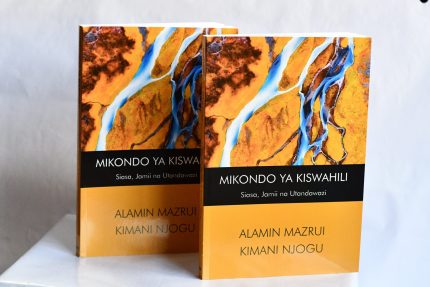
Mikondo Ya Kiswahili: Siasa, Jamii na...

KShs1,200.00 KShs1,000.00
Mikondo Ya Kiswahili: Siasa, Jamii na Utandawazi by Alamin Mazrui and Kimani Njogu

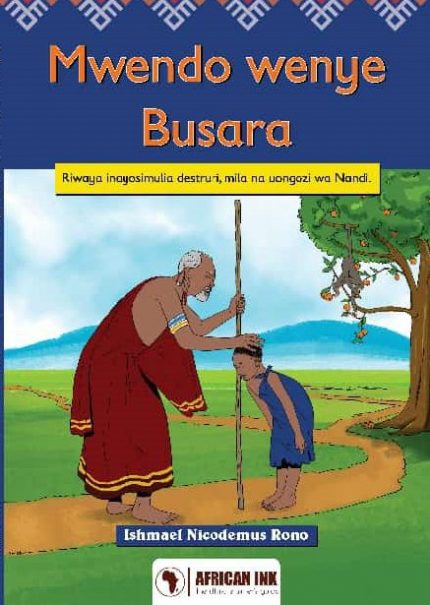
Mwendo Wenye Busara

KShs750.00 KShs650.00
Baada ya kuchinjwa, matumbo hukaguliwa na iwapo hakuna ishara yoyote ya ugonjwa, sherehe hutangazwa kuwa njema. Iwapo kondoo atapatikana na ishara ya ugonjwa, hii ikiwa nadra kwa kuwa umakinifu uliwekwa unapochaguliwa, mwingine hutakaswa na kuchinjwa tena. Rafiki zake bwana harusi wanapopeana habari njema, wazazi na wale kina mama wa ubatizo hunyunyiza maziwa na pombe… * Riwaya hii ni ya kihistoria ya jamii ya Wanandi. Inamulika masuala ainati ya asili katika utamaduni na mila zao. Namna jamii ya Wanandi ilivyojisuka na kujitawala katika uongozi, imani na matumaini katika maisha yao na majukumu yao katika kujikidhia matakwa ya kimsingi katika maisha. Riwaya hii ni mfano bora wa kazi zinazosimulia utamaduni wa Mwafrika na mfumo wa kujikuza na mielekeo ya maisha.

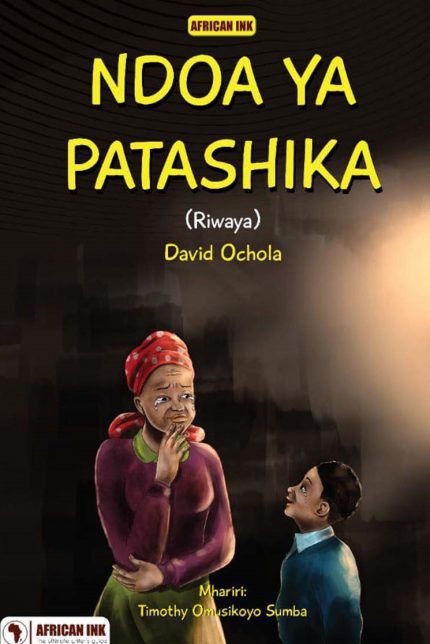
Ndoa Ya Patashika Na David Ochola

KShs750.00 KShs650.00
Ni mzazi kindakindaki. Ameniondolea janaa ya kuitwa mwana msi baba. Sasa nayafurahia mazingira matulivu. Yote ni kwa neema. Ile ndoa ya patashika baina ya Patashika na mama ikanitoka kabisa. Nikawa nimepoa na kutulia katika… Ndoa ya Patashika ni riwaya inayoangazia masuala tata yanayojitokeza katika ndoa. Aghalabu, kila ndoa huwa na changamoto zayo na ndiye maana mwandishi ameyaweka tashtiti mambo yanayowaudhi wahusika katika ndoa zenye hali hizo.

Modern Gikuyu Dictionary: Gikuyu-Engl...

KShs3,500.00
Learn Gikuyu the modern way with Gikuyu kasahorow! Start exploring the modern world with Gikuyu! The Modern Gikuyu Dictionary is a Gikuyu explorer's dictionary for English language speakers. Read Modern Gikuyu confidently. Contains all the words you need to understand every book in the kasahorow Gikuyu Library. Discover the joy of learning new things in Gikuyu. Suitable for everyone 13 years old and older.

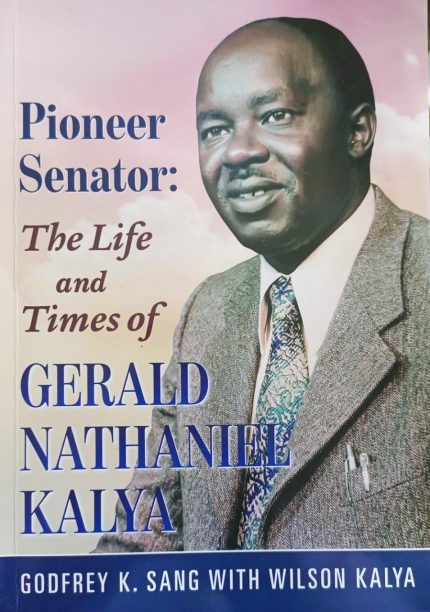
Pioneer Senator: The life and Times o...

KShs2,000.00 KShs1,500.00
Pioneer Senator: The life and Times of Gerald Nathaniee Kalya by Godfrey K. Sang With Wilson Kalya

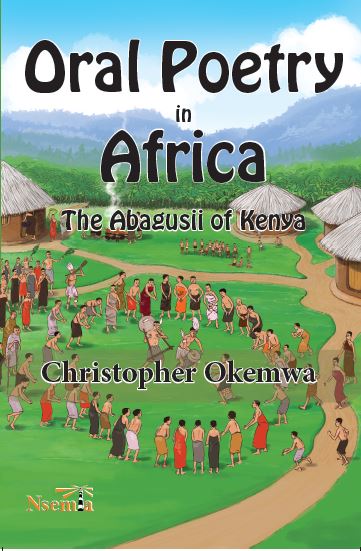
Oral Poetry in Africa :The Abagusii o...

KShs2,000.00 KShs1,500.00
Oral Poetry in Africa: The Abagusii of Kenya highlights characteristics of African oral traditions with particular focus on the oral poetry of the Abagusii of Kenya. It shows that oral poetry in the Abagusii community covered every facet of life. The community’s social-political and economic life, history, values, norms and customs were stored in the oral poetry, in addition to proverbs, riddles and folktales. Notably, oral poetry coloured the entire life of Omogusii and was sung during birth, initiation, marriage and death ceremonies. This book documents the oral poetry of the community in its original form, and in various versions that were practised or sung in different parts of the region inhabited by the community. Further, the book discusses the context in which this poetry was sung and explains some of the cultural practices, norms, and customs that surround or motivated the composition of the poetry. The advent of colonialism had ‘corrupting’ influence on the original poetry, more so with the adoption of English words and phrases. This kind of poetry has not been left out. Aside from the general poetry and the book also captures emeino, the Abagusii classical oral poetry. While the general poetry utilized improvisation as a technique in its presentation and performance, the classical poetry was a fixed form that demanded to be sung in its original form. Unlike the general poetry that, in its ephemerality, invited additions and subtractions from the text, classical poetry was permanent in text with no room for improvisation. Oral Poetry in Africa: The Abagusii of Kenya is meant for students of oral literature at university level. However, it can also be used by researchers of African oral literature, culture, anthropology, history and sociology. Indeed, it is also good for the general reader who is interested in the culture of Abagusii and African people, in general

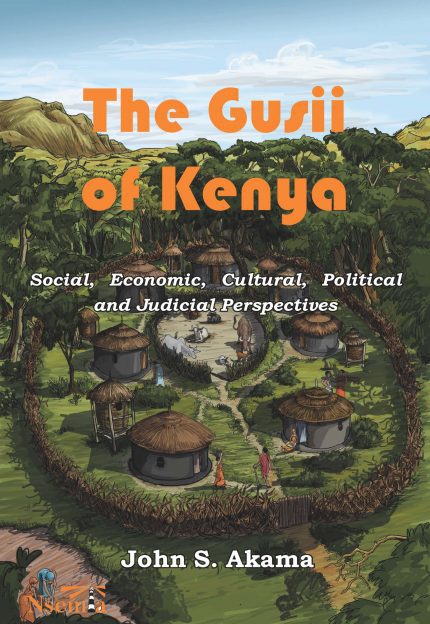
The Gusii of Kenya by John S. Akama

KShs1,800.00 KShs1,600.00
The Gusii of Kenya: Social, Economic, Cultural, Political & Judicial Perspectives provides in-depth topical insights of the Gusii (also known as the Kisii) of Kenya. The book captures historical aspects of the Gusii and how they ended up occupying their present lands. It enunciates the group’s cultural, political and economic organization that are core to the group’s identify and overall survival. Reading the book would provide understanding of some noticeable elements of these perspectives that persist to date. Cultural aspects such as the rites of passage and weddings, part of core identity elements of a people, are well articulated. Social organization, starting at the homestead to clan to community level, was intricately woven to form a coherence whole that defined the Gusii. Indeed, this also formed a basis of core elements of code of conduct (chinsoni) and justice as traditionally administered. The book also raises a number of questions regarding the core character of the Gusii such as lack of central authority and the implications this has had on the community over time. One can only speculate the trajectory of history that would have been had the Gusii organized themselves differently.

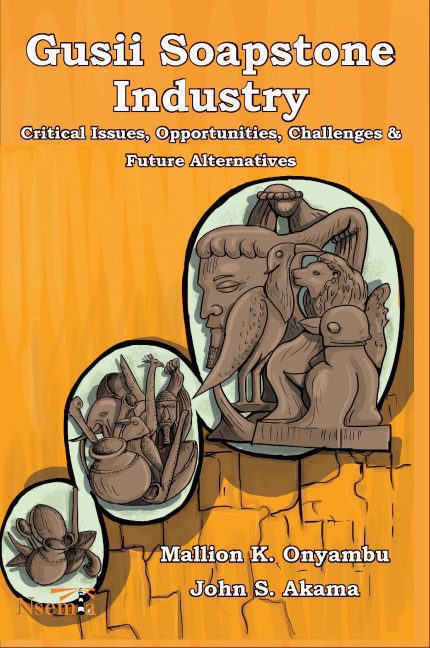
Gusii Soapstone Industry:Critical iss...

KShs1,000.00 KShs800.00
As is the case with most African indigenous industries, not much research has been done on the Gusii soapstone industry. Consequently, the main aim of this book is to fill the identified gap. Specifically, this book traces the origin of the Gusii soapstone industry, going through various stages, i.e. the Pre-Colonial, Colonial and Post-Colonial periods. Within this historical context, the book provides an elucidation of the social, economic, political and cultural factors that have impacted on the evolution and/or development of the soapstone industry. A critical issue captured in the book is the fact that, over the years, the soapstone handicraft products have been transformed from being items of utility for the local people to, mainly, becoming non-utility items that are sold to outsiders, particularly international tourists as unique pieces of indigenous handicraft and/or African art. However, it should be noted that, notwithstanding this transformation, indigenous cultural attributes and/or cultural themes that would have otherwise disappeared, due to increased impacts of globalization, are being preserved by the sculpturing of unique indigenous soapstone products. Furthermore, currently, the soapstone industry has become a major source of livelihood for the Gusii people of Tabaka in Southwestern Kenya. This book provides a lucid articulation of various facets (i.e., social, economic, cultural and political perspectives) of the Gusii soapstone industry, and the fundamental factors that have made the industry survive, over the years, notwithstanding the introduction of mass produced goods from the Western world. The conceptualization of the role of the indigenous industry in promoting sustainable livelihood is clearly brought out, and is presented within the broader milieu of the Gusii society. The book provides excellent reading for anyone interested in having proper perspectives on the history and the overall development of the Gusii soapstone industry. Elkanah Ong’esa, a world renowned artist and soapstone sculptor. As much as the soapstone sculptures are found in museums, art galleries, curio shops and people’s homes in most major cities of the world, not much research and documentation of these unique indigenous industry initiatives has been done. In light of that, this book on the Gusii soapstone industry fills a critical niche and is quite handy for people from all walks of life and academia looking for up to date information on the Gusii soapstone industry. Dr. Margaret Barasa, Anthropolinguistic Expert, and Dean, Faculty of Arts and Social Sciences, Kisii University, Kenya. Most literature on African indigenous industries, such as soapstone mining, carving and marketing, is based on Eurocentric approach which looks at these industries and African art as exotic items for the pleasure of Western gentry and middleclass. Adopting an Afrocentric approach, this book provides a refreshing analysis of the history, transformation and growth of the Gusii soapstone industry; an indigenous initiative that has evolved, systematically, over the years, and has shown a lot of resiliency in the face of many complex challenges. The book is recommended to people who want to have a proper perspective of similar indigenous industries and the Gusii soapstone industry in particular. Matunda Nyanchama, Publisher. This book looks at the resilience of the soapstone industry in Gusii. It shows that the soapstone carvings as currently developed by the Gusii people may have its origin in ancient traditions that dates back to hundreds and perhaps thousands of years. It also gives a good historical analysis of the growth and development of the soapstone industry. It will goes a long way in illuminating critical aspects of the Gusii soapstone industry. Herman Kiriama, Senior Research Fellow, Kisii University, Kenya.

Undeterred : The Rural Boy’s Jo...

KShs2,000.00 KShs1,800.00
Undeterred is an insightful exposé of his distinctive life as an academic and community leader in Africa. It shows that taking a strategic life path of positive thinking, commitment and hard work can lead to success and eventual achievement of cherished dreams and aspirations; even against all odds that may stand on the way. Prof. Akama grew up in a simple rural African setting in Kenya’s hinterland, and was raised by a typical Kenyan peasant family with meagre resources and limited frills. He went through early childhood enculturation and basic education in rural Kenyan schools, characterized by limited educational resources, scant infrastructure and minimal facilities. Through high school and university, his path was characterized by daunting challenges and setbacks. Being one who does not give up easily, and notwithstanding the many odds encountered, he managed to succeed in several fronts to get to the pinnacle of academia and university leadership. Prof. Akama’s discourse is a vivid testimony that all of us, as human beings, are capable of overcoming many life challenges that come our way, if we are guided by principles of determination, selflessness, focus, commitment and hard work

Mucii Wa Aceera A Mbari Ya (The Linea...

KShs700.00 KShs600.00
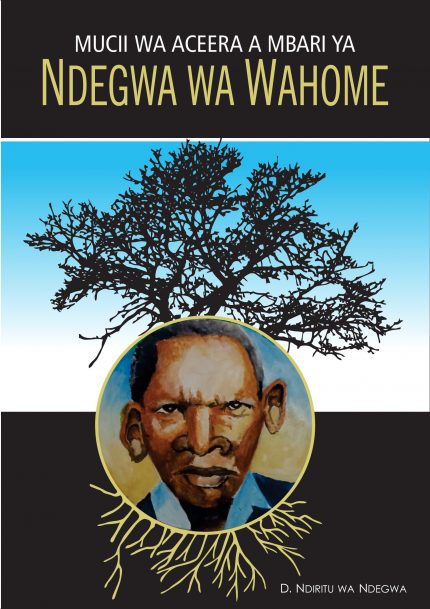
Mucii Wa Aceera A Mbari Ya (The Lineage of Aceera of Ndegwa Wahome Clan) by Duncan Nderitu Ndegwa

From The Cradle To The Cradle By Tony...

KShs3,500.00 KShs2,950.00
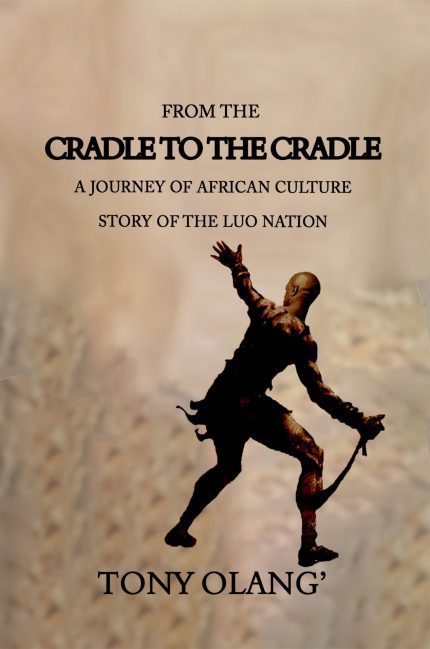
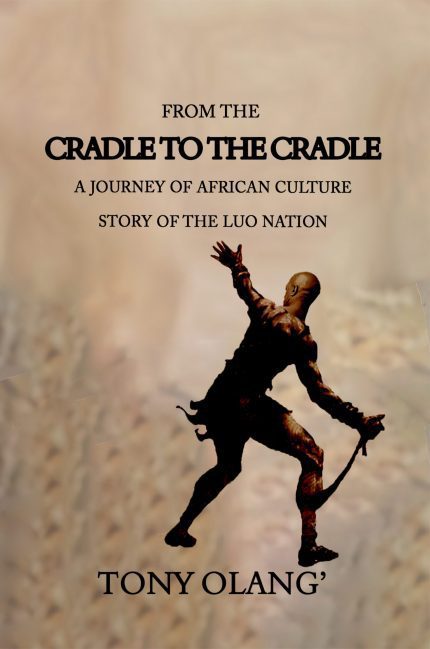
In the beginning, God created the heavens and the earth.   Oloo and Aloo were guided to go forth and fill the earth, giving rise to our diversity as brothers and sisters in the world today. Many generations later, jo luwo rech, better known as the people who follow fish, found themselves at Nam Lolwe - Lake Victoria, as the source of this abundant supply. This book traces the historical journey of the Luo from the Garden of Eden to the land of Kush and describes the life of a member of the community from birth to rebirth in the circle of life. Inspired by stories from the author’s grandmother, it is a representation of her answers to his many questions on the ways of his forefathers and enables the descendants of Kush to understand how they found themselves where they are and the ancestors they have in common with the Dinka,  Maasai, Kalenjin, Samburu, and Turkana.

Dholuo Grammar for Beginners by Dr. P...

KShs1,000.00 KShs800.00
Dholuo Grammar for Beginners by Dr. Peter Onyango

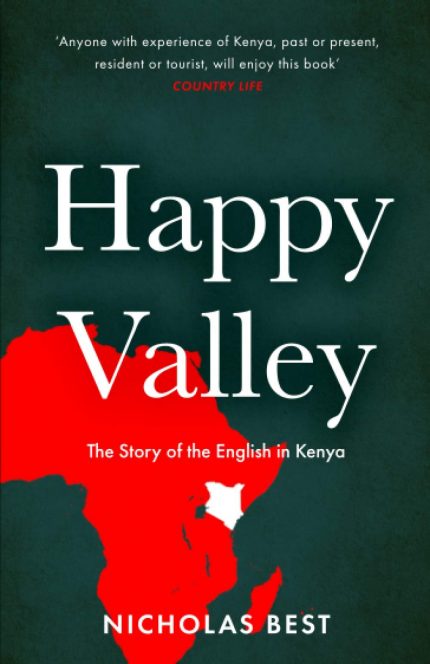
Happy Valley: The Story of the Englis...

KShs3,000.00 KShs2,799.00
The definitive story of the British in Kenya, from the explorer Joseph Thomson, whose exploits inspired King Solomon’s Mines, to the decadent Happy Valley set of the 1930s, the murder of Lord Erroll, and the Mau Mau revolt of the 1950s. "Nicholas Best tells an immensely entertaining tale" - Max Hastings, Evening Standard "Erudite, amusing and, even, gossipy" - Nigel Dempster, Punch "First class... quite hilariously funny!'" - Melbourne Herald "Anyone with experience of Kenya, past or present, resident or tourist, will enjoy reading Happy Valley" - Country Life

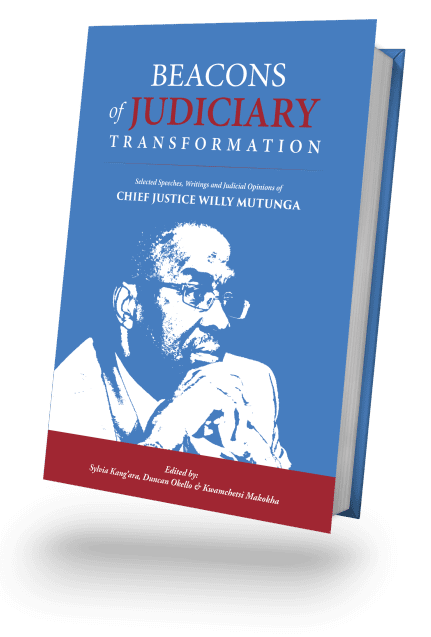
Beacons of Judiciary Transformation b...

KShs3,000.00 KShs2,500.00
This remarkable book contains over 60 speeches, seven judicial opinions, and three academic articles of Chief Justice Willy Mutunga written during his tenure as Chief Justice and President of the Supreme Court of Kenya from 2011 to 2016. Edited by Prof. Sylvia Kangara, Duncan Okello and Kwamchetsi Makokha, the book is a tour de force of Chief Justice Willy Mutunga’s remarkable career as the first Chief Justice under the 2010 Constitution and his efforts to transform the Judiciary, but also his role as an unrivalled leader of civil society movements in Kenya, thinker, academic, reformist and much more. The speeches, judicial opinions and academic articles are divided along the themes that resonate across Chief Justice Mutunga’s career: People, Participation and the Law; Gender Justice; the Legal Profession; Dialogue with Judges, Magistrates, Kadhis and Staff; Judicial Accountability; Jurisprudence; Elections; Expanding the Footprint of Justice; Inter-Governmental Relations; the Elite and the Academy; Nationhood; Youth Culture and the Arts; International Judicial Diplomacy; and of course Beacons for the Future. It is those Beacons for the future from which the title of this book is derived. This book therefore reflects Chief Justice Willy Mutunga’s commitment to what he calls the beacons of the 2010 Constitution. His own tenure as Chief Justice exemplified those beacons of alternative political leadership including incorruptibility, integrity, equitable distribution of resources among all people in the county, particularly minorities, and promotion of the sovereignty of the people through deep and committed public participation. Anyone who wants to understand why Kenya’s 2010 Constitution was so overwhelmingly ratified by the people of Kenya, how to interpret and understand it as well as what it means across a whole range of domains will find this book absolutely indispensable.

A Daunting Journey by Jeremiah Gitau ...

KShs1,500.00 KShs1,290.00
He is described as a Mau Mau oath-taker, seemingly of two minds - both for and against, loyal and disloyal. In A Daunting Journey, Jeremiah Gitau Kiereini, lets us into his life spanning three generations. He reveals insights into the influences and intrigues surrounding the early civil service and the powerful individuals who held Kenya's future in their hands. Kiereini also exposes the dichotomy that irreconcilably split the communities involved in the struggle for independence and the personal contradictions and challenges he encountered as he sought to find pride and loyalty in service to a newly independent Kenya. This is truly a fascinating chronicle that takes us from the humble and difficult years of childhood, through the Mau Mau years, the Kenyatta administration, the Moi regime, and on to the present in the life of Jeremiah Kiereini. Most captivating is the narrative on the infamous 1969 oath-taking commonly referred to as, 'Caai wa Gatundu' and the 1982 coup.
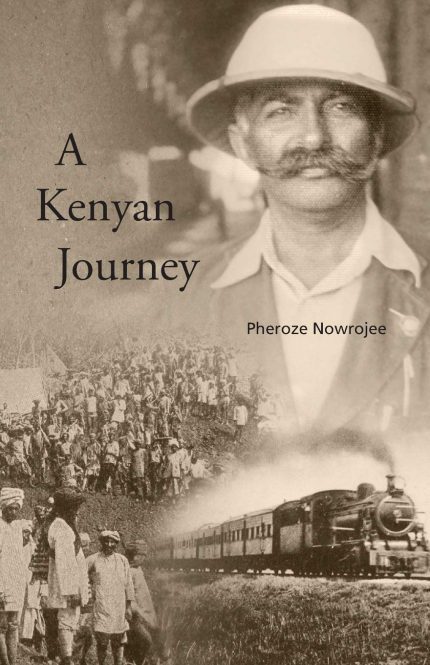
A Kenyan Journey by Pheroze Nowrojee

KShs2,500.00 KShs2,350.00
Pheroze Nowrojee's family came to Kenya in 1896 to work on the railway. In rich, layered prose, this book examines how that voyage from India became a Kenyan journey, how the railway became the family's own journey as Kenyans. Against this backdrop of the family's story, the book reflects on Kenya's history over the last hundred years and the chequered Asian African story within it. The family story interweaves with the country's major events, including the building of the Uganda Railway with indentured labour from India, the First World War in Kenya, the Emergency, independence, and the 1982 coup attempt, to result in a book that offers fresh insights into the national story.

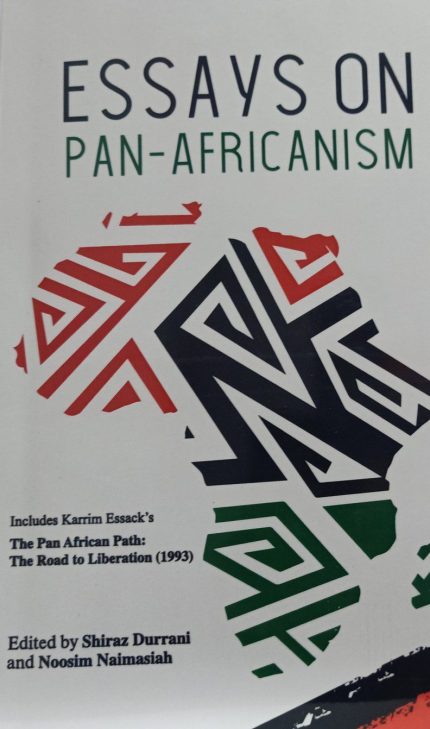
Essays on Pan Africanism by Shiraz Du...

KShs2,900.00 KShs2,000.00
Essays on Pan Africanism by Shiraz Durrani and Noosim Naimasiah

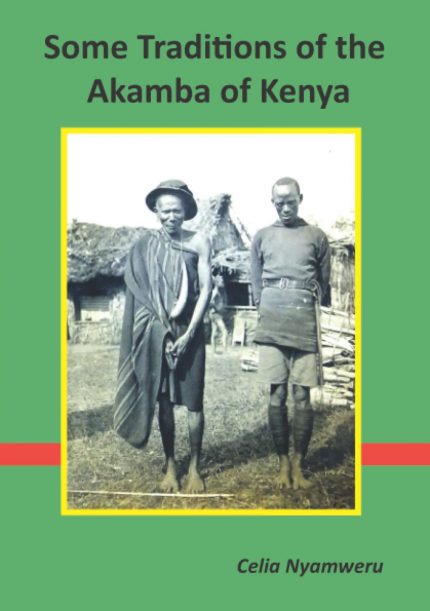
Some Traditions of the Akamba of Keny...

KShs1,500.00 KShs1,200.00
Written to appeal to a wide audience, this book presents both a historical and an updated picture of some important elements of Kamba culture that have been described as ‘supernatural’ or even ‘witchcraft.’ These are traditional practices and beliefs that some people know little about, while others consider them to be evil. However, for many Akamba, both in towns and in the rural areas, these beliefs are part of the reality of modern life. Kĩkamba has many words for them, while in English, they can be described as ‘oaths,’ ‘ordeals,’ ‘vows’ and ‘protective charms.’ The author quotes from interviews with Akamba from rural Ukambani, as well as urban residents; men and women, young and old, Christians and followers of traditional religion. She compares what she learned from them with material from published sources going back to 1860, to show that many traditional beliefs survive to the present day. Celia Nyamweru’s love for and interest in Kenya’s country and people grew from her very first months in the country in 1965. As a graduate student in geography, she studied landforms and rocks in the central Rift Valley. She became a teacher, first at a secondary school, and for over 18 years at Kenyatta University. She has written and edited books and articles for readers at all levels from primary school to specialized scholarship. Her research interests have included the ten thousand year old Lake Nakuru, the active volcano Oldoinyo Lengai, the making of bark cloth in Uganda, the sacred kaya forests of coastal Kenya, and the Mijikenda heroine Mekatilili. She became a Kenya citizen in 1972 and was married under Kikuyu customary law in 1977. She is the proud mother of two daughters and three stepsons, and the ‘cucu’ of eight grandchildren. She hopes that this book will encourage young Kenyans to take more interest in their own culture, since ‘mwacha mila ni mtumwa.’

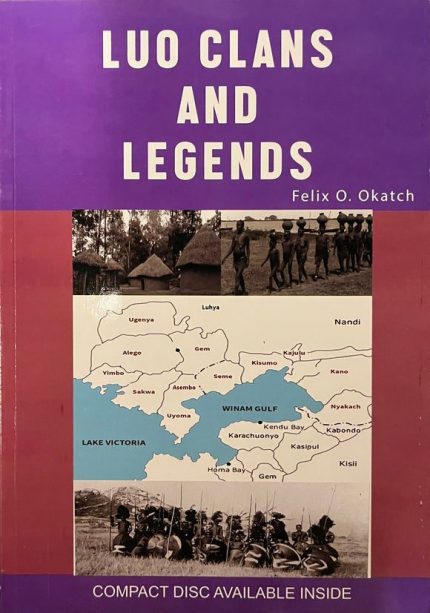
Luo Clans and Legends By Felix O. Okatch

KShs3,500.00 KShs3,000.00
Luo Clans and Legends provides a rich history about Luo clans and settlements. This book has attempted to fill the historical gaps that were not given attention by earlier renowned scholars. It provides a micro-analogy of Luo Clans and sub - clans. at the inner back cover of this book, there is a CD which has some stories as told by carefully selected informants. This enriches the reader’s knowledge, understanding and appreciation of the Luo Clans. We hope you will enjoy the stories and historical journey of the Luo people.

Unduire Wa Ruriri Rwa Agikuyu by Dunc...

KShs1,500.00 KShs1,200.00
The people of the continent of Africa are a great multitude blest by their creator with a diversity of spiritual, mental, social, and cultural backgrounds. Even with their diversity, the African is very similar to another no matter what part of the earth they find themselves in. This similarity in physique, belief, and spirituality that is experienced from the North to the South of Africa must therefore be interrogated. This book does not bring an overbearing of thoughts and feelings into what I believe. It is in fact written at an opportune time when Africans are curious to know who they are and where they came from. In my thoughts as expressed in this book and supported by various other African scholars and teachers of African spirituality, I have noted the importance of the Ancient civilization of Khemet which is arguably the source of all Africanism. In this civilization, the black person had self-rule, knew how to read and write, initiated arithmetic and different people had mastered arts like construction, animal and food husbandry and illustrative representation of speech and ideas. Moreover, sciences like astrology were practiced and Africans knew how to tell the weather and seasons through observation of constellations. Worship of deities was also strongly practiced and no one grew without knowing of the essence of God in their lives. It is in ancient Khemet (Now Egypt) that scholars from all over the world would go to learn mathematics and the use of language for the advancement of their cities. In short, the world would not have known a lot of what is now called civilization of any sort (including spiritual knowledge) without the presence of Khemet thus the presence of the black person. I am therefore opening a way for further interrogation to be done by other well-meaning authors to ensure that our future generations become more self-aware and knowledgeable about who they are and what their ancestry stood for. In my view, people that do not know about their past or remain ignorant about their background will remain slaves of the people that choose to tell their story. The African narrative must be told from an African point of view to ensure that the truth of the African people is advanced beyond the colloquial lies of the so-called “western civilization” which has taken place at the expense of Africa as a people. I begin by telling this truth and request to be joined in telling our younger generations henceforth that the melanin in their skin and body is God-given and is more than just skin color, it is long life, it is strength, it is agility, it is adaptation and many more. You are African and you are superior.