Showing 181–200 of 276 results

Beyond Politics: A conversation with ...

KShs1,899.00 KShs1,699.00
Brief Summary Beyond Politics: A conversation with Kiraitu Murungi by Njeri Rugene

Kenyan capitalists, the State, and de...

KShs2,000.00 KShs1,500.00
Brief Summary Himbara argues that the literature on Kenyan capitalism largely misses the mark because it either omits or misconceptualises as ""Asian capital"" the principal segment of the domestic bourgeoisie. He demonstrates the leading role that Kenya's Indian entrepreneurs have played in her development.

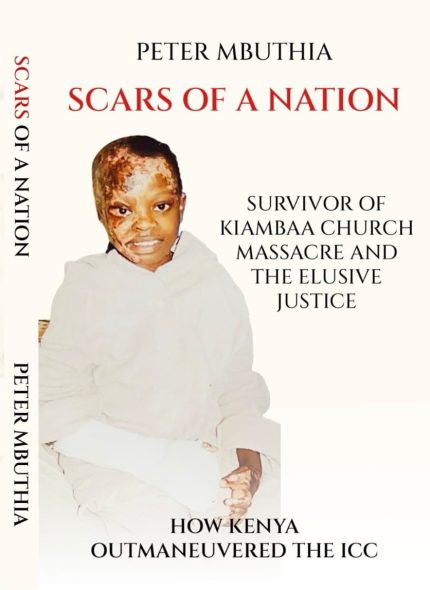
Scars Of A Nation: Survivor Of Kiamba...

KShs3,000.00 KShs2,000.00
Brief Summary A true Story about victims of the 2007/08 Post election Violence in Kenya, their suffering and the search for their Justice at The International Criminal Court in The Hague, Netherlands. The lies, intrigues, machinations and skullduggery during the ICC process. The author is a victim of the Kiambaa Church Massacre. Quote from the book: “Today, when you walk into the Kenya Assemblies of God Church in Kiambaa Eldoret, thirty-six graves are conspicuously visible. They stick out as a monument of that massacre - a powerful reminder of the consequences of prejudice, negative ethnicity, hate and the greed of a few individuals, who do not care that innocent citizens have to die from artificially generated conflicts, as long as this enables them to negotiate for political power, so as to satiate their individual greed, with ill-gotten wealth, and soothe their ego, with fame and prestige” In Naivasha “the attackers came to the home of Mr. Bernard Ndege, a man from the Luo tribe, and locked his entire family inside their house then set it ablaze and killed nine of his children and two wives” “having a President coming from your ethniccity is usually just a feel-good attitude only, and can be quite deceptive to think that one is privileged, because, it does not necessarily translate into tangible personal gains when ‘one of our own is the President’ Only a good governance system can guarantee equality for all” N/B Buy the book to support and encourage Kenyan authors.

Decolonization and Independence in Ke...

KShs4,500.00 KShs3,899.00
Brief Summary The main purpose of the book is to show that decolonisation does not only mean the transfer of alien power to sovereign nationhood; it must also entail the liberation of the worlds of spirit and culture, as well as economics and politics. The book also raises a more fundamental question, that is: How much independence is available to any state, national economy or culture in today's world? It asks how far are Africa's miseries linked to the colonial past and to the process of decolonization? In particular the book raises the basic question of how far Kenya is avoidably neo-colonial? And what does neo-colonial dependence mean? The book answers these questions by discussing the dynamic between the politics of decolonization, the social history of class formation and the economics of dependence. The book ends with a provocative epilogue discussing the transformation of the post-colonial state from a single-party to a multi-party system.

Ethnicity and Empire in Kenya: Loyalt...

KShs4,500.00 KShs3,699.00
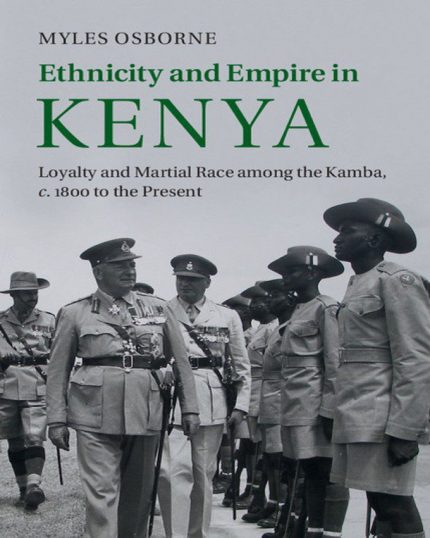
Brief Summary This book is about the creation and development of ethnic identity among the Kamba. Comprising approximately one-eighth of Kenya's population, the British considered the Kamba East Africa's premier "martial race" by the mid-twentieth century: a people with an apparent aptitude for soldiering. The reputation, indeed, was one that Kamba leaders used to leverage financial rewards from the colonial state. However, beneath this simplistic exterior was a maelstrom of argument and debate. Men and women, young and old, Christians and non-Christians, and the elite and poor fought over the virtues they considered worthy of honor in their communities, and which of their visions should constitute "Kamba" identity. Based on extensive archival research and more than 150 interviews, Ethnicity and Empire is one of the first books to analyze the complex process of building and shaping "tribe" over more than two centuries. It reveals new ways to think about themes crucial to the history of colonialism: soldiering, "loyalty", martial race, and indeed the nature of empire itself.

Broken Hedges (Novel) by Joseph Kang&...

KShs1,500.00 KShs1,000.00
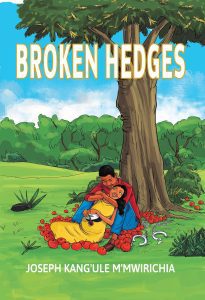
Brief Summary Forever trailed by the spiders, political activist Kamirangi Mwenda has dedicated himself to fighting the locusts—the people behind the corrupt and oppressive government—a fight for the second liberation of Kenya, His father, the veteran Mau Mau General Baikioo, is a bitter man: wallowing in poverty, not honoured as the hero he is, and false promises by the government; the sacrifices he made for the liberation of the country are nothing ... and his son is walking the same path. As the locusts threaten to wring the country dry, the past grapples with the present, pulling apart father and son, forcing them to realise that the cost of true freedom might be far too high.

Alcohol Abuse in Christian Families: ...

KShs1,300.00 KShs1,000.00
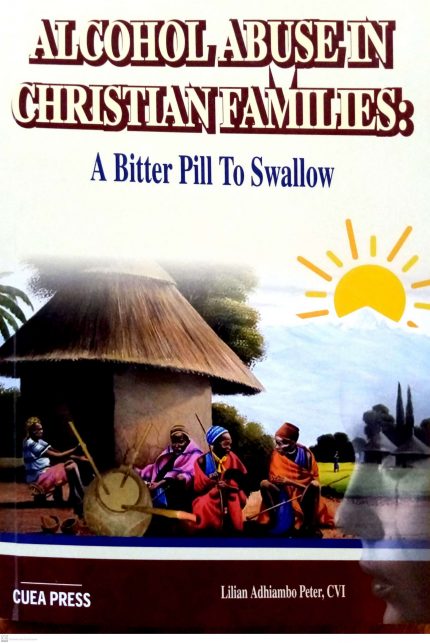
Brief Summary Alcohol Abuse in Christian Families: A BITTER PILL to swallow tackles alcohol consumption with a head-on approach. This publication acknowledges that alcohol consumption seems to be an unavoidable leisure activity at personal and communal levels as it excites, comforts and consoles its consumers.

The Luo Oral Literature: Educational ...

KShs2,000.00 KShs1,500.00
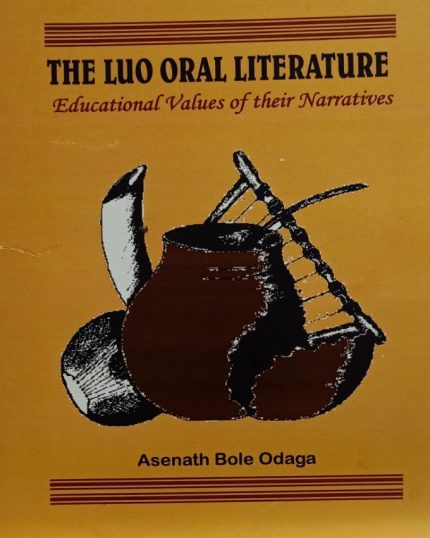
Brief Summary The Oral narratives are a popular genre of the Luo oral literature which plays many roles to the community. One of its role is to entertain while subtly passing on certain educational values to the youth and children. Therefore, in Africa, art is not indulged in just for arts sake, but its valued even more for its functional roles. In this book, Bole has demonstrated by identifying certain educational values which the children learn from oral narratives. The existence of supernatural power, Nyasaye, Nyakalaga and mans dependence on the environment and the inter relatedness with other creatures which inhabit and share the environment with man are certain knowledge which the children learn from the oral literature. Bole has written books on oral literature, novels, books for general reading and others for youth and children.

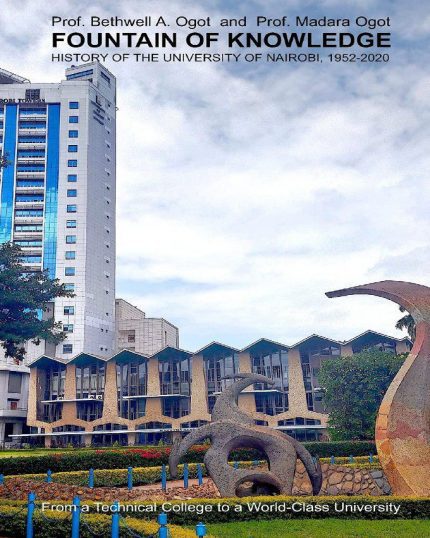
Fountain of Knowledge: History of the...

KShs4,000.00 KShs2,999.00
Fountain of Knowledge: History of the University of Nairobi 1952-2020follows the development of the University from its origins as the Royal Technical College in 1952, to the World Class University it has become in 2020. As the ‘mother’ university in Kenya, its history also provides a narrative of the evolution of university education in Kenya over the same period. Major events, activities and policies changes that have shaped university education are presented in the context of the University of Nairobi’s growth. Throughout the text, a large collection of photographs brings to life the development of the university over the past 68 years.

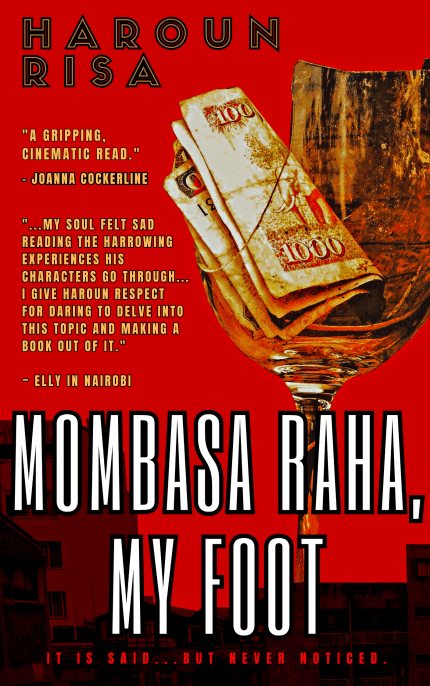
Mombasa Raha My Foot

KShs2,500.00 KShs1,800.00
The first in the Mombasa Raha, My Foot saga written by Haroun Risa. Its main theme is human trafficking and sex tourism in Kenya; Haroun Risa begins with this novel to raise awareness against major issues affecting Kenyans using fiction.

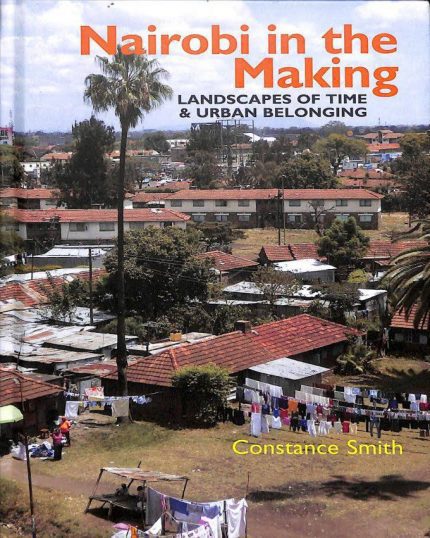
Nairobi in the Making: Landscapes of ...

KShs1,590.00 KShs1,099.00
Brief Summary What does it mean to make a life in an African city today? How do ordinary Africans, surrounded by collapsing urban infrastructures and amid fantastical promises of hypermodern, globalized futures, try to ensure a place for themselves in the city's future? Exploring the relationship between the remains of empire and the global city, and themes of urban belonging and exclusion, housing and security, Constance Smith examines the making and remaking of one of Africa's most fragmented, vibrant cities. Nairobi is on the cusp of radical urban change. As in other capital cities across Africa, the Kenyan government has launched "Vision 2030", an urban megaproject that envisions the capital as a "world class metropolis", a spectacular new node in a network of global cities. Yet as a city born of British colonialism, Nairobians also live amongst the dilapidated vestiges of imperial urban planning; spaces designed to regulate urban subjects. Based on extensive ethnographic research in a dilapidated, colonial-era public housing project built as a model urban neighborhood but which is now slated for demolition, Smith explores how projects of self-making and city-making are entwined. She traces how it is through residents' everyday lives - in the mundane, incremental work of home maintenance, in the accumulation of stories about the past, in ordinary people's aspirations for the future - that urban landscapes are formed, imaginatively, materially and unpredictably, across time. Nairobi emerges as a place of pathways and plans, obstructions and aspirations, residues and endurances, that inflect the way that ordinary people produce the city, generating practices of history making, ideas about urban belonging and attempts to refashion "Vision 2030" into a future more meaningful and inclusive to ordinary city dwellers.

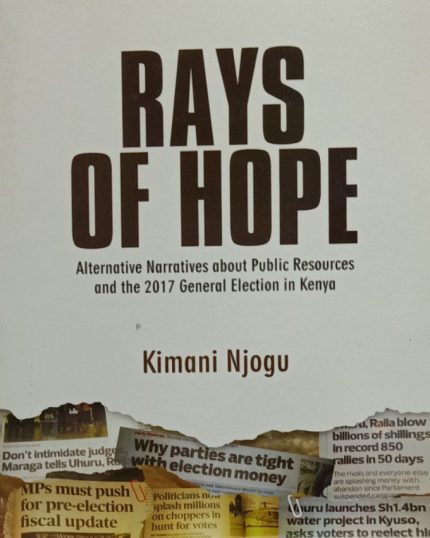
Rays of Hope: Alternative Narratives ...

KShs1,500.00 KShs799.00
Brief Summary Rays of Hope: Alternative Narratives about Public Resources and the 2017 General Election in Kenya by Kimani Njogu

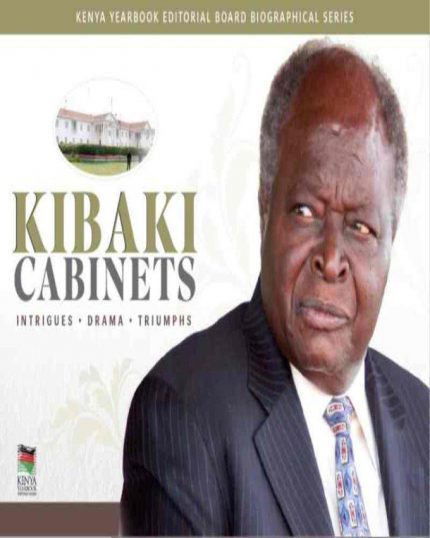
Kibaki Cabinets : Intrigues. Drama. T...
KShs5,000.00 KShs0.00
Brief Summary Kibaki Cabinets : Intrigues. Drama. Triumphs

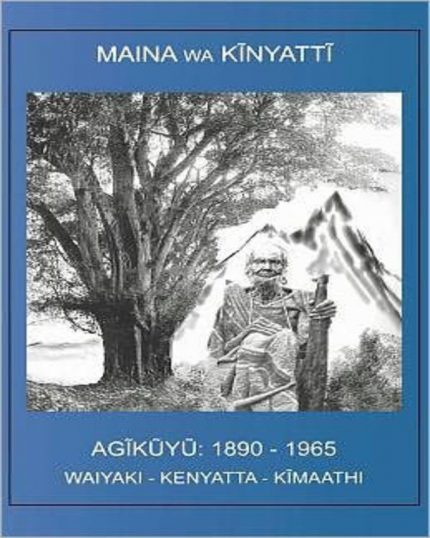
The Agikuyu: 1890 – 1965 by Mai...

KShs3,000.00 KShs2,790.00
Brief Summary Author Maina wa Kinyatti, who has written extensively on the history of the Mau Mau, breaks fresh ground in this treatise, first delivered in The Gikuyu language. The Agikuyu people with their cousins--Embu, Miiru, Mbeere and Akamba--are the inhabitants of central Kenya, which was the epicenter of the decade-long Mau Mau war of liberation. In this book, Kinyatti deftly navigates through the early phases of Kenya's history from the invasion and occupation of the country by the British imperialists and the Africans' spirited response to repression, which would find expression in formulations such as the Kenya African Union (KAU). Kinyatti pays close attention to KAU's towering figures like Jomo Kenyatta, the country's future founding president. He explains how his complicated role in the national struggle--anti-imperialism on one hand, and Mau Mau ambivalence on the other--would lead to his mistaken Author Maina wa Kinyatti, who has written extensively on the history of the Mau Mau, breaks fresh ground in this treatise, first delivered in The Gikuyu language. The Agikuyu people with their cousins--Embu, Miiru, Mbeere and Akamba--are the inhabitants of central Kenya, which was the epicenter of the decade-long Mau Mau war of liberation. In this book, Kinyatti deftly navigates through the early phases of Kenya's history from the invasion and occupation of the country by the British imperialists and the Africans' spirited response to repression, which would find expression in formulations such as the Kenya African Union (KAU). Kinyatti pays close attention to KAU's towering figures like Jomo Kenyatta, the country's future founding president. He explains how his complicated role in the national struggle--anti-imperialism on one hand, and Mau Mau ambivalence on the other--would lead to his mistaken

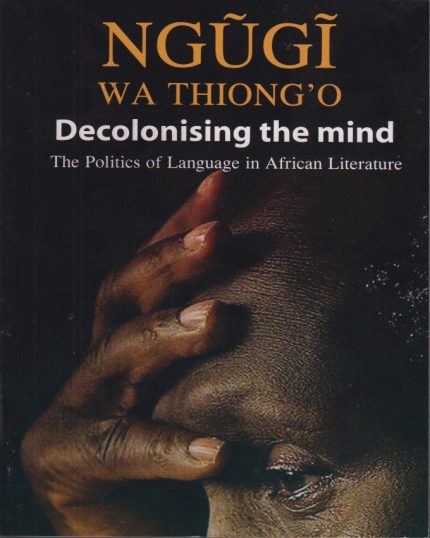
Decolonising the Mind: The Politics o...

KShs2,500.00 KShs1,990.00
Decolonising the Mind is a collection of essays about language and its constructive role in national culture, history, and identity. The book, which advocates for linguistic decolonization, is one of Ngũgĩ’s best-known and most-cited non-fiction publications, helping to cement him as a pre-eminent voice theorizing the “language debate” in post-colonial studies. Ngũgĩ describes the book as “a summary of some of the issues in which I have been passionately involved for the last twenty years of my practice in fiction, theatre, criticism, and in teaching of literature…” Decolonising the Mind is split into four essays: “The Language of African Literature,” “The Language of African Theatre,” “The Language of African Fiction,” and “The Quest for Relevance.”

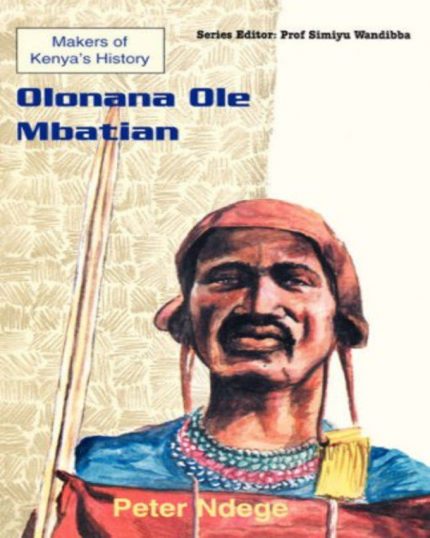
Olonana Ole Mbatian ( Makers of Kenya...

KShs1,000.00 KShs699.00
Brief Summary Olonana ole Mbatian, popularly known as Lenana, was one of the most outstanding Masai and Kenyan leaders, African chief and Laibon (prophet/visionary), whose life spanned the second half of the nineteenth, and the first decade of the twentieth centuries. He lived through and influenced a crucial period in Kenya's history: when the Masai were engaged in nation building, there was competition for leadership, land, people, livestock, wealth and power; and when European intrusions, which were becoming ever more intensive, were shaping Kenya's colonial culture and economy. This is a balanced and critical study of an individual's biography, and historical context. It analyses for example to what extent Olonana's relationship with the colonialists influenced colonial policy on pastoralism; the devastating effects of colonial policy on pastoralism; and why the Masai shunned westernism, education and trade in favour of traditional pastoralism, and the position of Olonana on these issues. It considers popular perceptions of Olonana as a champion of Masai cultural heritage; and assesses his achievements and legacy. This is a concise biography of a key figure in Masai history, about whom little has been written, which serves well as a general introduction to the history and key figures of the period.

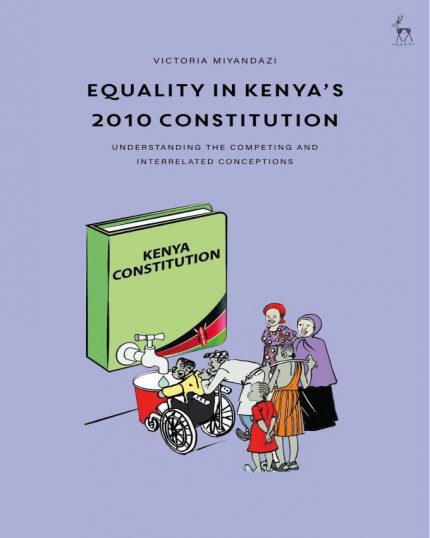
Equality in Kenya’s 2010 Consti...

KShs10,000.00 KShs8,999.00
Brief Summary "This book asks whether there is a coherent conception of equality in Kenya's 2010 Constitution and explores how competing and interrelated ideas of equality in it should be conceptualized, interpreted and applied. Making a significant contribution to the ongoing global conversations on the various understandings of equality, the book illuminates the many ways in which diverse equality guarantees clash, or are interrelated. It also sets out principled approaches on how they can be coherently interpreted to address the myriad inequalities in Kenya. Taking a comparative approach, the book considers how other jurisdictions including the United States, the United Kingdom, Canada, South Africa, India and Botswana have approached the conceptualization, interpretation and application of various equality concepts. The book focuses on important issues such as: - transformative constitutionalism in relation to the interpretation of Kenya's 2010 Constitution; - expanding the list of enumerated grounds for non-discrimination; - affirmative action; - accommodating religious and cultural diversity versus gender equality; - the interrelation between socio-economic rights and status-based equality"--

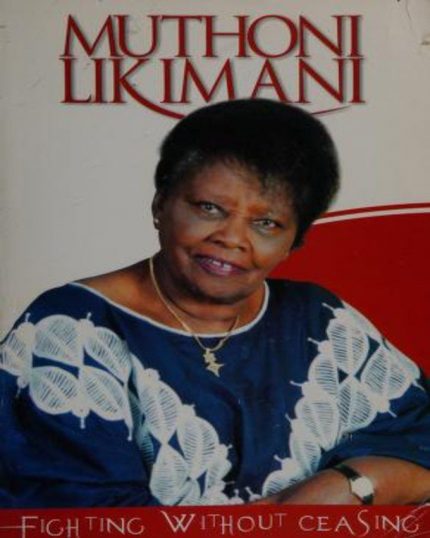
Fighting Without Ceasing by Muthoni L...

KShs3,190.00 KShs2,990.00
Brief Summary This is the autobiography of one of Kenya's foremost public figures and women role models, Muthoni Likimani. The subject has been a broadcaster, politician, teacher, actress and activist. Muthoni is also notable for having established Noni's Publicity, one of the first indigenously owned public relations firms in Africa. The narrative emphasizes the author's overriding concerns throughout her life with gender and race equality, human rights, religious faith and politics. An introduction is provided by Muthoni Wanyeki, Executive Director of the African Women's Development and Communication Network (FEMNET).

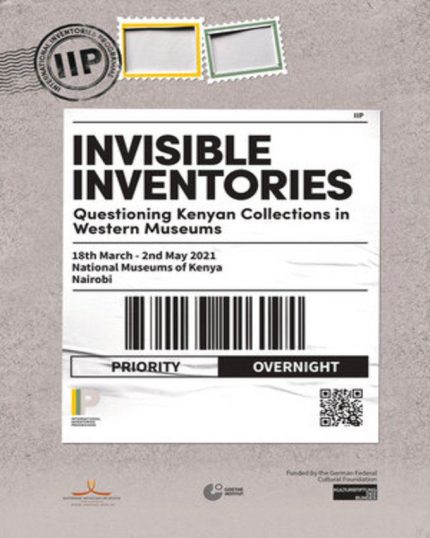
Invisible Inventories: Questioning Ke...

KShs1,000.00 KShs500.00
How can Kenyan cultural objects that are in the possession of cultural institutions in Europe and the US be made accessible in Kenya? This question is being investigated by the exhibition series Invisible Inventories, which opens on the 18th of March at the National Museums of Kenya in Nairobi—in the absence of said historical objects.

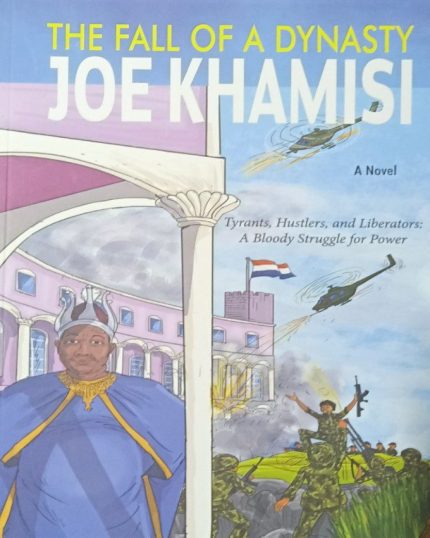
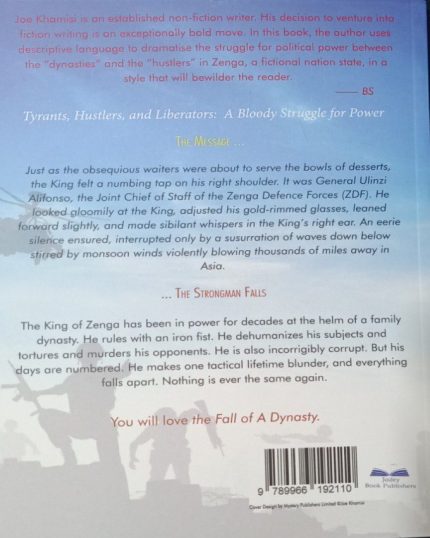
The Fall of A dynasty by Joe Khamisi

KShs1,390.00 KShs999.00
Brief Summary The Fall of A dynasty Tyrants hustlers and Liberators A bloody struggle for power by Joe Khamisi