Showing all 5 results

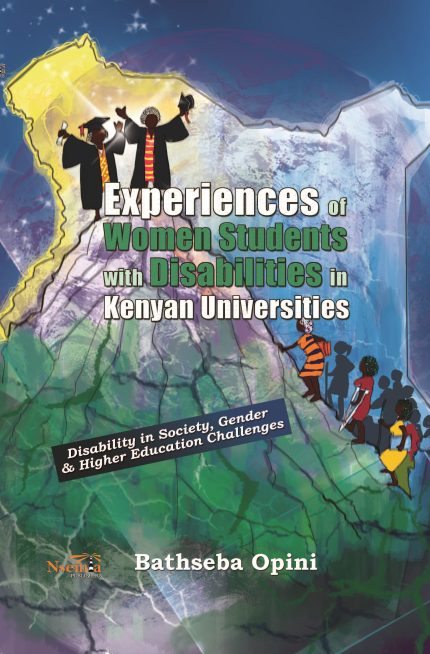
Experiences of Women Students with Di...

KShs2,500.00 KShs2,000.00
This work is a systematic analysis of the subject of disability and society as encountered in institutions of higher learning in Kenya. Experiences of women students with disabilities in Kenyan universities demonstrates that marginalization of people with disabilities is an insidious reality in virtually all societies. Across Africa, dialogue on discrimination against individuals with disability has for a long time been silenced resulting into minimal participation and representation of this population in the political, social, cultural, and economic and development initiatives in the continent. Only a few texts have examined the question of disability and the status of people with disabilities in Africa and more so, with reference to gender and higher education. Filing this gap, this book discusses the experiences of women students with disabilities in university education in Kenya. It analyzes the challenges these women face and how they deal with those challenges. There is evidence of ableim in Kenyan higher education institutions and in the society as a whole. Individuals, government and societal institutions should work together to address ableism and promote an inclusive society. What others say Disability is not inability. This cutting edge text reveals that although women students with disabilities in Kenyan universities face numerous challenges, they are determined to succeed. The desire to lead a better life is the glue that gives these women the determination to challenge their subjugated positions in society. This book provides important recommendations for policy, practice and research which Kenya and other African nations can learn from to change things for the better. It is an important and timely read to be enjoyed by everyone. - Chris Atuti, Toronto, Canada. This book brings us in touch with the lives of women, and their struggles, so as to inspire the collective need to address disability in more thought-provoking ways. Skillfully, Bathseba depicts the complexity of living with disability through her ethnographic account of twenty women students in Kenyan universities. Through this unique research and analysis, the reader comes to know that every experience of disability needs to be understood as a fully social, political, and historical, not to mention valid, way of being-in-the-world. Bathseba has produced a book that is a must read for anyone interested in exploring education as it is interwoven with the meanings of race, gender, class and disability in and through the Kenyan context - Dr. Tanya Titchkosky Associate Professor, Associate Chair, and Graduate Coordinator, Ontario Institute for Studies in Education, University of Toronto. This book is an outstanding sociological exploration of gender, disability and higher education in the African context. The women's stories come alive in this brilliant and sensitive interpretation of challenges and accomplishments of women students with disabilities in Kenyan universities. By giving voice to those who are rarely heard, Bathseba contributes to a comprehensive understanding of the student experience. - . Sandra Acker, Professor Emeritus, Ontario Institute for Studies in Education, University of Toronto.

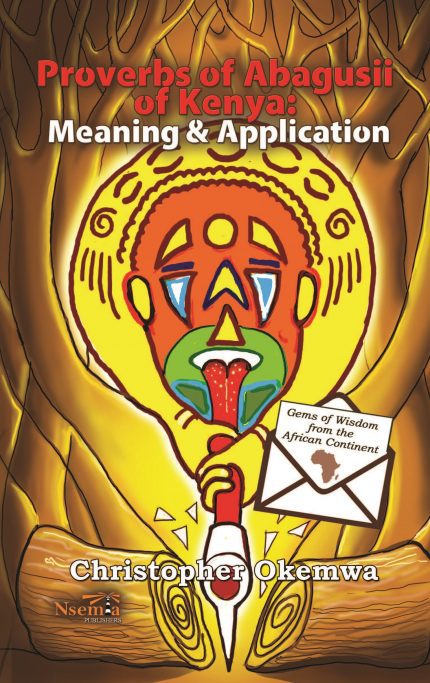
Proverbs of the Abagusii of Kenya Chr...

KShs1,000.00 KShs850.00
Like most cultural groups, the oral tradition of Abagusii People of Kenya is expressed in, among others, proverbs. These capture lessons and meaning, modulated by time and context as they are passed down generations. Like riddles and metaphors, proverbs express the wisdom of a culture and find apt applications in many situations. Christopher Okemwa's work documents some of the proverbs of Abagusii, their meaning, context in which they are used and application thereof. In this book proverbs are documented in the original form accompanied by English translations in addition to lessons they offer. Embedded in this collection are cultural aspects such beliefs and norms which touch on many aspects of Abagusii society. These aspects include relationships among people, communal life, gender matters, economic issues and many more. Here is what others say "Through careful transcription and translation of proverbs of Abagusii people of Kenya, Okemwa shares knowledge and cultural diversity as a wide range of themes and motifs recur hence multiplying meanings and implications. The proverbs explore both socio-political and socio-economic issues, in addition to fulfilling an aesthetic function." - Gladys Nyaiburi Ogaro, Mount. Kenya University "The uniqueness of this work lies in its use of Ekegusii language to impart culture of Abagusii on the reader through the imagery in proverbs. The advantage of 'hearing' Ekegusii first hand, its literal and deep meaning provided, makes it ideal for students and teachers of language and culture in learning institutions. The work also preserves, for posterity, wisdom that may become extinct with the passage of time." - Margaret Kemunto Obaga, Catholic University, Nairobi, Kenya "Christopher Okemwa's Proverbs of Abagusii of Kenya: Meaning & Application captures and radiates, with delight, the wisdom and beauty in Abagusii proverbs. For Ekegusii speakers, the proverbs nudge one to take a deep look at oneself and see how entertaining they can be. For non-speakers of the language the translation provided gives the poems versatility in content and pervasive reach, thus making them universal pieces of erudition that challenge and encourage. The proverb, 'Naigure ndumo boina ko mosiori ntamanya' (I have heard noise coming from grave diggers, but I am not sure who will be first to be interred), for instance, warns everybody against the barbarism of intransigence and physical confrontations, a universal piece of wisdom. Reading this invaluable book is a sure-fire route to intellectual nourishment. Okemwa has documented answers to our deep-seated questions on our socio- cultural, socio-economic and socio-political queries as captured by Abagusii proverbs. The wisdom therein helps one pry into one's own inadequacies and learn to challenge adversity." - Bwocha Nyagemi Bwocha, St. Augustine University, Tanzania

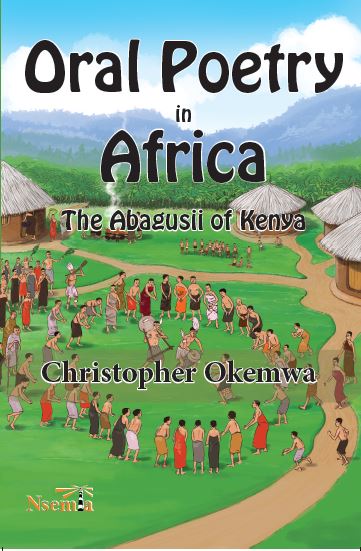
Oral Poetry in Africa :The Abagusii o...

KShs2,000.00 KShs1,500.00
Oral Poetry in Africa: The Abagusii of Kenya highlights characteristics of African oral traditions with particular focus on the oral poetry of the Abagusii of Kenya. It shows that oral poetry in the Abagusii community covered every facet of life. The community’s social-political and economic life, history, values, norms and customs were stored in the oral poetry, in addition to proverbs, riddles and folktales. Notably, oral poetry coloured the entire life of Omogusii and was sung during birth, initiation, marriage and death ceremonies. This book documents the oral poetry of the community in its original form, and in various versions that were practised or sung in different parts of the region inhabited by the community. Further, the book discusses the context in which this poetry was sung and explains some of the cultural practices, norms, and customs that surround or motivated the composition of the poetry. The advent of colonialism had ‘corrupting’ influence on the original poetry, more so with the adoption of English words and phrases. This kind of poetry has not been left out. Aside from the general poetry and the book also captures emeino, the Abagusii classical oral poetry. While the general poetry utilized improvisation as a technique in its presentation and performance, the classical poetry was a fixed form that demanded to be sung in its original form. Unlike the general poetry that, in its ephemerality, invited additions and subtractions from the text, classical poetry was permanent in text with no room for improvisation. Oral Poetry in Africa: The Abagusii of Kenya is meant for students of oral literature at university level. However, it can also be used by researchers of African oral literature, culture, anthropology, history and sociology. Indeed, it is also good for the general reader who is interested in the culture of Abagusii and African people, in general