Showing 261–276 of 276 results

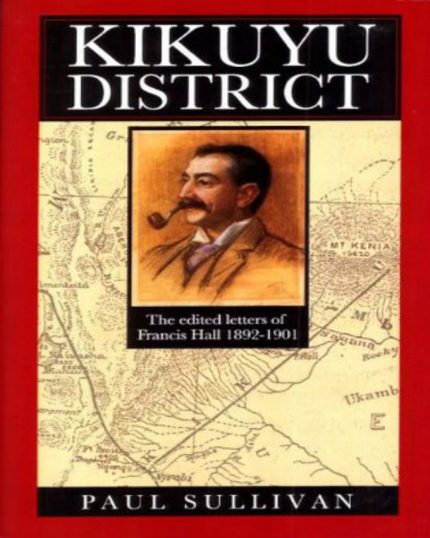
Kikuyu District by Paul Sullivan

KShs2,090.00 KShs1,899.00
Brief Summary Francis Hall's letters are among the earliest colonial record of daily life in British East Africa, now modern day Kenya. In 1892 Hall was posted to Fort Smith with orders to build 150 miles of road, to re-supply caravans between the coast and Uganda and to keep the peace between the Kikuyu and the Maasai. His was a hard life in difficult, dangerous conditions and every day was an adventure. He was gored by a rhino and mauled by a leopard, which he strangled with his rifle, and survived bush surgery and frequent bouts of malaria. While on leave in England he married Bee Russell, a colleague's sister, and they set up house together in Fort Smith. As the railway line approached, so the early European settlers started to arrive. But the railway was to change everything, and when Nairobi was established on their doorstep at the turn of the century, Fort Smith became redundant. The government first moved the Halls to Machakos and then back to Kikuyuland to establish a new fort at Mbirri. Six months later Francis Hall was dead from black water fever aged 40. Mbirri was renamed Fort Hall in his memory and today the town is called Muranga. Kikuyu District is a fascinating account of the life of an early colonial administrator and settler.

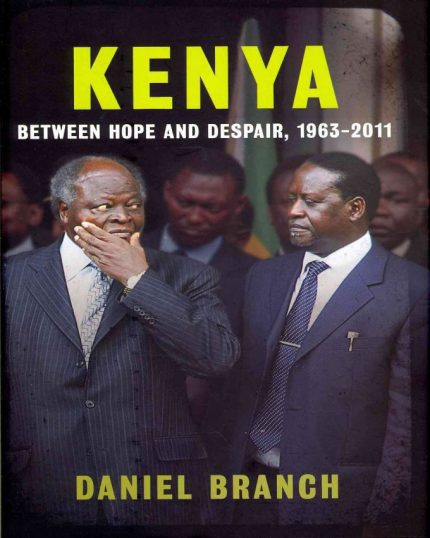
Kenya Between Hope and Despair 1963-2...

KShs6,990.00 KShs6,790.00
On December 12, 1963, people across Kenya joyfully celebrated independence from British colonial rule, anticipating a bright future of prosperity and social justice. As the nation approaches the fiftieth anniversary of its independence, however, the people's dream remains elusive. During its first five decades Kenya has experienced assassinations, riots, coup attempts, ethnic violence, and political corruption. The ranks of the disaffected, the unemployed, and the poor have multiplied. In this authoritative and insightful account of Kenya's history from 1963 to the present day, Daniel Branch sheds new light on the nation's struggles and the complicated causes behind them. Branch describes how Kenya constructed itself as a state and how ethnicity has proved a powerful force in national politics from the start, as have disorder and violence. He explores such divisive political issues as the needs of the landless poor, international relations with Britain and with the Cold War superpowers, and the direction of economic development. Tracing an escalation of government corruption over time, the author brings his discussion to the present, paying particular attention to the rigged election of 2007, the subsequent compromise government, and Kenya's prospects as a still-evolving independent state.  

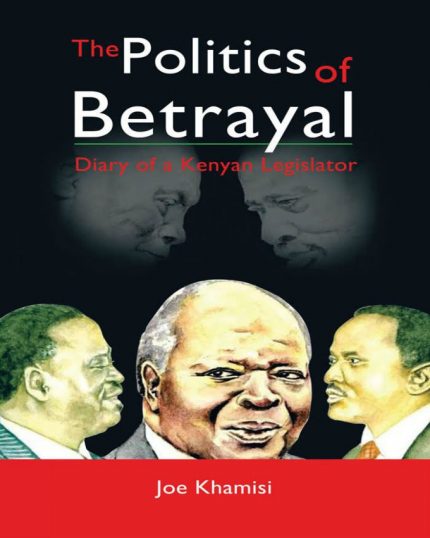
The Politics of Betrayal: Diary of a ...

KShs1,900.00
Brief Summary The Politics of Betrayal: Diary of a Kenyan Legislator In this provocative treatise, author Joe Khamisi catalogues the events that took place during one of Kenya's most important periods in history. This period began in 2002, when Daniel Arap Moi stepped down after twenty-four years as president of Kenya. Khamisi reviews events up to the time when the country exploded in post-election violence in 2007 and the subsequent formation of the Grand Coalition Government between President Mwai Kibaki and Raila Amolo Odinga the following year. Khamisi explores the leadership betrayals that he believes are responsible for the political, social, and economic rot that are pervasive in Kenya. He recounts how he helped a presidential poll loser in the 2007 elections, Stephen Kalonzo Musyoka, capture the coveted role of vice president. He also presents an in-depth analysis of Senator Barack Obama's visit to Kenya in 2006, as well as his own personal experiences with Barack's late father, who he describes as a person who "chain-smoked contentedly, drank copiously, and partied spiritedly." The Politics of Betrayal is critical reading for anyone who is interested in the transformation of Kenya from a one-party dictatorship to a pluralistic nation.

Rules of the Wild by Francesca Marciano

KShs1,799.00 KShs1,699.00
Brief Summary A mesmerizing novel of love and nostalgia set in the vast spaces of contemporary East Africa. Romantic, often resonantly ironic, moving and wise, Rules of the Wild transports us to a landscape of unsurpassed beauty even as it gives us a sharp-eyed portrait of a closely knit tribe of cultural outsiders: the expatriates living in Kenya today. Challenged by race, by class, and by a longing for home, here are "safari boys" and Samaritans, reporters bent on their own fame, travelers who care deeply about elephants but not at all about the people of Africa. They all know each other. They meet at dinner parties, they sleep with each other, they argue about politics and the best way to negotiate their existence in a place where they don't really belong. At the center is Esmé, a beautiful young woman of dazzling ironies and introspections, who tells us her story in a voice both passionate and self-deprecating. Against a paradoxical backdrop of limitless physical freedom and escalating civil unrest, Esmé struggles to make sense of her own place in Africa and of her feelings for the two men there whom she loves--Adam, a second-generation Kenyan who is the first to show her the wonders of her adopted land, and Hunter, a British journalist sickened by its horrors. Rules of the Wild evokes the worlds of Isak Dinesen, Beryl Markham, and Ernest Hemingway. It explores unforgettably our infinite desire for a perfect elsewhere, for love and a place to call home. It is an astonishing literary debut.  

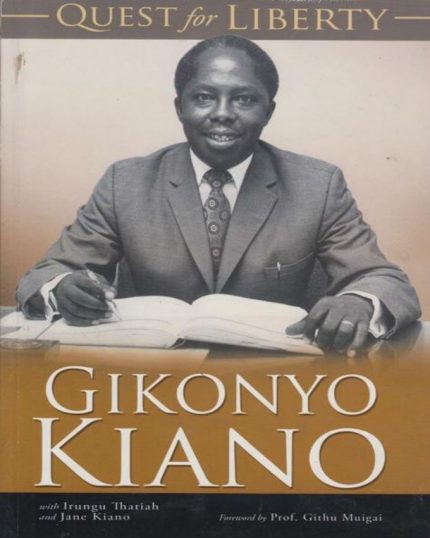
Quest for Liberty by Gikonyo Kiano

KShs2,500.00 KShs2,000.00
When the history of Kenya is told, a number of people feature prominently. One such person is Dr Julius Gikonyo Kiano, a politician who put Kenya before self. Dr Kiano was the first Kenyan to earn a doctorate degree, and the first African to teach at the Royal Technical College, now University of Nairobi. His story enumerates Kenya's struggle for independence and the role played by various nationalists in this noble cause. Quest for Liberty represents the acme of Dr Kiano's life as a politician. He was among those who negotiated for a new constitution at Lancaster House Conference just before Independence. As a dedicated minister in both Kenyatta and Moi cabinets, he implemented various notable programmes such as the Africanisation initiative that set the country on the path to economic independence. The famous airlifts to America that saw hundreds of young Kenyans enrol in universities in the US was his brainchild together with the late Tom Mboya.

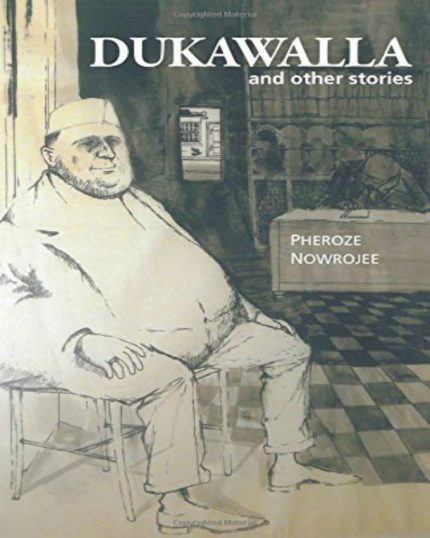
Dukawalla and Other Stories by Pheroz...

KShs1,650.00 KShs1,499.00
In this collection of stories, Pheroze Nowrojee takes his readers on journeys into varied Kenyan, East African, and other landscapes, delving into lives and personalities equally diverse. Whether actively transforming their surroundings or being transformed by what is around them, his complex characters reflect our common humanity in sometimes ordinary and sometimes surprising—but always compelling—ways. Exquisitely told, laden with humor and beauty and poignancy, these stories are a vital addition to the East African anthology.  

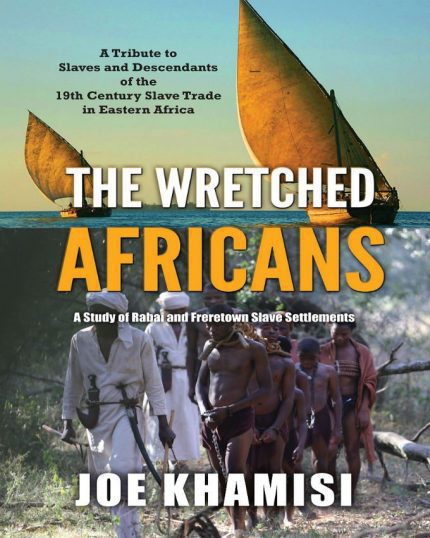
The Wretched Africans: A Study of Rab...

KShs1,900.00
Brief summary The Wretched Africans: A Study of Rabai and Freretown Slave Settlements. This book is about the 19th century slave trade in Eastern and Central Africa. No one in the history of humankind has suffered the indignity, abuse and pain of slavery than the African. Over many centuries, millions of Africans were uprooted from their quaint villages in the interior of the "Dark Continent" and taken into slavery. They were exported to the Americas, Asia, Arabia and a dozen other countries around the globe, to work in plantations, in the pearl industry, and as soldiers and domestic workers. Boys were castrated and made eunuchs and girls were sexually abused and forced into harems. Unfortunately, the African slave narrative - written mostly by Western historians and missionaries - has been contemptibly distorted to portray Europeans as the gallant saviors, the notorious slave traders as swaggering heroes, and the African captives as wretched victims of a horrible but regrettably inevitable human phenomenon of the time. The truth has been loftily garbled or masked and the role of liberated Africans vastly under-represented. The Wretched Africans peels of what is beneath the Arab slave trade, unravels the racism and abuse meted against Africans by European explorers and missionaries, and lays bare the heroism and resilience of the African captives. It memorializes Africans who died in caravan trails, at sea and those who found freedom in slave settlements around the world. It is a must read for historians, researchers, students and the general public wanting to understand the truth about what happened to an estimated eleven million people taken captive from the east coast of Africa to the new world and beyond.

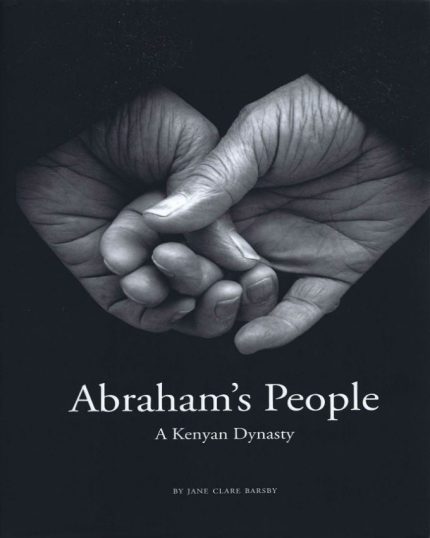
Abrahams People a Kenyan Dynasty by J...

KShs5,000.00 KShs3,999.00
Brief Summary The book, all 400 pages of it, sticks largely to the script of facts but unlike many other biographies brings Abraham’s journey alive, saturated with anecdotes, narrating the many twists in the tail of Abraham’s life as if the author had been the proverbial fly on the wall at times. Jane manages to find that perfect blend of what story telling should embrace, an embroidery of facts and at times a bit of fiction surely, giving readers of the book ‘Abraham’s People’ the impression of reading a novel rather than a dry story dictated entirely by time lines and actual events. Abraham’s escape route took him to Britain first, still as a young lad, before taking a leap into the unknown when he decided to first go to South Africa in 1901 to join up with his father, working his passage as a ‘grease monkey’ in the engine room before finally making his way to Kenya in 1903 at the age of 20. The first chapters in the book are dedicated to the story of his forefathers, how they came to Lithuania where they first prospered and then suffered under increasingly intolerant rulers, leading up to the days when first his father had to flee for his dear life before, almost one by one, the rest of the family managed to make their getaway. It must have been in those days in Leeds, when a little acorn took root in Abraham’s mind, germinating along the way, taking shape and eventually becoming a vision taking visible shape. His arrival at the port of Mombasa and the rail journey on the ‘Lunatic Express, aka as The Iron Snake’, his stepping off the train in Nairobi, back then but a depot for the railway, around which a town had just started to grow, his first meetings with contemporaries who were part of Kenya’s colonial history, all is meticulously captured by the author. Again it almost appears that Jane Barsby was present or else managed to train her looking glass back in time as she describes how Abraham met with Tommy Woods on arrival in Nairobi, who became a fast friend, or how Abraham made a quick 25 pounds profit on a land deal, which he struck with one of the Asian community’s icons Mr. Jevanjee and how he then ventured into business, farming, ranching and deal making, soon becoming part of the colonial Kenya’s ‘furniture’ too. The author ably sums up Abraham’s business acumen when she describes him as basically a jack of all trades with an uncanny ability to smell money if it could be made somewhere by buying or selling, investing or trading, importing and exporting. As the chapters add up, more and more insight is given into the life Abraham lived, the setbacks he suffered and his almost throwing in the towel had it not been for Lord Delamare, the Kenyan colony’s leading aristocrat and an icon in his own right.

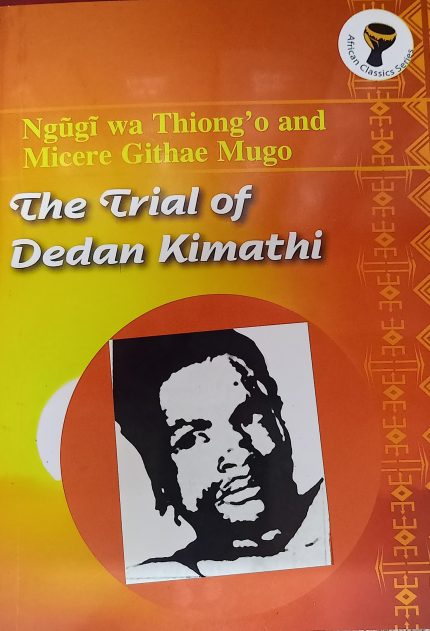
The trial of Dedan Kimathi by Ngugi w...

KShs1,000.00 KShs790.00
The Trial of Dedan Kimathi, written in collaboration with Micere Githae-Mugo, is Ngugi’s response to colonialist writings about the Mau-Mau movement, which traditionally depicted the movement and its leader, Dedan Kimathi, as mentally unbalanced and vicious. Ngugi and his collaborator choose to counter this image with a portrait of Kimathi as a man of great courage and commitment. This was how he was seen by many of the peasants and laborers of Kenya.  

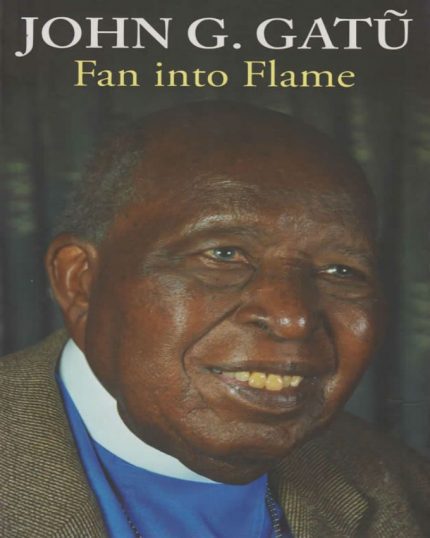
Fan into Flame by John Gatu

KShs2,500.00 KShs2,290.00
"I returned to the hangar quite drunk and forgot to fasten my rifle to my waist. When I woke up in the morning, I realized that my rifle, loaded with six bullets, had been stolen. In the military, and especially during a state of war, losing one's rifle was considered a serious crime. It is tantamount to willingly handing over a weapon to the enemy to fight you ...'."- Rev. Dr John G. Gatti From an early age, John Gan) yearns for and cherishes his independence. At the end of his primary school education, instead of joining a teacher training college, young Gaul opts to travel to Nairobi, believing a better world awaited him there. Much later, after scratching hard, he discovers this `better' world when he joins the army. Serving in Ethiopia and Somaliland, and finally traveling to London for the Victory Parade, thrills young Gatti despite the dangers involved. It is at the peak of his career in the military and after receiving the most coveted awards that John Gatti makes another decision: to retire from the army and work closer home. Gatti, the civilian, engages in different jobs before working as a clerk at Kambili Mission Church. "It had nothing to do with my Christian faith ... it was purely for the salary and my desire to work and live near my family," he confesses. It was during his service at Kambui that he encountered the 'flame' that continues to burn in him as he allows himself to be used to transform others. Fan into Flame is a multilayered narrative with the nuances of a thriller as the author unveils dramatic events that took place when he was a soldier in Ethiopia and the serenity that he encounters after his 'rebirth'. The story spans through the history of colonial and independent Kenya. Rev. John Gata's passion for his work as a servant of God, brings out the best in everyone he interacts with, no matter what their station in life. His role as an agent of peace and positive change in the church, his country and beyond, cannot be overemphasized.  

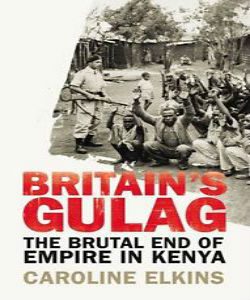
Britains Gulag The Brutal End of Empi...

KShs3,000.00 KShs2,800.00
Britain fought in the Second World War to save the world from fascism. But just a few years after the defeat of Hitler came the Mau Mau uprising in Kenya - a mass armed rebellion by the Kikuyu people, demanding the return of their land and freedom. The draconian response of Britain's colonial government was to detain nearly the entire Kikuyu population of one-and-a half-million - to hold them in camps or confine them in villages ringed with barbed wire - and to portray them as sub-human savages. From 1952 until the end of the war in 1960 tens of thousands of detainees - and possibly a hundred thousand or more - died from the combined effects of exhaustion, disease, starvation and systemic physical brutality. Until now these events have remained untold, largely because the British government in Kenya destroyed most of its files. For the last eight years Caroline Elkins has conducted exhaustive research to piece together the story, unearthing reams of documents and interviewing several hundred Kikuyu survivors. Britain's Gulag reveals what happened inside Kenya's detention camps, as well as the efforts to conceal the truth. Now, for the first time, we can understand the full savagery of the Mau Mau war and the ruthless determination with which Britain sought to control its empire.

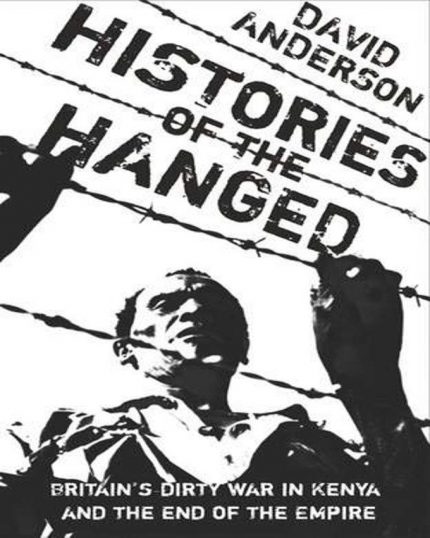
Histories of the Hanged by David Ande...

KShs3,000.00 KShs2,790.00
In "a gripping narrative that is all but impossible to put down" (Joseph C. Miller), Histories of the Hanged exposes the long-hidden colonial crimes of the British in Kenya. This groundbreaking work tells how the brutal war between the colonial government and the insurrectionist Mau Mau between 1952 and 1960 dominated the final bloody decade of imperialism in East Africa. Using extraordinary new evidence, David Anderson puts the colonial government on trial with eyewitness testimony from over 800 court cases and previously unseen archives. His research exonerates the Kikuyu rebels; hardly the terrorists they were thought to be; and reveals the British to be brutal aggressors in a "dirty war" that involved leaders at the highest ranks of the British government. This astonishing piece of scholarship portrays a teetering colonial empire in its final phase; employing whatever military and propaganda methods it could to preserve an order that could no longer hold.

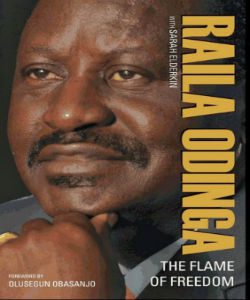
The Flame of Freedom by Raila Odinga ...

KShs5,700.00 KShs5,500.00
The Flame of Freedom chronicles the remarkable journey of one of Africa’s leading politicians and statesmen. Raila Odinga’s life-story mirrors the triumphs and tragedies of Kenya’s struggle to entrench multi-party democracy and the rule of law into the fabric of the State. The book is a testament to his courage, determination and sacrifice in the cause of peace, development and public service.

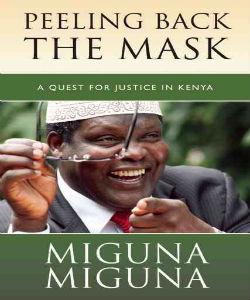
Peeling Back the Mask by Miguna Miguna

KShs4,500.00 KShs4,200.00
Peeling Back the Mask is an insider's account from one of the Kenyan Prime Minister's former adviser detailing instances of corruption and fraud at the highest level of Kenyan government. With massive online and media coverage, this book has become the spearhead of a national campaign to aspire to a new corruption-free Kenya. This remarkable book generated twenty thousand hits on the publisher website within hours of its announcement and Google reports Miguna Miguna is in the top five subjects searched online in Africa.

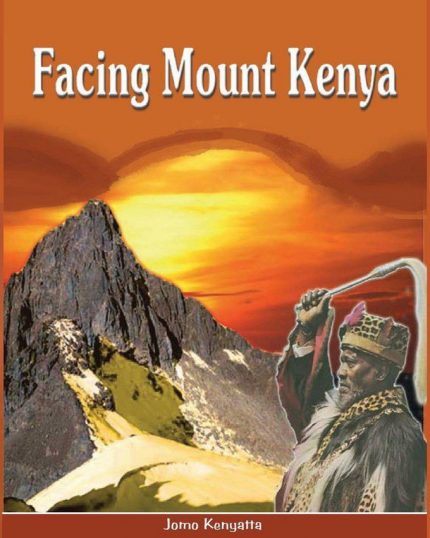
Facing Mount Kenya by Jomo Kenyatta

KShs1,990.00 KShs1,690.00
Brief Summary Facing Mount Kenya An eminent scholar and nationalistic leader presents a study of African tribal life as represented in his own Kikuyu society Full description

Unbowed by Wangari Maathai

KShs2,500.00 KShs2,000.00
Born in a rural Kenyan village in 1940, Wangari Maathai was already an iconoclast as a child, determined to get an education even though most African girls then were uneducated. In her remarkable and inspiring autobiography, she tells of her studies with Catholic missionaries, earning bachelors and master's degrees in the United States, and becoming the first woman both to earn a PhD and to head a university department in Kenya. She tells of her numerous run-ins with the brutal government of Daniel arap Moi and of the political and personal reasons that compelled her, in 1977, to establish the Green Belt Movement, which spread from Kenya across Africa, and which helps restore indigenous forests while assisting rural women by paying them to plant trees in their villages. Maathai's extraordinary courage and determination helped transform Kenya's government into the democracy in which she now serves as Deputy Minister for the Environment and Natural Resources and as a Member of Parliament. Eventually her achievement was internationally recognized in the Nobel Peace Prize, awarded in recognition of her 'contribution to sustainable development, human rights, and peace'. In Unbowed, we are in the presence of a hugely charismatic yet humble woman whose remarkable story carries with it an inspiring message of hope. Hers is an extraordinary story, spanning different worlds and changing times, and revealing what the courage, determination, tenacity and humour of one good woman can achieve; how as small a thing as planting a seedling and watering it can made all the difference in the world.