Showing 241–260 of 276 results

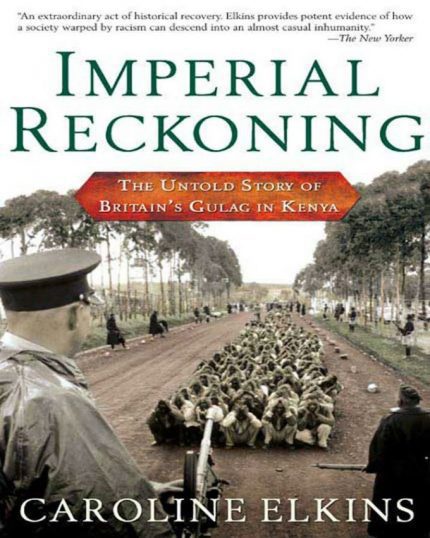
Imperial Reckoning The Untold Story o...

KShs4,000.00 KShs3,800.00
Brief Summary Britain fought in the Second World War to save the world from fascism. But just a few years after the defeat of Hitler came the Mau Mau uprising in Kenya - a mass armed rebellion by the Kikuyu people, demanding the return of their land and freedom. The draconian response of Britain's colonial government was to detain nearly the entire Kikuyu population of one-and-a half-million - to hold them in camps or confine them in villages ringed with barbed wire - and to portray them as sub-human savages. From 1952 until the end of the war in 1960 tens of thousands of detainees - and possibly a hundred thousand or more - died from the combined effects of exhaustion, disease, starvation and systemic physical brutality. Until now these events have remained untold, largely because the British government in Kenya destroyed most of its files. For the last eight years Caroline Elkins has conducted exhaustive research to piece together the story, unearthing reams of documents and interviewing several hundred Kikuyu survivors. Britain's Gulag reveals what happened inside Kenya's detention camps, as well as the efforts to conceal the truth. Now, for the first time, we can understand the full savagery of the Mau Mau war and the ruthless determination with which Britain sought to control its empire. ISBN:9780805080018 Author: Caroline Elkins

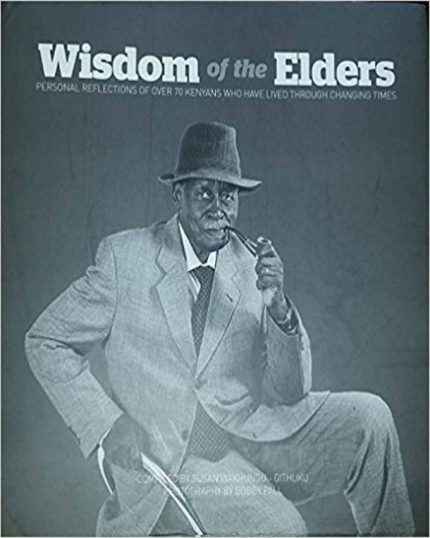
Wisdom of the Elders Personal Reflect...

KShs6,000.00 KShs4,990.00
"'Wisdom of the elders' presents conversations with over 70 elders of diverse background, education level, race and gender. One is none other than immediate former President Emilio Mwai Kibaki. Another is the widow of former freedom fighter Dedan Kimathi, while another is the grandmother of President Barrack Hussein. Others are normal Kenyans living in villages, with no claim to fame or stature. However, all those profiled have lived three score ten years and more and in the words of the Bible, have reached the age of wisdom. Discussing how life was then and how it is today, their disparate views will inform and resonate as they provide a veritable history lesson."--Dust jacket flap.  

Journey of a Lifetime Pilgrimage to M...

KShs3,890.00 KShs3,490.00
This exquisitely beautiful series of books portrays the cultures, landscapes, fauna, flora and history of an individual country with over 150 stunning photographs and well-written and knowledgeable text. Lavishly illustrated, this special pictorial record -- with lucid and absorbing text -- of the pilgrimage known to Muslims as the Hajj brilliantly catches the spirit and devotion of one of the world's great religious experiences. For pilgrims this book will be an enduring reminder of that experience. For non-Muslims it stands as a moving documentary of a testament to faith.  

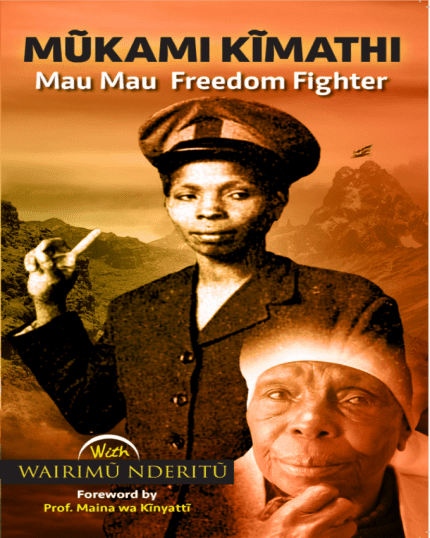
Mukami Kimathi Mau Mau Women Freedom ...

KShs2,500.00 KShs1,890.00
In 1964, a newly independent Kenya was facing the uphill task of reconstructing herself into an African State. That reconstruction was called "Africanisation”. As part of the Africanisation policy, my father, Vincent Nderitu, was posted to Sasumua Dam in Kinangop to take over from the British superintendents who were leaving the country. Not long after he had arrived, he asked the foreman, Harun Musungu, to find out where he could buy milk. That was how he met Mukami Kimathi. My father was thunderstruck. Back home in Tetu, Nyeri, his home and Mukami’s were within a walking distance. My father knew her as a legend. She was a Mau Mau heroine, the wife of Field Marshal Dedan Kimathi. My father began treating Mukami like an elder sister, fixing her fences and installing a water tank for her among other duties. When I was growing up, Mukami was the auntie through whose home we passed on our way from school; the one who made my brothers and I porridge and gave us red plums. She was not a blood relative, but we always thought she was. Mukami and her children, Nyambura and Waceke, would often come to our home in the afternoons and I would read the newspaper to her haltingly. She encouraged me saying; "When you grow up, you will write as well as you read. One day, you should write my karugano ( story) because what is not written is forgotten.” She wanted me to remind Kenyans to take care of the country the Mau Mau fought for. Her lowest point was the 2007-2008 post-election violence and often said: "Because we fought the colonialists, Kenyans now have arrow roots, sweet potatoes, bananas and yam on the table. But instead of eating, they are fighting! I wish this generation of Kenyans from all ethnic communities would rally as we did and this time emerge with, instead of independence like we did, national unity! In her story, Mukami shows us who Dedan Kimathi was as a father and husband. Her experiences provide an important complement to existing written records on Kenya’s history. Mukami Kimathi’s prophesy that I would write her karugan is now a reality. The book, Mukami Kimathi: Mau Mau Freedom Fighter, was launched at the National Museums of Kenya in Nairobi last evening. She was also proved right on another front; my sister Consolata Wakonyo became a pilot.  

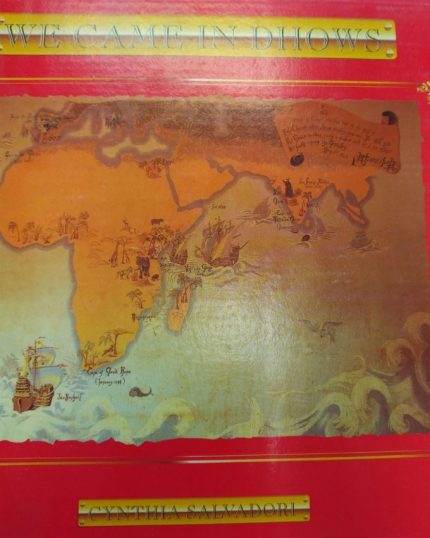
We Came in Dhows by Cynthia Salvadori...

KShs19,900.00 KShs18,500.00
Brief Summary From the introduction: "This volume has been designed as a companion to Through Open Doors: A View of Asian Cultures in Kenya. Although that book describes the historical background of the various Asian communities in Kenya, it has little information about individual people. This book is all about people."

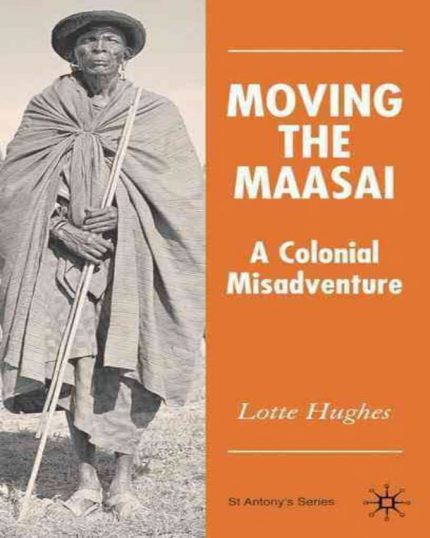
Moving the Maasai A Colonial Misadven...

KShs7,500.00 KShs6,399.00
This is the scandalous story of how the Maasai people of Kenya lost the best part of their land to the British in the 1900s. Drawing upon unique oral testimony and extensive archival research, Hughes describes the intrigues surrounding two enforced moves and the 1913 lawsuit, while explaining why recent events have brought the story full circle.

Coming of Age Strides in African Publ...

KShs2,000.00 KShs1,500.00
The sixteen chapters in this book form a Festschrift in honour of Henry Chakava, the distinguished Kenyan publisher. With a Forward by Tanzanian publisher Walter Bgoya , his long-time collaborator in furthering the causes of independent African publishing, the topics cover the full range of issues in which he has been central over more than forty years. His notable achievements include the first local buy-out of a British multinational publishing house, being one of the founders of African Books Collective and the African Publishers' Network, and participation in international counsels such as the Bellagio Publishing Network. Amongst the contributors are prominent Kenyan authors Ngugi wa Thiong'o, Simon Gikandi and Micere Githae Mugo; Kenyan colleagues from the book trade world; close collaborators in Uganda and Nigeria, and some international colleagues. The greatest range of the contributors are from within Africa. There are subject specific chapters on such issues as training, copyright, publishing in the digital age, and an overview of publishing at Codesria including the vexed issue of marginalisation of African language publishing.  

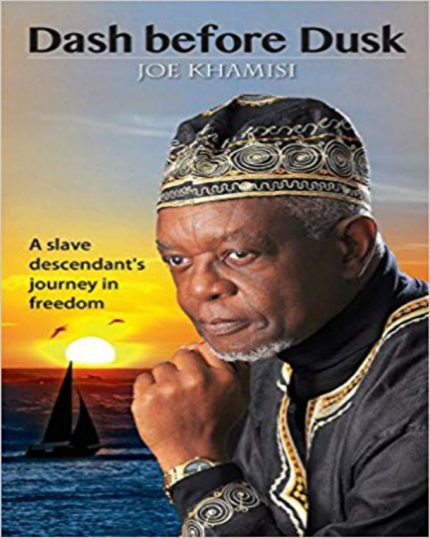
Dash before Dusk: A Slave Descendants...

KShs1,999.00 KShs1,699.00
Brief Summary Dash before Dusk: A slave descendant's journey in freedom is an account of the life and times of Joe Khamisi, a Kenyan slave descendant whose ancestors were taken captive by Arab traders from Nyasaland and Tanganyika, rescued at sea by the British, and settled at Rabai, a slave encampment along the East African coast. Khamisi, a former journalist, diplomat and politician, narrates the significant contributions former slaves and their descendants made in the transformation of Kenya into an independent state and their continuing struggle for recognition.

Looters and Grabbers by Joe Khamisi

KShs3,899.00
This book is about unbridled corruption, bribery and scandalous financial skullduggery in one of Africa's most promising countries, Kenya. It is a narrative of money-laundering, mega scandals, and international wheeler-dealing, and describes how Mafia-like lobbyists have been devouring the country's resources with blatant impunity over four regimes since independence in 1963. It is an important resource for historians, students, researchers, social and political scientists, non-governmental organizations, development and anti-corruption agencies.

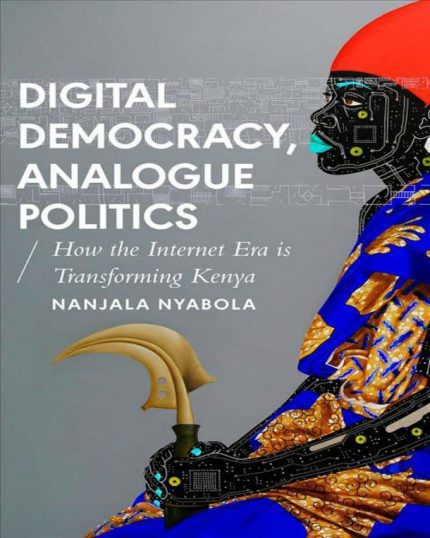
Digital Democracy Analogue Politics H...

KShs3,500.00 KShs3,000.00
From the upheavals of recent national elections to the success of the #MyDressMyChoice feminist movement, digital platforms have already had a dramatic impact on political life in Kenya – one of the most electronically advanced countries in Africa. While the impact of the Digital Age on Western politics has been extensively debated, there is still little appreciation of how it has been felt in developing countries such as Kenya, where Twitter, Facebook, WhatsApp and other online platforms are increasingly a part of everyday life. Written by a respected Kenyan activist and researcher at the forefront of political online struggles, this book presents a unique contribution to the debate on digital democracy. For traditionally marginalised groups, particularly women and people with disabilities, digital spaces have allowed Kenyans to build new communities which transcend old ethnic and gender divisions. But the picture is far from wholly positive. Digital Democracy, Analogue Politics explores the drastic efforts being made by elites to contain online activism, as well as how ‘fake news’, a failed digital vote-counting system and the incumbent president's recruitment of Cambridge Analytica contributed to tensions around the 2017 elections. Reframing digital democracy from the African perspective, Nyabola’s ground-breaking work opens up new ways of understanding our current global online era.  

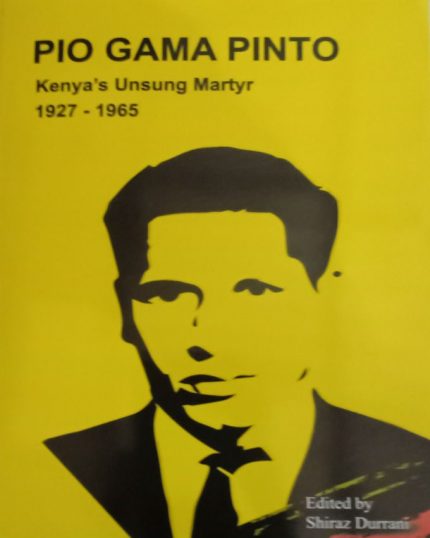
Pio Gama Pinto Untold Life Story of F...

KShs3,000.00 KShs2,800.00
Pio Gama Pinto: Kenya’s Unsung Martyr 1927– 1965 is edited by Shiraz Durrani and includes letters, recollections from family and comrades and newspaper articles. Shortly after independence, Pinto was shot dead outside his Westlands home (where Sarit Centre is). He was 38. That his two-year-old daughter was in the car with him or that it was broad daylight did not deter the assassins -- they were determined to eliminate him. One stark reason to finish him, it has been argued over the years, was the fact that he was a hardcore socialist caught in the cross-hairs of neo-imperialists hell-bent on directing Kenya the capitalistic way. The 2013 report by the Truth, Justice and Reconciliation (TJRC) said his death was motivated by "ideological differences at the heart of the global cold war but also mirrored in domestic politics.” Three men were nabbed in connection with the murder. TJRC said those arrested were "scapegoats” meant to divert attention from the real killers. Fingers were pointed at the government led by Mzee Jomo Kenyatta. One of his closest friends Achieng’ Oneko, on learning about his death, would shout: "No, no, no! Kenyatta must explain! He must explain!” Kenya’s second Vice President Joseph Murumbi, also a dear friend, was the most distraught and in tears after learning of his death (Murumbi is quoted saying that Pintomade him join politics). Two weeks earlier, Pinto had been tipped that there was a plot to murder him alongside Bildad Kaggia and JD Kali due to their "secret anti-Government” activities. But did Kenyatta have a hand in Pinto’s death? Pinto after all, had fought for Kenyatta’s release from detention. The book suggests that his assassination needs to be seen in its "overall national and international” context. Durrani quotes authors who have tied his death to that of slain US black rights activist Malcolm X. The two met when Malcolm visited Kenya in 1959. Pinto was active in the fight against colonialism as well as neo-colonialism in the post-independence struggle and was targeted by colonial Portuguese Goan and British Kenyan administrations. The post-independence ruling elite ultimately silenced him. "The bullets that killed Pinto may have been fired or organized by the former home guards, now the new power brokers, but their foreign backers were the real instigators of his assassination,” writes Durrani. Pinto gave away almost all his money and not even his wife Emma, knew how much he earned. As secretary of the Pan African press, Pinto used to tell his wife that his salary was half of what he earned and gave out the other half to the poor. According to Murumbi, he didn’t own a house and was very reluctant when it was suggested. When Pinto died, poor people from all over went to his house. "It was really pathetic to see elderly Kikuyu weeping for a man who had helped them, a man who was their colleague in detention and a man who had never forgotten them,” said Murumbi. After his death, Murumbi arranged for Emma to immigrate to Canada where they became citizens. Now 90, Emma describes Pinto as a "humanist.” The author says the book has been in the works since the 1980s and blames unfavourable political climate for the cancellations and delays on any work on Pinto.  

The Big Conservation Lie: The Untold ...

KShs4,000.00 KShs3,000.00
The Big Conservation Lie' is a wakeup call focused on a field that has been 'front and center' of many people's hearts and minds in recent years; the conservation of Africa's wildlife. It is a pursuit whose power to inspire is only rivalled by its ability to blind its audience to reality. This book takes the reader through Kenya's conservation 'industry' and the players therein with all their prejudices, weaknesses and commitment to causes, many of which are indistinguishable from their personalities. It is a call to indigenous Africans to claim their place at the table where the management of their natural resources is being discussed and invites well-meaning donors to look beyond the romantic images and detect the possible role of their money in the disenfranchisement of a people.

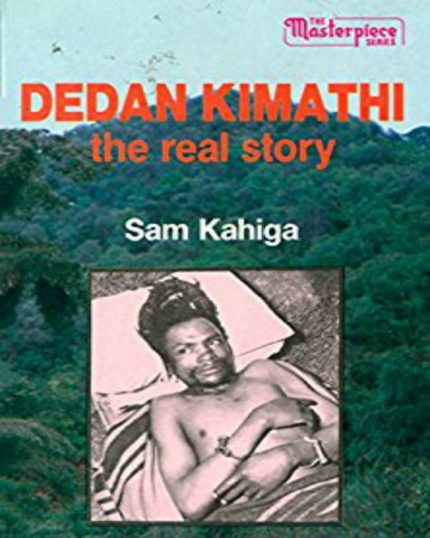
Dedan Kimathi The Real Story

KShs1,200.00 KShs1,000.00
Brief Summary "To most people, Dedan Kimathi, the man who led the Mau Mau movement in Kenya’s forests in the 1950s to win freedom from the British Empire, has remained a shadowy and enigmatic figure. Attempts to portray his heroic and fascinating life have produced varying results, ranging from historical distortion to artistic idealism. ISBN:9789966498151 Author:Samuel Kahiga

Shades of Benga The Story of Popular ...

KShs7,000.00 KShs6,500.00
Brief Summary Shades of Benga: The Story of Popular Music in Kenya delves into the foundations of modern Kenyan music, examining external influences from the English waltz to Afro Cuban Rumba and how they helped mould new music styles across Africa. Rumba was brought to Eastern Africa via the itinerant Congolese musicians Edouard Masengo and Jean Bosco Mwenda who’s intricate guitar-picking styles largely shaped the present Kenyan sound, with the Benga playing a dominant role. Although dozens of works have been published over the years on various characteristics of popular music in Kenya – from conventional folk to hip hop – none captures the history of music and its players as authoritatively as Shades of Benga: The Story of Popular Music in Kenya. An informed study of some literary publications and academic papers on music immediately reveals that the writers, who frequently tend to be foreign ‘experts’, do not seek the opinions of pioneer musicians who helped shape the various genres of music. Their research is largely based on information obtained from sources that are readily available on the Internet but often not easily verifiable. As we wrote this book, we made every possible effort to engage with practitioners directly involved in creating and shaping benga in order to ensure that their collective voice remains the sole critical factor to placing the music in its proper perspective while simultaneously giving the other genres in Kenya their correct definition. We undertook the arduous task of meticulously putting together the content that would faithfully recount the remarkable story of the development of our music in a manner previously not attempted. In an effort to make this 678-page book an easy read as well as eye catching, Shades of Benga: The Story of Popular Music in Kenya features over 400 pictures. " ISBN:6164001943132 Author:Ketebul Music

Dedan Kimathi Speaks We will fight to...

KShs2,500.00 KShs2,000.00
Brief Summary Dedan Kimathi Speaks: We Will Fight to the Last Gun

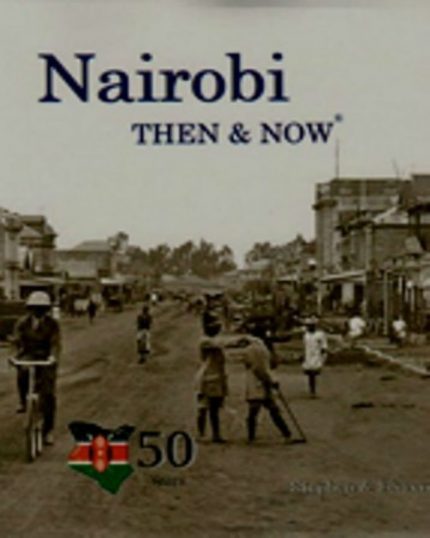
Nairobi then and now 50 years by Step...

KShs2,699.00 KShs2,299.00
Brief Summary This book is a window into Nairobi's past and a reminder of its present. The transformation we see is uneven - some things and places have evolved unrecognizably, while others remain constant. Nairobi is a place of great change. Rapid development and outward expansion is ever reshaping the landscape. Kenya and the UK have been partners in Nairobi's evolutionary journey throughout. Not just government, but also in terms of trade and investment, technology, security, knowledge, and people. The Kenya-UK partnership will continue the journey down this road to the future, towards achieving the Kenyan Government's Vision 2030 and beyond. 50 years in the future many places shown in this book could be long gone. While a few special old places might remain, our vision for the 2063 edition of this book is an ultra-modern Nairobi, a major interchange of the globalized and interconnected world. And a place where we continue to learn from the lessons of the past, as we focus on the promise of the future.

Unbounded by Boniface Mwangi

KShs3,000.00 KShs2,000.00
Brief Summary In just over a decade, Boniface Mwangi has risen from poverty to prominence in Kenya. He is renowned for his powerful photographs and his courageous protests calling for social justice. However, little is known about the man himself. Unbounded is a collection of engaging personal stories that takes us through some of the people, places and events that have shaped Boniface, easily one of Kenya best known photographers and activists. It is a portrait of the child, the man and some of the human, harrowing and even humorous episodes that he has witnessed and photographed. This book tells of the two remarkable women - his mother and grandmother - who influenced his character and inspired his drive to raise awareness about poverty, inequality and corruption. His work as a photo-activist is grounded in social engagement, collective action and the need for justice. This is the story of a man of determination and warmth, a man who lives his life to make a difference. We cannot change the world as individuals. We can only change the world together.

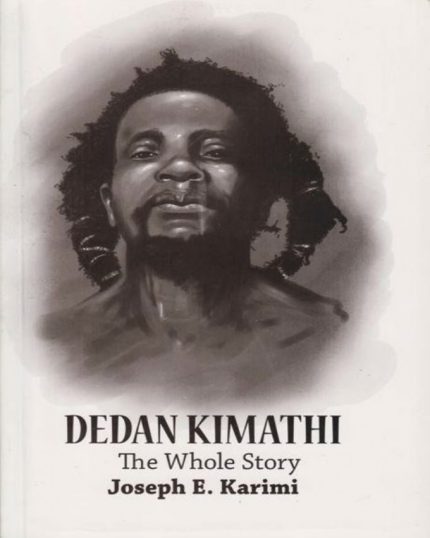
Dedan Kimathi The Whole Story by Jose...

KShs1,800.00 KShs1,490.00
Brief Summary Writer takes an honest look at the life and times of Dedan Kimathi, Kenya’s foremost freedom fighter at his Kimathi Street corner statue in Nairobi, a dreadlocked Dedan Kimathi is a small, frail, bent old man struggling to lift his rifle. That is the public image of the greatest Kenyan ever to live. Old, frail, starved. The sculptors were not helped by a literature that portrays Mau Mau adherents as bloodthirsty, atavistic, rural, poor and illiterate. Which child wants this for his grandpa? Yet image is everything. ISBN:9789966229724 Author:Joseph Karimi

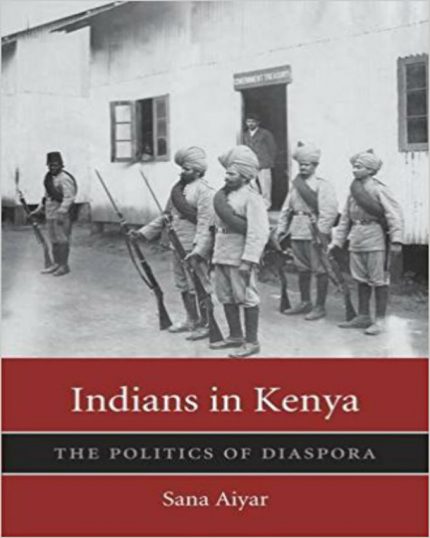
Indians in Kenya The Politics of Dias...

KShs8,000.00 KShs7,299.00
Brief Summary Working as merchants, skilled tradesmen, clerks, lawyers, and journalists, Indians formed the economic and administrative middle class in colonial Kenya. In general, they were wealthier than Africans, but were denied the political and economic privileges that Europeans enjoyed. Moreover, despite their relative prosperity, Indians were precariously positioned in Kenya. Africans usually viewed them as outsiders, and Europeans largely considered them subservient. Indians demanded recognition on their own terms. Indians in Kenya chronicles the competing, often contradictory, strategies by which the South Asian diaspora sought a political voice in Kenya from the beginning of colonial rule in the late 1890s to independence in the 1960s. Indians’ intellectual, economic, and political connections with South Asia shaped their understanding of their lives in Kenya. Sana Aiyar investigates how the many strands of Indians’ diasporic identity influenced Kenya’s political leadership, from claiming partnership with Europeans in their mission to colonize and "civilize” East Africa to successful collaborations with Africans to battle for racial equality, including during the Mau Mau Rebellion. She also explores how the hierarchical structures of colonial governance, the material inequalities between Indians and Africans, and the radicalized political discourses that flourished in both colonial and postcolonial Kenya limited the success of alliances across racial and class lines. Aiyar demonstrates that only by examining the ties that bound Indians to worlds on both sides of the Indian Ocean can we understand how Kenya came to terms with its South Asian minority. " ISBN:9780674289888 Author:Sana Aiyar