Showing 221–240 of 276 results

The History and Culture of the Nandi ...

KShs3,000.00 KShs2,890.00
This book focuses on the definition and application of Nandi customary laws on the backdrop of modern civilization. The author has good knowledge regarding the Nandi culture due to his personal observation including his participation in some of the events recorded in the book. Most of the information was indeed received in the form of oral transmission via stories and myths passed from generation to generation by past ancestors. Nevertheless, ideas may differ due to the influence of Nandi neighbors and immigrants who came in with their different cultures and practices.  

The Kipsigis Talai: Tragedy, Tribulat...

KShs2,500.00 KShs2,190.00
A general walk within Nairobi’s old low-income suburbs of Pumwani, Majengo, Kariokor, Kamukunji, and Shauri Moyo, you could chance upon an old Kalenjin woman, you would be forgiven if you thought she was lost. Still fluent in their particular Kalenjin dialect and with urbane children and grandchildren who scarcely speak her language, the woman represents a dark legacy of removal, displacement, and dispersal dating back to the dawn of colonial rule in Kenya. The old tin-roofed structures, the filthy surroundings and darkened dwellings in the low-income suburbs offer a paradoxical motif of poverty which pursued them there, even as they tried to escape it, in their villages of origin. You will be coming face to face with a bygone era, far removed from us but not entirely so. Their reasons for being there are as varied as their numbers.  

Potent Brews Social History Of Alcoho...

KShs4,500.00 KShs3,199.00
Brief Summary This is the first general history of alcohol and drinking in East Africa. Contributes to an emerging field of African social history in distinctive and innovative ways. Willis's central theme is power - from customary beliefs in alcohol as a symbol of authority and a means of enhancement and privilege, to the use of power in advertising and discourse on the consumption of modern bottled beers and spirits. It is Willis's contention that attitudes towards alcohol have become more similar across the region over time. Willis achieves a full chronological span of nearly two centuries. He lays considerable emphasis upon the late-colonial and post-colonial years; thus bringing out the continuities of these years which historians of eastern Africa have tended to overlook. Oral material from three case study areas in Uganda, Kenya and Tanzania are integrally woven in with archival and newspaper sources, each reinforcing and elaborating the other. ISBN:9780821414767 Author:Justin Willis

Kenyas War of Independence Mau Mau an...

KShs2,500.00 KShs1,890.00
Kenya's War of Independence restores Kenya’s stolen history to its rightful place, stripped of colonial interpretations. In this expanded and revised version of his 1986 booklet, Kimaathi, Mau Mau's First Prime Minister of Kenya, Durrani covers Mau Mau’s resistance to colonialism and neo-colonialism and reflects on its ideology, organisation and achievements. He sees Mau Mau in the larger context of Kenya’s war of independence and looks at the influence of organised, radical trade unions as the engine of resistance, linking economic with political demands of working people. Additional chapters document the post-independence resistance by the underground December Twelve Movement-Mwakenya. Durrani captures the dynamism of transition from colonialism to neo-colonialism: "Imperialism replaced colonialism, African elites replaced White Settlers, neo-colonial government replaced colonial government. Resistance changed from the War of Independence to War of Economic Independence. Worker and peasant resistance is evident once again. History is on the march”.

Journey through Kenya by Mohamed Amin...

KShs7,000.00 KShs6,500.00
Colonized by the British for more than 50 years, ending with independence in 1963, Kenya draws visitors from all over the world to see its fascinating mixture of landscape, wildlife and people. The snows of Mount Kenya astride the equator, sixteen national parks and over 300 miles of silver-sanded coast make Kenya one of the great holiday resorts - with surfing, snorkeling, scuba diving and big game fishing among the attractions which have lured such authors as Hemingway and Ruark. Blending historical fact with anecdote and imagery, and with an introduction by late film star William Holden, Mohamed Amin and Duncan Willetts' 150 color illustrations and Brian Tetley's text paint a vivid and exciting picture of an unforgettable nation.  

Kenya A History Since Independence by...

KShs9,500.00 KShs8,990.00
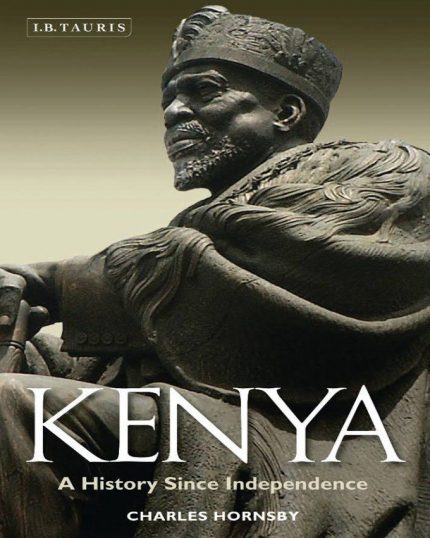
Since independence in 1963, Kenya has survived nearly five decades as a functioning nation-state, with regular elections, its borders intact, and without experiencing war or military rule. However, Kenya's independence has always been circumscribed by its failure to transcend its colonial past: its governments have failed to achieve adequate living conditions for most of its citizens and its politics have been fraught with controversy - illustrated most recently by the post-election protests and violence in 2007. The decisions of the early years of independence, and the acts of its leaders in the decades since - from Jomo Kenyatta, Tom Mboya, and Oginga Odinga to Daniel arap Moi and Mwai Kibaki - have changed the country's path in unpredictable ways, but key themes of conflicts remain: over land, tribalism - including the simmering Kikuyu-Luo rivalries - money, power, national autonomy, and the distribution of resources. The political elite's endless struggle for access to state resources has damaged Kenya's economy and the political exploitation of ethnicity still threatens the country's stability. In this definitive new history, Charles Hornsby demonstrates how independent Kenya's politics have been dominated by a struggle to deliver security, impartiality, efficiency, and growth, but how the legacies of the past have continued to undermine their achievement, making the long-term future of Kenya far from certain.

Forward to Independence by Fitz de Souza

KShs4,500.00 KShs3,500.00
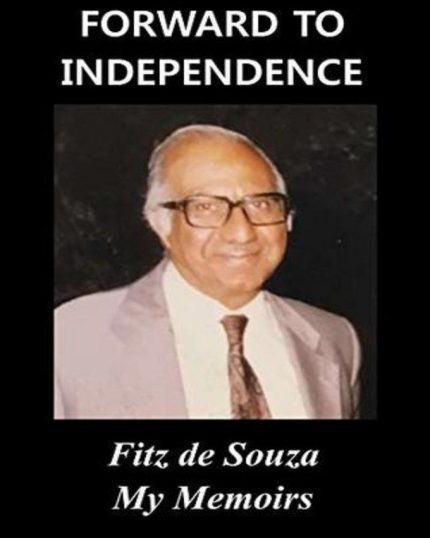
Brief Summary Fitz de Souza's memoirs recount a political story woven through a personal account of migration and integration, with both the hardship and hope that this entailed. His account takes us from Asia to Africa and then to Europe before returning to East Africa where he lived for most of his life. It gives a flavour of lifestyles, moral codes, and politics as they were in early 20th century India, 1930s Zanzibar, and Europe after the war. Most importantly, it takes us to that formative time when the foundations were laid for an independent Kenya, giving the reader a window into those last decades of colonial Africa and those early years of the new nation. The transition was not a peaceful one. It was not a time when the "rule of law" was applied in an undiluted sense. The book gives the inside story of the colonial government's handling of the independence movement including the trial of the Kapenguria six, Jomo Kenyatta and fellow nationalists, and Operation Anvil, the round-up of the Mau Mau. It explains how agreement was eventually reached and compromises found, in particular through the Lancaster House conferences, that enabled a new country to be founded. It portrays the politicians of the time, before independence and after, some hugely idealistic, some charismatic, and others forever enigmatic, many of whose lives in those formative years ended in tragedy. Hilary Ng'weno, a highly regarded Kenyan journalist and editor, provided invaluable support: "I interviewed him many times, so that the interviews, which were recorded, could help him in writing his memoirs. That exercise was an eye opener for me. I had never met an elderly person who could remember so many details about his past. He was remembering personalities and events of the years before and soon after Kenya’s independence in 1963 and Fitz wasn’t just remembering events touching on his life. He was remembering Kenya’s history of which he was one of the great makers. The story you read in this book is not just about Fitz. It is a story about the foundations of the Kenya nation. And it is for that reason that I feel very strongly that Fitz Remedios Santana de Souza will forever remain a legend for many Kenyans." David Steel, The Rt Hon. the Lord Steel of Aikwood, a close personal friend, commented: ”This is a remarkable book, beautifully written and describing in graphic detail the author’s experience of the transition of Kenya from violence-torn colony to independence. Fitz de Souza speaks with authority as one active at the centre from lawyer to Jomo Kenyatta to Deputy Speaker in the Nairobi Parliament. His sketches of the participants are quite breath-taking and moving. His is a life lived to the full – I could not put it down and read it all in just two sittings.” In her introduction, Victoria Brittain, former foreign correspondent for The Guardian in East Africa, writes: "Fitz de Souza is a man of memories from his unique insider/outsider status in Kenya’s struggle for independence from Britain and the early days of its uncharted path under Jomo Kenyatta. A vanished world of optimism and idealism rooted in Goa, Zanzibar, Kenya’s Rift Valley, London’s Inns of Court, and the dying days of British colonial rule in Kenya is unveiled in his subtle understated book. De Souza was Deputy Speaker of the first Parliament of independent Kenya, a trusted friend to Kenyatta and of all the aspiring politicians of the moment, many of whom he knew well from the prisons and courtrooms of violent pre-independence days. He was a man who in those heady days of independent Kenya could have had any ministry he wanted, and was offered any stretches of farmland he wanted by Kenyatta. Unlike so many others he wanted none. The life he chose was a very different one of idealism, matter-of-fact self-sacrifice and extraordinary hard work.”

The Girl who Dared to Dream by Betty ...

KShs2,590.00 KShs2,290.00
The Girl who Dared to Dream is the moving and highly motivational story of Dr. Betty Muthoni Gikonyo, who works exceedingly hard to overcome near insuperable social difficulties in pursuit of her childhood dreams. Her autobiography tells the story of a girl born into rural neediness at a time when education for the girl child is taboo among the Kenyan indigenous communities. Despite numerous roadblocks, social rapids and waterfalls, Betty Muthoni is unrelentingly focused on her dream. She has to become a physician, no matter the odds. She will be a blessing to herself, her family and to very many others. Her story takes you through the complete gamut of human emotions and passions, revealing her as truly human and humane, both in her high and low moments. In the words of Judge Justice Joyce Aluoch, this story is simply a must read, for everybody.  

Soaring Above the Storms of Passion b...

KShs3,800.00 KShs3,390.00
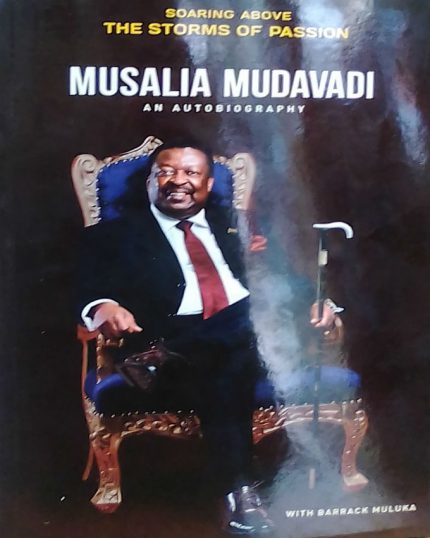
Mudavadi’s memoir, Soaring Above the Storms of Passion, paints Odinga as a man under pressure who was willing to play tricks on both friend and foe to overcome the difficult situation before him. Some of Mudavadi’s claims have also corroborated what had already been written by exiled Kenyan activist Miguna Miguna who was part of Odinga’s team in the aftermath of August General Election. For instance, Mudavadi writes of the plan to have a parallel swearing in ceremony for Odinga. The plan received a lot of opposition from the international community and the ANC Party Leader says one Western country went as far as to cancel Odinga’s visa and that of many of his allies. Mudavadi was in the team of those who believed the Opposition chief should not have been sworn in but Odinga was also under a lot of pressure from the swearing in diehards who included Miguna Miguna, James Orengo, Jimmy Wanjigi, Raila Junior, among others. As the pressure mounted, Mudavadi, in consultation with Raila and the technical team decided to announce the postponement of the swearing in ceremony that had been expected to take place on December 12th 2018. Just before Mudavadi could make the announcement during a press conference at Okoa Kenya office, Raila became untraceable. Unknown to Mudavadi, the Opposition chief was holed up in Jimmy Wanjigi’s house in Muthaiga where the Okoa Kenya TV had planned to film a swearing in ceremony which would then be distributed on the internet. The team in Wanjigi’s house did not know that Raila had already directed the swearing in ceremony to be postponed, and kept asking Mudavadi why he was taking too long to make the announcement. "I learnt from people present that Raila seemed to have been very shocked to watch us on TV calling off the swearing in. He is reported to have said, "Oh they are calling it off?” At this point the swearing in at Muthaiga was called off. Before we left for the Okoa Kenya offices, he had called me to ask why we were taking long to make the announcement,” Mudavadi writes in his new book.

An outline history of Nyanza up to 19...

KShs600.00 KShs450.00
Brief Summary An Outline History of Nyanza Up to 1914 ISBN:9780860703396 Author:William Robert Ochieng

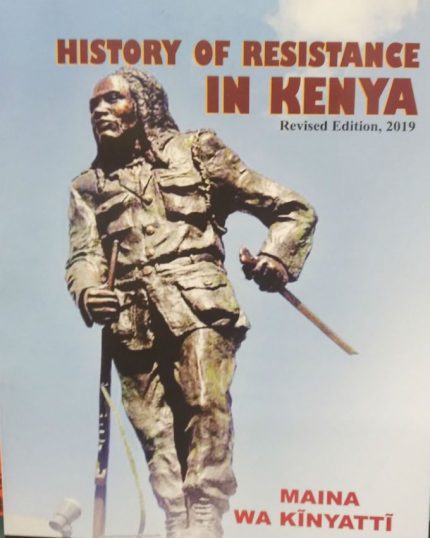
History of Resistance in Kenya by Mai...

KShs3,000.00 KShs2,499.00
Brief Summary This book is a contribution to an interpretation of the history of Kenya from the proletarian point of view. The author has attempted to give the reader in a scientific and accessible form the most important and accurate information on the people of Kenya and their history of resistance. ISBN:9781451504125 Author:Maina Wa Kinyatti

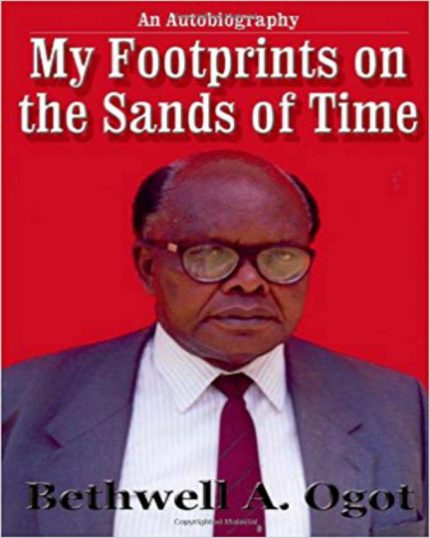
My footprints on the sands of time by...

KShs3,999.00 KShs3,499.00
While Allan Ogot's circuits of influence have been very wide, and while he has participated in conferences and forums around the world, he has never yielded his intellectual and personal anchorage in Kenya - though he has had numerous opportunities to accept distinguished chairs overseas. Extraordinarily, Allan Ogot has sustained his incredible level of service and scholarship through shifting and challenging conditions within Kenya and within Africa, navigating changing economic and political circumstances. His steady hand and persistent commitment to the highest ideals of scholarly engagement and community provide remarkable model for all who are dedicating themselves and will dedicate themselves to Africanist scholarship. This autobiography provides a commentary on the history of Kenya as seen through Allan Ogot's life experiences.

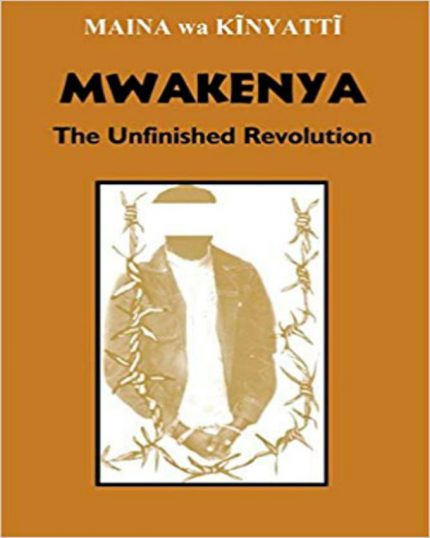
Mwakenya The Unfinished Revolution by...

KShs3,500.00 KShs2,999.00
Mwakenya: The Unfinished Revolution is a 440 page book divided into six parts after the Preface and Introduction. Part One deals with the birth of the Kenyan anti-imperialist underground move- ment in the mid-1970s around the time of the brutal and grisly murder of the populist parliamentarian JM Kariuki by assassins widely believed to be working at the behest of President Jomo Kenyatta. Drawing its inspiration and legacy from the Mau Mau anti-imperialist struggle of the 1950s, the December Twelve Movement (DTM) derived its name from the date Kenya achieved its flag independence in actually the date when the freedom aspirations of Kenyans were betrayed and neocolonialism ushered in. Maina informs his readers that DTM in turn was the child of the clandestine Workers' Party of Kenya. The fledgling underground movement took an anti-imperialist, pro-socialist stance--ideology anchored in Marxism-Leninism Maoist thought. The rest of the sections are taken up by detailed narrative as well as a very frank analysis and critique of the later history of the movement when, according to Maina, it was taken over by what he refers to as "opportunist, sectarians and ultra-leftists" who later transformed it into Mwakenya with at first disastrous consequences. The author chronicles the inner party debate, struggle and rectification, which later led to the expulsion of the "liquid- ationist Dar clique". It's worth reading and re-reading the Part One of the book because it appeared a distinct departure and a fresh gust of air from Maina's previous public views on Mwakenya--especially his last major work, "History of Resistance In Kenya, 1890-2002, where to many Kenyan leftists and observers outside the movement, Maina appeared to endorse some of Mwakenya's gregarious errors through silence. In conclusion, Maina is one of Kenya's foremost historians, one of Kenya's prominent organic intellectuals, one of Kenya's Marxist scholars. He was abducted from Kenyatta University in 1982, interrogated, humiliated and tortured by Kenya's state agents before being hauled to a Kangaroo court on trumped up charges and later flung to dungeons of Kamiti and Naivasha penitentiaries. He was released in 1988.

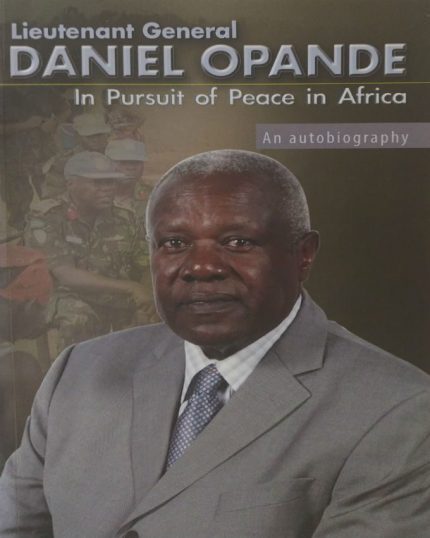
Lieutenant General Daniel Opande In P...

KShs3,500.00 KShs2,890.00
Daniel Ishmael Opande is a retired Kenyan military officer, who rose to the rank of Lieutenant General in the Kenyan Army and has had an illustrious career which included service in leadership positions in various UN peacekeeping mission. Lieutenant-General Opande, was Kenya's Vice-Chief of General Staff following which he took over as the Force Commander of the United Nations Mission in Liberia (UNMIL) in 2003. Since November 2000, he has served with distinction as Force Commander of the United Nations Mission in Sierra Leone (UNAMSIL). General Opande served as Deputy Force Commander with the United Nations Transitional Assistance Group in Namibia (UNTAG) from 1989 to 1990. He represented Kenya in the Mozambican peace process as a facilitator and negotiator between the Mozambican National Resistance (RENAMO) and the Government of Mozambique from 1990 to 1993, and served as Chief Military Observer of the United Nations Observer Mission in Liberia (UNOMIL) from 1993 to 1995. Lieutenant-General Opande is a graduate of Mons Officer Cadet School in Aldershot UK, where he was commissioned as a Second Lieutenant in 1964. He has served as Commandant of the National Defence College, Kenya's highest military institution. General Opande is also a graduate of the British Army Staff College and the United States National Defense University.

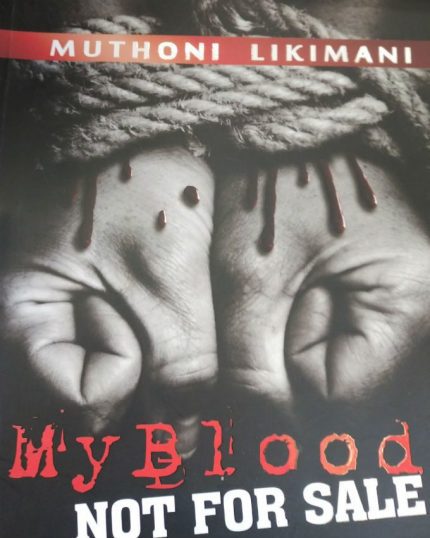
My Blood Not for Sale by Muthoni Liki...

KShs3,000.00 KShs2,799.00
Brief Summary Muthoni Likimani’s latest book, My Blood Not for Sale, is a blistering indictment of the scourge of human trafficking in modern times. It evokes feelings of horror at the various manifestations of modern slavery, which essentially re-enacts the heart-wrenching ordeal that Sarah Baarman underwent in the 19th century. The story of the Southern African woman Sarah Baartman, exported to Europe for public display, is one of the most horrendous instances of human trafficking. The sad story typifies the perpetual victimhood of people of African descent from antiquity to modernity. Sarah Baartman, of Khoikhoi or Hottentot origin, was lured with false promises of prosperity and plucked from her ancestral home in South Africa in 1810 and shipped to England, where she was put on display in freak shows. Why? Her physical features piqued the European gaze and earned her the tag Hottentont Venus, because in the European imagination, she was very unlike the women of the civilized Western world. She was displayed on stage in a cage in shows that earned her European captors a colossal amount of money. She was a slave. All efforts to have her released from the hands of her inhuman and inhumane captors fell flat. She would later be moved to France, where she was made an object of medical and scientific research to satiate a curious European fascination with African female sexuality. But the Hottentot Venus remained a slave in life and death as well. Upon her death, her genitalia, skeleton and brain were put on display in a museum.

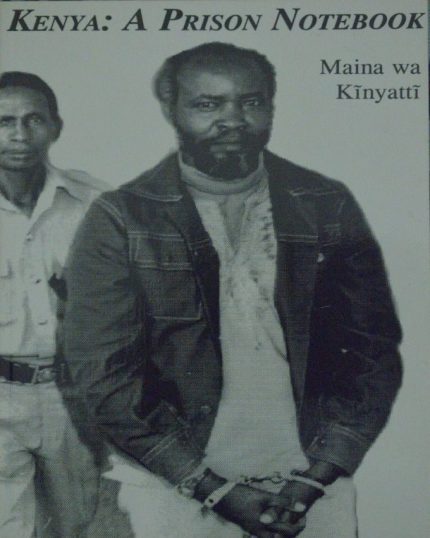
Kenya: A Prison Notebook by Maina wa ...

KShs1,500.00 KShs999.00
Brief Summary Maina wa Kinyatti is one of Kenya’s progressive historians. In June 1982, he was arrested by the Kenyan authoritarian regime, charged with possession of seditious literature and imprisoned. He suffered for six-and-a-half years in the hands of his brutal captors. He was repeatedly held in solitary confinement and was constantly insulted and beaten. He was tortured by vermin, untreated diseases, hunger and loneliness. But he remained defiant, his courage and spirit unbroken.

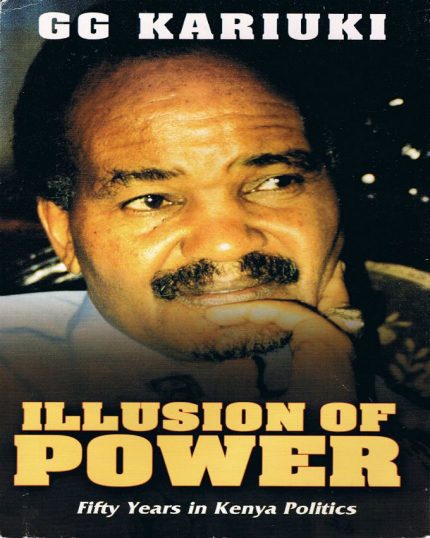
The illusion of power by GG Kariuki

KShs1,690.00 KShs1,390.00
The Illusion of Power: Reflections on Fifty Years in Kenya Politics. Kariki's political participation dates from 1952, when he pledged an oath to the allegiance of the Gikuyu tribe, the Mau Mau movement and the cause of African unity. Post-independence, he gradually progressed to being a political insider, serving in the Kenyan African National Union (KANU) and the Kenyan Government. In 1983 he was expelled from KANU - the only political party. It is from this outsider-perspective, and in this climate of fear and uncertainty, without the desired freedom of association and access to political colleagues of the period of struggle, that he nevertheless here recounts his experiences of half a century in politics. He holds the belief that political evolution is inexorable; and that knowledge about, and reflection on the past is the only way of preventing the tragedy of yet another generation repeating that which they condemned in their predecessors.  

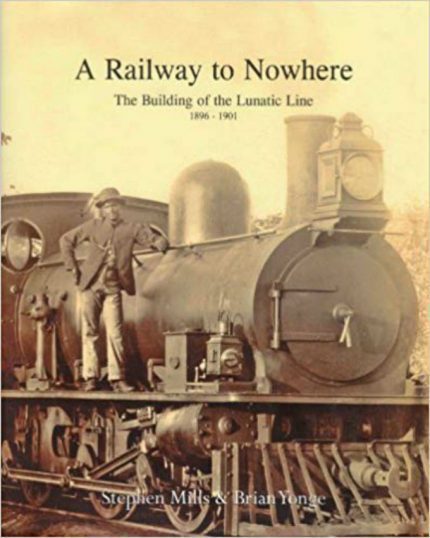
A Railway to Nowhere The Building of ...

KShs6,000.00 KShs5,500.00
Mervyn Hill made a significant contribution to East African studies in his history of the Kenya and Uganda Railway from its conception to the creation of East African Railways and Harbours in 1948. Commissioned in 1942 as a 'plain story' of 'the development of the railway' and published in 1949, 'Permanent Way' has long proved a boon to those interested in the history of Kenya and Uganda. Hill was however at a great disadvantage when writing the official history, most notably because the operation of the 50-year rule prevented him from consulting official documents in the Public Record Office and elsewhere, with the result that he was largely dependent on material published in Parliamentary Command papers. Two other serious drawbacks were that war conditions restricted his sources to published works and other material available in East Africa at the time and that many of the books and articles which authors now have access to had yet to be written. The Railway to Nowhere does not suffer from these disadvantages and provides a well-researched, authoritative account coupled with a pictorial appreciation of the construction of the railway in the early years of its operation. There is no doubt that the construction of the railway was a triumph of human endeavour and resolution over the most daunting obstacles and setbacks: the vision and tenacity of the British government in the face of parliamentary, press and Treasury opposition and criticism; the steadfast leadership of Sir George Whitehouse in coping with an often querulous Foreign Office Committee, and overcoming a series of administrative engineering and personal problems; the inventiveness and skill of surveyor engineers when tackling exceptional professional challenges and the hardiness shown by the working gangs, of all races, in carrying on under adverse conditions of climate and terrain.

Southern Kikuyu Before 1903 Volume 1,...

KShs35,000.00 KShs29,500.00
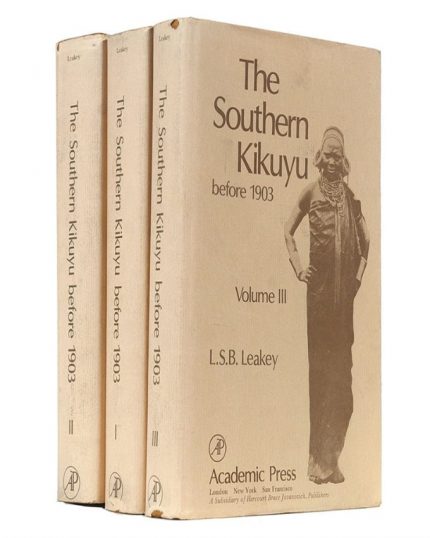
This is a Limited Second Edition, reprint of the three volume book The Southern Kikuyu- before 1903. One of the often unnoticed tragedies of an era of technological advance and improving communications is the passing from living memory of customs, language and beliefs as small insular pockets of culture are overtaken by the sweep of civilization. This impressive book is a complete record of the ways of the Kikuyu people, before and during the period of European influence which accompanied road and railway building and political and economic changes in the late 19th Century. It is the major anthropological achievement of the late L.S.B. Leakey and the culmination of his life-long study of the people among whom he was born and raised. Written in the graceful, readable style characteristic of scholarship in the thirties, it draws on the memories of the Elders whose confidant Dr. Leakey became. A once rich source of tradition and culture, passed on intact from generation to generation, was in danger of drying up without trace – this study, revised and published now, some forty years after it was first undertaken, will secure this fascinating collection of information for posterity now that all the last inheritors of the old Kikuyu way of life are dead. Thanks to Dr. Leakey, and to the collaborators who worked on the manuscript after his death, the Kikuyu mores have been set down – from descriptions of the daily activities of the people, digging, planting, harvesting, care of animals, trading, marriage, tribal raiding, dancing and lawgiving, to the customs connected with sex, linked with rites de passage, religious beliefs, magic and medicine. It is a picture of a successful self-regulating community, in which a strict set of rules and punishments established order and enabled the tribe to survive within its environment. The autonomy of tribal life all over the world is now being eroded, for better or worse. But this well-rounded study, intricate in its mass of detail, yet straightforward in approach, seeks to make no assertions or comparisons with other cultures. It will thus be an important unbiased primary source for social anthropologists, ethnologists and social scientists, as well as being of great value to all those interested in Africa and its history.

The Kenyatta Succession by Joseph Kar...

KShs2,000.00 KShs1,799.00
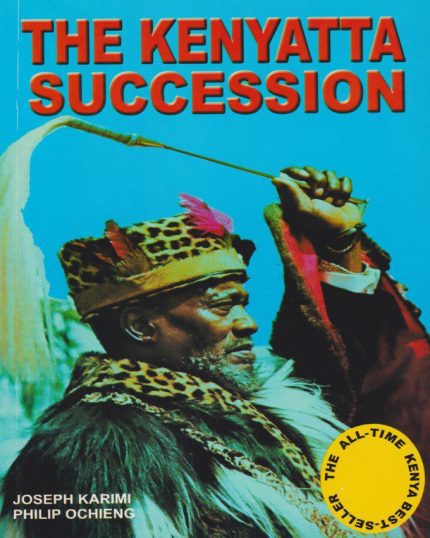
The Kenyatta Succession by Joseph Karimi & Philip Ochieng On the day Mzee Jomo Kenyatta died at Mombasa State House, Coast provincial intelligence officer Bart Kibati received a phone call from the PC Eliud Mahihu. The administrator relayed the sad news to the sleuth and then went ahead to ask him to look for a coffin in which they would transport the head of state’s body to Nairobi. A Kenya Air Force plane was on standby. Kibati, well aware that if he was seen buying a coffin tongues would start wagging, decided to pull a trick out of his cloak and dagger trade’s rule book. He bought not only one but three coffin - including one for a child for a good measure. The retired spy chief reveals in his tell-all biography ‘Memoirs of a Spymaster’ that this was not the first time he was involving himself in subterfuge following a high profile death. Just under a decade earlier he was the provincial director of intelligence when the celebrated Cabinet minister Tom Mboya was assassinated. On the day Mboya’s body was passing through Nakuru, Kibati came up with a hearse decoy.