Showing 61–80 of 276 results

Letter to the Prime Minister

KShs700.00 KShs500.00
In the Letter to the Prime Minister , Justus Siage aims at communicating the view-point of the average Kenyan teenager on social, political and economic issues affecting Kenya Told with a comical twist and in appealing, readable language, the author chronicles challenges of the common man and, tangentially, offers 'viable' solutions to the same. The Letter to the Prime Minister is one young man's portrayal of deep concern for the well-being and future of the country, Kenya. Through this writing, he seeks help from one of the most well-known practicing politician in the country, the prime minister. What others say: "The book is very unique as the author puts through his views by giving personal experiences in a comical manner to drive his point home. It's very interesting and fun to read... it's out of the woods!" - Roy Ndagwa "Kenya is an intriguing country and the myriad of issues faced by the citizen are sure to overwhelm anyone who takes on the task of narrating to an outsider. Justus has done this brilliantly by using witty language, one that appeals to both the young and old." - Beatrice Adera Amollo, Librarian "A young Kenyan speaks in words of his generation and captures challenges facing the nation and contradictory actions of the political class. The Letter to the Prime Minister is timely for it speaks for the majority of Kenyans." - Dr Matunda Nyanchama, Publisher & ICT Professional About the Author Justus Siage is the second born in a family of three children, sandwiched between two adorable ladies - Winnie and Grace. He sat for his Kenya Certificate of Primary Education in 2006 after which he joined high school, which he completed in 2010 having sat for his IGCSE O-levels. He is currently pursuing undergraduate studies in International Business at the Australian Studies Institute (AUSI) in Nairobi. Justus has a deep interest in the business world and economic issues in particular. He is constantly in search of solutions and the way forward for many of the economic, social, environmental and political problems that Kenya faces. Justus aims at improving Kenyans' living conditions, and making life a little more pleasant for the average Kenyan. In many ways, he is an average Kenyan teenager in jeans. However, unlike the average jeans-wearing teen, Justus began writing at an early age, publishing his first book, Billionaire Dropout (Sahel Books Inc. 2009) at the age of 17.

A Historical and Cultural Analysis of...

KShs2,000.00 KShs1,800.00
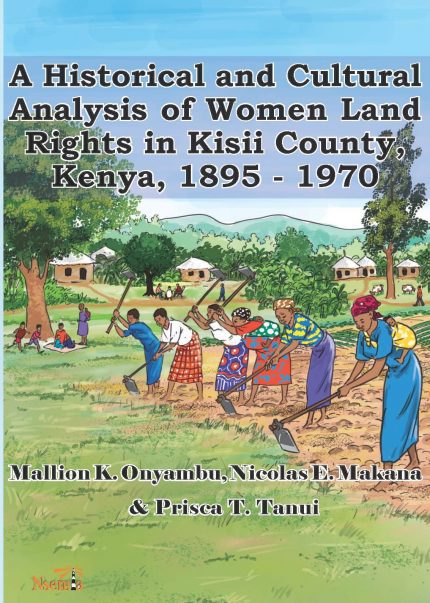
In most societies in different parts of the world, there are gender inequalities in access to productive resources such as land, and other social, economic, and environmental resources that are critical for people’s sustenance. However, in many instances, not much research has been conducted on those critical gender issues and perceived unfairness in the ownership, access, and utilization of critical societal resources, particularly, in Africa in general, and Kenya in particular. In this regard, the need to improve access to land and strengthen women’s land rights in Africa provided the main rationale for undertaking this research, with specific reference to the Gusii of Western Kenya. In particular, the book examines the changing and/or evolving responses of women over time to land access, ownership, control, and usage. Further, the book analyzes the relationship between indigenous land tenure systems and gendered relations; and the effects of colonial land policies on gendered relations. It also examines gender rights with respect to land access and ownership in the post-colonial period in Kisii. Overall, this study provides pertinent information on the following critical issues. What was the relationship between pre-colonial land tenure systems and gender relations in Kisii? What were the effects of colonial and post-colonial land policies on gender relations in Gusii? How did Gusii women respond to gendered land rights and ownership in the pre-colonial, colonial, and post-colonial periods?

My Roots

KShs2,200.00 KShs1,500.00
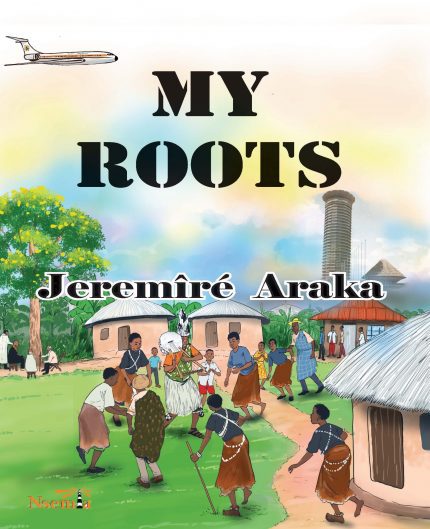
Set among the Abagusii of Kenya at the onset of independence in Africa, Jeremîré Araka’s My Roots is an extraordinary story of postcolonial migration and the characters’ struggle to negotiate their existence in the disparate cultures that assailed Africa during and after colonization. Otenyo, as Chief Ongoro’s first son, is the entitled heir to his father’s throne. Colonialism and Christianity, however, have infected native customs and traditions, especially among those who have attained formal education such as Otenyo and his sisters who have excelled in modern education undergirded by Christian values. Otenyo acquires outstanding credentials in America where he also meets and marries an American woman, jilting a childhood flame whom he had left – so far unknown to him – pregnant with a daughter. All the successes with education and in the professions, however, further alienate Ongoro’s children from their culture and traditions that have stood the test of time and served their society well. Torn between two worlds and rooted in neither, despite their academic success, their family faces mysterious deaths, countless ailments, baffling mishaps and many incomprehensible happenings whose solutions are deemed only explainable in the traditions of their people. This story gives the reader insights into the accounts of an immediate pre- and post-independent African state and the journey that Otenyo had unseeingly set out into the distant lands and upon his return, but now in search of his roots. Will the search for his roots succeed? How will his people, who have long-awaited his return, receive him? What of his estranged fiancé, Keruboo? Readers will conclude this book with a sense of awe-inspiring amusement. What others say about My Roots “My Roots is a searing memoir painted on a leather that is a vivid, revelatory, thoroughly original and compelling account of postcolonial migration and the characters’ battle to negotiate their existence in the mosaic of cultures that assailed Africa during colonialism and immediate post-colonialism.” – Omwami Prof. Dietrick Kaijanangoma, Author, Analyst, Distinguished communication scholar, St. Augustine University of Tanzania, Mwanza.

My Skinny Cow on an Anthill

KShs2,200.00 KShs1,500.00
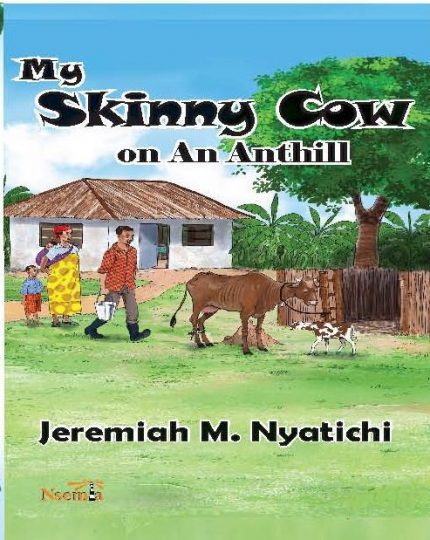
My Skinny Cow, set in rural Seito which slowly urbanizes and brings a new order, is the captivating story of Asiago and Obiri from their youth to old age. The two work hard in school to become heroes and beacons of hope for the future of the community. The reader is taken through a rich cultural heritage, epitomized most vividly by the community’s wedding tradition, which leaves the reader yearning for more. Even with the old striving to preserve the life-long glorious cultural traditions of the people, modernity comes with a price. The emergence of an all-knowing clique of youth threatens the community’s future; what with disputes between the traditional local elite and the youth determined to have their way with the societal changes they desire. Danger lucks either way: the rush to modernize at the expense of tradition and the desire to preserve tradition in the face of modernization. Which way for Seito? You, the reader, tell us! What Others Say “The novel demonstrates imagination and originality in league with the postmodernist canon, which upholds traditional cultures that are misconstrued by modernist views as peripheral and obsolete.” – Dr. Andrew Nyongesa, teacher, author, critic and literary scholar.

Historical Postcards of Kenya by Step...

KShs5,500.00 KShs4,990.00
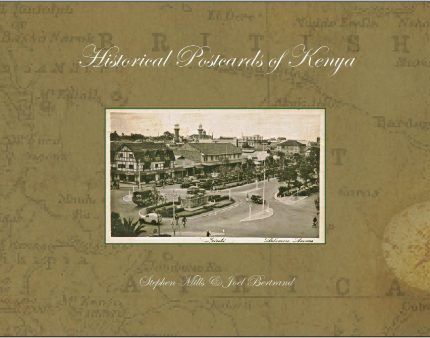
Until recently, there was nothing like Kenya. There was only, from Somalia down to the Comoros like the pearls of a Muslim rosary, a series of harbours of flourishing cities. Most were safely situated on islands where sailors had come since Antiquity from as far as Arabia, India and even China to trade and mix with the local African people. This is where the Swahili civilization blossomed. In 1498, Vasco de Gama was the first European to reach the area. Portugal established a few strongholds along the Coast – Fort Jesus in Mombasa is a vestige of this occupation. Soon followed by other European powers, they became yet another actor of the tumultuous power struggles in the area. In the hinterland, since the beginning of times – other people were living, peacefully or at war with each other, interacting, migrating, developing areas and societies, but with limited contacts with the Coast, and the outside world. The Swahili traders – often called Arabs – had for a long time established links with the people of the mainland. Large caravans would be chartered, going farther and farther into the continent, generation after generation. By the beginning of the 19th Century, they would start from Zanzibar and Bagamoyo on the mainland and reach the heart of Africa, the shores of the lakes known today as Tanganyika and Victoria, forming alliances with local chiefs and kings, even controlling large areas as in Kivu. But the traders from Lamu, Malindi, Gedi, and Mombasa could not go that far. If they dared penetrate deep into the continent, fierce fighting herdsmen would attack the intruders, disband the caravans, and make the business a disaster. Nobody ventured farther than a few hundred miles. The only possible route was from Zanzibar, which was followed by the famous explorers such as Stanley, Livingstone and Burton, who “discovered” Africa, and the missionaries who came in their footsteps. They ventured far and, to their amazement, reached a place which they described as a very developed political entity, the Kingdom of Buganda, on the shores of a lake they named Victoria Nyanza. The United Kingdom developed a strong interest in this area and, in alliance with the Kabaka of Buganda, took control over a large territory surrounding his kingdom, establishing the Uganda Protectorate, by 1894. But there was a problem. As agreed in 1886, the usual route to Buganda, from Zanzibar, meant crossing territories henceforth under German domination, Tanganyika, while Britain had been attributed those stretching inwards north of -1° latitude from the Coast up to the Rwenzori Mountains. To gain free access to its Protectorate, Britain decided to cut across from Mombasa and reach the shores of Victoria Nyanza by train. From there, Uganda would easily be reached by boat. Consequently, they decided to build the Uganda Railway, and construction began in 1896. Earlier, the young Lord Lugard, with a significant number of soldiers, Sudanese, Swahili, etc, completed the survey after the military had previously confirmed its feasibility and secured the new route by establishing a series of forts. The trained manpower to build the railway was imported from India, by the thousands. About a quarter of these often forced immigrants remained in the country. Many friends and relatives joined them, turning into shopkeepers in the new towns and the emerging modern villages. The epic of the Uganda Railway building is narrated in a novel, “The Lunatic Express”, as it was nicknamed. In 1899, as the construction was progressing towards the Lake, it was decided to establish a rail depot and workshops in a place the Maasai called Nairobi, located before the railhead reached the Big Escarpment. The Uganda Railway reached Port Florence, today called Kisumu, in December 1901. Meanwhile, Nairobi was growing, as the main stop on the long railroad. The British government, which had taken responsibility for the territory known as British East Africa (B.E.A.), decided in 1902 to transfer to B.E.A. the region called Kavirondo, bordering the Lake from Mount Elgon to Homa Bay, previously part of the Uganda Protectorate, so that the whole railway line, the backbone of the territory, could be under the same administration. In 1905, it was decided to transfer the capital from Mombasa to Nairobi where the headquarters of the Uganda Railway was already situated. Yet, as can be seen on a map of 1906, the name of Nairobi does not even appear. From there, a new political entity emerged. From the beginning of the century, British East Africa developed and took shape. Many immigrants arrived, white farmers from the U.K. and South Africa, Asians from British India, missionaries covering the country with churches and schools while the local populations, by will or whip, were introduced into the new world modernity. Most of the postcards here date from this period, the first quarter of the 20th century. Many buildings were erected, urban centres appeared and grew, and new ways of life were adopted. Then, in 1920, a major reorganisation was decided, B.E.A. becoming the Kenya colony, but for a strip of land along the Coast, where sovereignty was shared with the Sultan of Zanzibar, and which became the Kenya Protectorate. That part of the British Empire was named after the highest mountain in the country, Mt Kenya. The name was kept after Independence. This is how postcards tell the story of a nation in the making.

50 Years Since Independence. Where is...
KShs5,500.00 KShs4,900.00
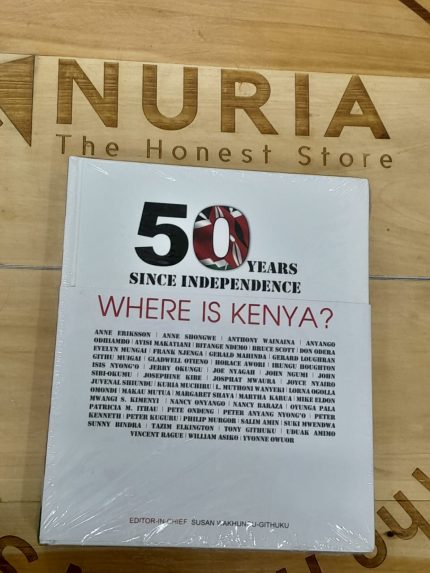
50 Years Since Independence. Where is Kenya by Susan Wakhungu

Mvita: History of Mombasa 12th Centur...

KShs4,500.00 KShs4,390.00
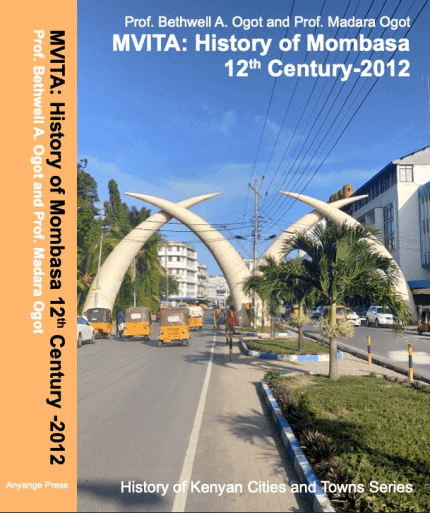
Mvita: History of Mombasa 12th Century - 2012

Kenya Pioneer Chronicles by Stephen M...

KShs7,000.00 KShs6,500.00
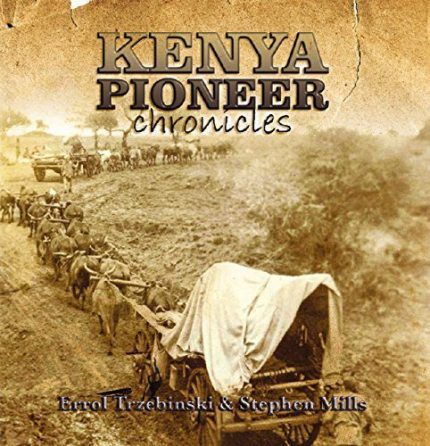
Before the turn of the nineteenth century the white man’s destination in Africa was more often fixed in his mind than on a map; his route was unlikely to be charted; the land mass was known in Europe by three words... ‘The Dark Continent’... Every pioneering family in Kenya had equally fascinating tales to tell and each member of the family many unique anecdotes. Some pioneers were barely in their twenties, holding a common conviction of exchanging an old way life for something new brim-full with promise and opportunity. Their departures from “home” were filled with bustle, panic and a sense of finality; mothers, fiancées and wives mopped their swollen eyes believing that the dark continent would swallow their beloveds whole. A few men did disappear but Africa was honed again and again by those survivors with technical knowhow, who made British East Africa their home. They strove daily for the dream and once achieved, the dream did not last for as long as they had hoped. This book is not for the oldest generation of Kenyans but to show their grandchildren (black and white) and in turn their great, great grandchildren that their forbears took on raw canvas and broke virgin soil.

The Morpho-phology of the Kenyan Swah...

KShs8,000.00 KShs7,500.00
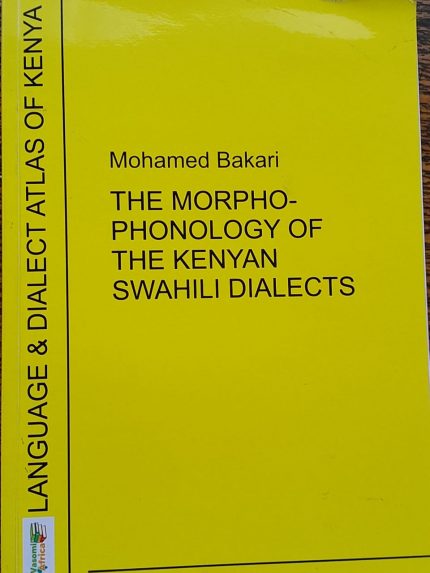
The Morpho phology of the Kenyan Swahili Dialect by Mohamed Bakari

Primer Mar Somo: Kitap Somo Mar Dholuo

KShs1,000.00 KShs890.00
Primer Mar Somo: Kitap Somo Mar Dholuo

Mau Mau in Meru: The Untold Story by ...

KShs3,500.00 KShs3,000.00
Mau Mau: The Untold Story by JST Kamunchuluh

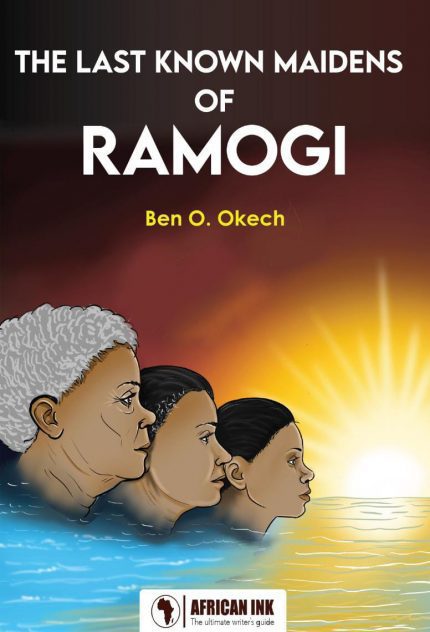
THE LAST KNOWN MAIDENS OF RAMOGI BY B...

KShs650.00 KShs549.00
The last maidens of Ramogi is a myth about how a mysterious lake came to be. Anyango Nyar Gwasi, one of the last maidens of Ramogi—who is the father of the Luo tribe ancestry, wishes that his first wife lives amongst his descendants. Anyango Nyar Gwasi is chosen as a reincarnation of the first wife of Ramogi as many have been before her, some from her own bloodline. She finds out about it in her life’s journey to find a home away from home. It is riddled with folklore fantasy and a venture in the fascinating enclaves of the Luo culture.

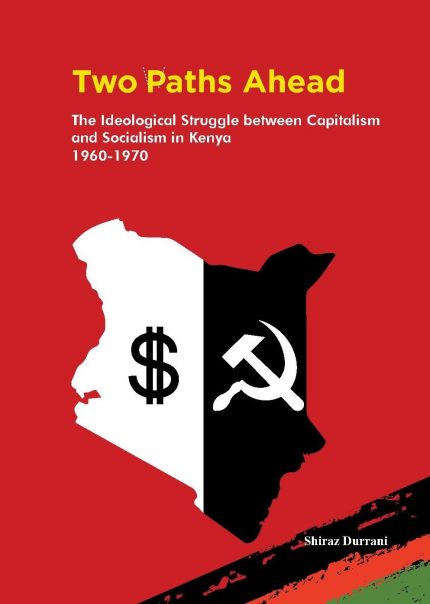
Two Paths A head: The Ideological Str...

KShs3,000.00 KShs2,390.00
Two Paths A head: The Ideological Struggle between Capitalism and Socialism in Kenya 1960- 1670 by Shiraz Durani.

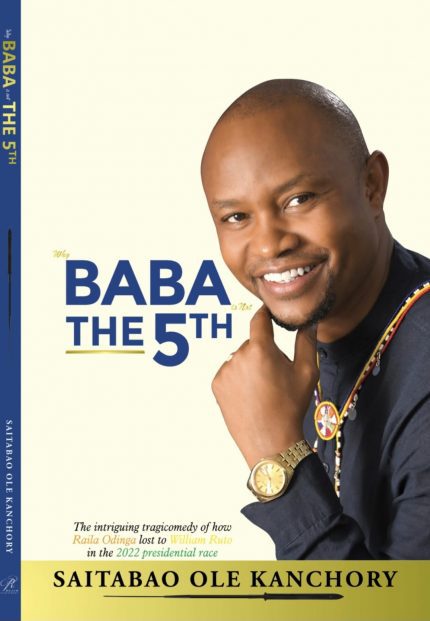
Why BABA is not THE 5TH by Saitabao o...

KShs1,400.00 KShs700.00
A TELL-ALL TALE of the BEHIND THE SCENES INTRIGUES of the 2022 PRESIDENTIAL ELECTION

Referee of a Dirty Ugly Game: In the ...

KShs4,000.00 KShs3,500.00
Referee of a Dirty Ugly Game: In the Theatre of Kenyas Elections - An insiders Account by Ahmed Issack Hassan

Referee of a Dirty Ugly Game: In the ...

KShs3,500.00 KShs3,000.00
Referee of a Dirty Ugly Game: In the Theatre of Kenyas Elections - An insiders Account by Ahmed Issack Hassan. Ahmed Issack Hassan’s memoirs, Referee of a Dirty, Ugly Game, the former chairman of the Independent Electoral and Boundaries Commission (2011-2016) tells of tense moments in Kenya’s first polls under new laws in 2013, including what appeared to be a cyberattack on the system relaying presidential election results, pressure from Raila Odinga’s camp and frantic phone calls from William Ruto — Uhuru Kenyatta’s running mate Voters around the country turned out in large numbers in the 2013 elections, with a record high of 86 per cent, which had never been witnessed before in Kenya. It was indeed a historic election. It was the first general election after the promulgation of the new Constitution (in 2010) and the first time we were having new elective positions. Kenyans were also optimistic after the commission introduced changes, particularly in technology, that things would be much better this time around.

Islam in Kenya: Proceeding of the Nat...

KShs3,000.00 KShs2,500.00
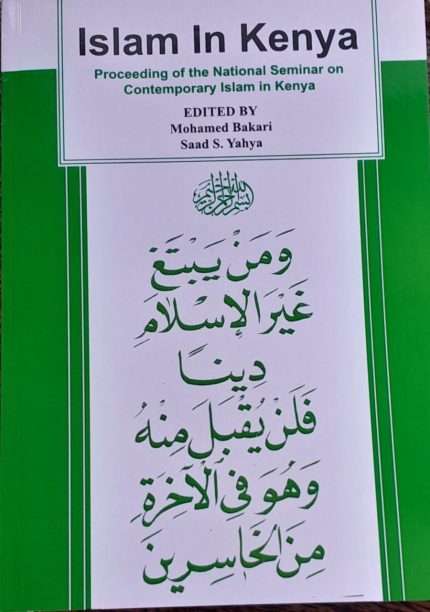
Islam in Kenya: Proceeding of the National Seminar on Contemporary Islam in Kenya by Mohamed Bakari and Saad S. Yahya

Proverbs of the Abagusii of Kenya Chr...

KShs1,000.00 KShs850.00
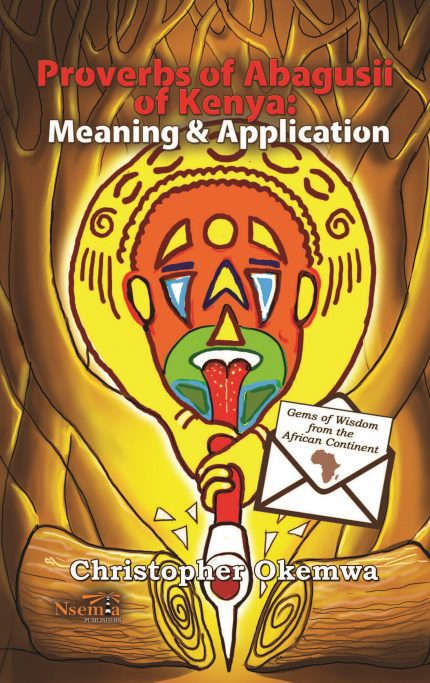
Like most cultural groups, the oral tradition of Abagusii People of Kenya is expressed in, among others, proverbs. These capture lessons and meaning, modulated by time and context as they are passed down generations. Like riddles and metaphors, proverbs express the wisdom of a culture and find apt applications in many situations. Christopher Okemwa's work documents some of the proverbs of Abagusii, their meaning, context in which they are used and application thereof. In this book proverbs are documented in the original form accompanied by English translations in addition to lessons they offer. Embedded in this collection are cultural aspects such beliefs and norms which touch on many aspects of Abagusii society. These aspects include relationships among people, communal life, gender matters, economic issues and many more. Here is what others say "Through careful transcription and translation of proverbs of Abagusii people of Kenya, Okemwa shares knowledge and cultural diversity as a wide range of themes and motifs recur hence multiplying meanings and implications. The proverbs explore both socio-political and socio-economic issues, in addition to fulfilling an aesthetic function." - Gladys Nyaiburi Ogaro, Mount. Kenya University "The uniqueness of this work lies in its use of Ekegusii language to impart culture of Abagusii on the reader through the imagery in proverbs. The advantage of 'hearing' Ekegusii first hand, its literal and deep meaning provided, makes it ideal for students and teachers of language and culture in learning institutions. The work also preserves, for posterity, wisdom that may become extinct with the passage of time." - Margaret Kemunto Obaga, Catholic University, Nairobi, Kenya "Christopher Okemwa's Proverbs of Abagusii of Kenya: Meaning & Application captures and radiates, with delight, the wisdom and beauty in Abagusii proverbs. For Ekegusii speakers, the proverbs nudge one to take a deep look at oneself and see how entertaining they can be. For non-speakers of the language the translation provided gives the poems versatility in content and pervasive reach, thus making them universal pieces of erudition that challenge and encourage. The proverb, 'Naigure ndumo boina ko mosiori ntamanya' (I have heard noise coming from grave diggers, but I am not sure who will be first to be interred), for instance, warns everybody against the barbarism of intransigence and physical confrontations, a universal piece of wisdom. Reading this invaluable book is a sure-fire route to intellectual nourishment. Okemwa has documented answers to our deep-seated questions on our socio- cultural, socio-economic and socio-political queries as captured by Abagusii proverbs. The wisdom therein helps one pry into one's own inadequacies and learn to challenge adversity." - Bwocha Nyagemi Bwocha, St. Augustine University, Tanzania

When a Stranger Called by 13 Kenyan w...

KShs1,200.00 KShs999.00
An anthology of short stories by 13 Kenyan writers. The book covers different themes – murder, revenge, sex, marriage, workplace relationships, romantic relationships, drugs, etc – all summarized into one: HUMAN RELATIONSHIPS.