Showing 221–240 of 485 results

Unscripted – The Great Rat-Race...

KShs4,500.00 KShs4,090.00
Learn How to Free Yourself and Your Life Through the Power of Unscripted Entrepreneurship. By all appearances, Jeff and Samantha Trotman are living the American Dream. But behind the white picket fence, they endure an American Nightmare. With little time for each other, a pile of debt, and Ferrari taste on a Ford budget, the ruse of affluence is killing them. Two respectable jobs and a lovely suburban house paint a pretty picture, but behind the ink the canvas tells another story of two working corpses sharing a broken marriage. And now, with an unplanned pregnancy, they’re facing a mid-life crisis twenty years early. With little time and looming bankruptcy, the Trotmans are forced to face the red-pill truth they long denied: They were alive, but they weren’t living. Determined to resurrect their life and their marriage, the Trotmans plot a rat-race escape—only to find themselves more thickly in it. As tensions rise and hope fades, follow along step-by-step as the Trotmans pivot to a new strategy and a new career: starting a business as entrepreneurs. While they navigate their journey, you’ll learn 120 wealth-building strategies and principles that your mainstream financial guru won’t dare reveal—actionable concepts that will help you profit your way into the Unscripted 1%, an emerging economic class of entrepreneurs who enjoy a lifetime of freedom emancipated from miserly living and Wall Street's "save, pray, and wait" paradigm. Discover how one family escapes the rat-race grind and wins a lifetime of financial freedom, leaving behind the tyranny of meaningless jobs and mediocre living— and how you can too. Here is just a little of what you will learn:
  • The Bad Math Principle: Why most people will never escape the rat-race, much less earn financial freedom.
  • The 1/5/10 Strategy: One this one simple exercise will unearth your ultimate dream life while establishing a decision framework for its reality.
  • The Honeypot Principle: Why the financial media's "invest a $100/mo for 40 years in indexed-funds" narrative is part of the same rat-race scheme, just a different side of the same rigged coin.
  • The Dual Change Strategy: The two divergent sides of change and how it can make you a fortune.
  • The Value Skew Strategy: How to find literally 1000s of business ideas and why you never need to "disrupt" or invent anything new or novel.
  • The Millionaire Payday Strategy: How to spot opportunities to hire yourself and earn an instant millionaire-making income.
  • The Cinderella Principle: Why starting a business based on a cultural trend or a fad is horrible idea.
  • The Perseverance Strategy: Never struggle with motivation again; the four necessary ingredients to tap into unlimited motivation and determination, regardless of the obstacles in your way.
  • The Triangulated Value Strategy: The 3-pronged strategy in maximizing marketing yields while also and over 110+ more!
  • Don’t let the rat-race and its co-conspirators proclaim your life as non-essential. Don’t let the rat-race entice you to save your life away for the promise of an elderly retirement. Don’t let the rat-race lull you into a tedious existence medicated by television, video games, and trivial sporting events. Go Unscripted, escape the rat-race, and discover your happily-ever-after.

Capital without Borders: Wealth Manag...

KShs3,000.00 KShs2,790.00
How do the ultra-rich keep getting richer, despite taxes on income, capital gains, property, and inheritance? Capital without Borders tackles this tantalizing question through a groundbreaking multi-year investigation of the men and women who specialize in protecting the fortunes of the world’s richest people. Brooke Harrington followed the money to the eighteen most popular tax havens in the world, interviewing wealth managers to understand how they help their high-net-worth clients dodge taxes, creditors, and disgruntled heirs―all while staying just within the letter of the law. She even trained to become a wealth manager herself in her quest to penetrate the fascinating, shadowy world of the guardians of the one percent.

The Connector Manager: Why Some Leade...

KShs1,990.00 KShs1,890.00
The best managers work smarter, not harder After conducting a unique global study of over 9,000 people, analysts at the world-leading sales research firm Gartner identified four distinct types of manager. Incredibly, they found one type consistently performs far better than the rest, and it wasn’t the one they were expecting. Connector Managers understand that it’s not enough for managers to just encourage and teach employees themselves, and that providing constant coaching to employees can actually be detrimental to their independent development. Instead, by connecting employees to others in the team or organisation, Connector Managers can help their employees develop a range of skills beyond their own areas of expertise. Although the four types of managers are more or less evenly distributed, employees with Connector Managers perform significantly better than others. Employees with Always-on Managers who provide constant feedback and coaching perform significantly worse. Drawing on their ground-breaking data-driven research, as well as in-depth case studies and extensive interviews with thousands of managers, you’ll discover what behaviours define Connector Managers and how you can use them yourself to build brilliant, powerhouse teams.

The Business of the 21st Century by K...

KShs2,200.00 KShs1,800.00
Explains the revolutionary business of network marketing in context of what makes any business a success in any economic situation. This book lends credibility to multilevel marketing business, and justifies why it is an ideal avenue to make money.

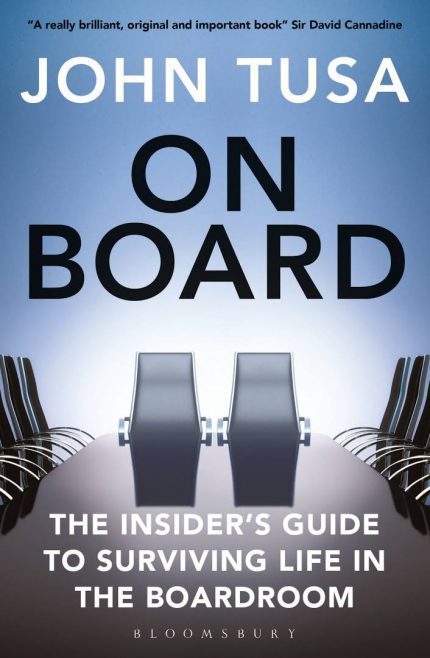
On Board: The Insiders Guide to Survi...

KShs3,500.00 KShs3,000.00
From local councils to international corporations--boards play a critical role in the running and success of any organization, large and small. In Boardmanship John Tusa brings us behind the closed doors of the boardroom to provide an insight into the inner-working of boards. From personal squabbles to financial crises, Tusa shares his experiences serving on a wide variety of international boards such as the National Gallery and American Public Radio. These lively life-stories unveil how boards overcome deep-set divisions, appoint new members and survive in times of chaos. Through these stories, Tusa provides lessons and tips on how to effectively operate in cooperative business environments. Tusa teaches the reader how to overcome the big egos and how to work collaboratively yet effectively. Boardmanship is not only an engaging foray into the vibrant career of John Tusa--it is also a comprehensive guide to anyone who struggles to work on boards or committees--or in any cooperative environment.

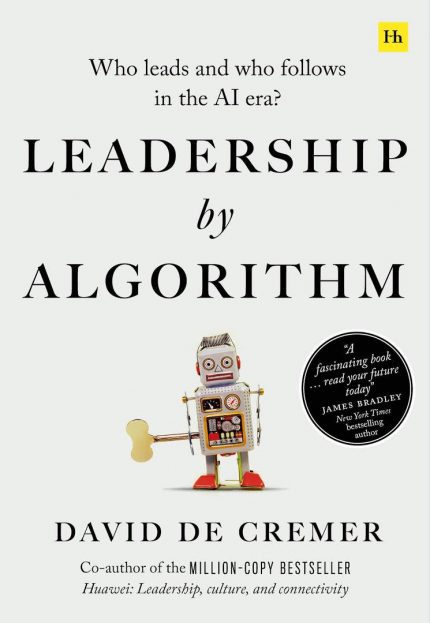
Leadership by Algorithm: Who Leads an...

KShs4,000.00 KShs3,800.00
With artificial intelligence on the rise, the way we run our organisations will change―and drastically. But what exactly will that future look like? And who will take the leading role: machines or people? In this compelling new book, leading management guru David De Cremer identifies the key areas where algorithms will collide with human skills, and assesses the likely outcomes. Will your next boss be a robot? Can an AI boss display the human qualities that define a good leader: compassion, empathy, imagination, ethics, and strategic awareness? Drawing on his own research findings, and those from thought leaders around the world, the author presents fascinating insights into the challenges that an automated work environment poses for organisations of the future.

Managing for the Future by Peter Drucker

KShs8,000.00 KShs7,500.00
At last, a phenomenal new management book by the man that Fortune magazine calls in a class by himself. From an analysis of the end of the welfare state to the present dearth of theories on how and why the U.S. economy works, Drucker's advice is essential to anyone concerned about the future of American economy.

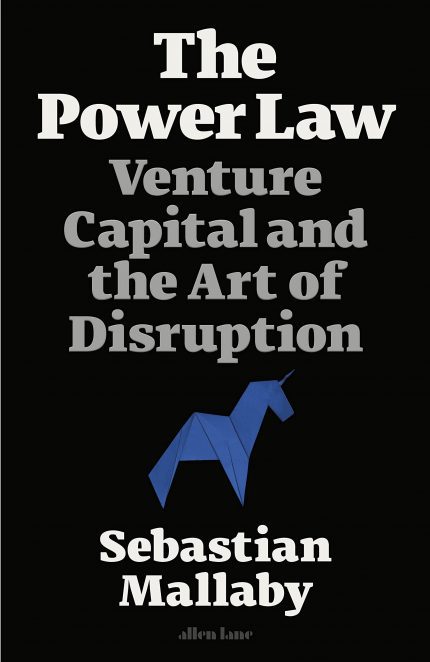
The Power Law: Inside Silicon Valley&...

KShs3,000.00 KShs2,500.00
Innovations rarely come from "experts." Elon Musk was not an "electric car person" before he started Tesla. When it comes to improbable innovations, which are the only innovations that really matter, a legendary tech VC told Sebastian Mallaby, the future can't be predicted, it can only be discovered, through iterative venture-backed experiments. It is the nature of the game that most of these experiments will fail, but a very few successes will succeed at such a scale that they will more than make up for everything else. That extreme ratio of success and failure is the power law that drives the VC sector, and all of Silicon Valley, and the wider tech sector shaped in its image. The implications of that power law echo around the world. In The Power Law, Sebastian Mallaby has parlayed unprecedented access to the most successful venture capitalists of all time - the key figures at Sequoia, Kleiner Perkins, Accel, Benchmark, and Andreessen Horowitz, among others--into a riveting blend of storytelling and analysis that unfurls the whole history of incubating tech companies, in the Valley and ultimately all over the world​. We learn the unvarnished truth, often for the first time, about some of the most iconic successes and infamous disasters in Valley history​, from the comedy of errors that was the birth of Apple to the avalanche of venture money that fostered hubris at WeWork and Uber. We're taken inside the different strategic models of the storied ​venture firms, their virtues and drawbacks​. We see the impact of culture, within VC​ partnerships and the companies they nurture--the importance of consciously tending it, and the disasters that ensue when power is concentrated in the wrong hands. ​VCs' relentless search for power-law ​grand slams brews an obsession with the ideal of the lone entrepreneur-genius, and companies seen as potential unicorns are given intoxicating amounts of power, with sometimes disastrous ​results. On a deeper, more systemic level, the need to make outsized bets on unproven talent ​reinforces bias that ​channels money and support to, e.g., a certain kind of white guy from Stanford, with women and minorities still represented, within VCs themselves and the companies they support, at woefully low levels. This doesn't just have social justice implications: China's homegrown VC sector, having learned at the Valley's feet, is exploding, and in short order now has far more women VC heads than America has ever had. Still and all, Silicon Valley VC remains the most successful and influential incubator of business innovation in the world: it is not where ideas come from so much as where they go, to become the products and companies that create the future. Of all the people in the world gambling on the future, this group has made, not just a science of it, but many competing sciences, and The Power Law, by taking us so deeply inside their game, give us the be​nefit of thinking more keenly about our own future through their eyes.

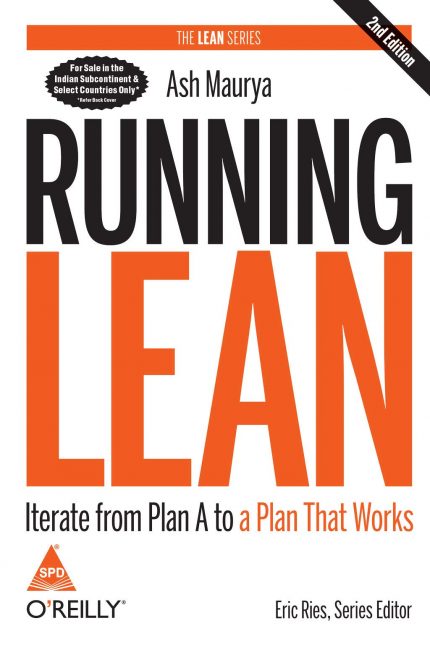
Running Lean: Iterate from Plan A to ...

KShs5,000.00 KShs4,690.00
We live in an age of unparalleled opportunity for innovation. We’re building more products than ever before, but most of them fail—not because we can’t complete what we set out to build, but because we waste time, money, and effort building the wrong product. What we need is a systematic process for quickly vetting product ideas and raising our odds of success. That’s the promise of Running Lean. In this inspiring book, Ash Maurya takes you through an exacting strategy for achieving a "product/market fit" for your fledgling venture, based on his own experience in building a wide array of products from high-tech to no-tech. Throughout, he builds on the ideas and concepts of several innovative methodologies, including the Lean Startup, Customer Development, and bootstrapping. Running Lean is an ideal tool for business managers, CEOs, small business owners, developers and programmers, and anyone who’s interested in starting a business project.
  • Find a problem worth solving, then define a solution
  • Engage your customers throughout the development cycle
  • Continually test your product with smaller, faster iterations
  • Build a feature, measure customer response, and verify/refute the idea
  • Know when to "pivot" by changing your plan’s course
  • Maximize your efforts for speed, learning, and focus
  • Learn the ideal time to raise your "big round" of funding

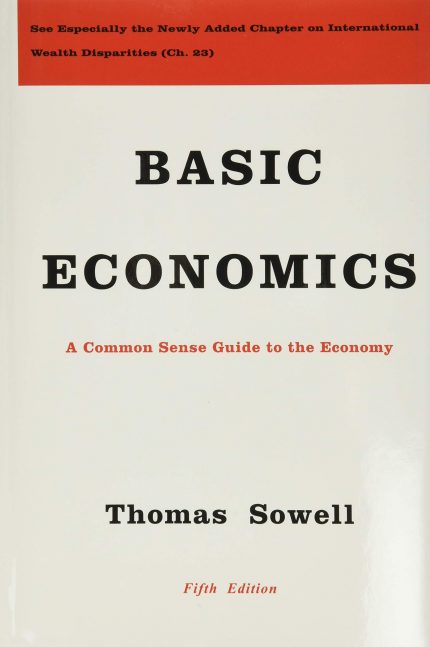
Basic Economics by Thomas Sowell

KShs7,000.00 KShs6,800.00
Basic Economics is a citizen's guide to economics, written for those who want to understand how the economy works but have no interest in jargon or equations. Bestselling economist Thomas Sowell explains the general principles underlying different economic systems: capitalist, socialist, feudal, and so on. In readable language, he shows how to critique economic policies in terms of the incentives they create, rather than the goals they proclaim. With clear explanations of the entire field, from rent control and the rise and fall of businesses to the international balance of payments, this is the first book for anyone who wishes to understand how the economy functions. This fifth edition includes a new chapter explaining the reasons for large differences of wealth and income between nations. Drawing on lively examples from around the world and from centuries of history, Sowell explains basic economic principles for the general public in plain English.

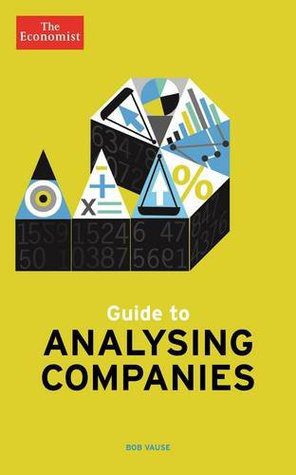
Guide to Analyzing Companies by Bob V...

KShs3,000.00 KShs2,590.00
* How do you tell how well run a company is and how well it is doing? * Which ratios and benchmarks should you use to assess performance? * What can be done to massage company results? * How do you recognise danger signs on the corporate horizon? * How do you compare companies operating in different sectors or even different countries? completely updated and revised fourth edition of this clear and comprehensive guide aimed at anyone who wants to * make sense and practical use of a company's annual report * measure a business against its competitors * judge the creditworthiness of a customer or client * assess the investment potential of a company * put a value on a company.

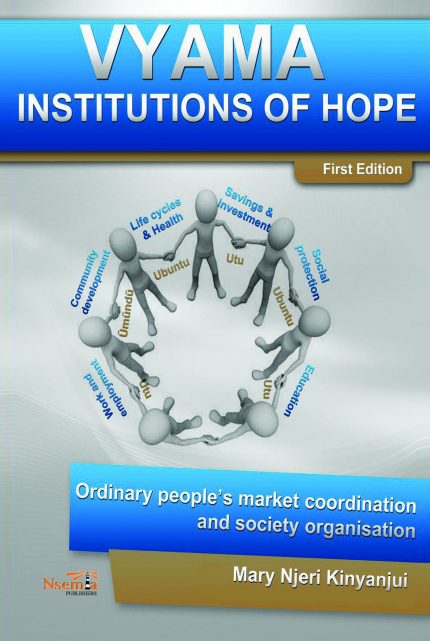
Vyama Institutions of Hope

KShs1,200.00 KShs1,000.00
This book makes the case for informal sector institutions in development theory. Through practical examples and interviews conducted in Kenya, the author captures how ordinary people organize themselves to meet daily economic and development challenges. The author traces how ordinary people (wananchi) use non-mainstream mechanisms in the form vyama (social groups) to enable individual, group and community development. The book offers insights into the evolution of vyama (institutions of hope) and the role these institutions continue to play in realizing economic growth: wealth creation and distribution; investments, social protection; and general community development. The work shows how, despite historical disruptions, modernization and neo-liberal policies, ordinary people creatively borrow from tradition. In the process, they use collective mechanisms for resource mobilization, investment, risk-sharing and shared gains for the common good. The author offers pointers into the future and how the chama concept can become mainstream in a people’s economic development. What others say “The analysis is rigorous. It is highly original, emotive, and an excellent piece of work. It makes a major contribution to our knowledge of the proto-proletariat and the informal sector in the developing world. - How the author beautifully weaves anecdotes from classical African novels into her analysis to reinforce her argument makes this work distinctive and unique.” - Professor MBK Darkoh, University of Botswana “This book is based on real life cases in an area that most scholars have not ventured into. It is a major addition of new findings in the body of knowledge. The presentation is clear, understandable and would appeal to most readers.” –Paul Kamau, PhD, Senior Research Fellow, University of Nairobi “The strength of this book is the way it has managed to present the lives of the ordinary people as not hopeless, but rather the base where future development for Africa could be emerging. The book starts from the grassroots and the development actions and innovations taking place there based on the needs as experienced by the ordinary people, rather than the technical fixes of development experts that follow the books rather than the actual needs of the people being developed.” – Professor Beth Maina Ahlberg, PhD, Professor of International Health, Uppsala University “This book demonstrates how ordinary citizens have discovered the power in tapping into social relations and are proactively solving their own socio-political and economic challenges. It calls for the incorporation of the ordinary citizen in development planning with a view of enabling them to receive value from and add value to the globalization and integration process. For anyone who is interested to see Africa play an important role in the global agenda, this is not a book to be ignored.” -- Josephat Juma, Managing Editor, The African Executive magazine.

Wanjiku in Global Development

KShs1,400.00 KShs1,200.00
In Kenya, the name 'Wanjiku' epitomizes the ordinary person, the citizen, in the context of national socio-political and socio-economic discourse. The origins of the name are in the often heated national debates on political, economic, and rights-related issues where elite self-interest often takes precedence. Aligned with economic thinking from western schools of thought, the elite often acts without much attention to Wanjiku's daily challenges of survival or completely ignores her well-developed modes of survival as a demonstration of a sound system worth paying attention to. In Wanjiku in Global Development: Everyday Ordinary Women Livelihood Economy in Kenya, Kinyanjui captures Wanjiku's systematic approach to day-to-day activities that undergirded participants' and society's common good. Call it the Wanjiku Business Model. In the true spirit of Ubuntu, market women (Wanjiku) operate within a set of unwritten rules that assure optimization of collective good from interacting among themselves and with others. The Wanjiku Business Model is well illustrated through a number of case studies that further capture its sound basis. Kinyanjui presents a major lesson we can learn from Wanjiku, namely: life does not have to be about cutthroat competition, winners and losers!

Herding the Zebra by Peter Otieno

KShs1,050.00 KShs950.00
When Peter Otieno finally left formal employment to focus on his enterprises, he did not anticipate a world of politics and backstabbing the private sector. Leaving an illustrious career in a multinational organization that had systems firmly in place, Peter joins murky world of partnerships and weak governance structures. The book gives a candid account of the behind the scenes shenanigans of partnership that we rarely glimpse in the private enterprises.  Herding The Zebra is a unique corporate memoir; told with honesty that there is no room for sanitizing any elements of the drama that ensues once the idea of barcoding Kenya took root. The ability to make bold decisions, often against the grain and embracing change, however uncomfortable, proves to be the key to success of GSI in East Africa.

Catch Me If You Can: The True Story o...

KShs1,590.00 KShs1,390.00
'I stole every nickel and blew it on fine threads, luxurious lodgings, fantastic foxes and other sensual goodies. I partied in every capital in Europe and basked on all the world's most famous beaches'. Frank W Abagnale, alias Frank Williams, Robert Conrad, Frank Adams and Ringo Monjo, was one of the most daring con men, forgers, imposters and escape artists in history. In his brief but notorious career, Abagnale donned a pilot's uniform and co-piloted a Pan Am jet, masqueraded as a member of hospital management, practised law without a licence, passed himself off as a college sociology professor, and cashed over $2.5 million in forged checks all before he was twenty-one. Known by the police of twenty-six foreign countries and all fifty states as 'The Skywayman', Abagnale lived a sumptuous life on the run - until the law caught up with him. Now recognised as the nation's leading authority on financial foul play, Abagnale is a charming rogue whose hilarious, stranger-than-fiction international escapades and ingenious escapes - including one from an aeroplane - make CATCH ME IF YOU CAN an irresistable tale of deceit.

Rethinking Competitive Advantage: New...

KShs1,690.00 KShs1,390.00
The old ways of creating competitive advantage for your business--such as building moats to ward off competitors--have become dangerous. Giants like Amazon and Alibaba are creating vast new market spaces through a deft combination of tools like machine learning and business savvy that reimagines customer experiences while generating immense shareholder value. A handful of traditional companies, including Fidelity Investments, Walmart, and B2W, have adopted these new approaches to reinvigorate their businesses. Most, however, are stalled--and the clock is running out. In this lively, accessible guide, Ram Charan, bestselling author and adviser to some of the world's top CEOs and boards, redefines competitive advantage for the digital-first era, offering a set of new rules to get ahead: - Create an ecosystem with third-party partners to revolutionize and personalize the customer experience. - Empower teams focused on a single task, building a "social engine" that drives constant innovation, fast execution, and customer satisfaction. - Attract funders who understand the big picture: that beyond a certain scale, major upfront spending will turn into a cash-generation machine. Filled with stories that peek behind the curtain of digital behemoths as well as traditional companies that have transformed their organizations, Rethinking Competitive Advantage offers concrete advice and methods to help you conceive of new market spaces and moneymaking models. Competing against digital giants might seem daunting, if not impossible. The necessary computing power is within any company's reach. By borrowing from these digital winners' playbooks, traditional companies and upstarts alike can gain an upper hand. Whether you're in the C-suite or brainstorming the next big idea from your garage, Rethinking Competitive Advantage is the ultimate guide to creating competitive advantage today.

Small Is Beautiful by E. F. Schumacher

KShs2,290.00
Hailed as an "eco-bible" by Time magazine, E.F. Schumacher's riveting, richly researched statement on sustainability has become more relevant and vital with each year since its initial groundbreaking publication during the 1973 energy crisis. A landmark statement against "bigger is better" industrialism, Schumacher's Small Is Beautiful paved the way for twenty-first century books on environmentalism and economics, like Jeffrey Sachs's The End of Poverty, Paul Hawken's Natural Capitalism, Mohammad Yunis's Banker to the Poor, and Bill McKibben's Deep Economy. This timely reissue offers a crucial message for the modern world struggling to balance economic growth with the human costs of globalization.

A Fork in the Road – Choose Pov...

KShs1,200.00 KShs1,000.00
Have you ever wished you life was different? Do you dream of having a bigger purpose, a better job, or a more meaningful life? Or maybe you have a goal or a dream but don't know His to make it happen? Then this book is for you.

Habits for a Better You by Toroitich ...

KShs500.00 KShs350.00
Title: Habits For A Better You Category: General Inspiration Author: Toroitich Patrick Yegon Target Readers: General Audience Have you ever wondered why some people become successful and accomplished and make the best out of all that they find their hands on whereas others just seem to be destined to never make any meaningful accomplishment? The answer lies in their personal constitutions which is so much constituted by the habits people choose to grow and keep. We make habits then habits make us. Read on to discover the habits that has raised great men and women over time. Allow yourself to grow the ones you lack and strengthen the ones you have so that you may have a better you! Better your best.

Reinventing Government: How the Entre...

KShs2,500.00 KShs1,990.00
A revolution is stirring in America. People are increasingly dissatisfied with the way the government works. This New York Times bestseller is both a call to arms against bureaucratic malaise and a guide for those who want to build something better