Showing 121–133 of 133 results

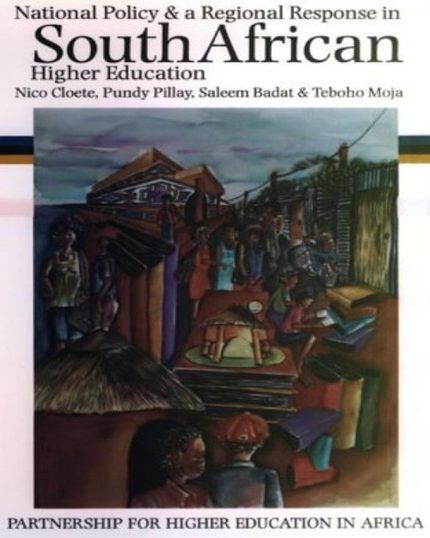
National Policy and a Regional Respon...

KShs4,000.00 KShs3,500.00
The Partnership for Higher Education in Africa commissioned case studies of higher education provision in Tanzania, Uganda, Kenya, Mozambique, Nigeria, Ghana and South Africa, as part of its effort to stimulate enlightened, equitable, and knowledge-based national development, and to provide guides to understanding. A radical reform of South African higher education started after the first democratic elections of 1994: higher education was confronted with social, political and economic demands, of a kind not encountered during the apartheid era. In association with Partnership for Higher Education in Africa

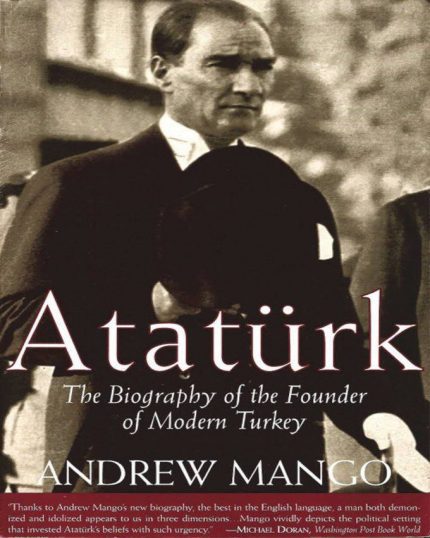
Ataturk: The Biography of the Founder...

KShs3,990.00 KShs3,199.00
Brief Summary Mustafa Kemal Atatürk was virtually unknown until 1919, when he took the lead in thwarting the victorious Allies' plan to partition the Turkish core of the Ottoman Empire. He divided the Allies, defeated the last Sultan, and secured the territory of the Turkish national state, becoming the first president of the new republic in 1923, fast creating his own legend. Andrew Mango's revealing portrait of Atatürk throws light on matters of great importance today-resurgent nationalism, religious fundamentalism, and the reality of democracy.

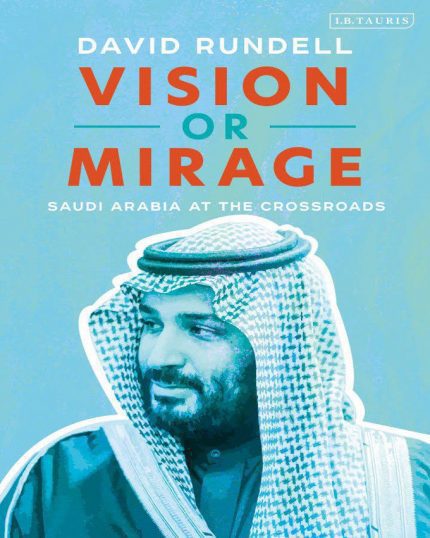
Vision Or Mirage: Saudi Arabia at the...

KShs3,500.00 KShs2,699.00
Brief Summary Something extraordinary is happening in Saudi Arabia. A traditional, tribal society once known for its lack of tolerance is rapidly implementing significant economic and social reforms. An army of foreign consultants is rewriting the social contract, King Salman has cracked down hard on corruption, and his dynamic though inexperienced son, the Crown Prince Mohammad bin Salman, is promoting a more tolerant Islam. But is all this a new vision for Saudi Arabia or merely a mirage likely to dissolve into Iranian-style revolution? David Rundell - one of America's foremost experts on Saudi Arabia - explains how the country has been stable for so long, why it is less so today, and what is most likely to happen in the future. The book is based on the author's close contacts and intimate knowledge of the country where he spent 15 years living and working as a diplomat. Vision or Mirage demystifies one of the most powerful, but least understood, states in the Middle East and is essential reading for anyone interested in the power dynamics and politics of the Arab World.

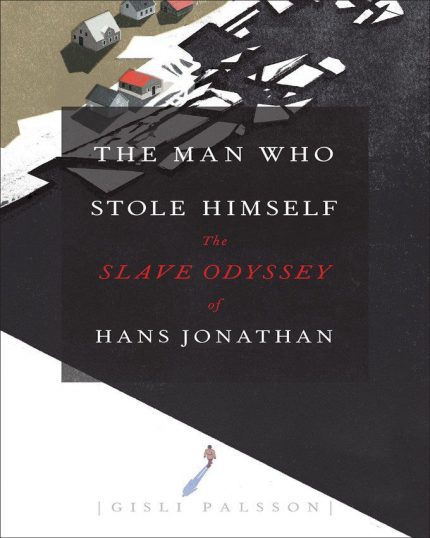
The Man Who Stole Himself: The Slave ...

KShs4,000.00 KShs3,499.00
Brief Summary The island nation of Iceland is known for many things—majestic landscapes, volcanic eruptions, distinctive seafood—but racial diversity is not one of them. So the little-known story of Hans Jonathan, a free black man who lived and raised a family in early nineteenth-century Iceland, is improbable and compelling, the stuff of novels. In The Man Who Stole Himself, Gisli Palsson lays out the story of Hans Jonathan (also known as Hans Jónatan) in stunning detail. Born into slavery in St. Croix in 1784, Hans was taken as a slave to Denmark, where he eventually enlisted in the navy and fought on behalf of the country in the 1801 Battle of Copenhagen. After the war, he declared himself a free man, believing that he was due freedom not only because of his patriotic service, but because while slavery remained legal in the colonies, it was outlawed in Denmark itself. He thus became the subject of one of the most notorious slavery cases in European history, which he lost. Then Hans ran away—never to be heard from in Denmark again, his fate unknown for more than two hundred years. It’s now known that Hans fled to Iceland, where he became a merchant and peasant farmer, married, and raised two children. Today, he has become something of an Icelandic icon, claimed as a proud and daring ancestor both there and among his descendants in America. The Man Who Stole Himself brilliantly intertwines Hans Jonathan’s adventurous travels with a portrait of the Danish slave trade, legal arguments over slavery, and the state of nineteenth-century race relations in the Northern Atlantic world. Throughout the book, Palsson traces themes of imperial dreams, colonialism, human rights, and globalization, which all come together in the life of a single, remarkable man. Hans literally led a life like no other. His is the story of a man who had the temerity—the courage—to steal himself.

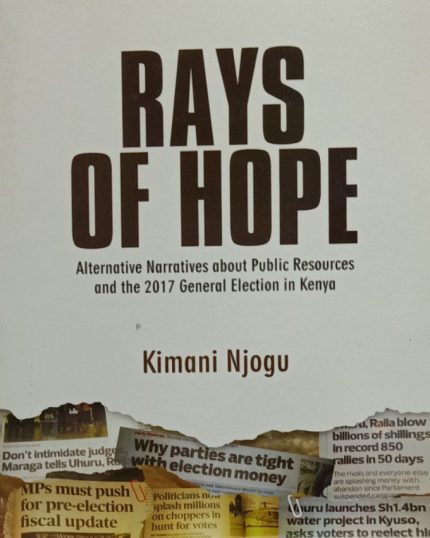
Rays of Hope: Alternative Narratives ...

KShs1,500.00 KShs799.00
Brief Summary Rays of Hope: Alternative Narratives about Public Resources and the 2017 General Election in Kenya by Kimani Njogu

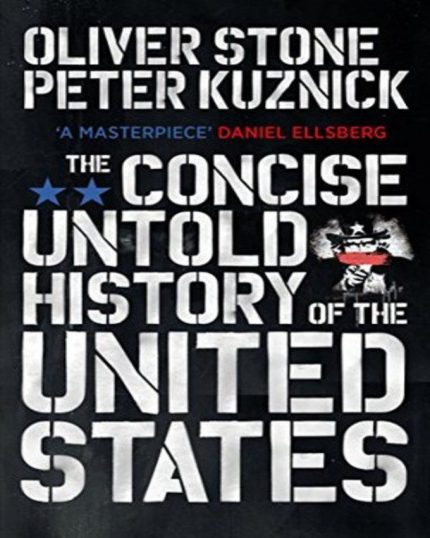
The Concise Untold History of the Uni...

KShs2,500.00 KShs1,399.00
Brief Summary A companion to Oliver Stone’s ten-part documentary series of the same name, this guide offers a people’s history of the American Empire: “a critical overview of US foreign policy…indispensable” (former Soviet president Mikhail Gorbachev); “brilliant, a masterpiece!” (Daniel Ellsberg); “Oliver Stone’s new book is as riveting, eye-opening, and thought-provoking as any history book you will ever read. It achieves what history, at its best, ought to do: presents a mountain of previously unknown facts that makes you question and re-examine many of your long-held assumptions about the most influential events” (Glenn Greenwald). In November 2012, Showtime debuted a ten-part documentary series based on Oliver Stone and Peter Kuznick’s The Untold History of the United States. The book and documentary looked back at human events that, at the time, went underreported, but also crucially shaped America’s unique and complex history over the twentieth century. From the atomic bombing of Japan to the Cold War and fall of Communism, this concise version of the larger book is adapted for the general reader. Complete with poignant photos, arresting illustrations, and little-known documents, The Concise Untold History of the United States covers the rise of the American empire and national security state from the late nineteenth century through the Obama administration, putting it all together to show how deeply rooted the seemingly aberrant policies of the Bush-Cheney administration are in the nation’s past and why it has proven so difficult for Obama to change course. In this concise and indispensible guide, Kuznick and Stone (who Pulitzer Prize-winning historian Garry Wills has called America’s own “Dostoevsky behind a camera”) challenge prevailing orthodoxies to reveal the dark truth about the rise and fall of American imperialism

Why We’re Polarized Book by Ezr...

KShs3,000.00 KShs2,399.00
Brief Summary Discover how American politics became a toxic system, why we participate in it, and what it means for our future--from journalist, political commentator, and cofounder of Vox, Ezra Klein. After Election Day 2016, both supporters and opponents of the soon-to-be president hailed his victory as a historically unprecedented event. Most Americans could agree that no candidate like Donald Trump had ever been elected President before. But political journalist Ezra Klein makes the case that the 2016 election wasn't surprising at all. In fact, Trump's electoral victory followed the exact same template as previous elections, by capturing a nearly identical percentage of voter demographics as previous Republican candidates. Over the past 50 years in America, our partisan identities have merged with our racial, religious, geographic, ideological, and cultural identities. Those merged identities have attained a weight that is breaking much in our politics and tearing at the bonds that hold this country together. In this groundbreaking book, Klein shows how and why American politics polarized around identity in the 20th century, and what that polarization did to the way we see the world and each other. And he traces the feedback loops between our polarized political identities and our polarized political institutions that are driving our political system towards crisis. Neither a polemic nor a lament, Klein offers a clear framework for understanding everything from Trump's rise to the Democratic Party's leftward shift to the politicization of everyday culture. A revelatory book that will change how you look at politics, and perhaps at yourself.

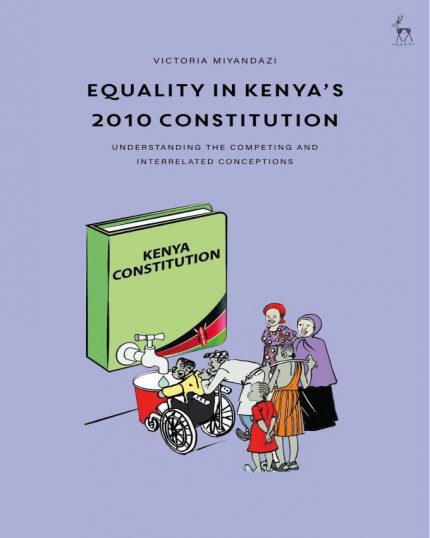
Equality in Kenya’s 2010 Consti...

KShs10,000.00 KShs8,999.00
Brief Summary "This book asks whether there is a coherent conception of equality in Kenya's 2010 Constitution and explores how competing and interrelated ideas of equality in it should be conceptualized, interpreted and applied. Making a significant contribution to the ongoing global conversations on the various understandings of equality, the book illuminates the many ways in which diverse equality guarantees clash, or are interrelated. It also sets out principled approaches on how they can be coherently interpreted to address the myriad inequalities in Kenya. Taking a comparative approach, the book considers how other jurisdictions including the United States, the United Kingdom, Canada, South Africa, India and Botswana have approached the conceptualization, interpretation and application of various equality concepts. The book focuses on important issues such as: - transformative constitutionalism in relation to the interpretation of Kenya's 2010 Constitution; - expanding the list of enumerated grounds for non-discrimination; - affirmative action; - accommodating religious and cultural diversity versus gender equality; - the interrelation between socio-economic rights and status-based equality"--

Sugar Barons: Family, Corruption, Emp...

KShs2,800.00 KShs2,299.00
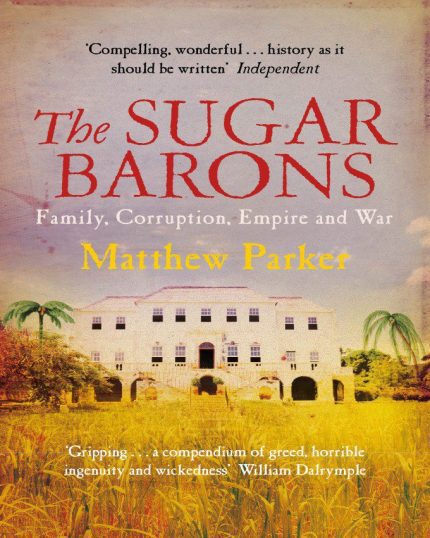
Brief Summary To those who travel there today, the West Indies are unspoiled paradise islands. Yet that image conceals a turbulent and shocking history. For some 200 years after 1650, the West Indies were the strategic center of the western world, witnessing one of the greatest power struggles of the age as Europeans made and lost immense fortunes growing and trading in sugar-a commodity so lucrative it became known as "white gold." As Matthew Parker vividly chronicles in his sweeping history, the sugar revolution made the English, in particular, a nation of voracious consumers-so much so that the wealth of her island colonies became the foundation and focus of England's commercial and imperial greatness, underpinning the British economy and ultimately fueling the Industrial Revolution. Yet with the incredible wealth came untold misery: the horror endured by slaves, on whose backs the sugar empire was brutally built; the rampant disease that claimed the lives of one-third of all whites within three years of arrival in the Caribbean; the cruelty, corruption, and decadence of the plantation culture. While sugar came to dictate imperial policy, for those on the ground the British West Indian empire presented a disturbing moral universe. Parker brilliantly interweaves the human stories of those since lost to history whose fortunes and fame rose and fell with sugar. Their industry drove the development of the North American mainland states, and with it a slave culture, as the plantation model was exported to the warm, southern states. Broad in scope, rich in detail, The Sugar Barons freshly links the histories of Europe, the West Indies, and North America and reveals the full impact of the sugar revolution, the resonance of which is still felt today.

Crude Nation: How Oil Riches Ruined V...

KShs3,000.00 KShs2,699.00
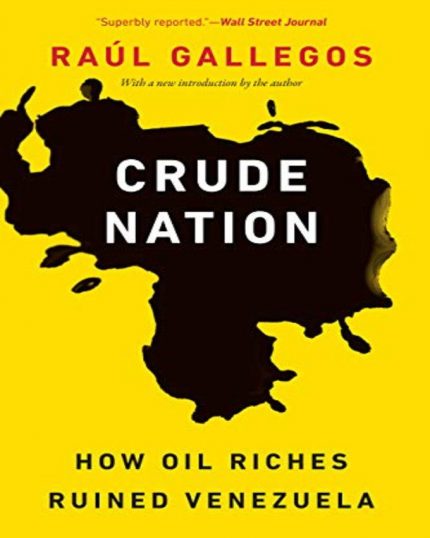
Brief Summary Beneath Venezuelan soil lies an ocean of crude—the world’s largest reserves—an oil patch that shaped the nature of the global energy business. Unfortunately, a dysfunctional anti-American, leftist government controls this vast resource and has used its wealth to foster voter support, ultimately wreaking economic havoc. Crude Nation reveals the ways in which this mismanagement has led to Venezuela’s economic ruin and turned the country into a cautionary tale for the world. Raúl Gallegos, a former Caracas-based oil correspondent, paints a picture both vivid and analytical of the country’s economic decline, the government’s foolhardy economic policies, and the wrecked lives of Venezuelans. Without transparency, the Venezuelan government uses oil money to subsidize life for its citizens in myriad unsustainable ways, while regulating nearly every aspect of day-to-day existence in Venezuela. This has created a paradox in which citizens can fill up the tanks of their SUVs for less than one American dollar while simultaneously enduring nationwide shortages of staples such as milk, sugar, and toilet paper. Gallegos’s insightful analysis shows how mismanagement has ruined Venezuela again and again over the past century and lays out how Venezuelans can begin to fix their country, a nation that can play an important role in the global energy industry.

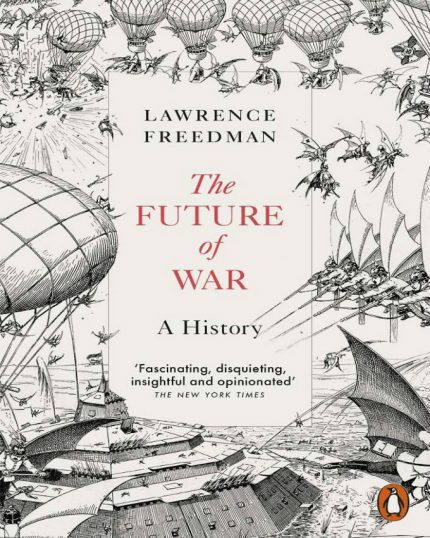
The Future of War A History by Lawren...

KShs1,899.00 KShs1,599.00
Brief Summary In 1912, Sir Arthur Conan Doyle, creator of Sherlock Holmes, wrote a short story about a war fought from underwater submersibles that included the sinking of passenger ships. At the time, it was dismissed by the British generals and admirals of the day not because the idea of submarines was technically unfeasible, but because no one could imagine that any nation would be so depraved as to sink civilian merchant ships. The future of war more often than not surprises us less because of some fantastic technical or engineering dimension but because of some human, political, or moral threshold that we had never imagined wanting to cross. As Lawrence Freedman shows, the future of war has a past and a present. Ideas of war, strategies for warfare and its practice, and organizing principles of war all have rich and varied origins which have shaped the minds of those who conceive the next war. Freedman shows how war can be studied systematically and empirically to provide a firm foundation for enlightened policy. The Future of War—which covers civil wars to as yet unknown nuclear conflicts, proxy wars (real) to the Cold War (not), fashionably small wars to the War to End All Wars (it didn’t)—is filled with insight and fascinating nuggets of military history and culture from one of the most brilliant military and strategic historians of his generation.