




Showing 61–80 of 132 results

Party Politics and Economic Reform in...

KShs6,000.00 KShs4,999.00
Brief Summary In Party Politics and Economic Reform in Africa's Democracies, M. Anne Pitcher offers an engaging new theory to explain the different trajectories of private sector development across contemporary Africa. Pitcher argues that the outcomes of economic reforms depend not only on the kinds of institutional arrangements adopted by states in order to create or expand their private sectors, but also on the nature of party system competition and the quality of democracy in particular countries. To illustrate her claim, Pitcher draws on several original data sets covering twenty-seven countries in Africa, and detailed case studies of the privatization process in Zambia, Mozambique, and South Africa. This study underscores the importance of formal institutions and political context to the design and outcome of economic policies in developing countries.

We Need to Talk About Africa: The Har...

KShs1,890.00 KShs1,399.00
Brief Summary If you boil a kettle twice today, you will have used five times more electricity than a person in Mali uses in a whole year. How can that be possible? Decades after the colonial powers withdrew Africa is still struggling to catch up with the rest of the world. When the same colonists withdrew from Asia there followed several decades of sustained and unprecedented growth throughout the continent. So what went wrong in Africa? And are we helping to fix it, or simply making matters worse? In this provocative analysis, Tom Young argues that so much has been misplaced: our guilt, our policies, and our aid. Human rights have become a cover for imposing our values on others, our shiniest infrastructure projects have fuelled corruption and our interference in domestic politics has further entrenched conflict. Only by radically changing how we think about Africa can we escape this vicious cycle.

How Democracies Die by Steven Levitsk...

KShs2,190.00 KShs1,990.00
Donald Trump’s presidency has raised a question that many of us never thought we’d be asking: Is our democracy in danger? Harvard professors Steven Levitsky and Daniel Ziblatt have spent more than twenty years studying the breakdown of democracies in Europe and Latin America, and they believe the answer is yes. Democracy no longer ends with a bang—in a revolution or military coup—but with a whimper: the slow, steady weakening of critical institutions, such as the judiciary and the press, and the gradual erosion of long-standing political norms. The good news is that there are several exit ramps on the road to authoritarianism. The bad news is that, by electing Trump, we have already passed the first one. Drawing on decades of research and a wide range of historical and global examples, from 1930s Europe to contemporary Hungary, Turkey, and Venezuela, to the American South during Jim Crow, Levitsky and Ziblatt show how democracies die—and how ours can be saved.

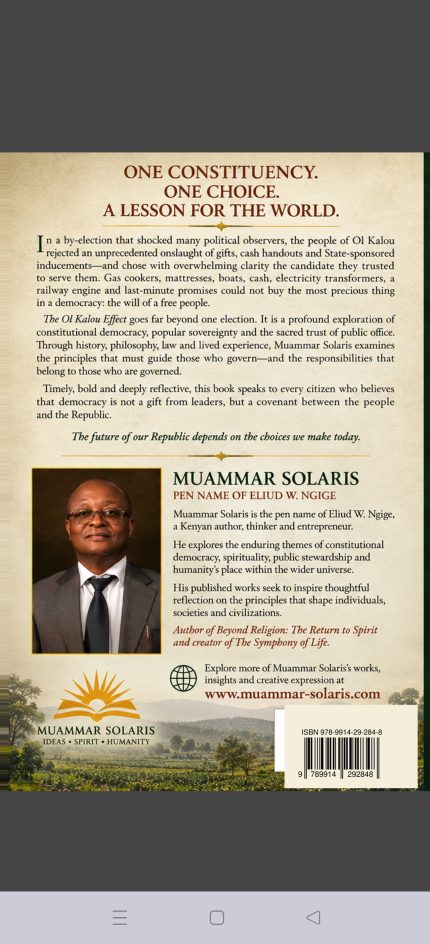
THE OL KALOU EFFECT

KShs2,600.00
A compelling exploration of democracy, popular sovereignty, and the relationship between citizens and the Republic, inspired by the lessons of Ol Kalou. The Ol Kalou Effect challenges readers to rethink political power, public trust, and the responsibility of citizens in safeguarding democracy

The 2027 PlayBook: Winning Power in K...

KShs2,500.00 KShs2,000.00

Elections are often misunderstood. They are presented as moments - events that begin with campaigns and end with results. But in reality, elections are systems. They are shaped long before the first rally and continue long after the final vote is counted.


This book enters the political space at a critical moment in Kenya’s evolution. The rules of engagement are shifting. Voters are more informed, more independent, and more demanding. Technology has redefined communication. Coalitions are fluid. Narratives are contested in real time. In such an environment, success cannot be accidental. It must be designed.


The 2027 Playbook provides that design. It is not a collection of theories. It is a strategic framework - grounded in Kenya’s electoral realities and informed by the lessons of recent cycles. It speaks to candidates, strategists, political parties, and leaders who seek not only to compete - but to win, govern, and sustain influence. In modern politics, victory belongs not to the loudest voice, but to the most disciplined strategy.

Exploring The Nature of law: A journe...

KShs2,000.00
The book's raison d'etre is to promote scholarly discourse and dissemination of knowledge on the nature of law by analyzing the nature and development of jurisprudence. It aims to provide originalin-depthinvestigationsof both theoretical and practical questions on the social foundationsof legal systems and the philosophy of jurisprudence, as well as their applicability in the context of South Sudan. The book traces the social foundations of law by analyzing its relationship with other concepts, its sources and classifications, then concludes with an assessment of the judicial system of South Sudan. The second part of the book is a dissection of the philosophy of jurisprudence. Here, various philosophical perspectives of the law are discussed, including natural law theory, positive law theory, sociological theory, realist theory, conflict theory, Marxism, and African customary law. It provides the reader with a theoretical understanding of the ideologies that shape laws and policies, as well as contemporary problems. This book is an essential read for anyone who interacts and is curious about law and philosophy.

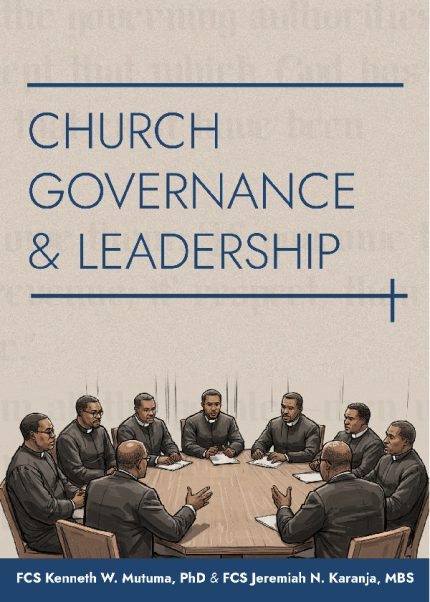
Church Governance & Leadership b...

KShs2,000.00
The Church Governance and Leadership is a practical guide designed to help church leaders, church boards, and congregations manage the holy institution of the church strictly according to Biblical teachings.

One SIM – Card Syndrome By Renj...

KShs2,200.00
In a world obsessed with control, applause, and being the centre of every story, this powerful classic flips the script. It’s not another leadership handbook—it’s a mirror held up to the soul of ambition. With a masterful blend of boardroom intelligence, human vulnerability, and spiritual depth, it challenges leaders, entrepreneurs, and ministers to stop micromanaging destiny and start building systems that breathe beyond them. Witty, hard-hitting, and unapologetically authentic, it explores the loneliness of leadership, the addiction to relevance, and the quiet art of letting go. It teaches that influence without structure is noise, and authority without trust is a ticking time bomb. Written with poetic brilliance and the piercing honesty of lived experience, this book is a clarion call to every visionary who’s ever carried too much alone. As Renja Erambo says, “You don’t prove strength by holding on—you prove leadership by letting go.” This isn’t just a read. It’s a reckoning.

THE VOICES IN THE WILDERNESS

KShs300.00 KShs200.00
  1. The Voices in the Wilderness is a gripping political story that exposes the dark side of leadership in a nation torn by corruption, ethnic manipulation, and youth exploitation. As a fearless generation rises to demand justice, the regime responds with silence and violence — but in the heart of oppression, a new hope is born. This is a powerful tale of resistance, resilience, and the unbreakable spirit of a people refusing to be silenced.

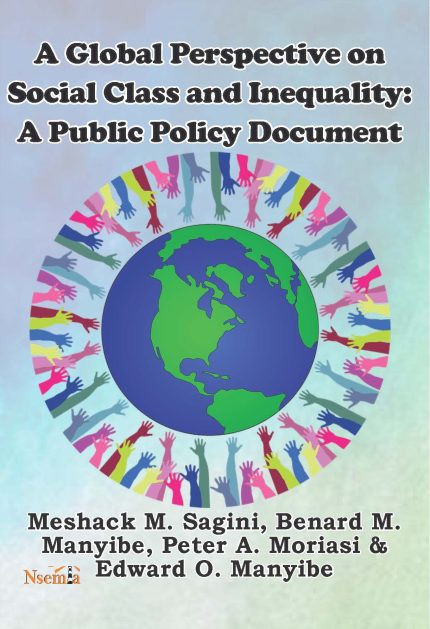
A Global Perspective on Social Class ...

KShs2,300.00 KShs2,100.00
A Global Perspective on Social Class and Inequality: A Public Policy Document is an extensive study of global poverty and inequality with practical examples drawn from the State of Oklahoma, USA. Herein are theories, diverse perspectives on poverty, insights into poverty’s root causes and measures for tackling the global scourge. Poverty is multidimensional, global and national. In the USA, it is shaped by national and state politics. Globally, culprits include poor governance and an entrenched extractive global system. The latter is mediated (in part) by multilateral entities like the World Bank and the International Monetary Fund (IMF), and multinational business malfeasance. What Others Say “This extraordinary document is an elaborate, synergistic, and interdisciplinary synthesis whose historical, comparative, and cosmopolitan outlook makes it attractive to the reading public across the world. The book makes important contributions to the understanding of poverty.” Toyin Falola, University Distinguished Teaching Professor, University of Texas, Austin, and Mwalimu Chair of Modern African Studies, Benue State University, Nigeria. “Sagini and team have employed a postmodern style to write an original classic whose assemblage of interrelated scholarly essays is creatively, harmoniously, and magnificently woven together at the conclusion.” Maxwell Owusu, Distinguished Professor, University of Michigan, Ann Arbor.

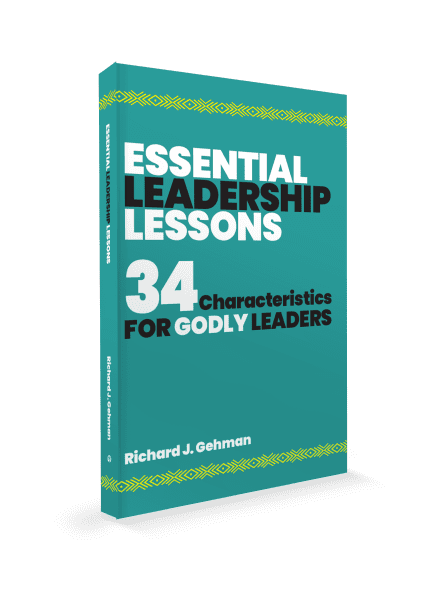
Essential Leadership Lessons: 34 Char...

KShs1,350.00 KShs1,200.00
Essential Leadership Lessons will help you develop the character and competence to lead well in God’s Kingdom. You’ll learn from the practical experience of more than 175 Christian leaders in Africa as you’re equipped to follow in the footsteps of the ultimate leader: Jesus himself. Author: Oasis International

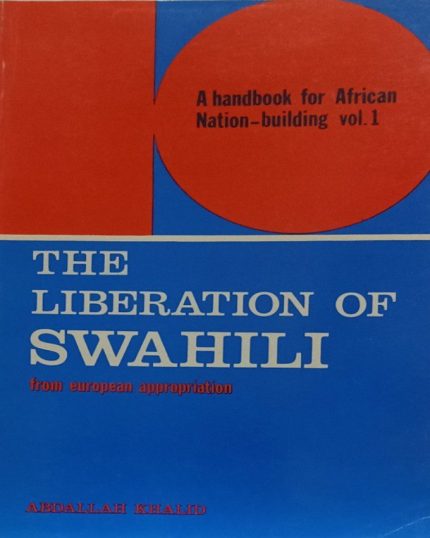
The Liberation of Swahili : A handboo...

KShs1,000.00 KShs950.00
The Liberation of Swahili : A handbook for African Nation Building Vol 1 by Abdalla Khalid.

Making the World Safe for Dictatorshi...

KShs6,000.00 KShs5,900.00
Authoritarian states try to present a positive image of themselves abroad. They invest in foreign-facing media, retain public relations firms, and showcase their successes to elite and popular foreign audiences. But there is also a darker side to these efforts. Authoritarian states try to obscure or censor bad news about their governments and often discredit their critics abroad. In extreme cases, authoritarian states intimidate, physically attack, or even murder their opponents overseas. This book is about how authoritarian states manage their image abroad using both “promotional” tactics of persuasion and “obstructive” tactics of repression. They adopt these practices to enhance their internal and external regime security or, put differently, to make their world safe for dictatorship. To substantiate these arguments, the book uses a diverse array of data, including fieldwork and author interviews, cross-national data on extraterritorial repression, examination of public relations filings with the United States government, analysis of authoritarian propaganda, media frequency analysis, and speeches and statements by authoritarian leaders. It builds a new data set—the Authoritarian Actions Abroad Database—that uses publicly available information to categorize nearly 1,200 instances in which authoritarian states repressed their critical exiles abroad, ranging from vague threats to confirmed assassinations. It also selects three cases for closer examination to understand in more detail how authoritarian states manage their image abroad using combinations of promotional and obstructive tactics: China, Rwanda, and North Korea. The result is a new way of thinking about the international dimensions of authoritarian politics.

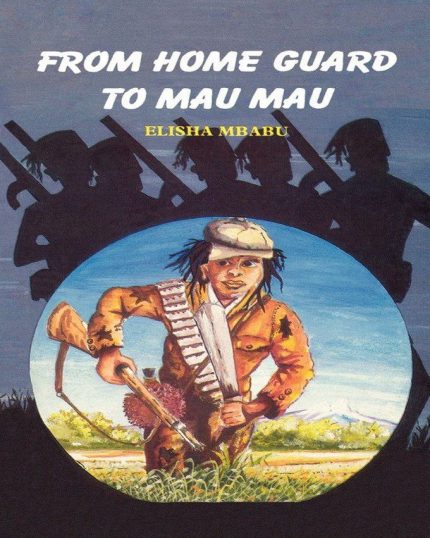
From Home Guard to Mau Mau by Elisha ...

KShs1,000.00 KShs800.00
This is a fictional account of a young Kenyan man who is the trusted home guard and bodyguard of a white farmer. The fight to free Kenya of the colonialists rule is on, and the Mau Mau are the spearhead. The young man secretly joins the Mau Mau, but his loyalties are in conflict and each part of his life now involves betrayal of an other. The life story is one of survival, betrayal, anguish and vengeance.

Shattered: Inside Hillary ClintonR...

KShs2,500.00 KShs1,899.00
It was never supposed to be this close. And of course she was supposed to win. How Hillary Clinton lost the 2016 election to Donald Trump is the tragic story of a sure thing gone off the rails. For every Comey revelation or hindsight acknowledgment about the electorate, no explanation of defeat can begin with anything other than the core problem of Hillary's campaign--the candidate herself. Through deep access to insiders from the top to the bottom of the campaign, political writers Jonathan Allen and Amie Parnes have reconstructed the key decisions and unseized opportunities, the well-intentioned misfires and the hidden thorns that turned a winnable contest into a devastating loss. Drawing on the authors' deep knowledge of Hillary from their previous book, the acclaimed biography HRC, Shattered will offer an object lesson in how Hillary herself made victory an uphill battle, how her difficulty articulating a vision irreparably hobbled her impact with voters, and how the campaign failed to internalize the lessons of populist fury from the hard-fought primary against Bernie Sanders. Moving blow-by-blow from the campaign's difficult birth through the bewildering terror of election night, Shattered tells an unforgettable story with urgent lessons both political and personal, filled with revelations that will change the way readers understand just what happened to America on November 8, 2016.

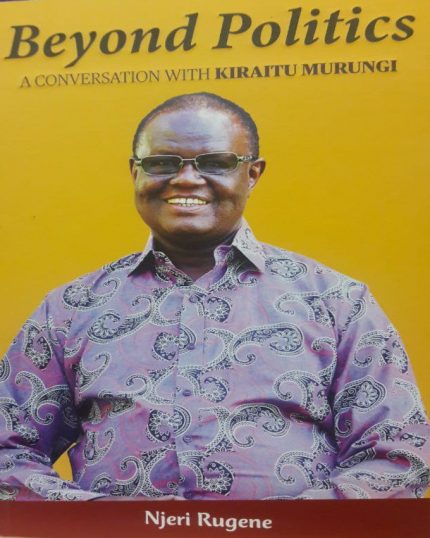
Beyond Politics: A conversation with ...

KShs1,899.00 KShs1,699.00
Brief Summary Beyond Politics: A conversation with Kiraitu Murungi by Njeri Rugene

African Civilizations: An Archaeologi...

KShs5,500.00 KShs4,499.00
Brief Summary This new revised edition of African Civilizations re-examines the physical evidence for developing social complexity in Africa over the last six thousand years. Unlike the two previous editions, it is not confined to tropical Africa but considers the whole continent. Graham Connah focuses upon the archaeological research of two key aspects of complexity, urbanism and state formation, in ten main areas of Africa: Egypt, North Africa, Nubia, Ethiopia, the West African savanna, the West African forest, the East African coast and islands, the Zimbabwe Plateau, parts of Central Africa and South Africa. The book's main concern is to review the available evidence in its varied environmental settings, and to consider possible explanations of the developments that gave rise to it. Extensively illustrated, including new maps and plans, and offering an extended list of references, this is essential reading for students of archaeology, anthropology, African history, black studies and social geography.

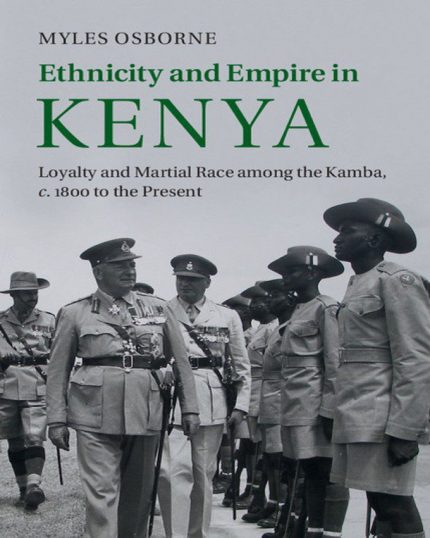
Ethnicity and Empire in Kenya: Loyalt...

KShs4,500.00 KShs3,699.00
Brief Summary This book is about the creation and development of ethnic identity among the Kamba. Comprising approximately one-eighth of Kenya's population, the British considered the Kamba East Africa's premier "martial race" by the mid-twentieth century: a people with an apparent aptitude for soldiering. The reputation, indeed, was one that Kamba leaders used to leverage financial rewards from the colonial state. However, beneath this simplistic exterior was a maelstrom of argument and debate. Men and women, young and old, Christians and non-Christians, and the elite and poor fought over the virtues they considered worthy of honor in their communities, and which of their visions should constitute "Kamba" identity. Based on extensive archival research and more than 150 interviews, Ethnicity and Empire is one of the first books to analyze the complex process of building and shaping "tribe" over more than two centuries. It reveals new ways to think about themes crucial to the history of colonialism: soldiering, "loyalty", martial race, and indeed the nature of empire itself.

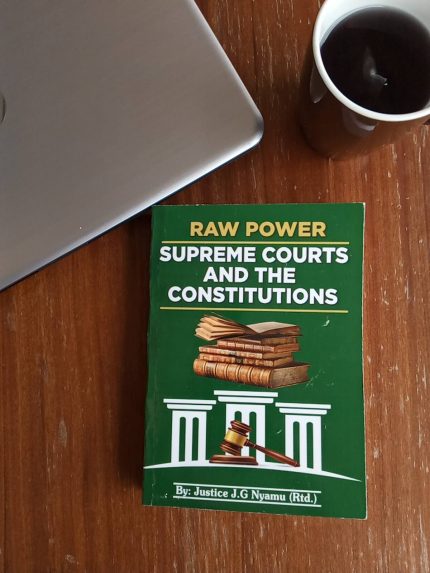
Raw Power Supreme Courts and the Cons...

KShs3,990.00 KShs3,500.00
The author has selected the Supreme Courts of Kenya, India and united states as the focus. He has cast his net wide to include the meaning of sovereignty, constitutional jurisdiction ,decisional independence and ethics in the process of judging.

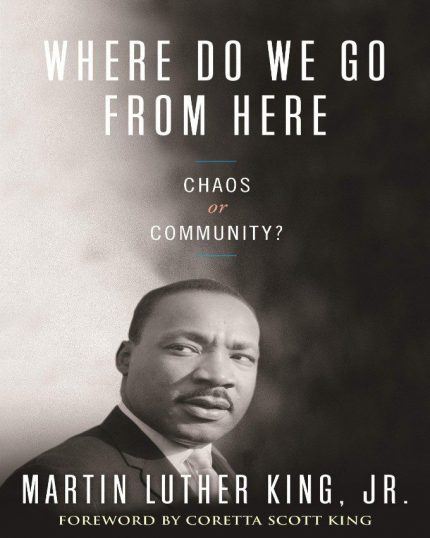
Where Do We Go from Here: Chaos or Co...

KShs2,500.00 KShs1,799.00
Brief Summary In 1967, Dr. Martin Luther King, Jr., isolated himself from the demands of the civil rights movement, rented a house in Jamaica with no telephone, and labored over his final manuscript. In this prophetic work, which has been unavailable for more than ten years, he lays out his thoughts, plans, and dreams for America's future, including the need for better jobs, higher wages, decent housing, and quality education. With a universal message of hope that continues to resonate, King demanded an end to global suffering, asserting that humankind-for the first time-has the resources and technology to eradicate poverty.