Showing 41–60 of 130 results

A NEW NATION

KShs1,200.00 KShs1,000.00
  1. A manifesto for national renewal

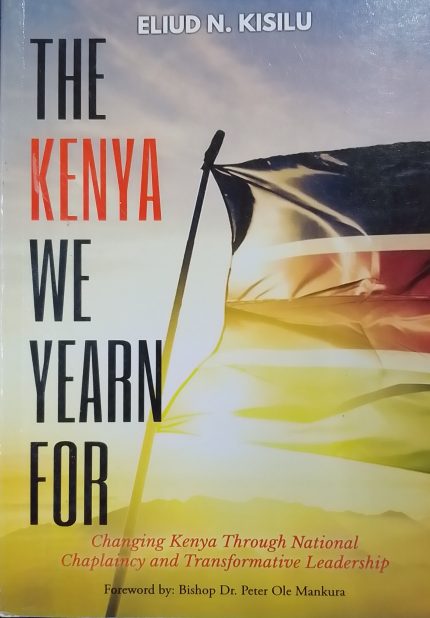
The Kenya We Yearn For by Eliud Kisilu

KShs1,000.00
Kenya is a country endowed with great resources, both Human and Physical. The Author implores Kenyans to stand up for our country to stop wastage, selfishness, tribalism and exercise true patriotism. The Author explored different ways by which Kenya can be brought back on track for economic prosperity and make it the place of peace, love and togetherness. Among the ways is true worship and reverence to God, The Almighty.

The Gatekeepers: How the White House ...

KShs3,000.00 KShs2,790.00
What do Dick Cheney and Rahm Emanuel have in common? Aside from polarizing personalities, both served as chief of staff to the president of the United States--as did Donald Rumsfeld, Leon Panetta, and a relative handful of others. The chiefs of staff, often referred to as "the gatekeepers," wield tremendous power in Washington and beyond; they decide who is allowed to see the president, negotiate with Congress to push POTUS's agenda, and--most crucially--enjoy unparalleled access to the leader of the free world. Each chief can make or break an administration, and each president reveals himself by the chief he picks. Through extensive, intimate interviews with all seventeen living chiefs and two former presidents, award-winning journalist and producer Chris Whipple pulls back the curtain on this unique fraternity. In doing so, he revises our understanding of presidential history, showing us how James Baker's expert managing of the White House, the press, and Capitol Hill paved the way for the Reagan Revolution--and, conversely, how Watergate, the Iraq War, and even the bungled Obamacare rollout might have been prevented by a more effective chief. Filled with shrewd analysis and never-before-reported details, The Gatekeepers offers an essential portrait of the toughest job in Washington.

Undaunted: Stories of Freedom in a Sh...

KShs1,990.00 KShs1,750.00
.to free oneself or assist in liberating others involves taking risks, being suspicious of the status quo, leaving the safety of the shore and launching out into the deep and the unknown. This is a very lonely calling too as one immerses oneself into the whole of reality with courage to confront and listen. Yet, the calling is not to be the liberator of the oppressed but to make a commitment to fight alongside them, as Paulo Freire wrote in Pedagogy of the Oppressed. — Fr Gabriel Dolan From his work in Turkana, Kitale, Kapenguria and Mombasa, Father Gabriel reminds us that true transformative change comes from the people themselves, from the bottom up. This is a challenge that the social justice/human rights practitioners must internalize and the sooner the better. The idea of being the “voice of the voiceless” must transform to facilitating, encouraging and giving space to those who suffer the indignities of injustice, violence, poverty and repression. Indeed, one of the most significant tasks for the human rights community is to devolve away from Nairobi, in real, practical, and substantive ways. It is not easy for a white man, with all the attendant privileges that brings, to become an integral part of the struggle for pro-poor transformative change in Kenya, and be subject to arrest, harassment, and repression. For those who read these memoirs, please circulate them to everyone you know. Translate them, read them in the mosques, churches and under trees so that Kenyans can get a sense of where we have come from, what we should avoid, and what it takes to make some gains that benefit the majority of our people. — Maina Kiai

The Oxford Handbook of Modern African...

KShs10,000.00 KShs9,000.00
Brief Summary The Oxford Handbook of Modern African History represents an invaluable tool for historians and others in the field of African studies. This collection of essays, produced by some of the finest scholars currently working in the field, provides the latest insights into, and interpretations of, the history of Africa - a continent with a rich and complex past. An understanding of this past is essential to gain perspective on Africa's current challenges, and this accessible and comprehensive volume will allow readers to explore various aspects - political, economic, social, and cultural - of the continent's history over the last two hundred years. Since African history first emerged as a serious academic endeavour in the 1950s and 1960s, it has undergone numerous shifts in terms of emphasis and approach, changes brought about by political and economic exigencies and by ideological debates. This multi-faceted Handbook is essential reading for anyone with an interest in those debates, and in Africa and its peoples. While the focus is determinedly historical, anthropology, geography, literary criticism, political science and sociology are all employed in this ground-breaking study of Africa's past.

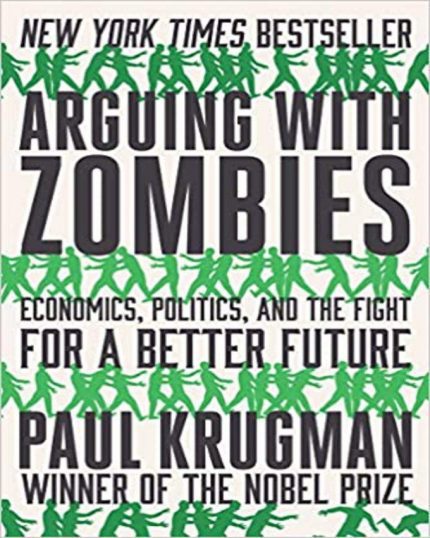
Arguing with Zombies: Economics, Poli...

KShs3,000.00 KShs2,499.00
There is no better guide than Paul Krugman to basic economics, the ideas that animate much of our public policy. Likewise, there is no stronger foe of zombie economics, the misunderstandings that just won’t die. In Arguing with Zombies, Krugman tackles many of these misunderstandings, taking stock of where the United States has come from and where it’s headed in a series of concise, digestible chapters. Drawn mainly from his popular New York Times column, they cover a wide range of issues, organized thematically and framed in the context of a wider debate. Explaining the complexities of health care, housing bubbles, tax reform, Social Security, and so much more with unrivaled clarity and precision, Arguing with Zombies is Krugman at the height of his powers. Arguing with Zombies puts Krugman at the front of the debate in the 2020 election year and is an indispensable guide to two decades’ worth of political and economic discourse in the United States and around the globe. With quick, vivid sketches, Krugman turns his readers into intelligent consumers of the daily news and hands them the keys to unlock the concepts behind the greatest economic policy issues of our time. In doing so, he delivers an instant classic that can serve as a reference point for this and future generations.

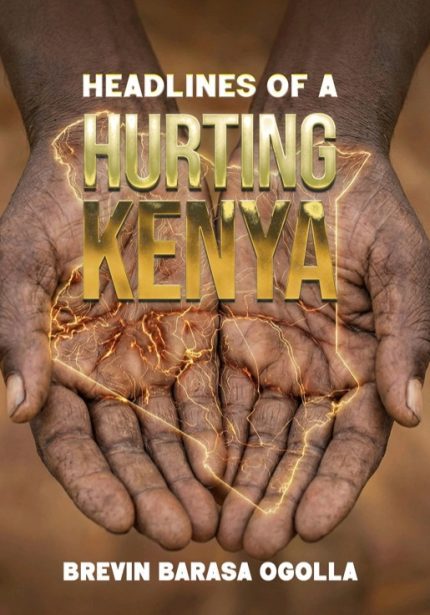
HEADLINES OF A HURTING KENYA BY BREVI...

KShs1,200.00 KShs1,000.00
Headlines of a hurting kenya is a bold,unfiltered and deeply human reflection on a nation in pain.It relies on author's experience, satire, story telling and moral inquiry to confront the silent crises behind Kenya's daily headlines crises that statistics fail to capture and politicians often ignore.It tells the stories of ordinary Kenyans, the hungry Child,the overlooked nurse,the unemployed graduate, the abandoned mother,the betrayed voter and the citizen who still believes this country can heal.

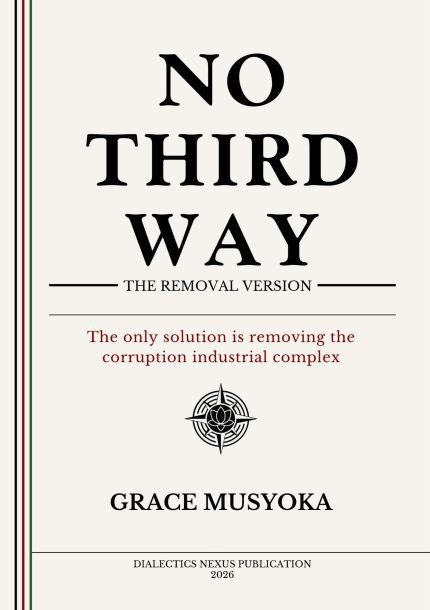
No Third Way: The Only Solution is Re...

KShs1,250.00 KShs1,000.00
No Third Way exposes why Kenya cannot feed, clothe, or house its own people—by design. The system was built to make you poor, replacing public goods with private capture and a local broker class. There is no "third way"—only removal, sector by sector, from mitumba to transport, restoring Kenyans as citizens, not customers.
No Third Way: The Removal Version argues that Kenya's crises in food, clothing, housing, transport, healthcare, and education are not accidents of poor leadership or corruption alone, but the result of a deeper system: the Corruption Industrial Complex. Through privatisation, trade liberalisation, public-private partnerships, and elite brokerage, a functioning public economy was systematically dismantled and replaced by private capture. Kenyans were made customers and products instead of productive citizens—unable to afford basics not by scarcity, but by design. 

Challenging the colonial lie that Africans are inherently corrupt, lazy, or incapable of managing their own affairs, this book argues that there is no "third way" between dependency and sovereignty. Every promise of a middle path leaves the underlying architecture intact. The solution is not reform but removal—a deliberate, sector-by-sector reversal of the policies that created the crisis. From banning mitumba and restoring local food reserves to public transport buyouts and decentralised education, No Third Way offers a sequential blueprint for national recovery. Part political manifesto, part decolonial critique, it invites readers to recover an African Gaze: an African-centred understanding of development, governance, and national self-determination. Memory is the beginning of reversal. And reversal is the shortcut hiding in plain sight.

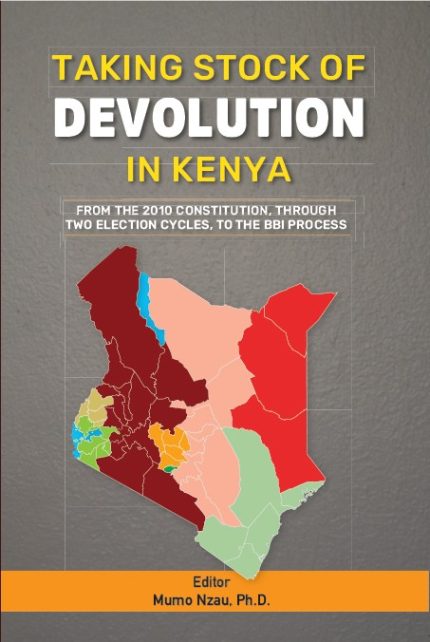
TAKING STOCK OF DEVOLUTION IN KENYA: ...

KShs2,400.00
Taking Stock of Devolution in Kenya: From the 2010 Constitution, Through Two Election Cycles, to the BBI Process examines the devolved system of governance in Kenya in retrospect with specific reference to constitutional, governance, and policy debates as well as experiences in the 47 counties. Its scope falls within the 2010 Constitution, through two election cycles, in 2013 and again in 2017, up to the changes proposed by the Building Bridges Initiative (BBI), and the ramifications that all these issues, events, and processes portend for the future of devolution in Kenya.

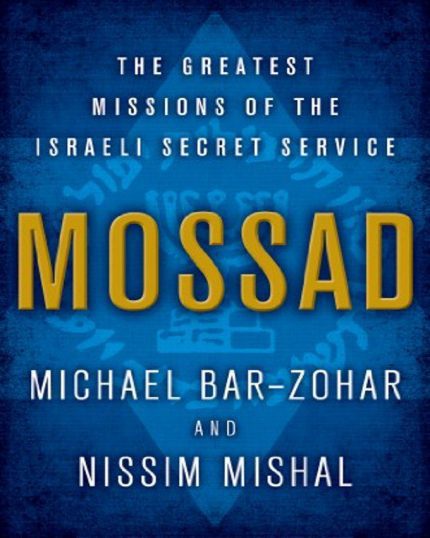
Mossad: The Greatest Missions of the ...

KShs3,400.00 KShs2,900.00
The Mossad is widely recognized today as the best intelligence service in the world. It is also the most enigmatic, shrouded in secrecy. Mossad: The Greatest Missions of the Israeli Secret Service unveils the defining and most dangerous operations that have shaped Israel and the world at large from the agency's more than sixty-year history, among them: the capture of Adolf Eichmann, the eradication of Black September, the destruction of the Syrian nuclear facility, and the elimination of key Iranian nuclear scientists. Through intensive research and exclusive interviews with Israeli leaders and Mossad agents, authors Michael Bar-Zohar and Nissim Mishal re-create these missions in riveting detail, vividly bringing to life the heroic operatives who risked everything in the face of unimaginable danger. In the words of Shimon Peres, president of Israel, this gripping, white-knuckle read "tells what should have been known and isn't--that Israel's hidden force is as formidable as its recognized physical strength."

The New Map: Energy, Climate, and the...

KShs2,900.00 KShs2,690.00
The world is being shaken by the collision of energy, climate change, and the clashing power of nations in a time of global crisis. Out of this tumult is emerging a new map of energy and geopolitics. The "shale revolution" in oil and gas has transformed the American economy, ending the "era of shortage" but introducing a turbulent new era. Almost overnight, the United States has become the world's number one energy powerhouse. Yet concern about energy's role in climate change is challenging the global economy and way of life, accelerating a second energy revolution in the search for a low-carbon future. All of this has been made starker and more urgent by the coronavirus pandemic and the economic dark age that it has wrought. World politics is being upended, as a new cold war develops between the United States and China, and the rivalry grows more dangerous with Russia, which is pivoting east toward Beijing. Vladimir Putin and China's Xi Jinping are converging both on energy and on challenging American leadership, as China projects its power and influence in all directions. The South China Sea, claimed by China and the world's most critical trade route, could become the arena where the United States and China directly collide. The map of the Middle East, which was laid down after World War I, is being challenged by jihadists, revolutionary Iran, ethnic and religious clashes, and restive populations. But the region has also been shocked by the two recent oil price collapses--and by the very question of oil's future in the rest of this century. A master storyteller and global energy expert, Daniel Yergin takes the reader on an utterly riveting and timely journey across the world's new map. He illuminates the great energy and geopolitical questions in an era of rising political turbulence and points to the profound challenges that lie ahead.

Controversial Chiefs in Colonial Keny...

KShs20,000.00 KShs14,999.00
Brief Summary Senior Chief Waruhiu wa Kung’u is one of colonial Kenya’s most controversial chiefs. His name has gone down in history as a traitor who was assassinated because he sold his country to the British colonizers. This book is the untold story of the controversial life of Senior Chief Waruhiu who served the colonial government for thirty years. He believed his white superiors’ authority was God-given and to disobey them was tantamount to disobeying God himself. That was why he was considered loyal, obedient, dependable, responsible, efficient, and a tower of strength. Chief Waruhiu’s violent death dealt his reputation a devastating blow, as it provided his critics with a basis to portray him as a traitor who sold out to the colonizers. Although Waruhiu believed that the Africans were not yet ready for self-government—and that they could not attain it through violence—that did not make him a traitor. Other chiefs also believed that and yet were not labeled as traitors. However, this did lead to him being considered a very pro-government and pro-European chief who was opposed to the aspirations of his people and he, as a result, deserved to be killed. Although it is believed that Waruhiu was killed by Mau Mau, there is no evidence to support that claim. The white settler community gained a lot from Waruhiu’s murder as it paved the way for it to get what it had been demanding for a long time—a declaration of a state of emergency and the arrest and detention of African leaders. It is very likely that some leaders of the white settlers, working together with government officials, were probably behind Waruhiu’s murder. The police, the prosecution, and the court seemed determined to make the murder charges against the accused suspects stick in spite of glaring discrepancies and contradictions in the evidence against them. Above all, the prosecution failed to prove beyond any reasonable doubts that Waweru and Gathuku killed Waruhiu. Thus, the mystery of who killed Waruhiu and those behind his murder still remains unresolved and the perpetrators of the murder may never be known.

Man, the State and War: a theoretical...

KShs5,990.00 KShs5,390.00
Brief Summary Man, the state, and war is the second of the Topical Studies in International Relations to be published. The series was planned to demonstrate some of the contributions which existing bodies of knowledge are capable of making to the understanding of modern international relations. Even in a relatively new field of academic specialization, it is not necessary for the scholar to make an absolutely fresh start. Indeed, it is incumbent upon him not to fail to draw on existing storehouses of knowledge. One of those storehouses least systematically inventoried for its usefulness for international relations is classical Western political thought....

Neither Settler nor Native: The Makin...

KShs3,500.00 KShs3,100.00
Brief Summary Making the radical argument that the nation-state was born of colonialism, this book calls us to rethink political violence and reimagine political community beyond majorities and minorities. In this genealogy of political modernity, Mahmood Mamdani argues that the nation-state and the colonial state created each other. In case after case around the globe―from the New World to South Africa, Israel to Germany to Sudan―the colonial state and the nation-state have been mutually constructed through the politicization of a religious or ethnic majority at the expense of an equally manufactured minority. The model emerged in North America, where genocide and internment on reservations created both a permanent native underclass and the physical and ideological spaces in which new immigrant identities crystallized as a settler nation. In Europe, this template would be used by the Nazis to address the Jewish Question, and after the fall of the Third Reich, by the Allies to redraw the boundaries of Eastern Europe’s nation-states, cleansing them of their minorities. After Nuremberg the template was used to preserve the idea of the Jews as a separate nation. By establishing Israel through the minoritization of Palestinian Arabs, Zionist settlers followed the North American example. The result has been another cycle of violence. Neither Settler nor Native offers a vision for arresting this historical process. Mamdani rejects the “criminal” solution attempted at Nuremberg, which held individual perpetrators responsible without questioning Nazism as a political project and thus the violence of the nation-state itself. Instead, political violence demands political solutions: not criminal justice for perpetrators but a rethinking of the political community for all survivors―victims, perpetrators, bystanders, beneficiaries―based on common residence and the commitment to build a common future without the permanent political identities of settler and native. Mamdani points to the anti-apartheid struggle in South Africa as an unfinished project, seeking a state without a nation.

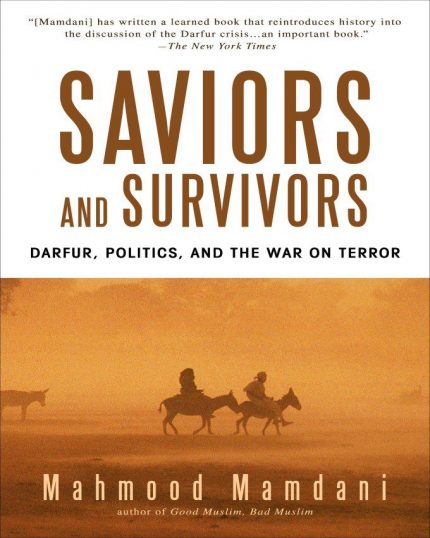
Saviors and Survivors: Darfur, Politi...

KShs3,000.00 KShs2,499.00
Brief Summary In Saviors and Survivors, Mahmood Mamdani explains how the conflict in Darfur began as a civil war (1987—89) between nomadic and peasant tribes over fertile land in the south, triggered by a severe drought that had expanded the Sahara Desert by more than sixty miles in forty years; how British colonial officials had artificially tribalized Darfur, dividing its population into “native” and “settler” tribes and creating homelands for the former at the expense of the latter; how the war intensified in the 1990s when the Sudanese government tried unsuccessfully to address the problem by creating homelands for tribes without any. The involvement of opposition parties gave rise in 2003 to two rebel movements, leading to a brutal insurgency and a horrific counterinsurgency–but not to genocide, as the West has declared. Mamdani also explains how the Cold War exacerbated the twenty-year civil war in neighboring Chad, creating a confrontation between Libya’s Muammar al-Qaddafi (with Soviet support) and the Reagan administration (allied with France and Israel) that spilled over into Darfur and militarized the fighting. By 2003, the war involved national, regional, and global forces, including the powerful Western lobby, who now saw it as part of the War on Terror and called for a military invasion dressed up as “humanitarian intervention.” Incisive and authoritative, Saviors and Survivors will radically alter our understanding of the crisis in Darfur.

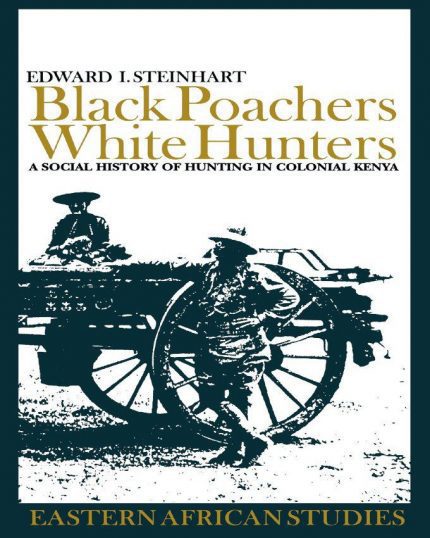
Black Poachers White Hunters A Social...

KShs4,500.00 KShs3,099.00
Brief Summary For centuries, Kenya's game-laden plains and forests were the rewarding hunting grounds of her native African population. Black Poachers, White Hunters traces the history of hunting there in the colonial era, describing the British attempt to impose the practices and values of nineteenth-century European aristocratic hunts. This both created and enforced an image of African inferiority and subordination. Ultimately conservationists came to claim sovereignty over African wildlife, completing the transformation of indigenous hunters into criminal poachers and seeking to eliminate them altogether from the "sportsman's paradise" of Kenya.ABOUT THE AUTHOR---Edward I. Steinhart is an associate professor of history at Texas Tech University, Lubbock.

The Politics by Aristotle

KShs2,290.00
Brief Summary What is the relationship of the individual to the state? What is the ideal state, and how can it bring about the most desirable life for its citizens? What sort of education should it provide? What is the purpose of amassing wealth? These are some of the questions Aristotle attempts to answer in one of the most intellectually stimulating works. Both heavily influenced by and critical of Plato's Republic and Laws, Politics represents the distillation of a lifetime of thought and observation. "Encyclopaedic knowledge has never, before or since, gone hand in hand with a logic so masculine or with speculation so profound," says H. W. C. Davis in his introduction. Students, teachers, and scholars will welcome this inexpensive new edition of the Benjamin Jowett translation, as will all readers interested in Greek thought, political theory, and depictions of the ideal state.

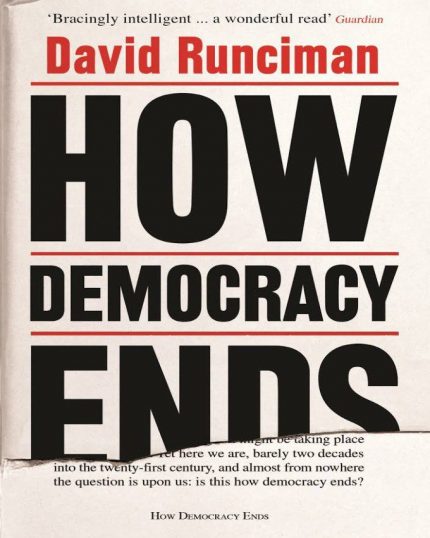
How Democracy Ends by David Runciman

KShs1,899.00 KShs1,499.00
Brief Summary Since the end of World War II, democracy's sweep across the globe seemed inexorable. Yet today, it seems radically imperiled, even in some of the world's most stable democracies. How bad could things get? In How Democracy Ends, David Runciman argues that we are trapped in outdated twentieth-century ideas of democratic failure. By fixating on coups and violence, we are focusing on the wrong threats. Our societies are too affluent, too elderly, and too networked to fall apart as they did in the past. We need new ways of thinking the unthinkable -- a twenty-first-century vision of the end of democracy, and whether its collapse might allow us to move forward to something better. A provocative book by a major political philosopher, How Democracy Ends asks the most trenchant questions that underlie the disturbing patterns of our contemporary political life.