Showing 21–40 of 132 results

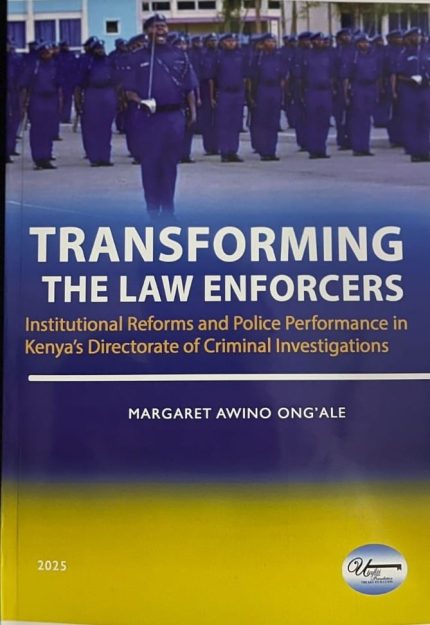
Transforming The Law Enforcers: Insti...

KShs3,000.00 KShs2,500.00
Dr. Margaret Awino Ong’ale "Transforming the Law Enforcers" is more than just a book—it's a reflection of my journey as an officer, a researcher, and a reform advocate. Having served within the Directorate of Criminal Investigations for years, I witnessed firsthand how reforms, especially in training, leadership, and technology transformed the way we fight crime. My PhD research focused on these institutional reforms, and I felt it was important to share the findings with a wider audience beyond academia. This book is my contribution to a better, more professional DCI. It’s a call to action, especially for young officers and policymakers, to embrace integrity, innovation, and service to the people. As a woman in law enforcement, I also wanted to show that women can lead—on the ground, in policy, and through knowledge. I hope this book educates, inspires, and influences positive change in how we think about policing in Kenya.

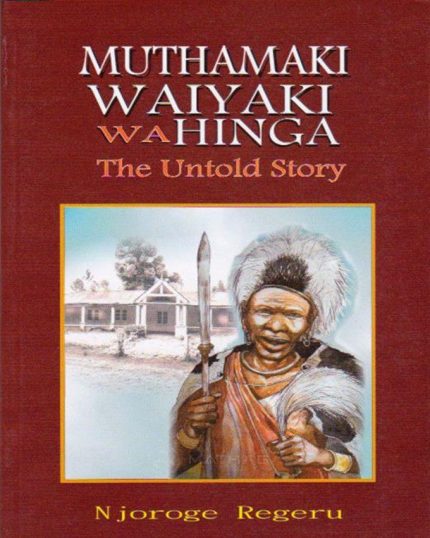
Muthamaki Waiyaki Wa Hinga: The Untol...

KShs3,000.00 KShs2,500.00
Muthamaki Waiyaki Wa Hinga : the Untold Story by Njoroge Regeru

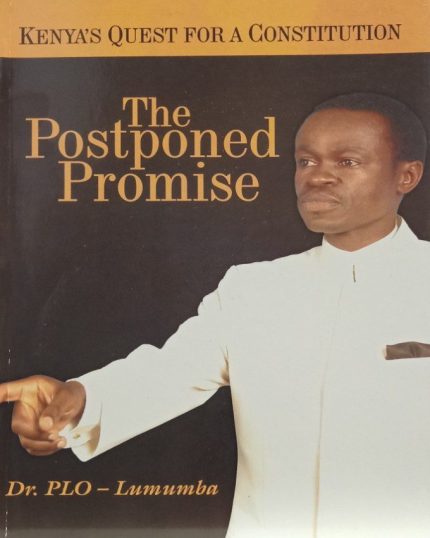
The Postponed Promise: Kenyas Quest f...

KShs700.00 KShs450.00
Brief Summary Dr. PLO- Lumumba has written a succinct "insiders" account of the constitution review exercise in Kenya. This short book will serve as a foretaste of what the author describes as the full blooded version to be released when a new Constitution is finally enacted.

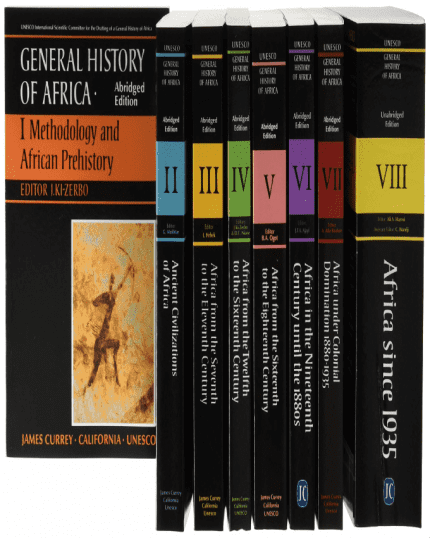
General History of Africa Complete Se...

KShs20,000.00 KShs18,000.00
This set brings together all 8 volumes of the groundbreaking Unesco General History of Africa, which are all now available again as paperbacks. The series demonstrates the importance of African history from earliest pre-history, through the establishment of its ancient civilizations to the placing of Africa in the context of world history. The growth and development of African historiography, once written records became more common, document the triumph of Islam, the extension of trading relations, cultural exchanges and human contacts, as well as the impact and consequences of the slave trade. The European scramble for colonial territory in the 1880s is examined with a focus on the responses of Africans themselves to the economic and social aspects of colonial systems up to 1935, including the growth of anti-colonial movements and the strengthening of African political nationalism. The contributions document how the continent moved from international conflict under foreign domination to struggles for political sovereignty and economic independence. The last (unabridged) volume 8 examines the challenges of nation-building and the socio-cultural changes affecting the newly independent nations.

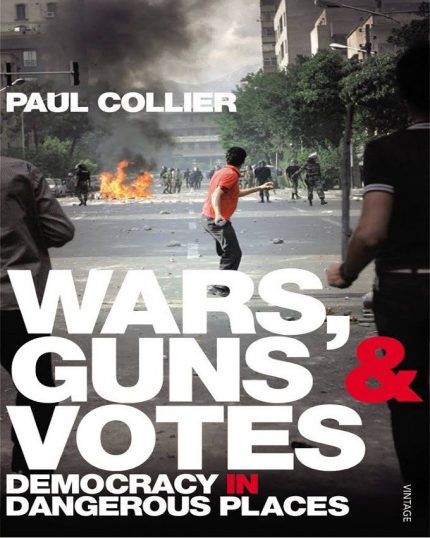
Wars, Guns, and Votes: Democracy in D...

KShs2,500.00 KShs1,790.00
Wars, Guns, and Votes, Paul Collier investigates the violence and poverty in the small, remote countries at the lowest level of the world economy. An esteemed economist and a foremost authority on developing countries, Collier argues that the spread of elections and peace settlements in the world's most dangerous countries may lead to a brave new democratic world. In the meantime, though, nasty and long civil wars, military coups, and failing economies are the order of the day—for now and into the foreseeable future. Through innovative research and astute analysis, Collier gives an eye-opening assessment of the ethnic divisions and insecurites in the developing countries of Africa, Latin America, and Asia, where corruption is often firmly rooted in the body politic. There have been many policy failures by the United States and other developed countries since the end of the Cold War, especially the reliance on preemptive military intervention. But Collier insists that these problems can and will be rectified. He persuasively outlines what must be done to bring peace and stability: the international community must intervene through aid, democracy building, and a very limited amount of force. Groundbreaking and provocative, Wars, Guns, and Votes is a passionate and convincing argument for the peaceful development of the most volatile places on earth.

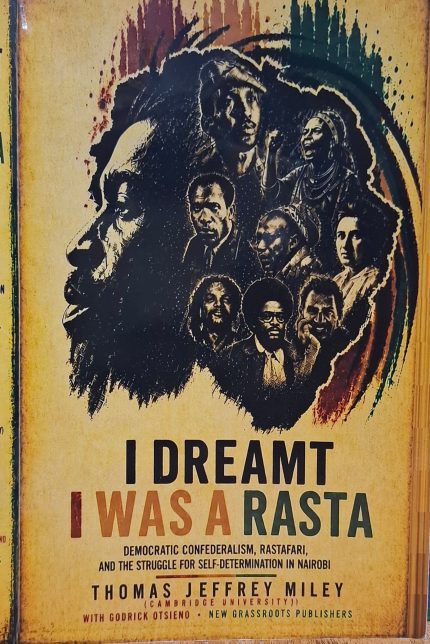
I Dreamt I was a Rasta by Thomas Jeff...

KShs2,700.00 KShs2,500.00
I Dreamt I was a Rasta is a brave, original and deeply personal book. it brings together the voices of Rastafarians, activists, teachers, musicians and residents of Nairobi's informal settlements, showing Mathare not only as a place of poverty and violence, but also as a centre of political thought, beautiful creativity, resistance and hope.

From Protest To Power by Alex Miringu

KShs1,200.00 KShs1,000.00
On June 25th, 2024, the streets of Kenya became classrooms, pulpits, and battlegrounds for a generation that refused to be silent. What began as protest became an awakening—of conscience, courage, and collective power. From Protest to Power captures that defining moment and asks the most important question of our time: What comes after the streets go quiet? Written in honour of the young lives lost during and after the June 25th protests, this book is both a tribute and a challenge. It confronts broken promises, political betrayal, and youth marginalization, while offering a clear path forward moving from anger to action, from resistance to responsibility, and from protest to leadership. With clarity, conviction, and hope, Alex Miringu calls on young people to step beyond outrage and into nation-building through values-driven leadership, civic engagement, and faith-rooted courage. This is not a book about politics alone. It is a call to duty. A blueprint for generational change. A reminder that true power is not only found in the streets but in shaping the future.

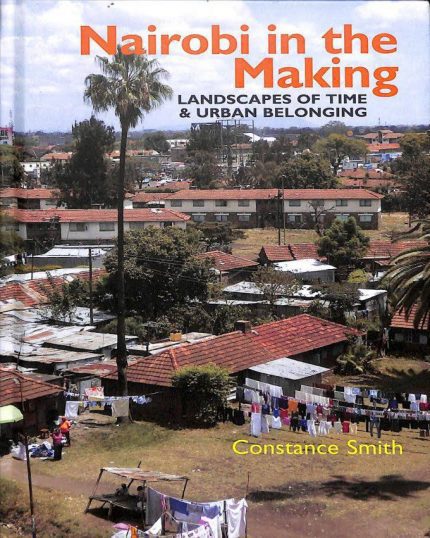
Nairobi in the Making: Landscapes of ...

KShs1,590.00 KShs1,099.00
Brief Summary What does it mean to make a life in an African city today? How do ordinary Africans, surrounded by collapsing urban infrastructures and amid fantastical promises of hypermodern, globalized futures, try to ensure a place for themselves in the city's future? Exploring the relationship between the remains of empire and the global city, and themes of urban belonging and exclusion, housing and security, Constance Smith examines the making and remaking of one of Africa's most fragmented, vibrant cities. Nairobi is on the cusp of radical urban change. As in other capital cities across Africa, the Kenyan government has launched "Vision 2030", an urban megaproject that envisions the capital as a "world class metropolis", a spectacular new node in a network of global cities. Yet as a city born of British colonialism, Nairobians also live amongst the dilapidated vestiges of imperial urban planning; spaces designed to regulate urban subjects. Based on extensive ethnographic research in a dilapidated, colonial-era public housing project built as a model urban neighborhood but which is now slated for demolition, Smith explores how projects of self-making and city-making are entwined. She traces how it is through residents' everyday lives - in the mundane, incremental work of home maintenance, in the accumulation of stories about the past, in ordinary people's aspirations for the future - that urban landscapes are formed, imaginatively, materially and unpredictably, across time. Nairobi emerges as a place of pathways and plans, obstructions and aspirations, residues and endurances, that inflect the way that ordinary people produce the city, generating practices of history making, ideas about urban belonging and attempts to refashion "Vision 2030" into a future more meaningful and inclusive to ordinary city dwellers.

Kibaki Cabinets : Intrigues. Drama. T...

KShs5,000.00 KShs0.00
Brief Summary Kibaki Cabinets : Intrigues. Drama. Triumphs

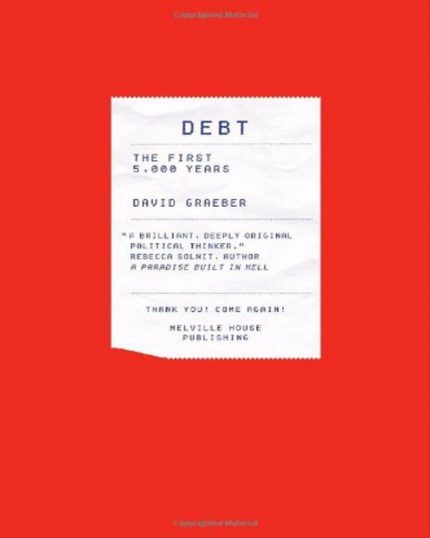
Debt The First 5000 Years by David Gr...

KShs3,990.00 KShs3,790.00
Brief Summary Before there was money, there was debt Every economics textbook says the same thing: Money was invented to replace onerous and complicated barter systems to relieve ancient people from having to haul their goods to market. The problem with this version of history? There’s not a shred of evidence to support it. Here anthropologist David Graeber presents a stunning reversal of conventional wisdom. He shows that for more than 5,000 years, since the beginnings of the first agrarian empires, humans have used elaborate credit systems to buy and sell goods that is, long before the invention of coins or cash. It is in this era, Graeber argues, that we also first encounter a society divided into debtors and creditors. Graeber shows that arguments about debt and debt forgiveness have been at the center of political debates from Italy to China, as well as sparking innumerable insurrections.
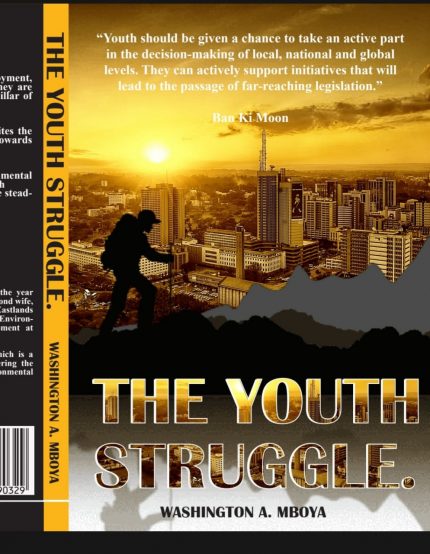
THE YOUTH STRUGGLE by WASHINGTON MBOY...

KShs2,000.00 KShs1,500.00
The youth in Kenya face drastic challenges ranging from unemployment, mental health, climate crisis, violence and political sabotage. They are always neglected to take charge of their lives and become the pillar of positive change and impact. THE YOUTH STRUGGLE vividly shows shows a clear picture and cites the reference of the real youth challenge and gives amicable solutions towards sustainable development goals. The book also echoes and salute the governmental, non-governmental organizations, multilateral institutions, youth led initiatives, youth leaders and community champions in the grassroot level who are steadfast in promoting change and creating a sustainable future.

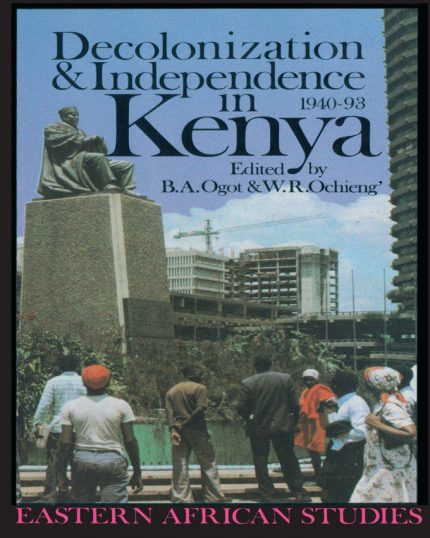
Decolonization and Independence in Ke...

KShs4,500.00 KShs3,899.00
Brief Summary The main purpose of the book is to show that decolonisation does not only mean the transfer of alien power to sovereign nationhood; it must also entail the liberation of the worlds of spirit and culture, as well as economics and politics. The book also raises a more fundamental question, that is: How much independence is available to any state, national economy or culture in today's world? It asks how far are Africa's miseries linked to the colonial past and to the process of decolonization? In particular the book raises the basic question of how far Kenya is avoidably neo-colonial? And what does neo-colonial dependence mean? The book answers these questions by discussing the dynamic between the politics of decolonization, the social history of class formation and the economics of dependence. The book ends with a provocative epilogue discussing the transformation of the post-colonial state from a single-party to a multi-party system.

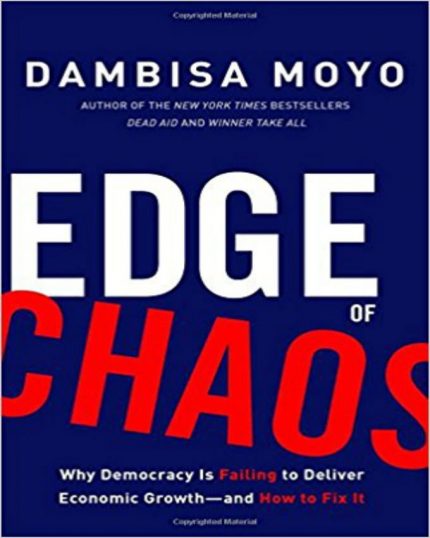
Edge of Chaos Why Democracy Is Failin...

KShs2,300.00 KShs2,090.00
From an internationally acclaimed economist, a provocative call to jump-start economic growth by aggressively overhauling liberal democracy. Edge of Chaos: Why Democracy Is Failing to Deliver Economic Growth and How to Fix It. Around the world, people who are angry at stagnant wages and growing inequality have rebelled against established governments and turned to political extremes. Liberal democracy, history's greatest engine of growth, now struggles to overcome unprecedented economic headwinds--from aging populations to scarce resources to unsustainable debt burdens. Hobbled by short-term thinking and ideological dogma, democracies risk falling prey to nationalism and protectionism that will deliver declining living standards. In Edge of Chaos, Dambisa Moyo shows why economic growth is essential to global stability, and why liberal democracies are failing to produce it today. Rather than turning away from democracy, she argues, we must fundamentally reform it. Edge of Chaos presents a radical blueprint for change in order to galvanize growth and ensure the survival of democracy in the twenty-first century.  

Environment & Land Court Case Di...

KShs4,000.00
Designed for practitioners, policymakers, scholars, and students, this book serves as a practical and accessible companion to understanding the evolving mandate of the ELC. It is, quite simply, the Environment and Land Court in your pocket. This volume brings together a carefully curated selection of landmark decisions from the Environment and Land Court (ELC) of Kenya, a specialized court established under Article 162(2) of the Constitution of Kenya, 2010. Mandated to adjudicate disputes concerning the environment, land use, occupation, and title, the Court continues to shape Kenya’s legal and governance landscape in profound ways. This case digest distills the Court’s most influential rulings and judgements, illustrating emerging jurisprudence on land governance, environmental protection, and sustainable resource management. Its publication is timely, arriving at a moment when conversations around Environmental and Social Governance (ESG), climate change, and natural resource extraction are redefining legal responsibilities and policy choices in Kenya and across the region. Designed for practitioners, policymakers, scholars, and students, this book serves as a practical and accessible companion to understanding the evolving mandate of the ELC. It is, quite simply, the Environment and Land Court in your pocket.

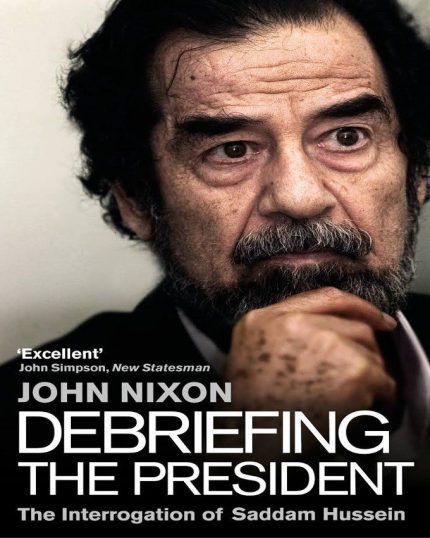
Debriefing the President: The Interro...

KShs2,290.00 KShs2,190.00
In December 2003, after one of the largest, most aggressive manhunts in history, US military forces captured Iraqi president Saddam Hussein near his hometown of Tikrit. Beset by body-double rumors and false alarms during a nine-month search, the Bush administration needed positive identification of the prisoner before it could make the announcement that would rocket around the world. At the time, John Nixon was a senior CIA leadership analyst who had spent years studying the Iraqi dictator. Called upon to make the official ID, Nixon looked for telltale scars and tribal tattoos and asked Hussein a list of questions only he could answer. The man was indeed Saddam Hussein, but as Nixon learned in the ensuing weeks, both he and America had greatly misunderstood just who Saddam Hussein really was. Debriefing the President presents an astounding, candid portrait of one of our era’s most notorious strongmen. Nixon, the first man to conduct a prolonged interrogation of Hussein after his capture, offers expert insight into the history and mind of America’s most enigmatic enemy. After years of parsing Hussein’s leadership from afar, Nixon faithfully recounts his debriefing sessions and subsequently strips away the mythology surrounding an equally brutal and complex man. His account is not an apology, but a sobering examination of how preconceived ideas led Washington policymakers—and the Bush White House—astray. Unflinching and unprecedented, Debriefing the President exposes a fundamental misreading of one of the modern world’s most central figures and presents a new narrative that boldly counters the received account.

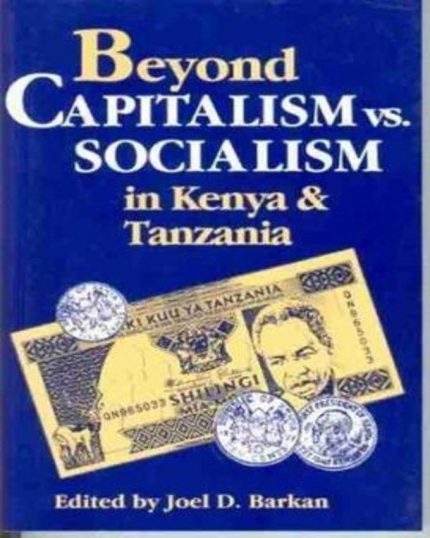
Beyond Capitalism and Socialism in Ke...

KShs1,500.00 KShs1,299.00
Brief Summary Explores how Tanzania and Kenya, often regarded as paradigms of capitalist and socialist development in Africa, have responded to the challenges they face, such as population growth, mounting external debt and structural adjustment, by modifying their original approach to development.

Kenyan capitalists, the State, and de...

KShs2,000.00 KShs1,500.00
Brief Summary Himbara argues that the literature on Kenyan capitalism largely misses the mark because it either omits or misconceptualises as ""Asian capital"" the principal segment of the domestic bourgeoisie. He demonstrates the leading role that Kenya's Indian entrepreneurs have played in her development.

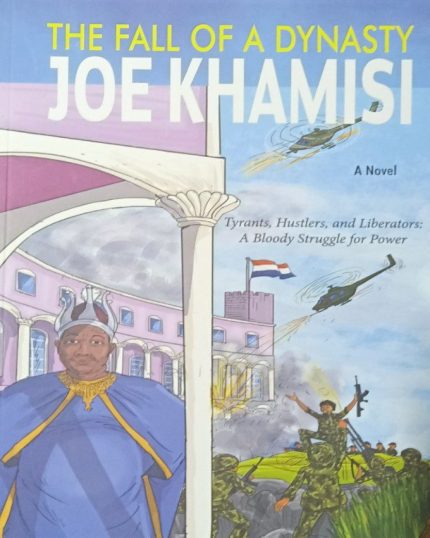
The Fall of A dynasty by Joe Khamisi

KShs1,390.00 KShs999.00
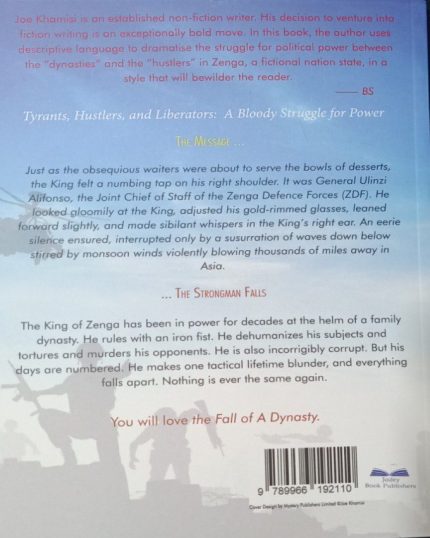
Brief Summary The Fall of A dynasty Tyrants hustlers and Liberators A bloody struggle for power by Joe Khamisi

White Mischief by James Fox

KShs2,000.00 KShs1,790.00
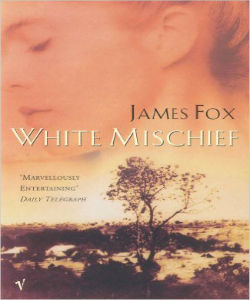
Brief Summary Just before 3am on January 24th, 1941, when Britain was preoccupied with surviving the Blitz, the body of Josslyn Hay, Earl of Erroll, was discovered lying on the floor of his Buick, at a road intersection some miles outside Nairobi, with a bullet in his head. A leading figure in Kenya's colonial community, he had recently been appointed Military Secretary, but he was primarily a seducer of other men's wives. Sir Henry Delves Broughton, whose wife was Erroll's current conquest, had an obvious motive for the murder, but no one was ever convicted and the question of who killed him became a classic mystery, a scandel and cause celebre. Among those who became fascinated with the Erroll case was Cyril Connolly. He joined up with James Fox for a major investigation of the case in 1969 for the SUNDAY TIMES magazine. After his death James Fox inherited the obsession and a commitment to continue in pursuit of the story both in England and Kenya in the late 1970s. One day, on a veranda overlooking the Indian Ocean, Fox came across a piece of evidence that seemed to bring all the fragments and pieces together and convinced him that he saw a complete picture.