Showing 961–980 of 1355 results

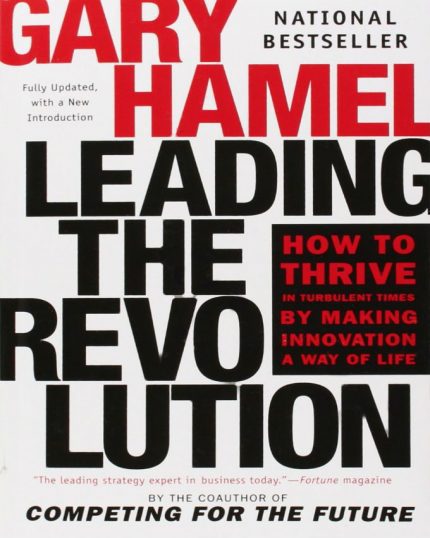
Leading the Revolution How to Thrive ...

£15.00 £14.45
Brief Summary Leading the Revolution: How to Thrive in Turbulent Times by Making Innovation a Way of Life. One of the world's preeminent business thinkers and co-author of the bestseller, competing for the Future, Gary Hamel has helped set the management agenda for three decades. Now, he brings us into the twenty-first century with leading the Revolution, which spent time on The New York Times, The Wall Street Journal, USA Today, and Business Week bestseller lists, among others. Hamel lays out an innovative action plan for any company or individual intent on becoming—and staying—an industry revolutionary, for years to come. By drawing on the success of "gray haired revolutionaries" like Charles Schwab, Virgin, and GE Capital—companies that are always thinking ahead of the game and growing in new directions—and profiling individuals such as Ken Kutaragi, one of the pioneers of Sony Playstation, Hamel explains how companies can continue to grow, innovate, and achieve success, even in a chaotic world market. With insight culled from years of experience, Hamel: • Explores where revolutionary new business concepts come from • Identifies the key design criteria for building companies that are activist-friendly and revolution-ready • Shows how to avoid becoming "one-vision wonders" • Demonstrates how to harness the imagination of every employee • Explains how to develop new financial measures that focus on creating new wealth Packed with practical advice, Leading the Revolution is an accessible read, perfect for both businesses and individuals that don't want to get caught in the slow lane in the race for success in the twenty-first century. ISBN:9780452283244 Author:Gary Hamel

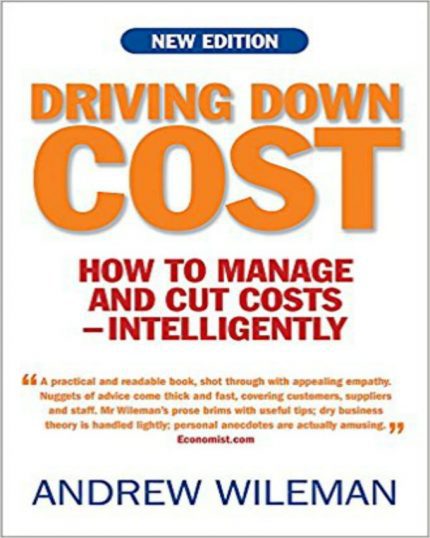
Driving Down Cost How to Manage

£15.00 £14.45
Brief Summary Driving Down Cost: How to Manage and Cut Costs-Intelligently With chaos in the markets and a worldwide recession on the horizon, Driving down Cost: How to Manage and Cut Costs- Intelligently could not be timelier. Cost management is not just for downturns; it should be practiced at all times. Further, it's not an issue that concerns only CEOs and those involved in the behind-the-scenes functions of finance, production control and customer call centers-cost management is an important issue for every manager and executive, at every level in every company, large or small, public or private. Driving down Cost is the first accessible and practical book to address cost management for managers across the board. ISBN:9781857885125 Author:Andrew Wileman

Hall of Mirrors The Great Depression ...

£27.00 £25.85
Brief Summary Hall of Mirrors: The Great Depression, the Great Recession, and the Uses - and Misuses - of History The two great financial crises of the past century are the Great Depression of the 1930s and the Great Recession, which began in 2008. Both occurred against the backdrop of sharp credit booms, dubious banking practices, and a fragile and unstable global financial system. When markets went into cardiac arrest in 2008, policymakers invoked the lessons of the Great Depression in attempting to avert the worst. While their response prevented a financial collapse and catastrophic depression like that of the 1930s, unemployment in the U.S. and Europe still rose to excruciating high levels. Pain and suffering were widespread. The question, given this, is why didn't policymakers do better? Hall of Mirrors, Barry Eichengreen's monumental twinned history of the two crises, provides the farthest-reaching answer to this question to date. Alternating back and forth between the two crises and between North America and Europe, Eichengreen shows how fear of another Depression following the collapse of Lehman Brothers shaped policy responses on both continents, with both positive and negative results. Since bank failures were a prominent feature of the Great Depression, policymakers moved quickly to strengthen troubled banks. But because derivatives markets were not important in the 1930s, they missed problems in the so-called shadow banking system. Having done too little to support spending in the 1930s, governments also ramped up public spending this time around. But the response was indiscriminate and quickly came back to haunt overly indebted governments, particularly in Southern Europe. Moreover, because politicians overpromised, and because their measures failed to stave off a major recession, a backlash quickly developed against activist governments and central banks. Policymakers then prematurely succumbed to the temptation to return to normal policies before normal conditions had returned. The result has been a grindingly slow recovery in the U. ISBN:9780199392001 Author:Barry Eichengreen

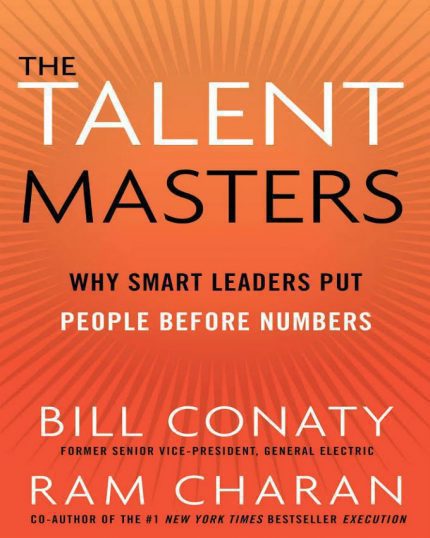
The Talent Masters Why Smart Leaders

£13.50 £13.03
Brief Summary The Talent Masters: Why Smart Leaders Put People before Numbers. If talent is the leading indicator of whether a business is up or down, a success or a failure (and it is) . . . do you know how to accurately judge raw human talent? Understand a person's unique combination of traits? Develop that talent? Convert what supposedly are "soft" subjective judgments about people into objective criteria that are as specific, verifiable, and concrete as the contents of a financial statement? The talent masters do. They put people before numbers for the simple reason that it is talent that delivers the numbers. Success comes from those who are able to extract meaning from events and the forces affecting a business, and are able to look at the world and assess the risks to take and the risks to avoid. The Talent Masters itself stems from a unique combination of talent: During a forty-year career at General Electric, Bill Conaty worked closely with CEOs Jack Welch and Jeff Immelt to build that company's worldrenowned talent machine. Ram Charan is the legendary advisor to companies around the world. Together they use their unparalleled experience and insight to write the definitive book on talent—a breakthrough in how to take a business to the next level: • Secrets of the masters. The specifics on how companies regarded as world-class—GE, P&G, Hindustan Unilever (and others)—base their stellar performance decade after decade on their systems for finding and nurturing leadership talent. • Intimate and systemic. Why deep knowledge and intimacy with your talent and a systemic rhythm of reviews are the foundation for creating a steady, self-renewing stream of leaders for all levels of an organization—from first-line supervisors to the CEO. • The competency that lasts. Financial results, market share, brand, and legacy products all have a half-life that seems to grow shorter by the year. Talent is the only competency that endures. • What to do Monday morning. The Talent Masters tool kit provides the specific guidelines for assessing and improving your company’s talent mastery capabilities. ISBN:9780307460264 Author:Bill Conaty and Ram Charan

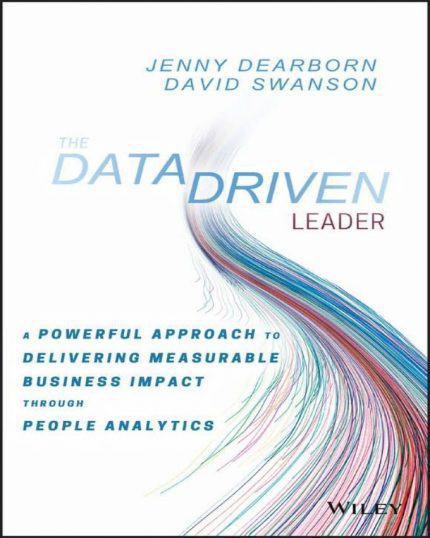
The Data Driven Leader

£20.50 £19.68
Brief Summary The Data Driven Leader: A Powerful Approach to Delivering Measurable Business Impact through People Analytics. Data is your most valuable leadership asset—here's how to use it The Data Driven Leader presents a clear, accessible guide to solving important leadership challenges through human resources-focused and other data analytics. This engaging book shows you how to transform the HR function and overall organizational effectiveness by using data to make decisions grounded in facts vs. opinions, identify root causes behind your company’s thorniest problems and move toward a winning, future-focused business strategy. Realistic and actionable, this book tells the story of a successful sales executive who, after leading an analytics-driven turnaround (in Data Driven, this book’s predecessor), faces a new turnaround challenge as chief human resources officer. Each chapter features insightful commentary and practical notes on the points the story raises, guiding you to put HR analytics into action in your organization. HR and other leaders cannot afford to overlook the power and competitive advantages of data-driven decision-making and strategies. This book reflects the growing trend of CEOs choosing analytics-minded business leaders to head HR, at a time when workplaces everywhere face game-changing forces including automation, robotics and artificial intelligence. It is urgent that human resources leaders embrace analytics, not only to remain professionally relevant but also to help their organizations successfully navigate this digital transformation. HR professionals can and must: • Understand essential data science principles and corporate analytics models • Identify and execute effective data analytics initiatives • Boost HR and company productivity and performance with metrics that matter • Shape an analytics-centric culture that generates data driven leaders Most organizations capture and report data, but data is useless without analysis that leads to action. The Data Driven Leader shows you how to use this tremendous asset to lead your organization higher. ISBN:9781119382201 Author:Jenny Dearborn and David Swanson

The WalMart Effect

£13.00 £12.55
Brief Summary The Wal-Mart Effect: How the World's Most Powerful Company Really Works - and How It's Transforming the American Economy Wal-Mart isn’t just the world’s biggest company, it is probably the world’s most written-about. But no book until this one has managed to penetrate its wall of silence or go beyond the usual polemics to analyze its actual effects on its customers, workers, and suppliers. Drawing on unprecedented interviews with former Wal-Mart executives and a wealth of staggering data (e.g., Americans spend $36 million an hour at Wal-Mart stores, and in 2004 its growth alone was bigger than the total revenue of 469 of the Fortune 500), The Wal-Mart Effect is an intimate look at a business that is dramatically reshaping our lives. ISBN:9780143038788 Author:Charles Fishman

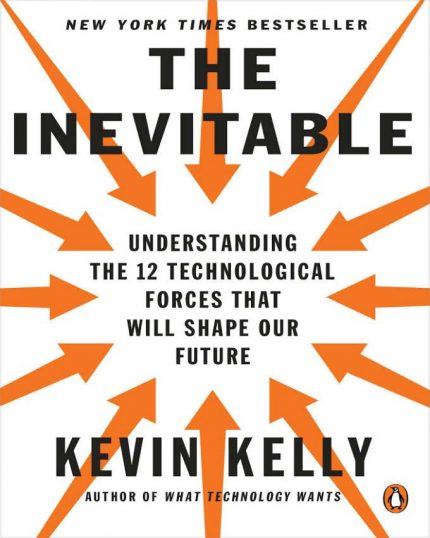
The Inevitable

£14.00 £13.50
Brief Summary The Inevitable: Understanding the 12 Technological Forces That Will Shape Our Future. From one of our leading technology thinkers and writers, a guide through the twelve technological imperatives that will shape the next thirty years and transform our lives. Much of what will happen in the next thirty years is inevitable, driven by technological trends that are already in motion. In this fascinating, provocative new book, Kevin Kelly provides an optimistic road map for the future, showing how the coming changes in our lives—from virtual reality in the home to an on-demand economy to artificial intelligence embedded in everything we manufacture—can be understood as the result of a few long-term, accelerating forces. Kelly both describes these deep trends— flowing, screening, accessing, sharing, filtering, remixing, tracking, and questioning — and demonstrates how they overlap and are codependent on one another. These larger forces will completely revolutionize the way we buy, work, learn, and communicate with each other. By understanding and embracing them, says Kelly, it will be easier for us to remain on top of the coming wave of changes and to arrange our day-to-day relationships with technology in ways that bring forth maximum benefits. Kelly’s bright, hopeful book will be indispensable to anyone who seeks guidance on where their business, industry, or life is heading—what to invent, where to work, in what to invest, how to better reach customers, and what to begin to put into place—as this new world emerges. ISBN:9780525428084 Author:Kevin Kelly

Women and ICT in Africa and the Middl...

£22.00 £21.10
Brief Summary Women and ICT in Africa and the Middle East: Changing Selves, Changing Societies. What is the link between Information Communication Technology (ICT) and women's empowerment in today's development context? How can ICT facilitate the pursuit of visions for a better world? Avoiding both 'techno-euphoric' and 'techno-pessimistic' hype this book offers answers. ISBN:9781783600427 Author:Ineke Buskens and Anne Webb

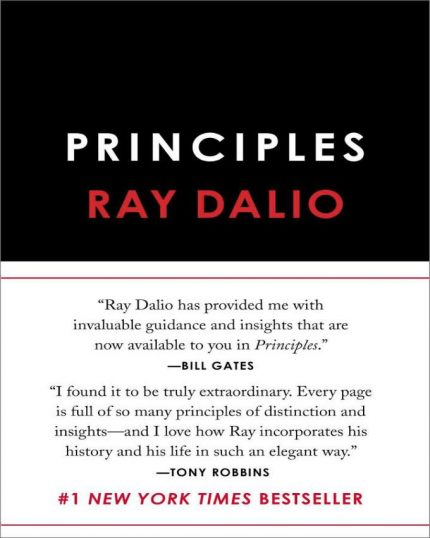
Principles by Ray Dalio

£33.95 £31.45
Ray Dalio, one of the world’s most successful investors and entrepreneurs, shares the unconventional principles that he’s developed, refined, and used over the past forty years to create unique results in both life and business—and which any person or organization can adopt to help achieve their goals. In 1975, Ray Dalio founded an investment firm, Bridgewater Associates, out of his two-bedroom apartment in New York City. Forty years later, Bridgewater has made more money for its clients than any other hedge fund in history and grown into the fifth most important private company in the United States, according to Fortune magazine. Dalio himself has been named to Time magazine’s list of the 100 most influential people in the world. Along the way, Dalio discovered a set of unique principles that have led to Bridgewater’s exceptionally effective culture, which he describes as "an idea meritocracy that strives to achieve meaningful work and meaningful relationships through radical transparency.” It is these principles, and not anything special about Dalio—who grew up an ordinary kid in a middle-class Long Island neighborhood—that he believes are the reason behind his success. In Principles, Dalio shares what he’s learned over the course of his remarkable career. He argues that life, management, economics, and investing can all be systemized into rules and understood like machines. The book’s hundreds of practical lessons, which are built around his cornerstones of "radical truth” and "radical transparency,” include Dalio laying out the most effective ways for individuals and organizations to make decisions, approach challenges, and build strong teams. He also describes the innovative tools the firm uses to bring an idea meritocracy to life, such as creating "baseball cards” for all employees that distill their strengths and weaknesses, and employing computerized decision-making systems to make believability-weighted decisions. While the book brims with novel ideas for organizations and institutions, Principles also offers a clear, straightforward approach to decision-making that Dalio believes anyone can apply, no matter what they’re seeking to achieve. Here is a rare opportunity to gain proven advice unlike anything you’ll find in the conventional business press.

Death Of A Salesman

£11.00 £10.65
Brief Summary Willy Loman, the central figure in Arthur Miller’s Death of a Salesman, occupies a position to which few characters in literature ascend. Willy serves as a point of reference in contexts outside of literature—invoked to describe anyone who is crushed by the immense forces of American capitalism. This habit suggests a certainty about the play’s meaning that often forms around a widely acknowledged masterpiece despite its multitude of ambiguities. Death of a Salesman vividly portrays the destructive power of certain American tendencies, such as equating wealth with virtue and possessions with self-worth. But the extent of the play’s ambition can quickly obscure the fact that it is also a story about one family and its individual members, culminating in the father’s suicide. What brings Willy Loman to this point cannot be reduced to the malignant influence of the society in which he lives, although an economic system determined by abstract principles rather than human needs is in part responsible for Willy’s fate. As he says to Howard, his boss, "a man is not a piece of fruit!” (pp. 61-62), but to Howard and the world he represents, the bottom line always comes first. Willy’s history with the Wagner Company and Howard’s father cannot keep Howard from firing Willy. All Howard can say to Willy is "business is business” (p. 60). Believing that his family will benefit more from his life insurance policy than from his continuing to live, Willy seems to accept the implication underlying Howard’s statement—that the value of a person can be quantified according to actual wealth or earning potential. As he says to Charley, "you end up worth more dead than alive” To argue, however, that Willy kills himself primarily because he realizes the true nature of his world neglects the all-consuming power of his illusions, which retain their hold on him to the end. He is seduced by an American dream that is corrupted; he spends his life working to pay for a house, a car, and a refrigerator, without suspecting that it’s a game he cannot win. Even though Willy finally seems to understand the absurdity of owning something only when it is no longer of any use to him, he maintains his belief in the worth and worthiness of being well liked, as if the game were about something more than numbers. But what makes Death of a Salesman more than an indictment of a system and gives Willy a truly tragic dimension is the intimation that Willy suffers not just from the inhumanity of free enterprise, but also from his inability to reconcile the hopes he had for his life with the one he has actually lived. ISBN:09780141182742 Author:Arthur Miller

When Money Destroys Nations

£18.50 £17.78
Brief Summary Since the financial crisis of 2008, the major governments of the world have resorted to printing large amounts of money to pay national debts and bail out banks. The warning signs are clear, and the collapse of the Zimbabwean dollar after years of rampant money printing is a frightening example of what lies in store for world economies if painful reform is not executed. When Money Destroys Nations tells the gripping story of the disintegration of the once-thriving Zimbabwean economy and how ordinary people survived in turbulent circumstances. Analysing this case within a global context, Philip Haslam and Russell Lamberti investigate the causes of hyperinflation and draw ominous parallels between Zimbabwe and the world's developed economies. The looming currency crises and hyperinflation in these major economies, particularly the United States, have the potential to turn the current world order upside down. This story of how money destroys nations holds lessons that cannot be ignored. ISBN:9780620590037 Author:Philip Haslam and Russell Lamberti

In Search of Excellence

£12.50 £12.08
Brief Summary In Search of Excellence: Lessons from America's Best-Run Companies. The "Greatest Business Book of All Time" (Bloomsbury UK), In Search of Excellence has long been a must-have for the boardroom, business school, and bedside table. Based on a study of forty-three of America's best-run companies from a diverse array of business sectors, In Search of Excellence describes eight basic principles of management -- action-stimulating, people-oriented, profit-maximizing practices -- that made these organizations successful. Joining the HarperBusiness Essentials series, this phenomenal bestseller features a new Authors' Note, and reintroduces these vital principles in an accessible and practical way for today's management reader. ISBN:9781861977168 Author:Thomas J. Peters, Tom Peters and Robert H. Waterman Jr.

Capitalism in the age of globalization

£17.00 £16.35
Brief Summary Capitalism in the Age of Globalization: The Management of Contemporary Society (Critique. Influence. Change.) Samir Amin is one of the world's most profound thinkers about the changing nature of capitalism, North-South relations and issues of development. Here he provides us with a powerful understanding of the new and very different era that capitalism has now entered with the collapse of the Soviet model, the triumph of unfettered market forces and accelerating globalization. His analysis spans the increasingly differentiated regions of the South and the former Eastern bloc countries, as well as Western Europe. He integrates his economic arguments about the nature of the crisis with political arguments based on his vision of human history not as simply determined by material realities, but as the product of social responses to those realities. His innovative analysis of the rise of ethnicity and fundamentalism as consequences of the failure of the ruling classes in the South to alter the unequal terms of globalization is particularly compelling, as is his deconstruction of the Bretton Woods institutions - notably the IMF and the World Bank - as managerial mechanisms protecting the profitability of capital. Looking to the longer term, Amin rejects a passive acceptance of the inevitability of globalization in its present polarizing form, or the simple-minded equation of development with expansion of the market. Instead, he argues for each society being allowed to negotiate the terms of its interdependence with the rest of the global economy in order that essential national developments can be pursued in a pluralistic world. ISBN:9781856494670 Author:Samir Amin

Jab Jab Jab Right Hook by Gary Vayner...

£18.50 £17.78
Brief Summary Jab, Jab, Jab, Right Hook: How to Tell Your Story in a Noisy Social World. The New York Times bestselling author and social media expert returns with hard-won advice on how to connect with customers and beat the competition by mastering social media marketing When managers and marketers outline their social media strategies, they often plan for the "right hook"-their next highly anticipated sale or campaign that's going to put the competition out for the count. Even companies committed to jabbing-patiently engaging with customers to build the relationships so crucial to successful social media campaigns-still yearn to land the powerful, bruising swing that will knock out their opponent or their customer's resistance in one tooth-spritzing, killer blow. Right hooks, after all, convert traffic to sales. They easily show results and ROI. Except when they don't. In the same passionate, street-wise style readers have come to expect, Gary Vaynerchuk is on a mission to improve marketers' right hooks by changing the way they fight to make their customers happy, and ultimately to compete. Thanks to the massive change and proliferation in social media platforms in the last four years, the winning combination of jabs and right hooks is different now. Communication is still key, but context matters more than ever. It's not just about developing high-quality content, but developing high-quality content perfectly adapted to specific social media platforms and mobile devices-content tailor-made for Facebook, YouTube, Instagram, Pinterest, Twitter, and Tumblr. A mash-up of the best elements of Crush It! and The Thank You Economy with a 2013 spin, here is a blueprint to social media marketing strategies that really works. " ISBN:9780062273062 Author:Gary Vaynerchuk

Entrepreneurship The New Rules

£12.00 £11.60
Brief Summary Nearly everyone has thought about starting up their own business at one time or another. Working for other people is no longer the only option that we have these days. But what does it really take to become an entrepreneur? Combining genuinely practical advice with an easily digestible format, Rob Yeung guides you through the things you need to know in order to set up on your own. You don't have to do something entirely new, you could just do it better, and Rob shows you how to get motivated, make a business plan and sell your product. ISBN:9780462099279 Author:Rob Yeung

The Fall of the House of Fifa

£18.50 £17.78
Brief Summary The Fall of the House of Fifa: The Multimillion-Dollar Corruption at the Heart of Global Soccer When Sepp Blatter joined FIFA in 1975 it had just twelve employees. Forty years later, the FBI have accused 14 executives of 47 counts of money laundering, racketeering and tax evasion linked to kickbacks totaling more than $150m. There's a fascinating story to be told here: how football got big, how FIFA got corrupt and what this means for soccer fans around the world. David Conn, who covered the scandal for The Guardian is the man for the job, putting the recent uproar in the context of FIFA's history and showing how far the organization has strayed from its humble beginnings. The narrative will cover the story up to now, covering everything that happened since the scandal broke - the FBI's investigation, what happened to Blatter and Platini, enquiries into the 2022 World Cup, the comedy of errors surrounding who should take over the presidency and so on. Conn's previous book was called Searching for the Soul of Football--he sees this book as an expansion of that book: an inquiry into the soul of soccer on the global scale, as we take stock of this shocking scandal and try to return the original spirit to the beautiful game. ISBN:9781478950097 Author:David Conn

The Euro And its Threat to the Future...

£18.50 £17.78
Brief Summary Solidarity and prosperity fostered by economic integration: this principle has underpinned the European project from the start, and the establishment of a common currency was supposed to be its most audacious and tangible achievement. Since 2008, however, the European Union has ricocheted between stagnation and crisis. The inability of the eurozone to match the recovery in the USA and UK has exposed its governing structures, institutions and policies as dysfunctional and called into question the viability of a common currency shared by such different economies as Germany and Greece. Designed to bring the European Union closer together, the euro has actually done the opposite: after nearly a decade without growth, unity has been replaced with dissent and enlargements with prospective exits. Joseph Stiglitz argues that Europe's stagnation and bleak outlook are a direct result of the fundamental flaws inherent in the euro project - economic integration outpacing political integration with a structure that promotes divergence rather than convergence. Money relentlessly leaves the weaker member states and goes to the strong, with debt accumulating in a few ill-favoured countries. The question then is: Can the euro be saved? Laying bare the European Central Bank's misguided inflation-only mandate and explaining why austerity has condemned Europe to unending stagnation, Stiglitz outlines the fundamental reforms necessary to the structure of the eurozone and the policies imposed on the member countries suffering the most. But the same lack of sufficient political solidarity that led to the creation of a flawed euro twenty years ago suggests that these reforms are unlikely to be adopted. Hoping to avoid the huge costs associated with current policies, Stiglitz proposes two other alternatives: a well-managed end to the common currency; or a bold, new system dubbed 'the flexible euro.' This important book, by one of the world's leading economists, addresses the euro-crisis on a bigger intellectual scale than any predecessor. ISBN:9780241258156 Author:Joseph Stiglitz

The Evolution of Everything How Ideas...

£12.00 £11.60
Brief Summary The New York Times bestselling author of The Rational Optimistand Genome returns with a fascinating, brilliant argument for evolution that definitively dispels a dangerous, widespread myth: that we can command and control our world. The Evolution of Everything is about bottom-up order and its enemy, the top-down twitch—the endless fascination human beings have for design rather than evolution, for direction rather than emergence. Drawing on anecdotes from science, economics, history, politics and philosophy, Matt Ridley’s wide-ranging, highly opinionated opus demolishes conventional assumptions that major scientific and social imperatives are dictated by those on high, whether in government, business, academia, or morality. On the contrary, our most important achievements develop from the bottom up. Patterns emerge, trends evolve. Just as skeins of geese form Vs in the sky without meaning to, and termites build mud cathedrals without architects, so brains take shape without brain-makers, learning can happen without teaching and morality changes without a plan. Although we neglect, defy and ignore them, bottom-up trends shape the world. The growth of technology, the sanitation-driven health revolution, the quadrupling of farm yields so that more land can be released for nature—these were largely emergent phenomena, as were the Internet, the mobile phone revolution, and the rise of Asia. Ridley demolishes the arguments for design and effectively makes the case for evolution in the universe, morality, genes, the economy, culture, technology, the mind, personality, population, education, history, government, God, money, and the future. As compelling as it is controversial, authoritative as it is ambitious, Ridley’s stunning perspective will revolutionize the way we think about our world and how it works. ISBN:9780062296009 Author:Matt Ridley

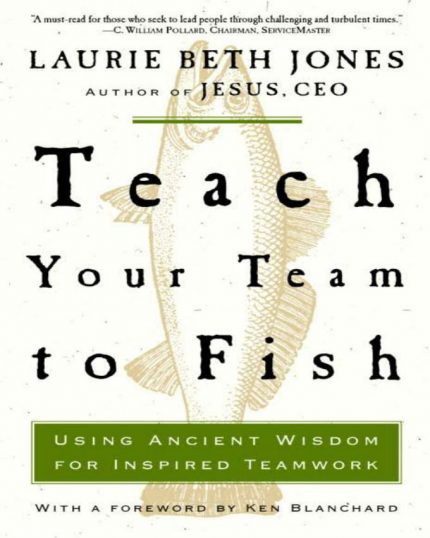
Teach Your Team to Fish

£12.00 £11.60
Brief Summary Teach Your Team to Fish: Using Ancient Wisdom for Inspired Teamwork. Jesus Built an Inspired Team. You Can, Too. Laurie Beth Jones has given hundreds of thousands of business reader’s insight into how the ideas of Jesus can be used to enhance performance. In Teach Your Team to Fish, Jones focuses on one of the most critical areas for anyone in business: teamwork. Leaders today face their greatest challenges not only in defining strategies and getting updated information but also in getting diverse human beings to pull together without falling apart. Jesus is a role model for team leaders everywhere. Teach Your Team to Fish offers dozens of stories from the Bible, showing how Jesus managed his team of disciples and other followers, with suggestions for how to apply these lessons to real-world teambuilding and management problems. It offers guidance and inspiration on: • How to excite your team members in order to motivate them • How to ground them so they’ll be realistic about what can be achieved • How to transform them into a truly well-functioning team • How to release them into the world to improve teams elsewhere Laurie Beth Jones provides many examples of companies in which teams work well together and offers lessons that can help team leaders everywhere sustain themselves and achieve their common goals. ISBN:9781400053117 Author:Laurie Beth Jones

Magna Carta of Exponentiality by Vusi...

£20.50 £19.00
Management and leadership are facing serious headwinds. These headwinds are driven by the sea of change that is facing organizations today. This change, driven predominantly but not exclusively, by the rapid rate of technological advancement has resulted in major shifts in how organizations configure themselves. The world has also become increasingly polarized. Whilst the nouveau-rich and the upper-middle classes of Tasha’s meetings continue blissfully to enjoy their lot, just fifteen minutes away, two of the fastest growing townships, Alexandra and Diepsloot have weekly service delivery protests, alarming crime rates and unsustainable social infrastructure backlogs. The social problems of South Africa are manifesting at an exponential rate, yet leaders continue to think, plan, manage, coordinate and deliver at a linear rate. These leaders, and many others like them, don’t have the skills or framework to work differently. For business leaders in pursuit of generating results better than their competitors and their market average, working through the quagmire of strategy, culture, context, leadership and many other latter-day management concepts seems to be their default. All this in the hope that they can discover the scripture that teaches them how they can generate better returns than their competition. How they can generate exponential results in linear markets. In the book, we look at teams, leaders and organizations that have managed to deliver phenomenal market-beating results in the face of extreme uncertainty, severe resource constraints and socio-political instability. We study the foresight of managers who turned entrepreneurs who seized opportunities and built businesses to rival their old employers, seasoned managers who looked through the fog of marketplace war to see opportunity. We answer the questions: how did they do it, what they did and what you can learn from their ingenuity, luck and guts. Over the past decade, my team and I have spent copious periods of time, effort and resources seeking to answer the ultimate management question of the new age, "how do we drive exponential results in linear markets?” The old way is dead. Linear is the past. Leaders, managers and entrepreneurs today need to learn how to work differently. They need a new bible, - The Magna Carta of Exponentiality.