Showing 721–740 of 1784 results

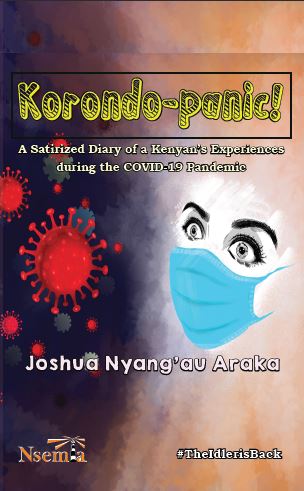
Korondo-Panic: A Satirized Diary of a...

KShs1,200.00 KShs1,000.00
“Articles in this book overflow with humour and thought provoking jokes. The way Araka twists and plays around with names of public figures, their actions and inactions, and blends it with the joys and disappointments of ‘ordinary’ citizens is on another level. The style is readable and appealing. The articles revolve around the novel Coronavirus disease. This is a time to be told and retold to present and future generations.” - Rose Kong’ani Keya, Book Editor and Teacher “The author has banked on wordplay to offer his contribution in chronicling a critical moment in our lives when COVID-19 threw the world into panic and confusion. The book tells of humanity’s inadequacies, hits and misses. Through his trademark satire, Araka shows that as human beings, we deserve better and can do better even when caught up in difficulties. - Edna, Gutenbergschule, Leipzig “Many occurrences happen in everyday life and can go unnoticed despite being significant. Araka is a gifted writer that makes such occurrences memorable through satire and humour. The themes in the articles including: political manipulations, exploitation, corruption, family relations, hypocrisy, traditions, and modern technology are well intertwined in the writer’s rich narrative style with vivid descriptions that capture the reader to achieve reading this collection in the shortest time possible. I recommend this collection to readers that wish to relive occurrences in their lives and surroundings in a laughable way.” - George Onkundi, Principal, Nyamira School. About the Author: Joshua Nyangau Araka is a journalist, creative writer and biographer. His other published works include: Peppered Path, Chronicles of the Idler-Volume One, and Beaten Odds, a Biography of Stephen Mabea.

Making the World Safe for Dictatorshi...

KShs6,000.00 KShs5,900.00
Authoritarian states try to present a positive image of themselves abroad. They invest in foreign-facing media, retain public relations firms, and showcase their successes to elite and popular foreign audiences. But there is also a darker side to these efforts. Authoritarian states try to obscure or censor bad news about their governments and often discredit their critics abroad. In extreme cases, authoritarian states intimidate, physically attack, or even murder their opponents overseas. This book is about how authoritarian states manage their image abroad using both “promotional” tactics of persuasion and “obstructive” tactics of repression. They adopt these practices to enhance their internal and external regime security or, put differently, to make their world safe for dictatorship. To substantiate these arguments, the book uses a diverse array of data, including fieldwork and author interviews, cross-national data on extraterritorial repression, examination of public relations filings with the United States government, analysis of authoritarian propaganda, media frequency analysis, and speeches and statements by authoritarian leaders. It builds a new data set—the Authoritarian Actions Abroad Database—that uses publicly available information to categorize nearly 1,200 instances in which authoritarian states repressed their critical exiles abroad, ranging from vague threats to confirmed assassinations. It also selects three cases for closer examination to understand in more detail how authoritarian states manage their image abroad using combinations of promotional and obstructive tactics: China, Rwanda, and North Korea. The result is a new way of thinking about the international dimensions of authoritarian politics.

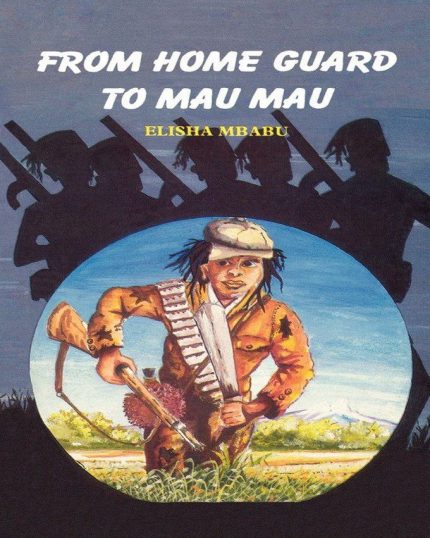
From Home Guard to Mau Mau by Elisha ...

KShs1,000.00 KShs800.00
This is a fictional account of a young Kenyan man who is the trusted home guard and bodyguard of a white farmer. The fight to free Kenya of the colonialists rule is on, and the Mau Mau are the spearhead. The young man secretly joins the Mau Mau, but his loyalties are in conflict and each part of his life now involves betrayal of an other. The life story is one of survival, betrayal, anguish and vengeance.

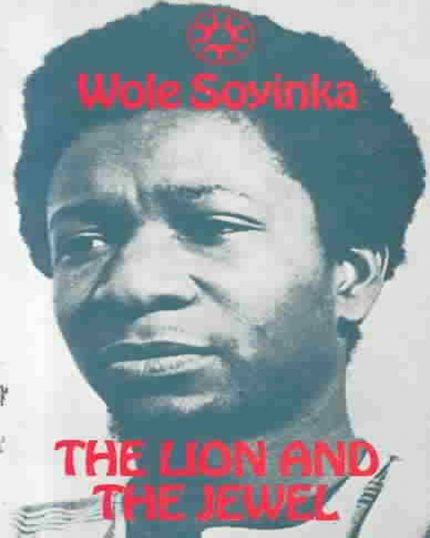
The Lion and the Jewel by Wole Soyinka

KShs1,990.00 KShs1,790.00
This is one of the best-known plays by Africa's major dramatist, Wole Soyinka. It is set in the Yoruba village of Ilunjinle. The main characters are Sidi (the Jewel), 'a true village belle' and Baroka (the Lion), the crafty and powerful Bale of the village, Lakunle, the young teacher, influenced by western ways, and Sadiku, the eldest of Baroka's wives. How the Lion hunts the Jewel is the theme of this ribald comedy.

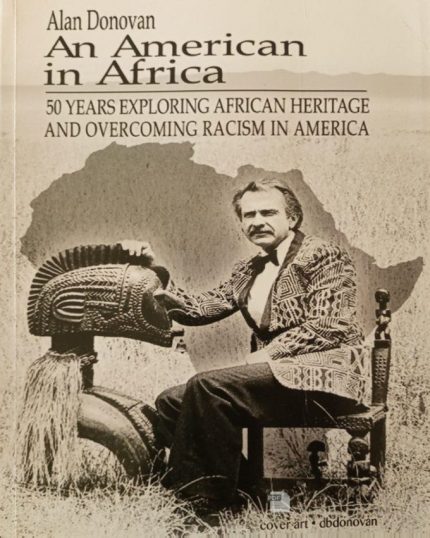
An American in Africa: 50 Years explo...

KShs2,500.00 KShs1,899.00
Brief Summary An American in Africa: 50 Years exploring African Heritage and Overcoming Racism in America by Alan Donovan

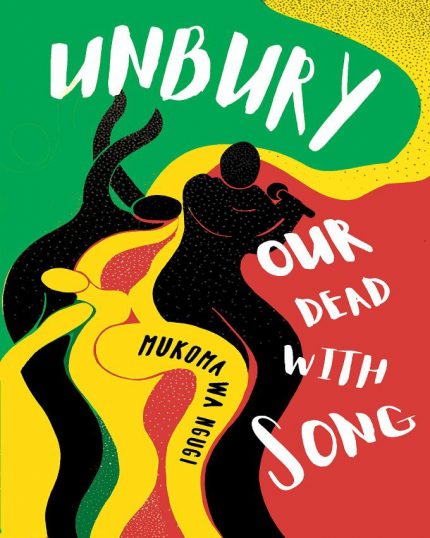
Unbury Our Dead with Song by Mũkoma w...

KShs2,500.00 KShs1,750.00
In the heart of Nairobi, four musicians – The Diva, The Taliban Man, The Corporal and 70-year-old bartender Miriam – gather for a once in a lifetime competition, to see who can perform the best Tizita. In the audience is tabloid journalist John Thandi Manfredi, who is enthralled by their renditions of the Ethiopian blues. Desperate to learn more, he follows the musicians back to Ethiopia, hoping to uncover the secret to this haunting music. Manfredi's search takes him from the idyllic Ethiopian countryside to vibrant juke joints and raucous parties in Addis Ababa, set to a soundtrack of stirring Tizita performances. From the humble domesticity behind the Diva's glamorous façade, to the troubling question of the Corporal's military service past, Manfredi discovers that the many layers to this musical genre are reflected in the lives and secrets of its performers. A love letter to beauty, music and the imagination, Unbury Our Dead with Song captures how it feels have an encounter with the sublime.

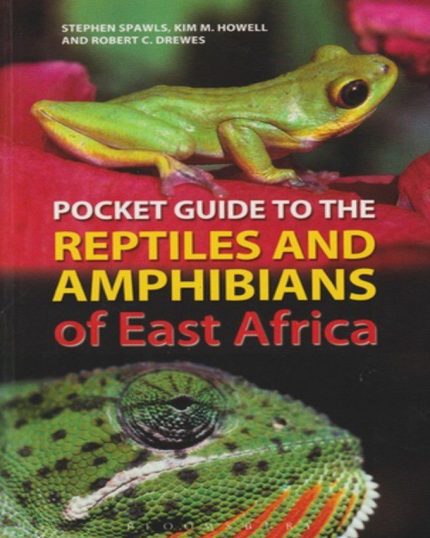
Reptiles and Amphibians of East Afric...

KShs3,000.00 KShs2,500.00
Brief Summary This is a lightweight and portable guide, partly adapted from the popular and highly acclaimed A Field Guide to the Reptiles of East Africa by the same authors. Covering the most prominent 150 reptiles and 80 amphibians found in the region (Kenya, Tanzania, Uganda, Rwanda and Burundi), with concise text, photograph and map for each, this is a convenient and attractive pocket guide for a diverse and often conspicuous and attractive group of animals.

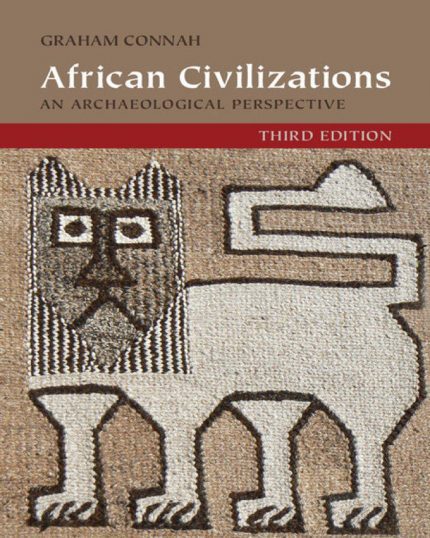
African Civilizations: An Archaeologi...

KShs5,500.00 KShs4,499.00
Brief Summary This new revised edition of African Civilizations re-examines the physical evidence for developing social complexity in Africa over the last six thousand years. Unlike the two previous editions, it is not confined to tropical Africa but considers the whole continent. Graham Connah focuses upon the archaeological research of two key aspects of complexity, urbanism and state formation, in ten main areas of Africa: Egypt, North Africa, Nubia, Ethiopia, the West African savanna, the West African forest, the East African coast and islands, the Zimbabwe Plateau, parts of Central Africa and South Africa. The book's main concern is to review the available evidence in its varied environmental settings, and to consider possible explanations of the developments that gave rise to it. Extensively illustrated, including new maps and plans, and offering an extended list of references, this is essential reading for students of archaeology, anthropology, African history, black studies and social geography.

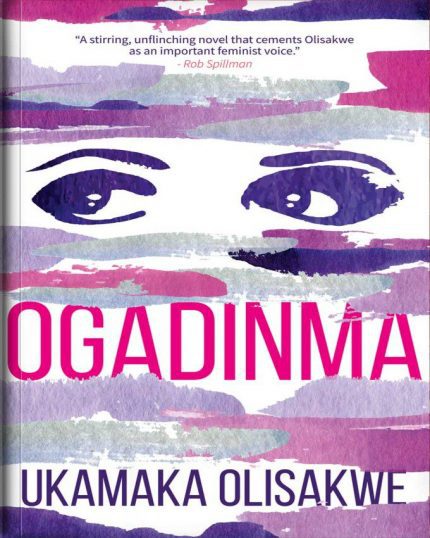
Ogadinma Or, Everything Will Be All R...

KShs2,000.00 KShs1,799.00
Brief Summary Ogadinma Or, Everything Will be All Right tells the story of the naïve and trusting teenager Ogadinma as she battles against Nigeria's societal expectations in the 1980s. After a rape and unwanted pregnancy leave her exiled from her family in Kano, thwarting her plans to go to university, she is sent to her aunt's in Lagos and pressured into a marriage with an older man. When their whirlwind romance descends into abuse and indignity, Ogadinma is forced to channel her independence and resourcefulness to escape a fate that appears all but inevitable. Ogadinma, the UK debut by Ukamaka Olisakwe, introduces a heroine for whom it is impossible not to root, and announces the author as a gifted chronicler of the patriarchal experience. ‘An intimate and dazzling exploration of the life and times of a young Nigerian woman whose move to the capital city of Lagos leads to a series of encounters, which are by turns disorienting, revelatory and tragic.’ Christopher Merrill, author of Self-Portrait with Dogwood ‘Written in vivid, engaging prose, this is the story of one woman’s journey to independence.’ Chinelo Okparanta, author of Under the Udala Trees and Happiness, Like Water: Stories

Where Do We Go from Here: Chaos or Co...

KShs2,500.00 KShs1,799.00
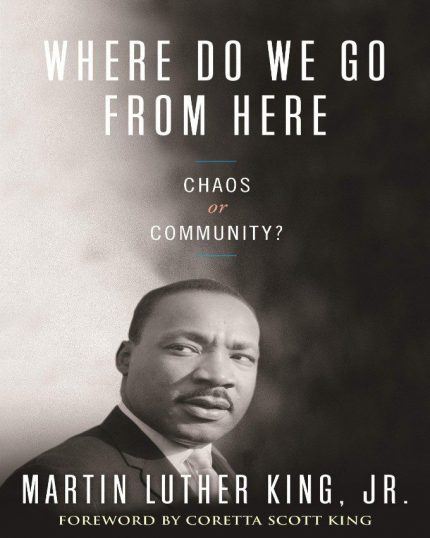
Brief Summary In 1967, Dr. Martin Luther King, Jr., isolated himself from the demands of the civil rights movement, rented a house in Jamaica with no telephone, and labored over his final manuscript. In this prophetic work, which has been unavailable for more than ten years, he lays out his thoughts, plans, and dreams for America's future, including the need for better jobs, higher wages, decent housing, and quality education. With a universal message of hope that continues to resonate, King demanded an end to global suffering, asserting that humankind-for the first time-has the resources and technology to eradicate poverty.

What We’re Told Not to Talk About (Bu...

KShs1,700.00 KShs1,499.00
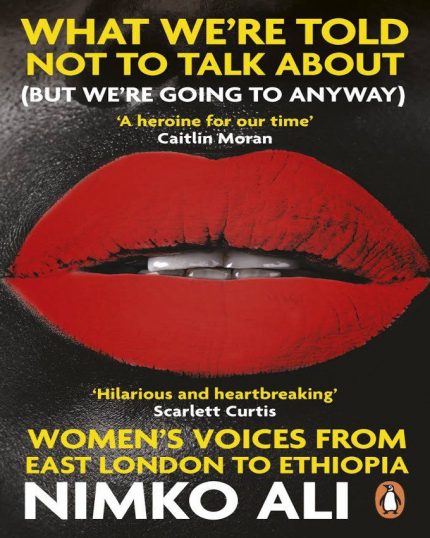
Brief Summary 14 countries, 42 women, each with a story no one has heard before. What do you do when you're living on the streets and on your period? What does it feel like to have a poo after you've given birth? How do we learn to love our bodies again after they've been abused? And, how do you know if you've ever really orgasmed? We all have questions about our bodies but often women's voices are silenced for being impolite or improper What We're Told Not To Talk About (But We're Going To Anyway) is an important, taboo-breaking book that gives voice to the experiences of women from all walks of life, whose stories might not ordinarily be heard. Alongside Nimko's story of living with FGM, rebuilding her relationship with her own body and being a woman her own way, these are the true stories of real women who are sharing the experiences they've always been told should be secret and shameful. The book is a call to arms for all women to reclaim the narrative around their bodies and to refuse to bow to the taboos which keep us silent. There is no such thing as oversharing. 'A beautiful book with such a wide range of uplifting but often heart-breaking stories. Made us cry and think in equal measure' - Pandora Sykes, co-host of The High Low

Mau Mau From Below by Greet Kershaw a...

KShs3,000.00 KShs2,499.00
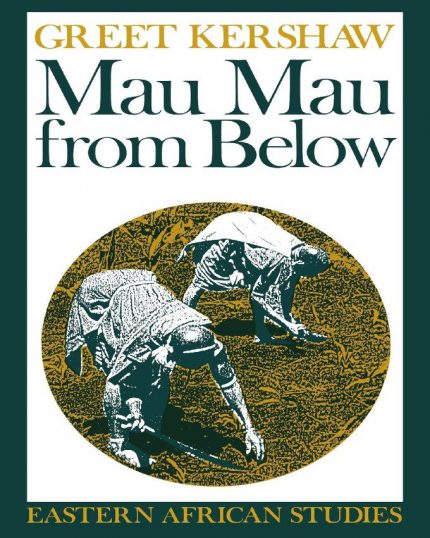
Brief Summary John Lonsdale says in his introduction: "This is the oral evidence of the Kikuyu villagers with whom Greet Kershaw lived as an aid worker during the Mau Mau 'Emergency' in the 1950s, and which is now totally irrecoverable in any form save in her own field notes. "Professor Kershaw has uncovered long local histories of social tension which could have been revealed by no other means than patient enquiry, of both her neighbour's memory and government archives... "Nobody, whether Kikuyu participant, Kenyan or European scholar, has provided such startlingly authoritative ethnographic insights into the values, fears and expectations of Kikuyu society and thus of the motivation of Kikuyu action... "Her data suggests, as other scholars have also accepted, that there never was a single such movement and that none of its members, even those who supposed themselves to be its leaders, ever saw it whole, not because they did not have a political aim, but because that agenda was contested within different political circles over which they had no control and of which they may scarcely have had any knowledge. And why is this finding important? It is because others, including almost all the movement's enemies, did see Mau Mau whole in order to try to comprehend it, a first step towards defeating it."

Weight of Whispers by Yvonne Adhiambo...

KShs400.00 KShs350.00
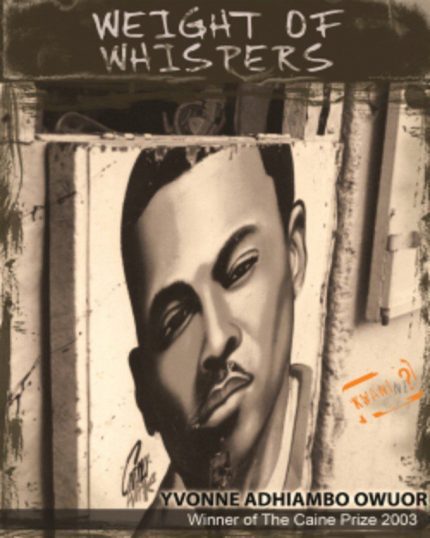
The policeman's grin broadens. He pounces. Long fingers. A girl would shave her head for fingers like his. He spits  on my finger, and draws out the ring with his teeth; the ring I have worn for 18 years from day I was recognized by the priests as a man and a prince.

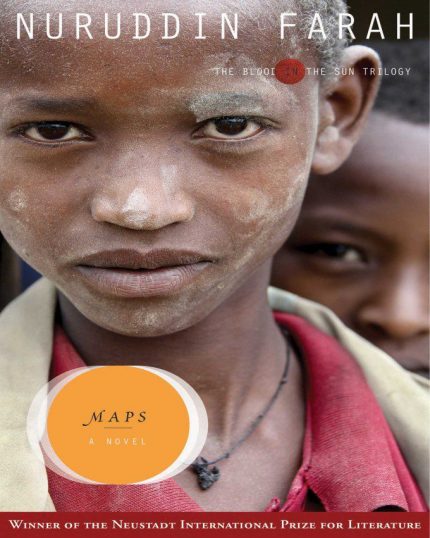
Maps by Nuruddin Farah

KShs2,500.00 KShs2,199.00
Brief Summary This first novel in Nuruddin Farah's Blood in the Sun trilogy tells the story of Askar, a man coming of age in the turmoil of modern Africa. With his father a victim of the bloody Ethiopian civil war and his mother dying the day of his birth, Askar is taken in and raised by a woman named Misra amid the scandal, gossip, and ritual of a small African village. As an adolescent, Askar goes to live in Somalia's capital, where he strives to find himself just as Somalia struggles for national identity.

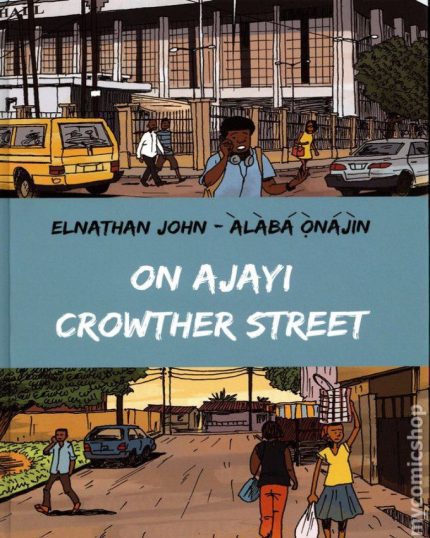
On Ajayi Crowther Street by Elnathan ...

KShs2,599.00 KShs2,470.00
Brief Summary On the noisy Ajayi Crowther Street in Lagos, neighbours gather to gossip, discuss noise complaints, and faithfully head to church each Sunday. But beneath the surface lies a hidden world of clandestine love affairs, hidden pregnancy, spiritual quackery and hypocrisy, that threatens to destroy the community from within. On Ajayi Crowther Street peels back the curtains on the lives of Reverend Akpoborie and his family, to reveal a tumultuous world full of secrets and lies. His only son, Godstime, is struggling to hide his sexuality from his parents whilst his daughter Keturah must hide the truth of her pregnancy by her pastor boyfriend to preserve her and her family’s image. But it is the Reverend himself who hides the darkest secret of them all, as his wondering eye lands on Kyauta, their young live-in maid. ISBN:9781911115908 Author:Elnathan John

The Bad Ass Librarians of Timbuktu by...

KShs1,999.00 KShs1,900.00
Brief Summary Abdel Kader Haidara was a small boy when he first learned about the hidden treasures of Timbuktu. In the Haidaras’ large house in Sankoré, the city’s oldest neighborhood, he often heard his father mention them under his breath, as if reluctantly revealing a family secret. Dozens of young boarders from across the Sahel region of Africa, the vast, arid belt that extends from the Atlantic Ocean to the Red Sea, came to study mathematics, science, astrology, jurisprudence, Arabic, and the Koran at the traditional school that his father ran in the vestibule of their home. Consisting of three three-hour sessions beginning before dawn and continuing, at intervals, until the early hours of the evening, the Haidara School was a throwback to the informal universities that had flourished in Timbuktu during its heyday as a center of learning in the sixteenth century. There were thousands of manuscripts at the house in Timbuktu, locked away in tin chests in a storage room behind a heavy oak door. Haidara had a sense of their importance, but he knew very little about them. Sometimes his father would rummage through the storage room and emerge with a volume from his family’s collection—a treatise about Islamic jurisprudence from the early twelfth century; a thirteenth-century Koran written on vellum made from the hide of an antelope; another holy book from the twelfth century, no larger than the palm of a hand, inscribed on fish skin, its intricate Maghrebi script illuminated with droplets of gold leaf. One of his father’s most prized works was the original travel diary of Major Alexander Gordon Laing, a Scotsman who had been the first European explorer to reach Timbuktu via Tripoli and the Sahara, and who was betrayed, robbed, and murdered by his Arab nomadic escorts shortly after departing from the city in 1826. A few years after Laing’s murder, a scribe had written a primer of Arabic grammar over the explorer’s papers—an early example of recycling. Haidara would peer over his father’s shoulder as he gathered students around him, regarding the crumbling works with curiosity. Over time he learned about the manuscripts’ history, and how to protect them. Haidara spoke Songhoy, the language of Mali’s Sorhai tribe, the dominant sedentary ethnic group along the northern bend of the Niger River, and in school he studied French, the language of Mali’s former colonial masters. But he also taught himself to read Arabic fluently as a boy, and his interest in the manuscripts grew. In those days—the late 1960s and early 1970s—Timbuktu was linked to the outside world only by riverboats that plied the Niger River when the water level was high enough, and once weekly flights on the state-owned airline to Bamako, the capital of Mali, 440 air miles away. Haidara, the sixth child among twelve brothers and sisters, had little awareness of his town’s isolation. He, his siblings, and their friends fished and swam in a five-mile-long canal that led from the western edge of Timbuktu to the Niger. The third longest river in Africa, it is a boomerang-shaped stream that originates in the highlands of Guinea and meanders for one thousand miles through Mali, forming lakes and floodplains, before curving east just below Timbuktu, then flowing through Niger and Nigeria and spilling into the Gulf of Guinea. The canal was the most vibrant corner of the city, a gathering point for children, market women, and traders in dugout canoes, or pirogues, piled high with fruits and vegetables from the irrigated farms that flourished beside the Niger. It was also a place redolent with bloody history: Tuareg warriors hiding on the reed-covered bank on Christmas Day 1893 had ambushed and massacred two French military officers and eighteen African sailors as they paddled a canoe up from the Niger. ISBN:9781476777412 Author:Joshua Hammer

The Lies That Bind Rethinking Identit...

KShs1,899.00 KShs1,805.00
Brief Summary Who do you think you are? That’s a question bound up in another: What do you think you are? Gender. Religion. Race. Nationality. Class. Culture. Such affiliations give contours to our sense of self, and shape our polarized world. Yet the collective identities they spawn are riddled with contradictions, and cratered with falsehoods. Kwame Anthony Appiah’s "The Lies That Bind" is an incandescent exploration of the nature and history of the identities that define us. It challenges our assumptions about how identities work. We all know there are conflicts between identities, but Appiah shows how identities are created by conflict. Religion, he demonstrates, gains power because it isn’t primarily about belief. Our everyday notions of race are the detritus of discarded nineteenth-century science. Our cherished concept of the sovereign nation?of self-rule?is incoherent and unstable. Class systems can become entrenched by efforts to reform them. Even the very idea of Western culture is a shimmering mirage. From Anton Wilhelm Amo, the eighteenth-century African child who miraculously became an eminent European philosopher before retiring back to Africa, to Italo Svevo, the literary marvel who changed citizenship without leaving home, to Appiah’s own father, Joseph, an anticolonial firebrand who was ready to give his life for a nation that did not yet exist, Appiah interweaves keen-edged argument with vibrant narratives to expose the myths behind our collective identities. These "mistaken identities,” Appiah explains, can fuel some of our worst atrocities?from chattel slavery to genocide. And yet, he argues that social identities aren’t something we can simply do away with. They can usher in moral progress and bring significance to our lives by connecting the small scale of our daily existence with larger movements, causes, and concerns. Elaborating a bold and clarifying new theory of identity, "The Lies That Bind" is a ringing philosophical statement for the anxious, conflict-ridden twenty-first century. This book will transform the way we think about who?and what?"we” are. " ISBN:B076MMN58K Author:Kwame Anthony Appiah

Makhan Singh A revolutionary Kenyan t...

KShs1,399.00 KShs1,330.00
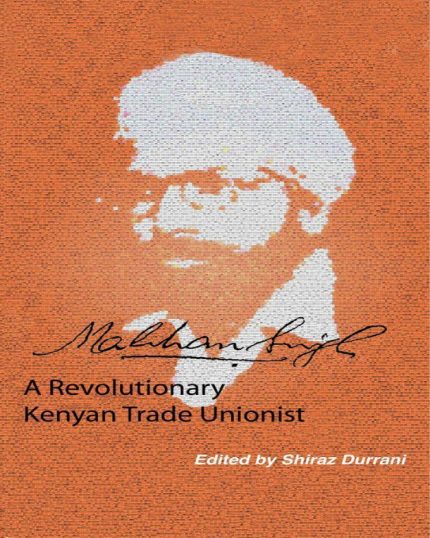
Brief Summary This book examines the life and work of a remarkable trade unionist and revolutionary. Makhan Singh laid the foundation for radical trade unionism and influenced the liberation struggle in Kenya. He actively participated in the struggles of the working classes in India. For this, the colonial authorities in India and Kenya detained him for over 15 years. This collection, marking 101 years of Makhan Singh’s birth, explores different aspects of his life as a father, a trade unionist, a political activist, a poet and a communist committed to social, political and economic liberation from colonialism and imperialism. His vision, his action and his courage are as relevant today as they were in his time. ISBN:9781869886226 Author:Shiraz Durrani

War and Politics in Sudan by Justin D...

KShs4,499.00 KShs4,275.00
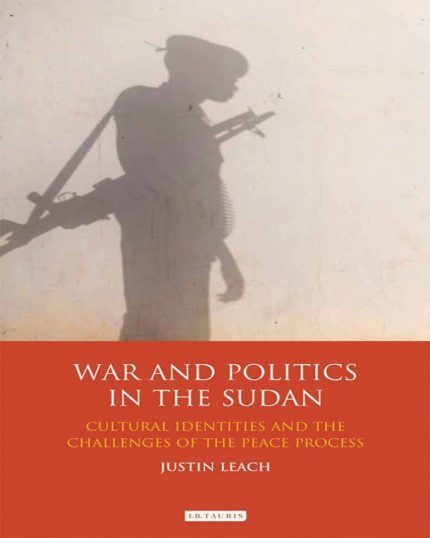
Brief Summary War and Politics in Sudan: Cultural Identities and the Challenges of the Peace Process. On 9 July 2011, South Sudan became an independent state after more than half a century of civil conflict wrought with human rights abuse. The post-colonial history of Sudan has been characterised by two Civil Wars spanning almost two decades each: the first from 1955-1972 and the second from 1983-2005. With questions of national and regional identity at the heart of both conflicts, the Sudanese Civil Wars have highlighted the key issues faced by post-colonial countries. War and Politics in the Sudan offers, for the first time, a revisionist comparative analysis of these Sudanese Civil Wars, disputing the popular notion that the 1972 Addis Ababa Agreement was simply a prelude to renewed conflict in 1983 and the eventual coup led by Omar al-Bashir and Hassan al-Turabi in 1989. In addition, Justin Leach posits that Sudan's size and diversity precludes the application of traditional theories of conflict resolution, questioning current approaches to the conflict's legacy. In this timely analysis of a region long beset by civil war, Leach outlines challenges to the Sudanese nationalist project, focusing on the strength of southern regional identities as well as the aims of northern political Islamists and potential problems for the new nation of South Sudan. ISBN:9781786723703 Author:Justin D Leach

New Daughters of Africa by Margaret B...

KShs3,890.00 KShs3,600.00
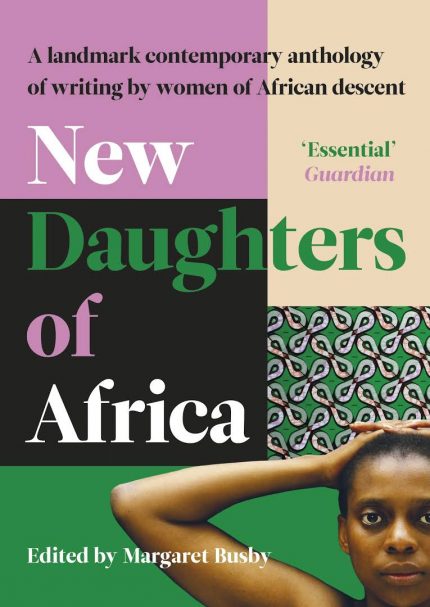
This major new international anthology brings together the work of over 200 women writers of African descent, charts a contemporary literary canon from 1900 and captures their continuing literary contribution as never before. A magnificent follow-up to Margaret Busby’s original landmark anthology, Daughters of Africa, this new companion volume brings together fresh and vibrant voices that have emerged in the last 25 years. Arranged chronologically, it brings together the work of women from across the globe—Antigua to Zimbabwe, Angola to the USA—to show the remarkable range of the African diaspora. It celebrates a unifying heritage and illustrates an uplifting sense of sisterhood and the strong links that endure from generation to generation as well as the common obstacles that female writers of colour continue to face as they negotiate issues of race, gender and class. A glorious portrayal of the richness, magnitude and range of the singular and combined accomplishments of these women, New Daughters of Africa also testifies to a wealth of genres: autobiography, memoirs, oral history, letters, diaries, short stories, novels, poetry, drama, humour, politics, journalism, essays and speeches. It showcases key figures and popular contemporaries, as well as overlooked historical authors and today’s new and emerging writers. Amongst the 200 contributors are: Chimamanda Ngozi Adichie, Patience Agbabi, Sefi Atta, Ayesha Harruna Attah, Malorie Blackman, Tanella Boni, Diana Evans, Bernardine Evaristo, Aminatta Forna, Danielle Legros Georges, Bonnie Greer, Andrea Levy, Imbolo Mbue, Yewande Omotoso, Nawal El Saadawi, Taiye Selasi, Warsan Shire, Zadie Smith and Andrea Stuart. A unique and seminal anthology, New Daughters of Africa represents the global sweep, diversity and extraordinary literary achievements of Black women writers whose voices, despite on going discussions, remain under-represented and underrated.