Showing 21–40 of 77 results

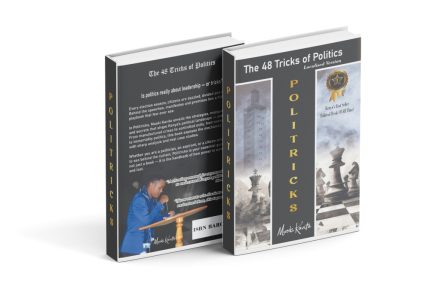
POLITRICKS

KShs500.00 KShs400.00
"Politricks" is a groundbreaking Kenyan political strategy book by Muoki Kavita. It unveils the hidden tricks, tactics, and power plays used by politicians to win influence, control narratives, and sway the people. Written with a sharp, revealing style, the book serves as a manual for aspiring leaders, political enthusiasts, and citizens seeking to understand the real game behind politics. More than a book, Politricks is a movement — sparking debate, empowering readers, and inspiring the next generation of leaders. Available now across major platforms.

Decolonising Africa’s Infrastructure:...

KShs1,750.00 KShs1,400.00
Why does Africa continue to invest billions in infrastructure, yet struggle to unlock broad-based prosperity? In Decolonising Africa’s Infrastructure, Dr. Apollo Buregyeya presents a bold and practical critique of the continent’s infrastructure model. He argues that many roads, railways, and projects are still designed along colonial lines, optimized for extraction and export rather than for connecting people, building industries, and strengthening internal markets. Drawing from engineering practice, economic reasoning, and African realities, the book explores how infrastructure can be redesigned to drive local industry, create jobs, and support sustainable development. It challenges policymakers, engineers, investors, and citizens to rethink not just what we build, but why we build it. This is not just a critique. It is a call to action for a new infrastructure philosophy, one that places African people, productivity, and sovereignty at its center.

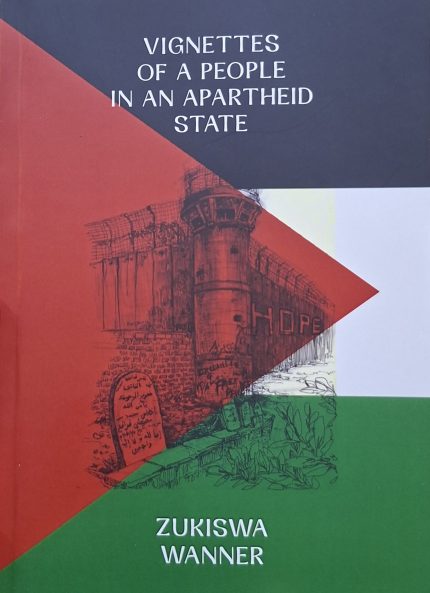
VIGNETTES OF A PEOPLE IN AN APARTHEID...

KShs1,090.00
In May 2023, South African author Zukiswa Wanner was a guest of the Palestine Festival of Literature. Coming from a country with a history of apartheid, she should have had an inkling of what to expect but her experiences were more than she bargained for. As Palestinians are not permitted to travel across checkpoints, the Palestine Festival of Literature brought her among other festival participants to different parts of the Palestinian territories (glorified bantustans) for literary engagement with audiences. Vignettes is her witness account of contemporary settler colonialism, genocide, and a world that’s damned by its refusal to hear the pleas for a truly free Palestine.

Flotilla: A Journey of Conscience by ...

KShs1,290.00
On 31 August, 2025, Zukiswa Wanner left Johannesburg, South Africa for Tunis, Tunisia where she hoped to board a boat and join hundreds of other civilians from 44 nations in an attempt to break the then 18-year siege on Gaza, Palestine to create a humanitarian corridor for much-needed aid. Her account of the preparations, the journey, the Gazan and multinational conversations along the way - and the eventual unwanted destination - is as darkly humourous and self-effacing as it is philosophical. If Wanner's Vignettes of a People in an Apartheid State was a witness account of settler colonialism and a genocidal apartheid state, Flotilla: A Journey of Conscienceis a rallying call for the 99 percent to understand Palestine as Ground Zero for colonialist and capitalist struggles and the urgent need for a globalised uprising. Because a free Palestine is the first step in freeing us all.

The Last Memory: When The Earth Began...

KShs3,000.00 KShs2,575.00
“Empires fall not when the conquered rise — but when the Earth grows tired of carrying their lies.” For centuries, the world’s story was written by the victors. The West crowned itself the keeper of civilization while bleeding continents dry — turning nations into markets, and memory into silence. The Last Memory begins in that silence — with the unflinching reckoning of those who refused to forget. It exposes the elegant machinery of exploitation that built empires and buried humanity beneath profit, arrogance, and denial. But this is not a book of revenge. It is a book of becoming. From the ashes of colonization rise the voices of the East, the South, and the forgotten. Africa, India, and China — long treated as the Earth’s servants — emerge as her stewards. The balance shifts. The world reawakens. As humanity stands on the edge of collapse and rebirth, the story turns inward — from conquest to conscience, from machinery to meaning. The Earth itself begins to dream, remembering everything we have done, and teaching us to listen once more. Through fire and forgiveness, humanity learns that redemption does not come through domination, but through remembrance. Judgment becomes understanding. Suffering becomes song. And in that song, the Earth finds her voice again. This is not a chronicle of despair. It is a testament of awakening — a bridge between the old world of power and the new world of purpose. It begins with the West’s crimes and ends with humanity’s redemption. It turns judgment into meaning — and suffering into song. The Last Memory: When the Earth Began to Dream Again A powerful, poetic epic that reminds us that the future of humankind will not be built by empires — but by those who remember. — Hardev Panesar

When The Gods Went Silent: The Covena...

KShs4,000.00 KShs3,550.00
For ages, we searched the skies for answers. We prayed to thunder, feared the stars, begged the heavens for meaning. But when the divine voices faded, something extraordinary happened—we awakened. 'When the GODS Went Silent' is the epic journey of consciousness itself: from the birth of light to the rise of memory, from the evolution of humanity to the emergence of Continuants—beings who carry not only the past, but the responsibility of the future. This is the story of becoming: of learning to stand without fear, to build without conquest, and to care without condition. A cosmic narrative that blends philosophy, myth, science, and spirit, it reveals a simple, transformative truth: the silence of the gods was never abandonment—it was an invitation, a doorway into our next evolution. In these pages, you will discover what humanity becomes when it listens not upward, but inward—and what awaits when a species finally grows into its own light. The gods did not disappear. They changed shape. They became us.

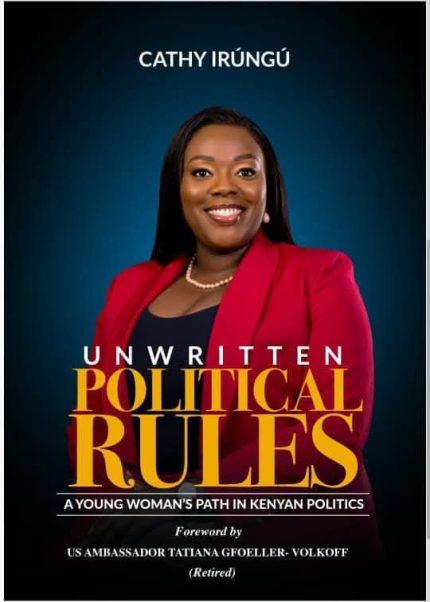
UNWRITTEN POLITICAL RULES BY CATHY IR...

KShs3,000.00 KShs1,960.00
Long before society was ready for her kind of leadership, Cathy Irungu stepped into rooms where decisions were made, where pain, betrayal, and negotiations danced hand in hand, and where truth often fell silent. Unwritten Political Rules is an unflinching account of a young woman's bold entry into the unforgiving world of Kenyan politics. In this deeply personal yet universally relevant narrative, Cathy reveals the raw costs of public service: the emotional scars, the psychological strain, and the cultural battles that women and young leaders must navigate. Cathy speaks candidly about gender-based violence, not just as physical harm, but as the sum of silencing, shame, and social exclusion. She interrogates voter behavior, unpacks the dysfunction of political parties, and questions the true independence of electoral institutions. This is more than a story; it is a rallying cry to every woman, every young person, and every citizen disillusioned by politics. Real change starts when good people stop waiting and start leading

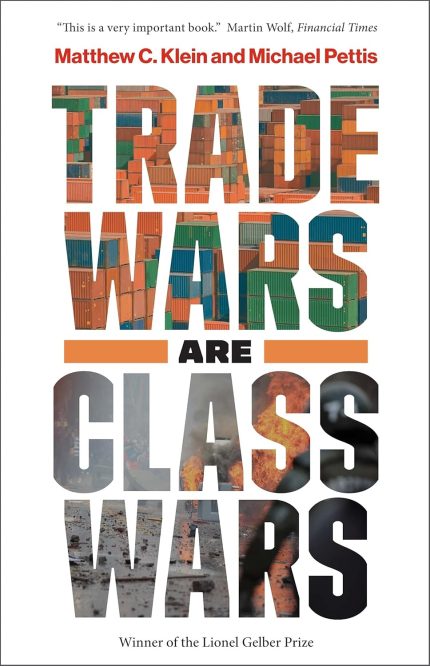
Trade Wars Are Class Wars: How Rising...

KShs4,800.00
Trade disputes are usually understood as conflicts between countries with competing national interests, but as Matthew C. Klein and Michael Pettis show, they are often the unexpected result of domestic political choices to serve the interests of the rich at the expense of workers and ordinary retirees. Klein and Pettis trace the origins of today’s trade wars to decisions made by politicians and business leaders in China, Europe, and the United States over the past thirty years. Across the world, the rich have prospered while workers can no longer afford to buy what they produce, have lost their jobs, or have been forced into higher levels of debt. In this thought‑provoking challenge to mainstream views, the authors provide a cohesive narrative that shows how the class wars of rising inequality are a threat to the global economy and international peace—and what we can do about it.

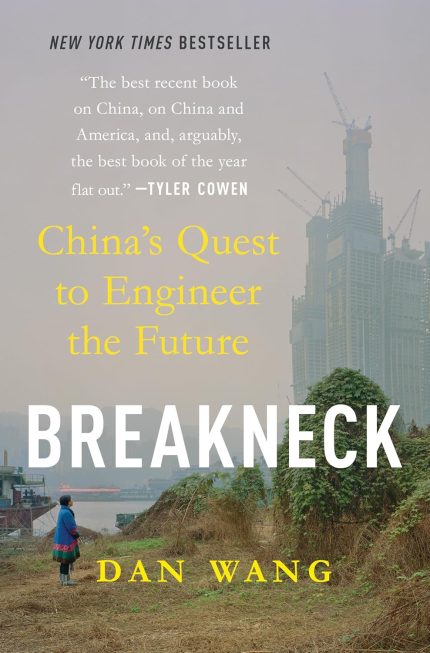
Breakneck: China’s Quest to Eng...

KShs4,790.00 KShs4,590.00
Wang blends political, economic, and philosophical analysis with reportage to reveal a provocative new framework for understanding China―one that helps us see America more clearly, too. While China is an engineering state, relentlessly pursuing megaprojects, the United States has stalled. America has transformed into a lawyerly society, reflexively blocking everything, good and bad Blending razor-sharp analysis with immersive storytelling, Wang offers a gripping portrait of a nation in flux. Breakneck traverses metropolises like Shanghai, Chongqing, and Shenzhen, where the engineering state has created not only dazzling infrastructure but also a sense of optimism. The book also exposes the downsides of social engineering, including the surveillance of ethnic minorities, political suppression, and the traumas of the one-child policy and zero-Covid. In an era of animosity and mistrust, Wang unmasks the shocking similarities between the United States and China. Breakneck reveals how each country points toward a better path for the other: Chinese citizens would be better off if their government could learn to value individual liberties, while Americans would be better off if their government could learn to embrace engineering―and to produce better outcomes for the many, not just the few.

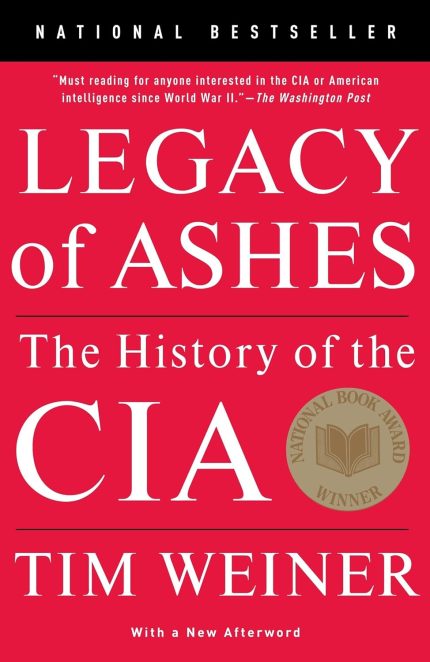
Legacy of Ashes: The History of the C...

KShs3,800.00 KShs3,500.00
For years, the CIA has managed to maintain a formidable reputation in spite of its terrible record, burying its blunders in top-secret archives. Its mission was to know the world. When it did not succeed, it set out to change the world. Its failures have handed us, in the words of President Eisenhower, “a legacy of ashes.” Now Pulitzer Prize–winning author Tim Weiner offers a definitive history of the CIA—and everything is on the record. LEGACY OF ASHES is based on more than 50,000 documents, primarily from the archives of the CIA itself, and hundreds of interviews with CIA veterans, including ten Directors of Central Intelligence. It takes the CIA from its creation after World War II, through its battles in the cold war and the war on terror, to its near-collapse after 9/ll. Here is the hidden history of the CIA: why eleven presidents and three generations of CIA officers have been unable to understand the world; why nearly every CIA director has left the agency in worse shape than he found it; and how these failures have profoundly jeopardized our national security.

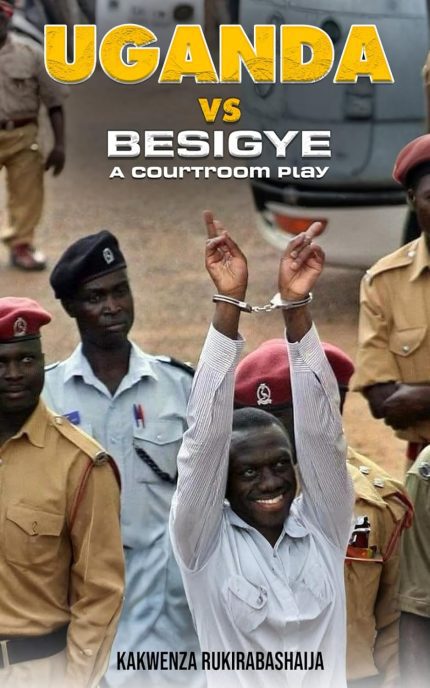
Uganda vs Besigye: A Courtroom Play b...

KShs1,500.00 KShs1,200.00
In 2006, the High Court of Uganda became the stage for one of the most controversial trials in the nation’s history. A former rebel doctor turned opposition leader, Col. (Rtd) Dr. Kizza Besigye, stood accused of rape in a case that divided the country, exposed fractures within state institutions, and revealed the uneasy relationship between political ambition and the rule of law. Uganda vs. Besigye is a powerful courtroom play that transforms real events into dramatic literature. It brings to life the voices, silences, contradictions, and psychological pressures that shaped the trial. Within its pages, a young university student struggles to keep her story straight, a frightened maid is pulled between truth and survival, investigators begin their work from tabloid gossip instead of victim reports, and lawyers duel with language in a battle for credibility rather than certainty. At the center of the conflict stands a judge who refuses to surrender integrity for political convenience. His wit, skepticism, and legal insight anchor a narrative filled with tension, irony, and moral inquiry. The courtroom becomes both theatre and battleground as truth navigates through coached testimonies, state pressure, public opinion, and the weight of suspicion that lingers even after acquittal. This play captures more than a single case. It reveals how justice bends under political influence, how trauma and memory clash with the demands of legal precision, and how individuals are used, discarded, or destroyed in the struggle for power. It explores the emotional toll on victims, the accused, and everyone caught in the conflict between truth and narrative. Uganda vs. Besigye is a story of state power, human vulnerability, and the fragile line between justice and performance. It is a scathing exploration of how legal systems can be manipulated, how witnesses can be shaped by fear and reward, and how political rivalry can turn a courtroom into a national spectacle. Told with dramatic force and sharp insight, this courtroom play invites readers to witness a nation wrestling with truth, doubt, and the meaning of justice itself. It is a compelling work for readers of political drama, human rights literature, African studies, legal theatre, and anyone interested in the intersection of politics and law.

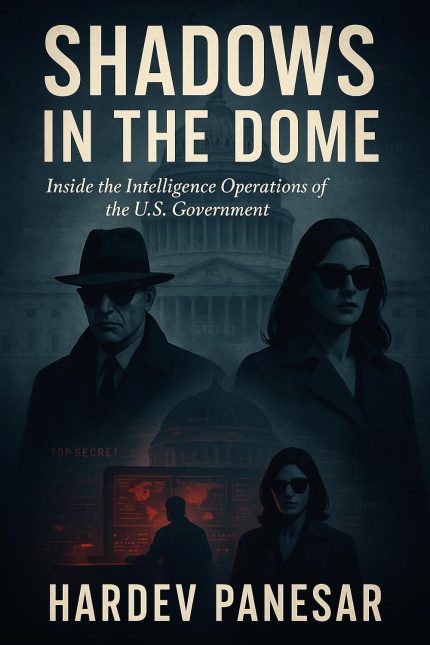
Shadows in the Dome: Inside the Intel...

KShs4,000.00 KShs3,500.00
They used me. Then they erased me. For decades, the United States has operated behind a carefully constructed veil of power, diplomacy, and national interest. But beneath that dome lies a world few ever see—a world of covert missions, betrayal, psychological manipulation, and expendable assets. In The Shadows in the Dome, Hardev Panesar pulls back the curtain on the intelligence operations of the U.S. government, exposing how global influence is wielded, how wars are manufactured, and how those who serve in silence are often abandoned when their usefulness expires. Blending firsthand observation, investigative insight, and an insider’s voice wrapped in caution and courage, this book explores Cold War espionage, proxy wars, cyber surveillance, and the chilling tactics of betrayal that stain the conscience of a superpower. This is not fiction. This is not guesswork. This is the truth that was never meant to be told. — Hardev Panesar

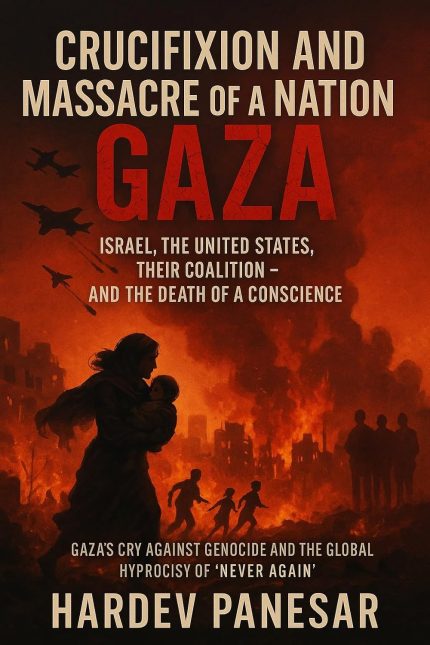
Crucifixion and Massacre of a Nation ...

KShs4,500.00 KShs4,250.00
The world watched in silence. Bombs fell on hospitals. Children starved as aid trucks were blocked. Entire families vanished in seconds, reduced to names scribbled on scraps of paper. Gaza became a graveyard of mothers, fathers, and children — not by accident, but by design. And still, politicians delivered speeches. Faith leaders offered empty prayers. The United Nations filed reports. America armed, Israel destroyed, Europe equivocated, Arab regimes normalized, and corporations profited. Silence became complicity. This is not a book of neutrality. It is testimony. It is accusation. It is grief sharpened into truth. It names names. It demands trials for the leaders of Israel, the United States, and their coalition allies — guilty of war crimes, crimes against humanity, and the genocide of the Palestinian nation. Shame on them. Shame on their silence. Shame on their betrayal of the most sacred duty: to protect the innocent. Gaza is not only a tragedy. Gaza is a test. And the world has failed.

UNWRITTEN POLITICAL RULES (HARDCOVER)...

KShs3,000.00
Long before society was ready for her kind of leadership, Cathy Irungu stepped into rooms where decisions were made, where pain, betrayal, and negotiations danced hand in hand, and where truth often fell silent. Unwritten Political Rules is an unflinching account of a young woman's bold entry into the unforgiving world of Kenyan politics. In this deeply personal yet universally relevant narrative, Cathy reveals the raw costs of public service: the emotional scars, the psychological strain, and the cultural battles that women and young leaders must navigate. Cathy speaks candidly about gender-based violence, not just as physical harm, but as the sum of silencing, shame, and social exclusion. She interrogates voter behavior, unpacks the dysfunction of political parties, and questions the true independence of electoral institutions. This is more than a story; it is a rallying cry to every woman, every young person, and every citizen disillusioned by politics. Real change starts when good people stop waiting and start leading

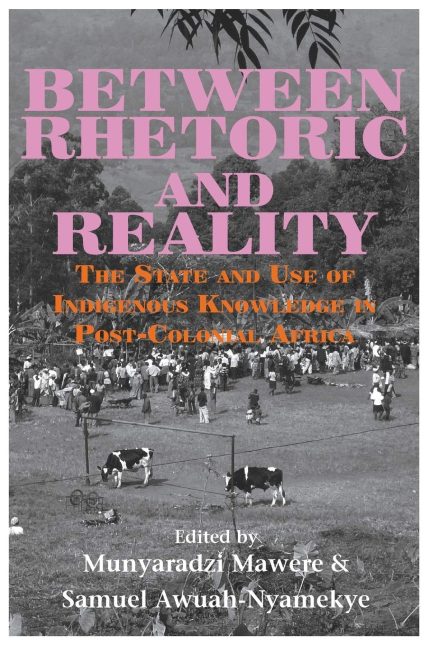
Between Rhetoric and Reality: The Sta...

KShs4,500.00 KShs4,000.00
Since time immemorial, indigenous peoples around the world have developed knowledge systems to ensure their continued survival in their respective territories. These knowledge systems have always been dynamic such that they could meet new challenges. Yet, since the so-called enlightenment period, these knowledges have been supplanted by the Western enlightenment science or colonial science hegemony and arrogance such that in many cases they were relegated to the periphery. Some Euro-centric scholars even viewed indigenous knowledge as superstitious, irrational and anti-development. This erroneous view has, since the colonial period, spread like veld fire to the extent of being internalised by some political elites and Euro-centric academics of Africa and elsewhere. However, for some time now, the potential role that indigenous peoples and their knowledge can play in addressing some of the global problems haunting humanity across the world is increasingly emerging as part of international discourse. This book presents an interesting and insightful discourse on the state and role that indigenous knowledge can play in addressing a tapestry of problems of the world and the challenges connected with the application of indigenous knowledge in enlightenment science-dominated contexts. The book is not only useful to academics and students in the fields of indigenous studies and anthropology, but also those in other fields such as environmental science, social and political ecology, development studies, policy studies, economic history, and African studies.

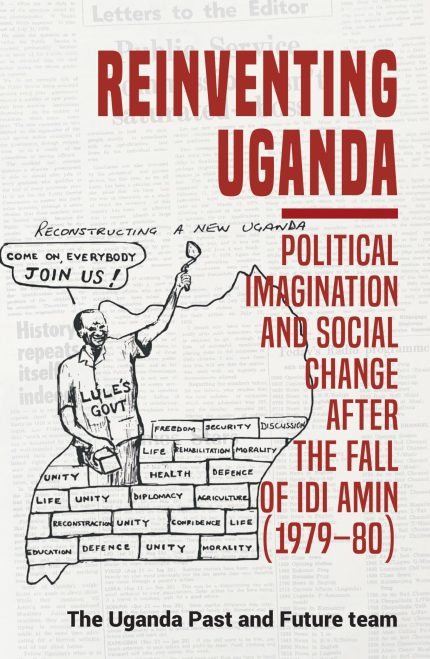
Reinventing Uganda: Political Imagina...

KShs1,500.00
In April 1979, as Idi Amin’s government crumbled in the face of the Tanzanian military advance, a moment of opportunity opened. After years of dictatorship and terrifying violence, Ugandans had the opportunity to start again. This book attempts to do justice to the multiple ways in which they imagined their future at the time, before the tragic end to these turbulent months—Milton Obote’s fraudulent election and the start of the civil war. For the first time in many years, men and – to a lesser extent – women were able to ask critical questions about what it might mean to be Ugandan, how state and society should be organised, about who should hold authority—and in the name of what. This was a time of fear and economic deprivation, in an international context largely defined by the Cold War and the emergence of neoliberalism. But it was also a time of hope, and of the flourishing of political imagination that would nurture the public debate for many years to come.

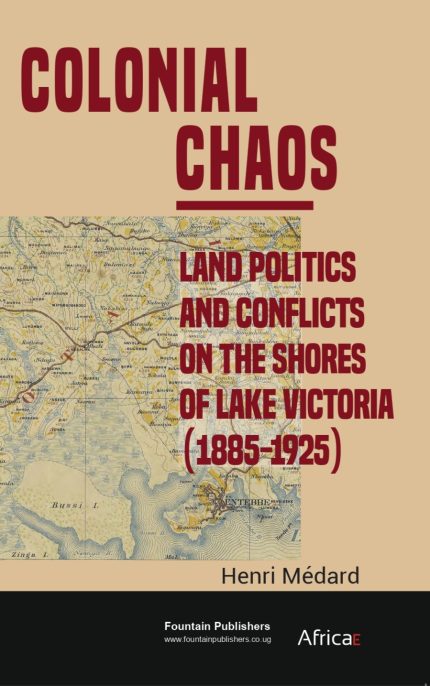
Colonial Chaos: Land Politics and Con...

KShs1,500.00
The book shows that the tension surrounding the hereditary clan chiefs in Buganda is as much a geographical tension between the people of the lake and the people of the land as it is a tension between ancient clan powers and a modernizing patronage power.

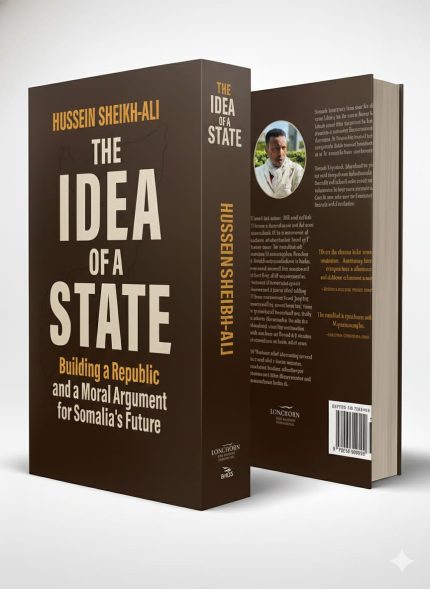
Idea of a State: Building a Republic ...

KShs2,000.00 KShs1,800.00
Idea of a State: Building a Republic. Moral Argument for Somalia’s Future presents a bold vision for rebuilding the Somali state on foundations of integrity, meritocracy, and constitutional order. Blending personal experience with national analysis, the book explains why Somalia has struggled and outlines practical reforms to revive governance, strengthen institutions, and unite citizens around shared moral principles. It is a call to action for leaders, thinkers, and ordinary Somalis committed to a just and functioning republic.

POLITRICKS

KShs1,000.00 KShs900.00
Politricks is the book politicians hope you never read. It uncovers the hidden tactics used to influence your thoughts, shape elections, and control public perception—often without you realizing it. If you’re a leader, an aspiring politician, or simply a Kenyan who wants to understand how power really works, this book gives you the psychological tools and insider strategies normally reserved for political insiders. Once you read Politricks, you will never look at politics the same again. Get your copy today—before the next political game begins.

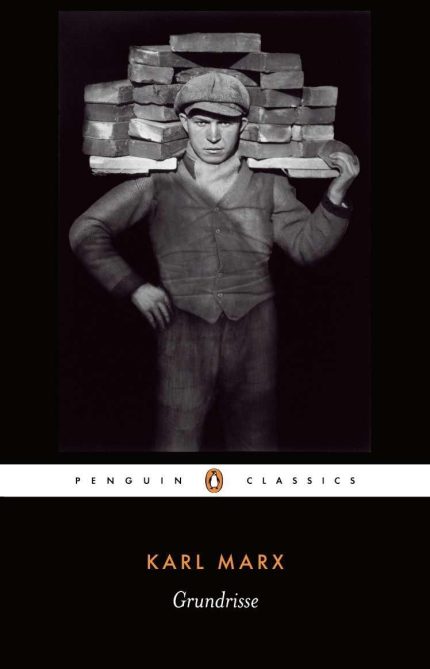
Grundrisse: Foundations of the Critiq...

KShs2,990.00
Written during the winter of 1857-8, the Grundrisse was considered by Marx to be the first scientific elaboration of communist theory. A collection of seven notebooks on capital and money, it both develops the arguments outlined in the Communist Manifesto (1848) and explores the themes and theses that were to dominate his great later work Capital. Here, for the first time, Marx set out his own version of Hegel's dialectics and developed his mature views on labor, surplus value and profit, offering many fresh insights into alienation, automation and the dangers of capitalist society.