


























QUICK DELIVERY
Swift dispatch
KShs1,750.00 KShs1,400.00
In stock
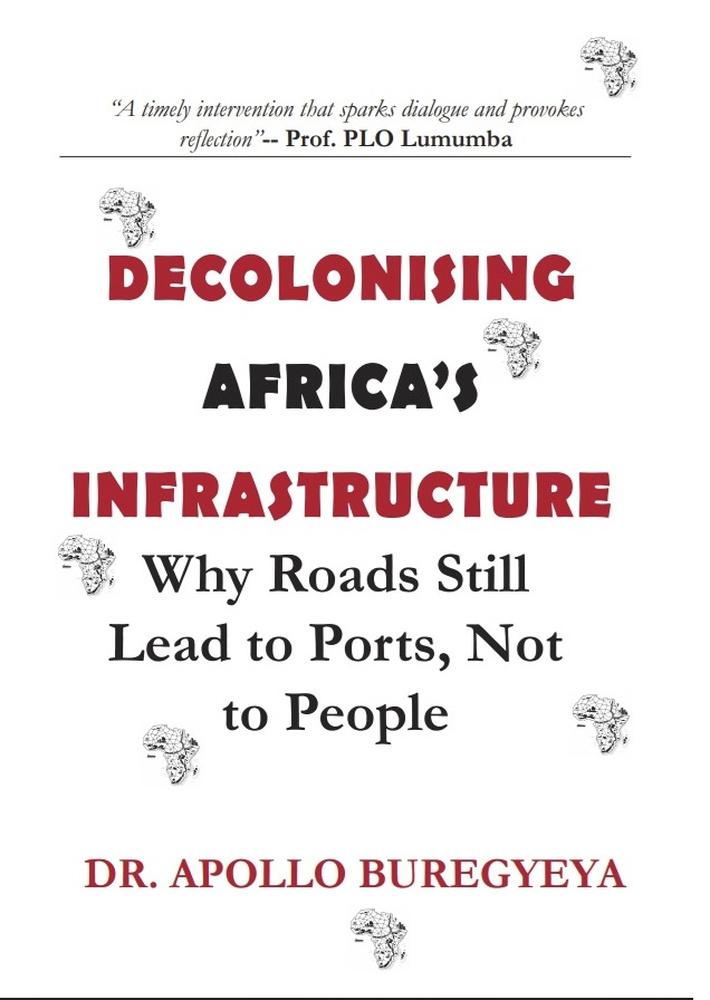
Why does Africa continue to invest billions in infrastructure, yet struggle to unlock broad-based prosperity?
In Decolonising Africa’s Infrastructure, Dr. Apollo Buregyeya presents a bold and practical critique of the continent’s infrastructure model. He argues that many roads, railways, and projects are still designed along colonial lines, optimized for extraction and export rather than for connecting people, building industries, and strengthening internal markets.
Drawing from engineering practice, economic reasoning, and African realities, the book explores how infrastructure can be redesigned to drive local industry, create jobs, and support sustainable development. It challenges policymakers, engineers, investors, and citizens to rethink not just what we build, but why we build it.
This is not just a critique. It is a call to action for a new infrastructure philosophy, one that places African people, productivity, and sovereignty at its center.

Swift dispatch
No account yet?
Create an Account
nyokabijesse –
A great book!
In “Decolonising Africa’s Infrastructure,” Dr. Apollo Buregyeya—a seasoned civil engineer, scholar, and author—delivers a compelling critique of the ways infrastructure choices have perpetuated inequality and hindered Africa’s progress. Drawing on extensive professional experience and deep knowledge of the continent’s history, Buregyeya presents a visionary manifesto for truly sovereign development. This book is a passionate rallying cry for Africans, particularly those in positions of leadership and public service, to redefine infrastructure on their own terms.
Buregyeya challenges the status quo, revealing how infrastructure across Africa remains shackled to colonial legacies. From export-driven ports to railways designed for resource extraction, he argues that infrastructure is not a neutral undertaking. Every road, bridge, and power line is a political decision—shaping who has access, who prospers, and who is marginalized.
With incisive analysis, vivid case studies, and innovative proposals, “Decolonising Africa’s Infrastructure” lays out a fresh blueprint rooted in local industry, knowledge sovereignty, climate resilience, and respect for citizen dignity. The book envisions a future where infrastructure is conceived and constructed by Africans, for Africans—prioritizing digital autonomy, resilient roads, participatory public works, and local supply chains over donor-driven priorities.
Buregyeya compels readers—engineers, policymakers, students, and citizens alike—to rethink the very definition of infrastructure and its role in shaping Africa’s destiny. He insists that infrastructure is more than concrete and steel: it is fundamentally about power, priorities, and values. And now is the time for Africans to reclaim that power.
The book highlights how, for generations, Africa’s infrastructure was designed not for internal development but for extraction, with networks built to move raw materials to foreign markets rather than connect people and communities. Power grids and transportation lines often bypassed rural populations, privileging industrial zones and elite interests. This colonial logic persists today, with success measured by export volumes and bankable projects, rather than by how well infrastructure serves ordinary citizens.
Buregyeya exposes how global lending institutions and donor agendas still shape infrastructure priorities, often sidelining local needs, creativity, and participation. He argues that true decolonization requires not just technical expertise but the intellectual courage to imagine alternatives—systems that serve people first, foster local industries, and honor the continent’s diversity.
The book critically examines initiatives like China’s Belt and Road, where projects are dominated by foreign interests and offer scant opportunities for local participation or knowledge transfer. Buregyeya calls for African governments to build internal capacity for project evaluation, transparent procurement, and public accountability—insisting that infrastructure should serve as a foundation for nation-building, not just as a symbol of prestige.
He also tackles the political distortions that plague infrastructure planning, from vote-driven road construction to elite-controlled contracts and neglected maintenance. For Buregyeya, the true test of progress is whether infrastructure connects people to services, opportunities, and one another—not simply whether it is new or grand.
Ultimately, Buregyeya urges a shift away from donor frameworks and imported models. He advocates for institutionalizing imagination and innovation, protecting public works from political interference, and creating systems that reward creativity, honesty, and accountability. He contends that failures must be openly addressed and learned from, rather than hidden or ignored.
“Decolonising Africa’s Infrastructure” is an inspiring, five-star work that challenges conventional wisdom and empowers Africans to envision and build infrastructure that reflects their own aspirations, values, and realities.