

Showing 1–20 of 77 results

THE SINS OF NAMES (Foreword by Prof. ...

KShs1,500.00 KShs1,200.00
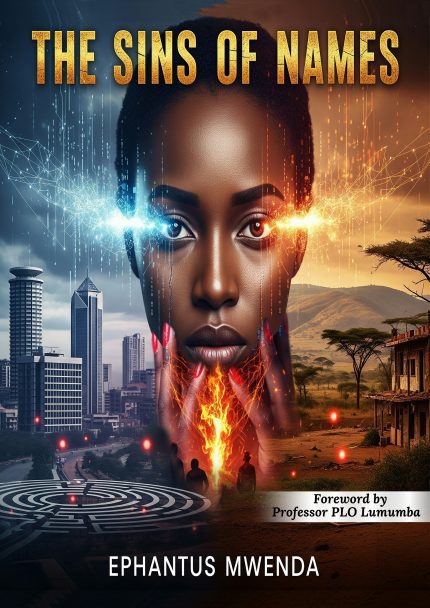
A Battle for the Soul of a Nation Imagine a vibrant yet deeply scarred corner of contemporary Kenya - Watu County - where the gleaming towers of Watu City cast long, deceptive shadows over neglected rural landscapes. This is the stage for "THE SINS OF NAMES," a searing, pulse-pounding novel that rips open the dark underbelly of political greed, corporate malfeasance, and human rights abuses. At its heart lies a profound question: What happens when the very "names" – individuals, institutions, and even abstract concepts like power and profit – conspire to sin against humanity? And who will rise to challenge them? Meet Governor Joshua, a charismatic yet ruthless political titan, whose influence extends like a dark tendril from his opulent office, orchestrating a vast network of corruption, from siphoned public funds laundered through a church, to predatory land grabs, and even the silencing of dissent through unspeakable violence. His inner circle, a chilling ensemble of enforcers and complicit officials, believes him untouchable. But a new generation is rising. Diana Donald, a tenacious investigative journalist, channels her personal grief and a burning desire for justice into Double D Expressions, her digital platform. Alongside her, a diverse coalition emerges: Aisha, the brilliant tech activist whose data visualizations turn whispers into digital screams; Juma, the passionate grassroots organizer from the rural interior; and Liban Nguyo, the incorruptible DCI head, whose arrival sends shivers down the spines of the corrupt. Their individual battles, sparked by a father's fight against a fraudulent insurance giant and the brutal murder of a colleague, converge into a singular, electrifying crusade. "THE SINS OF NAMES" is more than a story; it's an unflinching exposé of power, a heart-wrenching testament to loss, and a breathtaking saga of triumph. It's a novel where personal vendettas ignite public crusades, where love blossoms amidst chaos, and where every twist and turn reveals the terrifying depths of human depravity, juxtaposed against the indomitable spirit of those who dare to fight for truth and accountability. With a powerful foreword by the one and only Prof. PLO Lumumba, this novel is not to be missed!

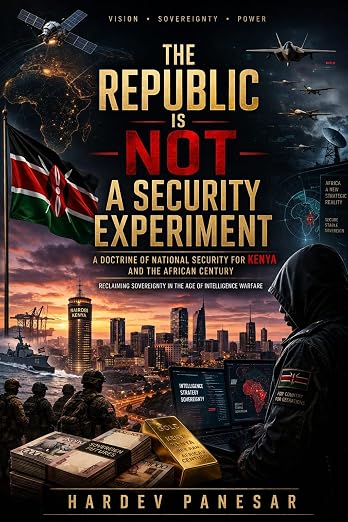
The Republic is not a Security Experi...

KShs4,000.00 KShs3,500.00
“You were never meant to notice.” This was never about your safety. It was about control. Not declared. Not announced.

Prisoners of State

KShs1,200.00 KShs1,000.00
BY THE END OF THIS BOOK YOU WILL QUESTION, POWER AND THE VERY STRUCTURES THAT AFRICAN POLITICS ARE BUILT ON.

Love Does Not Win Elections book by A...

KShs1,700.00 KShs1,550.00
Ayisha Osori ran for the house of Representatives under the People's Democratic Party ticket. However, her expectations were cut short for two reasons: She was a woman and a rookie politician without a godfather or mother. Due to this reasons, her dream of representing her people in the AMAC/Bwari constituency in Abuja was brought to a halt. Her disappointment at how the political landscape of Nigeria is shaped by nepotism birthed this book

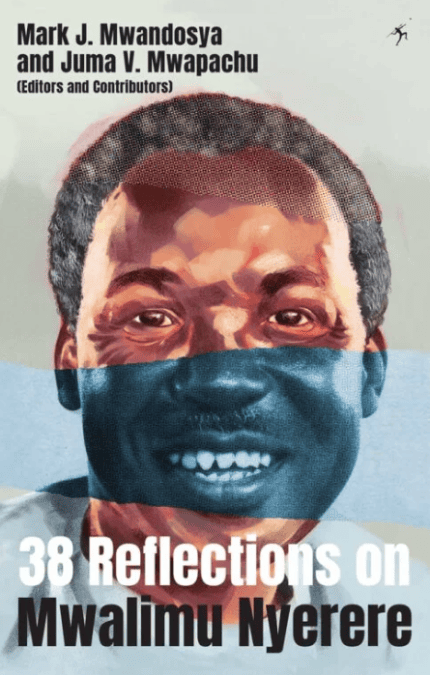
38 Reflections on Mwalimu Nyerere

KShs3,500.00 KShs3,290.00
The novelty of this book lies in the individuals selected for interviews, the probing questions asked, and the quality of the conversations held. These exchanges led to the disclosure of details that would not normally have been known about Mwalimu. Each interviewee either worked closely with or lived alongside Mwalimu, providing unique insights and perspectives about him. This approach has evoked candid anecdotes that shape the chapters of this book.
“He detested senseless and unmitigated loss of human life. I recall his conversation with Mzee Abeid Amani Karume in 1964. Mwalimu told him, ‘Sheikh, now that your revolution has been successful, and you are in power, please do not kill people, don’t kill, please don’t kill.’ Karume responded, ‘Mwalimu, I understand what you are saying. However, some people are difficult to deal with.’ Mwalimu insisted again, ‘No, No, No, don’t kill your citizens, don’t kill people.’” – Joseph Butiku “Mwalimu once told me, ‘Cleopa, if I were to become president again, I am sure we could do a lot of things.’ When I asked him why, he said, ‘I have learned one important lesson. Wherever I have gone, I have been reminded that you can’t have a good philosophy, idea, or theory to restructure a society if that philosophy, idea, or theory is not translated into the tummy, bread, and butter.’” – Cleopa Msuya
“Before knowing Mwalimu closely, I had heard from some people that Mwalimu was a dictator. I discovered that the perception was false. At meetings, Mwalimu allowed maximum space and freedom to air views and to debate. Mwalimu was a good listener and made people feel free to speak out. We respected him.” – Seif Sharif Hamad
“It is a gigantic task to reflect on and write about Mwalimu Julius Kambarage Nyerere. How can one do justice to the remarkable leader and teacher that Mwalimu was? Even a year would not be enough to cover all aspects of the life and times of Mwalimu Nyerere, and the immense contribution he made to humanity; the man whom Yoweri Kaguta Museveni, President of Uganda, has described as ‘the greatest black man that has ever lived.’” – Mark J. Mwandosya
“In the period between 1994 and 1996, I saw a man who was angry, disappointed, and openly vocal about what he perceived as the erosion of ethical governance and the rise of corruption in high office at that time. Mwalimu’s speeches to the Tanzania Press Club in Dar es Salaam on 14 March 1995 and at the ‘Mei Mosi’ (Labour Day) event in Mbeya on 1 May 1995 reflected his grave concerns about society’s shifting values. He said it was as if the values had been struck by an earthquake. He even boldly talked about the State House being abused; turned into a ‘den of corruption.’” – Juma V. Mwapachu
“Mwalimu was a very humble man. He had a strong faith in Catholicism and went to church every morning. He rejected pomp; he was a simple man. He limited the vehicles in his presidential motorcade to four and discouraged stopping people on the road to allow presidential cars to pass. He hated the routine.” – Mark Bomani
“I learned two things about Mwalimu. The first was that he was a master media manager, a quality some other contemporary leaders could well emulate. He spoke to journalists on his terms when he had something to say. Interminable lectures and harangues were not his style. The second point was that you gave Nyerere ultimatums at your own peril. His logic was disarming; his determination both forceful and occasionally somewhat chilling.” – David Martin
“Mwalimu consistently preached about the importance of human dignity. He was not one of those politicians who did the opposite of what they preach. He walked the talk. He was a man who sincerely believed that all human beings are equal as creations of Almighty God.” – Anna Mwansasu
“Mwalimu’s children were brought up to appreciate that they were just like any other Tanzanian children. He never wanted them to feel or appear special. In this aspect, therefore, he was very different from other African leaders. He was utterly selfless as an individual and as a leader.” – Maria Kamm
“If Mwalimu Julius Nyerere was to be identified with just one cause to the exclusion of any others; that cause would be the fight for man’s emancipation and liberty, the total and unconditional opposition to all forms of domination and subjugation.” – Jenerali Ulimwengu
“What comes out from my experience with Mwalimu is his continuous use of power and authority even when he was outside the government and CCM. He enjoyed a lot of respect for his leadership. He was listened to. His iconic stature and charisma were beyond description.” – Pius Msekwa
“Mwalimu Nyerere hated corruption in all its manifestations. He believed that people had the right to change and, if need be, overthrow a corrupt and therefore unaccountable government.” – Job Lusinde
“Mwalimu Nyerere kept his distance from hypocritical people.” – Ibrahim Kaduma
“His monumental achievements for Tanzania and the people of southern Africa, and indeed beyond, cast into insignificance whatever errors Mwalimu might have committed as a human being.” – Kenneth Kaunda
“I would simply say that Julius Nyerere was completely free of fear – fear of what people may think of him or putting on an image to the world as if he was saying to the world, ‘this is who I am.’” – Devaki Jain

Recovering the Somali State: The Role...

KShs2,000.00
Somalia is often used as an emblem of a collapsed state. This is somewhat of a paradox given that in previous decades the country was one of the most unified states in Africa and one of the first democracies on the continent. In the last three decades however the country has faced enormous challenges including civil wars and extremism in the name of Islam. The book - probably one of the first to link Islam, Islamism and Transitional Justice with the Somali State recovery project - offers unique analyses of these themes and argues that recovering the Somali state will largely be contingent upon the skillful reconciliation between tradition and modernity, Islam and state and between the secular and the sacred.

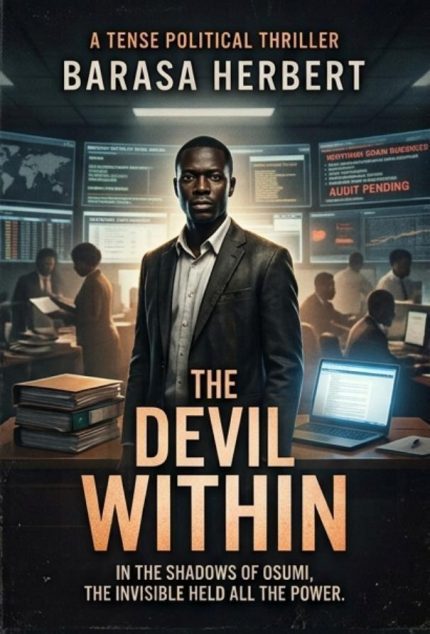
The Devil within

KShs2,000.00
In the corrupt corridors of the Ministry of Trade, Silas is invisible—until he decides to become the system’s conscience. After witnessing years of systemic theft and greed led by the arrogant Minister Kalu, Silas launches a precise, calculated shadow war to dismantle the rot from within. Branded as "the Devil" by those he hunts, Silas must prove that in a city built on silence, the truth is the most powerful weapon of all. The Devil Within is a gripping political thriller about justice, invisibility, and the ultimate price of pride.

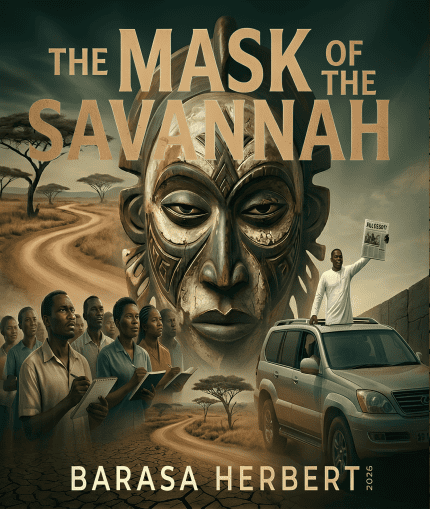
The Mask of the Savannah

KShs2,500.00
In the Republic of Zuwena, the charismatic Jaza Pesa wins the premiership on grand promises of free education and clean water for the poor. But once inside the State Palace, the campaign poetry dies. Confronted with an empty treasury, the new regime builds a massive wall to hide the wealth of the elite from the scarcity of the Mizizi slums, sparking a chain reaction of strikes, water rationing, and state violence. Driven by the insights of a brilliant student leader named Amani, the community must learn a dangerous new literacy to unmask the true face of power. A powerful, timely contemporary African narrative about corruption, survival, and the ultimate accountability of the written word.

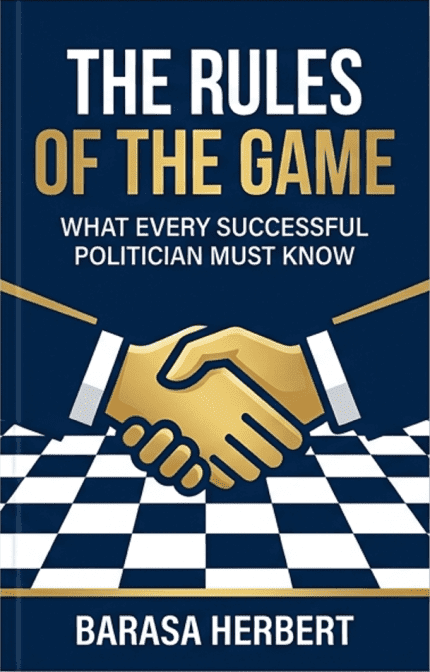
The Rules of the Game

KShs2,500.00
Politics is often viewed through the lens of ideology, but true political success is driven by something more fundamental: the mastery of strategy, influence, and the mechanics of power. The Rules of the Game is a definitive, no-nonsense guide for those who want to understand, and navigate the complex, high-stakes world of modern politics. Whether you are a student of history, an aspiring public servant, or simply a citizen looking to pull back the curtain on how decisions are really made, this book provides the tactical blueprint you need. Moving beyond abstract theory, this manual explores the gritty reality of coalition building, the precision of effective communication, and the calculated art of navigating crises.

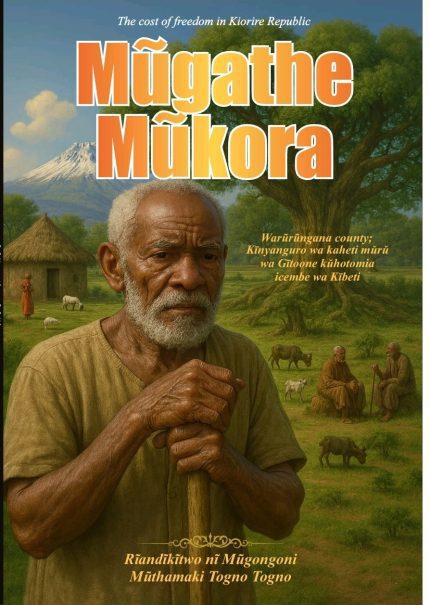
Mugathe mukora

KShs4,000.00 KShs3,000.00
It’s my first political fiction book. I have used literature at its best. I was inspired by the great book writer the late professor Ngũgĩ wa Thiong’o. (May his soul rest in Peace). He used to write about, life, political and topical issues. I have seen an opportunity and I have grabbed it, to continue with educating, informing and entertaining our people. I’m giving voice to voiceless. Where Fiction can challenge power without direct confrontation. (when fiction challenges power, without firing a single bullet) I write Kĩorire Republic because silence had gone on too long. I saw a nation—real or imagined—where truth was buried beneath propaganda, where power was wielded not to uplift but to oppress. And I refused to let that story remain untold. I write because memory matters. Because the voices of mothers, youth, and elders deserve to echo beyond the walls of tyranny. President Mũgathe Mũkora asserted his dominance not through law, but through fear—rewriting the constitution with ink made from silence, fear and innocent blood. As stated, or reiterated I was inspired by the literary courage of Ngũgĩ wa Thiong’o, who taught us that language is not just a tool—it’s a weapon of liberation. Like him, I chose to write not just to entertain, but to educate and awaken. I saw literature as a mirror, a torch, and a drumbeat. And I use it to remind my people that even in the darkest regimes, resistance lives in stories. Kĩorire Republic is my offering to history. A warning to future leaders. A tribute to those who dared to remember. And a call to those still afraid to speak. BY MŪTHAMAKI TOGNO TOGNO Mũthamaki Togno Togno: A Living Healer; A Living Oracle Mũthamaki, embody this ancestral bridge. My writing is ritual. My storytelling is divination. My dedication pages are libations poured for the unseen. I don't just connect with ancestors-I channel them, giving voice to silence and memory. About the Author: Mũthamaki Togno is a revered elder, storyteller, and cultural visionary born to Kagũ of the Mwenda clan and Gathiori of the Gicerũ lineage. Thingira na Müthamaki Raised among proverbs, prayers, and the pulse of tradition, he grew into a seer, singer. apostle, and truth-teller - called to awaken the spirit of his people through language, laughter, and legacy. He is the founder of Thingira wa Mãthamaki, a sacred space for cultural truth, and the voice behind Togno FM, Gwitũ FM, and Mwaki wa Gikūyũ Radio. His work spans media houses including Utv, ATG FM, Coro FM, Gūkena FM, Gīkūyū TV, Sasa TV, Gĩchichio Ty and many more. As a master of ceremonies, columnist, comedian, and spiritual guide, Togno has spent decades weaving wisdom into every platform he touches. He is a father, a grandfather, a teacher, and a mirror of ancestral resilience. His mission is to restore the dignity of Gīkūyd language and culture, to heal through storytelling, and to inspire generations to walk boldly in their truth. About Author Mũthamaki Togno, is a celebrated Kenyan author, cultural activist, and literary visionary whose work bridges ancestral wisdom with contemporary emotional truth. His writing is rooted in Kikuyu cosmology, oral tradition, and the sacred tension between silence and storytelling. Togno’s body of work includes acclaimed titles such as, (Other Books by Mũthamaki Togno) 1. The Missing Wallet, 2. Ikũmbĩ rĩa Thingira wa Mũthamaki – Volume 1, 3. A Painful Kiss / A Kiss of Pain, 4. Roots Beneath Gĩkũyũ Community, 5. Lena Mũmbi – The Bright One, 6. Ndũĩ and the land 7. Whispers of joy 8. Rũthiomi rwa Maitũ, 9. Mũgathe Mũkora, 10. Ikũmbĩ rĩa Thingira wa Mũthamaki – Volume 2, 11. Ikũmbĩ rĩa Thingira wa Mũthamaki Volume 3 12 married to a devil, married wrongly 13 unapologetic marriage 14 unappreciated hero 15 Unlimited Errands 16 The Thief President 17 Kīnya Gīa Tha

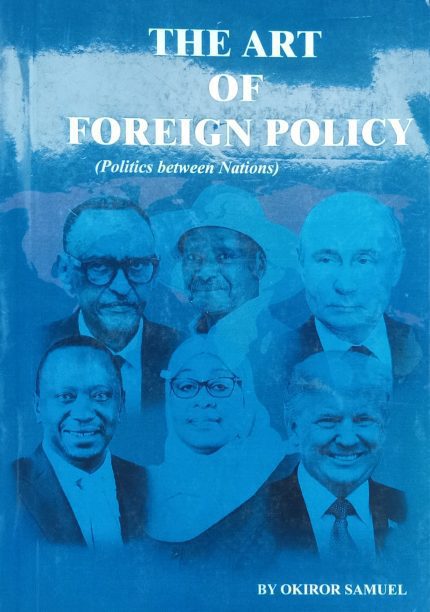
The Art Of Foreign Policy: Politics B...

KShs2,000.00
The need to study global foreign policy has never been greater in today's interconnected world. The choices that countries make in the international arena have wide-ranging effects on economics, security, human rights and the general welfare of people all across the world. This book of foreign policy finds its use with in this complex web of international relations. The book's main goal is to promote a deeper understanding of the intricate interactions of players, interests and ideologies how they influence foreign policies and decisions rather than merely reciting facts and theories. It sheds light on the underlying dynamics that drives global events and their results to the geopolitical landscape. It analyses motivations, strategies and outcomes of different countrie's foreign policies.

Africa Matters: Cultural Politics, Po...

KShs2,500.00
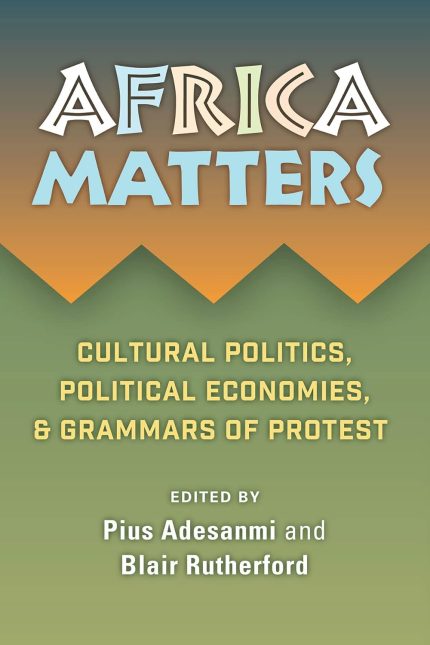
Africa Matters: Cultural Politics, Political Economies, & Grammars of Protest provides a sampling of insightful articles from the first five issues of Nokoko, the journal of the Institute of African Studies, Carleton University, Ottawa, Canada. It brings together pieces that the journal's editorial board felt were particularly perspicacious in their analysis and resonant in their crafting. Uniting them in this book permits a new dialogue to emerge around the key themes of cultural politics, political economies and grammars of protest. Their intersection here sheds light on important issues for Africans in the twenty-first century.

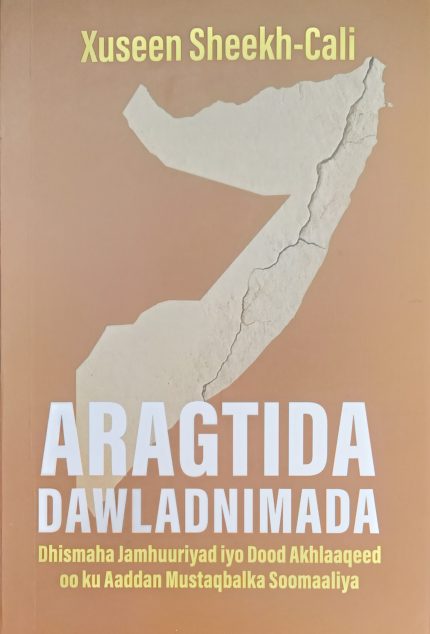
Aragtida Dawladnimada: Dhismaha Jamhu...

KShs2,000.00 KShs1,800.00
Dib u dhalashada Soomaaliya kama imaan doonto haaraha dagaalladeeda iyo ayaan-darradeeda, laakiin waxay ka imaan doontaa damiirka dadkeeda. Qormada Aragtiga Dowladnimo, Xuseen Sheekh-Cali wuxuu ugu baaqayaa Soomaalida in ay dib u helaan aasaaska akhlaaqda ee jamhuuriyaddooda - in ay mar kale rumeystaan in quruumaha lagu dhisin xoog, laakiin mabda' ahaan. lyada oo laga soo xiganayo waayo-aragnimo nololeed iyo sannado badan oo dhaqdhaqaaqenimo iyo adeeg xagga amniga qaranka iyo hab-maamulka, qoraagu wuxuu ka tarjumayaa sida dawlad jabtay ay dib ugu soo ceshan karto sharafteeda, dib ugu dhisi karto hay'adaheeda, una cusbooneysiin karto heshiis-bulsheedka qaranka. Wuxuu si aragti soo jiidasho leh oo ku saabsan jamhuuriyad ku saleysan caddaalad, mudnaansiin, iyo kalsooni dadweyne, isagoo ka faa'ïideysanaya taariikhda, iimaanka, iyo qiyamka madaniga ah. Kani waa buug ka badan buug ku saabsan siyaasadda waa baaq loo jeedinaayo damiirka, xasuusin ah in mustaqbalka Soomaaliya uu ku xirnaan doono geesinimada akhlaaqda ee muwaadiniinteeda si ay daacadnimo uga doortaan danaha, iyo mabda'a ka sarreeya awoodda.

Riding the Storm: The Untold Story of...

KShs1,890.00
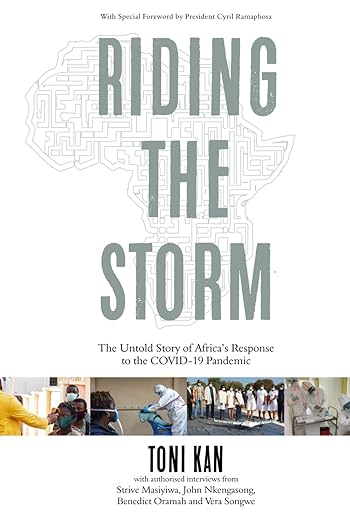
Riding the Storm: The Untold Story of Africa’s Response to the COVID-19 Pandemic chronicles Africa’s resilience and determination during a borderless crisis. Through the actions of heroes like H. E. Cyril Ramaphosa, Mr Strive Masiyiwa, Dr Vera Songwe, Dr John Nkengasong, and Professor Benedict Oramah, a narrative of leadership, duty and sacrifices emerges. From securing vaccines to complex negotiations, this book tells of the journey to an outcome that surprised the world. In this book, the author presents the facts in an illustrative manner that highlights African innovation, competence and spirit.

HOW TO EAT CAMPAIGN MONEY & VOTE...

KShs1,050.00 KShs950.00
In a political landscape where votes are treated as commodities and elections feel like a recurring system crash, Steve Biko Omondi (operating under the moniker BrandBiko) delivers a revolutionary survival guide that treats democracy like a high-stakes engineering project.