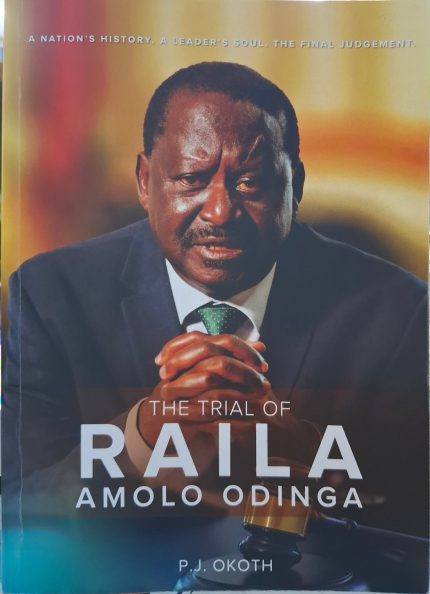
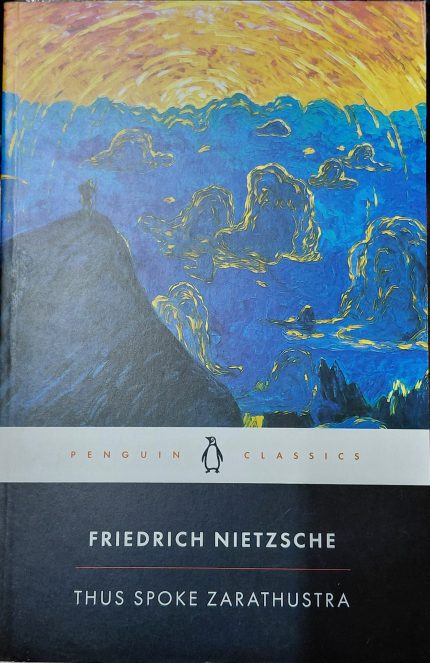
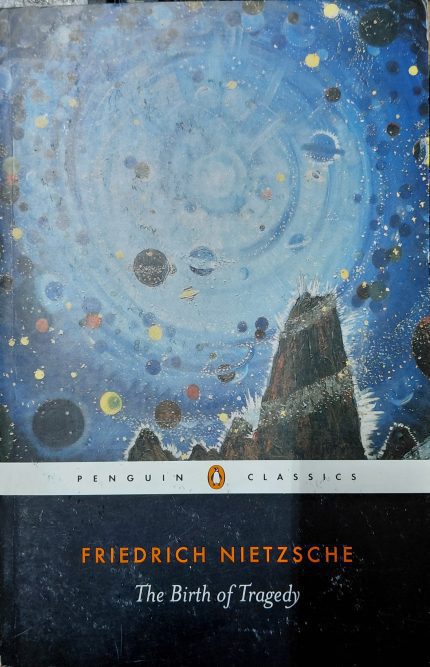
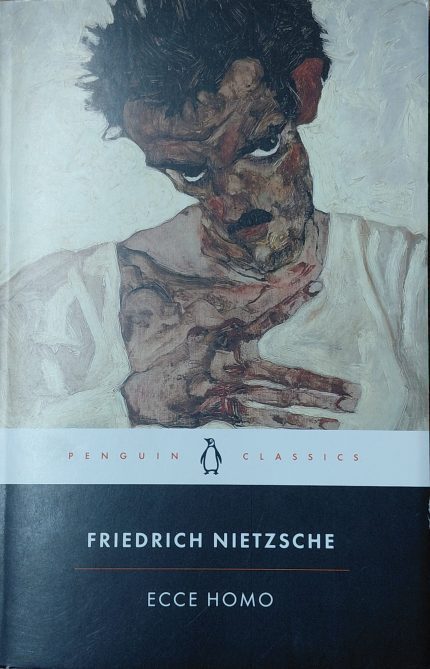
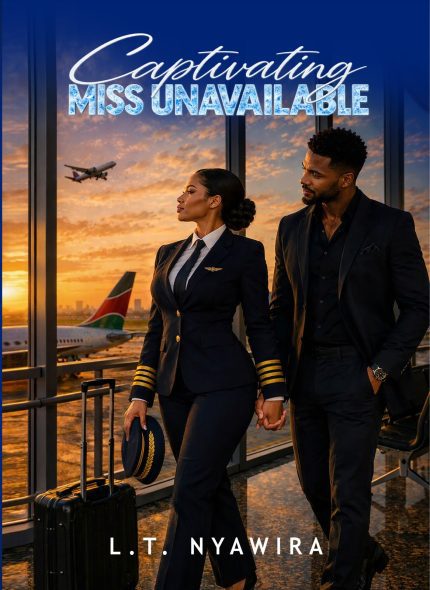
A speculative fiction that places former Kenyan Prime Minister Raila Amolo Odinga on trial in a celestial courtroom. The book weaves Kenya's turbulent political history with divine judgment, exploring the moral complexity of resistance, the costs of leadership, and whether a leader should be judged by his failures or by the hope he inspired. Drawing on the tradition of Ali Mazrui's The Trial of Christopher Okigbo, Rider Haggard's ancestral spiritualism from his book Montezuma’s Daughter, the Book of Enoch, and Kenya's own intellectual heritage, the work bridges the hard ground of history with the speculative sky of myth. It is also deeply personal - born from the author's exhaustion with earthly politics and his journey from public health administration to writing.
The Origin: A Whisper in the Night
The book was conceived in October 2020, during a moment of profound weariness. The author, a dental surgeon and hospital CEO, was bent over hospital plans while his wife observed: "You grow thin. You barely touch my food. You don't sleep. And you look sad and stressed." The endless night hours reviewing systems, writing blueprints, only to have operational chaos and political constraints shred them before dawn—"public service" had become a theater of constraints.
His predecessor had chosen him as deputy not for lineage or loyalty, but for his willingness to build. Together and in their individual styles fought political interference, the erosion of institutional autonomy, and the relentless pressure to compromise professional standards. He witnessed boards, informal media, and an unhinged gatekeeper used as inquisitions, data-free accusations of "inefficiency," and the manufacturing of narratives to remove competent workers and leaders.
The weight of it all - the fight to keep "jungle medicine" out of modern care, the exhausting battle to protect the radiotherapy project a renowned medical Professor had birthed, the noble vision of a sickle cell institute reduced to public relations, the bruising fights—finally broke him. Fearing for his mental health, he decided to step down. And in that space between exhaustion and liberation, the book was born: "I want to write a book. The Trial of Raila Amolo Odinga. To be tried in heaven, outside the compromised consciousness of the world."
Part One: The Earthly Crucible
Traces Raila's formation through personal and political trials: denied baptism at Maseno (1945), passport refusal (1962), education in East Germany, family bankruptcy, brother's suicide (1975), public shaming of his family (1978), torture and detention in Nyayo House (1982), mother's death while imprisoned, wife's eviction (1988), and the loss of his firstborn son Fidel.
Despite these scars, he emerges as a visionary architect: building NDP, merging with KANU's "Rainbow Coalition," creating ODM, championing the "No" vote against the 2005 Draft Constitution, delivering the 2010 Constitution as Prime Minister, establishing Devolution (47 counties), and executing controversial "Handshakes" with Presidents Kenyatta and Ruto.
Introduces Tom Mboya - the brilliant technocrat whose 1969 assassination by Nahashon Njenga represents Kenya's "original sin"—and Njenga himself, a man reduced to a single infamous act. Raila's death is strategic: he commands a 72-hour burial to prevent his funeral from becoming a political battlefield.
Part Two: The Celestial Summons
The Council of Principalities debates how to judge Raila's soul. Uriel proposes an unprecedented solution: let Tom Mboya prosecute (arguing the case for rational institution-building) and let Nahashon Njenga defend (arguing the context of desperate struggle). The structure echoes Mazrui's Trial of Christopher Okigbo—putting a figure in a cosmic dock where the verdict matters less than the questions the trial compels. The celestial setting, inspired by the Book of Enoch and the Book of Adam and Eve (introduced to the author by a doctor friend), creates an Empyrean Court where ancestors and angels debate. From Haggard's Montezuma's Daughter, the author absorbed the lesson that the dead do not simply die—they journey, testify, and wait on the shores of the living to be summoned. Like Haggard the author used his story to tell the history of Kenya.
Part Three: The Trial
Archangel Michael presides. Charges: (1) cultivating perpetual agitation, (2) engaging in Faustian bargains, (3) failing to build enduring institutions, (4) raising hopes without delivering. Raila pleads not guilty.
Prosecution witnesses include: the Ghost of 2007 (violence's collateral damage), the Spirit of the 2010 Constitution (used as cudgel, not covenant), a Luo Youth (hope without prosperity), Kalonzo Musyoka (loyal critic), the Spirit of Internal Party Democracy (top-down rule via Councils of Elders), Charles Njonjo (system's hypocrisy exposed), Mirugi Kariuki (tribal survival over principle), Peter Okondo (system's fatal finality), and the Essence of Economic Stability.
Defense witnesses include: Jaramogi (unjust system requires defiance), the Second Liberation (Raila as midwife), ODM as liberation vehicle, Dedan Kimathi (same war against oppression), Ronald Ngala (fulfiller of suppressed vision), Wangari Maathai (disruption as biological necessity), Bishop Muge (fellow truth-teller), Ali Mazrui ("performance artist of resistance"), and William Ochieng' (cautionary critique). These intellectual influences reflect the author's engagement with Kenya's scholarly tradition—Ochieng's forensic clarity, Mazrui's global synthesis, Taban's cultural diagnostics, Okot's metaphysical poetry, Mbaja's material witness, and Odhiambo's archival conscience.
Part Four: The Verdict
Before the verdict, a symphonic dissent erupts: Taban Lo Liyong accuses the court of “Western metaphysical imperialism”; Okot p'Bitek reframes Raila as a “geological event”—son of the Lake Goddess and Sun God; Luo and Luhya elders demand translation, not verdict. The nyatiti and eskuti rhythms fuse, creating a poly-rhythmic argument that challenges the court's epistemology. Michael integrates the dissent: "The objections are not overruled. They are absorbed into the court's new mandate."
Mzee Francis Okoth Abuje (the author's father) testifies: "My vote was for the fragment of a dream he carried... conflicted loyalty was the purest form of patriotism."
The Waiting Gallery: Kenyan presidents (Kenyatta, Moi, Kibaki, Uhuru, Ruto) watch silently, awaiting their own tribunals.
The Judgment:
· Raila: Not guilty of instigating violence; guilty of hypocrisy with context; not guilty of failing his destiny. Granted passage into light.
· The Kenyan State: Guilty of structural violence, economic exclusion, political assassination, and perpetuating a system rewarding tribe over talent.
Raila reflects: "I did not create the mountain. I simply refused to pretend it was not there."
Part Five: The Author's Trial
The author himself is tried by the intellectuals he summoned:
· Taban Lo Liyong: Accuses him of "narrative imperialism"—trading jazz for symphony
· William Ochieng': Accuses him of romanticizing history—"History is not a quarry for your metaphors. It is a graveyard."
· Ali Mazrui: Says he forgot the global context—"He was one note in a global symphony of resistance"
· Oyangi Mbaja: Confronts him in a Nyayo House cell—"You made a meal of our pain and called it literature"
· Okot p'Bitek: Challenges his right to speak for the nyatiti—"You have cited the instrument. You have not played it."
· Atieno Odhiambo: Offers the kindest diagnosis—"This book is not arrogance. It is haunting. The haunting of a boy who loved literature and was told to choose practicality."
The critics offer a choice: write their rebuttals or leave a blank page. Okoth chooses the blank page—an invitation for readers to complete the story with their own truths.
The Afterword: A Confession
The author reveals the book's deeply personal origins:
The Haunting of Abandoned Passion: "You did literature only up to Form Three. You dropped it because the sciences consumed your list of subjects. You sacrificed your passion for a profession. You wanted to take history alongside your sciences at A-level, but they rejected it. Unusual combination, they said. Not practical. Not viable. So you became a dentist. A good one. A public health specialist. A hospital administrator. You built systems. You saved lives. You served. But the ghost of that abandoned passion never left you."
The Hospital as Battlefield: As Medical Superintendent of Naivasha Hospital during the 2007/08 post-election violence, the author treated the burned and broken jaws—Luo men with machete wounds while police watched from armored vehicles. He authorized the storage of 47 unclaimed bodies in the hospital mortuary. He was simultaneously a bureaucrat and prey—treating Raila's supporters while being marked as a supporter himself. The system he served was hunting him indirectly as a dissident. When the heat became too much, he did what many did: he left. Naivasha to Kisumu. Displacement as diagnosis.
The Theological Critique: Mbaja challenges the author's "Waiting Gallery" for presidents—"Tell me: is this divine justice or celestial class privilege? On earth, the poor face instant judgement—in your heaven, the powerful get appointments. The same impunity that protected them in State House now protects them in your Empyrean... You accuse Raila of political compromise, yet your own heaven practices the ultimate compromise: admitting presidential guilt while postponing its consequences indefinitely."
The Final Reckoning: The author acknowledges his influences—Mazrui's cosmic courtroom, Haggard's ancestral visitations, the intellectual traditions of Kenya—and thanks those who guided him: Dr. Jacton Omoto (whose relentless commitment moved him from intention to action), Dr. Kennedy Otieno (who introduced him to the Book of Enoch), and his wife Monica (whose deepening spiritual journey showed him the veil between worlds is thinner than materialism admits).
Conclusion
The book ends with a grey stone on the author's desk—worn by water and time—and a blank page for readers. The author's final words: "I left it there for you—for your father's name, for your scream, for the silence that follows violence, for the story that no archive recorded." He invites readers to fill the blank page with their own truths, noting that the book now belongs to the silences it created, the conversations it started, and the memories it made space for.
Key Themes
· Blueprint vs. Battlefield: Mboya's rational institution-building vs. Raila's defiant struggle
· Tribalism vs. Nationhood: Whether Raila transcended or reinforced ethnic divisions
· Institutional Failure: Personality cult vs. necessary wartime cohesion
· Divine vs. Earthly Justice: The search for judgment beyond compromised institutions
· Who Gets to Tell the Story: Citation vs. belonging; the ethics of representation
· The Haunting of Abandoned Passion: The author's journey from a boy who loved humanities to a dentist who writes—and the ghost of that abandoned passion demanding to be fed
· The Collateral Damage of Struggle: The author's lived experience as a hospital administrator during the 2007/08 violence—treating the wounded while the state watched
· Celestial Class Privilege: The critique that even in heaven, the powerful get deferred judgments while the poor face instant reckoning
The verdict: Raila's soul is burdened but justified; the Kenyan State is guilty; and the reader is invited to complete the story with their own truth. The book stands as a long letter from the shores of a story—a story that belongs to Kenya, but held gently enough to pass on. It is also a confession: the author did not write this book to try Raila. He wrote it to try himself. To see if the boy who loved literature still lives. To see if the page can hold not just the names of the forgotten dead, but the name of the forgotten self.