Showing 61–80 of 327 results

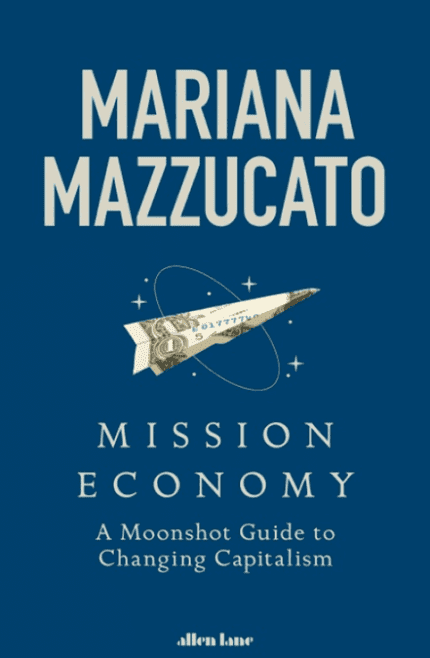
Mission Economy: A Moonshot Guide to ...

KShs2,000.00 KShs1,790.00
Capitalism is in crisis. The rich have gotten richer—the 1 percent, those with more than $1 million, own 44 percent of the world's wealth—while climate change is transforming—and in some cases wiping out—life on the planet. We are plagued by crises threatening our lives, and this situation is unsustainable. But how do we fix these problems decades in the making? Mission Economy looks at the grand challenges facing us in a radically new way. Global warming, pollution, dementia, obesity, gun violence, mobility—these environmental, health, and social dilemmas are huge, complex, and have no simple solutions. Mariana Mazzucato argues we need to think bigger and mobilize our resources in a way that is as bold as inspirational as the moon landing—this time to the most ‘wicked’ social problems of our time.. We can only begin to find answers if we fundamentally restructure capitalism to make it inclusive, sustainable, and driven by innovation that tackles concrete problems from the digital divide, to health pandemics, to our polluted cities. That means changing government tools and culture, creating new markers of corporate governance, and ensuring that corporations, society, and the government coalesce to share a common goal. We did it to go to the moon. We can do it again to fix our problems and improve the lives of every one of us. We simply can no longer afford not to.

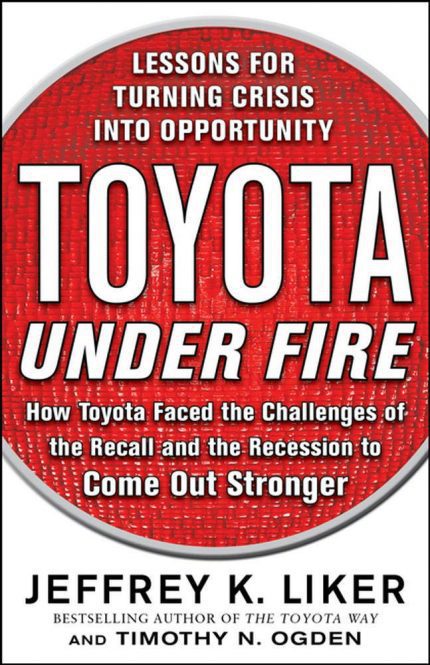
Toyota Under Fire: Lessons for Turnin...

KShs6,900.00 KShs6,300.00
Toyota Under Fire, 2011 Shingo Prize Winner, takes you beyond the headlines and into the offices and factories of Toyota to reveal the truth behind the company's highly publicized and controversial recall of over 10 million vehicles. Jeffrey Liker, the world's leading expert on Toyota processes and culture, was granted unprecedented access to the company's systems and people. The end result is the most comprehensive account available of what really precipitated the crisis, and how Toyota management met the ensuing challenges to come out stronger-lessons that can be applied to any management crisis in any industry.

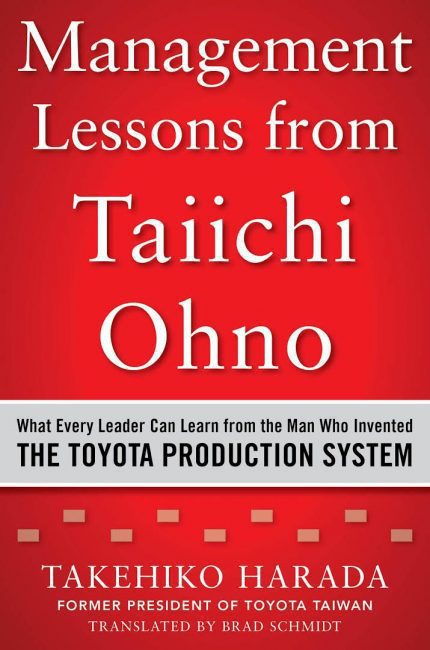
Management Lessons from Taiichi Ohno:...

KShs7,000.00 KShs6,300.00
The 15 most powerful practices for guiding breakthrough productivity improvements in any company Management Lessons From Taiichi Ohno provides firsthand knowledge of the tools, techniques, and challenges to implementing the Lean values of the Toyota Production System (TPS) in an organization. Takehiko Harada spent four decades applying Lean principles at Toyota with Taiichi Ohno, and the motivating insights he shares on maintaining a Lean culture are peerless. More than a set of rules for managers and executives to implement, this personal guidebook is from the heart in an attempt to see other companies enjoy the rewards of the TPS values Toyota leaders dedicated their lives to serving. It puts you in touch with the actual people who learned the key to success is creating a workforce of smiling employees who find purpose to their work. Real-world examples from Toyota as well as other companies striving to practice TPS/Lean fully demonstrate:
  • The 15 sayings of Taiichi Ohno―what his words mean and how his philosophies are practiced throughout Toyota
  • The 4 Stages of Things―a very useful method for visiting the gemba, which is where the action takes place
  • The managerial role―what management at the frontline should be, how it is different from a supervisor’s duties, and the critical motivational elements to creating a vibrant, happy workplace
  • Bridging the cultural gap―indispensable wisdom for deploying the Toyota method in non-Japanese cultures

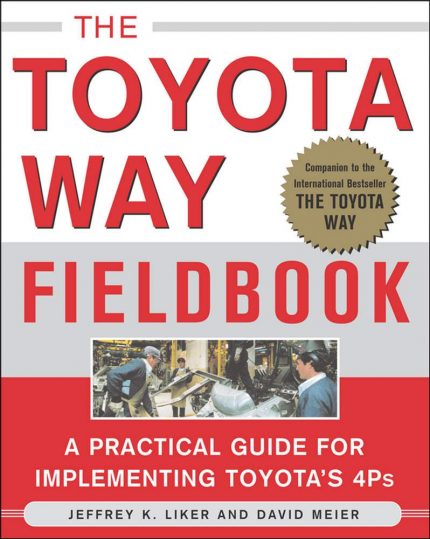
The Toyota Way Fieldbook by Jeffrey L...

KShs7,500.00 KShs6,900.00
The book begins with a review of the principles of the Toyota Way through the 4Ps model-Philosophy, Processes, People and Partners, and Problem Solving. Readers looking to learn from Toyota's lean systems will be provided with the inside knowledge they need to
  • Define the companies purpose and develop a long-term philosophy
  • Create value streams with connected flow, standardized work, and level production
  • Build a culture to stop and fix problems
  • Develop leaders who promote and support the system
  • Find and develop exceptional people and partners
  • Learn the meaning of true root cause problem solving
  • Lead the change process and transform the total enterprise
The depth of detail provided draws on the authors combined experience of coaching and supporting companies in lean transformation. Toyota experts at the Georgetown, Kentucky plant, formally trained David Meier in TPS. Combined with Jeff Liker's extensive study of Toyota and his insightful knowledge the authors have developed unique models and ideas to explain the true philosophies and principles of the Toyota Production System.

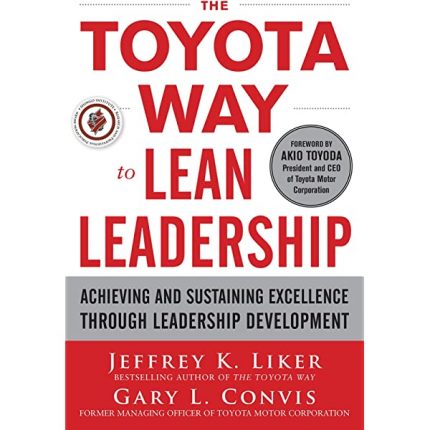
The Toyota Way to Lean Leadership: Ac...

KShs7,000.00 KShs6,500.00
TOYOTA. The name signifies greatness— world-class cars and game-changing business thinking. One key to the Toyota Motor Company’s unprecedented success is its famous production system and its lesser-known product development program. These strategies consider the end user at every turn and have become the model for the global lean business movement. All too often, organizations adopting lean miss the most critical ingredient—lean leadership. Toyota makes enormous investments in carefully selecting and intensively developing leaders who fit its unique philosophy and culture. Thanks to the company’s lean leadership approach, explains Toyota Way author Jeffrey Liker and former Toyota executive Gary Convis, the celebrated carmaker has set into motion a drive for continuous improvement at all levels of its business. This has allowed for:
  • Constant growth: Toyota increased profitability for 58 consecutive years—slowing down only in the face of 2008’s worldwide financial difficulties, the recall crisis, and the worst Japanese earthquake of the century.
  • Unstoppable inventiveness: Toyota’s approach to innovative thinking and problem solving has resulted in top industry ratings and incredible customer satisfaction, while allowing the company to weather these three crises in rapid succession and to come out stronger.
  • Strong branding and respect: Toyota’s reputation was instrumental in the company’s ability to withstand the recalls-driven media storm of 2010. But what looked to some to be a sinking ship is once again running under a full head of steam. Perhaps the Toyota culture had weakened, but lean leadership was the beacon that showed the way back.
In fact, writes Liker, the company is “as good and perhaps a better model for lean leadership than it ever has been.” of innovation and growth. Yet, Industry Week reports that just 2 percent of companies using lean processes can likewise claim to have had long-term success. What the other 98 percent lack is unified leadership with a common method and philosophy. If you want to get lean, you have to take it to the leadership level. The Toyota Way to Lean Leadership shows you how.

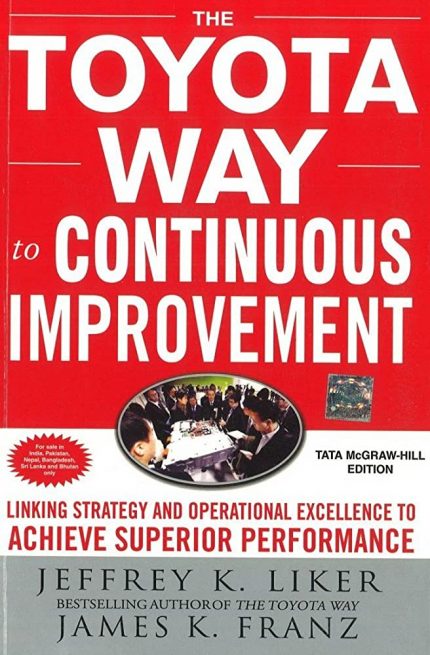
Toyota Way To Continuous Improvement:...

KShs7,000.00 KShs6,500.00
During Toyota’s highly publicized recalls of 2009 and 2010, the legendary carmaker’s 60-year-old reputation for operational excellence was put under the microscope. Business pundits wondered out loud if Toyota’s quality levels had decreased dramatically, while the harshest critics predicted the end of the company as we know it. For the most part, the government’s findings absolved Toyota of serious defects and accidents, and Toyota recovered rapidly―but mistakes were made, which showed that Toyota is not perfect. In fact, there is always opportunity for improvement in every process. In his bestselling business management classic The Toyota Way, Jeffrey Liker introduced the world to the foundational principles that have made Toyota the envy of companies around the world. Now, in The Toyota Way to Continuous Improvement, Liker teams up with former Toyota production engineer James Franz to explain the underlying thinking behind continuous improvement and why any company needs a disciplined approach to process improvement in every part of the organization. Liker and Franz outline the common mistakes in thinking that limit results, and they reveal how Toyota achieves its dual objectives of improving business performance and developing its people through following Dr. W. Edwards Deming’s teachings of Plan-Do-Check-Adjust (PDCA). Through detailed case examples in many industries, you’ll learn how to:
  • Determine why your processes aren’t achieving anticipated results
  • Build a sustainable lean process with a well-defined purpose
  • Create a system that reveals problems
  • Teach every leader and team member at every level the art of PDCA for process improvement.
With The Toyota Way to Continuous Improvement, you have the foundation you need to develop a vision of continuous improvement specific to your organization and plot a path to turn your vision into a measurable reality.

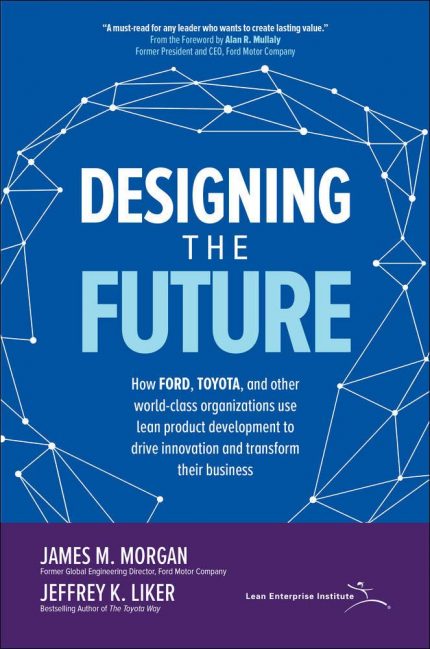
Designing the Future: How Ford, Toyot...

KShs7,500.00 KShs6,950.00
How did Ford Motors use Lean Development to pull off one of the most impressive corporate turnarounds in history? Largely by avoiding the mistakes that so many companies make when in a death spiral. They looked beyond manufacturing efficiency to change the very fundamentals of how they developed vehicles. In Designing the Future, Lean product development expert James Morgan and world-renowned Lean guru Jeffrey K. Liker reveal why so many companies have achieved only moderate success with Lean in operations, with a limited impact on their overall business. They take you through the process of bringing the best of Lean management to your enterprise―in order to link your business strategy to superior value designed for customers. The authors provide an actionable approach to building a better future for your business fueled by an iterative, integrated process that relies on simultaneous engineering, linking strategy and vision. They illustrate how to empower skilled and talented people to make collaboration and innovation a habit―hour to hour and day to day. It’s the secret of full implementation of Lean―and this groundbreaking guide takes you through every step of the process. The best way to predict the future is to create it. With Designing the Future, you have everything you need to create a flexible, iterative business-transformation process that takes you from strategic vision to value stream creation for maximum customer value delivery.

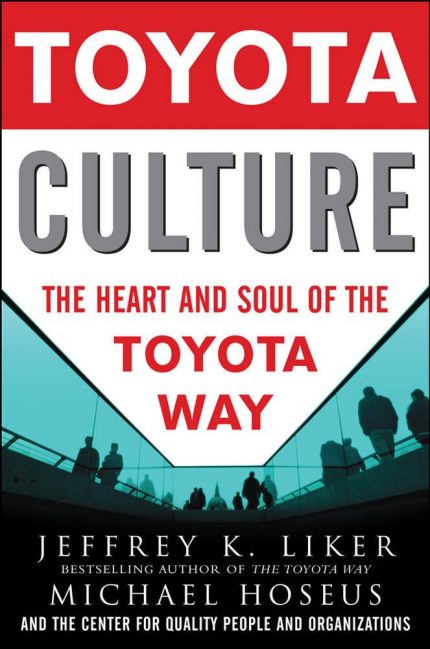
Toyota Culture: The Heart and Soul of...

KShs7,000.00 KShs6,190.00
Toyota Culture examines the “human systems” that Toyota has put in place to instill its founding principles of trust, mutual prosperity, and excellence in its plants, dealerships, and offices around the world. Beginning with a look at the evolution of the Toyota culture and why its people are the heart and soul of the Toyota Way, the authors explain the company's four-stage process for building and keeping quality people: Attract, Develop, Engage, and Inspire. Drawing upon numerous examples from Liker's decades of research as well as Hoseus' insider access as a Toyota manager, Toyota Culture gives you the tools you need to:
  • Find competent, able, and willing employees
  • Start training and socializing your people as you hire them
  • Establish and communicate key business performance indicators at every level of your organization
  • Train your people to solve problems and continuously improve processes in their daily work
  • Develop leaders who live and teach your company's philosophy
  • Reward top performance-and offer help to those who are struggling
  • Fascinating vignettes of Toyota's innovative culture highlight the nuances of translating and recreating a people-centric culture in factories and offices across the globe. These exclusive, behind-the-scenes details are just what your company needs to successfully learn from The Toyota Culture.

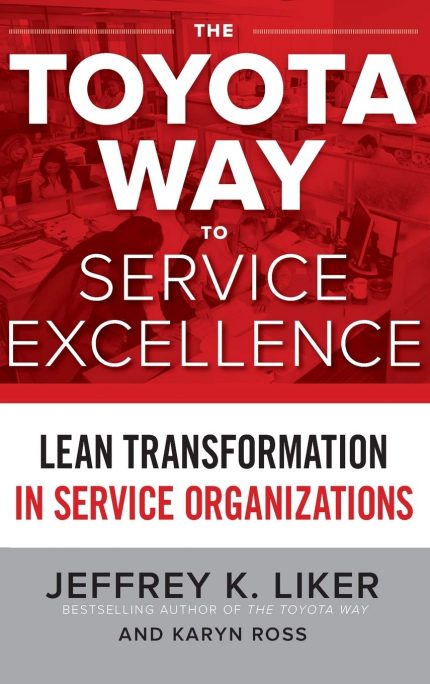
The Toyota Way to Service Excellence:...

KShs7,000.00 KShs6,650.00
A must-read for service professionals of every level, this essential book takes the proven Lean principles of the bestselling Toyota Way series and applies them directly to the industries where quality of service is crucial for success. Jeff Liker and Karyn Ross show you how to develop Lean practices throughout your organization using the famous 4P model. Whether you are an executive, manager, consultant, or frontline worker who deals with customers every day, you’ll learn how take advantage of all Lean has to offer. With this book as your guide, you’ll gain a clear understanding of Lean and discover the principles, practices and tools needed to develop people and processes that surprise and delight each of your customers. These ground-tested techniques are designed to help you make continuous improvements in your services, streamline your operations, and add ever-increasing value to your customers. Fascinating case studies of Lean-driven success in a range of service industries, including healthcare, insurance, financial services, and telecommunications, illustrate that Lean principles and practices work as well in services as they do in manufacturing. Drawn from original research and real-world examples, The Toyota Way to Service Excellence will help you make the leap to Lean.

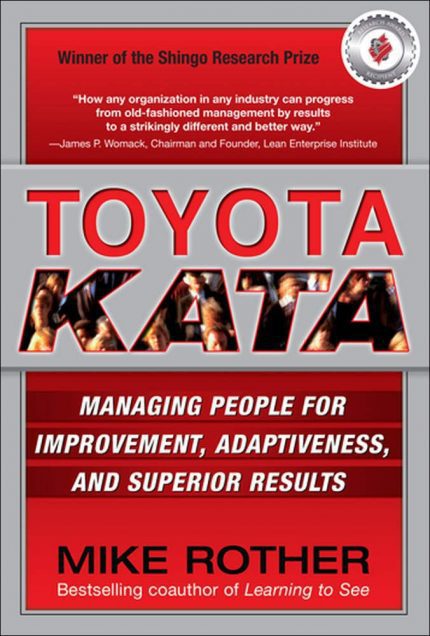
Toyota Kata: Managing People for Impr...

KShs7,000.00 KShs6,190.00
Lead, Manage, and Develop Your People--the Toyota Way! This game-changing book puts you behind the curtain at Toyota, providing new insight into the legendary automaker's management practices and offering practical guidance for leading and developing people in a way that makes the best use of their brainpower. Drawing on six years of research into Toyota's employee-management routines, Toyota Kata examines and elucidates, for the first time, the company's organizational routines that power its success with continuous improvement and adaptation. The book also reaches beyond Toyota to explain issues of human behavior in organizations and provide specific answers to questions such as:
  • How can we make improvement and adaptation part of everyday work throughout the organization?
  • How can we develop and utilize the capability of everyone in the organization to repeatedly work toward and achieve new levels of performance?
  • How can we give an organization the power to handle dynamic, unpredictable situations and keep satisfying customers?
Mike Rother explains how to improve our prevailing management approach through the practice of two Kata: the Improvement Kata--a repeating routine of establishing challenging target conditions, working step-by-step through obstacles, and always learning from the problems we encounter; and the Coaching Kata: a practice routine for teaching the Improvement Kata to employees at every level to ensure it motivates their ways of thinking and acting.

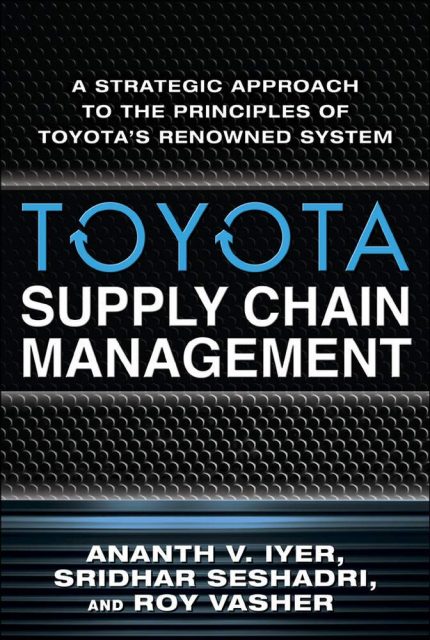
Toyota Supply Chain Management: A Str...

KShs7,000.00 KShs6,700.00
The Toyota Production System is the benchmark used throughout the world for “lean” thinking. Now you can model your own processes after those of the company that “wrote the book on supply chain management.” Written by two experts on the subject, along with a former Toyota senior executive, this book details the most celebrated supply chain operation in the world to help you form an integrated, synchronized system that will be the envy of your industry. You will find key insight into the logic behind every point of Toyota’s supply chain, along with both the tactics and strategies you can use to build an outstanding system of your own. Toyota Supply Chain Management explains how to achieve balance and efficiency by focusing on:
  • Variety: Determine your variety of offerings based on operational efficiency and market demand
  • Velocity: Maintain a steady flow through all processes of the supply chain
  • Variability: Manage inconsistencies carefully to reduce cost and improve quality
  • Visibility: Ensure the transparency of all processes to enable continuous learning and improvement
The authors provide valuable insider tips and offer hands-on guidance for improving production and operations in a variety of industries, including health care, insurance, banking, credit processing, and retailing. With careful attention paid to every aspect of the subject―from principles and theories to operations and best practices―Toyota Supply Chain Management is the most comprehensive, insightful guide to forging a world-class supply chain system.

50 Business Classics: Your shortcut t...

KShs1,500.00 KShs1,290.00
With insightful commentaries on over a century of landmark writings, 50 Business Classics presents the essence of great entrepreneur stories, the best management thinking and the proven ideas on strategy, innovation, and marketing illuminated and clarified as never before.

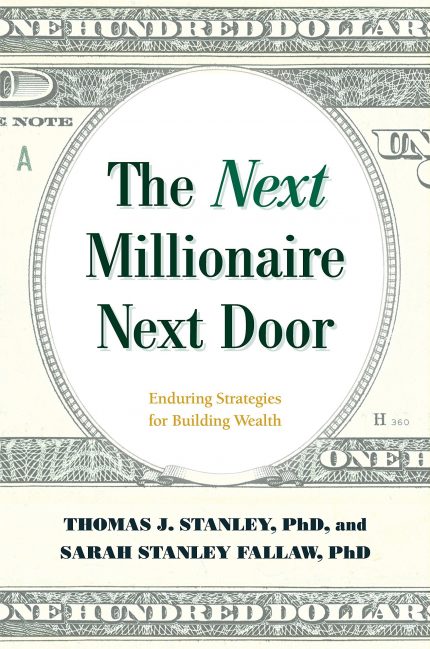
The Next Millionaire Next Door: Endur...

KShs3,090.00 KShs2,890.00
What does it take to be The Millionaire Next Door today? Find out in this research-backed, highly anticipated follow up. In The Next Millionaire Next Door, Dr. Thomas J. Stanley and Dr. Sarah Stanley Fallaw provide data-backed insights into what it takes to become the millionaire next door today, including:
  • Identifying and ignoring the myths about wealth and income
  • Understanding how those around you influence your financial behaviors
  • Living below your means
  • Identifying and developing your own behaviors that are conducive to building wealth
  • Finding careers and opportunities that allow for both economic and lifestyle-related freedom
  • Gaining knowledge and composure to invest and grow wealth

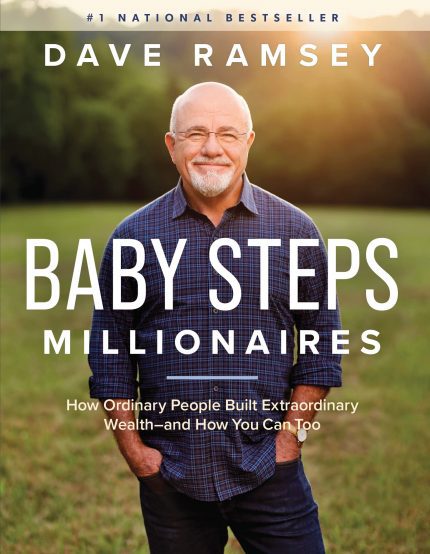
Baby Steps Millionaires: How Ordinary...

KShs4,390.00 KShs3,990.00
You Can Baby Step Your Way to Becoming a Millionaire Most people know Dave Ramsey as the guy who did stupid with a lot of zeros on the end. He made his first million in his twenties—the wrong way—and then went bankrupt. That’s when he set out to learn God’s ways of managing money and developed the Ramsey Baby Steps. Following these steps, Dave became a millionaire again—this time the right way. After three decades of guiding millions of others through the plan, the evidence is undeniable: if you follow the Baby Steps, you will become a millionaire and get to live and give like no one else. In Baby Steps Millionaires, you will . . .
  • Take a deeper look at Baby Step 4 to learn how Dave invests and builds wealth
  • Learn how to bust through the barriers preventing them from becoming a millionaire
  • Hear true stories from ordinary people who dug themselves out of debt and built wealth
  • Discover how anyone can become a millionaire, especially you
Baby Steps Millionaires isn’t a book that tells the secrets of the rich. It doesn't teach complicated financial concepts reserved only for the elite. As a matter of fact, this information is straightforward, practical, and maybe even a little boring. But the life you'll lead if you follow the Baby Steps is anything but boring! You don’t need a large inheritance or the winning lottery number to become a millionaire. Anyone can do it—even today. For those who are ready, it’s game on!

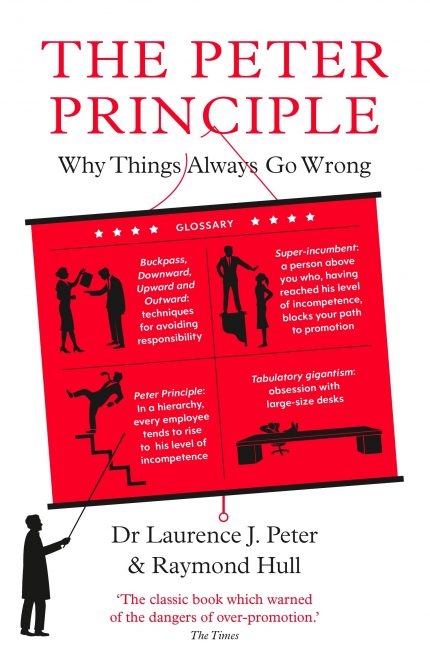
The Peter Principle: Why Things Alway...

KShs1,790.00 KShs1,490.00
The Peter Principle: Why Things Always Go Wrong: As Featured on Radio 4 by Raymond Hull and Dr Laurence J.

Build: An Unorthodox Guide to Making ...

KShs3,200.00 KShs2,890.00
So that’s what this book is. An advice encyclopedia. A mentor in a box. Written for anyone who wants to grow at work—from young grads navigating their first jobs to CEOs deciding whether to sell their company—Build is full of personal stories, practical advice and fascinating insights into some of the most impactful products and people of the 20th century. Each quick 5-20 page entry builds on the previous one, charting Tony’s personal journey from a product designer to a leader, from a startup founder to an executive to a mentor. Tony uses examples that are instantly captivating, like the process of building the very first iPod and iPhone. Every chapter is designed to help readers with a problem they’re facing right now—how to get funding for their startup, whether to quit their job or not, or just how to deal with the jerk in the next cubicle. Tony forged his path to success alongside mentors like Steve Jobs and Bill Campbell, icons of Silicon Valley who succeeded time and time again. But Tony doesn’t follow the Silicon Valley credo that you have to reinvent everything from scratch to make something great. His advice is unorthodox because it’s old school. Because Tony’s learned that human nature doesn’t change. You don’t have to reinvent how you lead and manage—just what you make. And Tony’s ready to help everyone make things worth making.

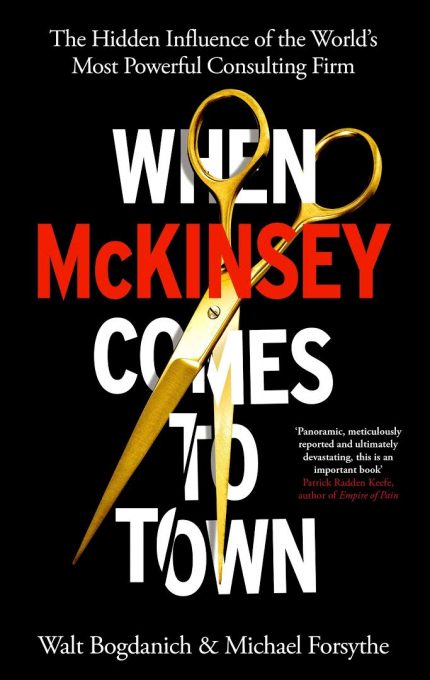
When McKinsey Comes to Town: The Hidd...

KShs2,990.00 KShs2,690.00
McKinsey & Company is the most prestigious consulting company in the world, earning billions of dollars in fees from major corporations and governments who turn to it to maximize their profits and enhance efficiency. McKinsey's vaunted statement of values asserts that its role is to make the world a better place, and its reputation for excellence and discretion attracts top talent from universities around the world. But what does it actually do? In When McKinsey Comes to Town, two prizewinning investigative journalists have written a portrait of the company sharply at odds with its public image. Often McKinsey's advice boils down to major cost-cutting, including layoffs and maintenance reductions, to drive up short-term profits, thereby boosting a company's stock price and the wealth of its executives who hire it, at the expense of workers and safety measures. McKinsey collects millions of dollars advising government agencies that also regulate McKinsey's corporate clients. And the firm frequently advises competitors in the same industries, but denies that this presents any conflict of interest. In one telling example, McKinsey advised a Chinese engineering company allied with the communist government which constructed artificial islands, now used as staging grounds for the Chinese Navy—while at the same time taking tens of millions of dollars from the Pentagon, whose chief aim is to counter Chinese aggression. Shielded by NDAs, McKinsey has escaped public scrutiny despite its role in advising tobacco and vaping companies, purveyors of opioids, repressive governments, and oil companies. McKinsey helped insurance companies' boost their profits by making it incredibly difficult for accident victims to get payments; worked its U.S. government contacts to let Wall Street firms evade scrutiny; enabled corruption in developing countries such as South Africa; undermined health-care programs in states across the country. And much more.

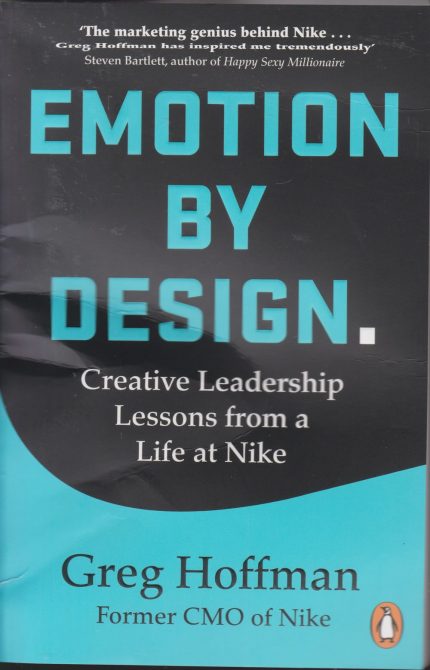
Emotion by Design by Greg Hoffman

KShs1,990.00 KShs1,790.00
Greg Hoffman joined Nike as a 22-year-old design intern. Over the next three decades, he would help craft some of the most iconic campaigns in history for Ronaldo and Serena, Olympic Games and World Cup finals. Now, he unveils a transformative method that will make any brand more creative: emotion by design.

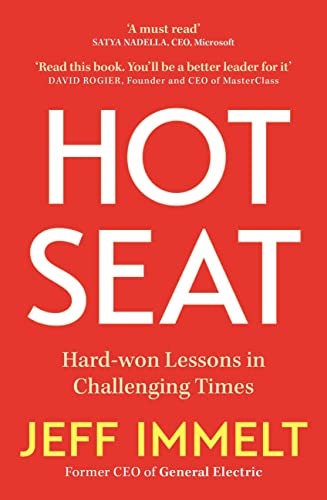
Hot Seat: What I Learned Leading a Gr...

KShs2,290.00 KShs1,990.00
In September 2001, Jeff Immelt replaced the most famous CEO in history, Jack Welch, at the helm of General Electric. Less than a week into his tenure, the 9/11 terrorist attacks shook the nation, and the company, to its core. GE was connected to nearly every part of the tragedy—GE-financed planes powered by GE-manufactured engines had just destroyed real estate that was insured by GE-issued policies. Facing an unprecedented situation, Immelt knew his response would set the tone for businesses everywhere that looked to GE—one of America’s biggest and most-heralded corporations—for direction. No pressure. Over the next sixteen years, Immelt would lead GE through many more dire moments, from the 2008–09 Global Financial Crisis to the 2011 meltdown of Fukushima’s nuclear reactors, which were designed by GE. But Immelt’s biggest challenge was inherited: Welch had handed over a company that had great people, but was short on innovation. Immelt set out to change GE’s focus by making it more global, more rooted in technology, and more diverse. But the stock market rarely rewarded his efforts, and GE struggled. In Hot Seat, Immelt offers a rigorous and raw interrogation of himself and his tenure, detailing for the first time his proudest moments and his biggest mistakes. The most crucial component of leadership, he writes, is the willingness to make decisions. But knowing what to do is a thousand times easier than knowing when to do it. Perseverance, combined with clear communication, can ensure progress, if not perfection, he says. That won’t protect any CEO from second-guessing, but Immelt explains how he’s pushed through even the most withering criticism: by staying focused on his team and the goals they tried to achieve. As the business world continues to be rocked by stunning economic upheaval, Hot Seat “takes you into the office, head, and heart of the man who became CEO of GE on the eve of 9/11, and then led the iconic behemoth for sixteen fascinating, and often turbulent, years. A handbook on leadership—and life” (Stanley A. McChrystal, General, US Army [Retired], CEO and Founder, McChrystal Group).

Built to Last by Jim Collins and Jerr...

KShs3,490.00 KShs2,500.00
Brief Summary This is not a book about charismatic visionary leaders. It is not about visionary product concepts or visionary products or visionary market insights. Nor is it about just having a corporate vision. This is a book about something far more important, enduring, and substantial. This is a book about visionary companies." So write Jim Collins and Jerry Porras in this groundbreaking book that shatters myths, provides new insights, and gives practical guidance to those who would like to build landmark companies that stand the test of time. Drawing upon a six-year research project at the Stanford University Graduate School of Business, Collins and Porras took eighteen truly exceptional and long-lasting companies -- they have an average age of nearly one hundred years and have outperformed the general stock market by a factor of fifteen since 1926 -- and studied each company in direct comparison to one of its top competitors. They examined the companies from their very beginnings to the present day -- as start-ups, as midsize companies, and as large corporations. Throughout, the authors asked: "What makes the truly exceptional companies different from other companies?" What separates General Electric, 3M, Merck, Wal-Mart, Hewlett-Packard, Walt Disney, and Philip Morris from their rivals? How, for example, did Procter & Gamble, which began life substantially behind rival Colgate, eventually prevail as the premier institution in its industry? How was Motorola able to move from a humble battery repair business into integrated circuits and cellular communications, while Zenith never became dominant in anything other than TVs? How did Boeing unseat McDonnell Douglas as the world's best commercial aircraft company -- what did Boeing have that McDonnell Douglas lacked? By answering such questions, Collins and Porras go beyond the incessant barrage of management buzzwords and fads of the day to discover timeless qualities that have consistently distinguished out-standing companies. They also provide inspiration to all executives and entrepreneurs by destroying the false but widely accepted idea that only charismatic visionary leaders can build visionary companies. Filled with hundreds of specific examples and organized into a coherent framework of practical concepts that can be applied by managers and entrepreneurs at all levels, Built to Last provides a master blueprint for building organizations that will prosper long into the twenty-first century and beyond.