Showing 501–520 of 1357 results

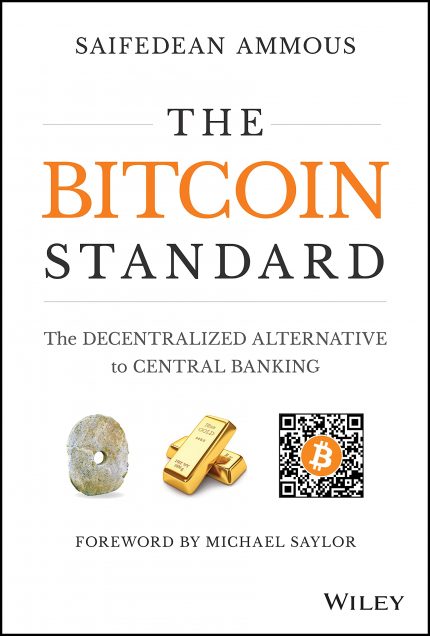
The Bitcoin Standard: The Decentraliz...

KShs5,000.00 KShs4,500.00
When a pseudonymous programmer introduced “a new electronic cash system that’s fully peer-to-peer, with no trusted third party” to a small online mailing list in 2008, very few paid attention. Ten years later, and against all odds, this upstart autonomous decentralized software offers an unstoppable and globally-accessible hard money alternative to modern central banks. The Bitcoin Standard analyzes the historical context to the rise of Bitcoin, the economic properties that have allowed it to grow quickly, and its likely economic, political, and social implications. While Bitcoin is a new invention of the digital age, the problem it purports to solve is as old as human society itself: transferring value across time and space. Ammous takes the reader on an engaging journey through the history of technologies performing the functions of money, from primitive systems of trading limestones and seashells, to metals, coins, the gold standard, and modern government debt. Exploring what gave these technologies their monetary role, and how most lost it, provides the reader with a good idea of what makes for sound money, and sets the stage for an economic discussion of its consequences for individual and societal future-orientation, capital accumulation, trade, peace, culture, and art. Compellingly, Ammous shows that it is no coincidence that the loftiest achievements of humanity have come in societies enjoying the benefits of sound monetary regimes, nor is it coincidental that monetary collapse has usually accompanied civilizational collapse. With this background in place, the book moves on to explain the operation of Bitcoin in a functional and intuitive way. Bitcoin is a decentralized, distributed piece of software that converts electricity and processing power into indisputably accurate records, thus allowing its users to utilize the Internet to perform the traditional functions of money without having to rely on, or trust, any authorities or infrastructure in the physical world. Bitcoin is thus best understood as the first successfully implemented form of digital cash and digital hard money. With an automated and perfectly predictable monetary policy, and the ability to perform final settlement of large sums across the world in a matter of minutes, Bitcoin’s real competitive edge might just be as a store of value and network for final settlement of large payments—a digital form of gold with a built-in settlement infrastructure. Ammous’ firm grasp of the technological possibilities as well as the historical realities of monetary evolution provides for a fascinating exploration of the ramifications of voluntary free market money. As it challenges the most sacred of government monopolies, Bitcoin shifts the pendulum of sovereignty away from governments in favor of individuals, offering us the tantalizing possibility of a world where money is fully extricated from politics and unrestrained by borders. The final chapter of the book explores some of the most common questions surrounding Bitcoin: Is Bitcoin mining a waste of energy? Is Bitcoin for criminals? Who controls Bitcoin, and can they change it if they please? How can Bitcoin be killed? And what to make of all the thousands of Bitcoin knock-offs, and the many supposed applications of Bitcoin’s ‘blockchain technology’? The Bitcoin Standard is the essential resource for a clear understanding of the rise of the Internet’s decentralized, apolitical, free-market alternative to national central banks.

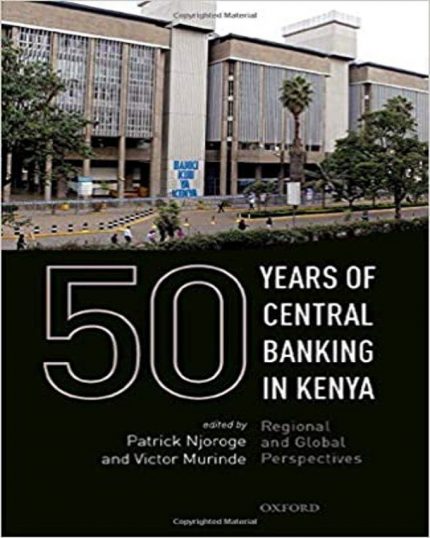
50 Years of Central Banking in Kenya ...

KShs17,000.00 KShs16,000.00
Documenting important milestones in the epic journey traversed by the Central Bank of Kenya (CBK) over the last 50 years, 50 Years of Central Banking in Kenya puts into perspective the evolution of central banking globally and within the East African region, and contemplates future prospects and challenges. The volume is timely, mainly because within the last 50 years the global financial landscape has shifted. Central bankers have expanded their mandates, beyond the singular focus on inflation, and consider economic growth as their other important objective. Bank regulation has moved from Basel I, to Basel II, and some countries have fully migrated to Basel III while some are still at the cross-roads. 50 Years of Central Banking in Kenya captures the wide-ranging discussions on central banking, from a symposium to celebrate the 50 year anniversary on 13 September 2016 in Nairobi. The participants at the symposium included current and former central bank governors from Kenya and the East Africa region, high level officials from multilateral financial institutions, policy makers, executives of commercial banks in Kenya, private sector practitioners, civil society agents, executives and researchers from think tanks based in Kenya and the Africa region, leading academics in banking and finance, and university students. Beyond the symposium, the volume highlights the evolution of specific functions of CBK over the last 50 years (such as monetary policy, bank regulation, and payments system), as well as developments in Kenya's financial system which strongly relate to the functionality of CBK, such as financial innovation, the evolution of financial markets, and non-bank financial institutions in Kenya.

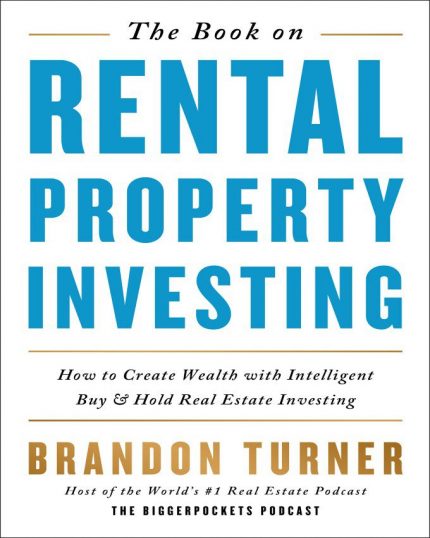
The Book on Rental Property Investing...

KShs4,000.00 KShs3,499.00
More than half a million copies sold worldwide. Everything you need to fast-track your way to financial freedom with rental properties! Real estate investing can provide a safe and fast path to financial freedom, and this business best seller will show you exactly how to get there. With nearly 400 pages of in-depth advice, The Book on Rental Property Investing imparts practical and exciting strategies that real estate investors across the world are using to build significant cash flow with rental properties. Brandon Turner―active real estate investor, best-selling author, and co-host of the Bigger Pockets Podcast―breaks down the time-tested strategies he used to build his own wealth in real estate. Whether you are just getting started or already own hundreds of units, you will learn how to create an achievable plan, find incredible deals, analyze properties, build a team, finance rentals, and much more―everything you need to become a millionaire rental property investor. Inside, you’ll discover:
  • Why many real estate investors fail, and how you can ensure you don’t!
  • Four unique, easy-to-follow strategies you can begin implementing today
  • Creative tips for finding incredible deals―even in competitive markets
  • How to achieve success without touching a toilet, paintbrush, or broom
  • Actionable ideas for financing rentals, no matter how much cash you have
  • Advice on keeping your wealth by deferring (and eliminating) taxes And so much more!

The Real Estate Fastlane: The Real Bo...

KShs1,790.00 KShs1,500.00
This book will show you how to make MONEY. That's the only reason it was written. I assume you would like to get rich. If you roll up your sleeves and genuinely follow its clear directions, you will become a rich, semi-retired man or woman in 10 years or less. Contents:
  • HOW IT STARTED
  • FIRST BUYS
  • CASH FLOW
  • LEARNING THE FACTS OF LIFE
  • LOCATION
  • DUMPING THE DEADWOOD
  • WHAT IS THE BEST BUY IN REAL ESTATE AND WHY
  • YOUR PHENOMENAL CHANCES FOR SUCCESS
  • GROW RICH ON BORROWED MONEY
  • WHAT TO CHECK FIRST
  • WHAT TO CHECK SECOND
  • THE TIME IS NOW
  • HOW TO FIND THE GOOD BUYS
  • THE IMPORTANCE AND USES OF THE VALUE FORMULA
  • THE FIFTEEN PER CENT RULE
  • TYPES TO WHICH THE VALUE FORMULA CAN BE APPLIED
  • FIGURING THE NET
  • BEFORE THE OFFER
  • CREATIVE OFFERS
  • PRECAUTIONS IN THE OFFER
  • AFTER ACCEPTANCE
  • CHECKING THE HEAT
  • AFTER TAKING TITLE
  • STRAIGHTENING OUT TENANCIES
  • NEW TENANTS
  • TAX BENEFITS WHILE HOLDING
  • HOW TO SELL THEM
  • TAX ANGLES IN SELLING

The Book on Negotiating Real Estate: ...

KShs3,999.00 KShs3,299.00
A priceless read during times of economic turmoil―use negotiation skills to get the best deals no matter what the housing market throws your way. Learn how to close more real estate deals. . . and make more money in the process! Three expert investors and bestselling authors come together to show you how to get the most deals―and the best deals―on all of your investment property. With more than 1,000 successful real estate deals between them, J Scott, Mark Ferguson, and Carol Scott combine the science of negotiation with real world experience to dive into all aspects of the real estate negotiation process. From the first interaction with a buyer or seller, to renegotiating the contract after unexpected issues arise, to last-minute concessions at closing, you’ll learn everything you need to reach optimal agreements every time. Along with a step-by-step guide to the negotiation process, this book also contains dozens of true-life stories that highlight how strong negotiation can result in more and better deals. Real dialogue examples will teach you what to say and how to say it, effectively strengthening your ability to close profitable transactions. Whether you’re a real estate investor, agent, beginner, or veteran, you can use these expert strategies to create dynamic end results! Inside, you will learn:
  • The psychology of building relationships to gain negotiating leverage
  • How to uncover information to tip negotiating outcomes in your favor
  • Strategies for defining optimal offers, counter-offers, and using concessions to get your deal to the finish line
  • How to overcome objections and renegotiate issues that arise from contract contingencies Specific tips for making/receiving offers through agents and buying properties from banks/HUD And much more!

The Memo: What Women of Color Need to...

KShs2,900.00 KShs2,490.00
From microaggressions to the wage gap, The Memo empowers women of color with actionable advice on challenges and offers a clear path to success. Most business books provide a one-size-fits-all approach to career advice that overlooks the unique barriers that women of color face. In The Memo, Minda Harts offers a much-needed career guide tailored specifically for women of color. Drawing on knowledge gained from her past career as a fundraising consultant to top colleges across the country, Harts now brings her powerhouse entrepreneurial experience as CEO of The Memo to the page. With wit and candor, she acknowledges "ugly truths" that keep women of color from having a seat at the table in corporate America. Providing straight talk on how to navigate networking, office politics, and money, while showing how to make real change to the system, The Memo offers support and long-overdue advice on how women of color can succeed in their careers.

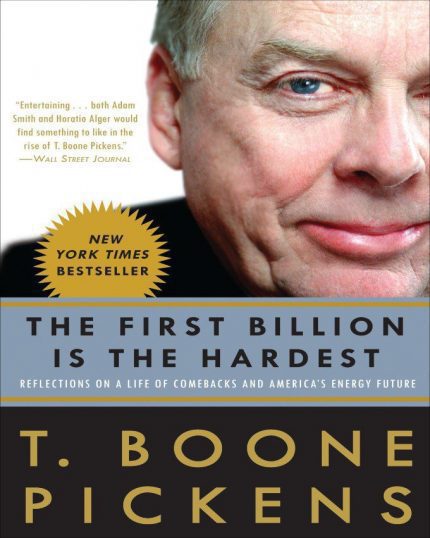
The First Billion Is the Hardest: How...

KShs2,800.00 KShs2,590.00
Brief Summary With a Plan for Reducing U.S. Oil Dependency It’s never too late to top your personal best. Now eighty years old, T. Boone Pickens is a legendary figure in the business world. Known as the “Oracle of Oil” because of his uncanny ability to predict the direction of fuel prices, he built Mesa Petroleum, one of the largest independent oil companies in the United States, from a $2,500 investment. In the 1980s, Pickens became a household name when he executed a series of unsolicited buyout bids for undervalued oil companies, in the process reinventing the notion of shareholders’ rights. Even his failures were successful in that they forced risk-averse managers to reconsider the way they did business. When Pickens left Mesa at age sixty-eight after a spectacular downward spiral in the company’s profits, many counted him out. Indeed, what followed for him was a painful divorce, clinical depression, a temporary inability to predict the movement of energy prices, and the loss of 90 percent of his investing capital. But Pickens was far from out. From that personal and professional nadir, Pickens staged one of the most impressive comebacks in the industry, turning his investment fund’s remaining $3 million into $8 billion in profit in just a few years. That made him, at age seventy-seven, the world’s second-highest-paid hedge fund manager. But he wasn’t done yet. Today, Pickens is making some of the world’s most colossal energy bets. If he has his way, most of America’s cars will eventually run on natural gas, and vast swaths of the nation’s prairie land will become places where wind can be harnessed for power generation. Currently no less bold than he was decades ago when he single-handedly transformed America’s oil industry, Pickens is staking billions on the conviction that he knows what’s coming. In this book, he spells out that future in detail, not only presenting a comprehensive plan for American energy independence but also providing a fascinating glimpse into key resources such as water—yet another area where he is putting billions on the line. From a businessman who is extraordinarily humble yet is considered one of the world’s most visionary, The First Billion Is the Hardest is both a riveting account of a life spent pulling off improbable triumphs and a report back from the front of the global energy and natural-resource wars—of vital interest to anyone who has a stake in America’s future.

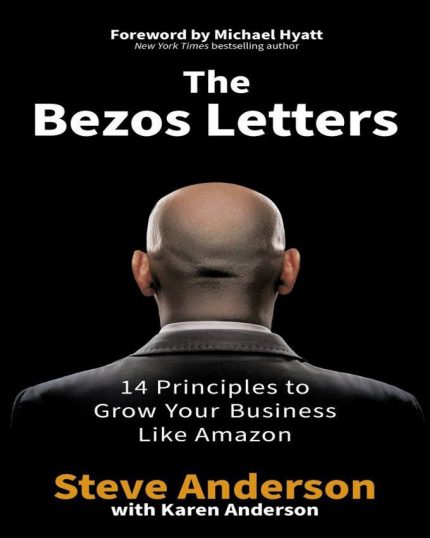
The Bezos Letters: 14 Principles to G...

KShs3,690.00 KShs3,490.00
The Bezos Letters lays out the fourteen growth principles that Amazon uses every day by examining Jeff Bezos’ personal letters to shareholders. Jeff Bezos created Amazon, the fastest company to reach $100 billion in sales ever, making him the richest man in the world. Business owners marvel at Amazon’s success, but don’t realize they have the answers right at their fingertips as Bezos reveals his hidden roadmap in his annual letters to shareholders. For the first time, business analyst Steve Anderson unlocks the key lessons, mindset, principles, and steps Bezos used, and continues to use, to make Amazon the massive success it is today. Steve shows business owners, leaders, and CEOs how to apply those same practices and watch their business become more efficient, productive, and successful―fast!

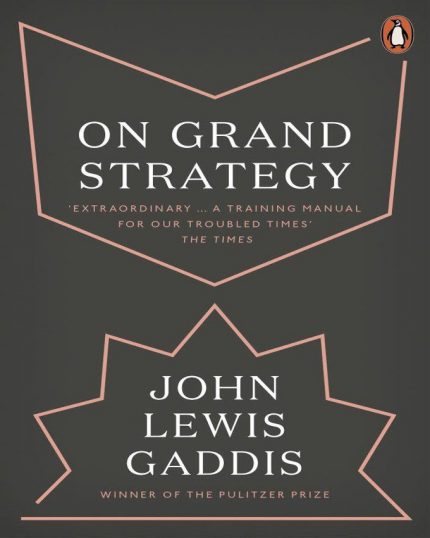
On Grand Strategy by John Lewis Gaddis

KShs2,000.00 KShs1,699.00
Brief Summary A master class in strategic thinking, distilled from the legendary program the author has co-taught at Yale for decades John Lewis Gaddis, the distinguished historian of the Cold War, has for almost two decades co-taught grand strategy at Yale University with his colleagues Charles Hill and Paul Kennedy. Now, in On Grand Strategy, Gaddis reflects on what he has learned. In chapters extending from the ancient world through World War II, Gaddis assesses grand strategic theory and practice in Herodotus, Thucydides, Sun Tzu, Octavian/Augustus, St. Augustine, Machiavelli, Elizabeth I, Philip II, the American Founding Fathers, Clausewitz, Tolstoy, Lincoln, Wilson, Franklin D. Roosevelt, and Isaiah Berlin. On Grand Strategy applies the sharp insights and wit readers have come to expect from Gaddis to times, places, and people he's never written about before. For anyone interested in the art of leadership, On Grand Strategy is, in every way, a master class.

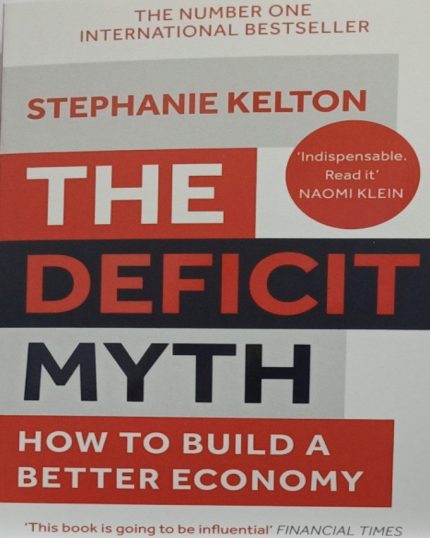
The Deficit Myth by Stephanie Kelton

KShs2,000.00 KShs1,790.00
Brief Summary The leading thinker and most visible public advocate of modern monetary theory -- the freshest and most important idea about economics in decades -- delivers a radically different, bold, new understanding for how to build a just and prosperous society. Stephanie Kelton's brilliant exploration of modern monetary theory (MMT) dramatically changes our understanding of how we can best deal with crucial issues ranging from poverty and inequality to creating jobs, expanding health care coverage, climate change, and building resilient infrastructure. Any ambitious proposal, however, inevitably runs into the buzz saw of how to find the money to pay for it, rooted in myths about deficits that are hobbling us as a country. Kelton busts through the myths that prevent us from taking action: that the federal government should budget like a household, that deficits will harm the next generation, crowd out private investment, and undermine long-term growth, and that entitlements are propelling us toward a grave fiscal crisis. MMT, as Kelton shows, shifts the terrain from narrow budgetary questions to one of broader economic and social benefits. With its important new ways of understanding money, taxes, and the critical role of deficit spending, MMT redefines how to responsibly use our resources so that we can maximize our potential as a society. MMT gives us the power to imagine a new politics and a new economy and move from a narrative of scarcity to one of opportunity.

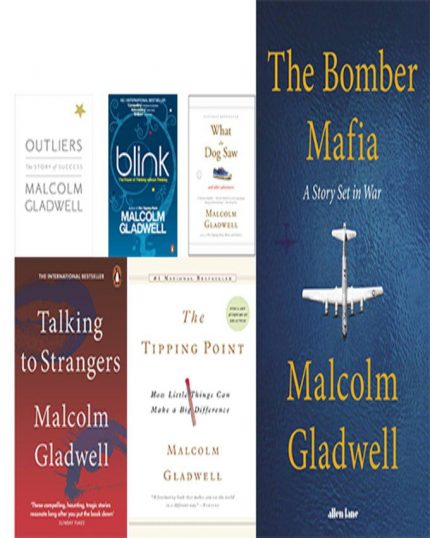
Malcolm Gladwell Collection 6 Books &...

KShs12,000.00 KShs10,000.00
Brief Summary Malcolm Gladwell Collection 6 Books- The Tipping Point, What the Dog Saw, Blink, Talking to Strangers, Outliers and The Bomber Mafia

Uncommon Service: How to Win by Putti...

KShs4,500.00 KShs3,699.00
Brief Summary Most companies treat service as a low-priority business operation, keeping it out of the spotlight until a customer complains. Then service gets to make a brief appearance – for as long as it takes to calm the customer down and fix whatever foul-up jeopardized the relationship. In Uncommon Service, Frances Frei and Anne Morriss show how, in a volatile economy where the old rules of strategic advantage no longer hold true, service must become a competitive weapon, not a damage-control function. That means weaving service tightly into every core decision your company makes. The authors reveal a transformed view of service, presenting an operating model built on tough choices organizations must make: • How do customers define “excellence” in your offering? Is it convenience? Friendliness? Flexible choices? Price? • How will you get paid for that excellence? Will you charge customers more? Get them to handle more service tasks themselves? • How will you empower your employees to deliver excellence? What will your recruiting, selection, training, and job design practices look like? What about your organizational culture? • How will you get your customers to behave? For example, what do you need to do to get them to treat your employees with respect? Do you need to make it easier for them to use new technology? Practical and engaging, Uncommon Service makes a powerful case for a new and systematic approach to service as a means of boosting productivity, profitability, and competitive advantage.

Just Work: Get Shit Done, Fast and Fa...

KShs3,500.00 KShs2,899.00
Brief Summary From Kim Scott, author of the revolutionary New York Times bestseller Radical Candor, comes Just Work: Get Sh*t

How to Write Like Tolstoy: A Journey ...

KShs1,899.00 KShs1,599.00
Brief Summary ‘There are three rules for writing a novel,’ Somerset Maugham once said. ‘Unfortunately, no one knows what they

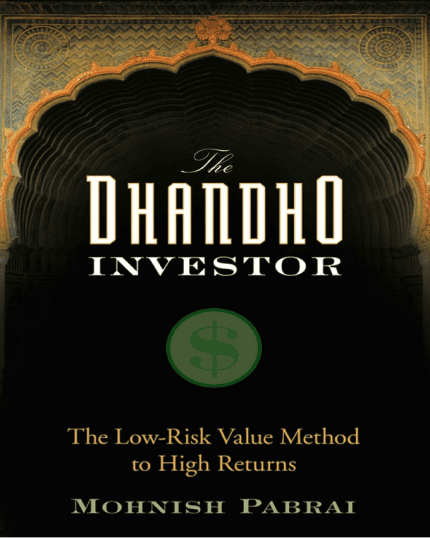
The Dhandho Investor: The Low-Risk Va...

KShs5,990.00 KShs5,750.00
Brief Summary A comprehensive value investing framework for the individual investor In a straightforward and accessible manner, The Dhandho Investor lays out the powerful framework of value investing. Written with the intelligent individual investor in mind, this comprehensive guide distills the Dhandho capital allocation framework of the business savvy Patels from India and presents how they can be applied successfully to the stock market. The Dhandho method expands on the groundbreaking principles of value investing expounded by Benjamin Graham, Warren Buffett, and Charlie Munger. Readers will be introduced to important value investing concepts such as Heads, I win! Tails, I don't lose that much!, Few Bets, Big Bets, Infrequent Bets, Abhimanyu's dilemma, and a detailed treatise on using the Kelly Formula to invest in undervalued stocks. Using a light, entertaining style, Pabrai lays out the Dhandho framework in an easy-to-use format. Any investor who adopts the framework is bound to improve on results and soundly beat the markets and most professionals.
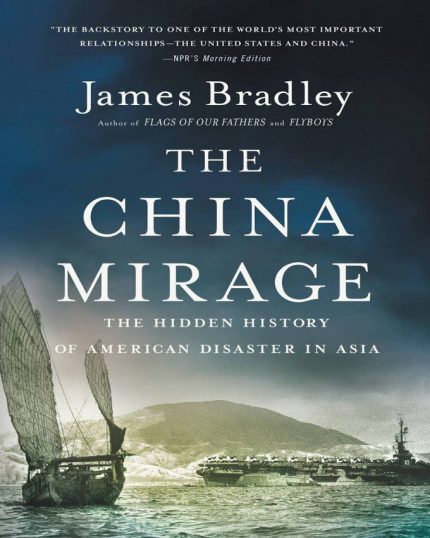
The China Mirage: The Hidden History ...

KShs2,500.00 KShs1,899.00
Brief Summary In each of his books, James Bradley has exposed the hidden truths behind America's engagement in Asia. Now comes his most engrossing work yet. Beginning in the 1850s, Bradley introduces us to the prominent Americans who made their fortunes in the China opium trade. As they -- -good Christians all -- -profitably addicted millions, American missionaries arrived, promising salvation for those who adopted Western ways. And that was just the beginning. From drug dealer Warren Delano to his grandson Franklin Delano Roosevelt, from the port of Hong Kong to the towers of Princeton University, from the era of Appomattox to the age of the A-Bomb, The China Mirage explores a difficult century that defines U.S.-Chinese relations to this day.

Hot Seat: What I Learned Leading a Gr...

KShs4,500.00 KShs3,799.00
Brief Summary In September 2001, Jeff Immelt replaced the most famous CEO in history, Jack Welch, at the helm of General Electric. Less than a week into his tenure, the 9/11 terrorist attacks shook the nation, and the company, to its core. GE was connected to nearly every part of the tragedy—GE-financed planes powered by GE-manufactured engines had just destroyed real estate that was insured by GE-issued policies. Facing an unprecedented situation, Immelt knew his response would set the tone for businesses everywhere that looked to GE—one of America’s biggest and most-heralded corporations—for direction. No pressure. Over the next sixteen years, Immelt would lead GE through many more dire moments, from the 2008–09 Global Financial Crisis to the 2011 meltdown of Fukushima’s nuclear reactors, which were designed by GE. But Immelt’s biggest challenge was inherited: Welch had handed over a company that had great people, but was short on innovation. Immelt set out to change GE’s focus by making it more global, more rooted in technology, and more diverse. But the stock market rarely rewarded his efforts, and GE struggled. In Hot Seat, Immelt offers a rigorous, candid interrogation of himself and his tenure, detailing for the first time his proudest moments and his biggest mistakes. The most crucial component of leadership, he writes, is the willingness to make decisions. But knowing what to do is a thousand times easier than knowing when to do it. Perseverance, combined with clear communication, can ensure progress, if not perfection, he says. That won’t protect any CEO from second-guessing, but Immelt explains how he’s pushed through even the most withering criticism: by staying focused on his team and the goals they tried to achieve. As the business world continues to be rocked by stunning economic upheaval, Hot Seat is an urgently needed, and unusually raw, source of authoritative guidance for decisive leadership in uncertain times.

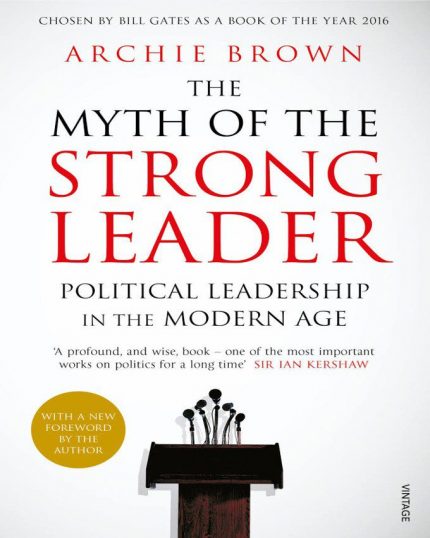
The Myth of the Strong Leader: Politi...

KShs2,500.00 KShs1,799.00
Brief Summary In this magisterial and wide-ranging survey of political leadership over the past hundred years, Archie Brown challenges the widespread belief that strong leaders - those who dominate their colleagues and the policy-making process - are the most successful and admirable. Within authoritarian regimes, a more collective leadership is a lesser evil compared with personal dictatorship where cultivation of the myth of the strong leader is often a prelude to oppression and carnage. Within democracies, although 'strong leaders' are seldom as strong or independent as they purport to be, the idea that one person is entitled to take the big decisions is dangerous nonetheless, and the advantages of a collegial style of leadership are too often overlooked. In reality, only a minority of political leaders make a big difference, by challenging assumptions about the politically possible or setting in motion systemic change. Yet in a democracy that is rare. It is especially when enlightened leaders acquire power in an authoritarian system that the opportunity for radical transformation occurs. Franklin D. Roosevelt and Lyndon B. Johnson, Willy Brandt and Mikhail Gorbachev, Deng Xiaoping and Nelson Mandela, Margaret Thatcher and Tony Blair are among the leaders whom Brown examines in this original and illuminating study.

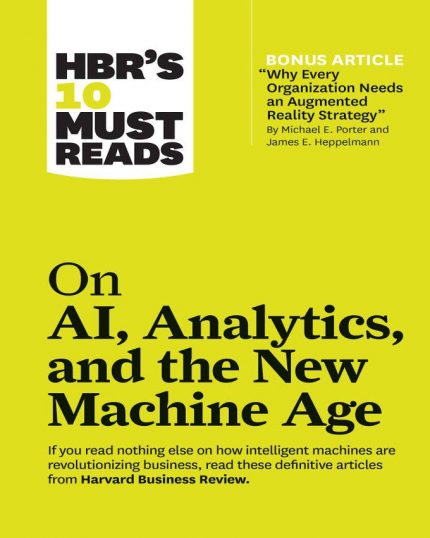
HBR’s 10 Must Reads on AI, Anal...

KShs3,000.00 KShs2,499.00
Brief Summary Machine learning and data analytics are powering a wave of groundbreaking technologies. Is your company ready? If you read nothing else on how intelligent machines are revolutionizing business, read these 10 articles. We've combed through hundreds of Harvard Business Review articles and selected the most important ones to help you understand how these technologies work together, how to adopt them, and why your strategy can't ignore them. In this book you'll learn how: Data science, driven by artificial intelligence and machine learning, is yielding unprecedented business insights Blockchain has the potential to restructure the economy Drones and driverless vehicles are becoming essential tools 3-D printing is making new business models possible Augmented reality is transforming retail and manufacturing Smart speakers are redefining the rules of marketing Humans and machines are working together to reach new levels of productivity. This collection of articles includes "Artificial Intelligence for the Real World," by Thomas H. Davenport and Rajeev Ronanki; "Stitch Fix's CEO on Selling Personal Style to the Mass Market," by Katrina Lake; "Algorithms Need Managers, Too," by Michael Luca, Jon Kleinberg, and Sendhil Mullainathan; "Marketing in the Age of Alexa," by Niraj Dawar; "Why Every Organization Needs an Augmented Reality Strategy," by Michael E. Porter and James E. Heppelmann; "Drones Go to Work," by Chris Anderson; "The Truth About Blockchain," by Marco Iansiti and Karim R. Lakhani; "The 3-D Printing Playbook," by Richard A. D’Aveni; "Collaborative Intelligence: Humans and AI Are Joining Forces," by H. James Wilson and Paul R. Daugherty; "When Your Boss Wears Metal Pants," by Walter Frick; and "Managing Our Hub Economy," by Marco Iansiti and Karim R. Lakhani.