Showing 1501–1520 of 1784 results

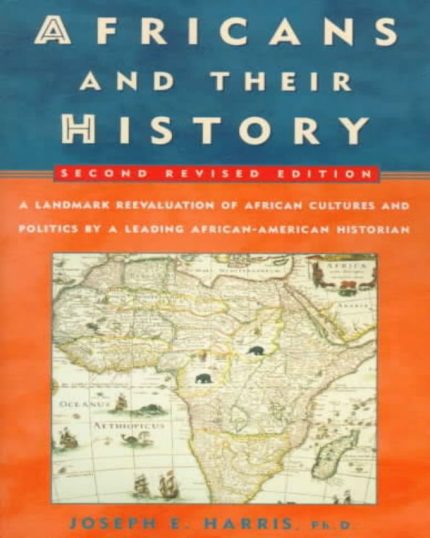
Africans and Their History by Joseph ...

KShs1,899.00 KShs1,805.00
Brief Summary Africa has witnessed the birth of many important developments in history. Human evolution, including the use of fire, food production via plant cultivation and animal domestication, as well as the creation of sophisticated tools and hunting weapons from iron took place in Africa. Other historical events such as the slave trade, which played a critical role in Western economic power, the rise of Islam as one of the world’s dominant religions, and colonization and struggles for independence occurred on African soil. Africans and Their History chronicles in fascinating detail African history from prehistoric times through the present. This concise and authoritative overview of the diverse peoples and societies of Africa now covers recent events, including the emergence of a free South Africa and its landmark enactment of a constitution that recognizes even more rights than the American constitution. The dynamic history and the relationship Africans have with the rest of the world is revealed in Africans and Their History, exposing and shattering ugly stereotypes that for too long have dominated Western thought. Africans and Their History has been updated to reflect the past decade of African events. Ever growing number of African Studies departments on college campuses insures a constant audience for this book. Africans and Their History has a long and steady backlist life--first published in 1972. ISBN:9780452011816 Author:Joseph E Harris

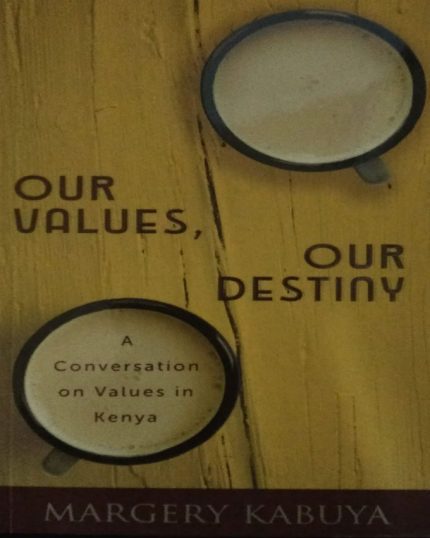
Our values our destiny a conversation...

KShs1,399.00 KShs1,330.00
Brief Summary Our Values, Our Destiny: A Conversation on Values in Kenya is an introductory book to study of values. From her work with children on values, Margery discusses 12 key values including peace, respect, love, responsibility, tolerance and unity. Most of these values have been identified in Kenya’s constitutive documents such as the Kenya constitution 2010, the national anthem and the vision 2030. The message of the book is that the challenge that Kenya is facing today such as corruption with impunity and cheating in examinations, point to an erosion of values. Margery suggests that revisiting these values might be one way to address these challenges and create a united and more cohesive nation that we shall all be proud of. It’s imperative that values start taking a central place in the national discourse. We need to focus more on orienting and training our children and youth to become more value based. ISBN:9789966097262 Author:Margery Kabuya

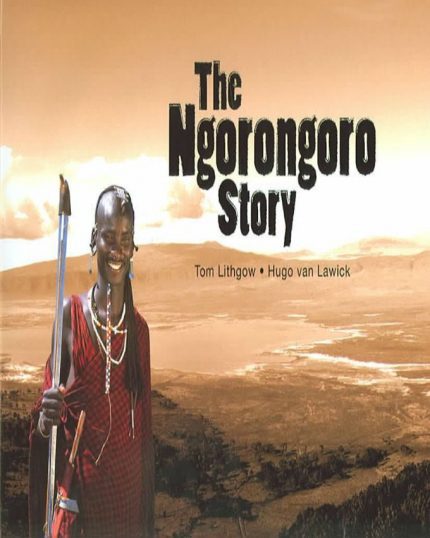
The Ngorongoro Story by Hugo van Lawi...

KShs6,000.00 KShs5,500.00
Brief Summary The battle for the Ngorongoro Crater is one of the most gripping conservation stories of the last century. Those throwing their hats into the ring have included a formidably imposing German farmer, a trigger-happy Scots baronet, and an ex-British army captain with some rather reckless ideas on how to photograph lions. Such interlopers have had to contend with the Maasai, who believe all the cattle in the world are theirs; conservationists who wish to preserve the Ngorongoro as a natural habitat; and of course the animals themselves, inhabiting the rich grasslands of the crater floor in teeming numbers. The Ngorongoro Story traces the history of the crater from the pioneering days of the early explorers, through two world wars, up to recent international efforts to save the natural habitat of the Ngorongoro for posterity. ISBN:9781904722045 Author:Hugo van Lawick and Tom Lithgow

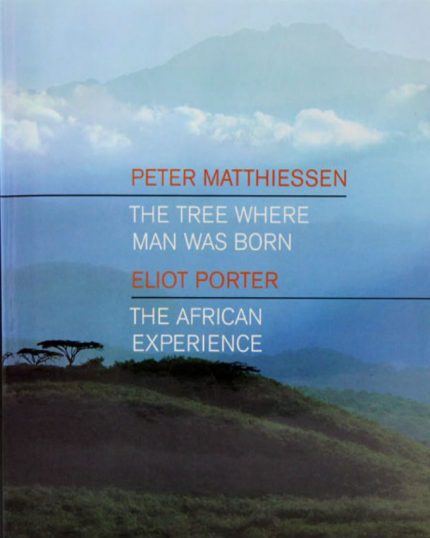
The Tree Where Man Was Born by Peter ...

KShs3,399.00 KShs3,230.00
Brief Summary In this classic volume, Matthiessen exquisitely combines both nature and travel writing to bring East Africa to vivid life. He skillfully portrays the daily lives of herdsmen and hunter-gatherers; the drama of the predator kills; the hundreds of exotic animals; the breathtaking landscapes; and the area's turbulent natural, political, and social histories. ISBN:9780140239348 Author:Peter Matthiessen

Media and Identity in Africa

KShs2,099.00 KShs1,995.00
Brief Summary Studies of the media in Africa, incorporating both African and international perspectives, are few. The thirty papers collected here were presented at a seminar organised and hosted by the Kenya-based Twaweza Communications and the International African Institute in Nairobi in 2004. They demonstrate how media outlets are used to perpetuate, question or modify the unequal power relations between the North and the South. Focusing on east Africa, the papers include discussions of the construction of old and new social entities, as defined by class, gender, ethnicity, political and economic differences, wealth, poverty, cultural behaviour, language and religion. The authors illustrate how there is increasing control by local people of traditional and modern forms of media. Globalization is being countered by local responses, within the context of social and cultural identities. Essentially, the book describes the tensions between the global and the local, tensions not often discussed in media studies, thus pioneering new debates. ISBN:9780748635221 Author:John Middleton, John F. M. Middleton and Kimani Njogu

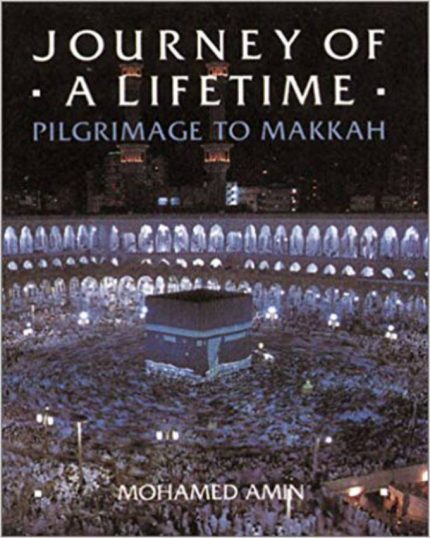
Journey of a Lifetime Pilgrimage to M...

KShs3,890.00 KShs3,490.00
This exquisitely beautiful series of books portrays the cultures, landscapes, fauna, flora and history of an individual country with over 150 stunning photographs and well-written and knowledgeable text. Lavishly illustrated, this special pictorial record -- with lucid and absorbing text -- of the pilgrimage known to Muslims as the Hajj brilliantly catches the spirit and devotion of one of the world's great religious experiences. For pilgrims this book will be an enduring reminder of that experience. For non-Muslims it stands as a moving documentary of a testament to faith.  

Beyond Ethnicism Exploring Racial and...

KShs1,499.00 KShs1,425.00
Brief Summary The manual, Beyond Ethnicism. Exploring Racial and Ethnic Diversity for Educators, a first of its kind in Kenya, speaks to the key issues of ethnic and racial belonging that are such a key-determining factor in defining and dividing Kenyans. These two issues influence many social, economic and especially political decisions. The manual transcends the limitations of current discussions on ethnicism and racism. Questions of ethnic and racial belonging are connected to some of the deepest moral and political decisions of our time. Belonging is an emotional subject that as a country citizens should not lose capacity to discuss coherently. An educator who wanted to know how to end ethnicism and racism inspired the writing of this manual. Ethnic and racial favoritism as well as discrimination have seeped into the Kenyan education system. Educators sit in staff-rooms as members of political parties or ethnic communities and sometimes consciously or unconsciously perpetuate ethnic and racial stereotypes and prejudices. Educators find talking about ethnicism and racism difficult. They do not know where to begin yet they can recognise ethnicism and racism in learners. Sometimes they practice it themselves, favouring or discriminating learners on the basis of ethnicity or race. Educators are sometimes helpless in arresting ethnicist and racist practices in their learners or themselves, as they do not have the tools to do so. This manual is a practical resource which assists educators in contextualising ethnic and race related concerns without undermining the human rights, it also helps in creating the space for discourse amongst educators on how to combat ethnicism and racism. It asks rarely addressed critical and significant questions on the meaning of ethnic and racial belonging. The manual addresses the arresting of stereotypes and prejudice before they morph into actual discrimination and sometimes violence. ISBN:9789966190307 Author:Alice Wairimu Nderitu

General History of Africa Vol 5 Afric...

KShs2,399.00 KShs2,280.00
Brief Summary Volume V of this acclaimed series is now available in an abridged paperback edition. The result of years of work by scholars from all over the world, The UNESCO General History of Africa reflects how the different peoples of Africa view their civilizations and shows the historical relationships between the various parts of the continent. Historical connections with other continents demonstrate Africa's contribution to the development of human civilization. Each volume is lavishly illustrated and contains a comprehensive bibliography. This fifth volume of the acclaimed series covers the history of the continent from the beginning of the sixteenth century to the close of the eighteenth century in which two themes emerge: first, the continuing internal evolution of the states and cultures of Africa during this period; second, the increasing involvement of Africa in external trade—with major but unforeseen consequences for the whole world. In North Africa, we see the Ottomans conquer Egypt. South of the Sahara, some of the larger, older states collapse, and new power bases emerge. Traditional religions continue to coexist with both Christianity (suffering setbacks) and Islam (in the ascendancy). Along the coast, particularly of West Africa, Europeans establish a trading network which, with the development of New World plantation agriculture, becomes the focus of the international slave trade. The immediate consequences of this trade for Africa are explored, and it is argued that the long-term global consequences include the foundation of the present world-economy with all its built-in inequalities. ISBN:9780520067004 Author:B A Ogot

General History of Africa Book 4 Afri...

KShs1,399.00 KShs1,330.00
Brief Summary Volume IV of this acclaimed series is now available in an abridged paperback edition. The result of years of work by scholars from all over the world, The UNESCO General History of Africa reflects how the different peoples of Africa view their civilizations and shows the historical relationships between the various parts of the continent. Historical connections with other continents demonstrate Africa's contribution to the development of human civilization. Each volume is lavishly illustrated and contains a comprehensive bibliography. The period covered in Volume IV constitutes a crucial phase in the continent's history, in which Africa developed its own culture and written records became more common. Major themes include the triumph of Islam; the extension of trading relations, cultural exchanges, and human contacts; and the development of kingdoms and empires. ISBN:9780520066991 Author:Joseph Ki Zerbo

Africa in World Politics A Pan Africa...

KShs3,999.00 KShs3,800.00
Brief Summary This book reviews the various ideologies and policies that independent African states have used to enhance their power and status in the world through a range of political, security, and economic strategies of inter-African cooperation and integration. Against the background of the ideology of Eurafrica, which informs Europe’s and Frances evolving relationship with Africa, the author assesses the prospects of the counter-ideology of Pan-Africanism. Africa’s economic, political, cultural, and geostrategic relations with Europe’s within the framework of the successive Lome Convention and with Frances within the framework of La Francophone and Franco-African cooperation systems are thoroughly examined. An overview of the numerous inter-state and intra-state border, ethnic, religious, and political conflicts which have erupted throughout Africa since the end of the Cold War leads to an examination of various inter-African peacemaking and peacekeeping strategies and policies. These have evolved at the regional (Organization of African Unity) and sub-regional levels where African organizations aimed at economic cooperation and integration (such as Ecowas, IGAD, and SADC) are increasingly assuming a collective security dimension. The response of the international community to the challenge of humanitarian assistance to African refugees is also examined. Against the background of contending notions of Afro-pessimism and Afro-optimism, the author considers various political and economic strategies of cooperation and integration. Throughout this engaging new book, Martin adopts a distinctly Pan-African approach. He argues that economic, political, and military unity among African states is necessary to enhance the power and status of African states in the contemporary world system. ISBN:9780865438583 Author:Guy Martin

Civil war is not a stupid thing accou...

KShs4,000.00 KShs3,590.00
Brief Summary This book takes issue with two common perspectives on violence and war. The first is the liberal interpretation, according to which war is exclusively negative in its effects and peace is easily achieved through democratization and free trade. In this view, modern liberal market democracies have outgrown violence, and only resort to it in self-defense. The second is a romantic, utopian view of violence. Transposed into political rhetoric, these two views are often directly opposed, as they are nowadays in Iraq and in the 'War on Terror'. Cramer's book forges an alternative way of understanding the role of violence in the transition to capitalism and a global economy.   ISBN:9781850657873 Author:Christopher Cramer

Non native Speaker Selected and Sundr...

KShs2,599.00 KShs2,470.00
Brief Summary Includes writing by Charles Cantalupo spanning roughly twenty-five years. Chronologically, it begins in 1993 with the first time he interviews Ngugi wa Thiong'o and ends in 2016, when Cantalupo last interviews him. In between, the decades reveal Cantalupo as a writer moving from a primarily Euro-American literary and cultural viewpoint to a continuum with African literatures and languages. Compelled by their power and their translation, he becomes deeply engaged with Eritrea, while also probing the process of translation itself. ISBN:9781569025741 Author:Charles Cantalupo

Silent Accomplice The Untold Story of...

KShs3,599.00 KShs3,420.00
Brief Summary The massacre of one million Rwandan Tutsis by ethnic Hutus in 1994 has become a symbol of the international community’s helplessness in the face of human rights atrocities. It is assumed that the West was well-intentioned, but ultimately ineffectual. But as Andrew Wallis reveals in this shocking book, one country - France - was secretly providing military, financial and diplomatic support to the genocidaires all along. Based on new interviews with key players and eye-witnesses, and previously unreleased documents, Walliss’ book tells a story which many have suspected, but never seen set out before. France, Wallis discovers, was keen to defend its influence in Africa, even if it meant complicity in genocide, for as French President Francois Mitterrand once said: "in countries like that, genocide is not so important”. Wallis’s riveting expose of the French role in one of the darkest chapters of human history will provoke furious debate, denials, and outrage. ISBN:9780857735348 Author:Andrew Wallis

The Terrible A Storytellers Memoir by...

KShs1,599.00 KShs1,520.00
Brief Summary From the poet behind bone, a lyrical memoir—part prose, part verse—about coming-of-age, uncovering the cruelty and the beauty of the wider world, and redemption through self-discovery and the bonds of family "My little brother and I saw a unicorn in the garden in the late nineties. I’m telling you. Neither one of us made it up; it was as real as anything else.” The Terrible, Yrsa Daley-Ward’s brave, raw, lyrical memoir that captures the surreal magic and incredible discomfort of adolescence, burgeoning sexuality, rootlessness, and connection. Through emotional snapshots that span from her adolescence through her early twenties, each brought to life in Yrsa’s signature style of open white spaces and stirring, singular lines, The Terrible evokes the pain and thrill of girlhood, as well as what it means to discover the fear and power that come with being a woman. With a sharp eye and a rare talent for mining the beauty and the sorrow in the everyday, Yrsa recounts her remarkable life: growing up as one of the only black children in a poor, white, working class town; navigating the extreme Christianity of her family; inquiring after her paternity; moving through phases of addiction and sexual encounters; and ultimately finding her place in her family and in life. ISBN:9780143132622 Author:Yrsa Daley Ward

Emerging Perspectives on Nuruddin Farah

KShs3,499.00 KShs3,325.00
Brief Summary "This is the first critical anthology on the Somali novelist Nuruddin Farah, winner of the 1998 Neustadt International Prize for Literature. Farah is one of Africa's most multilingual and multiliterate writers. In exile from his country since 1974, he has wandered through the world's cultures, literatures, and ideas." This anthology features the works of scholars from Africa, Australia, Europe, and North America, bringing together some of the many readings that Farah's voices have evoked. In its variety and complexity of responses, the volume pays tribute to Farah's versatility as a writer and to the multidimensionality of his work. Its subjects are diverse, ranging from the author's feminist and sociopolitical ideas, his vision of family and state, and concepts of time and history to his use of allegory and symbolism, his literary influences, and his relation to the oral tradition and postmodernism. ISBN:9780865439191 Author:Derek Wright

Demilitarizing the Mind African Agend...

KShs3,999.00 KShs3,800.00
Brief Summary This book highlights a central, but neglected component of Africa's complicated and intractable wars: the militarization of governance. Political cultures of militarism stand in the way of enduring peace, democracy, and the development of civil society. Militarism comes in both right-wing and left-wing guises -- the latter practiced by former liberation fronts in power across much of Africa which have all betrayed the ideals that enthused their earlier struggles. Seven comparative essays, drawn from the experience of conflict and peacemaking, focus on different aspects of militarism in contemporary Africa and ways of overcoming it. How can we create a coherent, "joined-up" peacemaking that knits together the many tasks necessary for establishing peace in Africa? Can Africa establish "security communities" at a trans-national level, abolishing both interstate conflict and the readiness of countries to intervene militarily in their neighbors' affairs? What is the role of the African Union? How can constitutional rule promote peace and security at a national and international level? What are the political cultures of militarism in Africa today? How are we to understand the widespread phenomenon of left-wing militarism as manifest by former liberation front’s now ruling their countries? How can key social groups, such as women, youth, and the poor, organize to promote peace? What roles are played by mercenaries in modern African wars? Are we witnessing the "mercenarization" of war and the entanglement of commerce with conflict? What are the challenges of post-conflict transitions to peace and democracy? The essays, edited by Alex de Waal, are unsigned and based on contributions by African political leaders and policymakers. They represent some of the most innovative thinking on African security dilemmas. This book is based on a project by Justice Africa and InterAfrica Group, the regional center for dialogue on issues of peace in the Horn of Africa. ISBN:9780865439887 Author:Alexander De Waal

Africas Odious Debts How Foreign Loan...

KShs2,799.00 KShs2,660.00
Brief Summary In Africa's Odious Debts, Boyce and Ndikumana reveal the shocking fact that, contrary to the popular perception of Africa being a drain on the financial resources of the West, the continent is actually a net creditor to the rest of the world. The extent of capital flight from sub-Saharan Africa is remarkable: more than $700 billion in the past four decades. But Africa’s foreign assets remain private and hidden, while its foreign debts are public, owed by the people of Africa through their governments. Léonce Ndikumana and James K. Boyce reveal the intimate links between foreign loans and capital flight. More than half of the money borrowed by African governments in recent decades departed in the same year, with a significant portion of it winding up in private accounts at the very banks that provided the loans in the first place. Meanwhile, debt-service payments continue to drain scarce resources from Africa, cutting into funds available for public health and other needs. Controversially, the authors argue that African governments should repudiate these "odious debts" from which their people derived no benefit, and that the international community should assist in this effort. A vital book for anyone interested in Africa, its future, and its relationship with the West. ISBN:9781848134584 Author:Leonce Ndikumana and James Boyce

New Sudan in the Making Essays on a N...

KShs6,399.00 KShs6,080.00
Brief Summary New Sudan is a concept for radically reforming Sudan s governance system by addressing the national identity crisis that has been responsible for the wars, the instability and the failure of the national building project that have afflicted the country since independence. The gist of the crisis is that the dominant Arab group, which is in fact an African Arab hybrid and a minority, perceives the country in its image as an Arab-Islamic nation. This inevitably discriminates against the non-Arab and non-Moslem populations in the South and even against the other groups in the peripheral regions of the North, who even though are predominantly Moslem, are however not Arabs. The South, one third of the country in territory and population, was the first to rebel against this discriminatory framework in August 1955, only a few months before independence on the January 1, 1956. That rebellion which escalated into a 17 year war was separatist, but was resolved in 1972 by a compromise that granted the South regional autonomy. The abrogation of that accord in 1983 led to the resumption of the second rebellion by the Sudan People s Liberation Movement and Army (SPLM/A) that called for the unity of the country in the framework of a New Sudan in which there would be full equality of citizenship, without any discrimination based on race, ethnicity, religion, culture or gender. Over time, this vision began to appeal to the non-Arab northern groups and other liberal minded northerners. The Nuba and the Ingassana (Funj) were the first to join the SPLM/A in the struggle in the mid-1980s. The Beja in the East joined later. And the Darfurians, after having their first attempt at rebellion crushed in 1992, again staged a rebellion in 2003, triggering the atrocious war that is still raging and which some international observers have determined to be genocide. The vision of the New Sudan was largely that of Dr. John Garang de Mabior, a man who was a scholar, a soldier, and a statesman. When he arrived in Khartoum to be sworn in as First Vice President of the Government of National Unity and President of the Government of Southern Sudan, in accordance with the Comprehensive Peace Agreement of January 9, 2005, he was met by a rallying crowd estimated in the millions, clear evidence that the New Sudan was in sight. Tragically, two weeks later, Garang died in a helicopter crash. To some, the vision of the New Sudan died with him. To others, his legacy, including the New Sudan Vision, has been ironically rejuvenated, particularly in the North. But will it be realized or will it remain a dream and an elusive goal? That is the very essence of the question mark in the title of this book. ISBN:9781569023020 Author:Francis Mading Deng

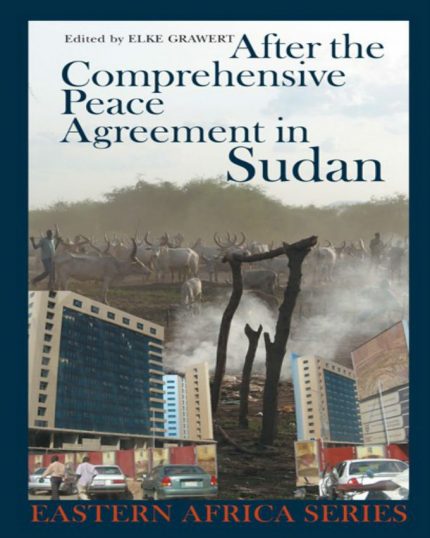
After the Comprehensive Peace Agreeme...

KShs6,999.00 KShs6,650.00
Brief Summary After a long process of peace negotiations the Comprehensive Peace Agreement (CPA) was signed on 9 January 2005 between the Government of Sudan (GOS) and the Sudan People's Liberation Movement/Army (SPLM/A). The CPA raised initial hopes that it would be the foundation block for lasting peace in Sudan. This book compiles scholarly analyses of the implementation of the power sharing agreement of the CPA, of ongoing conflicts with particular respect to land issues, of the challenges of the reintegration of internally displaced people and refugees, and of the repercussions of the CPA in other regions of Sudan as well as in neighboring countries. Elke Grawert is Senior Lecturer at the Institute for Intercultural & International Studies (InIIS), Faculty of Social Sciences, University of Bremen, Germany. ISBN:9781847010223 Author:Elke Grawert

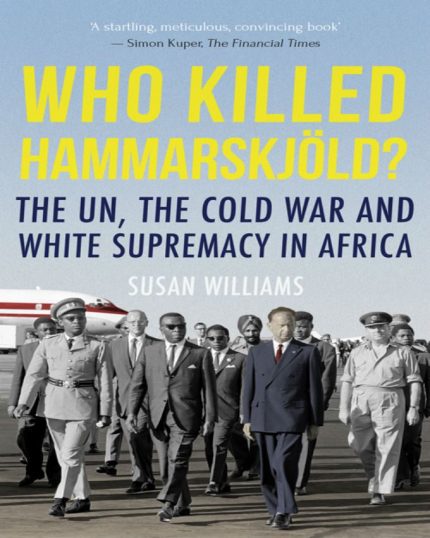
Who Killed Hammarskjold The UN the Co...

KShs2,999.00 KShs2,850.00
Brief Summary One of the outstanding mysteries of the twentieth century, and one with huge political resonance, is the death of Dag Hammarskjold and his UN team in a plane crash in central Africa in 1961. Just minutes after midnight, his aircraft plunged into thick forest in the British colony of Northern Rhodesia (Zambia), abruptly ending his mission to bring peace to the Congo. Across the world, many suspected sabotage, accusing the multi-nationals and the governments of Britain, Belgium, the USA and South Africa of involvement in the disaster. These suspicions have never gone away. British High Commissioner Lord Alport was waiting at the airport when the aircraft crashed nearby. He bizarrely insisted to the airport management that Hammarskjold had flown elsewhere - even though his aircraft was reported overhead. This postponed a search for so long that the wreckage of the plane was not found for fifteen hours. White mercenaries were at the airport that night too, including the South African pilot Jerry Puren, whose bombing of Congolese villages led, in his own words, to 'flaming huts ...destruction and death'. These soldiers of fortune were backed by Sir Roy Welensky, Prime Minister of the Rhodesian Federation, who was ready to stop at nothing to maintain white rule and thought the United Nations was synonymous with the Nazis. The Rhodesian government conducted an official inquiry, which blamed pilot error. But as this book will show, it was a massive cover-up that suppressed and dismissed a mass of crucial evidence, especially that of African eye-witnesses. A subsequent UN inquiry was unable to rule out foul play - but had no access to the evidence to show how and why. Now, for the first time, this story can be told. Who Killed Hammarskjold follows the author on her intriguing and often frightening journey of research to Zambia, South Africa, the USA, Sweden, Norway, Britain, France and Belgium, where she unearthed a mass of new and hitherto secret documentary and photographic evidence. At the heart of this book is Hammarskjold himself - a courageous and complex idealist, who sought to shield the newly-independent nations of the world from the predatory instincts of the Great Powers. It reveals that the conflict in the Congo was driven not so much by internal divisions, as by the Cold War and by the West's determination to keep real power from the hands of the post-colonial governments of Africa. It shows, too, that the British settlers of Rhodesia would maintain white minority rule at all costs. ISBN:9780190231408 Author:Susan Williams