Showing 881–900 of 1784 results

The Suicidal State in Somalia The Ris...

KShs11,999.00 KShs11,400.00
Brief Summary This book is a critical reposition of the study of military regimes in Africa. Documenting and delving deep into the reign and rule of General Mohamed Siad Barre regime in Somalia from 1969 up to 1991, the book puts emphasis on African agencies—ostensibly shaped by external beneficiaries and patrons—over what went wrong with Africa after the much-awaited post-colonial period. It does so by critically engaging with the wider theoretical and conceptual frameworks in African Studies which more often than not tend to attribute the post-colonial African State raptures to colonialism. The main thesis of the book is that colonialism left Africa on its own space wherein African leaders could have made a difference. By putting discrete perspectives into historical context, the book circumnavigates through comparative and comprehensive holistic approach to the Siad Barre regime to reveal how colonialism did not produce less than what criminalisation of the State resulted in Somalia. This empirical analysis is crucial to understanding the contemporary conundrum facing the Somali world today. The argument is that the contemporary conflicts are not only attributable to—but also because of—the past plunders of the post-colonial leaders trained by the departed colonial authorities. Employing nuanced analytic concepts and categories, the aim of the book is to refine the past to recapture the present and envision the future. Framing new ways of analyzing military regimes in Africa begins with (re)assessment of how the Siad Barre regime was previously approached. Marshalling extensive and extraordinary amount of sources, the book unveils the intricacies and contradictions of the dictatorship and its impact on the Somali psyche. The book locates the evolution of the regime within the wider context of the Cold War political contestation between the East and the West. Unparalleled in-depth and analysis, this book is the first full-length scholarly study of the Siad Barre regime systematically explaining the politics and process of the dictatorial rule. The historicity of exploring Somali State trajectory entails employing a Braudelian longue durée approach. Thus, three interrelated sets of contexts/questions inform the study: how Siad Barre himself came into power, how he ruled and maintained his authoritarian reign over the Somalis and who had assisted him from inside and outside the Somali world. ISBN:9780761867203 Author:Mohamed Haji Ingiriis

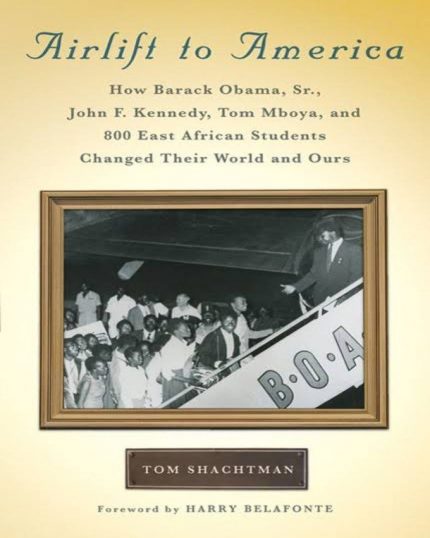
Airlift to America How Barack Obama S...

KShs2,999.00 KShs2,850.00
Brief Summary This is the long-hidden saga of how a handful of Americans and East Africans fought the British colonial government, the U.S. State Department, and segregation to transport to, or support at, U.S. and Canadian universities, between 1959 and 1963, nearly 800 young East African men and women who would go on to change their world and ours. The students supported included Barack Obama Sr., future father of a U.S. president, Wangari Maathai, future Nobel Peace Prize laureate, as well as the nation-builders of post-colonial East Africa -- cabinet ministers, ambassadors, university chancellors, clinic and school founders. The airlift was conceived by the unusual partnership of the charismatic, later-assassinated Kenyan Tom Mboya and William X. Scheinman, a young American entrepreneur, with supporting roles played by Jackie Robinson, Harry Belafonte, Sidney Poitier, and Martin Luther King, Jr. The airlift even had an impact on the 1960 presidential race, as Vice-President Richard Nixon tried to muscle the State Department into funding the project to prevent Senator Jack Kennedy from using his family foundation to do so and reaping the political benefit. The book is based on the files of the airlift's sponsor, the African American Students Foundation, untouched for almost fifty years. ISBN:9780312570750 Author:Tom Shachtman

Twisted: The Tangled History of Black...

KShs1,799.00 KShs1,710.00
Brief Summary Stamped from the Beginning meets You Can't Touch My Hair in this timely and resonant essay collection from Guardian contributor and prominent BBC race correspondent Emma Dabiri, exploring the ways in which black hair has been appropriated and stigmatized throughout history, with ruminations on body politics, race, pop culture, and Dabiri’s own journey to loving her hair. Emma Dabiri can tell you the first time she chemically straightened her hair. She can describe the smell, the atmosphere of the salon, and her mix of emotions when she saw her normally kinky tresses fall down her shoulders. For as long as Emma can remember, her hair has been a source of insecurity, shame, and—from strangers and family alike—discrimination. And she is not alone. Despite increasingly liberal world views, black hair continues to be erased, appropriated, and stigmatized to the point of taboo. Through her personal and historical journey, Dabiri gleans insights into the way racism is coded in society’s perception of black hair—and how it is often used as an avenue for discrimination. Dabiri takes us from pre-colonial Africa, through the Harlem Renaissance, and into today's Natural Hair Movement, exploring everything from women's solidarity and friendship, to the criminalization of dreadlocks, to the dubious provenance of Kim Kardashian's braids. Through the lens of hair texture, Dabiri leads us on a historical and cultural investigation of the global history of racism—and her own personal journey of self-love and finally, acceptance. Deeply researched and powerfully resonant, Twisted proves that far from being only hair, black hairstyling culture can be understood as an allegory for black oppression and, ultimately, liberation. ISBN:9780062966735 Author:Emma Dabiri

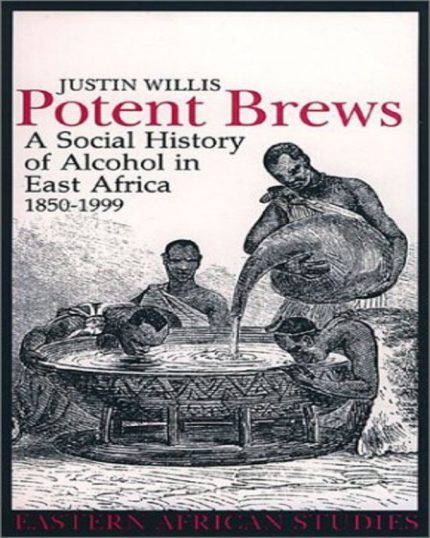
Potent Brews Social History Of Alcoho...

KShs4,500.00 KShs3,199.00
Brief Summary This is the first general history of alcohol and drinking in East Africa. Contributes to an emerging field of African social history in distinctive and innovative ways. Willis's central theme is power - from customary beliefs in alcohol as a symbol of authority and a means of enhancement and privilege, to the use of power in advertising and discourse on the consumption of modern bottled beers and spirits. It is Willis's contention that attitudes towards alcohol have become more similar across the region over time. Willis achieves a full chronological span of nearly two centuries. He lays considerable emphasis upon the late-colonial and post-colonial years; thus bringing out the continuities of these years which historians of eastern Africa have tended to overlook. Oral material from three case study areas in Uganda, Kenya and Tanzania are integrally woven in with archival and newspaper sources, each reinforcing and elaborating the other. ISBN:9780821414767 Author:Justin Willis

Swahili Origins by James De Vere Allen

KShs2,499.00 KShs2,375.00
Brief Summary Swahili Origins: Swahili Culture and The Shungwaya Phenomenon. Kiswahili has become the lingua franca of eastern Africa. Yet there can be few historic peoples whose identity is as elusive as that of the Swahili. Some have described themselves as Arabs, as Persians or even, in one place, as Portuguese. It is doubtful whether, even today, most of the people about whom this book is written would unhesitatingly and in all contexts accept the name Swahili. This book was central to the thought and lifework of the late James de Vere Allen. It is his major study of the origin of the Swahili and of their cultural identity. He focuses on how the African element in their cultural patrimony was first modified by Islam and later changed until many Swahili themselves lost sight of it. They share a language and they share a culture. Their territory stretches from the coast of southern Somalia to the Lamu archipelago in Kenya, to the Rovuma River in modern Mozambique and out into the islands of the Indian Ocean. But they lack a shared historical experience. James de Vere Allen, in this study of contentious originality, set out to give modern Swahili evidence of their shared history during a period of eight centuries. ISBN:9780821410448 Author:

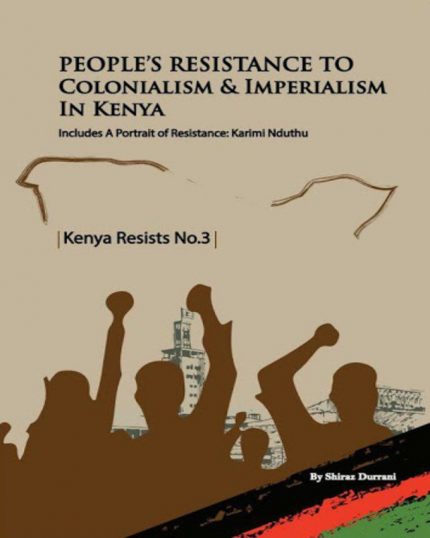
Peoples Resistance to Colonialism and...

KShs999.00 KShs950.00
Brief Summary This book looks at the third pillar of resistance to British colonialism – people’s resistance, the others being Mau Mau and radical trade union movement. It brings together several aspects of people’s resistance to colonialism and imperialism – before and after independence and includes resistance by nationalities, women, students, peasants and workers in what can only be described as people’s resistance. While Mau Mau and trade unions were essential in the liberation struggle, on their own they would have faced innumerable difficulties to achieve their goal. Peasants, nationalities, women, children and young people, students, independent churches, independent schools, all played a part in reinforcing the organized and ideology led resistance of Mau Mau and trade unions. Additional material is included to provide thought for reflections. The first two essays deal with the question of nationalities and with the contradictions between capitalism and socialism with the collapse of USSR. They point to the fact that that the struggle in Kenya influences, and is in turn influenced by, developments around the world. The next section is the presentation at the launch of Kenya’s War of Independence in Nairobi on February 21, 2018. The final section contains solidarity messages from Shiraz Durrani, Abdilatif Abdalla and Kang'ethe Mungai at the event to commemorate and celebrate the revolutionary work of Karimi Nduthu held on March 24, 2018 at the Professional Centre in Nairobi. The Kenya Resists Series covers different aspects of resistance by people of Kenya to colonialism and imperialism. It reproduces material from books, unpublished reports, research and oral or visual testimonies. The three aspects chosen for the first three publications in the Series – Mau Mau, Trade Unions and People’s Resistance – make up the three pillars of resistance of the people of Kenya. ISBN:9789966114525 Author:Shiraz Durrani

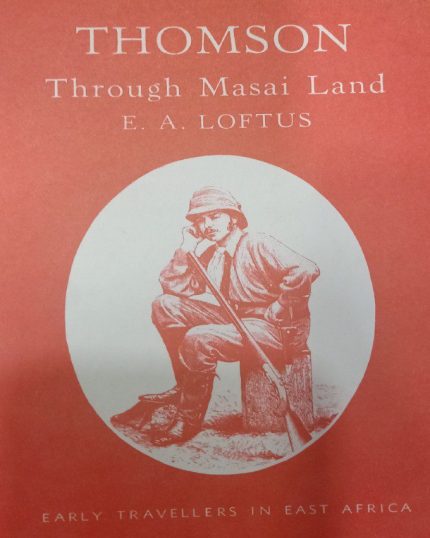
Thomson Through Masai Land by E. A. L...

KShs450.00
Brief Summary Thomson Through Masai Land (Early Travellers in East Africa) ISBN:B0028GBOXG Author:E. A. Loftus

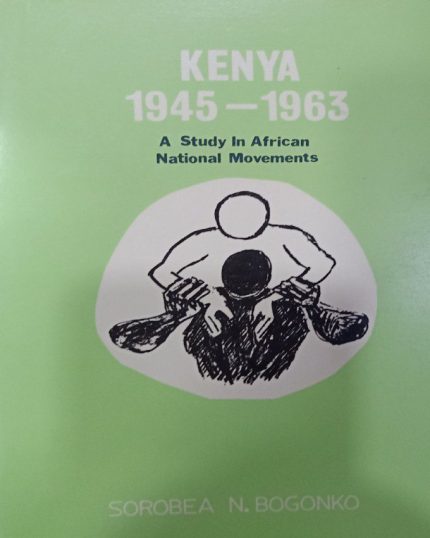
Kenya 1945-1963 A Study in African Na...

KShs899.00 KShs855.00
Brief Summary The British in Mombasa, 1824-1826 : being the history of Captain Owen's protectorate ISBN:Kenya 1945-1963001 Author:Sorobea N Bogonko

Trade Unions and Party Politics Labou...

KShs5,699.00 KShs5,415.00
Brief Summary This volume examines the political role of trade unions in seven African countries and the various ways in which they seek to influence political parties and the state. Whereas some, like the Nigeria Labour Congress, push for a political party of their own, others, such as COSATU in South Africa, opt to engage with the power struggles in the ruling party. In Namibia and Uganda unions have been incorporated by a one-party dominated state while in Ghana, unions insist on being autonomous. There is also a move towards autonomy in Senegal, despite the plurality of unions with party affiliations. In the case of Zimbabwe, unions took the lead in creating an alternative alliance in opposition to a repressive state. Trade Unions and Party Politics provides a finely tuned critique of the impact achieved by these strategies, within the context of both the unique forces shaping them and the looming shadow of the new global economy. ISBN:9780796923073 Author:Bjorn Beckman, Sakhela Buhlungu and L M Sachikonye

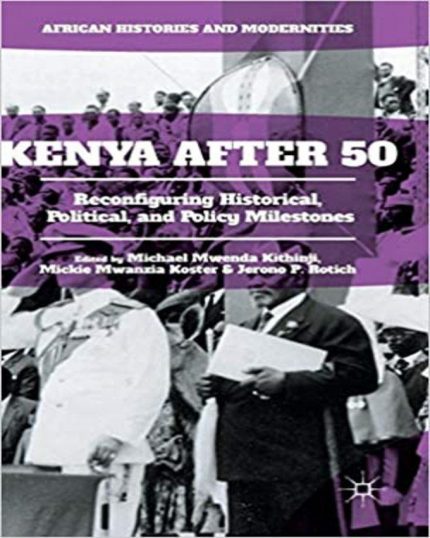
Kenya After 50 Reconfiguring Historic...

KShs11,999.00 KShs11,400.00
Brief Summary This book explores the journey that Kenya has travelled as a nation since its independence on December 12, 1963. It seeks to advance understanding of the country's major milestones in the postcolonial period, the challenges and the lessons that can be learned from this experience, and the future prospects. ISBN:9781349564606 Author:Michael Mwenda Kithinji, Mickie Mwanzia Koster and Jerono P Rotich

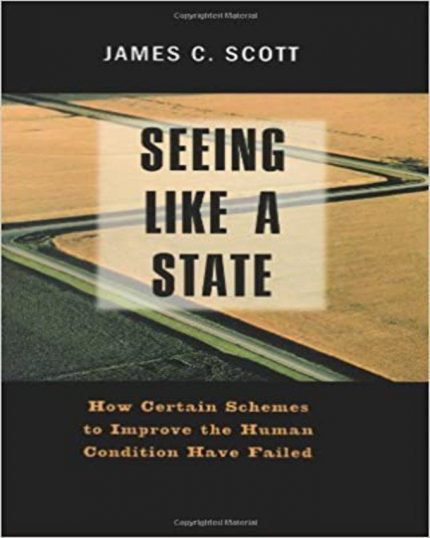
Seeing Like a State by James C Scott

KShs3,299.00 KShs3,135.00
Brief Summary Seeing Like a State: How Certain Schemes to Improve the Human Condition Have Failed. Compulsory ujamaa villages in Tanzania, collectivization in Russia, Le Corbusier’s urban planning theory realized in Brasilia, the Great Leap Forward in China, agricultural "modernization" in the Tropics—the twentieth century has been racked by grand utopian schemes that have inadvertently brought death and disruption to millions. Why do well-intentioned plans for improving the human condition go tragically awry? In this wide-ranging and original book, James C. Scott analyzes failed cases of large-scale authoritarian plans in a variety of fields. Centrally managed social plans misfire, Scott argues, when they impose schematic visions that do violence to complex interdependencies that are not—and cannot—be fully understood. Further, the success of designs for social organization depends upon the recognition that local, practical knowledge is as important as formal, epistemic knowledge. The author builds a persuasive case against "development theory" and imperialistic state planning that disregards the values, desires, and objections of its subjects. He identifies and discusses four conditions common to all planning disasters: administrative ordering of nature and society by the state; a "high-modernist ideology" that places confidence in the ability of science to improve every aspect of human life; a willingness to use authoritarian state power to effect large- scale interventions; and a prostrate civil society that cannot effectively resist such plans. ISBN:9780300078152 Author:James C Scott

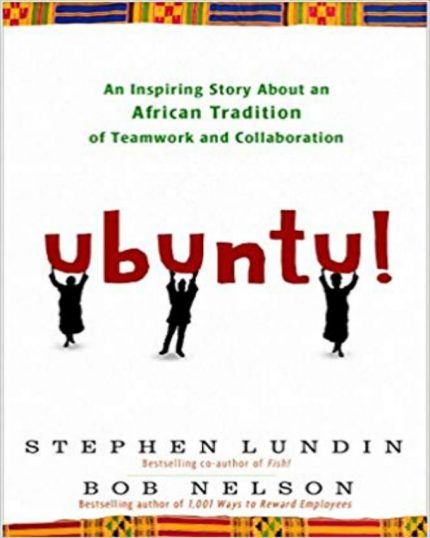
Ubuntu An Inspiring Story About an Af...

KShs2,099.00 KShs1,995.00
Brief Summary A powerful story about the African philosophy of teamwork and collaboration that has the power to reshape our workplaces, our relationships with our coworkers, and our personal lives, written by the bestselling coauthor of Fish! and the bestselling author of 1001 Ways to Reward Employees. John Peterson, a new manager in the credit department at a major big-box retailer, is struggling in his job. The people under him are not working as well or effectively as they need to, and his department is falling behind in meeting its goals. His only solution is to take on more work himself, burning the midnight oil and coming in most weekends to pick up the slack and keep his department above water. When one of the employees stays behind to help him—a young man who came to America from a small village in Africa—he learns of the ancient wisdom and hidden power of the African philosophy of Ubuntu. Before long, it begins to change the way he thinks about the people he works with, about himself, and about how he runs his department and his life. In an engaging and completely fresh narrative that holds a unique message for today’s business world, Ubuntu! shows us a way to overcome our fears, insecurities, and the "me-ism” that so often permeates our workplaces, and replace it with a culture of genuine respect and collaboration. It promises to take its place alongside Fish! and other business parables as the next bestselling classic in the business category. ISBN:9780307587886 Author:Bob Nelson and Stephen Lundin

African Twilight The Vanishing Ritual...

KShs17,999.00 KShs17,100.00
Brief Summary African Twilight is the two-volume, slipcased magnum opus of the two pioneering documentary photographers of African tribal cultures and ceremonies--a world that is quickly vanishing before our very eyes. Now, nearly two decades after these photographer's landmark African Ceremonies and with a greater sense of urgency, this book completes the journey, covering disappearing rituals and ceremonies from some of the most inaccessible corners of the African continent, to create the definitive statement on this subject. This new landmark volume will set the standard for capturing a visual testament to the vanishing traditions of African peoples. No other book like this exists or can ever be created again, as more than 40 percent of what has been documented here has already vanished. For the last 15 years of their four decades of African fieldwork, world-renowned photographers Carol Beckwith and Angela Fisher have continued their journey across Africa, seeking out remote communities to record the sacred ceremonies, powerful art forms, and boundless creativity of the people living there today. This ground-breaking book is a testament to these vanishing moments and peoples. African Twilight is a celebration of the powerful artistry and boundless creativity of Africa's cultural heritage for audiences worldwide, transporting viewers into a world of connections between individual and community, body and soul, land and people. All of the photography is previously unpublished. ISBN:9780847860173 Author:Carol Beckwith and Angela Fisher

The Politics of Trade and Industrial ...

KShs2,999.00 KShs2,850.00
Brief Summary The Politics of Trade and Industrial Policy in Africa: Forced Consensus? This book maps the process and political economy of policy making in Africa. It's focus on trade and industrial policy makes it unique and it will appeal to students and academics in economics, political economy, political science and African studies. Detailed case studies help the reader to understand how the process and motivation behind policy decisions can vary from country to country depending on the form of government, ethnicity and nationality and other social factors. ISBN:9781592211654 Author:Charles C Soludo, Osita M Ogbu and Ha Joon Chang

Art of Unlearning by Chief Nyamweya

KShs1,999.00 KShs1,900.00
Brief Summary ART OF UNLEARNING is a masterfully illustrated 130 page graphic novel about a young adventurer known as Gituma, son of the dictator King Ego, who discovers his father’s role in a notorious genocide. He is unable to outrun his traumatic past and realize his creative potential until he is challenged by three wise teachers who hold the keys to unlock his mind from the past. Unlearning is simply an inverse vision of learning. Whereas the traditional view of learning was about accumulating information, unlearning recognizes the abundance and ubiquity of digital information and therefore emphasizes instead how we can discover our innate potential or passion and share it. Passion is the rocket fuel behind all learning pursuits. Unleashing this energy is the purpose being The Art of Unlearning. To illustrate this better, consider the very delivery of this book to you. It has meant consuming volumes of books and articles on such diverse subjects as: crowdfunding, exponential technologies, spirituality, and the similarities between dark-room photography and ink illustration. It has meant sitting still and integrating remarkable experiences with human beings all around the world. It has meant failing forward and living simply in rural Eldoret with my parents for the many months of creation, a time I cherish all the more now that my Dad is far away recovering from cancer treatment. It has meant appreciating nature. It has also shown me the power of community. Most of all, I ‘found’ my number one crazy nut fan — and the love of my life, Sarah. Passion is the true power of the polymath. In this series of Blog Posts about The Art of Unlearning, I will explore the bliss and inevitable blisters of finding a new learning path for a new generation of digital natives who are negotiating the most transformational period in human history without a map. But wait! We do have a map, dumbo! Comics and graphic novels have been raving for decades about a post-singularity and post-scarcity humanity who having achieved energy abundance, universal connectivity and near-omniscience. Without the arousal of survival anxiety which so animates us at present, how will these beings flower? Will they be a boundlessly creative and generous community untethered from ignorance, disease and war? Science fiction writers have also explored the unsettling potential dangers of making human labour redundant to the goals of capital, as has been done to our environment already. ISBN:ArtofUnlearning001 Author:Chief Nyamweya

Why South Sudan Matters by Garang Malong

KShs1,199.00 KShs1,140.00
Brief Summary Why South Sudan Matters. Not a day goes by that there isn’t news coverage of a war breaking out somewhere in the world, or violence, or terrorism, or human trafficking, or child soldiers . . . the sheer volume of the reports is almost desensitizing. It isn’t that we don’t care or feel, even if briefly, for those living through these horrors, it is just that . . . well, it doesn’t impact our lives—or does it? In author Garang Malong’s authentic, captivating book, Why South Sudan Matters, he takes the reader along on his harrowing, childhood journey in a country constantly at war— a journey that no child should have to endure. This book is chilling, heart-rending, and riveting. Thanks to the author’s gift of storytelling, the reader will live through his trials with him, experience the love the South Sudanese have for their country, and in learning about the future possibilities for South Sudan, feel the connection we have to one another. One thing is certain. No one who reads this book will remain unchanged. ISBN:9780692776735 Author:Garang Malong

Perspectives On Culture And Globalisa...

KShs1,099.00 KShs1,045.00
Brief Summary In 1996 President Nelson Mandela described Professor Ali A. Mazrui (1933-2014) as "an outstanding educationist and freedom fighter.” In 2002 the former UN Secretary General Kofi Annan referred to Professor Mazrui as "Africa’s gift to the world.” Author of more than 35 books and hundreds of articles, Professor Mazrui was an African scholar who treated with uncommon flair a wide-range of themes that included globalization, the triple heritage, peace, and social justice. This volume engages with some of the themes that excited his attention for over six decades. The multidisciplinary essays seek to underline the highlights of Mazrui’s intellectual journey and attest to the fact that he was public intellectual par excellence. Indeed, in 2005, he was named one of the top 100 public intellectuals in the world. This book is a product of a symposium held from 15 to 17 July 2016 in Nairobi, Kenya. The symposium was jointly organized by the Twaweza Communications, Nairobi, Kenya, and the Institute of Global Cultural Studies (State University of New York at Binghamton) which Ali Mazrui created and presided over as the Albert Schweitzer Professor in the Humanities from 1991 to 2014. ISBN:9789966028679 Author:Kimani Njogu and Seifudein Adem

The Wayward Vagabond by MGN Kahende

KShs2,299.00 KShs2,185.00
Brief Summary David Livingstone: The Wayward Vagabond in Africa is an expression of doubt about the raîson d’etre concerning the 19th Century explorers and missionaries in Africa. Led by David Livingstone, the Scottish explorer and missionary, they are said to have come to civilize "backward” Africans, which the author creatively re-imagines, arguing that it is far from the truth. Instead, their actions gave impetus to colonialism proper. In this book the omniscient narrator, everywhere, is God’s special envoy mandated to witness history with far-reaching consequences for humanity. His investigation is to help nail David Livingstone on Judgment Day, much the same way St Peter chronicles events in the Book of Life. Read about how, everywhere, the spirit rides on wind, walks on water, enters into his characters’ stream of consciousness and even discerns how they interpret the world around them. The novel retraces Livingstone’s early life, from his deprived childhood in Blantyre, Scotland; his ideological evolution and training in London and his dramatic sojourn in Monomotapa kingdom, which he half-believes is his destiny. The satirical tone in the novel aptly captures that delusional aspect of Livingstone’s "God-ordained” mission to the world. ISBN:9789966564344 Author:M.G.N Kahende

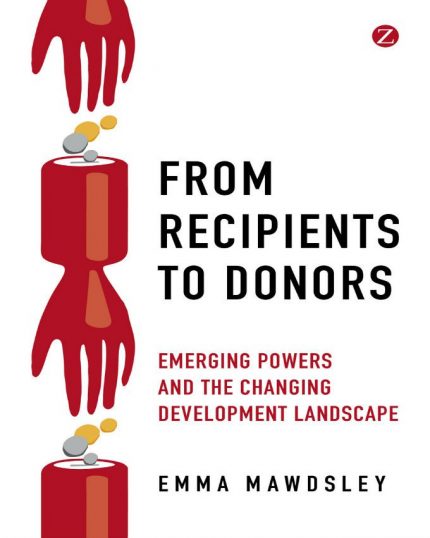
From Recipients to Donors by Emma Maw...

KShs2,799.00 KShs2,660.00
Brief Summary From Recipients to Donors: Emerging Powers and the Changing Development Landscape Foreign aid has seen enormous changes in the last decade. In the early millennium, it appeared that donor nations might succeed in combating partisan interests, and commit to a new era of coordinated policies and practices. However, the last few years have witnessed a number of challenges to this model: the problematic intrusion of security agendas; inherent difficulties in harmonization and alignment; and difficulties in securing promised finances after the financial crises. One of the key challenges arises from the growing proliferation of donors, with the growing flow of development funds that are by-passing the official agencies and being directed through NGOs, foundations, private organizations, and remittances. While reviewing all of these issues, this book focuses on one of the biggest challenges, the growth of so-called "New development donors," such as Brazil, China, Hungary, Korea, India, Poland, Saudi Arabia, Taiwan, Venezuela, and the United Arab Emirates. Some of these countries are relative newcomers to formal development assistance, while others have been active for decades. Their increasing visibility has been driven by: the rapidly expanding scale and scope of China's development assistance around the world; scrutiny of Islamic aid following 9/11; and EU debates over development policy alignment following the EU-15 accession in 2004. Are the growth of these new development donors a positive or negative thing for development? From Recipients to Donors weighs the positive and negative effects before concentrating on the new donors direct "development cooperation" policies and practices. Drawing on the author's rich original empirical research, while expertly condensing existing published and unpublished material, this is an essential and unique critical analysis and review for anyone with an academic or professional interest in development, aid, and international relations. ISBN:9781848139466 Author:Emma Mawdsley

The New Pirates Modern Global Piracy ...

KShs3,500.00 KShs3,000.00
Brief Summary Piracy is a significant global threat to international sea-borne trade - the life-blood of modern industrial economies and vital for world economic survival. The pirates of today are constantly in the world’s news media, preying on private and merchant shipping from small, high-speed vessels. Andrew Palmer here provides the historical background to the new piracy, its impact on the shipping and insurance industries and also considers the role of international bodies like the UN and the International Maritime Bureau, international law and the development of advanced naval and military measures. He shows how this 'new' piracy is rooted in the geopolitics and socio-economic conditions of the late-20th century where populations live on the margins and where weak or 'failed states' can encourage criminal activity and even international terrorism. Somalia is considered to be the nest of piracy, but hotspots include not only the Red Sea region, but also the whole Indian Ocean, West Africa, Latin America, Southeast Asia and the South China Seas. ISBN:9780857734938 Author:Andrew Palmer