Showing 301–320 of 1784 results

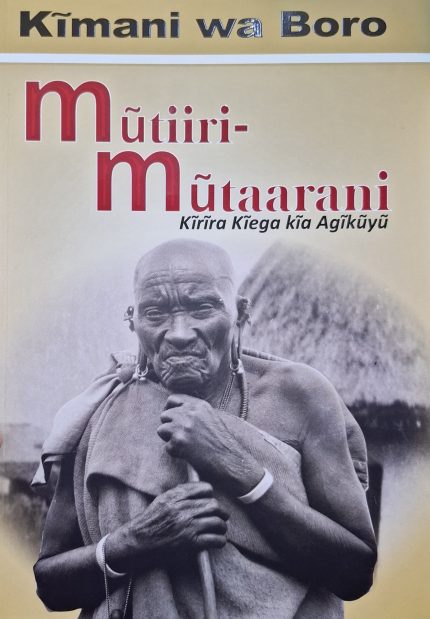
Mutiiri Mutaarani: Kirira kiega kia A...

KShs5,000.00 KShs4,500.00
Following the arrival of the white man, many Kenyan communities abandoned their cultures and embraced Western ways. Using cunning, trickery and coercion, the white man was able to get Africans to turn their backs on their own cultures. Early colonists knew that if Africans remained steadfast to their cultures, they would find it extremely to control them. As a result, Africans cultures were labeled primitive and backward. And soon, the core of African culture - religion - was attacked. Once the African embraced the Western Religion, it became quite easy to submit to the white man. Education and salvation became the new symbols of status and power. This book, Mũtiiri Mũtaarani, is written in Kikuyu and focuses on the traditional customs and beliefs of the Agîkûyû community - Joseph Ngunjiri - (Sunday Nation 18.03.2012

The Weight of Black Tongues and Other...

KShs1,000.00 KShs700.00
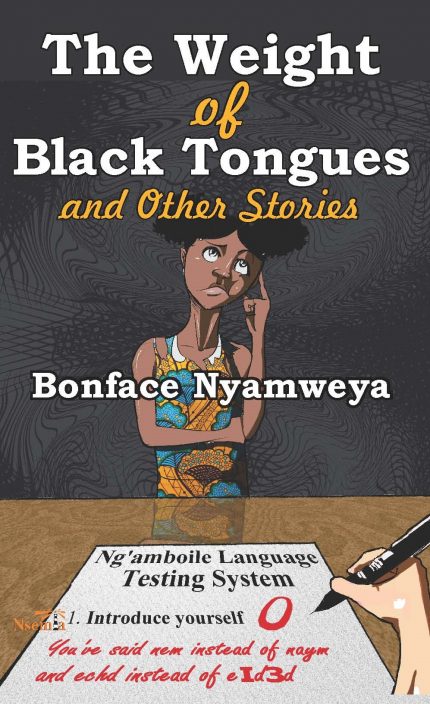
“The Weight of Black Tongues is an anthology of over half a dozen original short stories by an emerging star of new Kenyan literature, Bonface Nyamweya. This debut collection is both startling and gripping – envision it as a ride on the tail of a shooting star, zooming through Kenya’s night skies, each twinkle representing a unique story. As a dynamic figure in post-COVID-19 literary circles, whom I have had the honour of mentoring, Nyamweya showcases the depth and scope of storytelling in Kenya, transitioning from unusual novels and sartorial poetry to making his mark in short story fiction. From the enigmatic Whose Title Died to the riveting Waiting for Mama, each title in this new book invites readers into a world of mystery and profound reflection, solidifying Nyamweya as a rising force in African literature in the wake of the fin de siècle.

Dear Ex

KShs1,000.00 KShs700.00
"DEAR EX" is a heart-wrenching love story that delves into the dating scene of the 21st century woman. This gripping novel will leave you questioning the complexities of modern relationships and the true meaning of love. "REJECTED" is a powerful and emotional read that will have you on the edge of your seat until the very end. It is an exploration of the absurdity and meaninglessness of life, as seen through the eyes of the narrator. This novel will leave you questioning the nature of existence and the human condition. "THE CRY OF KAFRIA" is an epic historical novel set in pre-colonial Africa. This novel delves into the rich culture and history of the continent, bringing to life the struggles and triumphs of young Africa in vivid detail. "Traverse Through Nairobi" is an exciting read that is relatable to anyone who has ever experienced life in a big city. This novel takes you on a journey through the streets of Nairobi and reminds us that the city is not just a place of fun and entertainment, but also a place of deep struggles and hidden struggles, and it is only the strongest who can survive. This book is a call to remember the city is not just a place of fun but largely a place of deep, untold struggles and only those who fight hardest can fit in. Don't miss out on these incredible stories, get your hands on these novels today!

Matigari by Ngugi wa Thiongo English ...

KShs1,000.00 KShs699.00
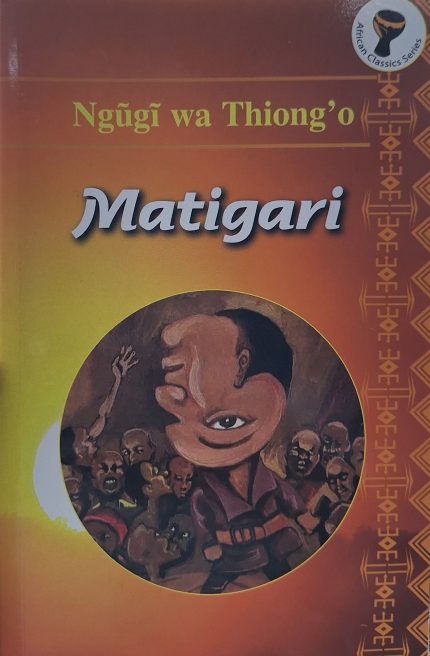
Brief Summary Who is Matigari? Is he young or old; a man or fate; dead or living… or even a resurrection of Jesus Christ? These are the questions asked by the people of this unnamed country, when a man who has survived the war for independence emerges from the mountains and starts making strange claims and demands. Matigari is in search of his family to rebuild his home and start a new and peaceful future. But his search becomes a quest for truth and justice as he finds the people still dispossessed and the land he loves ruled by corruption, fear, and misery. Rumors spring up that a man with superhuman qualities has risen to renew the freedom struggle. The novel races toward its climax as Matigari realizes that words alone cannot defeat the enemy. He vows to use the force of arms to achieve his true liberation. Matigari is a satire on the betrayal of human ideals and on the bitter experience of post-independence African society.

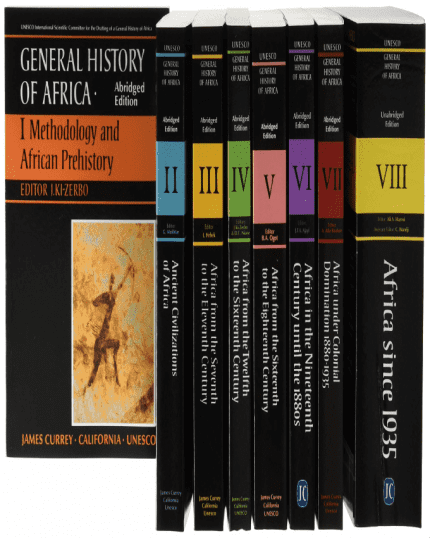
General History of Africa Complete Se...

KShs20,000.00 KShs18,000.00
This set brings together all 8 volumes of the groundbreaking Unesco General History of Africa, which are all now available again as paperbacks. The series demonstrates the importance of African history from earliest pre-history, through the establishment of its ancient civilizations to the placing of Africa in the context of world history. The growth and development of African historiography, once written records became more common, document the triumph of Islam, the extension of trading relations, cultural exchanges and human contacts, as well as the impact and consequences of the slave trade. The European scramble for colonial territory in the 1880s is examined with a focus on the responses of Africans themselves to the economic and social aspects of colonial systems up to 1935, including the growth of anti-colonial movements and the strengthening of African political nationalism. The contributions document how the continent moved from international conflict under foreign domination to struggles for political sovereignty and economic independence. The last (unabridged) volume 8 examines the challenges of nation-building and the socio-cultural changes affecting the newly independent nations.

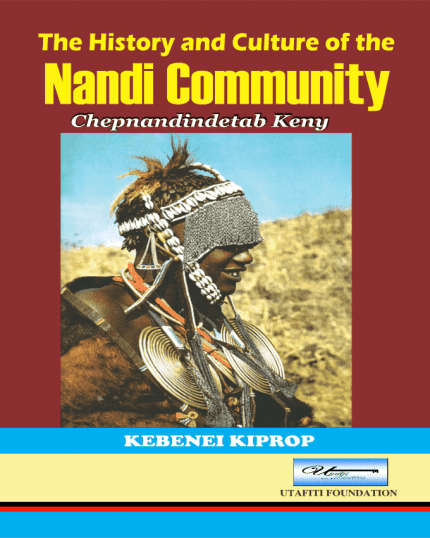
The History and Culture of the Nandi ...

KShs3,000.00 KShs2,890.00
This book focuses on the definition and application of Nandi customary laws on the backdrop of modern civilization. The author has good knowledge regarding the Nandi culture due to his personal observation including his participation in some of the events recorded in the book. Most of the information was indeed received in the form of oral transmission via stories and myths passed from generation to generation by past ancestors. Nevertheless, ideas may differ due to the influence of Nandi neighbors and immigrants who came in with their different cultures and practices.  

A history of the Kipsigis by Henry A ...

KShs699.00 KShs665.00
Brief Summary This study is the result of research conducted during the years 1973 and 1974. It is based on both written sources and oral traditions collected during that period. The work is divided into eleven chapters. The first chapter is devoted to a survey of the existing literature on the subject, outlining its major characteristics. Both those who trace the origin of the Kipsigis to the north of Kenya and those who see them as a society that has come about as a result of some sort of evolution are agreed in this literature in tracing the break up of one originally united group called Kalenjin. This thesis departs from this tradition and asserts that the Kipsigis as such, have not come from there. They have evolved where they are to-day from various ethnic interactions. Thus the origins of the society are diverse. The rest of the chapters, except the conclusion, are devoted to various aspects of how this came about ISBN:B07FLW542N Author:Henry A Mwanzi

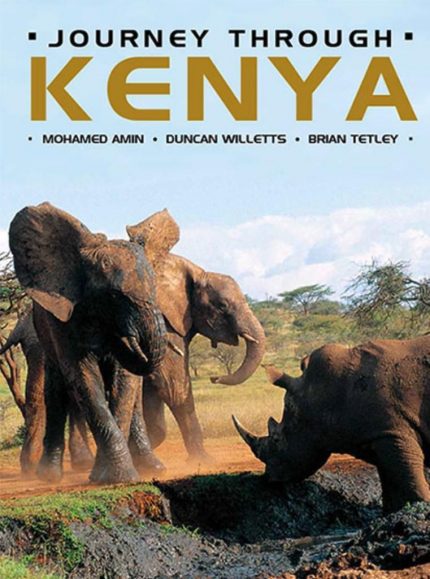
Journey through Kenya by Mohamed Amin...

KShs7,000.00 KShs6,500.00
Colonized by the British for more than 50 years, ending with independence in 1963, Kenya draws visitors from all over the world to see its fascinating mixture of landscape, wildlife and people. The snows of Mount Kenya astride the equator, sixteen national parks and over 300 miles of silver-sanded coast make Kenya one of the great holiday resorts - with surfing, snorkeling, scuba diving and big game fishing among the attractions which have lured such authors as Hemingway and Ruark. Blending historical fact with anecdote and imagery, and with an introduction by late film star William Holden, Mohamed Amin and Duncan Willetts' 150 color illustrations and Brian Tetley's text paint a vivid and exciting picture of an unforgettable nation.  

Mwakenya The Unfinished Revolution by...

KShs3,500.00 KShs2,999.00
Mwakenya: The Unfinished Revolution is a 440 page book divided into six parts after the Preface and Introduction. Part One deals with the birth of the Kenyan anti-imperialist underground move- ment in the mid-1970s around the time of the brutal and grisly murder of the populist parliamentarian JM Kariuki by assassins widely believed to be working at the behest of President Jomo Kenyatta. Drawing its inspiration and legacy from the Mau Mau anti-imperialist struggle of the 1950s, the December Twelve Movement (DTM) derived its name from the date Kenya achieved its flag independence in actually the date when the freedom aspirations of Kenyans were betrayed and neocolonialism ushered in. Maina informs his readers that DTM in turn was the child of the clandestine Workers' Party of Kenya. The fledgling underground movement took an anti-imperialist, pro-socialist stance--ideology anchored in Marxism-Leninism Maoist thought. The rest of the sections are taken up by detailed narrative as well as a very frank analysis and critique of the later history of the movement when, according to Maina, it was taken over by what he refers to as "opportunist, sectarians and ultra-leftists" who later transformed it into Mwakenya with at first disastrous consequences. The author chronicles the inner party debate, struggle and rectification, which later led to the expulsion of the "liquid- ationist Dar clique". It's worth reading and re-reading the Part One of the book because it appeared a distinct departure and a fresh gust of air from Maina's previous public views on Mwakenya--especially his last major work, "History of Resistance In Kenya, 1890-2002, where to many Kenyan leftists and observers outside the movement, Maina appeared to endorse some of Mwakenya's gregarious errors through silence. In conclusion, Maina is one of Kenya's foremost historians, one of Kenya's prominent organic intellectuals, one of Kenya's Marxist scholars. He was abducted from Kenyatta University in 1982, interrogated, humiliated and tortured by Kenya's state agents before being hauled to a Kangaroo court on trumped up charges and later flung to dungeons of Kamiti and Naivasha penitentiaries. He was released in 1988.

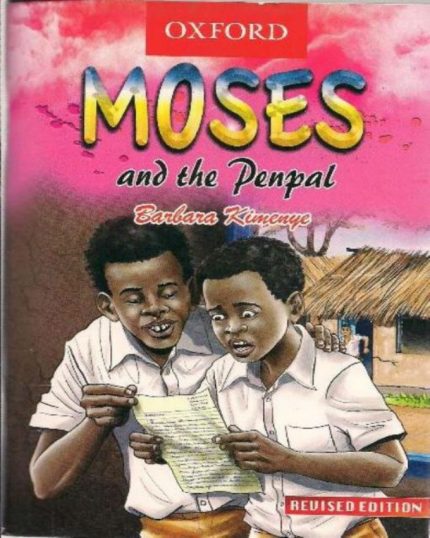
Moses and the Penpal by Barbara Kimenye

KShs650.00 KShs550.00
Brief Summary The craze for writing to penpals sweeps Mukibi's Institute for the Sons of African Gentlemen. Anywhere else, this would be a harmless enough hobby but at Mukibrs, even a letter can be dynamite. And, not surprisingly, Moses and King Kong are right in the middle of the explosion. Then there is the new boy, Kasali, who has an unusual hobby of his own. Hidden in the dormitory, he's set up a strange contraption for making wine. Everyone in Dorm 3 agrees it is very good wine, and that Kasali has a bright future ahead of him in the liquor business. Perhaps he has ... but before Kasalrs wine makes him a fortune. It’s destined to play a remarkable rote in the history of Mukibi's Institute for the Sons of African Gentlemen. ISBN:9780195738575 Author:Barbara Kimenye

Kamba customary law by D J Penwill

KShs399.00 KShs380.00
Brief Summary Kamba customary law : notes taken in the Machakos District of Kenya Colony. ISBN:2030311000264 Author:D J Penwill

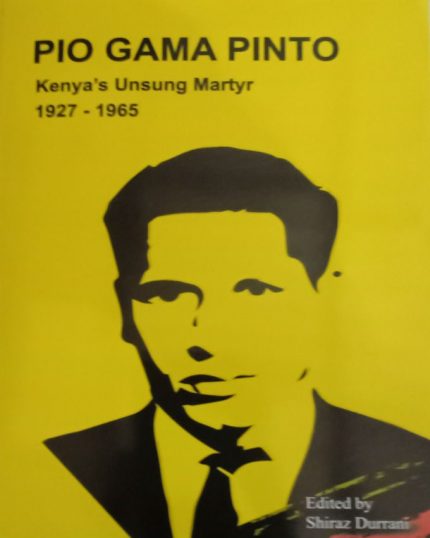
Pio Gama Pinto Untold Life Story of F...

KShs3,000.00 KShs2,800.00
Pio Gama Pinto: Kenya’s Unsung Martyr 1927– 1965 is edited by Shiraz Durrani and includes letters, recollections from family and comrades and newspaper articles. Shortly after independence, Pinto was shot dead outside his Westlands home (where Sarit Centre is). He was 38. That his two-year-old daughter was in the car with him or that it was broad daylight did not deter the assassins -- they were determined to eliminate him. One stark reason to finish him, it has been argued over the years, was the fact that he was a hardcore socialist caught in the cross-hairs of neo-imperialists hell-bent on directing Kenya the capitalistic way. The 2013 report by the Truth, Justice and Reconciliation (TJRC) said his death was motivated by "ideological differences at the heart of the global cold war but also mirrored in domestic politics.” Three men were nabbed in connection with the murder. TJRC said those arrested were "scapegoats” meant to divert attention from the real killers. Fingers were pointed at the government led by Mzee Jomo Kenyatta. One of his closest friends Achieng’ Oneko, on learning about his death, would shout: "No, no, no! Kenyatta must explain! He must explain!” Kenya’s second Vice President Joseph Murumbi, also a dear friend, was the most distraught and in tears after learning of his death (Murumbi is quoted saying that Pintomade him join politics). Two weeks earlier, Pinto had been tipped that there was a plot to murder him alongside Bildad Kaggia and JD Kali due to their "secret anti-Government” activities. But did Kenyatta have a hand in Pinto’s death? Pinto after all, had fought for Kenyatta’s release from detention. The book suggests that his assassination needs to be seen in its "overall national and international” context. Durrani quotes authors who have tied his death to that of slain US black rights activist Malcolm X. The two met when Malcolm visited Kenya in 1959. Pinto was active in the fight against colonialism as well as neo-colonialism in the post-independence struggle and was targeted by colonial Portuguese Goan and British Kenyan administrations. The post-independence ruling elite ultimately silenced him. "The bullets that killed Pinto may have been fired or organized by the former home guards, now the new power brokers, but their foreign backers were the real instigators of his assassination,” writes Durrani. Pinto gave away almost all his money and not even his wife Emma, knew how much he earned. As secretary of the Pan African press, Pinto used to tell his wife that his salary was half of what he earned and gave out the other half to the poor. According to Murumbi, he didn’t own a house and was very reluctant when it was suggested. When Pinto died, poor people from all over went to his house. "It was really pathetic to see elderly Kikuyu weeping for a man who had helped them, a man who was their colleague in detention and a man who had never forgotten them,” said Murumbi. After his death, Murumbi arranged for Emma to immigrate to Canada where they became citizens. Now 90, Emma describes Pinto as a "humanist.” The author says the book has been in the works since the 1980s and blames unfavourable political climate for the cancellations and delays on any work on Pinto.  

One Life too Many by Yusuf Dawood

KShs990.00 KShs790.00
Brief Summary Sydney Walker, young and carefree, came to Kenya in search of adventure, fell in love with the country and decided to make it his home. This is the story of the joys and sorrows of a man who worked hard and loved even harder. A magnificent account of expatriate life, set in the awe- inspiring beauty of Kenya, it confirms Yusuf K. Dawood as one of the greatest storytellers of our time.

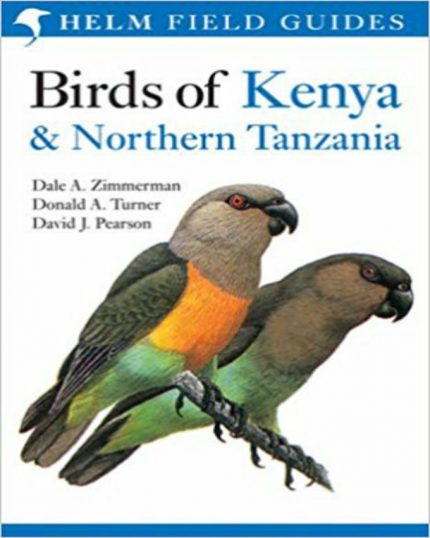
Birds of Kenya and Northern Tanzania ...

KShs7,990.00 KShs7,790.00
Brief summary This field guide is an abridged edition of the very successful Birds of Kenya and Northern Tanzania written by the same authors. It covers all 1089 bird species known from the region, including vagrants. This book combines the format and detailed treatment of the larger version with the convenience of a field guide. All the species are illustrated with full details of all the plumages and major races likely to be encountered. Concise text describes identification, status, range, habits and voice with range maps for nearly every species. This authoritative book will not only be an indispensable guide to the visiting birder, but also a vital tool for those engaged in work to conserve and study the avifauna of these countries. " " ISBN:9780713675504 Author:Dale A. Zimmerman, David J. Pearson & Donald A. Turner

In the Footsteps of Mr Kurtz by Miche...

KShs2,500.00 KShs2,190.00
He was known as "the Leopard," and for the thirty-two years of his reign Mobutu Sese Seko, president of Zaire, showed all the cunning of his namesake, seducing Western powers, buying up the opposition, and dominating his people with a devastating combination of brutality and charm. While the population was pauperized, he plundered the country's copper and diamond resources, downing pink champagne in his jungle palace like some modern-day reincarnation of Joseph Conrad's crazed station manager. Michela Wrong, a correspondent who witnessed firsthand Mobutu's last days, traces the rise and fall of the idealistic young journalist who became the stereotype of an African despot. Engrossing, highly readable, and as funny as it is tragic, her book assesses how Belgium's King Leopold, the CIA, and the World Bank all helped to bring about the disaster that is now the Democratic Republic of Congo. If, in this poignant account, the villains are the "Big Vegetables" (les Grosses légumes) — the fat cats who benefited from Mobutu's largesse — the heroes are the ordinary citizens trapped in a parody of a state. Living in the shadow of a disintegrating nuclear reactor, where banknotes are not worth the paper they are printed on, they have turned survival into an art form. For all its valuable insights into Africa's colonial heritage and the damage done by Western intervention, In the Footsteps of Mr. Kurtz is ultimately a celebration of the irrepressible human spirit.

On Black Sisters Street by Chika Unigwe

KShs2,000.00 KShs1,890.00
Brief Summary On Black Sisters Street tells the haunting story of four very different women who have left their African homeland for the riches of Europe—and who are thrown together by bad luck and big dreams into a sisterhood that will change their lives. Each night, Sisi, Ama, Efe, and Joyce stand in the windows of Antwerp’s red-light district, promising to make men’s desires come true—if only for half an hour. Pledged to the fierce Madam and a mysterious pimp named Dele, the girls share an apartment but little else—they keep their heads down, knowing that one step out of line could cost them a week’s wages. They open their bodies to strangers but their hearts to no one, each focused on earning enough to get herself free, to send money home or save up for her own future.Then, suddenly, a murder shatters the still surface of their lives. Drawn together by tragedy and the loss of one of their own, the women realize that they must choose between their secrets and their safety. As they begin to tell their stories, their confessions reveal the face in Efe’s hidden photograph, Ama’s lifelong search for a father, Joyce’s true name, and Sisi’s deepest secrets—-and all their tales of fear, displacement, and love, concluding in a chance meeting with a powerful, sinister stranger.On Black Sisters Street marks the U.S. publication debut of Chika Unigwe, a brilliant new writer and a standout voice among contemporary African authors. Raw, vivid, unforgettable, and inspired by a powerful oral storytelling tradition, this novel illuminates the dream of the West—and that dream’s illusion and annihilation—as seen through African eyes. It is a story of courage, unity, and hope, of women’s friendships and of bonds that, once forged, cannot be broken. ISBN:2147483647 Author:Chika Unigwe

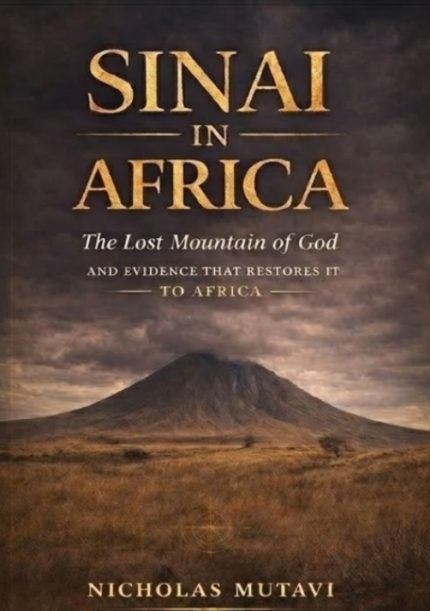
Sinai in Africa: The Lost Mountain of...

KShs5,000.00 KShs3,600.00
If you ever wanted to know the true location of Mt Sinai this is the book.

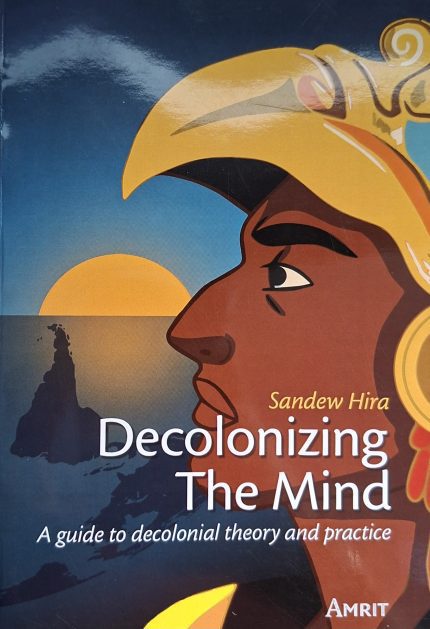
DECOLONIZING THE MIND: A guide to dec...

KShs5,500.00 KShs5,000.00
DECOLONIZING THE MIND BOOK For twelve years Sandew Hira has been working on a book titled Decolonizing The Mind - a guide to decolonial theory and practice. In different parts of the world a new decolonial movement is growing that challenges long time narratives in knowledge production and social struggle and transforms activism and social movements. It is driven by key factors such as the fall of the west and the rise of the rest, the collapse of the socialist bloc and in general the crisis of Western civilization. This book develops a comprehensive, coherent and integral theoretical framework that draws on different contributions in the decolonial movement. It also deals with the practical implication of decolonial theory for decolonial activism. Cuauhtémoc, the last Aztec ruler of Tenochtitlan, Mexico, spoke of the sun that has gone down with the arrival of the European invader and an era of darkness his people now entered. This contrasts with the idea of an era of Enlightenment, which is fundamental to the European view of world history. He also predicted that a time will come when the sun will rise again, when the colonial world civilization is replaced by a new world civilization based on decolonizing the mind. You can download the table of content of the book here and the Introductory chapter here. The importance of the book There are five things that makes this book special. First, across the globe there is a rise of a movement inside and outside the academia that labels their narrative as "decolonial". Academics and activists have made great contribution to decolonial theory and practice. Hira's book is an attempt to bring these contributions together in a comprehensive, coherent and integral theoretical framework. Western Enlightenment has produced two such frameworks: Liberalism and Marxism. A comprehensive, coherent and integral theoretical framework has the following characteristics: 1. It is comprehensive because it has produced concepts of how to look at the most important dimensions of a society: a world view, economics, social relations including relations with nature, politics and culture. There are other important aspects of a society, but these dimensions are essential to make a framework comprehensive. 2. It is coherent because its concepts don't contradict each other. They are consistent and logical. 3. It is integral because the concepts of the different dimensions are not just lumped together but are related to each other from a basic concept. In Liberalism it is "individual freedom" and in Marxism "class struggle". In decolonial theory it is mental slavery and decolonizing the mind. Second, the book is a systematic guide to decolonize the mind. Decolonizing the mind consists of three 1. The critique of the Western colonization of the mind and thus Eurocentric knowledge production. 2. The development of an alternative comprehensive, coherent and integral knowledge production. 3. The translation of this new knowledge in viable policies to built a new pluriversal world civilization. Third, the book appeals both to academics who can use the book as teaching material, but also to activists who are figuring out to build social movements that go beyond the dichotomy of Liberalism and Marxism. Fourth, the book is part of a greater vision of how produce and transfer decolonial knowledge. It is not only about producing and distributing a book. It is also about linking theoretical concepts with art. An example is the musical documentary produced by artist Pravini: The Uprising. And most importantly, the book is a basis discussing decolonial knowledge in summer schools, lectures, workshops etc. About Sandew Hira Sandew Hira, penname of Dew Baboeram, is secretary of the Decolonial International Network Foundation (DIN). Hira studied economics at the Erasmus University Rotterdam in Holland. He has written 25 books on different topics among them colonial history. Download his CV is here. Follow Sandew Hira via his website: www.sandewhira.com. The publisher Amrit Publishers is decolonial publishing house set up by Sandew Hira and Sitla Bonoo in The Netherlands. Amrit has published more than 80 books, many in Dutch, but in the last few years they have started publishing books in English in the series Decolonizing The Mind. The series is edited by Sandew Hira of the Decolonial International Network Foundation, Prof. Dr. Stephen Small from the University of California, USA, and Arzu Merali from the Islamic Human Rights Commission in the UK.

Gambling Nation: Kenya’s Silent...

KShs2,000.00 KShs1,500.00
Gambling in Kenya is no longer just a game. It is a growing crisis. From bright TV shows to online betting apps, gambling has quietly crept into homes, schools, and minds. It promises quick wealth but often brings pain, debt, and broken dreams. This book reveals how the craze is hurting youth, destroying families, and fueling a silent epidemic. It is a powerful warning and a call to action. Kenya must wake up before it is too late.