Showing 1581–1600 of 2412 results

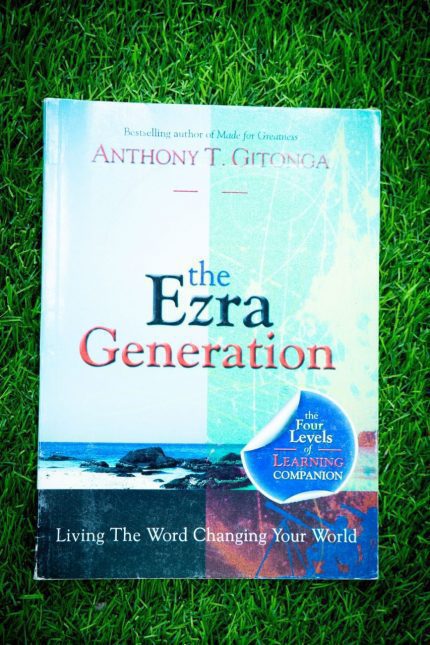
The Ezra Generation by Anthony T. Git...

KShs699.00 KShs499.00
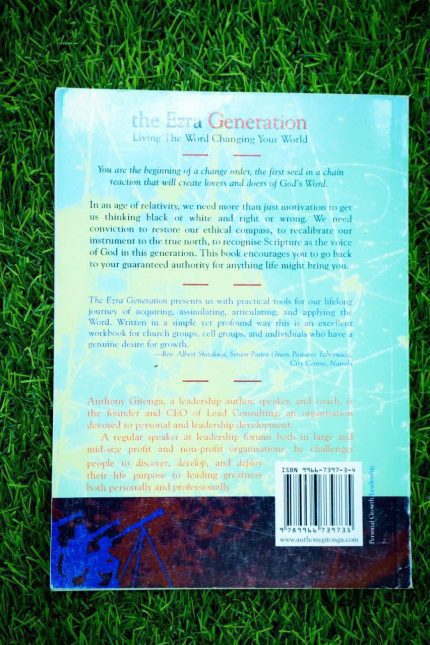
This book encourages you to go back to your guaranteed authority for anything life might bring you. The Ezra Generation presents us with practical tools for our lifelong journey of acquiring, assimilating, articulating, and applying the word. Written in a simple yet profound way this is an excellent workbook for church groups, cell groups, and individuals who have a genuine desire for growth. Rev. Albert Shitakwa, Senior Pastor Green Pastures Tabernacle ,City Centre, Nairobi.

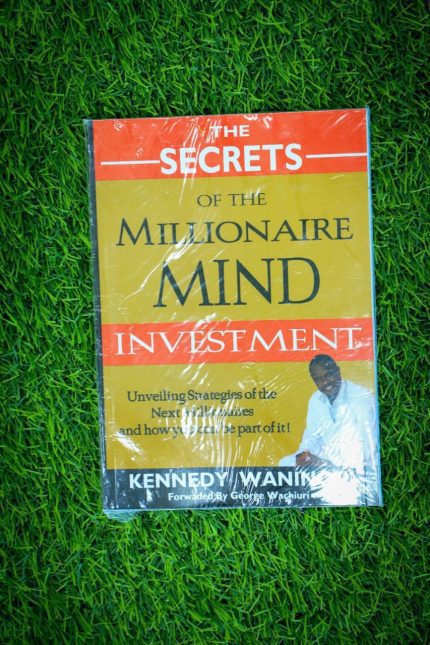
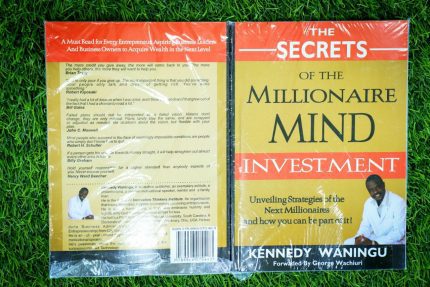
The Secrets Of The Millionaire Mind I...

KShs999.00 KShs699.00
A Must read for Every Entrepreneur, Aspiring Business Leaders And Business Owners to Acquire Wealth in the Next Level

Silencing Anna by Wanjiru Waithaka

KShs1,500.00 KShs1,200.00
Silencing Anna tells the story of a young female journalist, blacklisted from all the media houses in the country, after exposing a prominent tycoon’s clandestine activities. Kihoto Ndegwa uses his advertising millions to arm-twist editors and media owners into only publishing PR stories about him and killing negative ones in a classic illustration of media capture. Anna struggles to keep her integrity in an often corrupt newsroom atmosphere while suffering depression and losing her faith in God. When a whistle blower gives her the chance to bring Ndegwa down, Anna takes him on again despite her fear. The resulting drama moves quickly through the streets of Nairobi, the port of Mombasa, the Indian Ocean and ultimately into the wilderness of Tsavo East National Park where Anna faces her greatest test. An elephant rescued from the wild after poachers killed its mother holds the key to Anna’s survival. Can she be saved before it’s too late? A final heart-breaking twist ends this fast-paced thriller that you won’t want to put down for even one minute. Click on this link to watch the book trailer: https://youtu.be/i93aniJL8oc

Bandits on the Border: The Last Front...

KShs5,500.00 KShs4,900.00
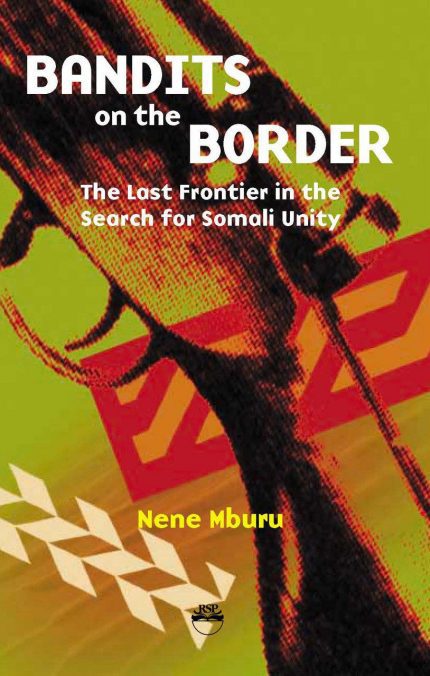
Bandits on the Border: The Last Frontier in the Search for Somali Unity - By Nene Mburu. In the early 1990s, Somalia was in the spotlight for factionalism as Warlords, clans, and sub-clans doggedly wrenched their fiefdoms from the Polyglot State through bloody civil wars. In contrast, thirty years earlier the Somali were pre-occupied with the struggle for stitching together the five Somali-inhabited enclaves of the Horn of Africa into one Greater Somalia. Bandits on the Border revisits pan-Somalia nationalism of the 1960s when Kenyan Somalis attempted to secede and join the Somalia State which had been created after the merger of the former British Somaliland with the Italian Trusteeship. This book is the first insiders analysis of the so-called Shifta secessionist war of the early 1960s and its degeneration into apolitical banditry that continues in the former Northern Frontier Districts of Kenya (NFD). The author argues that in the late 1950s Britain's crumbling colonial empire was beyond salvage and, having just fought the Mau Mau, the colonial power could not risk another protracted war in Kenya. It therefore procrastinated a resolution of the Somali questions until it handed over political power to Jomo Kenyattas government. Nevertheless, having neglected and insulated the Somali community/region from the mainstream Kenyan society for sixty years, Britain bequeathed Kenyatta an advanced security problem that required time and long-term economic investment to eradicate collective disaffection and secessionism. The book also explores the dynamics of the Shifta insurrection in its geopolitical context to illustrate why Somalia's irredentist foreign policy was unsustainable. It details how the Shifta war was affected by, and correspondingly affected, the realpolitik of the prevailing Cold War. It also gives a detailed comparative analysis with other secessionist wars taking place in Africa. Lastly, the book explores the symmetrical connexion between insecurity in the NFD, the collapsed Somali State, and Americas war on international terrorism particularly after the bombing of the US embassies in eastern Africa and the attacks in USA of 11 September 2001.

From the Village to the World: Reflec...

KShs1,200.00 KShs999.00
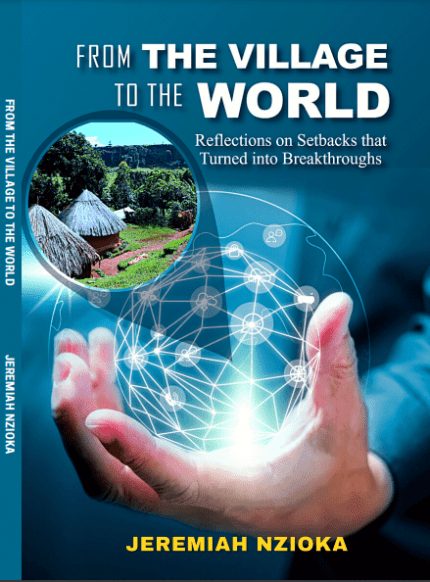
Jeremiah, a UK-based Kenyan Economist and Pastor, was born and raised in a small village called Kamanzi in Kenya. His childhood was spent in the midst of tremendous challenges including poverty and deprivation. Their family struggled to afford food and school fees. That notwithstanding, Jeremiah received education through providential circumstances. By sharing reflections from his own life story, Jeremiah offers the reader an example of how setbacks in real life turned into breakthroughs. In addition to Jeremiah’s life story, you will read reflections from four other similarly inspiring stories. This message will encourage and inspire you to convert life's inherent setbacks to your advantage. Important Lesson: Most of our humiliating defeats and setbacks in life can be converted into spectacular breakthroughs. Endorsements "This book is quite inspirational. I would encourage everyone to read it. It will give you renewed energy to walk through the rough patches of life's journey." Prof. Hazel Miseda Mumbo Vice Chancellor Great Lakes University of Kisumu. "I find From the Village to the World very insightful and helpful." Dr. John Dilworth Lecturer Africa International University

Giigikuyu Giitu: Kirathi gia Gatatu I...

KShs700.00 KShs550.00
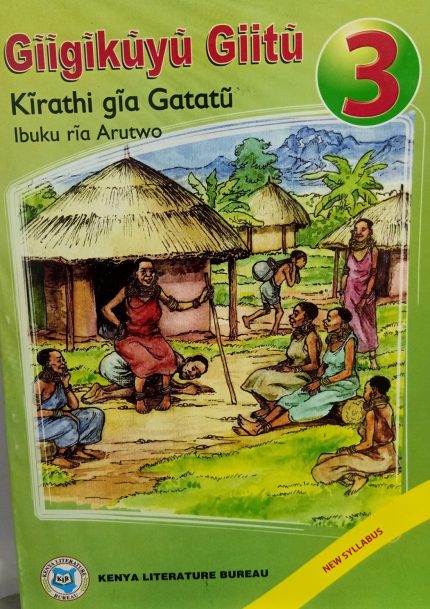
Giigikuyu Giitu: Kirathi gia Gatatu Ibuku ria Arutwo By Margaret Muthoni

Giigikuyu Giitu: Kirathi kia keeri Ib...

KShs700.00 KShs550.00
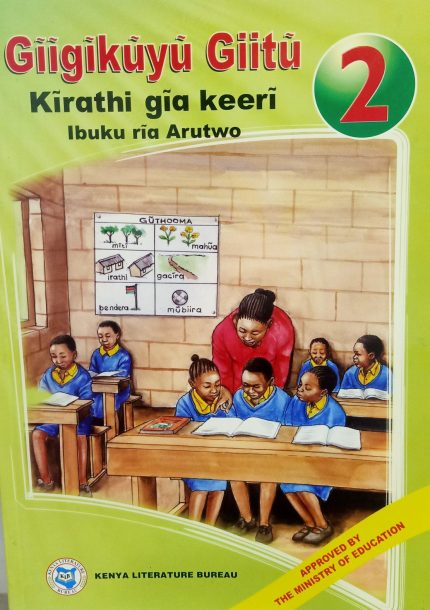
Giigikuyu Giitu: Kirathi kia keeri Ibuku ria Arutwo By Margaret Muthoni

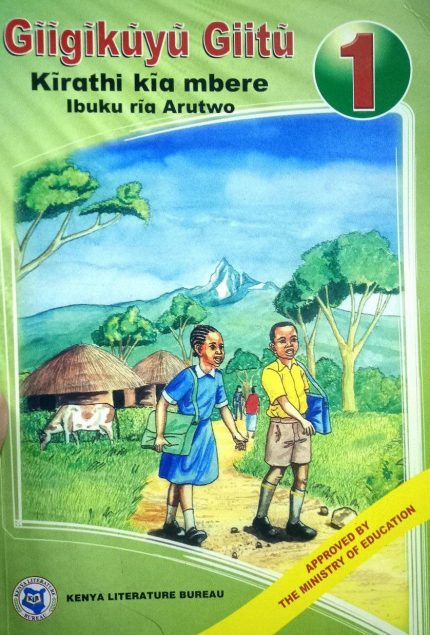
Giigikuyu Giitu: Kirathi kia Mbere Ib...

KShs690.00 KShs550.00
Giigikuyu Giitu: Kirathi kia Mbere Ibuku ria Arutwo By Margaret Muthoni

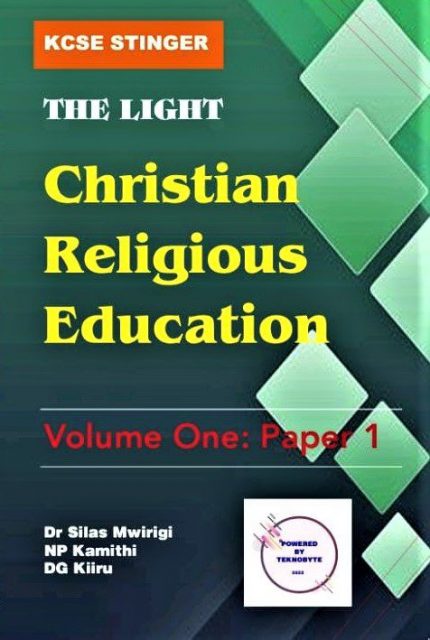
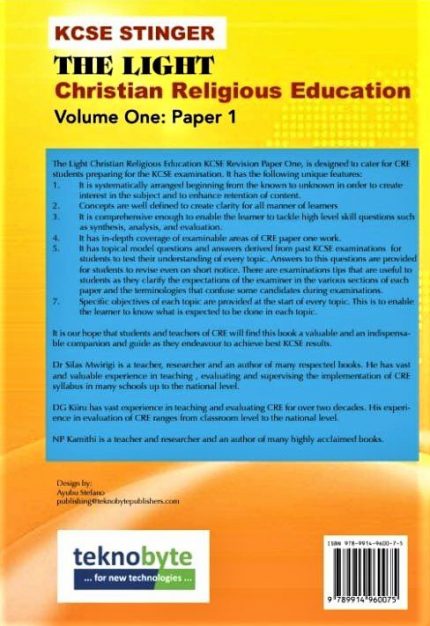
The Light Christian Religious Educati...

KShs1,000.00 KShs950.00
The book is designed to cater for CRE students preparing for the KCSE examination. It covers examinable areas of CRE paper one work with topical model questions and answers which are derived from past KCSE examinations.

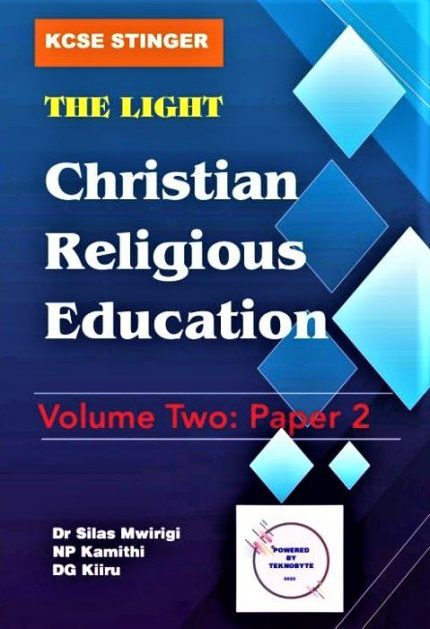
The Light Christian Religious Educati...

KShs1,000.00 KShs950.00
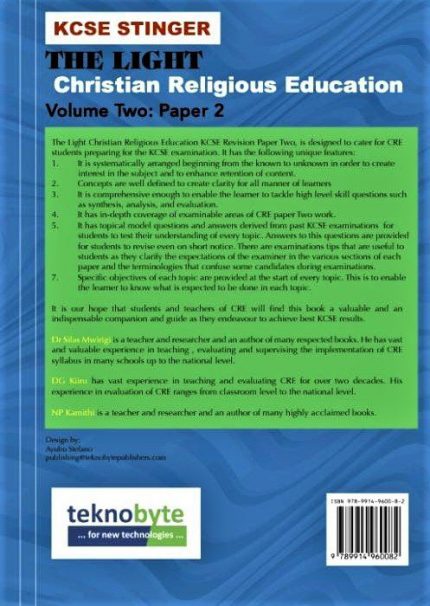
The book is designed to cater for CRE students preparing for the KCSE examination. It covers examinable areas of CRE paper two work with topical model questions and answers which are derived from past KCSE examinations.

Descent From Cherangany Hills: Memoir...

KShs3,500.00 KShs3,090.00
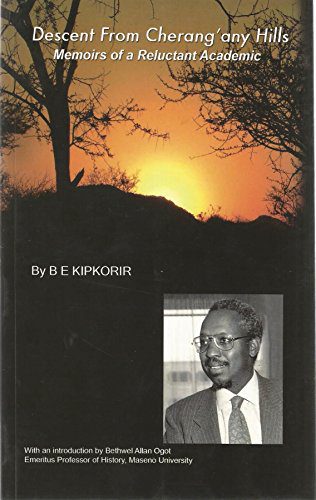
The life story of B. E. Kipkorir (1939-2015) is a stunning account told with the grace and ease of a seamless symphony; in captivating literary language, complete with rhetorical flashes of gripping phrases and simple sentences mortised to astonishing tightness. It is a story about the ultimate triumph of a man who beat great odds to scale the highest heights he possibly could. A singular raconteur, the author weaves a tapestry – spanning many years – in quick rapid fire, both vivid and compelling. It’s a story to make you laugh, a story to make you cry, to build your faith to maximize your potential, for it is a story about possibilities. We read fascination as the quintessential Marakwet village boy, with almost frightful upbringing turns into a consummate academic (albeit reluctantly), as he makes an epic journey through GAS Tambach, Alliance High School, Makerere University and finally, to Cambridge University, England. Kipkorir, an amazing figure of pure will, took his burning ambition to equally deadly and fierce combat zones of war: study, the corporate world and public service; working, as a Deputy Clerk of the Sirikwa County Council, a lecturer at the University of Nairobi, Executive Chairman of the Kenya Commercial Bank and later, as Kenya’s Ambassador to Washington. Then, in a cruel twist of fate, disaster struck the Kipkorir’s closely-knit family, with the force of a hurricane - and the family was shaken to a jolt - when Kipkorir’s wife, Lea, was diagnosed with cancer. The author nostalgically relieves his last days with Lea, in a language that is heartbreaking, poetic and haunting; he recounts joys past and envisions what could have been. Despite the passionately penetrating, often unflattering accounts of his personal and family life, these memoirs are a work of history. Of no less relevance are his accounts of the incredibly amateurish approaches of European missionaries to the social engineering of African societies and their culture, aided in so small measure by colonial administrators, employing Africans’ own resources for the purpose! These memoirs are the history of his people, both local and national, in his time and circumstances. They inform and challenge. They are intended to inspire others to contribute further to the illumination of our time.

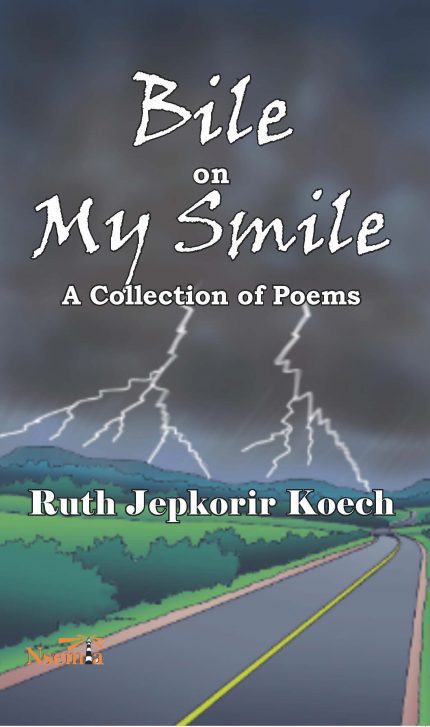
Bile on my Smile

KShs800.00 KShs600.00
Bile on My Smile is a collection of poems authored by the youngest and most brilliant poet in Kenya. Its motivation seems to largely emanate from the poet’s childhood experiences: meditations, self-hate, self-denial, trauma, frustrations, disappointments, and failed ambitions. Reading through the poems the reader feels like being in a dark room with an invisible body that is experiencing anguish and trauma, haunted by invisible ghosts and spirits. Here is What Other’s Say Jepkorir Koech’s collection of poems Bile on My Smile vibrates with enthusiasm and valour. The poet ventures into beaten paths as well unbeaten ones in her bid to touch the instinct and intellect of her reader. Utilisation, preservation and conservation of nature for collective good certainly come out as a well-thought-out theme. This, added to philosophical concepts love, beauty, death, truth, betrayal, loss and freedom, reflects deeply on the poet’s concern for humanity’s most salient issue today: Destruction of nature and impending attendant catastrophes! The poems are a promise of hope for humanity. -Bwocha Nyagemi Bwocha, Kisii University.

Window into Worlds

KShs800.00 KShs600.00
Dr. Evans Gesura Mecha’s poems in Window into Worlds stir the soul and evoke worlds beyond worlds. I am overjoyed to read them, as I believe other readers would. Mecha’s poetry easily blends the jigsaws of life in the present with that of antiquity and the metaphysical. It is as much rooted in contemporaneity, indigenous ethos, as in the inwardness of a universal rhythm which ripples through his poetry like a pure, crystalline stream flowing effortlessly. It is delightfully oblique yet not constricted by the artifice of rhetoric and prosody. The subterranean nuances trigger the mind to introspect and delve into untold depths of the “feeling intellect” (Wordsworth).His powerful imagism and natural impressionism makes it superbly impactful, permeating the deepest consciousness of the reader. His poetic diction revels as much in the ordinary beauty of everyday natural life as in the transcendental realm eluding the patterns of words. His poetry smells of the musk of the soil and wings out into the transcendental. Mecha takes one easily on the magic carpet of a poetic elysium into the realms of the multiverse. I am sure readers will revel in his poetry as much as I have. - Prof. Dr. Laksmisree Banerjee, Poet, Professor, Vocalist & Ex-Vice Chancellor; Universities of Calcutta, Ranchi & Kolhan, INDIA.

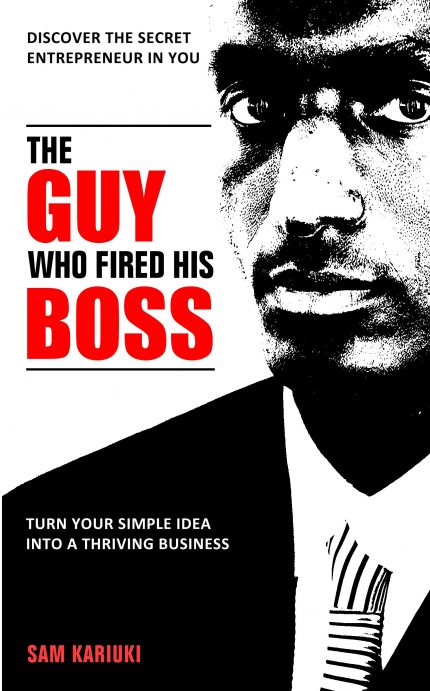
The Guy Who Fired His Boss by Sam Kar...

KShs2,000.00 KShs1,590.00

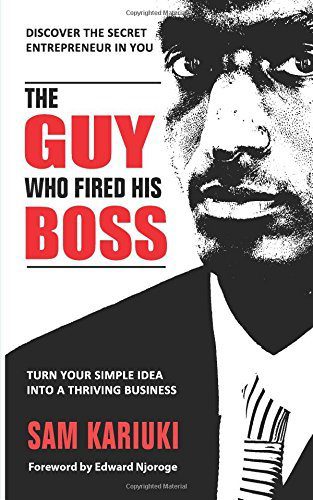
The Guy Who Fired His Boss is a book you must need to read if you are starting a new business or building one.  It has helped many entrepreneurs find their space and given others the courage to start.  Those who have been in business they have had their motivation renewed and those who feel lost rediscover the direction of their business.

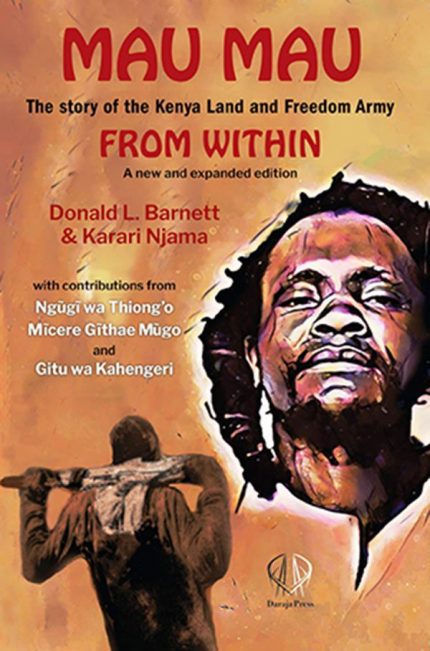
Mau Mau From Within: The Story of the...

KShs4,000.00 KShs3,500.00
The inside story of the struggles of the Kenya Land and Freedom Army, referred to by British colonialism as the ‘Mau Mau rebellion’, is little known today. The autobiographical material written by Karari Njama (a senior leader in the Mau Mau hierarchy) and compiled by Donald L. Barnett was first published by Monthly Review Press in 1966, as Mau Mau From Within: An analysis of Kenya’s Peasant Revolt. It was reprinted in 1970; it has remained out of print for many years. As the late Basil Davidson put it in his review of the first edition: “Njama writes of the forest leaders’ efforts to overcome dissension, to evolve effective tactics, to keep discipline, mete out justice … and to teach men how to survive in those merciless forests. His narrative is crowded with excitement. Those who know much of Africa and those who know little will alike find it compulsive reading. Some 10,000 Africans died fighting in those years . Here, in the harsh detail of everyday experience, are the reasons why.” The book is an extraordinary story of courage, passion, heroism, combined with recounting of colonial terror, brutality and betrayal. It is a story of how the very idea of being ‘Kenyan’ was intimately linked to the idea of freedom, a connection that was destroyed not only by the firepower of the British, but also by those who collaborated and established themselves as the beneficiaries of neocolonial rule. Disconnecting notions of freedom from identity left only a caricature that rapidly descended into tribalism and ethnicity. This momentous story of the struggle for freedom described here is relevant not only for a new generation of Kenyans but also for all those engaged in emancipatory struggles internationally. For so long as the experiences arising from the struggles described in this book are perceived as merely ‘African’ or ‘Kenyan’, it is not possible to fully grasp the contributions they have made to the struggle for a universalist humanity. What is recounted in this publication is more than an ‘analysis of a peasant revolt’. It is above all a history of the Kenya Land and Freedom Army. As Ngūgī wa Thiong’o points out in his Preface to this new edition, ‘we don’t have to use the vocabulary of the colonial to describe our struggles.’ We were tempted to rename the book ‘Kenya Land and Freedom Army from Within.’ But because the original title has wide recognition, and and as one of the characteristics of movements of the oppressed is to appropriate derogatory terms

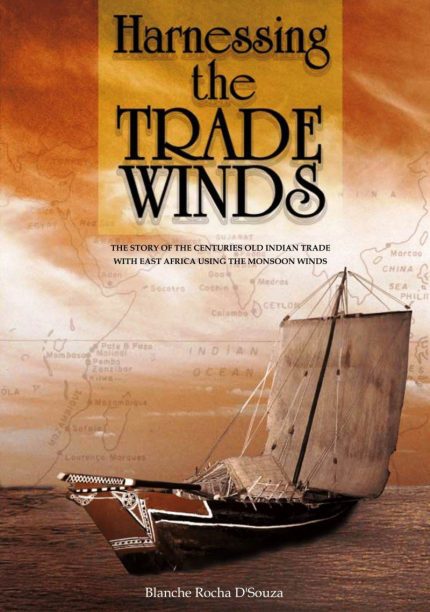
Harnessing the Trade Winds. The Story...

KShs2,500.00 KShs2,000.00
Harnessing the Trade Winds is the outcome of a generation of research undertaken in Nairobi, Mombassa and Zanzibar in East Africa, and Mumbai and Goa in India. Of her work the author says: "In all my research I found that Arab and particularly European, sources of information downplayed the importance of Indian trade in the Indian Ocean which goes back at least three thousand years BC. [The book] attempts to rekindle in the Indian diaspora a justifiable pride in the achievements of its forebears in East Africa, and indeed other parts of the world. In East Africa they promoted the development of agriculture and industry and the globalization of trade stemming from their trading activities." "Blanche D'Souza's book is a most direct statement on 'brown man's' transcripts over thousands of years trade, labour and migrations for settlements against a pervading backdrop of Arab, British and Portugese rivalries in the Indian Ocean. In this wake Harnessing the Trade Winds adds to plural historical perspectives, in that the text upholds the value of diversity that shapes the identities and self-knowledge of the peoples of Asia and Africa. It challenges those who hold the political reigns and direct policy, on education as well as race relations." - Sultan Somjee, Former head of Ethnography at the National Museums of Kenya, founder of the Community Peace Museums Programme and Foundation, and the Asian African Heritage Trust in Kenya.

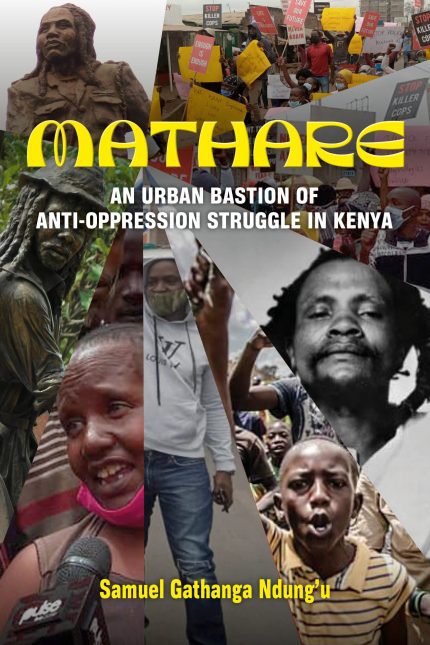
Mathare: An Urban Bastion of Anti-Opp...

KShs1,000.00 KShs890.00
The Kenyan education system fights against memory, against acknowledging our past. But we need to recognize our pasts to grieve them, and in doing this work, we must tell these stories ourselves. For a long time, most of the narratives we have had about ourselves and our histories have either been the sanitized narratives of the neo-colonial state or the white-washed versions given by our colonial masters, and a lot has been lost in these versions. The stories we tell ourselves shape our esteem, decisions, and ultimately our destiny. Thus, we must revisit our histories and uncover the various hidden truths that have long been buried. The past is all pervasive- we cannot escape it. It is part of who we are; our cultures, our behaviours, and manifests in all aspects of our day-to-day living. Knowing our true history connects us to our past and tap into a dimension of longitudinal meaning over time. Because of this, learning our true history is essential; history gives the past and the present visible form and meaning. In doing this, history also allows us to see into the future by offering precedents for current behavior and forewarning us from repeating previous mistakes. But in a neoliberal education system, education is framed around investments in students as human capital, and the value of education is tied to the student’s prospects for future earnings. Such a limited approach to education raises concerns about the purpose of education and the relationship between schools, state governance, and democratic life. Beyond education, neoliberal governance also results in the privatization of other public institutions and processes including urban planning. Harvey (1989) famously abstracted the spread of neoliberalism into urban planning as a shift from urban managerialism to urban entrepreneurialism. Whereas managerial cities had been primarily concerned with providing services and facilities to the urban population by the local administration, entrepreneurial cities in an era of increased interurban competition, had to focus on attracting investment and employment more than ever before. The consequent de-democratization of urban policies has left out a big chunk of the urban population from decision-making processes. This population continues to be threatened by unaffordable urban developments in the form of evictions and neglect. It is against this backdrop that Mathare, the urban bastion of the anti-oppression struggle in Kenya, exists. Despite its role in the fight for Kenya’s independence and the post-colonial struggles for liberation, Mathare’s story is often overlooked. As Gathanga writes in his book, most people outside the settlement associate the name Mathare with the mental hospital bordering the settlement. For others, their narrative of Mathare is one of pity, considering that the place is known to house the urban poor.
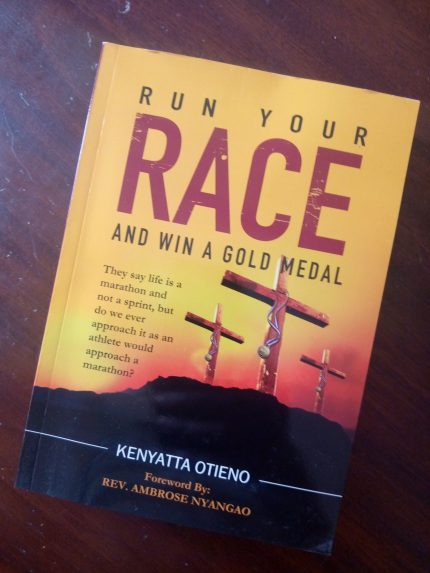
Run Your Race and win a gold medal by...

KShs750.00 KShs600.00
This is a book that speaks to the stages of life. Weather it is education, marriage or a marathon, divide the journey into three stages, named Bronze, Silver and Gold. It will help you navigate the different stages of life journeys. It comes with a sporting, Biblical and Geological angle to it.

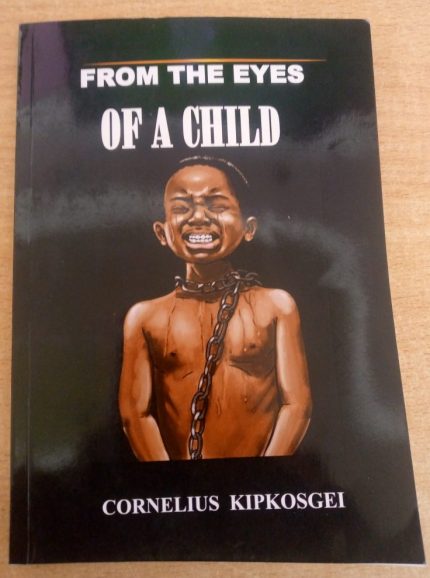
From The Eyes Of A Child by Cornelius...

KShs600.00 KShs500.00
From The Eyes Of A Child, a poetry collection by Cornelius Kipkosgei, digs into themes such as childhood, love and marriage, war, the environment among other contemporary themes. It fashions itself as a shelf of satire, sarcasm and dark humour. The author opines that the littlest experiences are what makes a man. This book on various spectrums of life is worth a read dear reader.

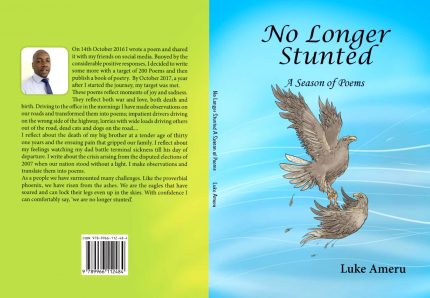
No Longer Stunted By Luke Ameru

KShs1,500.00 KShs1,000.00
This a collection of poems that reflect different themes. War and love, death and birth, joy and sadness. The poems reflect our day to day lives and our struggles to better our lives. They reflect a people who have surmounted many challenges and, like the proverbial phoenix, they have risen from the ashes.