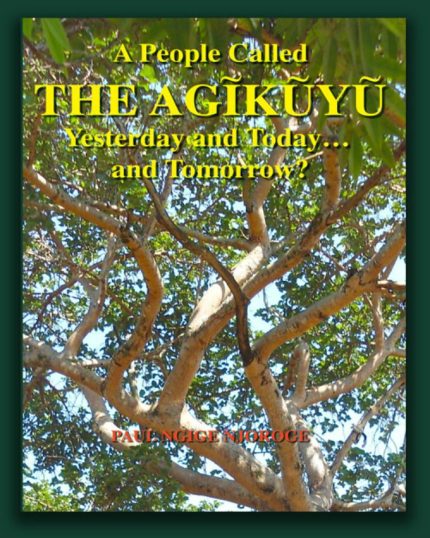
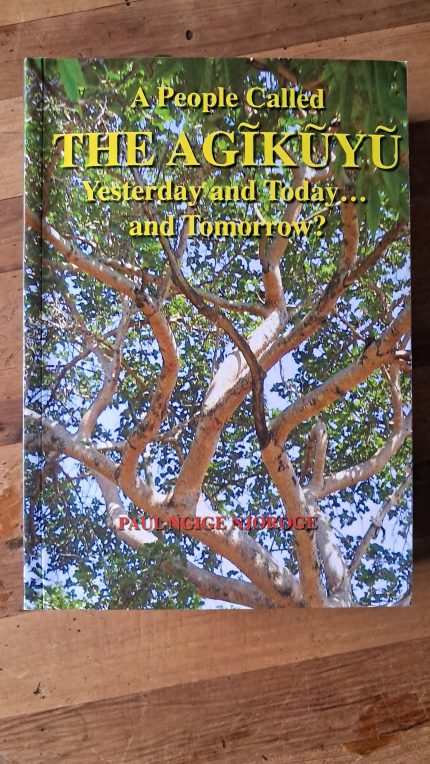
A People Called the Agikuyu: Yesterday and Today … and Tomorrow?
Around A.D. 1000, a community of Bantu-Thagicu speakers left their Nyambene Hills area settlement in Igembe-Tigania, in present-day Meru country in central-eastern Kenya, in search of new homes. By A.D. 1400, this community had split into distinct, but closely related, Thagicu-speaking groups occupying a region running from Meru, through Embu and Kirinyaga to Murang’a. These groups were – from north to south – the Tharaka, Cuka, Embu, Mbeere, Gicugu, Ndia, and the Agikuyu.
Gikuyu national consciousness goes back to the early 1400s. In the next 400 years, the Agikuyu would expand into Nyeri, Kiambu and parts of Nyandarwa – to occupy the land between the Four Mountains, namely Kirinyaga (Mount Kenya), Kia-Nyandarwa (the Nyandarwa Range), Kia-Njahi (Kilimambogo), and Kia-Mbiruiru (Ngong Hills).
The British settler-colonialists, as they penetrated the interior of Kenya in the late 19th century, encountered the Agikuyu building fortified villages on the outskirts of the area that would grow into Nairobi. on the southern frontier – and stopped Gikuyu expansion in its tracks. What followed was the brutal and tragic drama of a war of conquest and inevitable resistance. The resistance was suppressed. But within the ensuing half century, the Mau Mau war of liberation would break out, and the Agikuyu and their Thagicu (now GEMA) cousins would suffer ruthless suppression by the mighty British Empire.
This is the story of the Agikuyu, from their beginnings, through their encounter with foreign white rule, their contribution to Kenya’s liberation, and their mixed fortunes since Kenya’s national independence – what with their remarkable contribution to nation-building and economic development, but also their tragic experiences, including attempts at ethnic cleansing targeting them, their GEMA brothers and sisters and other communities in the 1990s, and also, most painfully, in 2007-8.
The story is set against the historical background of the trans-Atlantic slave trade, the Scramble for and Partition of Africa, the struggles for the self-determination of African nation-states, as well as nation building in a brutal Globalized ‘New World Order” under the control of the Imperialist Western powers,
The author, Paul Ngige Njoroge, studied literature at Makerere and Nairobi Universities. He has worked as a teacher and a book-publishing editor.