











ENJOY FREE DELIVERY WITHIN NAIROBI FOR ORDERS ABOVE 10,000
Nuria App
Kenyan Shilling (KSh)
  • Kenyan Shilling (KSh)
  • United States (US) dollar ($)
  • Pound sterling (£)
  • Ugandan Shilling (UGX)
0 Wishlist
Login / Register
  • Home
  • Shop
  • Kenyan Books
  • Rare Books
  • Gift Card
  • Blog
  • Contact Us
  • SELL ON NURIA
  • VENDOR LOGIN
Menu
0 items KShs0.00
Browse Categories
  • Kenya Books
  • Rare Books
  • International Bestsellers
  • Self Help & Motivation
  • Fiction
  • Autobiography
  • Business
  • Children’s Books
  • Kids & Teens
  • African Interest
  • Educational Books
  • Romances & Thrillers
HELP / SUPPORT

0794 233 261

0 items KShs0.00
Click to enlarge
Home Books Governance State and Public Policy: A Comparative Analysis of University Reforms in East Africa by Olivier Provini
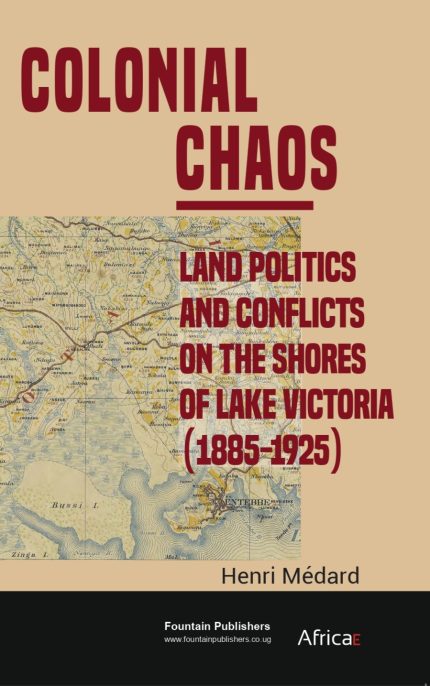
Colonial Chaos: Land Politics and Conflicts on the Shores of Lake Victoria (1885-1925) KShs1,500.00
Back to products
President's Visit by Victor Kibe KShs250.00

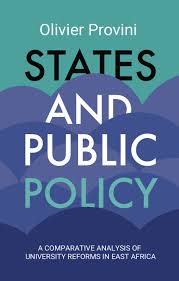
State and Public Policy: A Comparative Analysis of University Reforms in East Africa by Olivier Provini

KShs1,500.00

Nuria Ranking: #97 in Governance

Purchase this product now and earn 3 Points!

Why did students start paying tuition fees at African universities? How did public universities become increasingly expensive for the large numbers of young people they are supposed to be educating? This book helps us to understand the reasons for this, and reminds us that change is always the result of political compromise. The book looks at the higher education reforms carried out since the 1980s in four East African countries with unique historical and political trajectories: Uganda, Kenya, Tanzania and Burundi. Through a rigorous, well-documented analysis, the author provides valuable insights into the fundamental political issues facing development actors in the South: the transformation of state intervention, the training of national elites, and the marketing of the education sector, particularly through the highly political issue of school fees.
Add KShs10,000.00 worth of products to your cart for free delivery within Nairobi!
Add to wishlist
Category: Governance Tags: Kenya, Uganda
Share:
Close
  • Description
  • Shipping
  • Reviews (0)
  • Vendor Info
  • More Products
Description

Why did students start paying tuition fees at African universities? How did public universities become increasingly expensive for the large numbers of young people they are supposed to be educating? This book helps us to understand the reasons for this, and reminds us that change is always the result of political compromise. The author examines the higher education reforms carried out since the 1980s in four East African countries with unique historical and political trajectories: Uganda, Kenya, Tanzania and Burundi. Through a rigorous, well-documented analysis, Olivier Provini provides valuable insights into the fundamental political issues facing development actors in the South: the transformation of state intervention, the training of national elites, and the marketing of the education sector, particularly through the highly political issue of school fees.
Shipping
Reviews (0)
Rated 0 out of 5
0 reviews
Rated 5 out of 5
0
Rated 4 out of 5
0
Rated 3 out of 5
0
Rated 2 out of 5
0
Rated 1 out of 5
0

Reviews

Clear filters

There are no reviews yet.

Be the first to review “State and Public Policy: A Comparative Analysis of University Reforms in East Africa by Olivier Provini” Cancel reply

Your email address will not be published. Required fields are marked *


Vendor Info

Vendor Information

  • Store Name: IFRA-Nairobi
  • Vendor: IFRA Nairobi
  • No ratings found yet!
More Products

Colonial Chaos: Land Politics and Conflicts on the Shores of Lake Victoria (1885-1925)

History
KShs1,500.00
The book shows that the tension surrounding the hereditary clan chiefs in Buganda is as much a geographical tension between the people of the lake and the people of the land as it is a tension between ancient clan powers and a modernizing patronage power.
Add to wishlist
Add to basket
Quick view

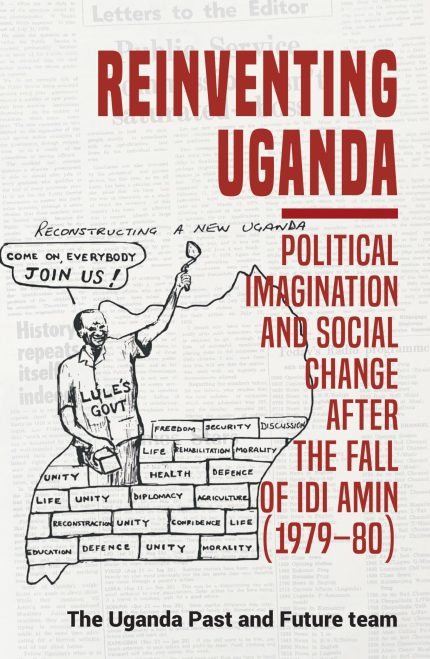
Reinventing Uganda: Political Imagination and Social Change after the Fall of Idi Amin (1979-80)

African Interest
KShs1,500.00
In April 1979, as Idi Amin’s government crumbled in the face of the Tanzanian military advance, a moment of opportunity opened. After years of dictatorship and terrifying violence, Ugandans had the opportunity to start again. This book attempts to do justice to the multiple ways in which they imagined their future at the time, before the tragic end to these turbulent months—Milton Obote’s fraudulent election and the start of the civil war. For the first time in many years, men and – to a lesser extent – women were able to ask critical questions about what it might mean to be Ugandan, how state and society should be organised, about who should hold authority—and in the name of what. This was a time of fear and economic deprivation, in an international context largely defined by the Cold War and the emergence of neoliberalism. But it was also a time of hope, and of the flourishing of political imagination that would nurture the public debate for many years to come.
Add to wishlist
Add to basket
Quick view

Rural-Urban Dynamics in the East African Mountains

African Interest
KShs1,500.00
This book is the result of a long-term cooperation between French and East African scholars and universities under the aegis of the French Institute of Research in Africa (IFRA-Nairobi). It presents the main results of the research program Cooperation for University and Scientific Research (CORUS): Mountains and Small and Medium Cities in East Africa: Environmental Management, Flows of People and Resources, funded by the French Ministry of Foreign Afairs and supported by IFRA-Nairobi.
Add to wishlist
Add to basket
Quick view

Indian Africa: Minorites of Indian-Pakistani Origin in Eastern Africa

African Interest
KShs1,500.00
This book aims at painting a broad picture of the communities of Indian origin in East Africa, striving to include changes that have occurred since the end of the 1980s. The different contributions explore questions of race and citizenship, national loyalties and cosmopolitan identities, local attachment and transnational networks. Drawing upon anthropology, history, sociology and demography, Indian Africa depicts a multifaceted population and analyses how the past and the present shape their sense of belonging, their relations with others, their professional and political engagement. This book is a must-read for contemporary researchers, students, policy practioners as well as the general reader.
Add to wishlist
Add to basket
Quick view

Related products

-21%

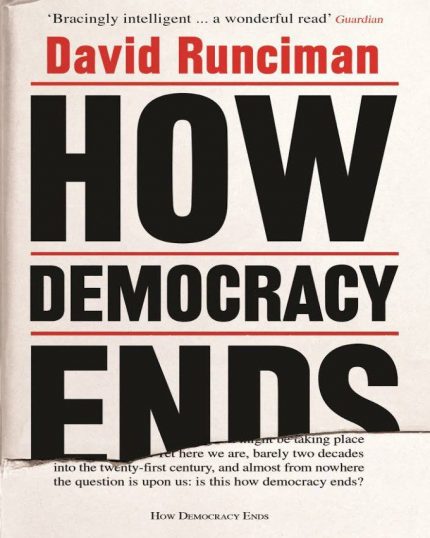
How Democracy Ends by David Runciman

Books, African Interest, Governance
KShs1,899.00 KShs1,499.00
Brief Summary Since the end of World War II, democracy's sweep across the globe seemed inexorable. Yet today, it seems radically imperiled, even in some of the world's most stable democracies. How bad could things get? In How Democracy Ends, David Runciman argues that we are trapped in outdated twentieth-century ideas of democratic failure. By fixating on coups and violence, we are focusing on the wrong threats. Our societies are too affluent, too elderly, and too networked to fall apart as they did in the past. We need new ways of thinking the unthinkable -- a twenty-first-century vision of the end of democracy, and whether its collapse might allow us to move forward to something better. A provocative book by a major political philosopher, How Democracy Ends asks the most trenchant questions that underlie the disturbing patterns of our contemporary political life.
Add to wishlist
Add to basket
Quick view
-26%

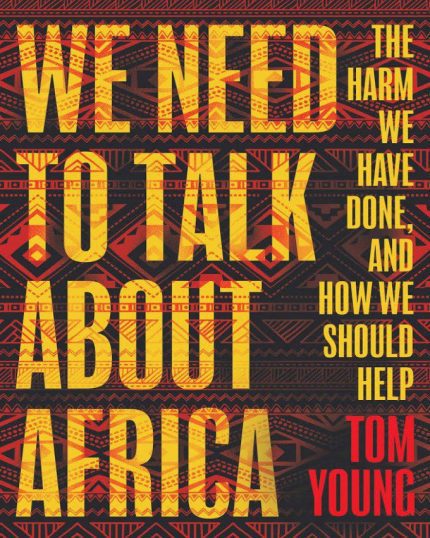
We Need to Talk About Africa: The Harm We Have Done, and how We Should Help

Books, African Interest, Energy, Governance, History, International Bestsellers
Rated 5.00 out of 5
KShs1,890.00 KShs1,399.00
Brief Summary If you boil a kettle twice today, you will have used five times more electricity than a person in Mali uses in a whole year. How can that be possible? Decades after the colonial powers withdrew Africa is still struggling to catch up with the rest of the world. When the same colonists withdrew from Asia there followed several decades of sustained and unprecedented growth throughout the continent. So what went wrong in Africa? And are we helping to fix it, or simply making matters worse? In this provocative analysis, Tom Young argues that so much has been misplaced: our guilt, our policies, and our aid. Human rights have become a cover for imposing our values on others, our shiniest infrastructure projects have fuelled corruption and our interference in domestic politics has further entrenched conflict. Only by radically changing how we think about Africa can we escape this vicious cycle.
Add to wishlist
Add to basket
Quick view
-47%

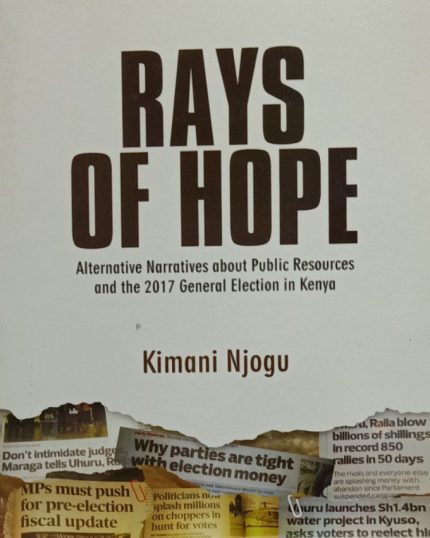
Rays of Hope: Alternative Narratives about Public Resources and the 2017 General Election in Kenya by Kimani Njogu

Books, Governance
KShs1,500.00 KShs799.00
Brief Summary Rays of Hope: Alternative Narratives about Public Resources and the 2017 General Election in Kenya by Kimani Njogu
Add to wishlist
Add to basket
Quick view

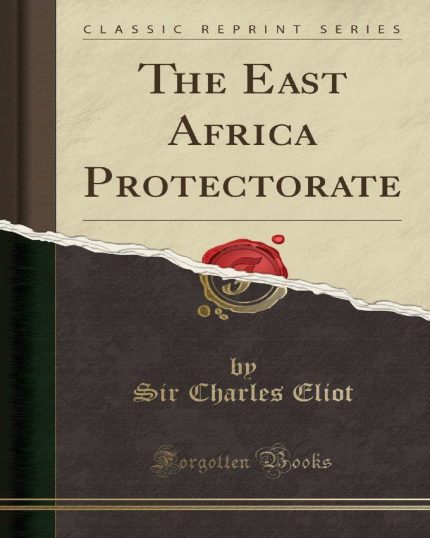
The East Africa Protectorate by Sir Charles Eliot

Books, Governance
Rated 5.00 out of 5
KShs1,000.00
Brief Summary This work has been selected by scholars as being culturally important, and is part of the knowledge base of civilization as we know it. This work was reproduced from the original artifact, and remains as true to the original work as possible. Therefore, you will see the original copyright references, library stamps (as most of these works have been housed in our most important libraries around the world), and other notations in the work. This work is in the public domain in the United States of America, and possibly other nations. Within the United States, you may freely copy and distribute this work, as no entity (individual or corporate) has a copyright on the body of the work. As a reproduction of a historical artifact, this work may contain missing or blurred pages, poor pictures, errant marks, etc. Scholars believe, and we concur, that this work is important enough to be preserved, reproduced, and made generally available to the public. We appreciate your support of the preser
Add to wishlist
Read more
Quick view
-10%Sold out

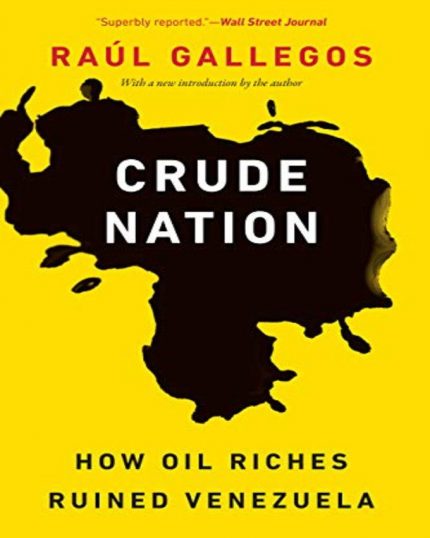
Crude Nation: How Oil Riches Ruined Venezuela by Ral Gallegos

Books, African Interest, Governance, International Bestsellers
KShs3,000.00 KShs2,699.00
Brief Summary Beneath Venezuelan soil lies an ocean of crude—the world’s largest reserves—an oil patch that shaped the nature of the global energy business. Unfortunately, a dysfunctional anti-American, leftist government controls this vast resource and has used its wealth to foster voter support, ultimately wreaking economic havoc. Crude Nation reveals the ways in which this mismanagement has led to Venezuela’s economic ruin and turned the country into a cautionary tale for the world. Raúl Gallegos, a former Caracas-based oil correspondent, paints a picture both vivid and analytical of the country’s economic decline, the government’s foolhardy economic policies, and the wrecked lives of Venezuelans. Without transparency, the Venezuelan government uses oil money to subsidize life for its citizens in myriad unsustainable ways, while regulating nearly every aspect of day-to-day existence in Venezuela. This has created a paradox in which citizens can fill up the tanks of their SUVs for less than one American dollar while simultaneously enduring nationwide shortages of staples such as milk, sugar, and toilet paper. Gallegos’s insightful analysis shows how mismanagement has ruined Venezuela again and again over the past century and lays out how Venezuelans can begin to fix their country, a nation that can play an important role in the global energy industry.
Add to wishlist
Read more
Quick view
-10%

Man, the State and War: a theoretical analysis by Kenneth Waltz

Books, Governance, International Bestsellers
KShs5,990.00 KShs5,390.00
Brief Summary Man, the state, and war is the second of the Topical Studies in International Relations to be published. The series was planned to demonstrate some of the contributions which existing bodies of knowledge are capable of making to the understanding of modern international relations. Even in a relatively new field of academic specialization, it is not necessary for the scholar to make an absolutely fresh start. Indeed, it is incumbent upon him not to fail to draw on existing storehouses of knowledge. One of those storehouses least systematically inventoried for its usefulness for international relations is classical Western political thought....
Add to wishlist
Add to basket
Quick view
-17%Sold out

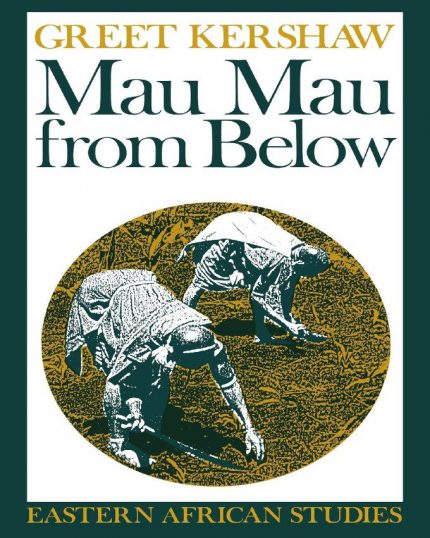
Mau Mau From Below by Greet Kershaw and John Lonsdale

Books, African Interest, Governance
KShs3,000.00 KShs2,499.00
Brief Summary John Lonsdale says in his introduction: "This is the oral evidence of the Kikuyu villagers with whom Greet Kershaw lived as an aid worker during the Mau Mau 'Emergency' in the 1950s, and which is now totally irrecoverable in any form save in her own field notes. "Professor Kershaw has uncovered long local histories of social tension which could have been revealed by no other means than patient enquiry, of both her neighbour's memory and government archives... "Nobody, whether Kikuyu participant, Kenyan or European scholar, has provided such startlingly authoritative ethnographic insights into the values, fears and expectations of Kikuyu society and thus of the motivation of Kikuyu action... "Her data suggests, as other scholars have also accepted, that there never was a single such movement and that none of its members, even those who supposed themselves to be its leaders, ever saw it whole, not because they did not have a political aim, but because that agenda was contested within different political circles over which they had no control and of which they may scarcely have had any knowledge. And why is this finding important? It is because others, including almost all the movement's enemies, did see Mau Mau whole in order to try to comprehend it, a first step towards defeating it."
Add to wishlist
Read more
Quick view
-31%

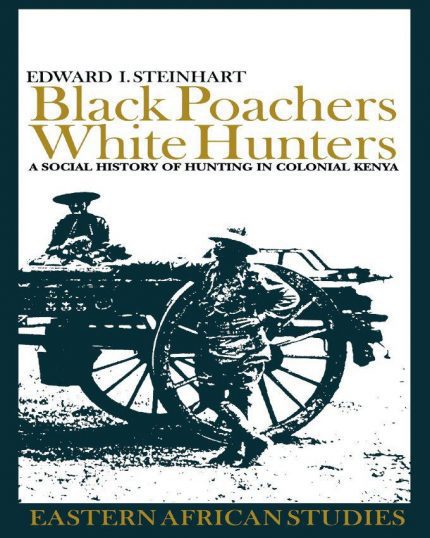
Black Poachers White Hunters A Social History of Hunting in Colonial Kenya by Edward I Steinhart

Books, African Interest, Governance
KShs4,500.00 KShs3,099.00
Brief Summary For centuries, Kenya's game-laden plains and forests were the rewarding hunting grounds of her native African population. Black Poachers, White Hunters traces the history of hunting there in the colonial era, describing the British attempt to impose the practices and values of nineteenth-century European aristocratic hunts. This both created and enforced an image of African inferiority and subordination. Ultimately conservationists came to claim sovereignty over African wildlife, completing the transformation of indigenous hunters into criminal poachers and seeking to eliminate them altogether from the "sportsman's paradise" of Kenya.ABOUT THE AUTHOR---Edward I. Steinhart is an associate professor of history at Texas Tech University, Lubbock.
Add to wishlist
Add to basket
Quick view
-11%

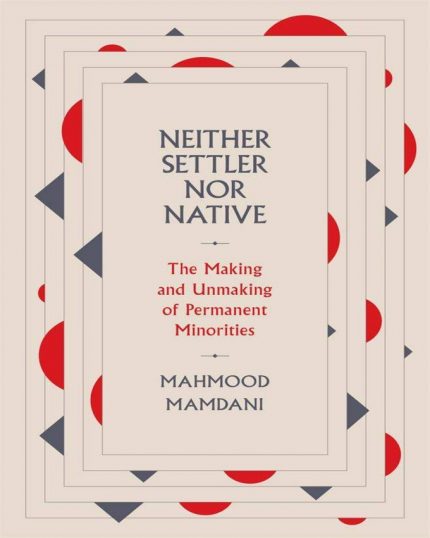
Neither Settler nor Native: The Making and Unmaking of Permanent Minorities by Mahmood Mamdani

Books, Governance
KShs3,500.00 KShs3,100.00
Brief Summary Making the radical argument that the nation-state was born of colonialism, this book calls us to rethink political violence and reimagine political community beyond majorities and minorities. In this genealogy of political modernity, Mahmood Mamdani argues that the nation-state and the colonial state created each other. In case after case around the globe―from the New World to South Africa, Israel to Germany to Sudan―the colonial state and the nation-state have been mutually constructed through the politicization of a religious or ethnic majority at the expense of an equally manufactured minority. The model emerged in North America, where genocide and internment on reservations created both a permanent native underclass and the physical and ideological spaces in which new immigrant identities crystallized as a settler nation. In Europe, this template would be used by the Nazis to address the Jewish Question, and after the fall of the Third Reich, by the Allies to redraw the boundaries of Eastern Europe’s nation-states, cleansing them of their minorities. After Nuremberg the template was used to preserve the idea of the Jews as a separate nation. By establishing Israel through the minoritization of Palestinian Arabs, Zionist settlers followed the North American example. The result has been another cycle of violence. Neither Settler nor Native offers a vision for arresting this historical process. Mamdani rejects the “criminal” solution attempted at Nuremberg, which held individual perpetrators responsible without questioning Nazism as a political project and thus the violence of the nation-state itself. Instead, political violence demands political solutions: not criminal justice for perpetrators but a rethinking of the political community for all survivors―victims, perpetrators, bystanders, beneficiaries―based on common residence and the commitment to build a common future without the permanent political identities of settler and native. Mamdani points to the anti-apartheid struggle in South Africa as an unfinished project, seeking a state without a nation.
Add to wishlist
Add to basket
Quick view
-20%

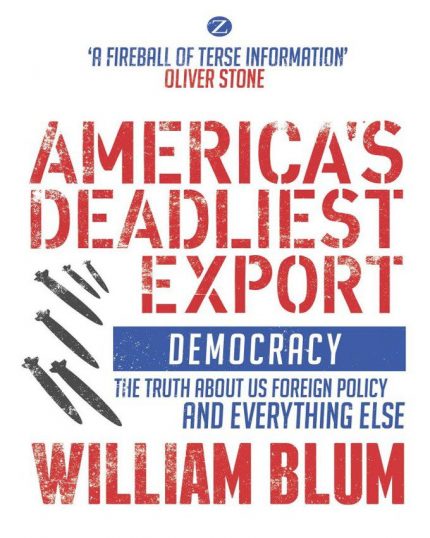
America’s Deadliest Export: Democracy The Truth About US Foreign Policy and Everything Else by William Blum

Books, Governance
KShs2,500.00 KShs1,999.00
Brief Summary For over sixty-five years, the United States war machine has been on automatic pilot. Since World War II we have been conditioned to believe that America's motives in 'exporting' democracy are honorable, even noble. In this startling and provocative book, William Blum, a leading dissident chronicler of US foreign policy and the author of controversial bestseller Rogue State, argues that nothing could be further from the truth. Moreover, unless this fallacy is unlearned, and until people understand fully the worldwide suffering American policy has caused, we will never be able to stop the monster.
Add to wishlist
Add to basket
Quick view
-12%Sold out

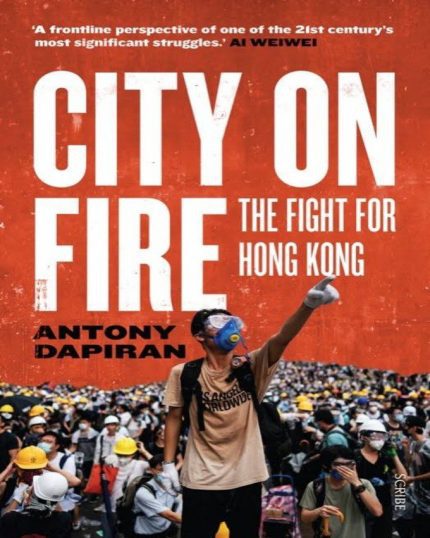
City on Fire: The Fight for Hong Kong by Antony Dapiran

Books, Governance, International Bestsellers
KShs1,690.00 KShs1,490.00
A long-term resident and expert observer of dissent in Hong Kong takes readers to the front lines of Hong Kong’s revolution. Through the long, hot summer of 2019, Hong Kong burned. Anti-government protests, sparked by a government proposal to introduce a controversial extradition law, grew into a pro-democracy movement that engulfed the city for months. Protesters fought street battles with police, and the unrest brought the People’s Liberation Army to the very doorstep of Hong Kong. Driven primarily by students and youth protesters with their ‘Be Water!’ philosophy, borrowed from hometown hero Bruce Lee, this leaderless, technology-driven protest movement defied a global superpower and changed Hong Kong, perhaps forever. But it also changed China, and challenged China’s global standing. Antony Dapiran provides the first detailed account of the protests, reveals the activists’ unique tactics, and explains how the movement fits into the city’s long history of dissent. City on Fire explores what the protests will mean for the future of Hong Kong, China, and China’s place in the world.
Add to wishlist
Read more
Quick view
-9%

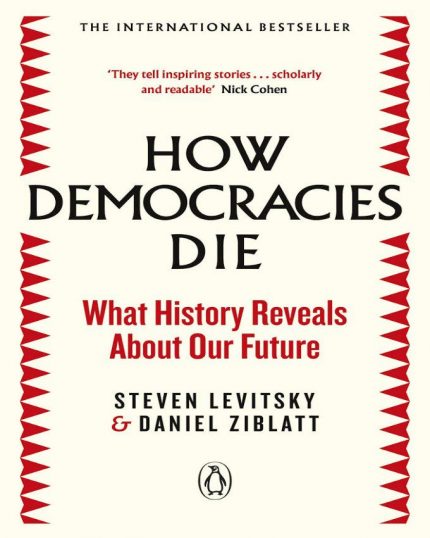
How Democracies Die by Steven Levitsky and Daniel Ziblatt

Books, Governance, International Bestsellers
KShs2,190.00 KShs1,990.00
Donald Trump’s presidency has raised a question that many of us never thought we’d be asking: Is our democracy in danger? Harvard professors Steven Levitsky and Daniel Ziblatt have spent more than twenty years studying the breakdown of democracies in Europe and Latin America, and they believe the answer is yes. Democracy no longer ends with a bang—in a revolution or military coup—but with a whimper: the slow, steady weakening of critical institutions, such as the judiciary and the press, and the gradual erosion of long-standing political norms. The good news is that there are several exit ramps on the road to authoritarianism. The bad news is that, by electing Trump, we have already passed the first one. Drawing on decades of research and a wide range of historical and global examples, from 1930s Europe to contemporary Hungary, Turkey, and Venezuela, to the American South during Jim Crow, Levitsky and Ziblatt show how democracies die—and how ours can be saved.
Add to wishlist
Add to basket
Quick view
-20%

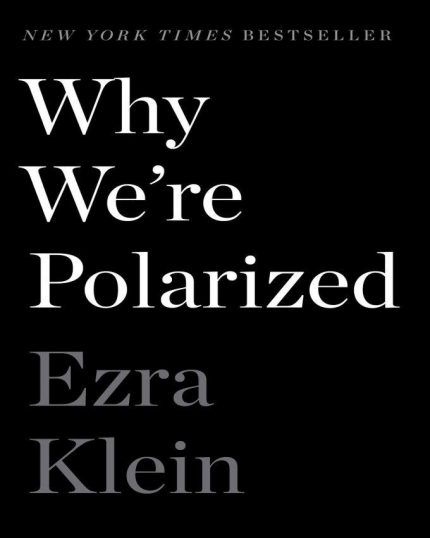
Why We’re Polarized Book by Ezra Klein

Books, Governance
KShs3,000.00 KShs2,399.00
Brief Summary Discover how American politics became a toxic system, why we participate in it, and what it means for our future--from journalist, political commentator, and cofounder of Vox, Ezra Klein. After Election Day 2016, both supporters and opponents of the soon-to-be president hailed his victory as a historically unprecedented event. Most Americans could agree that no candidate like Donald Trump had ever been elected President before. But political journalist Ezra Klein makes the case that the 2016 election wasn't surprising at all. In fact, Trump's electoral victory followed the exact same template as previous elections, by capturing a nearly identical percentage of voter demographics as previous Republican candidates. Over the past 50 years in America, our partisan identities have merged with our racial, religious, geographic, ideological, and cultural identities. Those merged identities have attained a weight that is breaking much in our politics and tearing at the bonds that hold this country together. In this groundbreaking book, Klein shows how and why American politics polarized around identity in the 20th century, and what that polarization did to the way we see the world and each other. And he traces the feedback loops between our polarized political identities and our polarized political institutions that are driving our political system towards crisis. Neither a polemic nor a lament, Klein offers a clear framework for understanding everything from Trump's rise to the Democratic Party's leftward shift to the politicization of everyday culture. A revelatory book that will change how you look at politics, and perhaps at yourself.
Add to wishlist
Add to basket
Quick view
-9%

Edge of Chaos Why Democracy Is Failing by Dambisa Moyo

Books, African Interest, Governance
KShs2,300.00 KShs2,090.00
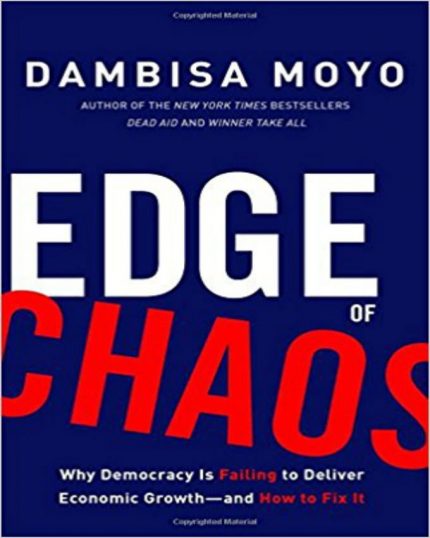
From an internationally acclaimed economist, a provocative call to jump-start economic growth by aggressively overhauling liberal democracy. Edge of Chaos: Why Democracy Is Failing to Deliver Economic Growth and How to Fix It. Around the world, people who are angry at stagnant wages and growing inequality have rebelled against established governments and turned to political extremes. Liberal democracy, history's greatest engine of growth, now struggles to overcome unprecedented economic headwinds--from aging populations to scarce resources to unsustainable debt burdens. Hobbled by short-term thinking and ideological dogma, democracies risk falling prey to nationalism and protectionism that will deliver declining living standards. In Edge of Chaos, Dambisa Moyo shows why economic growth is essential to global stability, and why liberal democracies are failing to produce it today. Rather than turning away from democracy, she argues, we must fundamentally reform it. Edge of Chaos presents a radical blueprint for change in order to galvanize growth and ensure the survival of democracy in the twenty-first century.  
Add to wishlist
Add to basket
Quick view
-44%

The Concise Untold History of the United States by Oliver Stone and Peter Kuznick

Books, Governance
KShs2,500.00 KShs1,399.00
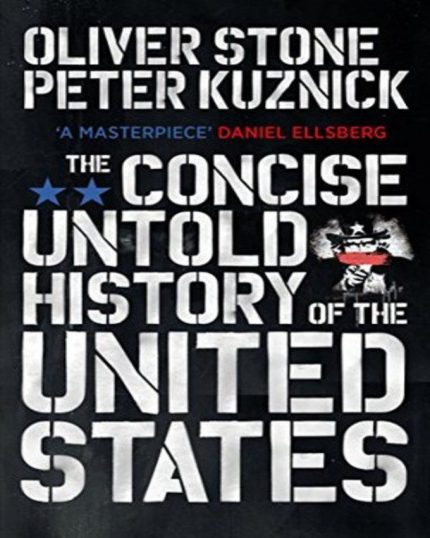
Brief Summary A companion to Oliver Stone’s ten-part documentary series of the same name, this guide offers a people’s history of the American Empire: “a critical overview of US foreign policy…indispensable” (former Soviet president Mikhail Gorbachev); “brilliant, a masterpiece!” (Daniel Ellsberg); “Oliver Stone’s new book is as riveting, eye-opening, and thought-provoking as any history book you will ever read. It achieves what history, at its best, ought to do: presents a mountain of previously unknown facts that makes you question and re-examine many of your long-held assumptions about the most influential events” (Glenn Greenwald). In November 2012, Showtime debuted a ten-part documentary series based on Oliver Stone and Peter Kuznick’s The Untold History of the United States. The book and documentary looked back at human events that, at the time, went underreported, but also crucially shaped America’s unique and complex history over the twentieth century. From the atomic bombing of Japan to the Cold War and fall of Communism, this concise version of the larger book is adapted for the general reader. Complete with poignant photos, arresting illustrations, and little-known documents, The Concise Untold History of the United States covers the rise of the American empire and national security state from the late nineteenth century through the Obama administration, putting it all together to show how deeply rooted the seemingly aberrant policies of the Bush-Cheney administration are in the nation’s past and why it has proven so difficult for Obama to change course. In this concise and indispensible guide, Kuznick and Stone (who Pulitzer Prize-winning historian Garry Wills has called America’s own “Dostoevsky behind a camera”) challenge prevailing orthodoxies to reveal the dark truth about the rise and fall of American imperialism
Add to wishlist
Add to basket
Quick view
-17%Sold out

Party Politics and Economic Reform in Africa’s Democracies by M Anne Pitcher

Books, African Interest, Governance
KShs6,000.00 KShs4,999.00
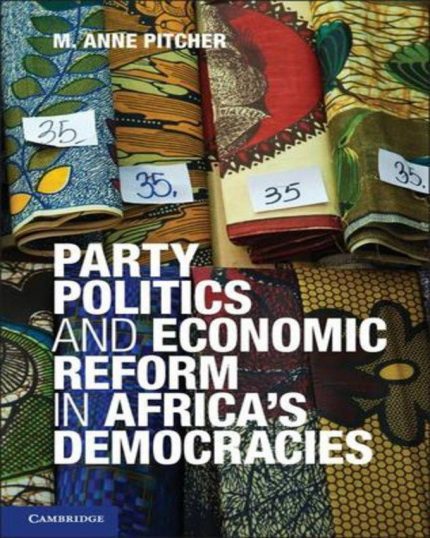
Brief Summary In Party Politics and Economic Reform in Africa's Democracies, M. Anne Pitcher offers an engaging new theory to explain the different trajectories of private sector development across contemporary Africa. Pitcher argues that the outcomes of economic reforms depend not only on the kinds of institutional arrangements adopted by states in order to create or expand their private sectors, but also on the nature of party system competition and the quality of democracy in particular countries. To illustrate her claim, Pitcher draws on several original data sets covering twenty-seven countries in Africa, and detailed case studies of the privatization process in Zambia, Mozambique, and South Africa. This study underscores the importance of formal institutions and political context to the design and outcome of economic policies in developing countries.
Add to wishlist
Read more
Quick view
delivery

QUICK DELIVERY

Swift dispatch

ONLINE PAYMENT

Multiple options

EXPERT SUPPORT

Help when you need it

WIDE VARIETY

Thousands of books

GLOBAL SHIPPING

Worldwide delivery

  • TALK TO US
    • 0794 233261 / 0724 670194
    • nuriakenyabookstore@gmail.com
    • The Bazaar Building, 1st Floor
  • About Nuria
    • Our Story
    • Blog
    • Contact Us
  • VENDORS
    • Sell on Nuria
    • Vendor Login
    • Privacy Policy
  • USEFUL LINKS
    • Delivery Policy
    • Returns
    • Gift Card Balance
digitals-app-store-button
google-play-button

We Accept

2023 NURIA KENYA All rights reserved
  • Menu
  • Categories
  • Kenya Books
  • Rare Books
  • International Bestsellers
  • Self Help & Motivation
  • Fiction
  • Autobiography
  • Business
  • Children’s Books
  • Kids & Teens
  • African Interest
  • Educational Books
  • Romances & Thrillers
  • Home
  • Shop
  • Gift Card
  • About Us
  • Nuria App
  • Contact Us
  • Wishlist
  • Login / Register
Shopping cart
Close
Sign in
Close

Lost your password?

No account yet?

Create an Account
Shop
Sidebar
0 Wishlist
0 items Cart
My account