IFRA-Nairobi
IFRA-Nairobi

IFRA-Nairobi

  • No ratings found yet!

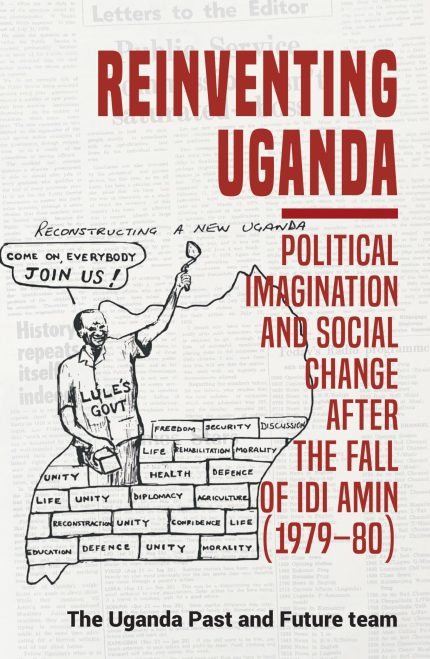
Reinventing Uganda: Political Imagina...

KShs1,500.00
In April 1979, as Idi Amin’s government crumbled in the face of the Tanzanian military advance, a moment of opportunity opened. After years of dictatorship and terrifying violence, Ugandans had the opportunity to start again. This book attempts to do justice to the multiple ways in which they imagined their future at the time, before the tragic end to these turbulent months—Milton Obote’s fraudulent election and the start of the civil war. For the first time in many years, men and – to a lesser extent – women were able to ask critical questions about what it might mean to be Ugandan, how state and society should be organised, about who should hold authority—and in the name of what. This was a time of fear and economic deprivation, in an international context largely defined by the Cold War and the emergence of neoliberalism. But it was also a time of hope, and of the flourishing of political imagination that would nurture the public debate for many years to come.

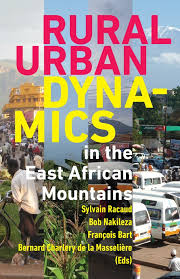
Rural-Urban Dynamics in the East Afri...

KShs1,500.00
This book is the result of a long-term cooperation between French and East African scholars and universities under the aegis of the French Institute of Research in Africa (IFRA-Nairobi). It presents the main results of the research program Cooperation for University and Scientific Research (CORUS): Mountains and Small and Medium Cities in East Africa: Environmental Management, Flows of People and Resources, funded by the French Ministry of Foreign Afairs and supported by IFRA-Nairobi.

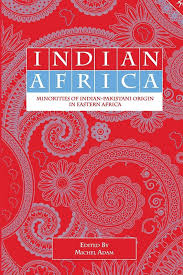
Indian Africa: Minorites of Indian-Pa...

KShs1,500.00
This book aims at painting a broad picture of the communities of Indian origin in East Africa, striving to include changes that have occurred since the end of the 1980s. The different contributions explore questions of race and citizenship, national loyalties and cosmopolitan identities, local attachment and transnational networks. Drawing upon anthropology, history, sociology and demography, Indian Africa depicts a multifaceted population and analyses how the past and the present shape their sense of belonging, their relations with others, their professional and political engagement. This book is a must-read for contemporary researchers, students, policy practioners as well as the general reader.

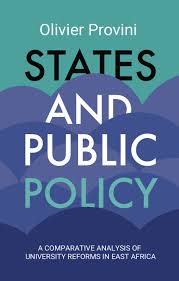
State and Public Policy: A Comparativ...

KShs1,500.00
Why did students start paying tuition fees at African universities? How did public universities become increasingly expensive for the large numbers of young people they are supposed to be educating? This book helps us to understand the reasons for this, and reminds us that change is always the result of political compromise. The book looks at the higher education reforms carried out since the 1980s in four East African countries with unique historical and political trajectories: Uganda, Kenya, Tanzania and Burundi. Through a rigorous, well-documented analysis, the author provides valuable insights into the fundamental political issues facing development actors in the South: the transformation of state intervention, the training of national elites, and the marketing of the education sector, particularly through the highly political issue of school fees.

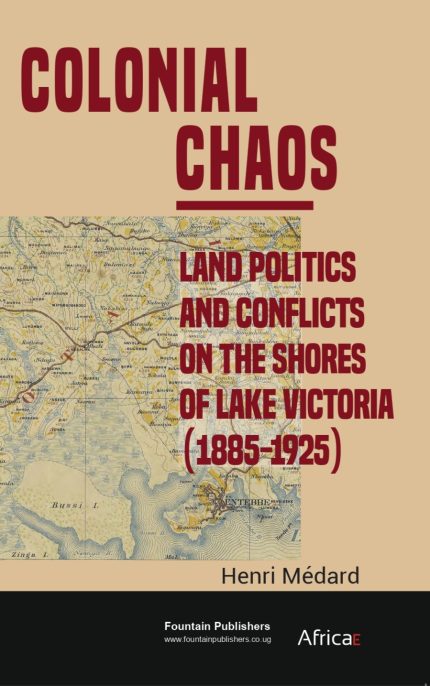
Colonial Chaos: Land Politics and Con...

KShs1,500.00
The book shows that the tension surrounding the hereditary clan chiefs in Buganda is as much a geographical tension between the people of the lake and the people of the land as it is a tension between ancient clan powers and a modernizing patronage power.
delivery

QUICK DELIVERY

Swift dispatch

ONLINE PAYMENT

Multiple options

EXPERT SUPPORT

Help when you need it

WIDE VARIETY

Thousands of books

GLOBAL SHIPPING

Worldwide delivery

Shopping cart
Sign in

No account yet?

Shop
0 Wishlist
0 items Cart
My account