Showing 81–86 of 86 results

The Man Who Stole Himself: The Slave ...

KShs4,000.00 KShs3,499.00
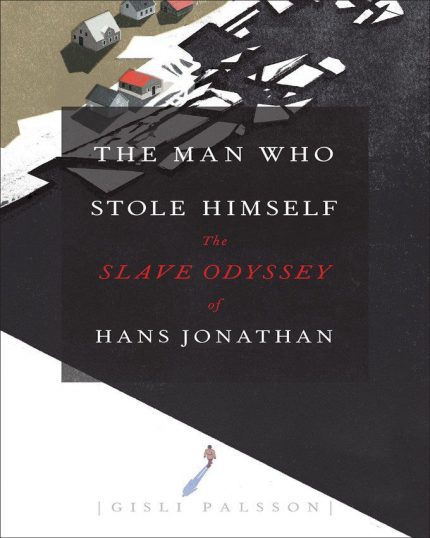
Brief Summary The island nation of Iceland is known for many things—majestic landscapes, volcanic eruptions, distinctive seafood—but racial diversity is not one of them. So the little-known story of Hans Jonathan, a free black man who lived and raised a family in early nineteenth-century Iceland, is improbable and compelling, the stuff of novels. In The Man Who Stole Himself, Gisli Palsson lays out the story of Hans Jonathan (also known as Hans Jónatan) in stunning detail. Born into slavery in St. Croix in 1784, Hans was taken as a slave to Denmark, where he eventually enlisted in the navy and fought on behalf of the country in the 1801 Battle of Copenhagen. After the war, he declared himself a free man, believing that he was due freedom not only because of his patriotic service, but because while slavery remained legal in the colonies, it was outlawed in Denmark itself. He thus became the subject of one of the most notorious slavery cases in European history, which he lost. Then Hans ran away—never to be heard from in Denmark again, his fate unknown for more than two hundred years. It’s now known that Hans fled to Iceland, where he became a merchant and peasant farmer, married, and raised two children. Today, he has become something of an Icelandic icon, claimed as a proud and daring ancestor both there and among his descendants in America. The Man Who Stole Himself brilliantly intertwines Hans Jonathan’s adventurous travels with a portrait of the Danish slave trade, legal arguments over slavery, and the state of nineteenth-century race relations in the Northern Atlantic world. Throughout the book, Palsson traces themes of imperial dreams, colonialism, human rights, and globalization, which all come together in the life of a single, remarkable man. Hans literally led a life like no other. His is the story of a man who had the temerity—the courage—to steal himself.

Why We’re Polarized Book by Ezr...

KShs3,000.00 KShs2,399.00
Brief Summary Discover how American politics became a toxic system, why we participate in it, and what it means for our future--from journalist, political commentator, and cofounder of Vox, Ezra Klein. After Election Day 2016, both supporters and opponents of the soon-to-be president hailed his victory as a historically unprecedented event. Most Americans could agree that no candidate like Donald Trump had ever been elected President before. But political journalist Ezra Klein makes the case that the 2016 election wasn't surprising at all. In fact, Trump's electoral victory followed the exact same template as previous elections, by capturing a nearly identical percentage of voter demographics as previous Republican candidates. Over the past 50 years in America, our partisan identities have merged with our racial, religious, geographic, ideological, and cultural identities. Those merged identities have attained a weight that is breaking much in our politics and tearing at the bonds that hold this country together. In this groundbreaking book, Klein shows how and why American politics polarized around identity in the 20th century, and what that polarization did to the way we see the world and each other. And he traces the feedback loops between our polarized political identities and our polarized political institutions that are driving our political system towards crisis. Neither a polemic nor a lament, Klein offers a clear framework for understanding everything from Trump's rise to the Democratic Party's leftward shift to the politicization of everyday culture. A revelatory book that will change how you look at politics, and perhaps at yourself.

The Splendid and the Vile: A Saga of ...

KShs3,000.00 KShs2,299.00
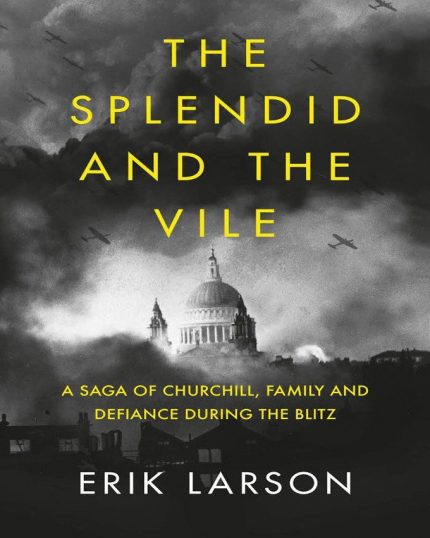
Brief Summary On Winston Churchill's first day as prime minister, Adolf Hitler invaded Holland and Belgium. Poland and Czechoslovakia had already fallen, and the Dunkirk evacuation was just two weeks away. For the next twelve months, Hitler would wage a relentless bombing campaign, killing 45,000 Britons. It was up to Churchill to hold his country together and persuade President Franklin Roosevelt that Britain was a worthy ally--and willing to fight to the end. In The Splendid and the Vile, Erik Larson shows how Churchill taught the British people "the art of being fearless." It is a story of political brinkmanship, but it's also an intimate domestic drama, set against the backdrop of Churchill's prime-ministerial country home, Chequers; his wartime retreat, Ditchley, where he and his entourage go when the moon is brightest and the bombing threat is highest; and of course 10 Downing Street in London. Drawing on diaries, original archival documents, and once-secret intelligence reports--some released only recently--Larson provides a new lens on London's darkest year through the day-to-day experience of Churchill and his family: his wife, Clementine; their youngest daughter, Mary, who chafes against her parents' wartime protectiveness; their son, Randolph, and his beautiful, unhappy wife, Pamela; Pamela's illicit lover, a dashing American emissary; and the advisers in Churchill's "Secret Circle," to whom he turns in the hardest moments.

Twilight of Democracy by Anne Applebaum

KShs1,890.00 KShs1,490.00
Twilight of Democracy: The Seductive Lure of Authoritarianism. Across the world today, from the Americas to Europe and beyond, liberal democracy is under siege while populism and nationalism are on the rise. In Twilight of Democracy, prize-winning historian Anne Applebaum offers an unexpected explanation: that there is a deep and inherent appeal to authoritarianism, to strongmen, and, especially, to one-party rule--that is, to political systems that benefit true believers, or loyal soldiers, or simply the friends and distant cousins of the Leader, to the exclusion of everyone else. People, she argues, are not just ideological; they are also practical, pragmatic, opportunistic. They worry about their families, their houses, their careers. Some political systems offer them possibilities, and others don't. In particular, the modern authoritarian parties that have arisen within democracies today offer the possibility of success to people who do not thrive in the meritocratic, democratic, or free-market competition that determines access to wealth and power. Drawing on reporting in Spain, Switzerland, Poland, Hungary, and Brazil; using historical examples including Stalinist central Europe and Nazi Germany; and investigating related phenomena: the modern conspiracy theory, nostalgia for a golden past, political polarization, and meritocracy and its discontents, Anne Applebaum brilliantly illuminates the seduction of totalitarian thinking and the eternal appeal of the one-party state.

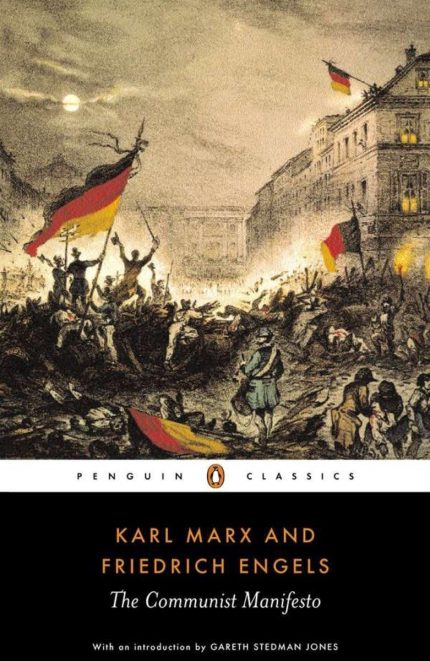
The Communist Manifesto by Friedrich ...

KShs1,990.00
One of the most important and influential political theories ever formulated, The Communist Manifesto is a revolutionary summons to the working class-an incisive account of a new theory of communism that would be brought about by a proletarian revolution. Arguing that increasing exploitation of industrial workers will eventually lead to a rebellion in which capitalism will be overthrown, Marx and Engels propose a vision of a society without classes, private property, or a state. The theoretical basis of political systems in Russia, China, Cuba, and Eastern Europe, The Communist Manifesto continues to influence and provoke debate on capitalism and class. ISBN:9780717802418 Author:Friedrich Engels and Karl Marx

Guns Germs and Steel by Jared Diamond

KShs2,990.00 KShs2,700.00
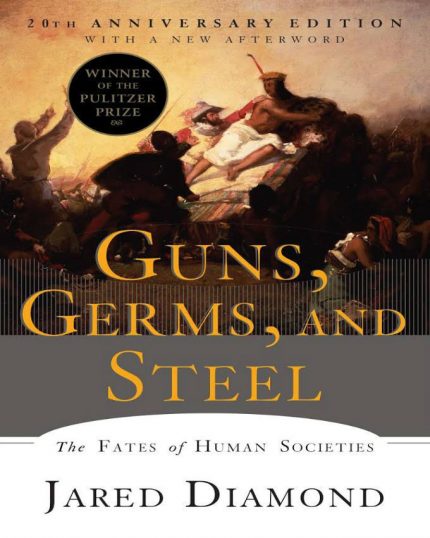
Brief Summary Guns, Germs and Steel: A short history of everybody for the last 13,000 years 'Diamond has written a book of remarkable scope . . . one of the most important and readable works on the human past published in recent years.' Winner of the Pulitzer Prize and a national bestseller: the global account of the rise of civilization that is also a stunning refutation of ideas of human development based on race. In this "artful, informative, and delightful" (William H. McNeill, New York Review of Books) book, Jared Diamond convincingly argues that geographical and environmental factors shaped the modern world. Societies that had a head start in food production advanced beyond the hunter-gatherer stage, and then developed writing, technology, government, and organized religion—as well as nasty germs and potent weapons of war—and adventured on sea and land to conquer and decimate preliterate cultures. A major advance in our understanding of human societies, Guns, Germs, and Steel chronicles the way that the modern world came to be and stunningly dismantles racially based theories of human history.