Showing 61–80 of 86 results

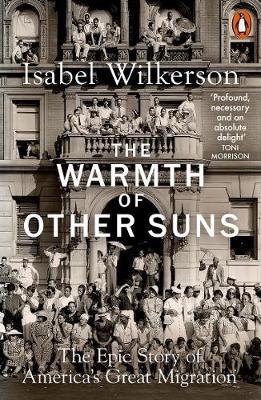
The Warmth of Other Suns -The Epic St...

KShs2,500.00
From 1915 to 1970, an exodus of almost six million people would change the face of America. With stunning historical detail, Pulitzer prize-winning journalist Isabel Wilkerson gives us this definitive, vividly dramatic account of how these... By Isabel Wilkerson

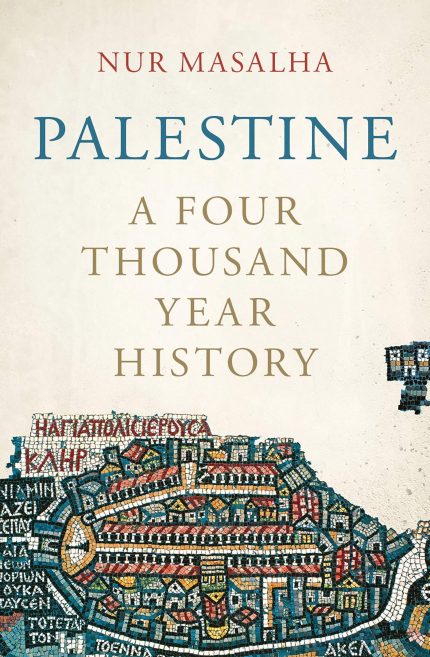
Palestine: A Four Thousand Year Histo...

KShs3,990.00 KShs3,490.00
This rich and magisterial work traces Palestine's millennia-old heritage, uncovering cultures and societies of astounding depth and complexity that stretch back to the very beginnings of recorded history. Starting with the earliest references in Egyptian and Assyrian texts, Nur Masalha explores how Palestine and its Palestinian identity have evolved over thousands of years, from the Bronze Age to the present day. Drawing on a rich body of sources and the latest archaeological evidence, Masalha shows how Palestine's multicultural past has been distorted and mythologised by Biblical lore and the Israel–Palestinian conflict. In the process, Masalha reveals that the concept of Palestine, contrary to accepted belief, is not a modern invention or one constructed in opposition to Israel, but rooted firmly in ancient past. Palestine represents the authoritative account of the country's history.

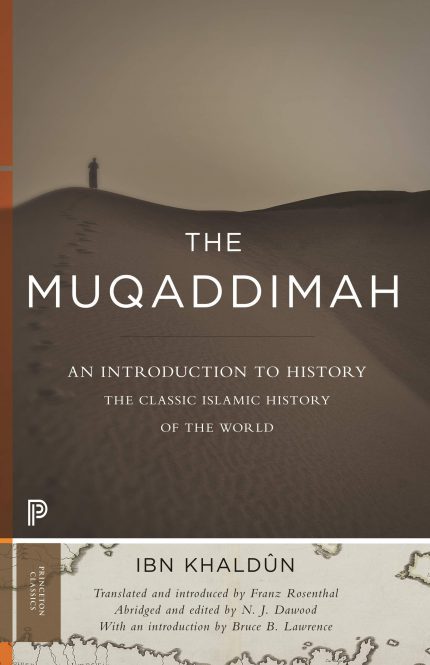
The Muqaddimah: An Introduction to Hi...

KShs3,500.00 KShs3,000.00
The Muqaddimah, often translated as "Introduction" or "Prolegomenon," is the most important Islamic history of the premodern world. Written by the great fourteenth-century Arab scholar Ibn Khaldûn (d. 1406), this monumental work established the foundations of several fields of knowledge, including the philosophy of history, sociology, ethnography, and economics. The first complete English translation, by the eminent Islamicist and interpreter of Arabic literature Franz Rosenthal, was published in three volumes in 1958 as part of the Bollingen Series and received immediate acclaim in the United States and abroad. A one-volume abridged version of Rosenthal's masterful translation first appeared in 1969. This Princeton Classics edition of the abridged version includes Rosenthal's original introduction as well as a contemporary introduction by Bruce B. Lawrence. This volume makes available a seminal work of Islam and medieval and ancient history to twenty-first century audiences.

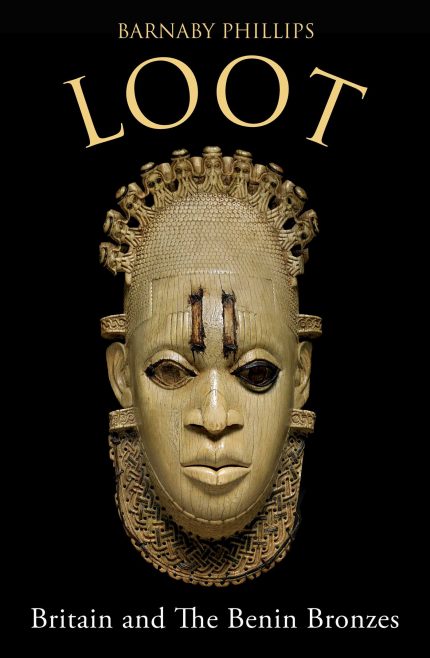
Loot: Britain and the Benin Bronzes b...

KShs2,400.00 KShs1,990.00
In 1897, Britain sent a punitive expedition to the Kingdom of Benin, in what is today Nigeria, in retaliation for the killing of seven British officials and traders. British soldiers and sailors captured Benin, exiled its king and annexed the territory. They also made off with some of Africa’s greatest works of art. The ‘Benin Bronzes’ are now amongst the most admired and valuable artworks in the world. But seeing them in the British Museum today is, in the words of one Benin City artist, like ‘visiting relatives behind bars’. In a time of huge controversy about the legacy of empire, racial justice and the future of museums, what does the future hold for the Bronzes?

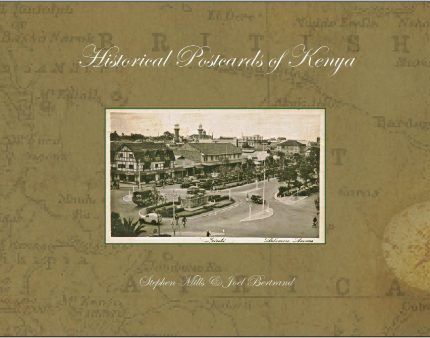
Historical Postcards of Kenya by Step...

KShs5,500.00 KShs4,990.00
Until recently, there was nothing like Kenya. There was only, from Somalia down to the Comoros like the pearls of a Muslim rosary, a series of harbours of flourishing cities. Most were safely situated on islands where sailors had come since Antiquity from as far as Arabia, India and even China to trade and mix with the local African people. This is where the Swahili civilization blossomed. In 1498, Vasco de Gama was the first European to reach the area. Portugal established a few strongholds along the Coast – Fort Jesus in Mombasa is a vestige of this occupation. Soon followed by other European powers, they became yet another actor of the tumultuous power struggles in the area. In the hinterland, since the beginning of times – other people were living, peacefully or at war with each other, interacting, migrating, developing areas and societies, but with limited contacts with the Coast, and the outside world. The Swahili traders – often called Arabs – had for a long time established links with the people of the mainland. Large caravans would be chartered, going farther and farther into the continent, generation after generation. By the beginning of the 19th Century, they would start from Zanzibar and Bagamoyo on the mainland and reach the heart of Africa, the shores of the lakes known today as Tanganyika and Victoria, forming alliances with local chiefs and kings, even controlling large areas as in Kivu. But the traders from Lamu, Malindi, Gedi, and Mombasa could not go that far. If they dared penetrate deep into the continent, fierce fighting herdsmen would attack the intruders, disband the caravans, and make the business a disaster. Nobody ventured farther than a few hundred miles. The only possible route was from Zanzibar, which was followed by the famous explorers such as Stanley, Livingstone and Burton, who “discovered” Africa, and the missionaries who came in their footsteps. They ventured far and, to their amazement, reached a place which they described as a very developed political entity, the Kingdom of Buganda, on the shores of a lake they named Victoria Nyanza. The United Kingdom developed a strong interest in this area and, in alliance with the Kabaka of Buganda, took control over a large territory surrounding his kingdom, establishing the Uganda Protectorate, by 1894. But there was a problem. As agreed in 1886, the usual route to Buganda, from Zanzibar, meant crossing territories henceforth under German domination, Tanganyika, while Britain had been attributed those stretching inwards north of -1° latitude from the Coast up to the Rwenzori Mountains. To gain free access to its Protectorate, Britain decided to cut across from Mombasa and reach the shores of Victoria Nyanza by train. From there, Uganda would easily be reached by boat. Consequently, they decided to build the Uganda Railway, and construction began in 1896. Earlier, the young Lord Lugard, with a significant number of soldiers, Sudanese, Swahili, etc, completed the survey after the military had previously confirmed its feasibility and secured the new route by establishing a series of forts. The trained manpower to build the railway was imported from India, by the thousands. About a quarter of these often forced immigrants remained in the country. Many friends and relatives joined them, turning into shopkeepers in the new towns and the emerging modern villages. The epic of the Uganda Railway building is narrated in a novel, “The Lunatic Express”, as it was nicknamed. In 1899, as the construction was progressing towards the Lake, it was decided to establish a rail depot and workshops in a place the Maasai called Nairobi, located before the railhead reached the Big Escarpment. The Uganda Railway reached Port Florence, today called Kisumu, in December 1901. Meanwhile, Nairobi was growing, as the main stop on the long railroad. The British government, which had taken responsibility for the territory known as British East Africa (B.E.A.), decided in 1902 to transfer to B.E.A. the region called Kavirondo, bordering the Lake from Mount Elgon to Homa Bay, previously part of the Uganda Protectorate, so that the whole railway line, the backbone of the territory, could be under the same administration. In 1905, it was decided to transfer the capital from Mombasa to Nairobi where the headquarters of the Uganda Railway was already situated. Yet, as can be seen on a map of 1906, the name of Nairobi does not even appear. From there, a new political entity emerged. From the beginning of the century, British East Africa developed and took shape. Many immigrants arrived, white farmers from the U.K. and South Africa, Asians from British India, missionaries covering the country with churches and schools while the local populations, by will or whip, were introduced into the new world modernity. Most of the postcards here date from this period, the first quarter of the 20th century. Many buildings were erected, urban centres appeared and grew, and new ways of life were adopted. Then, in 1920, a major reorganisation was decided, B.E.A. becoming the Kenya colony, but for a strip of land along the Coast, where sovereignty was shared with the Sultan of Zanzibar, and which became the Kenya Protectorate. That part of the British Empire was named after the highest mountain in the country, Mt Kenya. The name was kept after Independence. This is how postcards tell the story of a nation in the making.

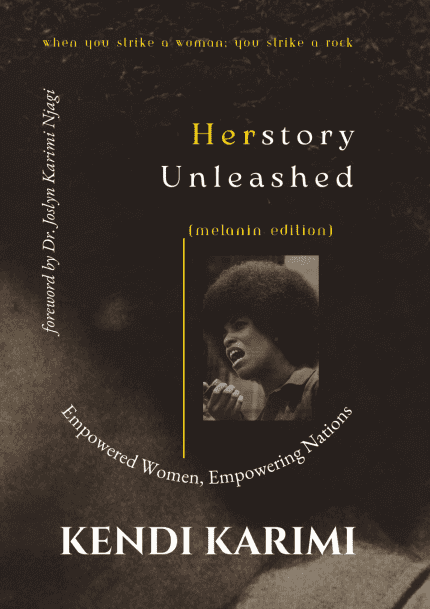
Herstory Unleashed: Empowered Women E...

KShs1,450.00 KShs1,000.00
Herstory Unleashed is a recount of history lived in the actions and words of some very brave women who have used their freedom of speech to write and rally, to inspire and empower. These are not just any women but African women, melanated women, women whose voices still count as a minority, rising above the majority to put permanent prints in history. Minority my foot!

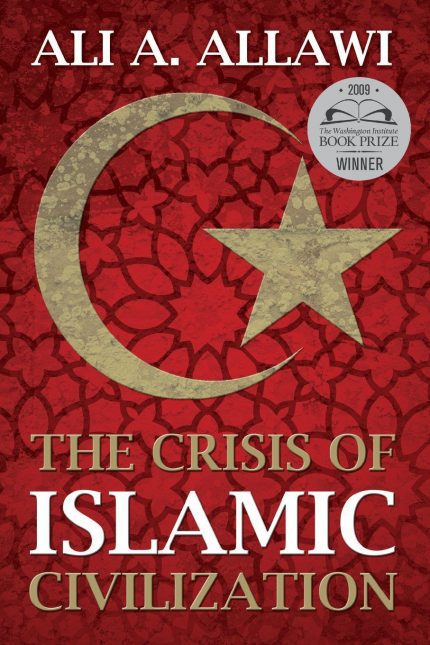
The Crisis of Islamic Civilization by...

KShs4,000.00 KShs3,500.00
A bold analysis of the sources of the crisis in today’s Islamic world, from a public intellectual and statesman at its heart Islam as a religion is central to the lives of over a billion people, but its outer expression as a distinctive civilization has been undergoing a monumental crisis. Buffeted by powerful adverse currents, Islamic civilization today is a shadow of its former self. The most disturbing and possibly fatal of these currents—the imperial expansion of the West into Muslim lands and the blast of modernity that accompanied it—are now compounded by a third giant wave, globalization. These forces have increasingly tested Islam and Islamic civilization for validity, adaptability, and the ability to hold on to the loyalty of Muslims, says Ali A. Allawi in his provocative new book. While the faith has proved resilient in the face of these challenges, other aspects of Islamic civilization have atrophied or died, Allawi contends, and Islamic civilization is now undergoing its last crisis. The book explores how Islamic civilization began to unravel under colonial rule, as its institutions, laws, and economies were often replaced by inadequate modern equivalents. Allawi also examines the backlash expressed through the increasing religiosity of Muslim societies and the spectacular rise of political Islam and its terrorist offshoots. Assessing the status of each of the building blocks of Islamic civilization, the author concludes that Islamic civilization cannot survive without the vital spirituality that underpinned it in the past. He identifies a key set of principles for moving forward, principles that will surprise some and anger others, yet clearly must be considered.

Settler Colonialism by Roxanne Dunbar...

KShs700.00 KShs550.00
Settler Colonialism examines the genesis in the USA of the first full-fledged settler state in the world, which went beyond its predecessors in 1492 Iberia and British-colonized Ireland with an economy based on land sales and enslaved African labor, an implementation of the fiscal-military state. Both the liberal and the rightwing versions of the national narrative misrepresent the process of European colonization of North America. Both narratives serve the critical function of preserving the “official story” of a mostly benign and benevolent USA as an anticolonial movement that overthrew British colonialism. The pre-US independence settlers were colonial settlers just as they were in Africa and India or like the Spanish in Central and South America. The nation of immigrants myth erases the fact that the United States was founded as a settler state from its inception and spent the next hundred years at war against the Native Nations in conquering the continent. The founding of the United States created a division of the Anglo empire, with the US becoming a parallel empire to Great Britain, ultimately overcoming it. From day one the new “republic for empire,” as Thomas Jefferson called the new United States, envisioned the future shape of what is now the forty-eight states of the continental US. The text originates from Roxanne Dunbar-Ortiz (2021) Not A Nation of Immigrants: Settler Colonialism, White Supremacy, and a History of Erasure and Exclusion.

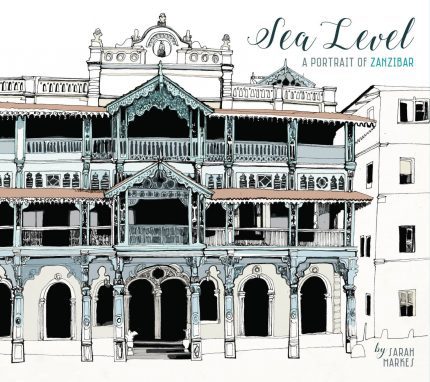
Sea Level: A Portrait of Zanzibar by ...

KShs4,000.00 KShs3,500.00
Sea Level is a creative celebration of Zanzibar's rich and fascinating heritage as seen today. Captured in drawings by artist and designer Sarah Markes, this is a unique and personal portrait of Stone Town's colourful streets, and a portrayal of the island's natural beauty and culture. It is also a plea for recognition of the threats posed to Zanzibar's heritage and the inestimable value of conserving it. This is the second book in the series, following 'Street Level - A collection of Drawings and Creative Writing Inspired by Dar es Salaam'. Now in its third edition, Street Level was described by M.G. Vassanji as "A truly delightful book, a must for those who love Dar and care about its history.

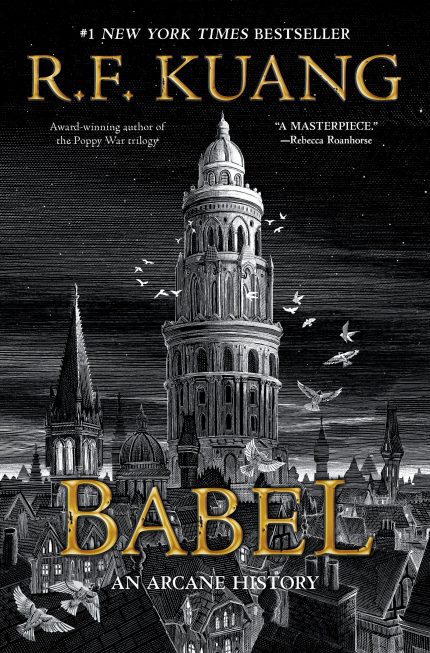
Babel: Or the Necessity of Violence: ...

KShs2,290.00 KShs2,090.00
Traduttore, traditore: An act of translation is always an act of betrayal. 1828. Robin Swift, orphaned by cholera in Canton, is brought to London by the mysterious Professor Lovell. There, he trains for years in Latin, Ancient Greek, and Chinese, all in preparation for the day he’ll enroll in Oxford University’s prestigious Royal Institute of Translation—also known as Babel. Babel is the world's center for translation and, more importantly, magic. Silver working—the art of manifesting the meaning lost in translation using enchanted silver bars—has made the British unparalleled in power, as its knowledge serves the Empire’s quest for colonization. For Robin, Oxford is a utopia dedicated to the pursuit of knowledge. But knowledge obeys power, and as a Chinese boy raised in Britain, Robin realizes serving Babel means betraying his motherland. As his studies progress, Robin finds himself caught between Babel and the shadowy Hermes Society, an organization dedicated to stopping imperial expansion. When Britain pursues an unjust war with China over silver and opium, Robin must decide… Can powerful institutions be changed from within, or does revolution always require violence?

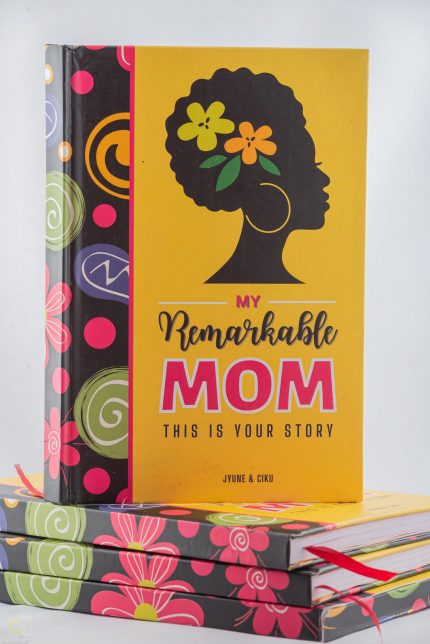
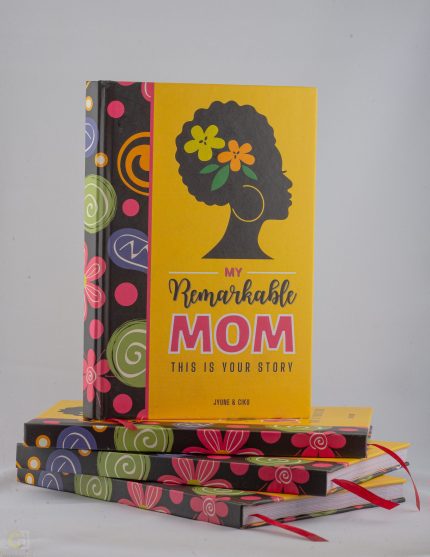
My Remarkable Mom: This is your story...

KShs2,700.00 KShs2,500.00
My Remarkable Mom is a guided journal that has been thoughtfully created to help us get to know our mothers better. Every relationship, including that of a mother and child, benefits from deliberate tending and intentionality. The book may be filled by a child on behalf of their mother as they talk, or if a mom is able to, and if it is preferred, she may fill the book herself in addition to the conversations. A mother with young children could start to fill the book for them while memories are still fresh. It will be a precious keepsake in which entries can be made as life unfolds.

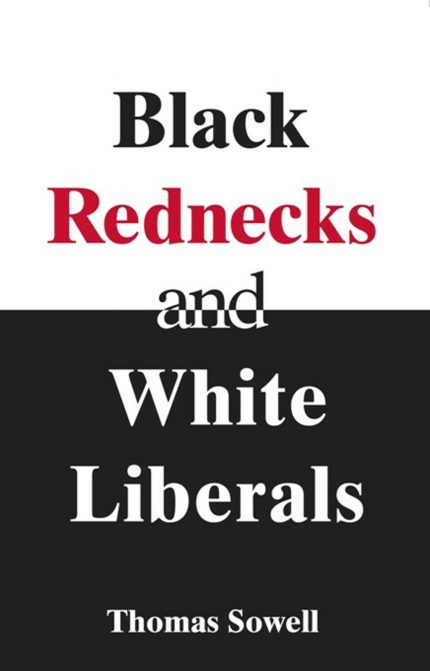
Black Rednecks and White Liberals by ...

KShs4,390.00 KShs3,990.00
This explosive new book challenges many of the long-prevailing assumptions about blacks, about Jews, about Germans, about slavery, and about education. Plainly written, powerfully reasoned, and backed with a startling array of documented facts, Black Rednecks and White Liberals takes on not only the trendy intellectuals of our times but also such historic interpreters of American life as Alexis de Tocqueville and Frederick Law Olmsted. In a series of long essays, this book presents an in-depth look at key beliefs behind many mistaken and dangerous actions, policies, and trends. It presents eye-opening insights into the historical development of the ghetto culture that is today wrongly seen as a unique black identity--a culture cheered on toward self-destruction by white liberals who consider themselves "friends" of blacks. An essay titled "The Real History of Slavery" presents a jolting re-examination of that tragic institution and the narrow and distorted way it is too often seen today. The reasons for the venomous hatred of Jews, and of other groups like them in countries around the world, are explored in an essay that asks, "Are Jews Generic?" Misconceptions of German history in general, and of the Nazi era in particular, are also re-examined. So too are the inspiring achievements and painful tragedies of black education in the United States. "Black Rednecks and White Liberals" is the capstone of decades of outstanding research and writing on racial and cultural issues by Thomas Sowell.

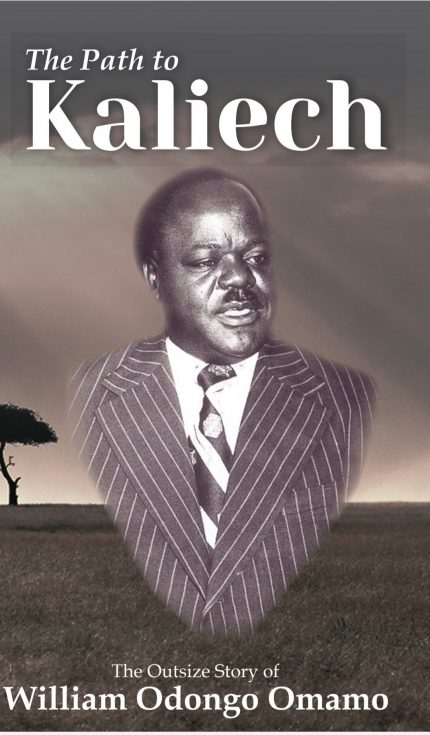
The Path to KALIECH: Autobiography of...

KShs3,000.00 KShs2,500.00
The Path to KALIECH are the memoirs of Dr. William Odongo Omamo, a member of the first generation of Kenyan African technocrats. In it, he describes his journey from his childhood, to his struggles to acquire education as part of the pioneer O level class of Maseno School, to his rise to Cabinet Minister in both the Jomo Kenyatta and Moi Governments. Themes featuring prominently in it include the cultural milieu of his village and childhood, his challenges acquiring an education all the way to University during pre-independence Kenya, his transition from education to government service, and finally his travails in politics. Readers will get to know answers to the questions about his much talked about relationship with Jaramogi Oginga Odinga, untold stories of the Jomo Kenyatta and Moi government political intrigues, as well as his well known oratory during his public life, and the origin of his popular nickname, KALIECH.

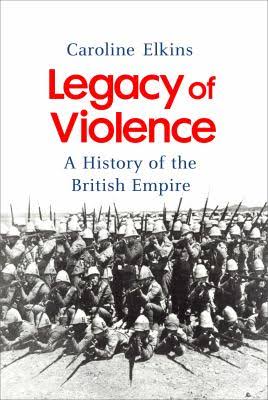
Legacy of Violence: A History of the ...

KShs4,000.00 KShs3,000.00
Sprawling across a quarter of the world's land mass and claiming nearly five hundred colonial subjects, Britain's twentieth-century empire was the largest empire in human history. For many Britons, it epitomized their nation's cultural superiority, but what legacy did the island nation deliver to the world? Covering more than two hundred years of history, Caroline Elkins reveals an evolutionary and racialized doctrine that espoused an unrelenting deployment of violence to secure and preserve the nation's imperial interests. She outlines how ideological foundations of violence were rooted in the Victorian era calls for punishing recalcitrant "natives," and how over time, its forms became increasingly systematized. And she makes clear that when Britain could no longer maintain control over the violence it provoked and enacted, it retreated from empire, destroying and hiding incriminating evidence of its policies and practices. Drawing on more than a decade of research on four continents, Legacy of Violence implicates all sides of Britain's political divide in the creation, execution, and cover-up of imperial violence. By demonstrating how and why violence was the most salient factor underwriting Britain's empire and the nation's imperial identity at home, Elkins upends long-held myths and sheds new light on empire's role in shaping the world today.

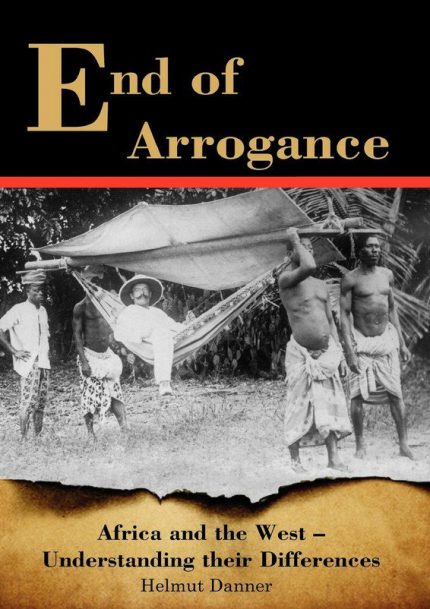
End of Arrogance: Africa and the West...

KShs1,500.00 KShs1,000.00
What determines the African social structure? What does this mean for the ethical orientation? Can the African Spirituality be considered to be 'metaphysical? Conversely, what are the foundations of the west that determine society, religion, politics and science? What do the mental and cultural differences mean for the relationship between Africa and the West? What impact do they specifically have on development cooperation? These are some of the questions Danner attempts to grapple with in "End of Arrogance: Africa and the West - Understanding their differences". A critical and honest observer will often notice a subtle condescension by Westerners towards Africans and resentment on the part of Africans towards the West. Where does this tensed and unfortunate relationship originate from? There are two essential reasons: Africa and the West have a common history that can neither be forgotten nor forgiven by Africans - contempt, subjugation, and exploitation through slave trade, missionary, and colonization. Both have never been able to appreciate or understand the cultural and mental orientation of each other. An approach of mutual understanding - contrary to quantitative measuring - might help counter the arrogance of the West and the distrust by Africans.

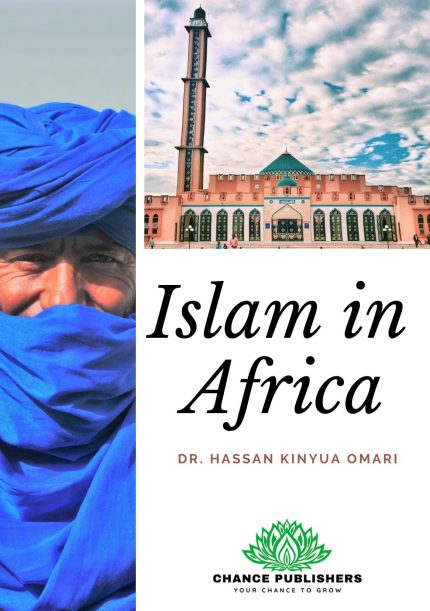
Islam in Africa by Dr Hassan Kinyua O...

KShs2,500.00 KShs2,000.00
This book gives a detail history of how Islam spread in Africa. It details the impact and reasons Africans embrace Islam to date. The book is suitable for adults and college/university students and lecturers interested in African history and Islam.

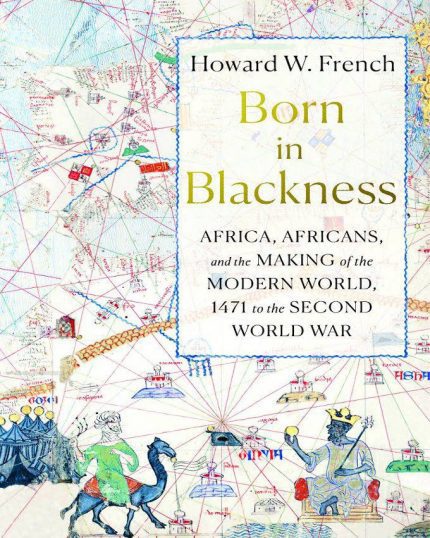
Born in Blackness: Africa, Africans, ...

KShs5,500.00 KShs4,900.00
Revealing the central yet intentionally obliterated role of Africa in the creation of modernity, Born in Blackness vitally reframes our understanding of world history. Traditional accounts of the making of the modern world afford a place of primacy to European history. Some credit the fifteenth-century Age of Discovery and the maritime connection it established between West and East; others the accidental unearthing of the “New World.” Still others point to the development of the scientific method, or the spread of Judeo-Christian beliefs; and so on, ad infinitum. The history of Africa, by contrast, has long been relegated to the remote outskirts of our global story. What if, instead, we put Africa and Africans at the very center of our thinking about the origins of modernity? In a sweeping narrative spanning more than six centuries, Howard W. French does just that, for Born in Blackness vitally reframes the story of medieval and emerging Africa, demonstrating how the economic ascendancy of Europe, the anchoring of democracy in the West, and the fulfillment of so-called Enlightenment ideals all grew out of Europe’s dehumanizing engagement with the “dark” continent. In fact, French reveals, the first impetus for the Age of Discovery was not―as we are so often told, even today―Europe’s yearning for ties with Asia, but rather its centuries-old desire to forge a trade in gold with legendarily rich Black societies sequestered away in the heart of West Africa. Creating a historical narrative that begins with the commencement of commercial relations between Portugal and Africa in the fifteenth century and ends with the onset of World War II, Born in Blackness interweaves precise historical detail with poignant, personal reportage. In so doing, it dramatically retrieves the lives of major African historical figures, from the unimaginably rich medieval emperors who traded with the Near East and beyond, to the Kongo sovereigns who heroically battled seventeenth-century European powers, to the ex-slaves who liberated Haitians from bondage and profoundly altered the course of American history. While French cogently demonstrates the centrality of Africa to the rise of the modern world, Born in Blackness becomes, at the same time, a far more significant narrative, one that reveals a long-concealed history of trivialization and, more often, elision in depictions of African history throughout the last five hundred years. As French shows, the achievements of sovereign African nations and their now-far-flung peoples have time and again been etiolated and deliberately erased from modern history. As the West ascended, their stories―siloed and piecemeal―were swept into secluded corners, thus setting the stage for the hagiographic “rise of the West” theories that have endured to this day.

The House of Rothschild: The worlds B...

KShs2,890.00 KShs2,590.00
A second volume in the acclaimed history of the legendary banking dynasty chronicles the changing fortunes of the financial family during a turbulent era in world history, from their dramatic influence in nineteenth-century Europe to their gradual decline because of the failure to establish a sixth house in the world financial center of New York. 22,500 first printing.
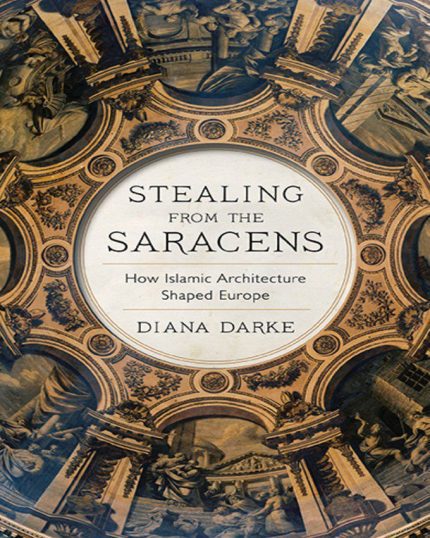
Stealing from the Saracens: How Islam...

KShs5,000.00 KShs3,999.00
Brief Summary Against a backdrop of Islamophobia, Europeans are increasingly airbrushing from history their cultural debt to the Muslim world. But this legacy lives on in some of Europe's most recognizable buildings, from Notre-Dame Cathedral to the Houses of Parliament. This beautifully illustrated book reveals the Arab and Islamic roots of Europe's architectural heritage. Diana Darke traces ideas and styles from vibrant Middle Eastern centers like Damascus, Baghdad and Cairo, via Muslim Spain, Venice and Sicily into Europe. She describes how medieval crusaders, pilgrims and merchants encountered Arab Muslim culture on their way to the Holy Land; and explores more recent artistic interaction between Ottoman and Western cultures, including Sir Christopher Wren's inspirations in the "Saracen" style of Gothic architecture. Recovering this long yet overlooked history of architectural "borrowing," Stealing from the Saracens is a rich tale of cultural exchange, shedding new light on Europe's greatest landmarks.

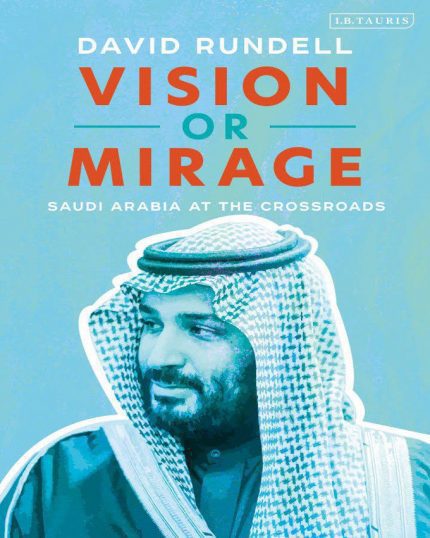
Vision Or Mirage: Saudi Arabia at the...

KShs3,500.00 KShs2,699.00
Brief Summary Something extraordinary is happening in Saudi Arabia. A traditional, tribal society once known for its lack of tolerance is rapidly implementing significant economic and social reforms. An army of foreign consultants is rewriting the social contract, King Salman has cracked down hard on corruption, and his dynamic though inexperienced son, the Crown Prince Mohammad bin Salman, is promoting a more tolerant Islam. But is all this a new vision for Saudi Arabia or merely a mirage likely to dissolve into Iranian-style revolution? David Rundell - one of America's foremost experts on Saudi Arabia - explains how the country has been stable for so long, why it is less so today, and what is most likely to happen in the future. The book is based on the author's close contacts and intimate knowledge of the country where he spent 15 years living and working as a diplomat. Vision or Mirage demystifies one of the most powerful, but least understood, states in the Middle East and is essential reading for anyone interested in the power dynamics and politics of the Arab World.