Showing 321–340 of 375 results

Swahili for the Broken hearted by Pet...

KShs1,800.00 KShs1,399.00
Brief Summary Question: What do you do when you're dumped by the Girl Next Door? Answer: Throw yourself into another madcap adventure and travel from Cape Town to Cairo... A week after breaking up with the GND (his travelling companion through Central America) Peter Moore heads off to Africa to lose himself for a while. In the grand tradition of 19th-century scoundrelas, explorers and romantics, Africa strikes him as the ideal place to find solitude and anonymity in the face of a personal crisis. What follows is Peter's journey from one end of the Dark Continent to the other. Travelling the fabled Cape Town to Cairo route by any means of transport he can blag (or if he must, pay) his way onto, it's an epic trek that sees our intrepid Antipodean experience everything from the southernmost city in Africa to the Pyramids, vast game parks and thundering falls, cosmopolitan cities and tiny villages as he journeys through the very heart of Africa. And travelling on his own, it's inevitable that Peter falls in with a motley cast of characters and has a myriad misadventures: including coming face to face with a wild Hyena with very bad breath, crossing the treacherous Sani Pass, the highest in Africa, narrowly escaping a riot by hiding in a coffin shop, saving oil-covered Penguins in South Africa, acting as an extra in a WW2 epic, not to mention dodging 20,000 single woman trying to catch the eye of the king of Swaziland during the annual Reed Dance. And then there was the time when he was kicked out of Robert Mugabe's birthday bash at gunpoint.

God’s Bits of Wood by Ousmane S...

KShs890.00 KShs599.00
Brief Summary In 1947 the workers on the Dakar-Niger Railway came out on strike. Throughout this novel, written from the workers' perspective, the community social tensions emerge, and increase as the strike lengthens Ousmane Sembène envinces the color, passion, and tragedy of those formative years in the history of West Africa.

We Are All Birds of Uganda by Hafsa Z...

KShs2,000.00 KShs1,790.00
'You can't stop birds from flying, can you, Sameer? They go where they will...' 1960s UGANDA. Hasan struggles to keep his family business afloat following the sudden death of his wife. As he begins to put his shattered life back together piece by piece, a new regime seizes power, and a wave of rising prejudice threatens to sweep away everything he has built. Present-day LONDON. Sameer, a young high-flying lawyer, senses an emptiness in what he thought was the life of his dreams. Called back to his family home by an unexpected tragedy, Sameer begins to find the missing pieces of himself not in his future plans, but in a heritage he never knew. Moving between two continents over a troubled century, We Are All Birds of Uganda is an immensely resonant novel that explores racial tensions, generational divides and what it means to belong.

How Democracy Ends by David Runciman

KShs1,899.00 KShs1,499.00
Brief Summary Since the end of World War II, democracy's sweep across the globe seemed inexorable. Yet today, it seems radically imperiled, even in some of the world's most stable democracies. How bad could things get? In How Democracy Ends, David Runciman argues that we are trapped in outdated twentieth-century ideas of democratic failure. By fixating on coups and violence, we are focusing on the wrong threats. Our societies are too affluent, too elderly, and too networked to fall apart as they did in the past. We need new ways of thinking the unthinkable -- a twenty-first-century vision of the end of democracy, and whether its collapse might allow us to move forward to something better. A provocative book by a major political philosopher, How Democracy Ends asks the most trenchant questions that underlie the disturbing patterns of our contemporary political life.

Makers Of Kenya’s History: Fiel...

KShs600.00 KShs450.00
Brief Summary Dedan Kimathi is a story of the man who is now almost universally accepted as the true symbol of Kenya's liberation struggle. A warrior and military strategist to boot, Dedan Kimathi rose through the ranks to become the overall leader of the Mau Mau freedom fighters. Since his death at the heart of the struggle, he has acquired, in the minds of many, legendary and mythical qualities.

Mr Loverman by Bernardine Evaristo

KShs1,990.00 KShs1,790.00
Barrington Jedidiah Walker. Barry to his friends. Trouble to his wife. Seventy-four years old, Antiguan born and bred, flamboyant Hackney personality Barry is known for his dapper taste and fondness for retro suits. He is a husband, father and grandfather. And for the past sixty years, he has been in a relationship with his childhood friend and soulmate, Morris. Wife Carmel knows Barry has been cheating on her, but little does she know what is really going on. When their marriage goes into meltdown, Barrington has big choices to make. Mr Loverman is a groundbreaking exploration of Britain's older Caribbean community, which explodes cultural myths and fallacies, and shows how deep and far-reaching the consequences of prejudice and fear can be. It is also a warm-hearted, funny and life-affirming story about a character as mischievous, cheeky and downright lovable as any you'll ever meet.

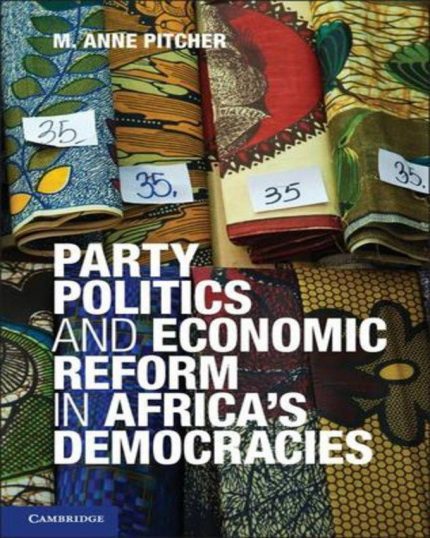
Party Politics and Economic Reform in...

KShs6,000.00 KShs4,999.00
Brief Summary In Party Politics and Economic Reform in Africa's Democracies, M. Anne Pitcher offers an engaging new theory to explain the different trajectories of private sector development across contemporary Africa. Pitcher argues that the outcomes of economic reforms depend not only on the kinds of institutional arrangements adopted by states in order to create or expand their private sectors, but also on the nature of party system competition and the quality of democracy in particular countries. To illustrate her claim, Pitcher draws on several original data sets covering twenty-seven countries in Africa, and detailed case studies of the privatization process in Zambia, Mozambique, and South Africa. This study underscores the importance of formal institutions and political context to the design and outcome of economic policies in developing countries.

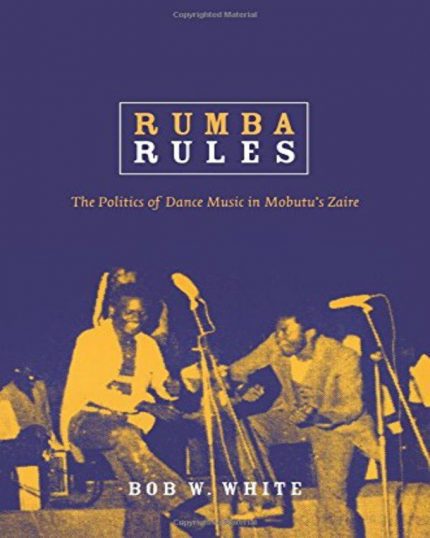
Rumba Rules The Politics of Dance Mus...

KShs4,000.00 KShs3,499.00
Brief Summary Mobutu Sese Seko, who ruled Zaire (now the Democratic Republic of Congo) from 1965 until 1997, was fond of saying “happy are those who sing and dance,” and his regime energetically promoted the notion of culture as a national resource. During this period Zairian popular dance music (often referred to as la rumba zaïroise) became a sort of musica franca in many parts of sub-Saharan Africa. But how did this privileged form of cultural expression, one primarily known for a sound of sweetness and joy, flourish under one of the continent’s most brutal authoritarian regimes? In Rumba Rules, the first ethnography of popular music in the Democratic Republic of Congo, Bob W. White examines not only the economic and political conditions that brought this powerful music industry to its knees, but also the ways that popular musicians sought to remain socially relevant in a time of increasing insecurity. Drawing partly on his experiences as a member of a local dance band in the country’s capital city Kinshasa, White offers extraordinarily vivid accounts of the live music scene, including the relatively recent phenomenon of libanga, which involves shouting the names of wealthy or powerful people during performances in exchange for financial support or protection. With dynamic descriptions of how bands practiced, performed, and splintered, White highlights how the ways that power was sought and understood in Kinshasa’s popular music scene mirrored the charismatic authoritarianism of Mobutu’s rule. In Rumba Rules, Congolese speak candidly about political leadership, social mobility, and what it meant to be a bon chef (good leader) in Mobutu’s Zaire.

The AKO Caine Prize for African Writi...

KShs1,000.00 KShs599.00
Brief Summary Now in its 21st year, the AKO Caine Prize for African Writing is African’s leading literary prize, and is awarded to a short story by an African writer published in English, whether in Africa or elsewhere. The collection brings together the five stories on the 2020 shortlist. The authors shortlisted for the 2020 AKO Caine Prize are: - Jowhor Ile (Nigeria) for Fisherman’s Stew - Rémy Ngamije (Rwanda/Namibia) for The Neighbourhood Watch - Irenosen Okojie (Nigeria) for Grace Jones - Erica Sugo Anyadike (Tanzania) for How to Marry an African President - Chikodili Emeladu (Nigeria) for What to do when your child brings home a Mami Wata The 2020 judging panel comprises: - Kenneth Olumuyiwa Tharp (Chair) has over 35 years’ experience in the UK arts and cultural sector, including a 25-year career as a dancer, choreographer, teacher and director. Since May 2018 he has been Director of The Africa Centre. - Audrey Brown is a South African broadcast journalist, who currently presents the BBC World Service flagship daily news and current affairs programme, Focus on Africa. Gabriel Gbadamosi is an Irish-Nigerian poet and playwright. His London novel Vauxhall (2013) won the Tibor Jones Pageturner Prize and Best International Novel at the Sharjah Book Fair. - James Murua is a Kenya-based blogger, journalist, podcaster and editor who has written for a variety of media outlets in a career spanning print, web and TV. - Ebissé Wakjira-Rouw is an Ethiopian-born non-fiction editor, podcaster, publisher and policy advisor at the Dutch Council for Culture in the Netherlands.

Assata An Autobiography by Assata Shakur

KShs3,000.00 KShs2,800.00
On May 2, 1973, Black Panther Assata Shakur (aka JoAnne Chesimard) lay in a hospital, close to death, handcuffed to her bed, while local, state, and federal police attempted to question her about the shootout on the New Jersey Turnpike that had claimed the life of a white state trooper. Long a target of J. Edgar Hoover's campaign to defame, infiltrate, and criminalize Black nationalist organizations and their leaders, Shakur was incarcerated for four years prior to her conviction on flimsy evidence in 1977 as an accomplice to murder. This intensely personal and political autobiography belies the fearsome image of JoAnne Chesimard long projected by the media and the state. With wit and candor, Assata Shakur recounts the experiences that led her to a life of activism and portrays the strengths, weaknesses, and eventual demise of Black and White revolutionary groups at the hand of government officials. The result is a signal contribution to the literature about growing up Black in America that has already taken its place alongside The Autobiography of Malcolm X and the works of Maya Angelou. Two years after her conviction, Assata Shakur escaped from prison. She was given political asylum by Cuba, where she now resides.

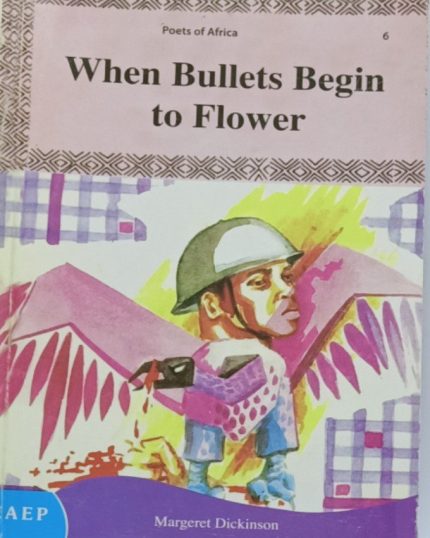
When Bullets Begin to Flower: Poems o...

KShs1,000.00 KShs599.00
Brief Summary When Bullets Begin to Flower: Poems of Resistance from Angola, Mozambique and Guinea.

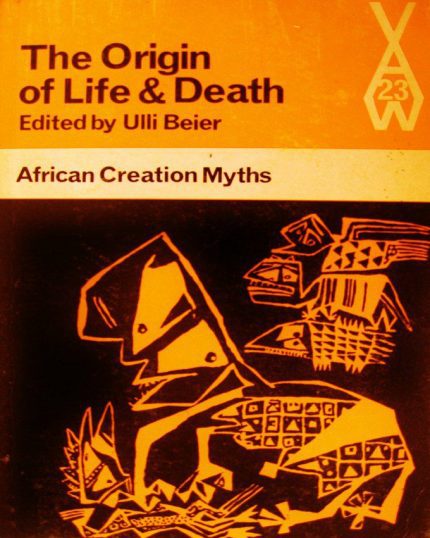
The origin of life and death by Ulli ...

KShs500.00 KShs399.00
Brief Summary This is a collection of creation myths from West, East, Central and North Africa.

We Need to Talk About Africa: The Har...

KShs1,890.00 KShs1,399.00
Brief Summary If you boil a kettle twice today, you will have used five times more electricity than a person in Mali uses in a whole year. How can that be possible? Decades after the colonial powers withdrew Africa is still struggling to catch up with the rest of the world. When the same colonists withdrew from Asia there followed several decades of sustained and unprecedented growth throughout the continent. So what went wrong in Africa? And are we helping to fix it, or simply making matters worse? In this provocative analysis, Tom Young argues that so much has been misplaced: our guilt, our policies, and our aid. Human rights have become a cover for imposing our values on others, our shiniest infrastructure projects have fuelled corruption and our interference in domestic politics has further entrenched conflict. Only by radically changing how we think about Africa can we escape this vicious cycle.

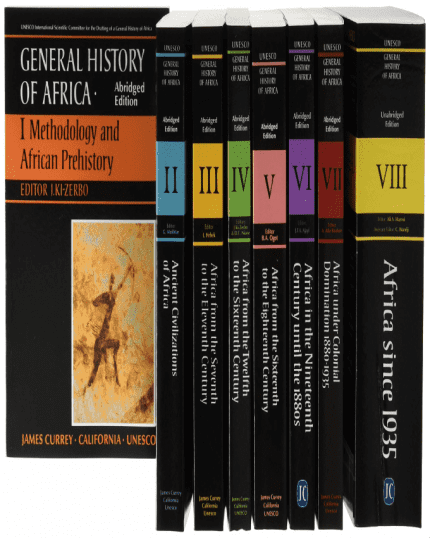
General History of Africa Complete Se...

KShs20,000.00 KShs18,000.00
This set brings together all 8 volumes of the groundbreaking Unesco General History of Africa, which are all now available again as paperbacks. The series demonstrates the importance of African history from earliest pre-history, through the establishment of its ancient civilizations to the placing of Africa in the context of world history. The growth and development of African historiography, once written records became more common, document the triumph of Islam, the extension of trading relations, cultural exchanges and human contacts, as well as the impact and consequences of the slave trade. The European scramble for colonial territory in the 1880s is examined with a focus on the responses of Africans themselves to the economic and social aspects of colonial systems up to 1935, including the growth of anti-colonial movements and the strengthening of African political nationalism. The contributions document how the continent moved from international conflict under foreign domination to struggles for political sovereignty and economic independence. The last (unabridged) volume 8 examines the challenges of nation-building and the socio-cultural changes affecting the newly independent nations.

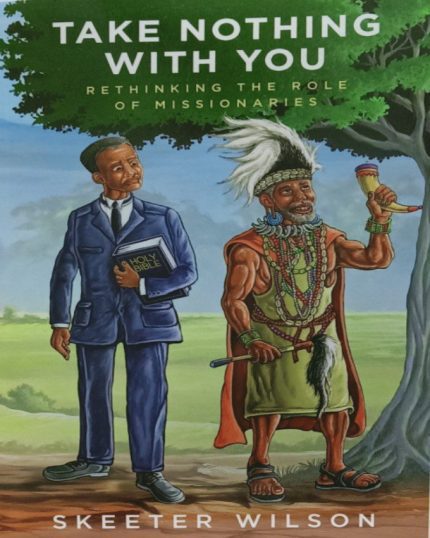
Take Nothing With You Rethinking the ...

KShs2,800.00 KShs2,199.00
Brief Summary For more than a decade, Skeeter Wilson has been interviewing elders in Kenya to better understand them as they see themselves, rather than defined by the missionary culture. Take Nothing With You does not doubt the sincerity and good intentions of most missionaries worldwide-especially in Africa, where the author grew up. Neither does it question the sincerity that drives them to believe that they are fulfilling a divine calling. What Take Nothing With You does question is how faithfully the missionary movement reflects the teachings and examples of the Christ-the One who is the purported subject of their message. It questions if the message, as delivered in the missionary context, can really be considered "Good News." Author: Skeeter Wilson

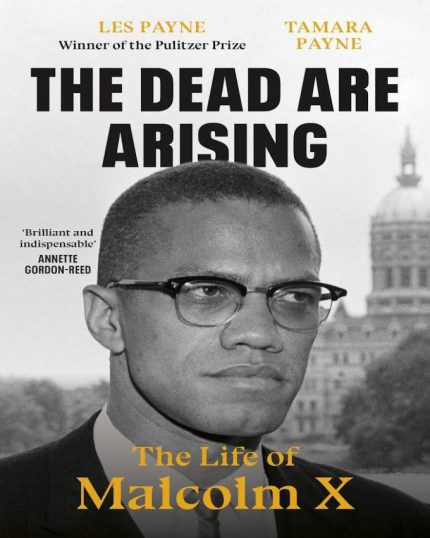
The Dead Are Arising The Life of Malc...

KShs2,290.00 KShs2,150.00
Les Payne, the renowned Pulitzer Prize–winning investigative journalist, embarked in 1990 on a nearly thirty-year-long quest to interview anyone he could find who had actually known Malcolm X—all living siblings of the Malcolm Little family, classmates, street friends, cellmates, Nation of Islam figures, FBI moles and cops, and political leaders around the world. His goal was ambitious: to transform what would become over a hundred hours of interviews into an unprecedented portrait of Malcolm X, one that would separate fact from fiction. The result is this historic biography that conjures a never-before-seen world of its protagonist, a work whose title is inspired by a phrase Malcolm X used when he saw his Hartford followers stir with purpose, as if the dead were truly arising, to overcome the obstacles of racism. Setting Malcolm’s life not only within the Nation of Islam but against the larger backdrop of American history, the book traces the life of one of the twentieth century’s most politically relevant figures “from street criminal to devoted moralist and revolutionary.” In tracing Malcolm X’s life from his Nebraska birth in 1925 to his Harlem assassination in 1965, Payne provides searing vignettes culled from Malcolm’s Depression-era youth, describing the influence of his Garveyite parents: his father, Earl, a circuit-riding preacher who was run over by a street car in Lansing, Michigan, in 1929, and his mother, Louise, who continued to instill black pride in her children after Earl’s death. Filling each chapter with resonant drama, Payne follows Malcolm’s exploits as a petty criminal in Boston and Harlem in the 1930s and early 1940s to his religious awakening and conversion to the Nation of Islam in a Massachusetts penitentiary. With a biographer’s unwavering determination, Payne corrects the historical record and delivers extraordinary revelations—from the unmasking of the mysterious NOI founder “Fard Muhammad,” who preceded Elijah Muhammad; to a hair-rising scene, conveyed in cinematic detail, of Malcolm and Minister Jeremiah X Shabazz’s 1961 clandestine meeting with the KKK; to a minute-by-minute account of Malcolm X’s murder at the Audubon Ballroom. Introduced by Payne’s daughter and primary researcher, Tamara Payne, who, following her father’s death, heroically completed the biography, The Dead Are Arising is a penetrating and riveting work that affirms the centrality of Malcolm X to the African American freedom struggle.

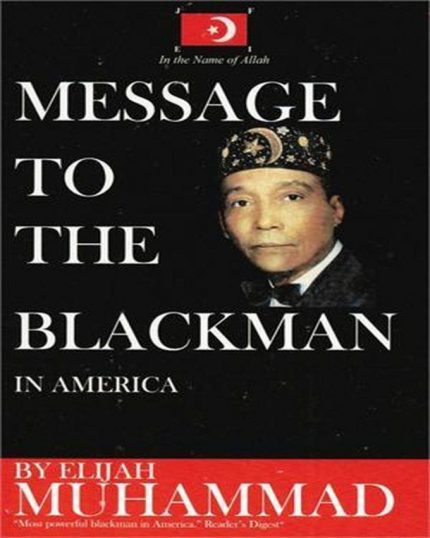
Message to the Blackman in America by...

KShs3,000.00 KShs2,699.00
Brief Summary Message To The Blackman In America By Elijah Muhammad According to countless mainstream news organs, Elijah Muhammad, by far, was the most powerful black man in America. Known more for the students he produced, like Malcolm X, Louis Farrakhan and Muhammad Ali, this controversial man exposed the black man as well as the world to a teaching, till now, was only used behind closed doors of high degree Masons and Shriners. An easy and smart read. The book approaches the question of what and who is God. It compares the concept held by religions to nature and mathematics. It also explores the origin of the original man, mankind, devil, heaven and hell. Its title, Message To The Blackman, is directed to the American Blacks specifically, but addresses blacks universally as well.

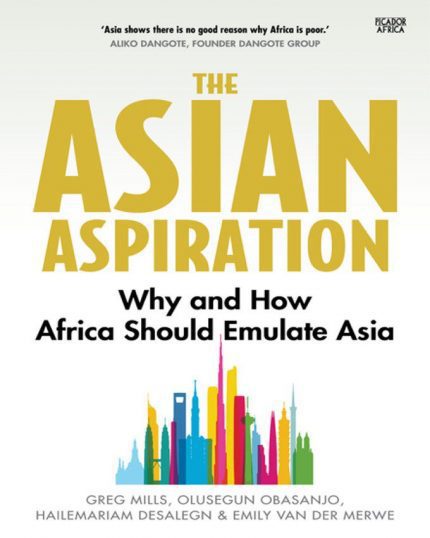
The Asian Aspiration: Why and How Afr...

KShs3,999.00 KShs3,799.00
In 1960, the GDP per capita of Southeast Asian countries was nearly half of that of Africa. By 1986, the gap had closed and today the trend is reversed, with more than half of the world’s poorest now living in sub-Saharan Africa. Why has Asia developed while Africa lagged? The Asian Aspiration chronicles the stories of explosive growth and changing fortunes: the leaders, events and policy choices that lifted a billion people out of abject poverty within a single generation, the largest such shift in human history. The relevance of Asia’s example comes as Africa is facing a population boom, which can either lead to crisis or prosperity; and as Asia is again transforming, this time out of low-cost manufacturing into hi-tech, leaving a void that is Africa’s for the taking. Far from the determinism of ‘Africa Rising’, this book calls for unprecedented pragmatism in the pursuit of African success. Authors: Greg Mills, Olusegun Obasanjo, Hailemariam Desalegn and Emily Van der Merwe

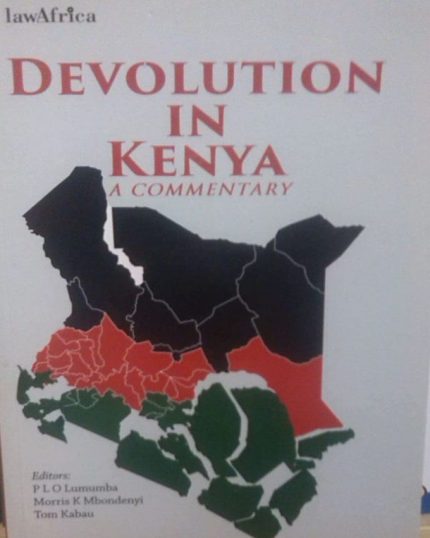
Devolution in Kenya: A commentary by ...

KShs3,000.00 KShs2,899.00
Devolution in Kenya: A commentary by PLO Lumumba