Showing 341–360 of 375 results

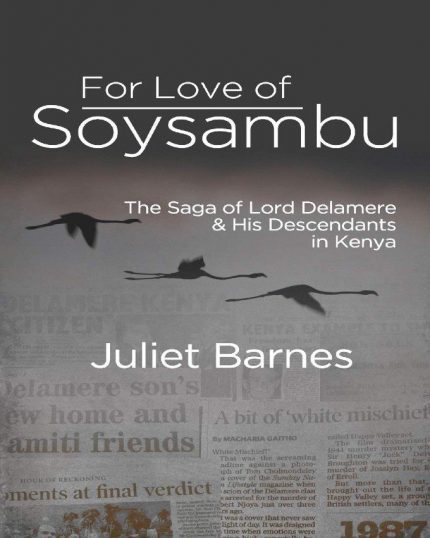
For Love of Soysambu The Saga of Lord...

KShs3,000.00 KShs2,500.00
This dramatic story spans 122 years and highlights challenges faced by four generations of an initially British aristocratic family in Kenya, with Soysambu in the Great Rift Valley as its central focus. Initially a refuge for dying sheep, but more recently a Wildlife Conservancy and part of a UNESCO World Heritage Site, today Soysambu protects many rare and endangered species. The saga begins in 1897 with the arrival of the Hon. Hugh Cholmondeley, who walked over 1,000 kilometres into East Africa from Berbera. In 1902, after inheriting his title of 3rd Baron Delamere, he abandoned his grand Cheshire family home, Vale Royal, for a grass and mud hut in East Africa, where he befriended local Maasai and gradually built up a formidable reputation as a leading politician and pioneer. When he died in 1931, having sold off his Cheshire estates to fund his agricultural experiments, he was bankrupt. His second wife, Gwladys, Mayor of Nairobi, was associated with the notorious Happy Valley clique, dragging her into the Lord Erroll murder trial in 1941. Delamere's son, Thomas Cholmondeley, now 4th Baron Delamere, moved to Kenya after World War II to salvage his father's farms. Thomas, who was pro-independence, managed to turn Soysambu into a successful cattle ranch. His third wife, Diana, remained notorious for her affair with Lord Erroll at his time of murder, with many still believing she'd been his killer. Following Thomas's death in 1979, his only son Hugh, now 5th Baron Delamere, took over Soysambu. His son, Tom Cholmondeley, faced increasing financial problems and pressure from land-hungry Kenyans, a situation exacerbated when he was charged with murder - twice. After his incarcerations and eventual release, he was busy implementing his innovative ideas on Soysambu when he died unexpectedly on 24th August 2016 after hip surgery.  

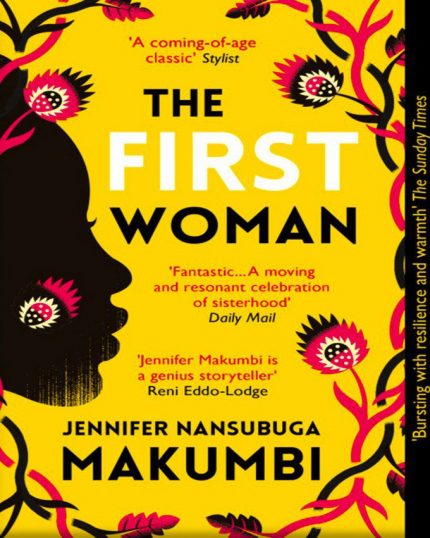
The First Woman by Jennifer Nansubuga...

KShs2,090.00 KShs1,990.00
Brief Summary Growing up in a small Ugandan village, Kirabo is surrounded by powerful women. Her grandmother, her aunts, her friends and cousins are all desperate for her to conform, but Kirabo is inquisitive, headstrong and determined. Up until now, she has been perfectly content with her life at the heart of this prosperous extended family, but as she enters her teenage years, she begins to feel the absence of the mother she has never known. The First Woman follows Kirabo on her journey to becoming a young woman and finding her place in the world, as her country is transformed by the bloody dictatorship of Idi Amin. Jennifer Makumbi has written a sweeping tale of longing and rebellion, at once epic and deeply personal, steeped in an intoxicating mix of ancient Ugandan folklore and modern feminism, that will linger in the memory long after the final page.  

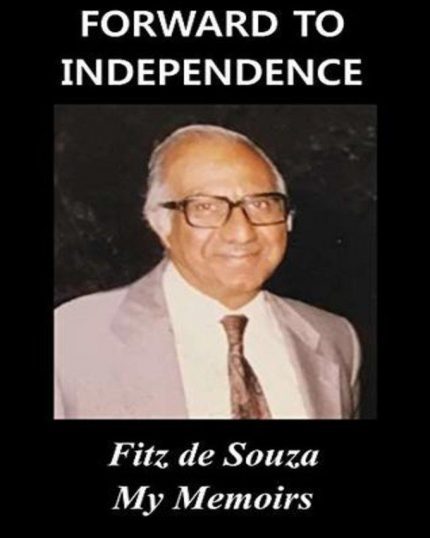
Forward to Independence by Fitz de Souza

KShs4,500.00 KShs3,500.00
Brief Summary Fitz de Souza's memoirs recount a political story woven through a personal account of migration and integration, with both the hardship and hope that this entailed. His account takes us from Asia to Africa and then to Europe before returning to East Africa where he lived for most of his life. It gives a flavour of lifestyles, moral codes, and politics as they were in early 20th century India, 1930s Zanzibar, and Europe after the war. Most importantly, it takes us to that formative time when the foundations were laid for an independent Kenya, giving the reader a window into those last decades of colonial Africa and those early years of the new nation. The transition was not a peaceful one. It was not a time when the "rule of law" was applied in an undiluted sense. The book gives the inside story of the colonial government's handling of the independence movement including the trial of the Kapenguria six, Jomo Kenyatta and fellow nationalists, and Operation Anvil, the round-up of the Mau Mau. It explains how agreement was eventually reached and compromises found, in particular through the Lancaster House conferences, that enabled a new country to be founded. It portrays the politicians of the time, before independence and after, some hugely idealistic, some charismatic, and others forever enigmatic, many of whose lives in those formative years ended in tragedy. Hilary Ng'weno, a highly regarded Kenyan journalist and editor, provided invaluable support: "I interviewed him many times, so that the interviews, which were recorded, could help him in writing his memoirs. That exercise was an eye opener for me. I had never met an elderly person who could remember so many details about his past. He was remembering personalities and events of the years before and soon after Kenya’s independence in 1963 and Fitz wasn’t just remembering events touching on his life. He was remembering Kenya’s history of which he was one of the great makers. The story you read in this book is not just about Fitz. It is a story about the foundations of the Kenya nation. And it is for that reason that I feel very strongly that Fitz Remedios Santana de Souza will forever remain a legend for many Kenyans." David Steel, The Rt Hon. the Lord Steel of Aikwood, a close personal friend, commented: ”This is a remarkable book, beautifully written and describing in graphic detail the author’s experience of the transition of Kenya from violence-torn colony to independence. Fitz de Souza speaks with authority as one active at the centre from lawyer to Jomo Kenyatta to Deputy Speaker in the Nairobi Parliament. His sketches of the participants are quite breath-taking and moving. His is a life lived to the full – I could not put it down and read it all in just two sittings.” In her introduction, Victoria Brittain, former foreign correspondent for The Guardian in East Africa, writes: "Fitz de Souza is a man of memories from his unique insider/outsider status in Kenya’s struggle for independence from Britain and the early days of its uncharted path under Jomo Kenyatta. A vanished world of optimism and idealism rooted in Goa, Zanzibar, Kenya’s Rift Valley, London’s Inns of Court, and the dying days of British colonial rule in Kenya is unveiled in his subtle understated book. De Souza was Deputy Speaker of the first Parliament of independent Kenya, a trusted friend to Kenyatta and of all the aspiring politicians of the moment, many of whom he knew well from the prisons and courtrooms of violent pre-independence days. He was a man who in those heady days of independent Kenya could have had any ministry he wanted, and was offered any stretches of farmland he wanted by Kenyatta. Unlike so many others he wanted none. The life he chose was a very different one of idealism, matter-of-fact self-sacrifice and extraordinary hard work.”

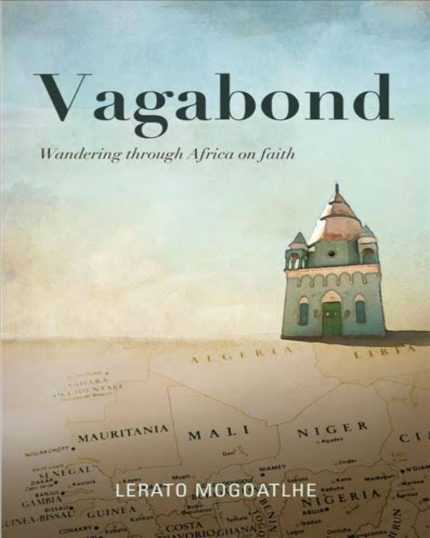
Vagabond by Lerato Mogoatlhe

KShs1,990.00 KShs1,800.00
Vagabond: Wandering through Africa on faith. One woman. One continent. Vagabond is Lerato Mogoatlhe’s story of her travels through twenty-one countries in Africa. Vagabond is a poetic, raw and honest diary of Lerato’s travels through Africa. From meeting President Mbeki at an event in Timbuktu to hanging out with one of her favourite artists, Habib Koite, Vagabond is a love letter of Lerato’s discovery of herself, her home, Africa, and its people that readers will witness through her uncensored curiosity and with none of the glamour of a guidebook. Out of the twenty-one countries visited over the five years she travelled through the continent, Lerato names Sudan, Mali, Egypt, Uganda and Kenya as her top five to visit.  

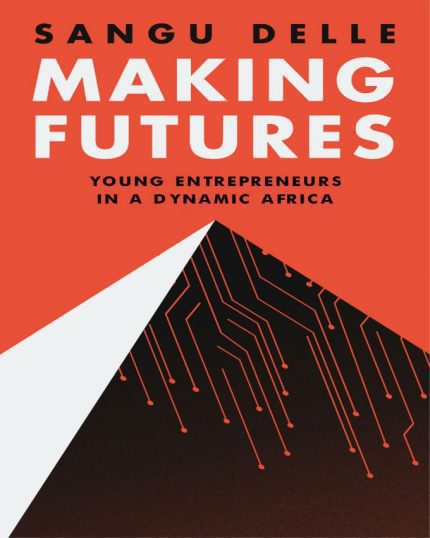
Making Futures by Sangu Delle

KShs2,899.00 KShs2,399.00
Making Futures: Young Entrepreneurs in a Dynamic Africa. Making Futures brings together 18 young entrepreneurs from 14 countries doing incredible work across the continent. Their stories are both inspirational and aspirational; providing a template for readers who might be interested in embarking on their own entrepreneurial journey, and allowing others to see the incredible energy and work that is happening across the continent. There’s the story of David Sengeh, who has worked on combatting malaria and lack of energy in Sierra Leone before turning to custom-made prosthetics, to Farida Bedwei, co-founder of the largest microfinance banking software platform in Ghana. These are entrepreneurs who are helping to reconfigure the narrative about Africa by simply making things for the masses of their population. They represent what is possible and what can be scaled up in different African contexts, despite the dysfunctionality witnessed across the continent. With such diversity of stories, readers have access to potential business ideas, while learning a little about the history of that country and what it takes to build a business in an emerging economy. These men and women have done it and are doing it! This collection equips readers with intimate knowledge about the markets and growth across the region, and how young creative entrepreneurs are identifying problems as opportunities and seeding growth in a continent that has been long overlooked, but is poised for explosive growth and opportunity, enabled by technology.  

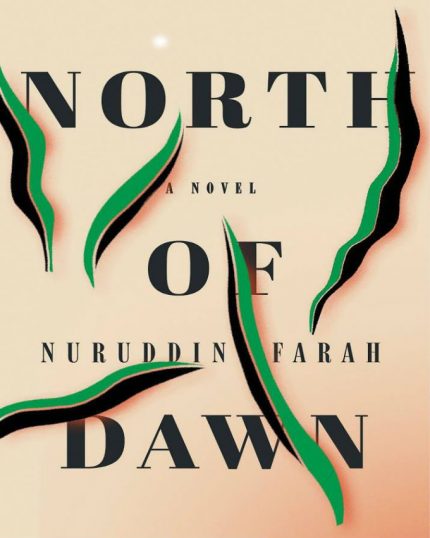
North of Dawn by Nuruddin Farah

KShs2,500.00 KShs1,890.00
A couple's tranquil life abroad is irrevocably transformed by the arrival of their son's widow and children, in the latest from Somalia's most celebrated novelist. For decades, Gacalo and Mugdi have lived in Oslo, where they've led a peaceful, largely assimilated life and raised two children. Their beloved son, Dhaqaneh, however, is driven by feelings of alienation to jihadism in Somalia, where he kills himself in a suicide attack. The couple reluctantly offers a haven to his family. But on arrival in Oslo, their daughter-in-law cloaks herself even more deeply in religion, while her children hunger for the freedoms of their new homeland, a rift that will have life altering consequences for the entire family. Set against the backdrop of real events, North of Dawn is a provocative, devastating story of love, loyalty, and national identity that asks whether it is ever possible to escape a legacy of violence--and if so, at what cost.  

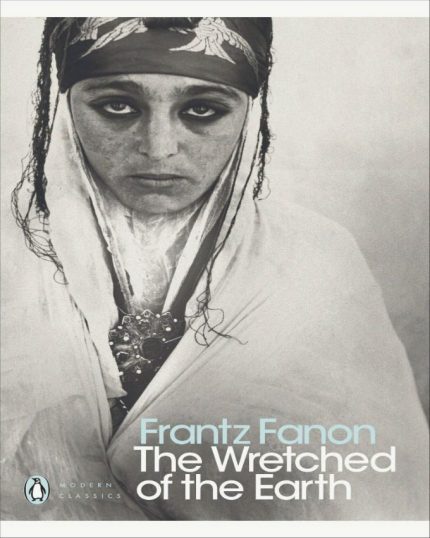
The Wretched of the Earth by Frantz F...

KShs1,990.00 KShs1,890.00
Brief summary A distinguished psychiatrist from Martinique who took part in the Algerian Nationalist Movement, Frantz Fanon was one of the most important theorists of revolutionary struggle, colonialism, and racial difference in history. Fanon s masterwork is a classic alongside Edward Said s Orientalism or The Autobiography of Malcolm X, and it is now available in a new translation that updates its language for a new generation of readers. The Wretched of the Earth is a brilliant analysis of the psychology of the colonized and their path to liberation. Bearing singular insight into the rage and frustration of colonized peoples, and the role of violence in effecting historical change, the book incisively attacks the twin perils of post-independence colonial politics: the disenfranchisement of the masses by the elites on the one hand, and intertribal and interfaith animosities on the other. Fanon s analysis, a veritable handbook of social reorganization for leaders of emerging nations, has been reflected all too clearly in the corruption and violence that has plagued present-day Africa. The Wretched of the Earth has had a major impact on civil rights, anti-colonialism, and black consciousness movements around the world, and this bold new translation by Richard Philcox reaffirms it as a landmark."

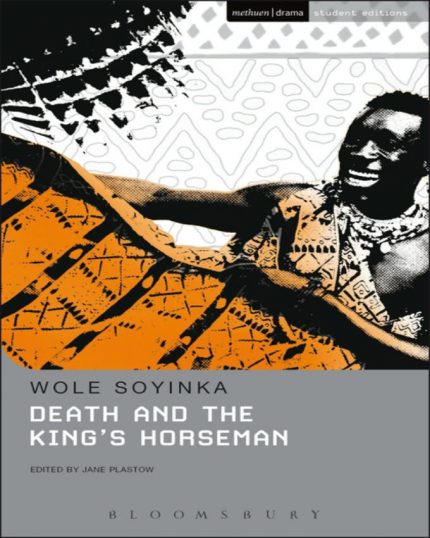
Death and the Kings Horseman Play by ...

KShs2,000.00 KShs1,790.00
Based on events that took place in Oyo, an ancient Yoruba city of Nigeria, in 1946, Wole Soyinka's powerful play concerns the intertwined lives of Elesin Oba, the king's chief horseman; his son, Olunde, now studying medicine in England; and Simon Pilkings, the colonial district officer. The king has died and Elesin, his chief horseman, is expected by law and custom to commit suicide and accompany his ruler to heaven. The stage is set for a dramatic climax when Pilkings learns of the ritual and decides to intervene and Elesin's son arrives home.

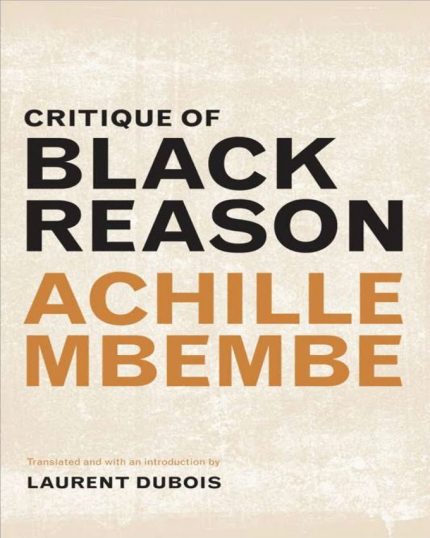
Critique of Black Reason by Achille M...

KShs5,000.00 KShs3,999.00
Brief Summary In Critique of Black Reason eminent critic Achille Mbembe offers a capacious genealogy of the category of Blackness—from the Atlantic slave trade to the present—to critically reevaluate history, racism, and the future of humanity. Mbembe teases out the intellectual consequences of the reality that Europe is no longer the world's center of gravity while mapping the relations among colonialism, slavery, and contemporary financial and extractive capital. Tracing the conjunction of Blackness with the biological fiction of race, he theorizes Black reason as the collection of discourses and practices that equated Blackness with the nonhuman in order to uphold forms of oppression. Mbembe powerfully argues that this equation of Blackness with the nonhuman will serve as the template for all new forms of exclusion. With Critique of Black Reason, Mbembe offers nothing less than a map of the world as it has been constituted through colonialism and racial thinking while providing the first glimpses of a more just future. ISBN:9780822363439 Author:Achille Mbembe

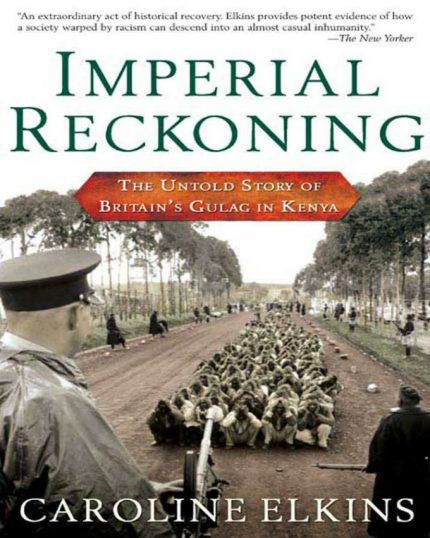
Imperial Reckoning The Untold Story o...

KShs4,000.00 KShs3,800.00
Brief Summary Britain fought in the Second World War to save the world from fascism. But just a few years after the defeat of Hitler came the Mau Mau uprising in Kenya - a mass armed rebellion by the Kikuyu people, demanding the return of their land and freedom. The draconian response of Britain's colonial government was to detain nearly the entire Kikuyu population of one-and-a half-million - to hold them in camps or confine them in villages ringed with barbed wire - and to portray them as sub-human savages. From 1952 until the end of the war in 1960 tens of thousands of detainees - and possibly a hundred thousand or more - died from the combined effects of exhaustion, disease, starvation and systemic physical brutality. Until now these events have remained untold, largely because the British government in Kenya destroyed most of its files. For the last eight years Caroline Elkins has conducted exhaustive research to piece together the story, unearthing reams of documents and interviewing several hundred Kikuyu survivors. Britain's Gulag reveals what happened inside Kenya's detention camps, as well as the efforts to conceal the truth. Now, for the first time, we can understand the full savagery of the Mau Mau war and the ruthless determination with which Britain sought to control its empire. ISBN:9780805080018 Author: Caroline Elkins

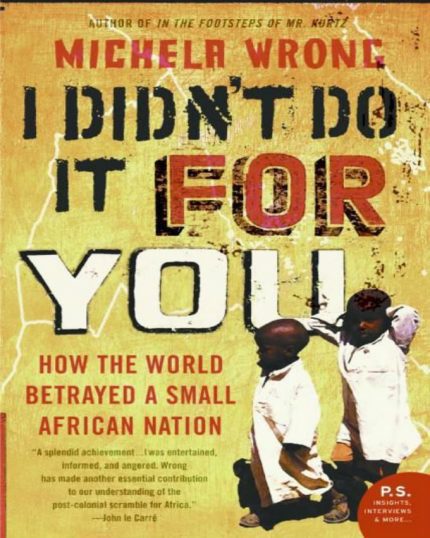
I Did not Do It for You How the World...

KShs2,500.00 KShs2,190.00
Brief Summary Scarred by decades of conflict and occupation, the craggy African nation of Eritrea has weathered the world's longest-running guerrilla war. The dogged determination that secured victory against Ethiopia, its giant neighbor, is woven into the national psyche, the product of cynical foreign interventions. Fascist Italy wanted Eritrea as the springboard for a new, racially pure Roman empire; Britain sold off its industry for scrap; the United States needed a base for its state-of-the-art spy station; and the Soviet Union used it as a pawn in a proxy war. In I Didn't Do It for You, Michela Wrong reveals the breathtaking abuses this tiny nation has suffered and, with a sharp eye for detail and a taste for the incongruous, tells the story of colonialism itself and how international power politics can play havoc with a country's destiny.

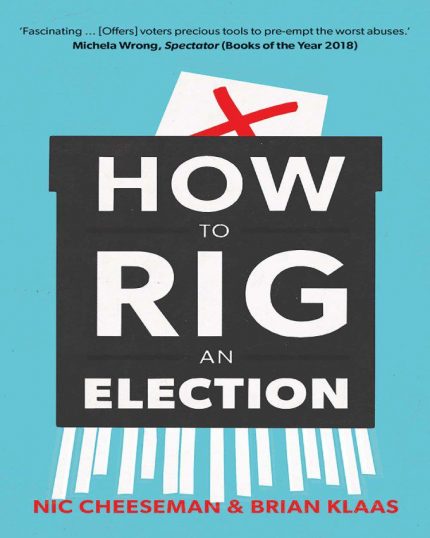
How to Rig an Election by Brian Klaas...

KShs3,390.00 KShs2,990.00
An engrossing analysis of the pseudo-democratic methods employed by despots around the world to retain control contrary to what is commonly believed, authoritarian leaders who agree to hold elections are generally able to remain in power longer than autocrats who refuse to allow the populace to vote. In this engaging and provocative book, Nic Cheeseman and Brian Klaas expose the limitations of national elections as a means of promoting democratization, and reveal the six essential strategies that dictators use to undermine the electoral process in order to guarantee victory for themselves. Based on their firsthand experiences as election watchers and their hundreds of interviews with presidents, prime ministers, diplomats, election officials, and conspirators, Cheeseman and Klaas document instances of election rigging from Argentina to Zimbabwe, including notable examples from Brazil, India, Nigeria, Russia, and the United States--touching on the 2016 election. This eye-opening study offers a sobering overview of corrupted professional politics, while providing fertile intellectual ground for the development of new solutions for protecting democracy from authoritarian subversion.

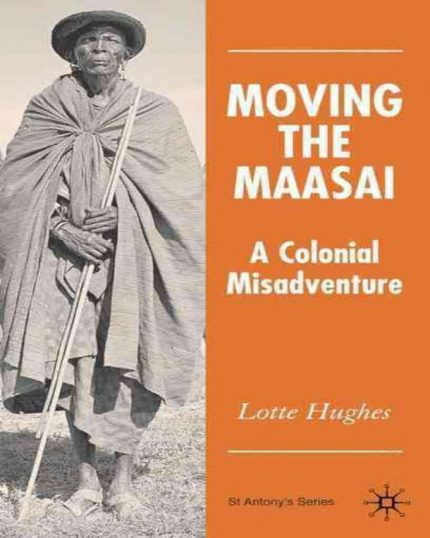
Moving the Maasai A Colonial Misadven...

KShs7,500.00 KShs6,399.00
This is the scandalous story of how the Maasai people of Kenya lost the best part of their land to the British in the 1900s. Drawing upon unique oral testimony and extensive archival research, Hughes describes the intrigues surrounding two enforced moves and the 1913 lawsuit, while explaining why recent events have brought the story full circle.

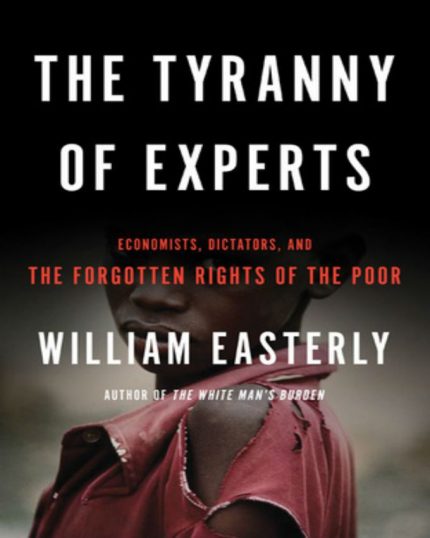
The Tyranny of Experts Economists Dic...

KShs3,290.00 KShs2,999.00
Brief Summary In The Tyranny of Experts, renowned economist William Easterly examines our failing efforts to fight global poverty, and argues that the "expert approved" top-down approach to development has not only made little lasting progress, but has proven a convenient rationale for decades of human rights violations perpetrated by colonialists, postcolonial dictators, and US and UK foreign policymakers seeking autocratic allies. Demonstrating how our traditional antipoverty tactics have both trampled the freedom of the world's poor and suppressed a vital debate about alternative approaches to solving poverty, Easterly presents a devastating critique of the blighted record of authoritarian development. In this masterful work, Easterly reveals the fundamental errors inherent in our traditional approach and offers new principles for Western agencies and developing countries alike: principles that, because they are predicated on respect for the rights of poor people, have the power to end global poverty once and for all.

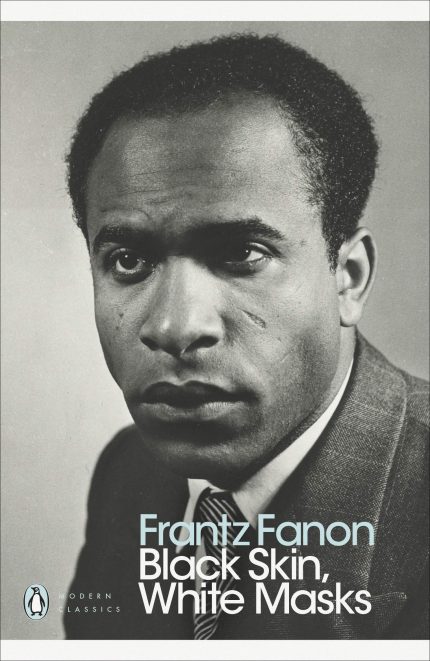
Black Skin White Masks by Frantz Fanon

KShs2,000.00 KShs1,790.00
Few modern voices have had as profound an impact on the black identity and critical race theory as Frantz Fanon, and Black Skin, White Masks represents some of his most important work. Fanon’s masterwork is now available in a new translation that updates its language for a new generation of readers. A major influence on civil rights, anti-colonial, and black consciousness movements around the world, Black Skin, White Masks is the unsurpassed study of the black psyche in a white world. Hailed for its scientific analysis and poetic grace when it was first published in 1952, the book remains a vital force today from one of the most important theorists of revolutionary struggle, colonialism, and racial difference in history.  

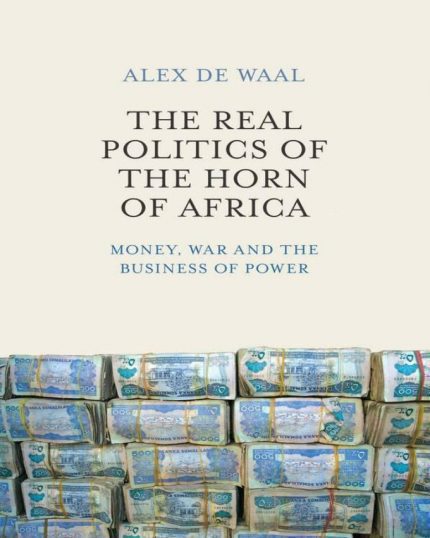
The Real Politics of the Horn of Afri...

KShs5,000.00 KShs4,390.00
Brief Summary The Real Politics of the Horn of Africa delves into the business of politics in the turbulent, war-torn countries of north-east Africa. It is a contemporary history of how politicians, generals and insurgents bargain over money and power, and use of war to achieve their goals. Drawing on a thirty-year career in Sudan, Ethiopia, Eritrea and Somalia, including experience as a participant in high-level peace talks, Alex de Waal provides a unique and compelling account of how these countries’ leaders run their governments, conduct their business, fight their wars and, occasionally, make peace. De Waal shows how leaders operate on a business model, securing funds for their ‘political budgets’ which they use to rent the provisional allegiances of army officers, militia commanders, tribal chiefs and party officials at the going rate. This political marketplace is eroding the institutions of government and reversing state buildingÑ and it is fuelled in large part by oil exports, aid funds and western military assistance for counter-terrorism and peacekeeping. The Real Politics of the Horn of Africa is a sharp and disturbing book with profound implications for international relations, development and peacemaking in the Horn of Africa and beyond. ISBN:9780745695587 Author:Alex de Waal

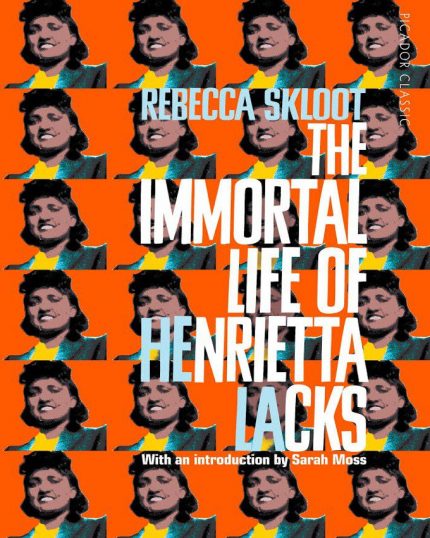
The Immortal Life of Henrietta Lacks ...

KShs1,399.00 KShs1,330.00
Her name was Henrietta Lacks, but scientists know her as HeLa. She was a poor black tobacco farmer whose cells—taken without her knowledge in 1951—became one of the most important tools in medicine, vital for developing the polio vaccine, cloning, gene mapping, and more. Henrietta's cells have been bought and sold by the billions, yet she remains virtually unknown, and her family can't afford health insurance. This phenomenal New York Times bestseller tells a riveting story of the collision between ethics, race, and medicine; of scientific discovery and faith healing; and of a daughter consumed with questions about the mother she never knew.

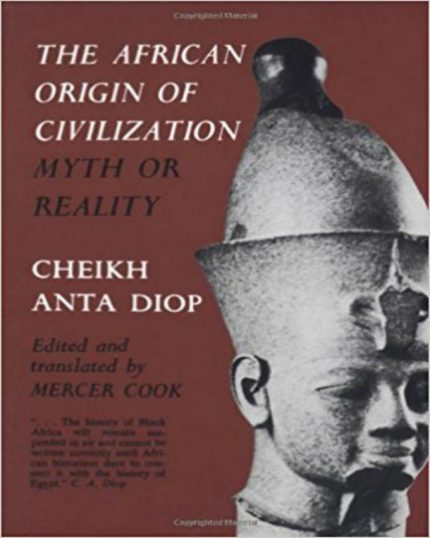
The African Origin of Civilization My...

KShs3,900.00 KShs3,590.00
"The African Origin of Civilization: Myth or Reality” (1974) is a book by Cheikh Anta Diop, a Senegalese Egyptologist. It makes the case that both mankind and civilization started with black people. It argues that Ancient Egypt was largely Black African in race and culture during the first 2,000 years of its civilization. Diop’s model goes like this: 1. Homo sapiens began in Africa and began as black people. It was as black people that they spread over Asia and Europe, taking the place of the Neanderthals. 2. The rise of different races: Over time black people in northern Eurasia became light-skinned and began to look like the people who live there today. 3. Between -3000 and -1500, the region stretching from North Africa through the South West Asia to India became civilized: Egypt, Canaan, Elam, Indus, etc. People were dark-skinned, like they still are today in Ethiopia and southern India. The Bible calls them the sons of Ham. The Greeks saw them as Ethiopians of one sort or other. 4. After -1500 this region has become whiter over time as wave after wave of light-skinned barbarians over thousands of years have come down from the north. In India people were separated into light- and dark-skinned castes. Elsewhere they have mixed more thoroughly. 5. Egyptian civilization spreads north of the Sahara to Western Europe by way of Greece and south of the Sahara to West Africa by way of Nubia.

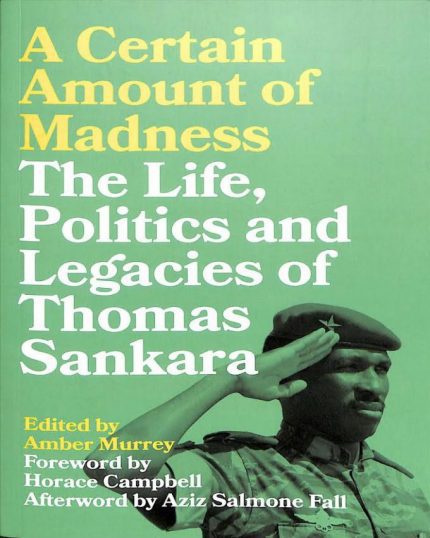
A Certain Amount of Madness The Life ...

KShs7,000.00 KShs6,690.00
Brief Summary Thomas Sankara was one of Africa's most important anti-imperialist leaders of the late 20th Century. His declaration that fundamental socio-political change would require a 'certain amount of madness' drove the Burkinabe Revolution and resurfaced in the country's popular uprising in 2014. This book looks at Sankara's political philosophies and legacies and their relevance today. Analyses of his synthesis of Pan-Africanism and humanist Marxist politics, as well as his approach to gender, development, ecology and decolonization offer new insights to Sankarist political philosophies. Critical evaluations of the limitations of the revolution examine his relationship with labour unions and other aspects of his leadership style. His legacy is revealed by looking at contemporary activists, artists and politicians who draw inspiration from Sankarist thought in social movement struggles today, from South Africa to Burkina Faso. In the 30th anniversary of his assassination, this book illustrates how Sankara's political praxis continues to provide lessons and hope for decolonisation struggles today. ISBN:9780745337579 Author:Amber Murrey

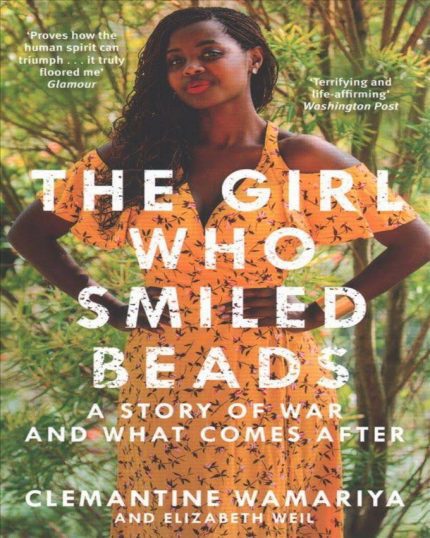
The Girl Who Smiled Beads by Clemanti...

KShs1,990.00
Brief Summary The Girl Who Smiled Beads: A Story of War and What Comes After A riveting story of dislocation, survival, and the power of stories to break or save us. Clemantine Wamariya was six years old when her mother and father began to speak in whispers, when neighbors began to disappear, and when she heard the loud, ugly sounds her brother said were "thunder." In 1994, she and her fifteen-year-old sister, Claire, fled the Rwandan massacre and spent the next six years wandering through seven African countries, searching for safety--perpetually hungry, imprisoned and abused, enduring and escaping refugee camps, finding unexpected kindness, witnessing inhuman cruelty. They did not know whether their parents were dead or alive. When Clemantine was twelve, she and her sister were granted asylum in the United States, where she embarked on another journey--to excavate her past and, after years of being made to feel less than human, claim her individuality. Raw, urgent, and bracingly original, The Girl Who Smiled Beads captures the true costs and aftershocks of war: what is forever destroyed; what can be repaired; the fragility of memory; the disorientation that comes of other people seeing you only as broken--thinking you need, and want, to be saved. But it is about more than the brutality of war. It is about owning your experiences, about the life we create: intricately detailed, painful, beautiful, a work in progress.