Showing all 8 results

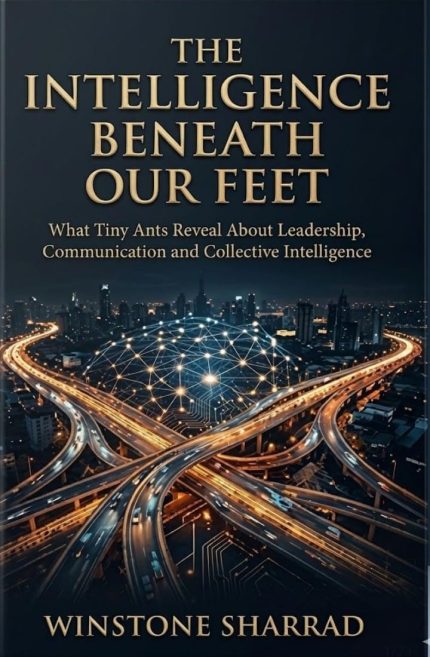
The Intelligence Beneath Our Feet- Wh...

KShs899.00 KShs749.00
The Intelligence Beneath began with a simple observation of tiny black ants following a trail towards a few sugar crystals on a bathroom wall. This everyday encounter led Winstone Sharrad to discover the remarkable ways ants communicate, coordinate, solve problems and adapt without central leadership. Drawing on scientific research, nature, technology, leadership and biblical reflection, the book connects the hidden intelligence of ant colonies to artificial intelligence, robotics and human organisations. It invites readers to look beyond appearances and discover how cooperation, resilience and seemingly simple systems can reveal important lessons about intelligence and the world we inhabit.

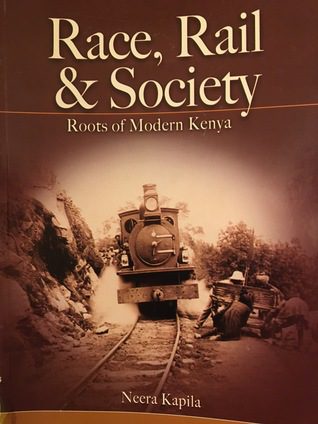
Race, Rail and Society: Roots of Mode...

KShs8,000.00 KShs5,000.00
Race, Rail & Society: Roots of Modern Kenya is a historical work by Kenyan author Neera Kapila that examines how the construction of the Uganda Railway — popularly known as the "Lunatic Express" — shaped the racial, social, and political landscape of what would become modern Kenya. The book explores the deep interplay between three forces: the iron rails laid from Mombasa to Lake Victoria, the racial hierarchies imposed by British colonialism, and the diverse communities that were brought together or set against each other in the process.

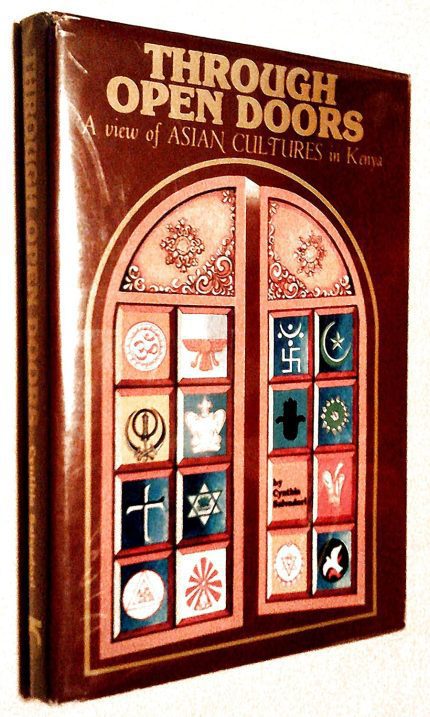
Through Open Doors: A View of Asian C...

KShs15,000.00 KShs10,000.00
Through Open Doors: A View of Asian Cultures in Kenya by Cynthia Salvadori

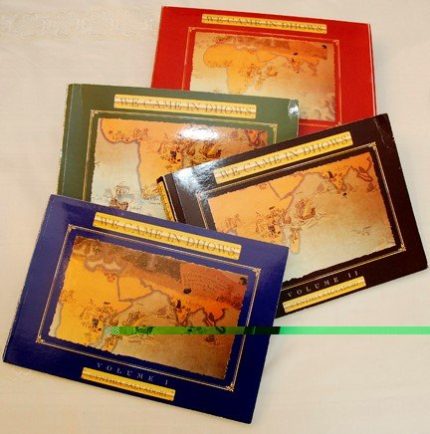
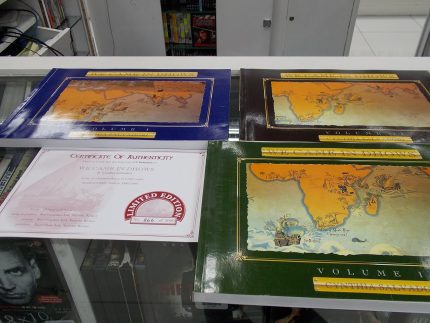
We Came in Dhows by Cynthia Salvadori...

KShs50,000.00 KShs35,000.00
From the “This volume has been designed as a companion to Through Open A View of Asian Cultures in Kenya.

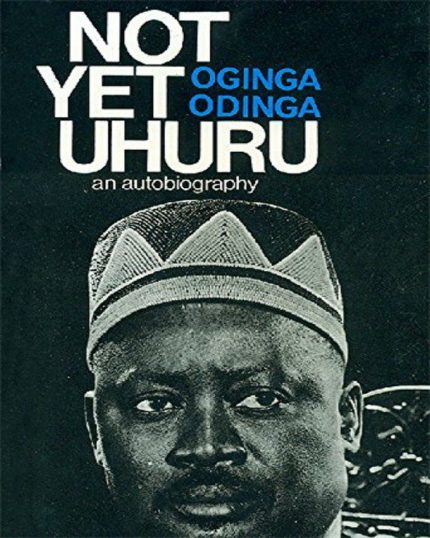
Not yet Uhuru by Jaramogi Oginga Odinga

KShs2,190.00
Not Yet Uhuru gives a vivid and authoritative account of the history of Kenya. In this autobiography, the author counters the Imperial British propaganda machine to distort the history of a nation. From the perspective of a man who was at the centre of the liberation struggle and the making of a new nation, Jaramogi Oginga Odinga deconstructs the fallacious and sloppy historical narratives peddled by propagandists, which are deliberately tailored to vilify the true national heroes and exalt villains. In this seminal literary work, Jaramogi lets his betrayal by Jomo Kenyatta off his chest. He lays bare his frustration with Kenyatta’s turn against fellow Kapenguria six members such as Bildad Kaggia into his primary casualties and enemies. Jaramogi accuses Kenyatta of becoming an Imperial Master stooge and thus justifies his decision to break ranks with the Kenyatta regime. In light of the nationalism spirit, vision, and mission, Jaramogi considered Kenyatta’s change of heart an unforgivable grand betrayal. Not Yet Uhuru is not an ordinary autobiography. It is Jaramogi’s historical gift to Kenyans, Africa in general, and historians the world over. This book is filled with prophetic anecdotes and laden with premonitions, which can stir us from our self-induced political stupor. Not Yet Uhuru demystifies the Kenyatta and Odinga families’ political feud, which has played out for over five decades. This book will help you understand why the sons of the two founding fathers of Kenyan continue to strive to outwit each other in the political arena.

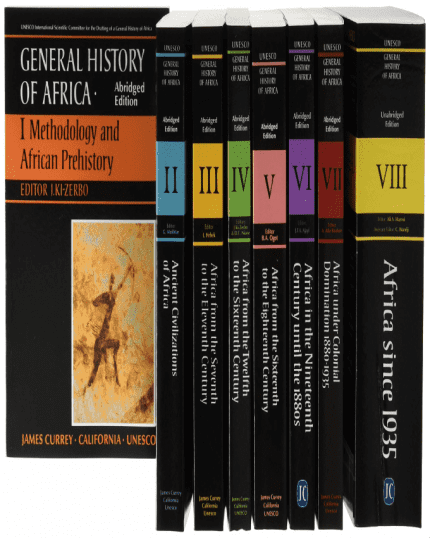
General History of Africa Complete Se...

KShs20,000.00 KShs18,000.00
This set brings together all 8 volumes of the groundbreaking Unesco General History of Africa, which are all now available again as paperbacks. The series demonstrates the importance of African history from earliest pre-history, through the establishment of its ancient civilizations to the placing of Africa in the context of world history. The growth and development of African historiography, once written records became more common, document the triumph of Islam, the extension of trading relations, cultural exchanges and human contacts, as well as the impact and consequences of the slave trade. The European scramble for colonial territory in the 1880s is examined with a focus on the responses of Africans themselves to the economic and social aspects of colonial systems up to 1935, including the growth of anti-colonial movements and the strengthening of African political nationalism. The contributions document how the continent moved from international conflict under foreign domination to struggles for political sovereignty and economic independence. The last (unabridged) volume 8 examines the challenges of nation-building and the socio-cultural changes affecting the newly independent nations.

A history of the Luo Abasuba of Weste...

KShs1,000.00 KShs800.00
Henry Akello Ayot in his PhD thesis titled A History of the Luo Abasuba of Western Kenya from AD 1760-1940 however offers an alternative narrative. The scholar argues that the Abasuba are also to be found in Tanzania and had originated from southern Uganda before migrating to South Nyanza via Mfangano Islands. He casts doubts about Buganda being the origin of the Abasuba, hypothesising that there were some descendants from the Busoga. The oral narrative of Abasuba’s blood linkages with the Kabaka of Buganda are given credence by Siraje Lubwama in an article published by Uganda’s The Observer. The writer retells Kabaka Jjunju’s sexual excesses and the rebellion it triggered in the over two centuries ago. The consequences of this palace lust have had some far reaching effects which are still felt today in Kenya, more than 200 years after the sibling betrayal. According to the Suba folklore, the people banished from the Buganda Kingdom first set foot on Kenyan soil led by Kiboye. One of the few remaining elders conversant with the oral history, Moris Kasuku, Kiboye disembarked his canoe along the shores of Lake Vitoria in Mfangano Island. His brother Witewe who opted to remain in Mfangano Island as the latter proceeded towards Gwassi accompanied Kiboye. " Kiboye had been attracted to the Gwassi hills that were visible from Mfangano Island. The hills, bathed by fluffy misty and enveloped by alluring dense vegetation were irresistible,” explained Kasuku.