Showing 3381–3400 of 23020 results

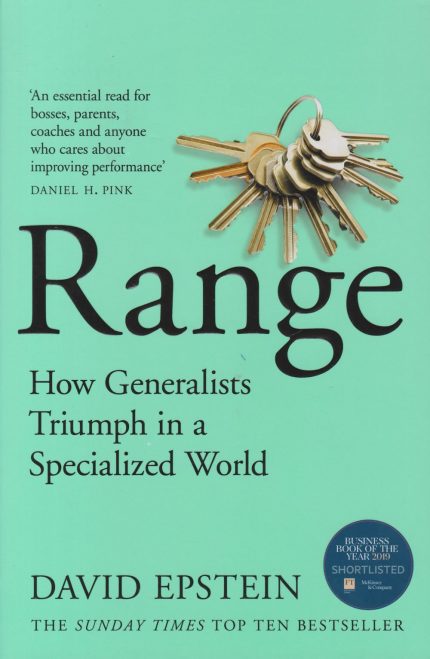
Range – How Generalists Triumph...

KShs1,890.00
In this landmark book, David Epstein shows you that the way to succeed is by sampling widely, gaining a breadth of experiences, taking detours, experimenting relentlessly, juggling many interests in other words, by developing range. By David Epstein

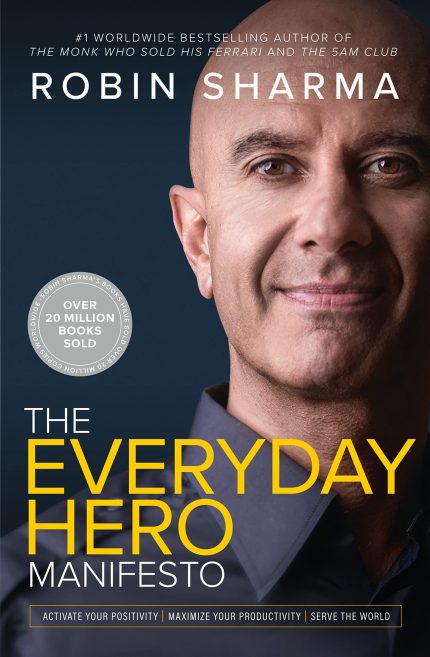
The Everyday Hero Manifesto

KShs2,860.00
Aim for Iconic Rise to LegendaryMake History * The hidden habits used by many of the worlds most creative and successful people to realize their visionary ambitions* Original techniques to turn fear into fuel, problems into power and past troubles... By Robin Sharma

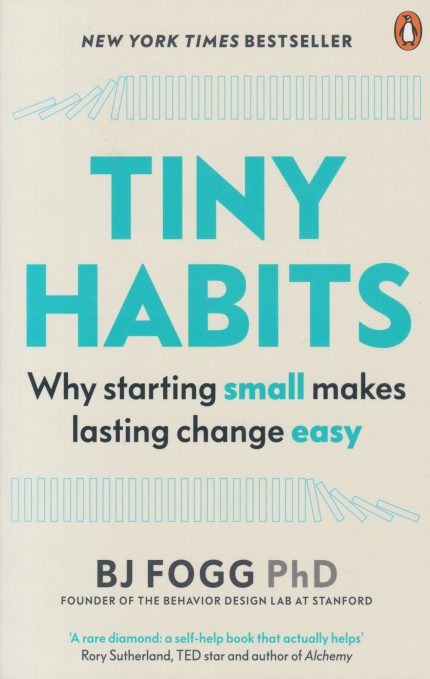
Tiny Habits: Why Starting Small Makes...

KShs1,790.00
Based on twenty years’ research and used by over 60,000 people, BJ Fogg’s Tiny Habits method reveals that the key to changing behavior is the opposite of what youve always been told. It isn’t about willpower: it’s about starting small, and... By BJ Fogg

JKF New Primary English Grade 6 Teach...

KShs1,032.00
The New Primary English Teacher’s Guide Book for Grade 6 has been written for use alongside the learner’s book. It provides relevant additional information for the teacher to ensure that dissemination of knowledge and information to the... By

Noise :A Flaw in Human Judgement (Small)

KShs1,600.00
Imagine that two doctors in the same city give different diagnoses to identical patients - or that two judges in the same court give different sentences to people who have committed matching crimes. Now imagine that the same doctor and the same... By Daniel Kahneman

Salamu Kutoka Kuzimu

KShs954.00
Lakini yeye anataka watu wakubwa zaidi. Anataka kuifanya Afrika nzima iangue kilio na maombolezo ambayo hayajapata kutokea duniani. Na anataka hilo litokee siku moja, saa moja Bendera zote duniani zipepee nusu mlingoti, anasema akichekelea.... By Ben R. Mtobwa

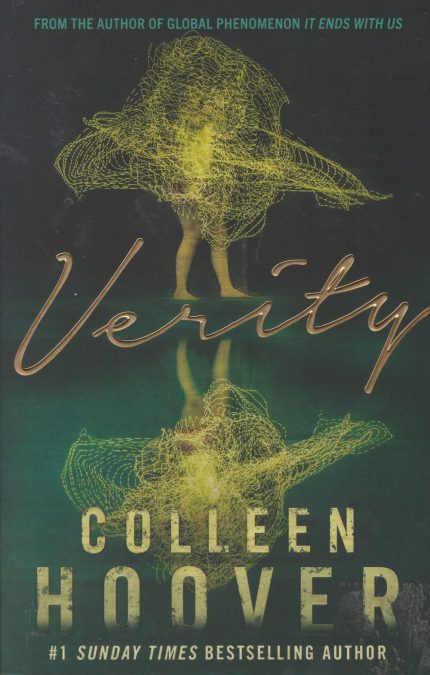
Verity: The thriller that will captur...

KShs1,790.00
Lowen Ashleigh is a struggling writer on the brink of financial ruin when she accepts the job offer of a lifetime. Jeremy Crawford, husband of bestselling author Verity Crawford, has hired Lowen to complete the remaining books in a successful... By Colleen Hoover

Mastering Sounds and Reading Book 1

KShs890.00
Mastering Sounds and Reading book is the most basic English book 1 which introduces English sounds to the learner in a very easy and friendly way. It also imparts reading skills to the learner enabling them master the basics of written and spoken... By Smartzbrains

The How Of Happiness: A Practical Gui...

KShs1,510.00
We all want to be happier it’s what makes Life worth living but few of us know how to go about improving our happiness.Revealing that a startling 40 per cent of our capacity for happiness is within our power to change, Sonja .Lyubomirsky guides... By Sonja Lyubomirsky

Big Girl Goals Guide

KShs2,000.00 KShs1,800.00
The Big Girl Goals Guide is a comprehensive guide perfect for reflection and reliable goal setting.  It contains well thought through question that would help you reflect on the past and envision the future. It's great guide to do with your Girl friends

Hatima Yangu by Matata Hassan

KShs850.00 KShs699.00
Hatima Yangu inamulika masuala muhimu yanayoikumba jamii ya sasa. Uhalisia wa riwaya hii unaifanya kua ya kipekee katika kuhamasisha jamii.

ROLE OF PARENTING IN ACADEMIC EXCELLE...

KShs850.00 KShs800.00
Parenting is a skill and when it comes to assisting our children in improving performance in their education, we need the skill. We also need to learn from one another on how to achieve this parenting milestone and that is the reason why this book is a must read for all the parents.

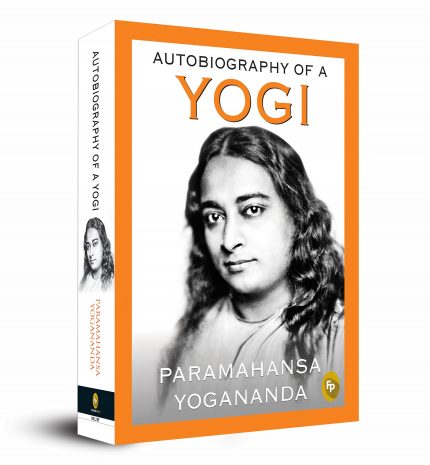
Autobiography of a Yogi by Paramahans...

KShs2,000.00 KShs1,890.00
Inspiring stalwarts like the Beatles, Steve Jobs and Ravi Shankar, Autobiography of a Yogi is an immensely gratifying spiritual read that has altered and enriched the lives of millions across the world, since it was first published in 1946. An originative text that tells the story of Paramhansa Yogananda, this book has been revered for its memorable, incisive and instructive teachings. This spiritual autobiography will take you on an incredible journey of Indian mysticism and spirituality and deliver humbling, comforting truths about life and existence.A book that deserves a place in every home.

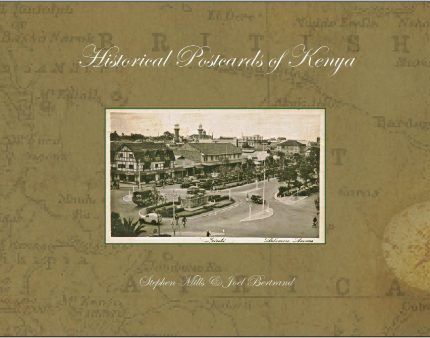
Historical Postcards of Kenya by Step...

KShs5,500.00 KShs4,990.00
Until recently, there was nothing like Kenya. There was only, from Somalia down to the Comoros like the pearls of a Muslim rosary, a series of harbours of flourishing cities. Most were safely situated on islands where sailors had come since Antiquity from as far as Arabia, India and even China to trade and mix with the local African people. This is where the Swahili civilization blossomed. In 1498, Vasco de Gama was the first European to reach the area. Portugal established a few strongholds along the Coast – Fort Jesus in Mombasa is a vestige of this occupation. Soon followed by other European powers, they became yet another actor of the tumultuous power struggles in the area. In the hinterland, since the beginning of times – other people were living, peacefully or at war with each other, interacting, migrating, developing areas and societies, but with limited contacts with the Coast, and the outside world. The Swahili traders – often called Arabs – had for a long time established links with the people of the mainland. Large caravans would be chartered, going farther and farther into the continent, generation after generation. By the beginning of the 19th Century, they would start from Zanzibar and Bagamoyo on the mainland and reach the heart of Africa, the shores of the lakes known today as Tanganyika and Victoria, forming alliances with local chiefs and kings, even controlling large areas as in Kivu. But the traders from Lamu, Malindi, Gedi, and Mombasa could not go that far. If they dared penetrate deep into the continent, fierce fighting herdsmen would attack the intruders, disband the caravans, and make the business a disaster. Nobody ventured farther than a few hundred miles. The only possible route was from Zanzibar, which was followed by the famous explorers such as Stanley, Livingstone and Burton, who “discovered” Africa, and the missionaries who came in their footsteps. They ventured far and, to their amazement, reached a place which they described as a very developed political entity, the Kingdom of Buganda, on the shores of a lake they named Victoria Nyanza. The United Kingdom developed a strong interest in this area and, in alliance with the Kabaka of Buganda, took control over a large territory surrounding his kingdom, establishing the Uganda Protectorate, by 1894. But there was a problem. As agreed in 1886, the usual route to Buganda, from Zanzibar, meant crossing territories henceforth under German domination, Tanganyika, while Britain had been attributed those stretching inwards north of -1° latitude from the Coast up to the Rwenzori Mountains. To gain free access to its Protectorate, Britain decided to cut across from Mombasa and reach the shores of Victoria Nyanza by train. From there, Uganda would easily be reached by boat. Consequently, they decided to build the Uganda Railway, and construction began in 1896. Earlier, the young Lord Lugard, with a significant number of soldiers, Sudanese, Swahili, etc, completed the survey after the military had previously confirmed its feasibility and secured the new route by establishing a series of forts. The trained manpower to build the railway was imported from India, by the thousands. About a quarter of these often forced immigrants remained in the country. Many friends and relatives joined them, turning into shopkeepers in the new towns and the emerging modern villages. The epic of the Uganda Railway building is narrated in a novel, “The Lunatic Express”, as it was nicknamed. In 1899, as the construction was progressing towards the Lake, it was decided to establish a rail depot and workshops in a place the Maasai called Nairobi, located before the railhead reached the Big Escarpment. The Uganda Railway reached Port Florence, today called Kisumu, in December 1901. Meanwhile, Nairobi was growing, as the main stop on the long railroad. The British government, which had taken responsibility for the territory known as British East Africa (B.E.A.), decided in 1902 to transfer to B.E.A. the region called Kavirondo, bordering the Lake from Mount Elgon to Homa Bay, previously part of the Uganda Protectorate, so that the whole railway line, the backbone of the territory, could be under the same administration. In 1905, it was decided to transfer the capital from Mombasa to Nairobi where the headquarters of the Uganda Railway was already situated. Yet, as can be seen on a map of 1906, the name of Nairobi does not even appear. From there, a new political entity emerged. From the beginning of the century, British East Africa developed and took shape. Many immigrants arrived, white farmers from the U.K. and South Africa, Asians from British India, missionaries covering the country with churches and schools while the local populations, by will or whip, were introduced into the new world modernity. Most of the postcards here date from this period, the first quarter of the 20th century. Many buildings were erected, urban centres appeared and grew, and new ways of life were adopted. Then, in 1920, a major reorganisation was decided, B.E.A. becoming the Kenya colony, but for a strip of land along the Coast, where sovereignty was shared with the Sultan of Zanzibar, and which became the Kenya Protectorate. That part of the British Empire was named after the highest mountain in the country, Mt Kenya. The name was kept after Independence. This is how postcards tell the story of a nation in the making.

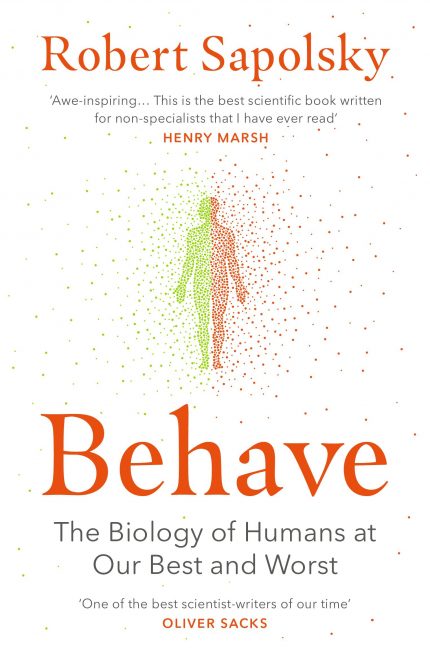
Behave: The Biology of Humans at Our ...

KShs2,900.00 KShs2,590.00
Sapolsky's storytelling concept is delightful but it also has a powerful intrinsic logic: he starts by looking at the factors that bear on a person's reaction in the precise moment a behavior occurs, and then hops back in time from there, in stages, ultimately ending up at the deep history of our species and its evolutionary legacy. And so the first category of explanation is the neurobiological one. A behavior occurs--whether an example of humans at our best, worst, or somewhere in between. What went on in a person's brain a second before the behavior happened? Then Sapolsky pulls out to a slightly larger field of vision, a little earlier in time: What sight, sound, or smell caused the nervous system to produce that behavior? And then, what hormones acted hours to days earlier to change how responsive that individual is to the stimuli that triggered the nervous system? By now he has increased our field of vision so that we are thinking about neurobiology and the sensory world of our environment and endocrinology in trying to explain what happened. Sapolsky keeps going: How was that behavior influenced by structural changes in the nervous system over the preceding months, by that person's adolescence, childhood, fetal life, and then back to his or her genetic makeup? Finally, he expands the view to encompass factors larger than one individual. How did culture shape that individual's group, what ecological factors millennia old formed that culture? And on and on, back to evolutionary factors millions of years old. The result is one of the most dazzling tours d'horizon of the science of human behavior ever attempted, a majestic synthesis that harvests cutting-edge research across a range of disciplines to provide a subtle and nuanced perspective on why we ultimately do the things we do...for good and for ill. Sapolsky builds on this understanding to wrestle with some of our deepest and thorniest questions relating to tribalism and xenophobia, hierarchy and competition, morality and free will, and war and peace. Wise, humane, often very funny, Behave is a towering achievement, powerfully humanizing, and downright heroic in its own right.

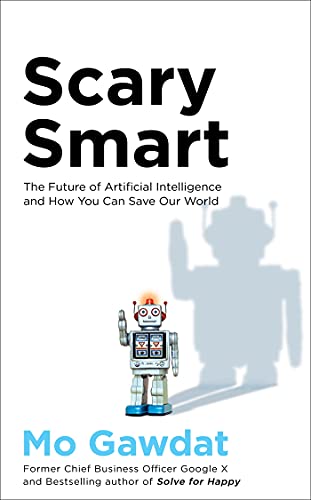
Scary Smart: The Future of Artificial...

KShs2,000.00 KShs1,890.00
Technology is putting our humanity at risk to an unprecedented degree. This book is not for engineers who write the code or the policy makers who claim they can regulate it. This is a book for you. Because, believe it or not, you are the only one that can fix it. – Mo Gawdat Artificial intelligence is smarter than humans. It can process information at lightning speed and remain focused on specific tasks without distraction. AI can see into the future, predicting outcomes and even use sensors to see around physical and virtual corners. So why does AI frequently get it so wrong? The answer is us. Humans design the algorithms that define the way that AI works, and the processed information reflects an imperfect world. Does that mean we are doomed? In Scary Smart, Mo Gawdat, the internationally bestselling author of Solve for Happy, draws on his considerable expertise to answer this question and to show what we can all do now to teach ourselves and our machines how to live better. With more than thirty years' experience working at the cutting-edge of technology and his former role as chief business officer of Google [X], no one is better placed than Mo Gawdat to explain how the Artificial Intelligence of the future works. By 2049 AI will be a billion times more intelligent than humans. Scary Smart explains how to fix the current trajectory now, to make sure that the AI of the future can preserve our species. This book offers a blueprint, pointing the way to what we can do to safeguard ourselves, those we love and the planet itself.

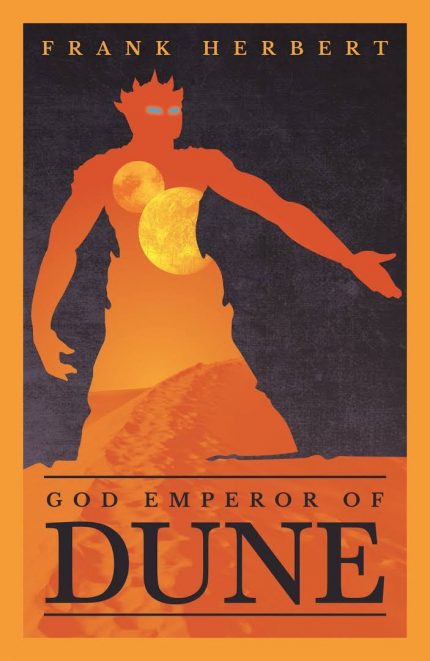
God Emperor of Dune (Dune Chronicles,...

KShs2,000.00 KShs1,890.00
Millennia have passed on Arrakis, and the once-desert planet is green with life. Leto Atreides, the son of the world’s savior, the Emperor Paul Muad’Dib, is still alive but far from human. To preserve humanity’s future, he sacrificed his own by merging with a sandworm, granting him near immortality as God Emperor of Dune for the past thirty-five hundred years. Leto’s rule is not a benevolent one. His transformation has made not only his appearance but his morality inhuman. A rebellion, led by Siona, a member of the Atreides family, has risen to oppose the despot’s rule. But Siona is unaware that Leto’s vision of a Golden Path for humanity requires her to fulfill a destiny she never wanted—or could possibly conceive

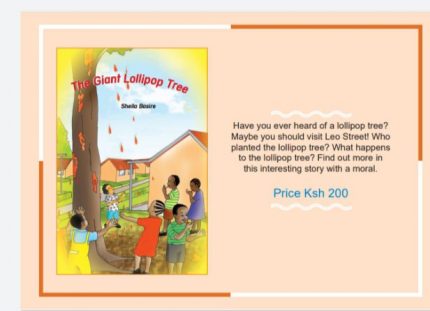
The Giant Lollipop Tree by Emmah Achieng

KShs200.00 KShs140.00
The Giant Lollipop Tree is a story book for children.