Showing 781–800 of 1357 results

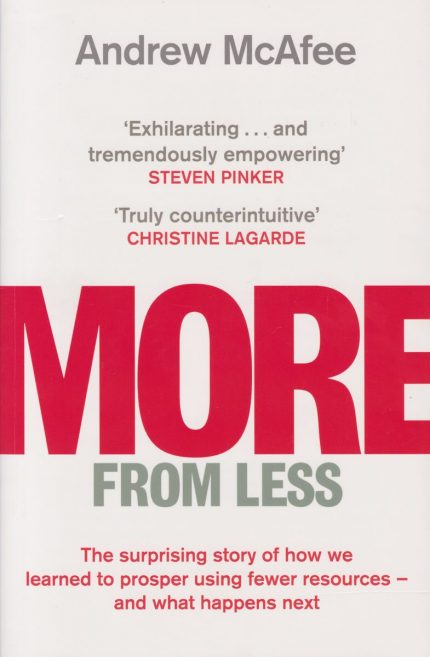
More from less by Andrew McAfree

KShs2,200.00 KShs1,990.00
This turn of events invalidates the predictions of overpopulation alarmists and those who argue we need to drastically reduce our conception of how much is enough. What has made this turnabout possible? One thing primarily: the collaboration between technology and capitalism. Capitalism’s quest for higher profits is a quest for lower costs; materials and resources are expensive, and technological progress allows companies to use fewer of them even as they grow their markets. Modern smartphones take the place of cameras, GPS units, landline telephones, answering machines, tape recorders and alarm clocks. Precision agriculture lets farmers harvest larger crops while using less water and fertiliser. Passenger cars get lighter, which makes them cheaper to produce and more fuel-efficient. This means that, even though there’ll be more people in the future, and they’ll be wealthier and consume more, they’ll do so while using fewer natural resources. For the first time ever, and for all time to come, humans will live more prosperous lives while treading more lightly on the Earth. The future is not all bright, cautions McAfee. He warns of issues that still haven’t been fully solved. (For example, our oceans are still vulnerable to overfishing; global warming is still running largely unchecked; and even as 'dematerialisation' - the reduced need for raw materials - improves our global situation, power and resources are getting more concentrated. That creates an even larger division between the haves and the have nots.)

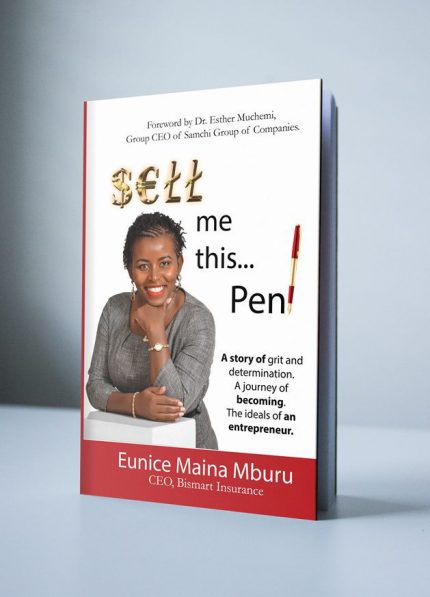
Sell Me This Pen by Eunice Maina Mburu

KShs2,000.00 KShs1,500.00
Nothing happens until someone sells something, You cannot get that job until you sell your skills, you cannot build a business until you sell your products and services. Selling is the key skill that separates ‘Wannapreneurs’ from accomplished entrepreneurs. Eunice Maina weaves a story of fortitude, grit, desire to succeed, and persistence that sees her grow in the insurance industry to be a celebrated award-winning sales agent and entrepreneur. Grow from an average salesperson to a sales superstar through the distilled lessons in, Sell me this… Pen.

Beyond Candlesticks: New Japanese Cha...

KShs12,000.00 KShs11,000.00
From the Father of Candlesticks--penetrating new Japanese techniques for forecasting and tracking market prices and improving market timing Steve Nison has done it again. The man who revolutionized technical analysis by introducing Japanese candlestick charting techniques to Western traders is back--this time with a quartet of powerful Japanese techniques never before published or used in the West. Stunningly effective on their own, these new techniques pack an even greater wallop when teamed up with traditional trading, investing, or hedging strategies, and Steve Nison shows you how to do it. Beyond Candlesticks provides step-by-step instructions, detailed charts and graphs, and clear-cut guidance on tracking and analyzing results--everything you need to pick up these sharp new tools and take your place at the cutting edge of technical analysis. Critical praise for Steve Nison's first book . . destined to become the classic reference on the subject. --Charles Lebeau and David Lucas Technical Trader's Bulletin I believe Steve Nison's new candlestick book is destined to become one of the truly great books for this time period.. Whether you trade futures, commodities, or equities, day trade or hold positions overnight, this book is a must. --Lee Siegfried Investor's Library, Data Broadcasting Corp. It is hard to be too effusive about the quality of NiSon's work . This is clearly one of the best investment books ever written in terms of covering a subject with pedagogical ability and writing skill. The organization is impeccable . reading it was a pleasure. --Commodity Traders Consumer Report

How to speak how to listen by Mortime...

KShs2,500.00 KShs1,850.00
Drawing on decades of experience as an educator and philosopher, Mortimer J. Adler gives a short course in effective communication, invaluable for salespeople, negotiators, teachers, and families seeking better communication among themselves.

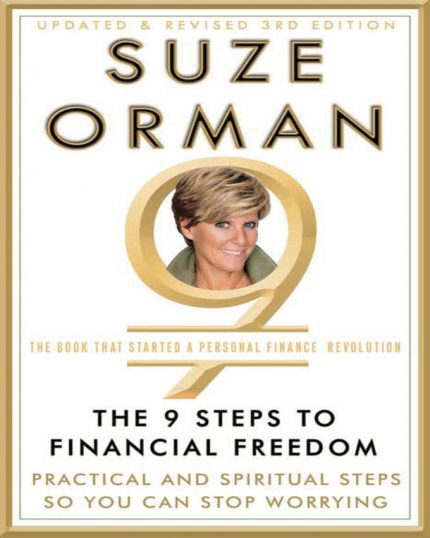
The 9 Steps to Financial Freedom by S...

KShs1,990.00 KShs1,750.00
With a new preface that reflects personal finance today, New York Times bestselling author and leading financial expert Suze Orman shares a refreshed version of The 9 Steps to Financial Freedom, the revolutionary, groundbreaking classic that changed the way we think, feel, and act about money. Unlike traditional money management books, 9 Steps approaches money from an emotional and spiritual point of view, emphasizing that fear, shame, and anger are the main obstacles to wealth. Now, in these turbulent economic times, Suze’s life-changing message from fifteen years ago is more important than ever. This reissued version of shows you: · That debt is bondage and how best to break free of it · Why the less you have, the more you need a revocable living trust · How to find the best financial adviser (look in the mirror!) · How to avoid being taken advantage of when buying life insurance · Which retirement accounts make sense and which do not In nine simple steps, you’ll learn all you need to know to be responsible with and respectful of the money you have and the money you don’t have. Embrace Suze’s groundbreaking philosophy—that you are worth more than your money—and understand the true meaning of wealth so you can live a life without regrets. If you do not have control over the money in your life right now, Suze’s nine steps to financial freedom are for you.

Cybersecurity: The Insights You Need ...

KShs3,000.00 KShs2,499.00
No data is completely safe. Cyberattacks on companies and individuals are on the rise and growing not only in number but also in ferocity. And while you may think your company has taken all the precautionary steps to prevent an attack, no individual, company, or country is safe. Cybersecurity can no longer be left exclusively to IT specialists. Improving and increasing data security practices and identifying suspicious activity is everyone's responsibility, from the boardroom to the break room. Cybersecurity: The Insights You Need from Harvard Business Review brings you today's most essential thinking on cybersecurity, from outlining the challenges to exploring the solutions, and provides you with the critical information you need to prepare your company for the inevitable hack. The lessons in this book will help you get everyone in your organization on the same page when it comes to protecting your most valuable assets. Business is changing. Will you adapt or be left behind? Get up to speed and deepen your understanding of the topics that are shaping your company's future with the Insights You Need from Harvard Business Review series. Featuring HBR's smartest thinking on fast-moving issues--blockchain, cybersecurity, AI, and more--each book provides the foundational introduction and practical case studies your organization needs to compete today and collects the best research, interviews, and analysis to get it ready for tomorrow. You can't afford to ignore how these issues will transform the landscape of business and society. The Insights You Need series will help you grasp these critical ideas--and prepare you and your company for the future.

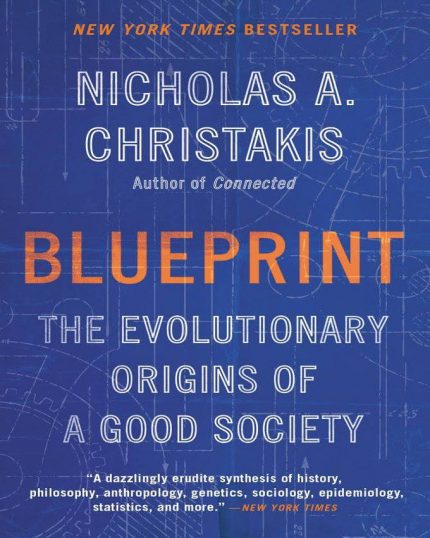
Blueprint: The Evolutionary Origins o...

KShs3,890.00 KShs3,399.00
For too long, scientists have focused on the dark side of our biological heritage: our capacity for aggression, cruelty, prejudice, and self-interest. But natural selection has given us a suite of beneficial social features, including our capacity for love, friendship, cooperation, and learning. Beneath all of our inventions -- our tools, farms, machines, cities, nations -- we carry with us innate proclivities to make a good society. In Blueprint, Nicholas A. Christakis introduces the compelling idea that our genes affect not only our bodies and behaviors, but also the ways in which we make societies, ones that are surprisingly similar worldwide. With many vivid examples -- including diverse historical and contemporary cultures, communities formed in the wake of shipwrecks, commune dwellers seeking utopia, online groups thrown together by design or involving artificially intelligent bots, and even the tender and complex social arrangements of elephants and dolphins that so resemble our own -- Christakis shows that, despite a human history replete with violence, we cannot escape our social blueprint for goodness. In a world of increasing political and economic polarization, it's tempting to ignore the positive role of our evolutionary past. But by exploring the ancient roots of goodness in civilization, Blueprint shows that our genes have shaped societies for our welfare and that, in a feedback loop stretching back many thousands of years, societies are still shaping our genes today.

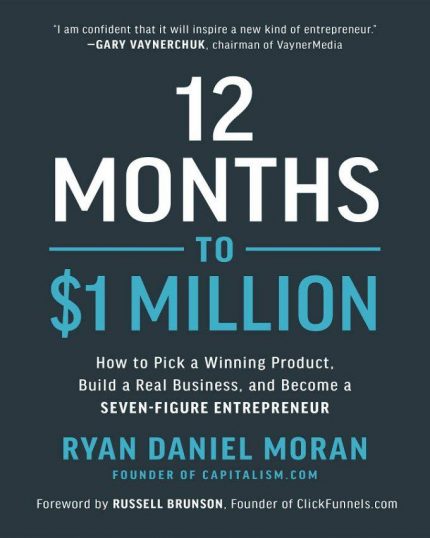
12 Months to $1 Million: How to Pick ...

KShs4,500.00 KShs3,990.00
Brief Summary This is the road map to a seven-figure business . . . in one year or less The word “entrepreneur” is today’s favorite buzzword, and any aspiring business owner has likely encountered an overwhelming number of so-called “easy paths to success.” The truth is that building a real, profitable, sustainable business requires thousands of hours of commitment, grit, and hard work. It’s no wonder why more than half of new businesses close within six years of opening, and fewer than 5 percent will ever earn more than $1 million annually. 12 Months to $1 Million condenses the startup phase into one fast-paced year that has helped hundreds of new entrepreneurs hit the million-dollar level by using an exclusive and foolproof formula. By cutting out the noise and providing a clear and proven plan, this roadmap helps even brand-new entrepreneurs make decisions quickly, get their product up for sale, and launch it to a crowd that is ready and waiting to buy. This one-year plan will guide you through the three stages to your first $1 million: The Grind (Months 0-4): This step-by-step plan will help you identify a winning product idea, target customers that are guaranteed to buy, secure funding, and take your first sale within your first four months. The Growth (Months 5 - 8): Once you’re in business, you will discover how to use cheap and effective advertising strategies to get your product to at least 25 sales per day, so you can prove you have a profitable business. The Gold (Months 9-12): It’s time to establish series of products available for sale, until you are averaging at least 100 sales per day, getting you closer to the million-dollar mark every single day. Through his training sessions at Capitalism.com, Ryan Daniel Moran has helped new and experienced entrepreneurs launch scalable and sustainable online businesses. He’s seen more than 100 entrepreneurs cross the seven-figure barrier, many of whom go on to sell their businesses. If your goal is to be a full-time entrepreneur, get ready for one chaotic, stressful, and rewarding year. If you have the guts to complete it, you will be the proud owner of a million-dollar business and be in a position to call your own shots for life.

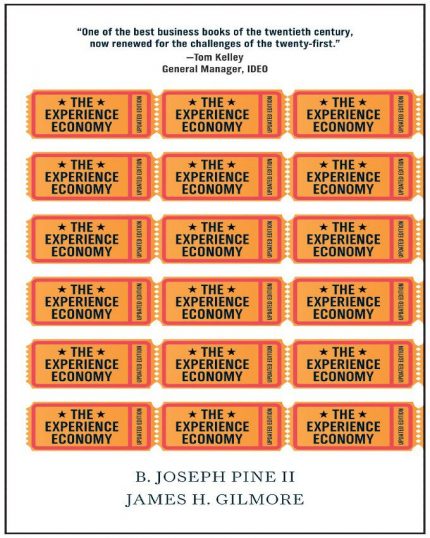
The Experience Economy by B. Joseph P...

KShs3,500.00 KShs2,999.00
Brief Summary In 1999, Joseph Pine and James Gilmore offered this idea to readers as a new way to think about connecting with customers and securing their loyalty. As a result, their book The Experience Economy is now a classic, embraced by readers and companies worldwide and read in more than a dozen languages. And though the world has changed in many ways since then, the way to a customer's heart has not. In fact, the idea of staging experiences to leave a memorable—and lucrative—impression is now more relevant than ever. With an ongoing torrent of brands attacking consumers from all sides, how do you make yours stand out? Welcome to the new Experience Economy. With this fully updated edition of the book, Pine and Gilmore make an even stronger case that experience is the missing link between a company and its potential audience. It offers new rich examples—including the U.S. Army, Heineken Experience, Autostadt, Vinopolis, American Girl Place, and others—to show fresh approaches to scripting and staging compelling experiences, while staying true to the very real economic conditions of the day.

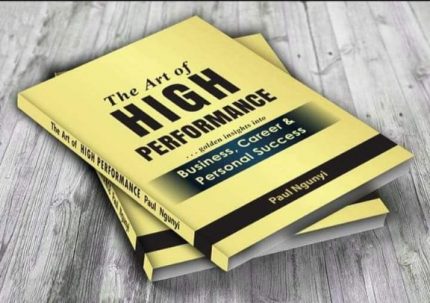
The Art of High Performance by Mary W...

KShs1,500.00 KShs1,000.00
Brief Summary The principal pursuit of every human being is being happy and successful. Without the two, life becomes distressful and to an extent, meaningless. The big question then becomes; are you happy with your life now? If you are not as happy as you would like, what can you do today to become happier and more fulfilled in life?

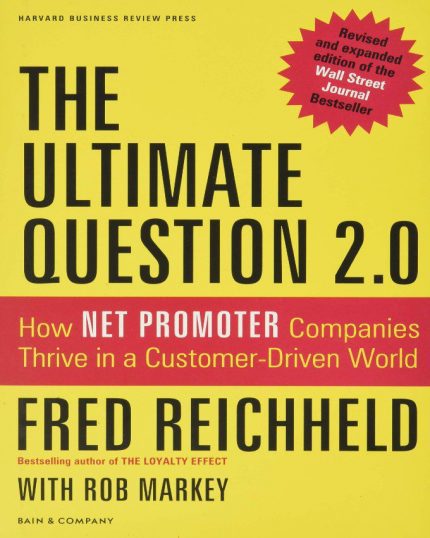
The Ultimate Question 2.0 : How Net P...

KShs5,500.00 KShs4,399.00
Brief Summary In the first edition of this landmark book, business loyalty guru Fred Reichheld revealed the question most critical to your company’s future: Would you recommend us to a friend?” By asking customers this question, you identify detractors, who sully your firm’s reputation and readily switch to competitors, and promoters, who generate good profits and true, sustainable growth. You also generate a vital metric: your Net Promoter Score. Since the book was first published, Net Promoter has transformed companies, across industries and sectors, constituting a game-changing system and ethos that rivals Six Sigma in its power. In this thoroughly updated and expanded edition, Reichheld, with Bain colleague Rob Markey, explains how practitioners have built Net Promoter into a full-fledged management system that drives extraordinary financial and competitive results. With his trademark clarity, Reichheld:
  • Defines the fundamental concept of Net Promoter, explaining its connection to your company’s growth and sustained success
  • Presents the closed-loop feedback process and demonstrates its power to energize employees and delight customers
  • Shares new and compelling stories of companies that have transformed their performance by putting Net Promoter at the center of their business
Practical and insightful, The Ultimate Question 2.0 provides a blueprint for long-term growth and success.

The Man Who Stole Himself: The Slave ...

KShs4,000.00 KShs3,499.00
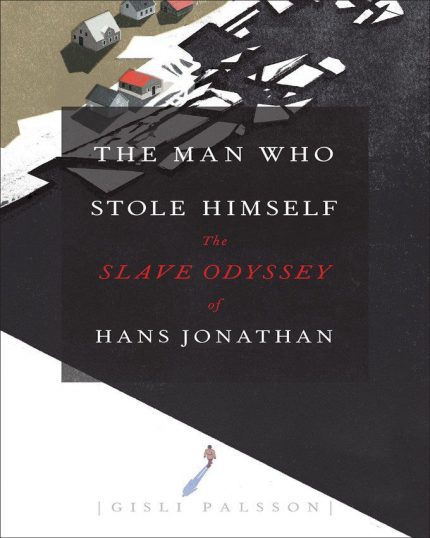
Brief Summary The island nation of Iceland is known for many things—majestic landscapes, volcanic eruptions, distinctive seafood—but racial diversity is not one of them. So the little-known story of Hans Jonathan, a free black man who lived and raised a family in early nineteenth-century Iceland, is improbable and compelling, the stuff of novels. In The Man Who Stole Himself, Gisli Palsson lays out the story of Hans Jonathan (also known as Hans Jónatan) in stunning detail. Born into slavery in St. Croix in 1784, Hans was taken as a slave to Denmark, where he eventually enlisted in the navy and fought on behalf of the country in the 1801 Battle of Copenhagen. After the war, he declared himself a free man, believing that he was due freedom not only because of his patriotic service, but because while slavery remained legal in the colonies, it was outlawed in Denmark itself. He thus became the subject of one of the most notorious slavery cases in European history, which he lost. Then Hans ran away—never to be heard from in Denmark again, his fate unknown for more than two hundred years. It’s now known that Hans fled to Iceland, where he became a merchant and peasant farmer, married, and raised two children. Today, he has become something of an Icelandic icon, claimed as a proud and daring ancestor both there and among his descendants in America. The Man Who Stole Himself brilliantly intertwines Hans Jonathan’s adventurous travels with a portrait of the Danish slave trade, legal arguments over slavery, and the state of nineteenth-century race relations in the Northern Atlantic world. Throughout the book, Palsson traces themes of imperial dreams, colonialism, human rights, and globalization, which all come together in the life of a single, remarkable man. Hans literally led a life like no other. His is the story of a man who had the temerity—the courage—to steal himself.

Whose Reality Counts? Putting the Fir...

KShs3,990.00 KShs3,199.00
Brief Summary In this sequel to Rural Development: Putting the last first Robert Chambers argues that central issues in development have been overlooked, and that many past errors have flowed from domination by those with power. Development professionals now need new approaches and methods for interacting, learning and knowing. Through analysing experience - of past mistakes and myths, and of the continuing methodological revolution of PRA (participatory rural appraisal) - the author points towards solutions. In many countries, urban and rural people alike have shown an astonishing ability to express and analyse their local, complex and diverse realities which are often at odds with the top-down realities imposed by professionals. The author argues that personal, professional and institutional change is essential if the realities of the poor are to receive greater recognition. Self-critical awareness and changes in concepts, values, methods and behaviour must be developed to explore the new high ground of participation and empowerment. Whose Reality Counts? presents a radical challenge to all concerned with development, whether practitioners, researchers or policy-makers, in all organizations and disciplines, and at all levels from fieldworkers to the heads of agencies. With its thrust of putting the first last it presents a new, exciting and above all practical agenda for future development which cannot be ignored. BAI Catalogue: The methods and approaches of Participatory Rural Appraisal (PRA) comprise the core of this book. But PRA has evolved and spread in many directions and into many areas. The author argues that PRA has come to affect much development practice, professionalism, research, education, training, management and many institutions.  

Corporate Culture: Getting It Right b...

KShs2,590.00 KShs2,099.00
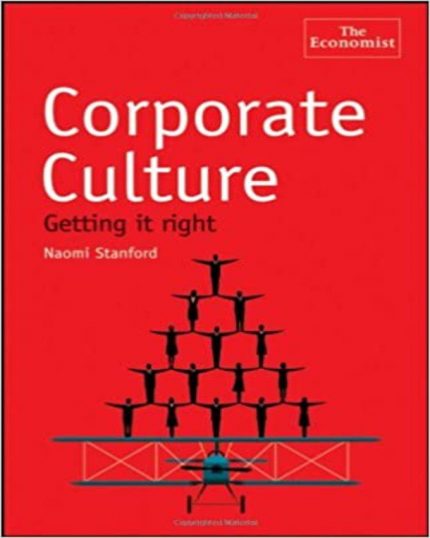
Brief Summary How corporate culture affects a company's long-term success Today, more and more managers are learning that an organization's culture matters, and are, therefore, putting greater emphasis improving their company culture. The Economist's Organization Culture: Getting It Right can help. In Organization Culture, Naomi Stanford provides a road map for managers who want to: understand the power corporate culture has on a company's success; understand, define, position, and measure their organization's culture; avoid the common and costly mistakes of "culture change" programmes; and, keep their culture dynamic, responsive and resourceful. The book
  • Provides case studies on the business culture of companies like Google, IKEA, eBay, Wal-Mart, Microsoft, and Lehman Brothers
  • Describes cultural patterns within organizations, and offers useful exercises on shaping a positive corporate culture
  • Other titles by Stanford: Guide to Organization Design: Creating High-Performing and Adaptable Enterprises
Organization Culture addresses all facets of company culture, offering managers commonsense, practical, realistic and pragmatic approaches that will help them improve all aspects of how they do business, regardless of the type of business they're in.

The Bank That Lived a Little: Barclay...

KShs2,500.00 KShs1,899.00
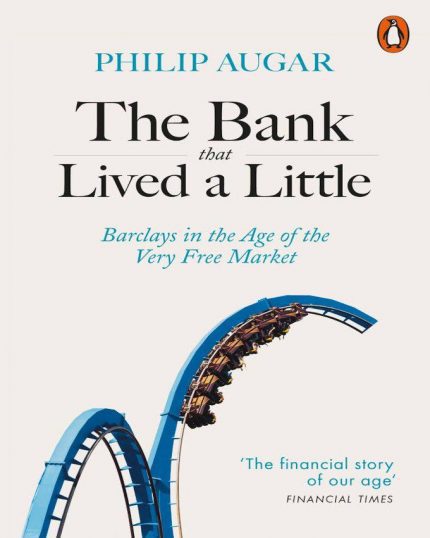
Brief Summary Barcalys is one of the biggest names on the British high street. Based on unparalleled access to those involved, and told with thrilling pace and drama, Barclays- The Bank that Lived a Little is the story of Barclays since Big Bang, Britain's financial services revolution of 1986. Philip Augar describes in detail three decades of boardroom intrigue driven by greed, ambition and a love of power, and by shifting alliances between rival camps - one desperate for Barclays to join the top table of global banks, the other preferring a smaller domestic role. But this is much more than a corporate thriller and chronicle of personal feuds- Augar shows that Barclays' experiences are also a paradigm for Britain's social and economic life since the mid-80s. The financial services revolution saw the City move from the edge of the economy to its very centre, creating unprecedented prosperity and then blowing it all away, making governments' reputations and then leaving them in ruins. The decade of austerity, the rise and fall of governments, the leveraged society, and the winner-takes-all mentality can all be traced to the influence of banks such as Barclays. Augar's book tells this extraordinary story from the perspective of many of the participants and also of those affected by the grip they came to have on Britain.

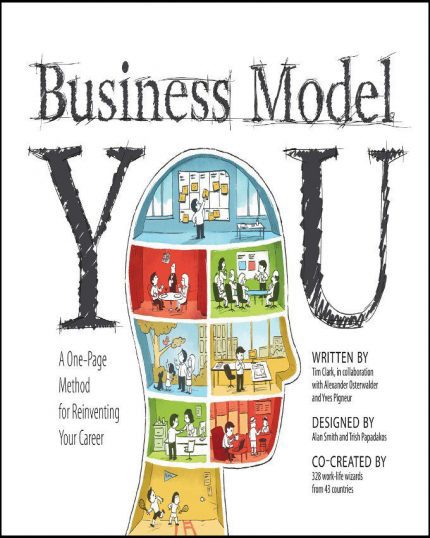
Business Model You: A One-Page Method...

KShs4,000.00 KShs3,499.00
Brief Summary A one-page tool to reinvent yourself and your career. The global bestseller Business Model Generation introduced a unique visual way to summarize and creatively brainstorm any business or product idea on a single sheet of paper. Business Model You uses the same powerful one-page tool to teach readers how to draw "personal business models," which reveal new ways their skills can be adapted to the changing needs of the marketplace to reveal new, more satisfying, career and life possibilities. Produced by the same team that created Business Model Generation, this book is based on the Business Model Canvas methodology, which has quickly emerged as the world's leading business model description and innovation technique. This book shows readers how to:
  • Understand business model thinking and diagram their current personal business model
  • Understand the value of their skills in the marketplace and define their purpose
  • Articulate a vision for change
  • Create a new personal business model harmonized with that vision, and most important, test and implement the new model.
When you implement the one-page tool from Business Model You, you create a game-changing business model for your life and career.

What’s Your Problem?: To Solve ...

KShs5,000.00 KShs4,599.00
Brief Summary Are you solving the right problems? Have you or your colleagues ever worked hard on something, only to find out you were focusing on the wrong problem entirely? Most people have. In a survey, 85 percent of companies said they often struggle to solve the right problems. The consequences are severe: Leaders fight the wrong strategic battles. Teams spend their energy on low-impact work. Startups build products that nobody wants. Organizations implement "solutions" that somehow make things worse, not better. Everywhere you look, the waste is staggering. As Peter Drucker pointed out, there's nothing more dangerous than the right answer to the wrong question. There is a way to do better. The key is reframing, a crucial, underutilized skill that you can master with the help of this book. Using real-world stories and unforgettable examples like "the slow elevator problem," author Thomas Wedell-Wedellsborg offers a simple, three-step method - Frame, Reframe, Move Forward - that anyone can use to start solving the right problems. Reframing is not difficult to learn. It can be used on everyday challenges and on the biggest, trickiest problems you face. In this visually engaging, deeply researched book, you’ll learn from leaders at large companies, from entrepreneurs, consultants, nonprofit leaders, and many other breakthrough thinkers. It's time for everyone to stop barking up the wrong trees. Teach yourself and your team to reframe, and growth and success will follow.

The Splendid and the Vile: A Saga of ...

KShs3,000.00 KShs2,299.00
Brief Summary On Winston Churchill's first day as prime minister, Adolf Hitler invaded Holland and Belgium. Poland and Czechoslovakia had already fallen, and the Dunkirk evacuation was just two weeks away. For the next twelve months, Hitler would wage a relentless bombing campaign, killing 45,000 Britons. It was up to Churchill to hold his country together and persuade President Franklin Roosevelt that Britain was a worthy ally--and willing to fight to the end. In The Splendid and the Vile, Erik Larson shows how Churchill taught the British people "the art of being fearless." It is a story of political brinkmanship, but it's also an intimate domestic drama, set against the backdrop of Churchill's prime-ministerial country home, Chequers; his wartime retreat, Ditchley, where he and his entourage go when the moon is brightest and the bombing threat is highest; and of course 10 Downing Street in London. Drawing on diaries, original archival documents, and once-secret intelligence reports--some released only recently--Larson provides a new lens on London's darkest year through the day-to-day experience of Churchill and his family: his wife, Clementine; their youngest daughter, Mary, who chafes against her parents' wartime protectiveness; their son, Randolph, and his beautiful, unhappy wife, Pamela; Pamela's illicit lover, a dashing American emissary; and the advisers in Churchill's "Secret Circle," to whom he turns in the hardest moments.

A Companion to Marx’s Capital b...

KShs2,500.00 KShs1,899.00
Brief Summary The biggest financial crisis since the Great Depression has generated a surge of interest in Marx’s work in the effort to understand the origins of our current predicament. For nearly forty years, David Harvey has written and lectured on Capital, becoming one of the world’s most foremost Marx scholars. Based on his recent lectures, this current volume aims to bring this depth of learning to a broader audience, guiding first-time readers through a fascinating and deeply rewarding text. A Companion to Marx’s Capital offers fresh, original and sometimes critical interpretations of a book that changed the course of history and, as Harvey intimates, may do so again.

Power Moms: How Executive Mothers Nav...

KShs4,000.00 KShs3,299.00
Brief Summary For the first time in American history, a significant number of mothers are heading major corporations, including General Motors, Ulta Beauty, and Best Buy. Over the past several decades, women have made gains throughout executive suites. Yet these “Power Moms” still struggle with balancing their management responsibilities with raising children. Joann S. Lublin draws on the experiences of the nation’s two generations of these successful women to measure how far we’ve come—and how far we still need to go. Lublin combines her own insights with those of eighty-five executive mothers across industries—including experienced public-company chiefs such as Carol Bartz, the first woman to command Autodesk and Yahoo; Hershey’s Michele Buck, DuPont’s Ellen Kullman, ITT’s Denise Ramos, and WW International’s Mindy Grossman—and twenty-five of their grown daughters. Lublin reveals how trailblazer boomers, many now in their sixties, often endured sweeping disapproval for their demanding management careers, even as their own daughters sometimes rejected their choices. While the second wave of executive mothers—all under forty-five—handle working parenthood with less angst, they still lead stressful lives. Power Moms provides lessons and advice to help today’s professional women, their families, and their employers navigate this challenging terrain. Lublin looks at the trade-offs mothers are too often forced to make between work and family and the root causes, including the dearth of large-scale paid parental leave and other family-friendly policies. While it celebrates the gains women have made, Power Moms makes clear how much more must be done to make being a working mother easier.