Showing 41–45 of 45 results

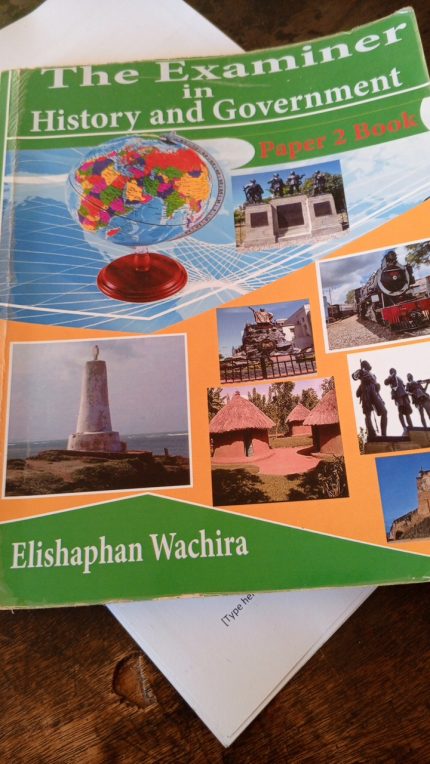
The Examiner History & Government...

KShs900.00 KShs850.00
This is a history paper 2 revision book, with questions and answers tested in the KCSE Examinations.

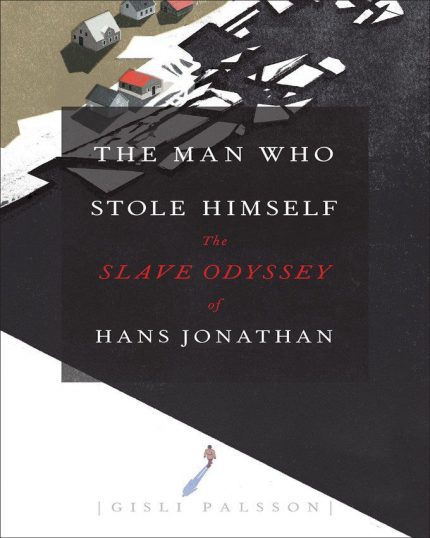
The Man Who Stole Himself: The Slave ...

KShs4,000.00 KShs3,499.00
Brief Summary The island nation of Iceland is known for many things—majestic landscapes, volcanic eruptions, distinctive seafood—but racial diversity is not one of them. So the little-known story of Hans Jonathan, a free black man who lived and raised a family in early nineteenth-century Iceland, is improbable and compelling, the stuff of novels. In The Man Who Stole Himself, Gisli Palsson lays out the story of Hans Jonathan (also known as Hans Jónatan) in stunning detail. Born into slavery in St. Croix in 1784, Hans was taken as a slave to Denmark, where he eventually enlisted in the navy and fought on behalf of the country in the 1801 Battle of Copenhagen. After the war, he declared himself a free man, believing that he was due freedom not only because of his patriotic service, but because while slavery remained legal in the colonies, it was outlawed in Denmark itself. He thus became the subject of one of the most notorious slavery cases in European history, which he lost. Then Hans ran away—never to be heard from in Denmark again, his fate unknown for more than two hundred years. It’s now known that Hans fled to Iceland, where he became a merchant and peasant farmer, married, and raised two children. Today, he has become something of an Icelandic icon, claimed as a proud and daring ancestor both there and among his descendants in America. The Man Who Stole Himself brilliantly intertwines Hans Jonathan’s adventurous travels with a portrait of the Danish slave trade, legal arguments over slavery, and the state of nineteenth-century race relations in the Northern Atlantic world. Throughout the book, Palsson traces themes of imperial dreams, colonialism, human rights, and globalization, which all come together in the life of a single, remarkable man. Hans literally led a life like no other. His is the story of a man who had the temerity—the courage—to steal himself.

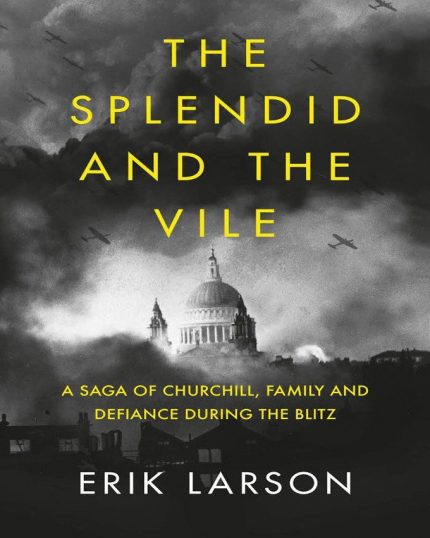
The Splendid and the Vile: A Saga of ...

KShs3,000.00 KShs2,299.00
Brief Summary On Winston Churchill's first day as prime minister, Adolf Hitler invaded Holland and Belgium. Poland and Czechoslovakia had already fallen, and the Dunkirk evacuation was just two weeks away. For the next twelve months, Hitler would wage a relentless bombing campaign, killing 45,000 Britons. It was up to Churchill to hold his country together and persuade President Franklin Roosevelt that Britain was a worthy ally--and willing to fight to the end. In The Splendid and the Vile, Erik Larson shows how Churchill taught the British people "the art of being fearless." It is a story of political brinkmanship, but it's also an intimate domestic drama, set against the backdrop of Churchill's prime-ministerial country home, Chequers; his wartime retreat, Ditchley, where he and his entourage go when the moon is brightest and the bombing threat is highest; and of course 10 Downing Street in London. Drawing on diaries, original archival documents, and once-secret intelligence reports--some released only recently--Larson provides a new lens on London's darkest year through the day-to-day experience of Churchill and his family: his wife, Clementine; their youngest daughter, Mary, who chafes against her parents' wartime protectiveness; their son, Randolph, and his beautiful, unhappy wife, Pamela; Pamela's illicit lover, a dashing American emissary; and the advisers in Churchill's "Secret Circle," to whom he turns in the hardest moments.

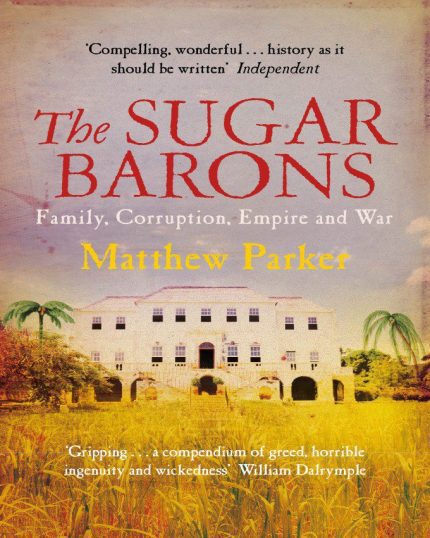
Sugar Barons: Family, Corruption, Emp...

KShs2,800.00 KShs2,299.00
Brief Summary To those who travel there today, the West Indies are unspoiled paradise islands. Yet that image conceals a turbulent and shocking history. For some 200 years after 1650, the West Indies were the strategic center of the western world, witnessing one of the greatest power struggles of the age as Europeans made and lost immense fortunes growing and trading in sugar-a commodity so lucrative it became known as "white gold." As Matthew Parker vividly chronicles in his sweeping history, the sugar revolution made the English, in particular, a nation of voracious consumers-so much so that the wealth of her island colonies became the foundation and focus of England's commercial and imperial greatness, underpinning the British economy and ultimately fueling the Industrial Revolution. Yet with the incredible wealth came untold misery: the horror endured by slaves, on whose backs the sugar empire was brutally built; the rampant disease that claimed the lives of one-third of all whites within three years of arrival in the Caribbean; the cruelty, corruption, and decadence of the plantation culture. While sugar came to dictate imperial policy, for those on the ground the British West Indian empire presented a disturbing moral universe. Parker brilliantly interweaves the human stories of those since lost to history whose fortunes and fame rose and fell with sugar. Their industry drove the development of the North American mainland states, and with it a slave culture, as the plantation model was exported to the warm, southern states. Broad in scope, rich in detail, The Sugar Barons freshly links the histories of Europe, the West Indies, and North America and reveals the full impact of the sugar revolution, the resonance of which is still felt today.

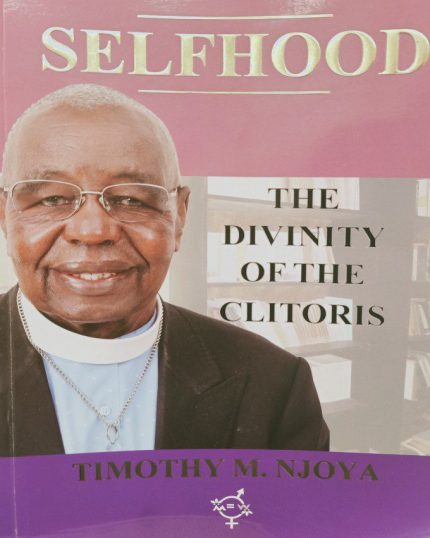
Selfhood Divinity of the Clitoris by ...

KShs3,500.00 KShs3,250.00
What you need to know: In his 802-page book: Selfhood; Divinity of the Clitoris, the retired minister of the Presbyterian Church of East Africa (PCEA) gives a rather revolutionary strategy to clean the Kenyan society of the vice in a country where one in three girls is at risk of the cut. In his justification of the brazen title, Rev Njoya says he chose to use the word clitoris in its outright term to bring the message home to every man and woman on the effects of FGM. Retired Rev. Timothy Njoya has taken a radical approach on ending Female Genital Mutilation (FGM) in Kenya. In his 802-page book: Selfhood; Divinity of the Clitoris, the retired minister of the Presbyterian Church of East Africa (PCEA) gives a rather revolutionary strategy to clean the Kenyan society of the vice in a country where one in three girls is at risk of the cut. In his justification of the brazen title, Rev Njoya says he chose to use the word clitoris in its outright term to bring the message home to every man and woman on the effects of FGM. PIECE OF MEAT “Clitoris is made in the image of God and it is divine,” he explains. “To cut a woman and remove the clitoris is like taking a woman for a piece of meat.” But why is it so important that a clitoris remains in its whole? Rev. Njoya has a divinity answer to that. “A woman’s clitoris has more than 20,000 nerve endings, while a penis is wired with only 2,000 nerve endings,” he states. “The clitoris is wired to pull 60kg of pelvic bones apart and pull them back. Without the nerve endings, the muscles cannot pull apart…that is why 20 per cent of Kenyan women die during child birth because their pelvic bones have nothing to pull them apart when they are circumcised.”