Showing 21–40 of 45 results

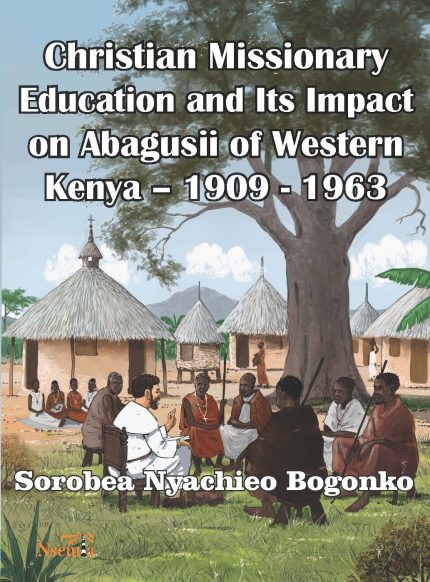
Christian Missionary Education and It...

KShs2,800.00 KShs2,400.00
This work focuses on Christian missionaries’ education in Gusii, western Kenya, between 1909 and 1963. It examines the socio-economic and educational aspects of Gusii society in the pre-Christian period. A key observation is that traditional African education was practical, mnemonic, and real; it was worthwhile for the culture of Abagusii. The missionaries introduced a largely theoretical education that was alien to Gusii. Missionaries, through condemnation of the ways of life of Abagusii, inflicted a deadly blow to traditional education. Gusii educational processes (e.g. rites of passage such as circumcision) and venues of education (e.g. ebisarate) were termed ‘heathen’. Colonial government support for missionary education further weakened indigenous ways and practices, rendering traditional Gusii education helpless. The alien education destroyed traditional structures and systems, and enabled the first modern elite classes to emerge. It produced clerical and administrative cadres for the colonial administration, in addition to commercial and political elites. Mission schools, further, produced teachers who, though not well educated, spread and planted modern education in Gusii society. All this submerged old elites: the rainmakers, medicine men, seers, and others. The actions of missionaries and the colonial government shaped Gusii society anew. Their impact on Gusii culture, economy, healthcare and administration, among others, was irreversible. What would have been the trajectory in Gusii had the foreigners integrated indigenous education into their schemes? To what degree would Gusii society, its culture and knowledge have been preserved? How prominent, for instance, would indigenous ways of life (e.g. medicine) be part of modern Gusii society?

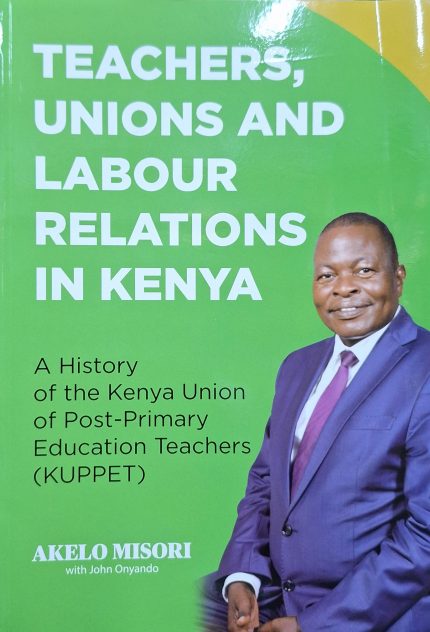
Teachers, Unions and Labour Relations...

KShs900.00
The book contains a history of education in Kenya, history of the teaching profession, trade unions and teachers' unions, as well as the story of KUPPET from its formation to date. The book is essential reading for students and practitioners of education, history, trade unionism, labour relations, human resources, politics, communication and media studies.

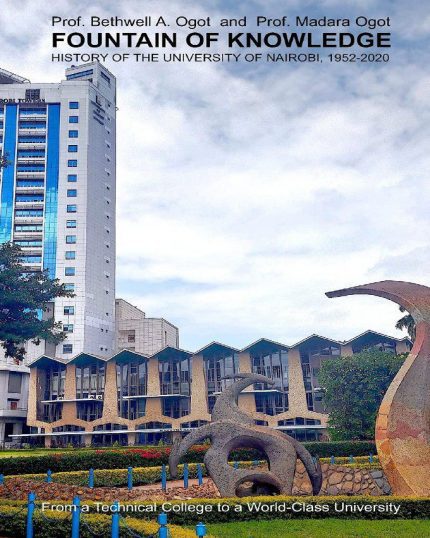
Fountain of Knowledge: History of the...

KShs4,000.00 KShs2,999.00
Fountain of Knowledge: History of the University of Nairobi 1952-2020follows the development of the University from its origins as the Royal Technical College in 1952, to the World Class University it has become in 2020. As the ‘mother’ university in Kenya, its history also provides a narrative of the evolution of university education in Kenya over the same period. Major events, activities and policies changes that have shaped university education are presented in the context of the University of Nairobi’s growth. Throughout the text, a large collection of photographs brings to life the development of the university over the past 68 years.

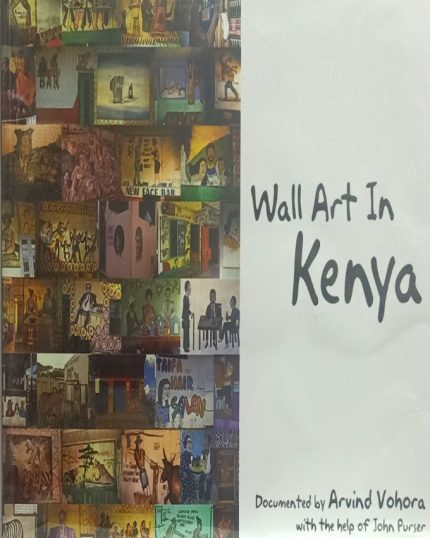
Wall Art in Kenya by Arvind Vohora an...

KShs4,000.00 KShs3,349.00
Wall art in Kenya documented by Arvind Vohora with the help of John Purser

Twilight of Democracy by Anne Applebaum

KShs1,890.00 KShs1,490.00
Twilight of Democracy: The Seductive Lure of Authoritarianism. Across the world today, from the Americas to Europe and beyond, liberal democracy is under siege while populism and nationalism are on the rise. In Twilight of Democracy, prize-winning historian Anne Applebaum offers an unexpected explanation: that there is a deep and inherent appeal to authoritarianism, to strongmen, and, especially, to one-party rule--that is, to political systems that benefit true believers, or loyal soldiers, or simply the friends and distant cousins of the Leader, to the exclusion of everyone else. People, she argues, are not just ideological; they are also practical, pragmatic, opportunistic. They worry about their families, their houses, their careers. Some political systems offer them possibilities, and others don't. In particular, the modern authoritarian parties that have arisen within democracies today offer the possibility of success to people who do not thrive in the meritocratic, democratic, or free-market competition that determines access to wealth and power. Drawing on reporting in Spain, Switzerland, Poland, Hungary, and Brazil; using historical examples including Stalinist central Europe and Nazi Germany; and investigating related phenomena: the modern conspiracy theory, nostalgia for a golden past, political polarization, and meritocracy and its discontents, Anne Applebaum brilliantly illuminates the seduction of totalitarian thinking and the eternal appeal of the one-party state.

We Need to Talk About Africa: The Har...

KShs1,890.00 KShs1,399.00
Brief Summary If you boil a kettle twice today, you will have used five times more electricity than a person in Mali uses in a whole year. How can that be possible? Decades after the colonial powers withdrew Africa is still struggling to catch up with the rest of the world. When the same colonists withdrew from Asia there followed several decades of sustained and unprecedented growth throughout the continent. So what went wrong in Africa? And are we helping to fix it, or simply making matters worse? In this provocative analysis, Tom Young argues that so much has been misplaced: our guilt, our policies, and our aid. Human rights have become a cover for imposing our values on others, our shiniest infrastructure projects have fuelled corruption and our interference in domestic politics has further entrenched conflict. Only by radically changing how we think about Africa can we escape this vicious cycle.

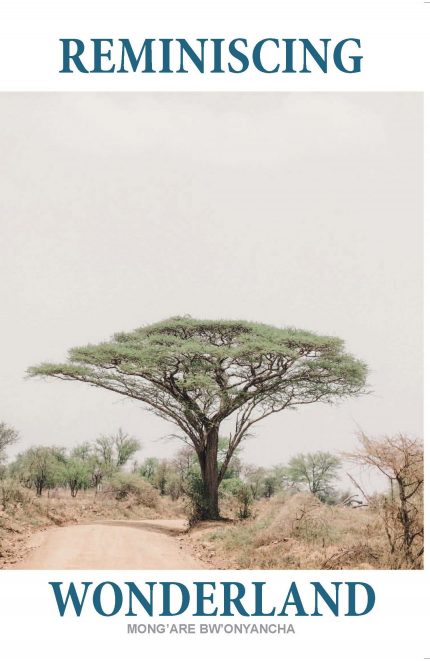
Reminiscing Wonderland

KShs1,200.00 KShs1,100.00
Praise for Dr. Mong'are Bw'Onyancha's Reminiscing Wonderland “Interesting stories! ...some brought me to tears. Others were enthralling. I was moved by Molo's life story and captivated by the coming of age stories.” Cindy, Editor “Reminiscing Wonderland. The narrator's imagination perceives his new school as a magical dreamland, a 'Once upon a time perfect home 'until he encounters 'stains' which threaten to curtail his aspirations. His learner's enthusiasm, just like in the novel, The African Child, is without parallel. He is like an arrow on the hunter's bow, ready to go. Molo is one of the hurdles he has to overcome. Superficially, Molo is portrayed as a cold, stone-hearted troublemaker. Yet, the writer delves into his stained life. By the end, the reader sympathizes with the concept of his being, relationships, and nurturing (compare with the novels, A Grain of Wheat and Crime and Punishment, where main characters don't have close trusted relationships and how they reap what they sow). Good defeats evil, and there is the hope of redemption and support systems to the purest of state. With the passage of time and increase in human activities, all life in Wonderland will be altered in some way (Paradise Lost, Wonderland Stained).”

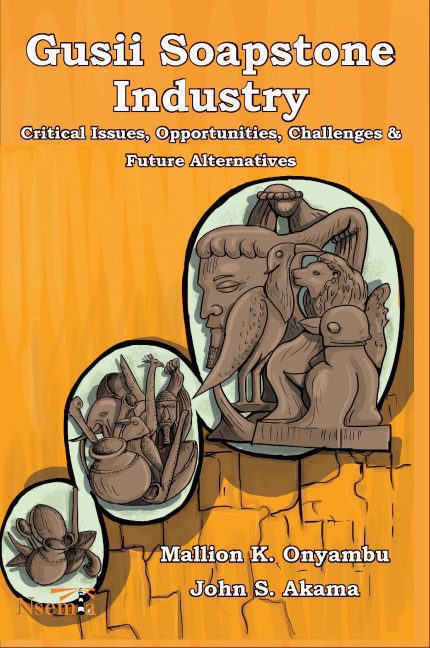
Gusii Soapstone Industry:Critical iss...

KShs1,000.00 KShs800.00
As is the case with most African indigenous industries, not much research has been done on the Gusii soapstone industry. Consequently, the main aim of this book is to fill the identified gap. Specifically, this book traces the origin of the Gusii soapstone industry, going through various stages, i.e. the Pre-Colonial, Colonial and Post-Colonial periods. Within this historical context, the book provides an elucidation of the social, economic, political and cultural factors that have impacted on the evolution and/or development of the soapstone industry. A critical issue captured in the book is the fact that, over the years, the soapstone handicraft products have been transformed from being items of utility for the local people to, mainly, becoming non-utility items that are sold to outsiders, particularly international tourists as unique pieces of indigenous handicraft and/or African art. However, it should be noted that, notwithstanding this transformation, indigenous cultural attributes and/or cultural themes that would have otherwise disappeared, due to increased impacts of globalization, are being preserved by the sculpturing of unique indigenous soapstone products. Furthermore, currently, the soapstone industry has become a major source of livelihood for the Gusii people of Tabaka in Southwestern Kenya. This book provides a lucid articulation of various facets (i.e., social, economic, cultural and political perspectives) of the Gusii soapstone industry, and the fundamental factors that have made the industry survive, over the years, notwithstanding the introduction of mass produced goods from the Western world. The conceptualization of the role of the indigenous industry in promoting sustainable livelihood is clearly brought out, and is presented within the broader milieu of the Gusii society. The book provides excellent reading for anyone interested in having proper perspectives on the history and the overall development of the Gusii soapstone industry. Elkanah Ong’esa, a world renowned artist and soapstone sculptor. As much as the soapstone sculptures are found in museums, art galleries, curio shops and people’s homes in most major cities of the world, not much research and documentation of these unique indigenous industry initiatives has been done. In light of that, this book on the Gusii soapstone industry fills a critical niche and is quite handy for people from all walks of life and academia looking for up to date information on the Gusii soapstone industry. Dr. Margaret Barasa, Anthropolinguistic Expert, and Dean, Faculty of Arts and Social Sciences, Kisii University, Kenya. Most literature on African indigenous industries, such as soapstone mining, carving and marketing, is based on Eurocentric approach which looks at these industries and African art as exotic items for the pleasure of Western gentry and middleclass. Adopting an Afrocentric approach, this book provides a refreshing analysis of the history, transformation and growth of the Gusii soapstone industry; an indigenous initiative that has evolved, systematically, over the years, and has shown a lot of resiliency in the face of many complex challenges. The book is recommended to people who want to have a proper perspective of similar indigenous industries and the Gusii soapstone industry in particular. Matunda Nyanchama, Publisher. This book looks at the resilience of the soapstone industry in Gusii. It shows that the soapstone carvings as currently developed by the Gusii people may have its origin in ancient traditions that dates back to hundreds and perhaps thousands of years. It also gives a good historical analysis of the growth and development of the soapstone industry. It will goes a long way in illuminating critical aspects of the Gusii soapstone industry. Herman Kiriama, Senior Research Fellow, Kisii University, Kenya.

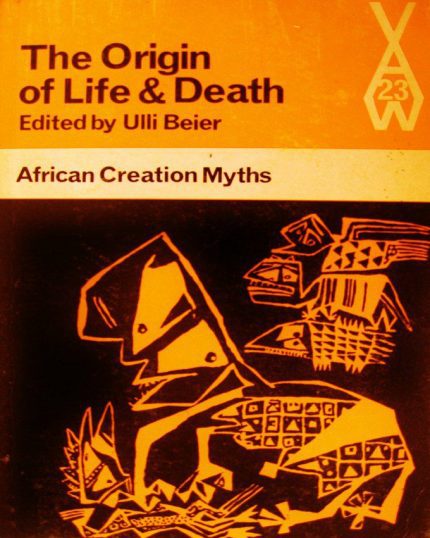
The origin of life and death by Ulli ...

KShs500.00 KShs399.00
Brief Summary This is a collection of creation myths from West, East, Central and North Africa.

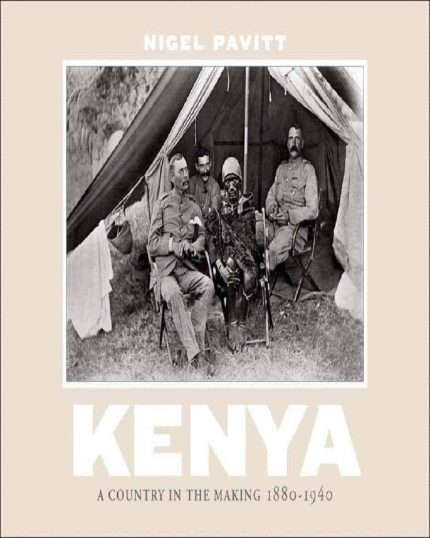
Kenya A Country in the Making 1880-19...

KShs4,500.00 KShs4,200.00
This stunning collection of 720 photographs, many of them drawn from family archives and scrapbooks and all carefully restored, is one of the most important visual records of Africa in the late nineteenth and early twentieth centuries ever to have been published. The early photographers captured the beauty and dangerous allure of life on this spectacular frontier: the ceremonies and traditional attire of the native people, the fantastic machinery used in construction of the Uganda Railway, the gradual development of trade on the coast and in the country's interior, the hardships of the East African Campaign during World War I, and the pioneering spirit of early European settlers and farmers. Many of the most famous names and places connected with Africa appear in these pages, including Karen Blixen's farm and Ernest Hemingway and Theodore Roosevelt on safari. This is a book to delight anyone who has ever traveled to East Africa or been intrigued by its history. 720 photographs

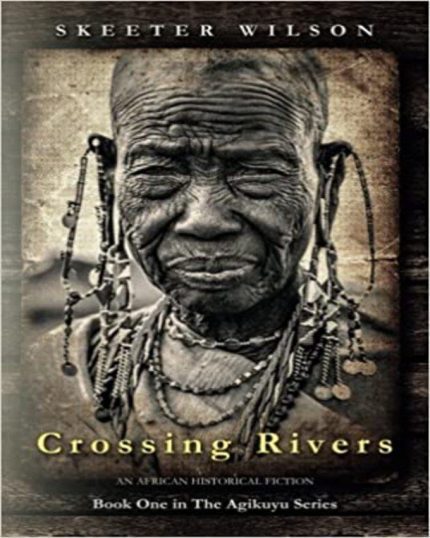
Crossing Rivers An African Historical...

KShs2,490.00 KShs1,999.00
Brief Summary Crossing Rivers: A young Maasai girl’s world is turned upside down when she is traded to an old Gikuyu woman in exchange for food, by her starving parents. Compelled to become a Gikuyu she goes through adoption and initiation rituals. She falls in love but soon after her marriage her world, once again, changes forever. Crossing Rivers is Book One in The Agikuyu Series" Brilliantly written and uncompromising in its perspective, Crossing Rivers by Skeeter Wilson delivers us into the hands of the peoples of pre-colonial eastern Africa allowing us to learn at their fires, listen to a voice most have never heard, and appreciate a way of life all too often misrepresented." T.L. O’Hara Author: Skeeter Wilson

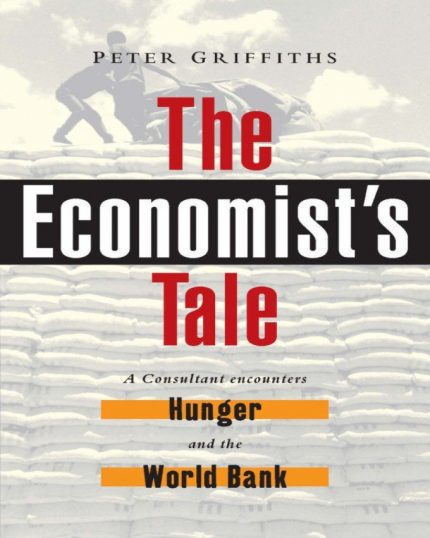
The Economists Tale A Consultant Enco...

KShs2,899.00 KShs2,499.00
Brief Summary What really happens when the World Bank imposes its policies on a country? This is an insider's view of one aid-made crisis. Peter Griffiths was at the interface between government and the Bank. In this ruthlessly honest, day by day account of a mission he undertook in Sierra Leone, he uses his diary to tell the story of how the World Bank, obsessed with the free market, imposed a secret agreement on the government, banning all government food imports or subsidies. The collapsing economy meant that the private sector would not import. Famine loomed. No ministry, no state marketing organization, no aid organization could reverse the agreement. It had to be a top-level government decision, whether Sierra Leone could afford to annoy minor World Bank officials. This is a rare and important portrait of the aid world which insiders will recognize, but of which the general public seldom get a glimpse.

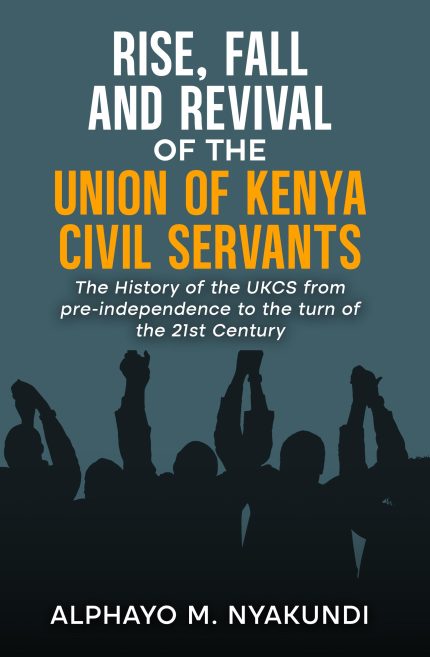
Rise, Fall and Revival of the Union o...

KShs2,000.00
Book provides a historic narrative chronicling the birth, struggles, and revival of the Union of Kenya Civil Servants. The book describes the pre-colonial conditions faced by black workers that led them to organize and how the organization grew into a union. The book further narrates negotiations between the union and the Government of Kenya.
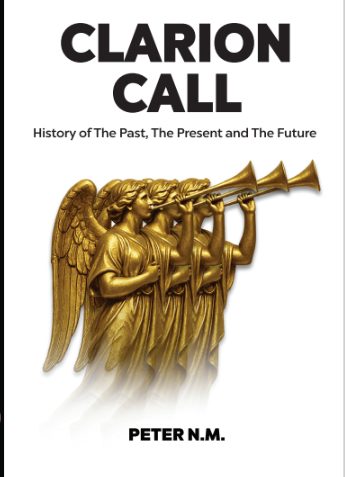
CLARION CALL: History of The Past, Th...

KShs1,200.00
Every generation asks the same questions: Where did we come from? Why is our world the way it is? Where is history leading? The Bible offers a unified answer—one that stretches from the beginning of creation to the fulfillment of God's eternal kingdom.
Clarion Call: History of the Past, the Present, and the Future is an invitation to explore the Bible's prophetic message with clarity, confidence, and purpose. Drawing from the books of Daniel and Revelation, this study presents the unfolding story of God's plan for humanity through carefully organized charts and Scripture-based analysis. It connects the past, the present, and the future, helping readers see how biblical prophecy reveals the steady hand of God throughout history.
More than a study of prophetic events, this book points to the central message of Scripture: the character of God, the mission of Jesus Christ, and God's invitation to every person to respond in faith. It examines the Bible's final messages to the world, showing why they remain deeply relevant in an age of uncertainty, moral confusion, and global change.
Whether you are new to the study of prophecy or have spent years searching the Scriptures, Clarion Call encourages you to examine God's Word for yourself. Its visual format and straightforward presentation make complex prophetic themes easier to follow while remaining firmly rooted in the biblical text.
The Bible declares that God's final message is proclaimed to "every nation, tribe, language, and people." This book is written in that same spirit—inviting readers from every background to consider the evidence of Scripture, understand the times in which we live, and discover the hope found in God's promises.
As history moves toward its appointed conclusion, God's call remains clear. This is an invitation to look beyond today's headlines, see the larger story of redemption, and prepare your heart for the future He has revealed.

The Missing Wallet

KShs3,000.00 KShs2,700.00
Mũthamaki Togno Togno: A Living Healer; A Living Oracle Mũthamaki, embody this ancestral bridge. My writing is ritual. My storytelling is divination. My dedication pages are libations poured for the unseen. I don't just connect with ancestors-I channel them, giving voice to silence and memory. About the Author: Mũthamaki Togno is a revered elder, storyteller, and cultural visionary born to Kagũ of the Mwenda clan and Gathiori of the Gicerũ lineage. Thingira na Müthamaki Raised among proverbs, prayers, and the pulse of tradition, he grew into a seer, singer. apostle, and truth-teller - called to awaken the spirit of his people through language, laughter, and legacy. He is the founder of Thingira wa Mãthamaki, a sacred space for cultural truth, and the voice behind Togno FM, Gwitũ FM, and Mwaki wa Gikūyũ Radio. His work spans media houses including Utv, ATG FM, Coro FM, Gūkena FM, Gīkūyū TV, Sasa TV, Gĩchichio Ty and many more. As a master of ceremonies, columnist, comedian, and spiritual guide, Togno has spent decades weaving wisdom into every platform he touches. He is a father, a grandfather, a teacher, and a mirror of ancestral resilience. His mission is to restore the dignity of Gīkūyd language and culture, to heal through storytelling, and to inspire generations to walk boldly in their truth. About Author Mũthamaki Togno, is a celebrated Kenyan author, cultural activist, and literary visionary whose work bridges ancestral wisdom with contemporary emotional truth. His writing is rooted in Kikuyu cosmology, oral tradition, and the sacred tension between silence and storytelling. Togno’s body of work includes acclaimed titles such as, (Other Books by Mũthamaki Togno)   1. The Missing Wallet, 2. Ikũmbĩ rĩa Thingira wa Mũthamaki – Volume 1, 3. A Painful Kiss / A Kiss of Pain, 4. Roots Beneath Gĩkũyũ Community, 5. Lena Mũmbi – The Bright One, 6. Ndũĩ and the land 7. Whispers of joy 8. Rũthiomi rwa Maitũ, 9. Mũgathe Mũkora, 10. Ikũmbĩ rĩa Thingira wa Mũthamaki – Volume 2, 11. Ikũmbĩ rĩa Thingira wa Mũthamaki Volume 3 12 married to a devil, married wrongly 13 unapologetic marriage 14 unappreciated hero 15 Unlimited Errands 16 The Thief President 17 Kīnya Gīa Tha

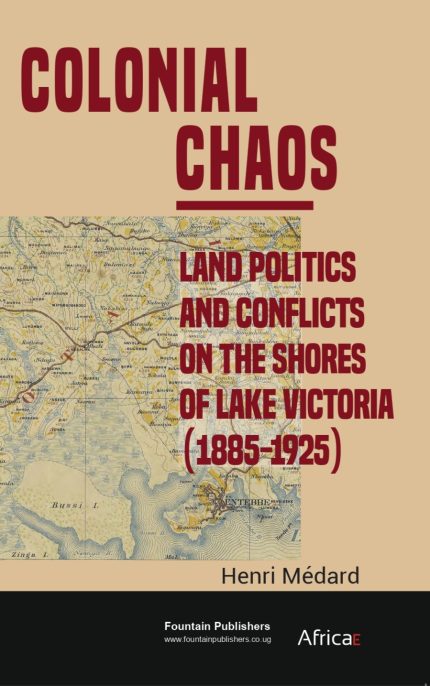
Colonial Chaos: Land Politics and Con...

KShs1,500.00
The book shows that the tension surrounding the hereditary clan chiefs in Buganda is as much a geographical tension between the people of the lake and the people of the land as it is a tension between ancient clan powers and a modernizing patronage power.

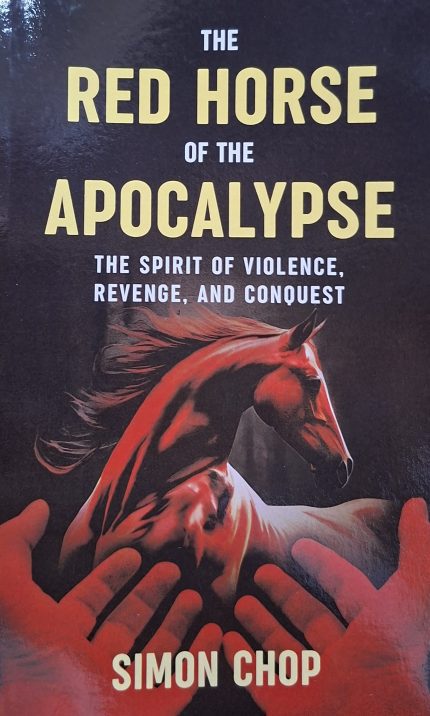
The Red Horse of The Apocalypse: The ...

KShs3,000.00 KShs2,300.00
The Red Horse of The Apocalypse: The Spirt of Violence, Revenge and Conquest by Simon Chop

SCULPTED BY DESIGN by Dora Kemirimo O...

KShs1,200.00 KShs1,000.00
Our History begins with God. In SCULPTED BY DESIGN, the Bible is opened to reveal to the reader that God wants them to win in the game if life Like a sculptor or engineer, He carefully and masterfully placed His words as valuable trinkets to help us win in life. In the first seven days, God unveils a most delightful and perfect game maze, the world.

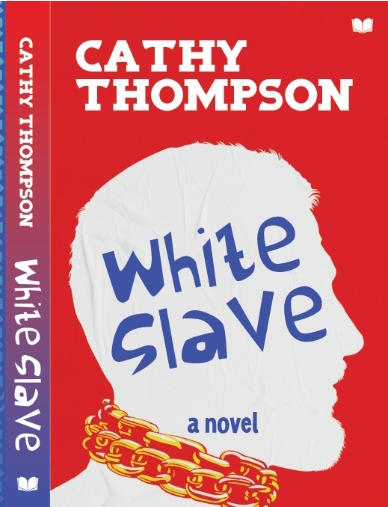
White Slave

KShs4,000.00
A former slave tell of an escapade involbing him leading out a group of slaves from their former master,confronting reality of racism in New Orleans in the 1800s, some years before the abolition.

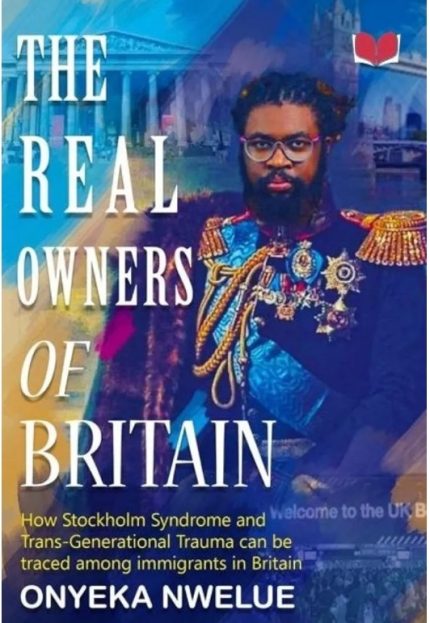
The Real Owners of Britain by Onyeka ...

KShs3,000.00 KShs2,500.00
Money is power. When you have power, it can be intoxicating. That is why the power gate-keepers that money spawn like to delight in the broth of infallibility. But when powerful people are dragooned to their knees, it is always disastrous. Let's think of Harvey Weinstein-who was the Executive Producer of almost every film you could find on Netflix, when they started. He provided them with all sorts of mooi content as you'd imagine. Still and all when his time was up, his fall was deep, steep, and tragic. Harvey had the money, so he had the power. Money is magnetic. It brings close to you, the wrong people. As you have the money, you have the power. There are many people hanging around to demystify you and wring that power away from you.