


Showing 61–80 of 1736 results

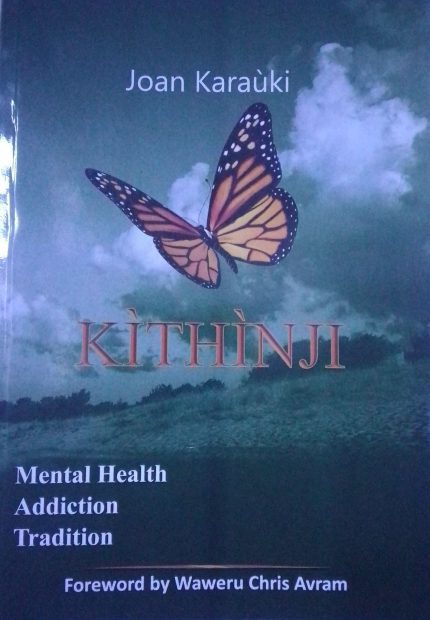
Kìthìnji

KShs1,060.00 KShs990.00
Kìthìnji is a contemporary Kenyan novella that explores the intersection of mental health, societal expectations, education, marriage, and generational trauma in rural Kenya. The story follows Lina, a university graduate who navigates the collapse of her carefully constructed life as her husband Jeff descends into mental illness, her brother Martin loses his grip on reality, and her daughter Kaarì rejects traditional values. Through interconnected character studies, the novella critiques the failures of the education system, the stigma surrounding mental health, the rigidity of community judgment, and the slow erosion of cultural foundations.

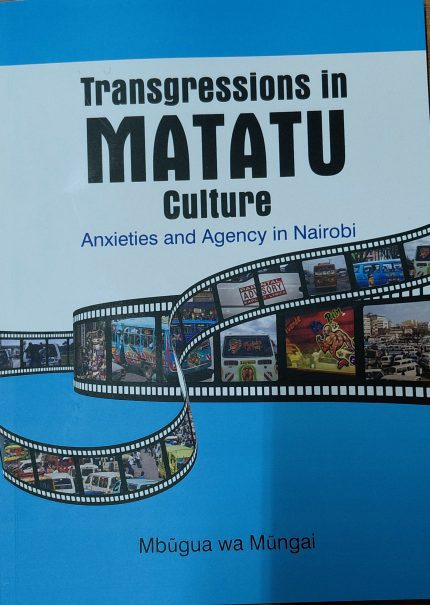
Transgressions in Matatu Culture: Anx...

KShs2,000.00 KShs1,500.00
Only in a matatu can you find flat-broke ex-government ministers, thieves, teachers, madmen, school children and nuns sharing the same space. To understand the matatu is to begin to understand Kenya. Many stories are performed and told within the experience of a matatu ride- but why are they enacted? What are they about and whose perspectives inform the telling? Transgressions in Matatu Culture explores the positioning of different actors in the collective performance of matatu travel experience, identifying discussions that take place in and around these vehicles and linking them to broader discourses on gender, economics, politics and power in Kenyan society and further afield in global popular culture. Deployed from multiple perspectives, some depicting clear contradictions with the lived experiences of the men (mostly) who crew these matatu, the incessant signification on the vehicles is central to the telling of stories about Nairobi. Taken together, the loud music, catchy slogans, boisterous display, and Sheng-the Kiswahili-based urban dialect that constitutes the predominant register of matatu work-among other aspects, tell us as much about matatu men as they present ideas about Kenya, and specific ways of being in Nairobi. These men have over time created and purveyed what is arguably one of postcolonial Kenya's most visible, uniquely defined and vibrant subcultural expressions. In their practices, matatu men force even the most passive observers to (re-)examine their own complex relations with them. Trying to apprehend the similarities between matatu men and their compatriots, who are assumed to be unlike them, is one way of trying to comprehend some of the workings of contemporary Kenya and Nairobi is a productive pointer to some of the transgressive processes at play. This book presents a version of the many possible stories about matatu men's resilient occupational subculture, taken as a

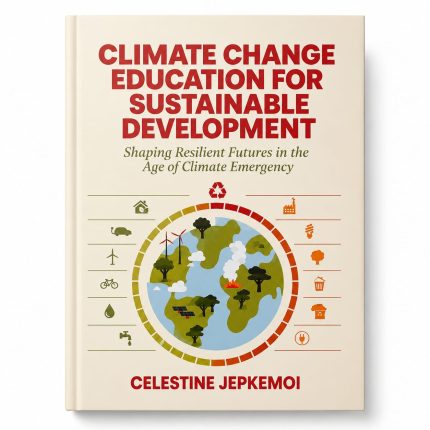
Climate Change Education for Sustaina...

KShs2,500.00 KShs1,800.00
Climate Change Education for Sustainable Development is a useful book that shares knowledge, strategies, and practical ways to tackle climate change through education and action. It serves as a guide for teachers, students, policymakers, and communities. The book aims to improve climate literacy, foster resilience, and encourage sustainable solutions. On a global scale, the book connects with the United Nations Framework Convention on Climate Change (UNFCCC), especially Action for Climate Empowerment (ACE). This initiative highlights education, training, and public awareness as key for addressing climate change. It supports the goals of the Paris Agreement, which promotes inclusive and participatory methods for mitigation and adaptation. At the national level, the book addresses Kenya’s Vision 2030, the Climate Change Act (2016), and the National Climate Change Action Plan (NCCAP). It also reflects the 2010 Constitution of Kenya, which guarantees the right to a clean and healthy environment. This book represents my personal effort to support Kenya’s sustainable development and climate goals. By connecting with SDG 4 (Quality Education), SDG 13 (Climate Action), and SDG 15 (Life on Land), it links global frameworks to Kenya’s local context. It empowers citizens with the knowledge and skills they need for resilience, adaptation, and sustainable development.

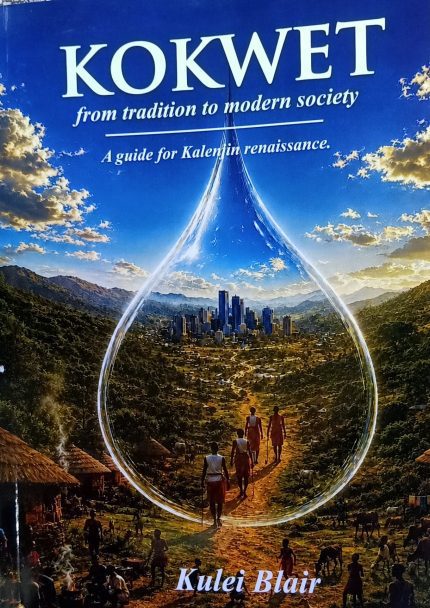
Kokwet: From tradition to modern soci...

KShs1,500.00 KShs1,300.00
The guide examines questions of God, creation, ancestry, memory, morality, and the place of spirituality in human society. It also discusses government, education, culture, leadership, and the challenges facing communities in the modern world.
Above all, this work seeks to provide an intellectual framework through which Kalenjin heritage can be studied, taught, preserved, and developed. It is intended as a teaching resource for cultural education, historical reflection, spiritual inquiry, and constructive engagement in contemporary society.
The purpose of Kipgaa is not merely to remember the past, but to help present a way of knowing who we are, where we came from, and what we can contribute to the world.

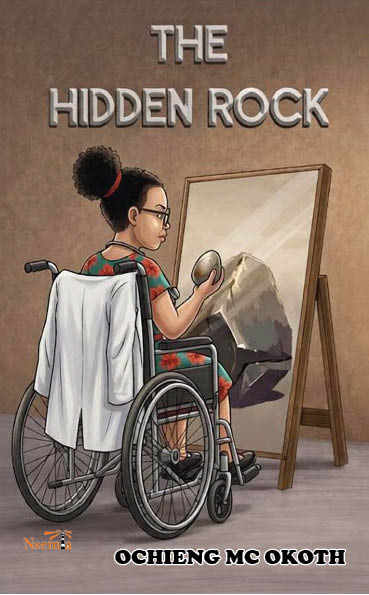
The Hidden Rock

KShs1,200.00
In this breathtaking tale, Ochieng MC Okoth invites us into the vibrant and dangerous world of the Kingdom of Ogwato. The story follows Oba, a young man whose life is a beautiful, but a messy tangle of loyalty and love. While he navigates the delicate balance between two very different women, his world is suddenly set on fire by a violent struggle for the throne. The author does a magnificent job of showing how one man’s quiet life can be swept up into the grand history of a nation. When the noble King Awaje is murdered, the story transforms into a heart-pounding mission of survival. Oba becomes a hero not because he wants to be, but because he must protect the innocent Princess Abiero and the sacred “Hidden Rock”; a powerful symbol of the kingdom’s true soul. This is more than just a story; it is a stunning journey about the heavy price of a crown and the incredible courage found in an ordinary young heart. It is a must-read for anyone who loves a story that is as emotional as it is exciting.

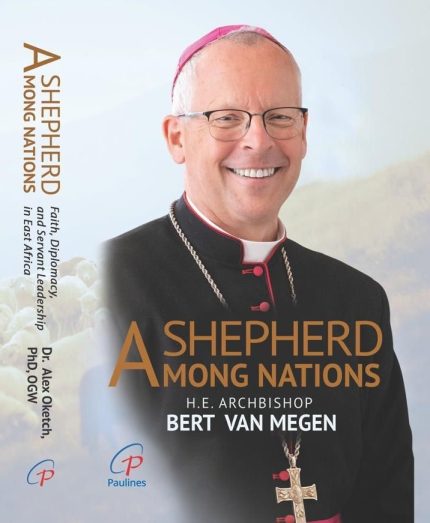
A Shepherd Among Nations: H.E. Archbi...

KShs3,000.00 KShs2,500.00
A Shepherd Among Nations is a compelling chronicle of faith, diplomacy, and servant leadership, documenting the remarkable ministry of Archbishop Hubertus (Bert) van Megen. The book traces his distinguished service as Apostolic Nuncio to Kenya and South Sudan (2019–2026) and his subsequent appointment as Apostolic Nuncio to the Federal Republic of Germany in 2026. It highlights his unwavering commitment to peace, justice, pastoral care, and the Holy See’s diplomatic mission, presenting a legacy that transcends national borders and continues to inspire the Church and the international community.

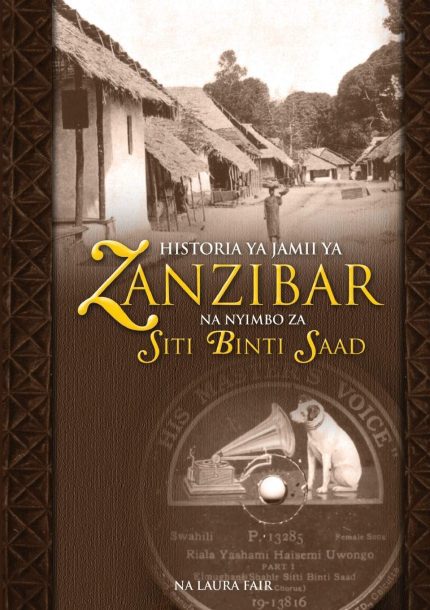
Historia YA Jamii YA Zanzibar Na Nyim...

KShs1,000.00 KShs790.00
Laura Fair is Professor of History at Michigan State University in the U.S.A. She lived in Zanzibar for many years doing research for her first book: Pastimes and Politics: Culture, Community and Identity in Post-abolition Urban Zanzibar, 1890-1945. In this book she illustrates how former slaves used the social and cultural tools at their command to demonstrate their freedom from slavery and articulate alternative visions of justice under colonialism. Her current book project is a wide-ranging study of commercial cinema in colonial and post-colonial Tanzania, exploring changes in exhibition, distribution and reception over time.

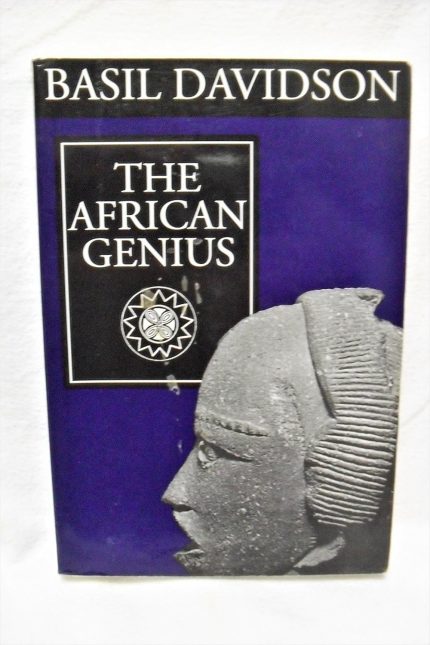
The African Genius by Basil Davidson

KShs5,000.00 KShs4,500.00
The African Genius presents the ideas, social systems, religions, moral values, arts, and metaphysics of a range of African peoples. Basil Davidson points toward the Africa that might emerge from an ancient civilization that was overlaid and battered by colonialism, then torn apart by the upheaval of colonialism’s dismantlement. Davidson disputes the notion that Africa gained under colonialism by entering the modern world. He sees, instead, an ancient order replaced by modern dysfunction. Davidson’s depiction of the sophisticated “native genius” that has carried Africans through centuries of change is vital to an understanding of modern Africa as well.

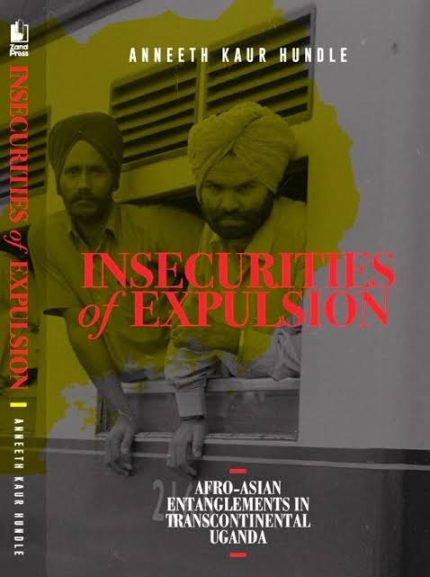
Insecurities of Expulsion: Afro-Asian...

KShs3,000.00 KShs2,500.00
She examines Afro-Asian entanglements in what she describes as transcontinental Uganda through the lenses of race, ethnicity, class, caste, religion, gender, and sexuality. Throughout, Hundle argues for stronger attention to knowledge production on global Afro-South Asian connections and the continued dynamics of community, citizenship, and identity on the African Continent as central to envisioning Black African self-determinism, racial reconciliation, and interracial pluralisms during shifting imperial, postcolonial, nationalist, and geopolitical times.

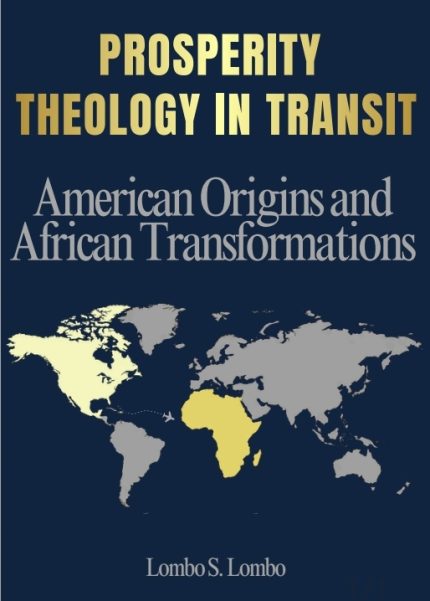
PROSPERITY THEOLOGY IN TRANSIT by Lom...

KShs1,200.00
One of the most consequential Theological movementsof our time. The author draws on Biblical exegesis, African voices from within

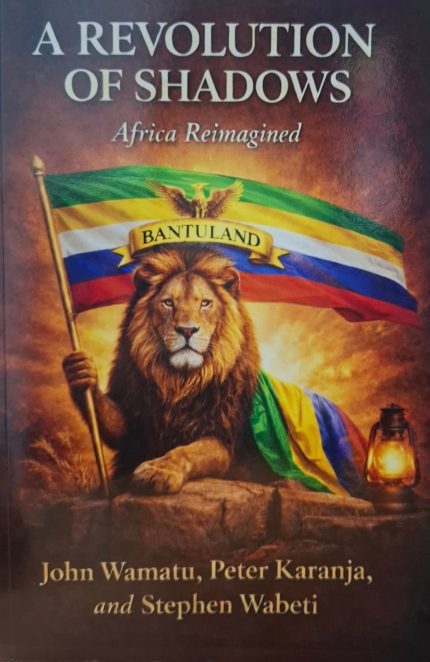
A Revolution of Shadows: Africa Reima...

KShs1,500.00 KShs1,300.00
In this compelling story by John Wamatu, Peter Karanja and Stephen Wabeti, we explore the vibrant, intricate landscape of a transformative era in Africa. Motivated by a deep passion for storytelling and a strong commitment to their homeland, the authors use artificial intelligence to reimagine a hopeful future in a place they call Bantuland. At the center of this story is Bantu Matata, an exceptional leader who gains power through a democratic election. Bantu isn’t just another politician; he is a symbol of integrity, committed to enacting meaningful policies and development initiatives. In his efforts to combat corruption, Bantu takes bold actions, including the controversial move to involve the military to ensure accountability. As Bantu’s vision starts to take hold, he gains support from his fellow citizens in Bantuland and admirers across Africa and beyond. His success inspires others, igniting hope and a sense of possibility. However, his journey is filled with obstacles. Resistance arises from his inner circle and foreign interests, leading to attempts on his life that test his resolve. Despite these challenges, Bantu Matata charts a path for progress by using strategic thinking and resilience to navigate the turbulent landscape of leadership. This book invites readers to follow Bantu’s journey — a story of courage, determination, and the relentless pursuit of a better future for his people and country.

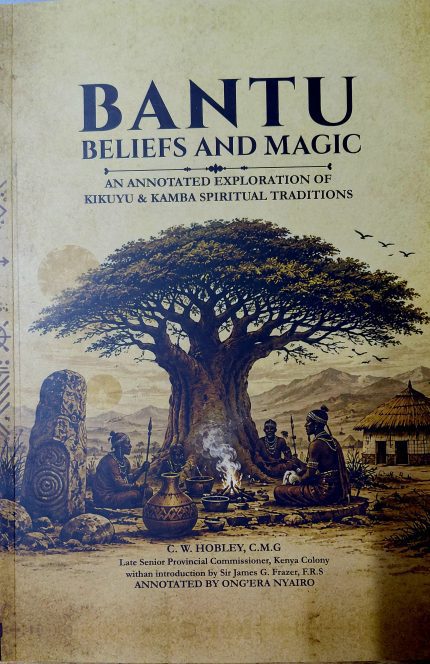
Bantu Beliefs and Magic: An Annotated...

KShs3,000.00

Bantu Beliefs and Magic is a remarkable exploration of the spiritual,cultural, and political traditions of the Agikuyu (Kikuyu) and Akamba peoples of Kenya. Written by C. W. Hobley in 1922, the book preserves a detailed record of indigenous life during a period of profound change under colonial rule. Drawing from years of research and conversations with elders, Hobley examines beliefs about God, ancestral spirits, sacred places, sacrifice, initiation rites, harvest ceremonies, and the customs that guided community life. These traditions reveal a rich worldview in which the spiritual and physical worlds were deeply connected.

The book also explores the role of magic, divination, healers, blacksmiths, curses, and protective rituals. Far from being isolated practices, these beliefs influenced social order, justice, health, and everyday decision-making within the community. Beyond religion and magic, Hobley documents systems of governance, councils of elders, customary law, age-set organizations, warfare, folklore, dances, and the influential role of women. His observations reveal societies with complex institutions and well-established methods of leadership and conflict resolution. Part anthropology, part history, and partcolonial-era record, Bantu Beliefs and Magic offers readers a rare window into precolonial East African life. It remains an important resource for anyone interested in African heritage, traditional belief systems, and the history of Kenya's indigenous communities.
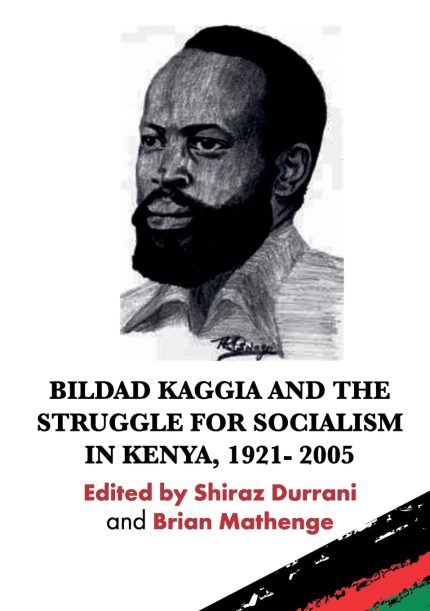

Bildad Kaggia and the Struggle for So...

KShs2,000.00
"Since the days of my primary school, I have always been a fighter," said Bildad Kaggia. Like Makhan Singh and Pio Gama Pinto, Bildad Kaggia struggled against imperialism in all its phases: capitalism, colonialism and neo-colonialism, first gainst British colonialism, then against the comprador government of lom enyatta imposed by imperialism on the working people of Keny While many gave up the struggle at independence and joined Kenyatta in looting the land and condemning workers and peasants to landlessness and poverty, Bildad Kaggia preferred to continue the struggle and live the life of a peasant. That example remains to this day for the post-independence generations. Kaggia was active in Mau Mau, in the trade union movement, in writing and publishing. He added a cultural and religious aspect to his struggle. He ended up in colonial detention but refused to give up the struggle for the aims of Mau Mau. He was a member of its Central Committee. Imperialism has used the comprador governments to distort and hide Kaggia's contribution to the struggle for the liberation of Kenya. They prevented the full publication of his autobiography which appeared as Roots of Freedom, but stopped the story in 1963, removing his struggle against the comprador government. This gap was finally filled in 2012 with the publication of The Struggle for Freedom and Justice. March 7, 2026 marked the 21st anniversary of Bildad Kaggia's death. We publish a collection of essays to mark his life and record his contribution to the liberation of Kenya. His clear ideological stand and actions to achieve his vision of a Kenya with freedom and justice for working people is what scared imperialism and the comprador governments. Generations born after independence need his history to support their own struggles against capitalism and imperialism.

Fire in the factory shadows in the sl...

KShs1,000.00
In the shadows of a city built on sweet and silence, the factory gates become battlegrounds and the slums echo with the heartbeat of resistance. When workers refuse to bow to exploitation, a storm of courage, betrayal, and hope unfolds. Fire in the Factory; Shadows in the Slums follows ordinary men, women, and children who dare to rise against systems designed to keep them invisible. Their struggle burns through smoke-filled workshops, crowded alleys, and the corridors of power-revealing how unity can ignite even the darkest corners of society. This is a story of people who have nothing left to lose and everything to win. This book matters because it shows how the oppressed-armed only with unity, hope, and the truth -can rewrite their own fate. It reminds us that injustice is not distant history, but a living force shaping our world today. Readers will leave these pages inspired, awakened, and more of the power that emerges when people stand together.

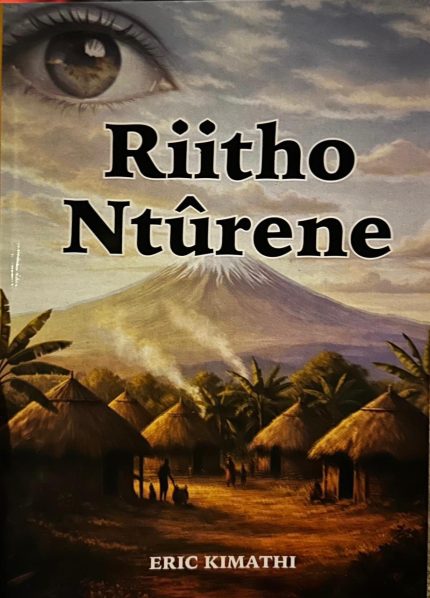
RIITHO NTURENE BY Erick Kimathi

KShs700.00
Riitho Ntûrene (The Eye of the Village/Community) is a cultural reflection that serves as an observational lens into the heart of Ameru society. Through a collection of narratives, wisdom, and traditional teachings, the book captures the essence of communal life and the societal values that hold the community together. It acts as a preservation tool for the oral history and cultural philosophies of the Meru people, inviting the reader to understand the community not just through historical dates and political structures, but through the everyday life, ethics, and "watchful eye" of the village.

Africa Sports Industry – Unders...

KShs5,850.00 KShs5,500.00
Discover the blueprint for a new era in sports with Africa Sports Industry: Understanding the Game, led by Will Mbiakop alongside global icons like Didier Drogba and Masai Ujiri. This groundbreaking book explores how Africa is leveraging its youth, infrastructure, and investments to transform its sports ecosystem into a powerful driver of economic prosperity. Perfect for sports fans and business minds alike, it offers an unparalleled vision of a future where Africa doesn't just participate in the global arena—it leads it.

Leave Your Mess at Home by Tolani Aki...

KShs3,200.00 KShs2,790.00
Sola Longe, eldest daughter, estranged from the family, is secretly back home in Chicago for the first time in a

THE BLESSED BRAIN POWER

KShs1,300.00
The brain is the King within you, If you you fail to treat your brain well you will not live well, because when your brain works well your life moves well

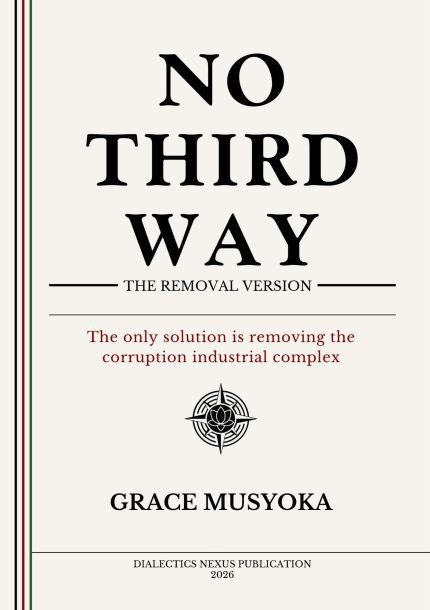
No Third Way: The Only Solution is Re...

KShs1,250.00 KShs1,000.00
No Third Way exposes why Kenya cannot feed, clothe, or house its own people—by design. The system was built to make you poor, replacing public goods with private capture and a local broker class. There is no "third way"—only removal, sector by sector, from mitumba to transport, restoring Kenyans as citizens, not customers.
No Third Way: The Removal Version argues that Kenya's crises in food, clothing, housing, transport, healthcare, and education are not accidents of poor leadership or corruption alone, but the result of a deeper system: the Corruption Industrial Complex. Through privatisation, trade liberalisation, public-private partnerships, and elite brokerage, a functioning public economy was systematically dismantled and replaced by private capture. Kenyans were made customers and products instead of productive citizens—unable to afford basics not by scarcity, but by design. 

Challenging the colonial lie that Africans are inherently corrupt, lazy, or incapable of managing their own affairs, this book argues that there is no "third way" between dependency and sovereignty. Every promise of a middle path leaves the underlying architecture intact. The solution is not reform but removal—a deliberate, sector-by-sector reversal of the policies that created the crisis. From banning mitumba and restoring local food reserves to public transport buyouts and decentralised education, No Third Way offers a sequential blueprint for national recovery. Part political manifesto, part decolonial critique, it invites readers to recover an African Gaze: an African-centred understanding of development, governance, and national self-determination. Memory is the beginning of reversal. And reversal is the shortcut hiding in plain sight.