Showing 441–460 of 23825 results

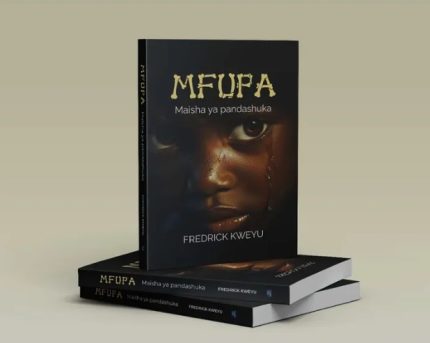
MFUPA by FREDRICK OMINA

KShs1,500.00 KShs1,000.00
Ni riwaya inayosimulia maisha ya mwandishi kutoka utotoni hadi utu uzima. Safari yake ya pandashuka maishani. " Unaweza kusahau ladha nzuri ya Samaki uliyewahi kumla, ila huwezi kusahau MFUPA uliowahi kukuchoma kwenye fizi"

Poverty, Inequality, and Democracy (A...

KShs3,500.00
The rise of populism in new democracies, especially in Latin America, has brought renewed urgency to the question of how liberal democracy deals with issues of poverty and inequality. Citizens who feel that democracy failed to improve their economic condition are often vulnerable to the appeal of political leaders with authoritarian tendencies. To counteract this trend, liberal democracies must establish policies that will reduce socioeconomic disparities without violating liberal principles, interfering with economic growth, or ignoring the consensus of the people. Poverty, Inequality, and Democracy addresses the complicated philosophical and moral issues surrounding the distribution of economic goods in free societies as well as the empirical relationships between democratization and trends in poverty and inequality. This volume also discusses the variety of welfare-state policies that have been adopted in different regions of the world. The book’s distinguished group of contributors provides a succinct synthesis of the scholarship on this topic. They address such broad issues as whether democracy promotes inequality, the socioeconomic factors that drive democratic failure, and the basic choices that societies must make as they decide how to deal with inequality. Chapters focus on particular regions or countries, examining how problems of poverty and inequality have been handled (or mishandled) by newer democracies in Latin America, Eastern Europe, Africa, and Asia. Poverty, Inequality, and Democracy will prove vital reading for all students of world politics, political economy, and democracy’s global prospects. Contributors: Dan Banik, Nancy Bermeo, Dorothee Bohle, Nathan Converse, Alberto Díaz-Cayeros, Francis Fukuyama, Béla Greskovits, Stephan Haggard, Ethan B. Kapstein, Robert R. Kaufman, Taekyoon Kim, Huck-Ju Kwon, Jooha Lee, Peter Lewis, Beatriz Magaloni, Mitchell A. Orenstein, Marc F. Plattner, Charles Simkins, Alejandro Toledo, Ilcheong Yi.

African Development and Governance St...

KShs4,500.00
NEPAD -- the New Partnership for Africa's Development -- is the latest attempt to chart a new course of good governance combined with an effective development strategy for the African continent. This volume brings together some of Africa's best economists and social scientists to reflect on Africa's previous experiences with alternative paradigms to structural adjustment and related problems. The intention is to learn from the past in order to chart viable new policy directions for the future, including critically assessing the prospects for NEPAD measuring up to the challenges involved. This rich collection of essays examines a wide range of economic issues such as the importance of planning, the continuing reality of the debt crisis, and the new parameters for regional integration in the context of the global economy. Good governance is analysed, as is corporate governance. There is a special emphasis on issues of human development, including poverty, HIV/AIDS, and the refugee problem. The assumption is that the continent's decades of experience since independence embody lessons and reflect alternative policy approaches which, if properly understood, could be of real value in charting a viable future for its people -- provided African countries are set free to chart their own courses of action that address their particular circumstances and meet the social and economic needs of their own populations. The occasion for these essays was the 70th birthday of one of Africa's most eminent economists and a leading public servant -- Professor Adebayo Adedeji. Former Executive Secretary for the Economic Commission on Africa and Under Secretary General of the United Nations,scholar, and author of numerous books and papers, Adebayo Adedeji is perhaps best known for his pioneering work developing the African Alternative Framework to Structural Adjustment at a time when the damage being caused by the latter policies being imposed on Africa was only just beginning to become clear.


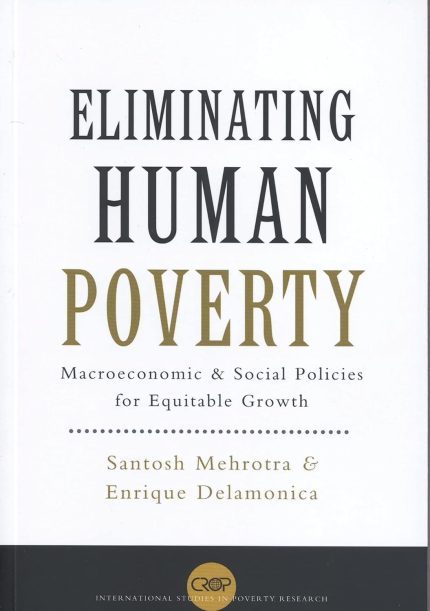
Eliminating Human Poverty: Macroecono...

KShs2,500.00
This book focuses on the provision of basic social services - in particular, access to education, health and water supplies - as the central building blocks of any human development strategy. The authors concentrate on how these basic social services can be financed and delivered more effectively to achieve the internationally agreed Millennium Development Goals. Their analysis, which departs from the dominant macro-economic paradigm, deploys the results of broad-ranging research they led at UNICEF and UNDP, investigating the record on basic social services of some 30 developing countries. In seeking to learn from these new data, they develop an analytical argument around two potential synergies: at the macro level, between poverty reduction, human development and economic growth, and at the micro level, between interventions to provide basic social services. Policymakers, they argue, can integrate macro-economic and social policy. Fiscal, monetary, and other macro-economic policies can be compatible with social sector requirements. They make the case that policymakers have more flexibility than is usually presented by orthodox writers and international financial institutions, and that if policymakers engaged in alternative macro-economic and growth-oriented policies, this could lead to the expansion of human capabilities and the fulfillment of human rights. This book explores some of these policy options. The book also argues that more than just additional aid is needed. Specific strategic shifts in the areas of aid policy, decentralized governance, health and education policy and the private-public mix in service provision are a prerequisite to achieve the goals of human development. The combination of governance reforms and fiscal and macro-economic policies outlined in this book can eliminate human poverty in the span of a generation.

The President’s Man. Book one. ...

KShs1,700.00
What is known about Hassan Al Rashid, also known as El Diablo, is that he is untouchable. A drug dealer, gunrunner and partner of the Somalia Alshabaab, he has powerful protectors deep inside government. But it is when a frustrated president sends ace detective Patrick after him and he is captured that it begins to become clear he is not just a crime lord. Part of something called The Partnership, El Diablo could be aiding the plans of a deeply secret and treasonous conspiracy built around the frustrations of the loss of the Shifta War back in the sixties. And even as the president struggles to come to terms with the deep rot now uncovered in the national security institutions, The Partnership pursues El Diablo in custody, determined to either rescue or kill him to keep him silent. Stampede is the first of a proposed trilogy called The President’s Man.

Poverty Reduction: What Role for the ...

KShs2,500.00
Poverty and social exclusion have moved up the international policy agenda, in step with the ever more obvious failure of development to reduce mass immiseration and the growing gulf of inequality which latterday capitalism has created. In this volume, local and international scholars, acknowledging that the 'trickle down' and 'natural' processes of the market do not provide a remedy, turn the spotlight on the state. In a series of general explorations of the issues involved and specific investigations in particular countries, mainly in Southern and Central Africa, they explore theoretically and empirically the difficult questions around how much can be expected of the state in poverty reduction. What political and cultural dimensions of the state need to be taken into account when considering how it should help shape activity in society? How is the role of power best analysed when considering strategies to reduce poverty? What is the meaning of pro-poor governance? What can be expected of specific interventions by government? How is the concept of citizenship incorporated in poverty reduction programmes? This volume makes two major contributions. It provides a rich seam of up-to-date information on the incidence and forms of poverty in Southern and Central Africa and the great variety of strategies and programmes by governments, aid agencies and international institutions to tackle it. Even more importantly, it throws light on the general questions, indeed the limitations and obstacles, around expecting too much of governments.

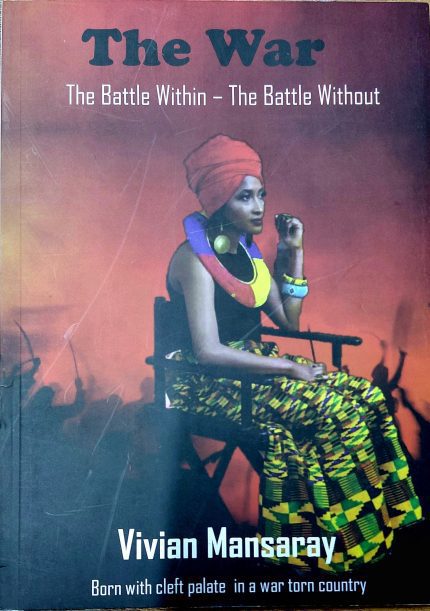
The War: The Battle Within – Th...

KShs2,000.00 KShs1,500.00
Vivian Mansaray was born in Freetown, Sierra Leone in West Africa. When she was 7 years old, the Sierra Leone civil war began. The war lasted for 11 years and left over 50,000 people dead and about half a million others displaced. This war found her already in a bigger war-front; at birth, her vocal cord failed to develop due to cleft palate condition. In this book, she shares her life experiences, including circumstances where she hanged onto life with a thread thinner than a cobweb strand. She relocated to Kenya at 22 years and studied aviation and beauty courses and also underwent surgery to correct her speech. She has modelled in Kenya, with a wide interaction with the modelling space in the country and at one point, she was featured by a Nairobian newspaper. Vivian is very passionate about girl-child mentorship and runs a charity program that focusses on sanitary towel donations to young girls, especially those in the school-going age bracket. She also does clothing donations to the elderly and poor families in the community. Besides sharing her transformational story, her main drive in writing this book is to inspire hope and courage to the readers. Part of the proceeds raised through this book project will be dedicated towards her charity programs.

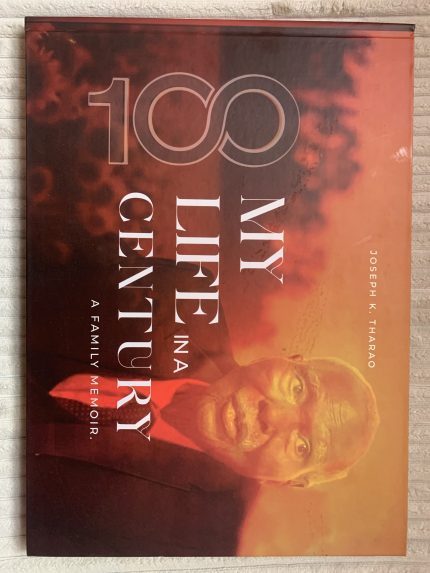
My Life in a Century: A Family Memoir...

KShs2,500.00
A memoir by Joseph Tharao detailing his rise in rank in the prison service

The Road to Peace: In Pursuit of Valu...

KShs1,500.00
The Road to Peace is a timely book that addresses the challenges of the present socioeconomic and political conjecture in the life of the Kenyan nation-state and our African continent as a whole

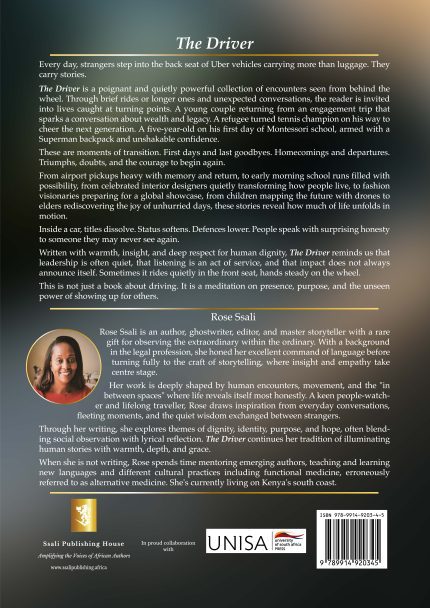
The Driver: The Conversations Between...

KShs1,250.00
Inside a car, titles dissolve. Status softens. Defences lower. People speak with surprising honesty to someone they may never see again.

BETWEEN TWO WORLDS by SAYYIDA ALI

KShs1,500.00 KShs1,400.00
Between Two Worlds is a heartfelt story of family, sacrifice, forgiveness, and hidden truths, reminding us that behind every silence lies a story, and that healing begins when we find the courage to face the truth.

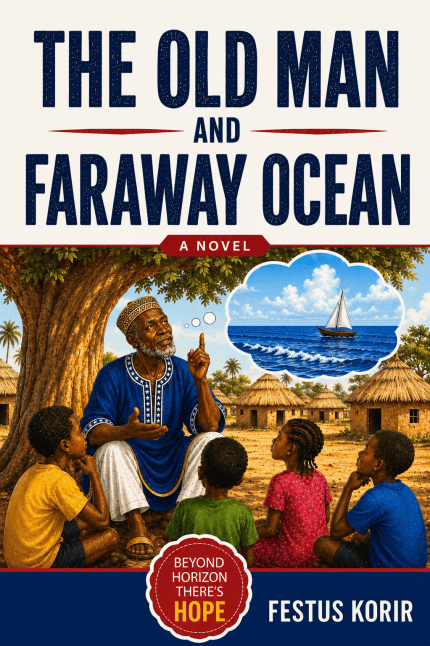
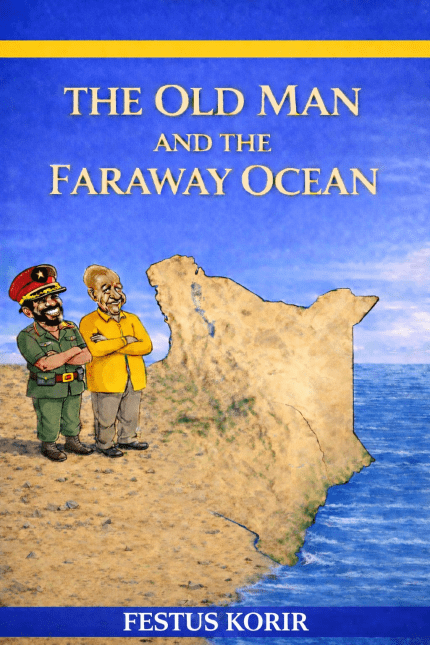
THE OLD MAN AND FARAWAY OCEAN BY FEST...

KShs1,250.00 KShs1,000.00
The Old Man and Faraway Ocean is a heartwarming novel about life, memories, loss, courage and hope. Through a powerful journey beyond the waves, it explores the experiences that shape us and the strength found in facing the past. What It Solves It speaks to readers struggling with loss, loneliness, regret and difficult life transitions, offering a message of hope, resilience, healing and the courage to begin again.

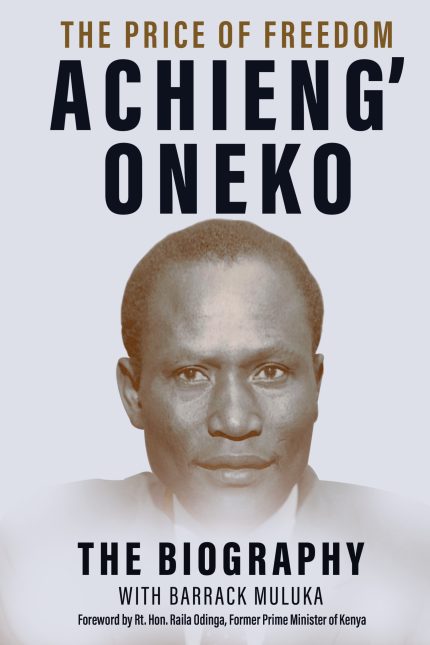
The Price of Freedom Achieng Oneko: T...

KShs4,000.00 KShs3,500.00
Ramogi Achieng’ Oneko’s public life is a story of resilience and courage, as well as sacrifice and betrayal, in the pursuit of the State that Kenyans have yearned for. Oneko was among the most consequential figures in the struggle for Kenya’s independence in the 1950s and in the early 1960s, collectively known as the Kapenguria Six, after the sham trial they endured in Kapenguria, northwestern Kenya, following their arrest on 20 October 1952. Also arrested alongside Oneko by the British colonial authorities in the Kenya Colony were Jomo Kenyatta, Paul Ngei, Bildad Kaggia, Kung’u Karumba, and Fred Kubai. This book is a narrative of Oneko’s heroic life and times, largely as told by himself, and also carefully reconstructed from notes he left behind at the time of his death in 2007. It also draws from other historical sources and authorities, including primary source eye-witness accounts, to give a powerful eye–opener to the true story of the elusive quest for a Kenyan nation. The narrative explores key debates surrounding land, nationalism, governance, and post-independence state formation. Through Oneko’s reflections, you get to gain insight into the aspirations and tensions that accompanied the transition from colonial rule to self-government. This volume is an invaluable addition to the repository of the Kenyan narrative, for anyone interested in the country’s true story.