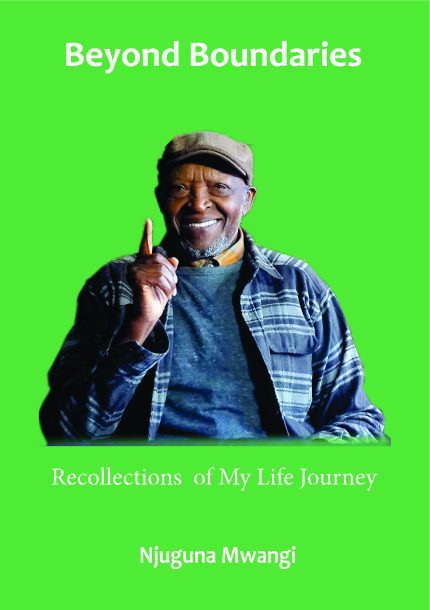
In Beyond Boundaries, Njuguna Mwangi leads readers on an extraordinary odyssey spanning nearly eight decades—from the dusty trails of colonial Kenya to the modern cities of Europe, Asia, and North America. What begins as a memoir becomes a profound reflection on faith, freedom, and the search for identity.
Mwangi’s recollections of childhood under colonial rule vividly capture the silent courage and hidden heroism of Kenya’s fight for independence. He recalls the executions of November 30, 1953, and the haunting story of two Itungati who chose suicide rather than endure more torture—stark reminders of the price of liberation and the depth of human resilience.
Beyond personal memory, Mwangi confronts the ideological machinery of colonization—especially the manipulation of religion. He exposes how the infamous “Slave Bible Doctrine” was used to shape policies of dominance, exploitation, and suppression—all deceitfully couched as the will of God to the colonized. Yet by revisiting the Council of Jerusalem (Acts 15:20 onwards), he reminds readers that early Christianity was never meant to erase indigenous cultures, but to coexist with them.
Drawing from decades of service as a civil servant, macroeconomist, and United Nations advisor, Mwangi offers an insider’s view of postcolonial Africa—its promise, contradictions, and evolving identity. His global travels—from the Sámi of Northern Sweden and the First Nations of North America to communities across Europe, Asia, and Sub-Saharan Africa—reinforce his conviction in the oneness of humanity, best expressed through the richness of diverse cultures.
Ultimately, Beyond Boundaries transcends memoir. It is a spiritual and intellectual manifesto calling Africans to free themselves from the psychological scars of colonization. True liberation, Mwangi insists, begins not on the battlefield but in the awakening of the mind and the restoration of the soul.