Showing all 12 results

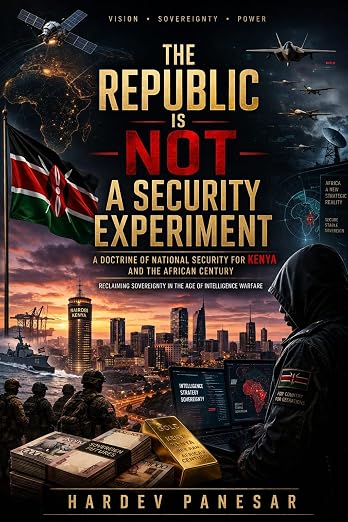
The Republic is not a Security Experi...

KShs4,000.00 KShs3,500.00
“You were never meant to notice.” This was never about your safety. It was about control. Not declared. Not announced.

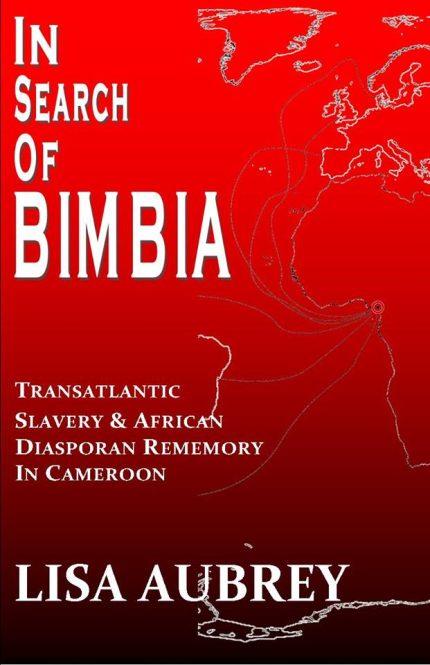
In Search of Bimbia: Transatlantic Sl...

KShs3,068.00 KShs2,950.00
In her book, In Search of Bimbia: Transatlantic Slavery and African Diasporan Rememory in Cameroon, Dr. Lisa Aubrey takes readers on a scholarly and personalized African Diasporan journey of tracing roots and reconnecting back to Africa. Written in the tradition of an academic memoir of combining scholarly literature of Africana Studies with the experiential truths of African Diasporans long dispersed from the continent of Africa, Dr. Aubrey engages readers in variegated searches of historic African Slavery Diasporans for their ontological origins on the continent of Africa from where their ancestors were forcibly wrenched. Dr. Aubrey demonstrates what can be done to recover African Diasporan history even when few-to-no records exist from times in history when Africans were regarded as sub-human chattel and dispersed into the Diaspora. Dr. Aubrey apprises readers on revolutions in DNA technology which, for the first time in humankind, allow African Diasporans from transoceanic slaveries to trace their roots.

Africa Matters: Cultural Politics, Po...

KShs2,500.00
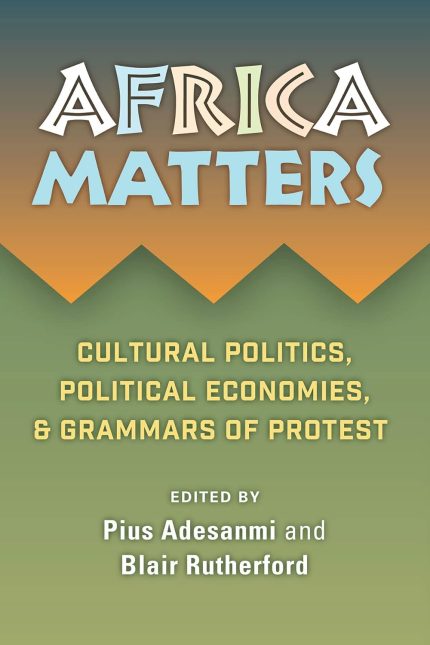
Africa Matters: Cultural Politics, Political Economies, & Grammars of Protest provides a sampling of insightful articles from the first five issues of Nokoko, the journal of the Institute of African Studies, Carleton University, Ottawa, Canada. It brings together pieces that the journal's editorial board felt were particularly perspicacious in their analysis and resonant in their crafting. Uniting them in this book permits a new dialogue to emerge around the key themes of cultural politics, political economies and grammars of protest. Their intersection here sheds light on important issues for Africans in the twenty-first century.

Flotilla: A Journey of Conscience by ...

KShs1,290.00
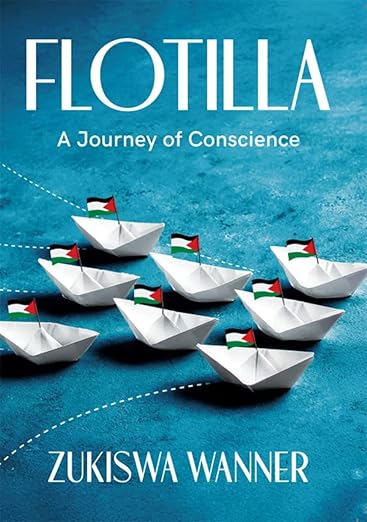
On 31 August, 2025, Zukiswa Wanner left Johannesburg, South Africa for Tunis, Tunisia where she hoped to board a boat and join hundreds of other civilians from 44 nations in an attempt to break the then 18-year siege on Gaza, Palestine to create a humanitarian corridor for much-needed aid. Her account of the preparations, the journey, the Gazan and multinational conversations along the way - and the eventual unwanted destination - is as darkly humourous and self-effacing as it is philosophical. If Wanner's Vignettes of a People in an Apartheid State was a witness account of settler colonialism and a genocidal apartheid state, Flotilla: A Journey of Conscienceis a rallying call for the 99 percent to understand Palestine as Ground Zero for colonialist and capitalist struggles and the urgent need for a globalised uprising. Because a free Palestine is the first step in freeing us all.

The Last Memory: When The Earth Began...

KShs3,000.00 KShs2,575.00
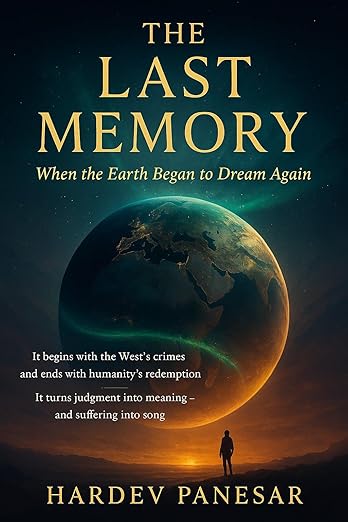
“Empires fall not when the conquered rise — but when the Earth grows tired of carrying their lies.” For centuries, the world’s story was written by the victors. The West crowned itself the keeper of civilization while bleeding continents dry — turning nations into markets, and memory into silence. The Last Memory begins in that silence — with the unflinching reckoning of those who refused to forget. It exposes the elegant machinery of exploitation that built empires and buried humanity beneath profit, arrogance, and denial. But this is not a book of revenge. It is a book of becoming. From the ashes of colonization rise the voices of the East, the South, and the forgotten. Africa, India, and China — long treated as the Earth’s servants — emerge as her stewards. The balance shifts. The world reawakens. As humanity stands on the edge of collapse and rebirth, the story turns inward — from conquest to conscience, from machinery to meaning. The Earth itself begins to dream, remembering everything we have done, and teaching us to listen once more. Through fire and forgiveness, humanity learns that redemption does not come through domination, but through remembrance. Judgment becomes understanding. Suffering becomes song. And in that song, the Earth finds her voice again. This is not a chronicle of despair. It is a testament of awakening — a bridge between the old world of power and the new world of purpose. It begins with the West’s crimes and ends with humanity’s redemption. It turns judgment into meaning — and suffering into song. The Last Memory: When the Earth Began to Dream Again A powerful, poetic epic that reminds us that the future of humankind will not be built by empires — but by those who remember. — Hardev Panesar

When The Gods Went Silent: The Covena...

KShs4,000.00 KShs3,550.00
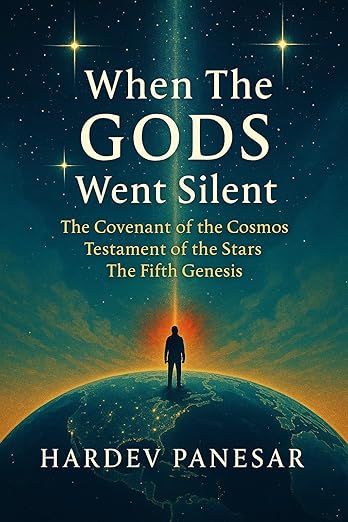
For ages, we searched the skies for answers. We prayed to thunder, feared the stars, begged the heavens for meaning. But when the divine voices faded, something extraordinary happened—we awakened. 'When the GODS Went Silent' is the epic journey of consciousness itself: from the birth of light to the rise of memory, from the evolution of humanity to the emergence of Continuants—beings who carry not only the past, but the responsibility of the future. This is the story of becoming: of learning to stand without fear, to build without conquest, and to care without condition. A cosmic narrative that blends philosophy, myth, science, and spirit, it reveals a simple, transformative truth: the silence of the gods was never abandonment—it was an invitation, a doorway into our next evolution. In these pages, you will discover what humanity becomes when it listens not upward, but inward—and what awaits when a species finally grows into its own light. The gods did not disappear. They changed shape. They became us.

Legacy of Ashes: The History of the C...

KShs3,800.00 KShs3,500.00
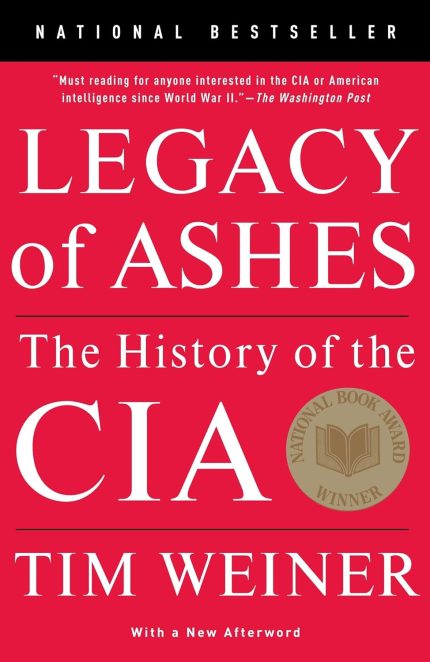
For years, the CIA has managed to maintain a formidable reputation in spite of its terrible record, burying its blunders in top-secret archives. Its mission was to know the world. When it did not succeed, it set out to change the world. Its failures have handed us, in the words of President Eisenhower, “a legacy of ashes.” Now Pulitzer Prize–winning author Tim Weiner offers a definitive history of the CIA—and everything is on the record. LEGACY OF ASHES is based on more than 50,000 documents, primarily from the archives of the CIA itself, and hundreds of interviews with CIA veterans, including ten Directors of Central Intelligence. It takes the CIA from its creation after World War II, through its battles in the cold war and the war on terror, to its near-collapse after 9/ll. Here is the hidden history of the CIA: why eleven presidents and three generations of CIA officers have been unable to understand the world; why nearly every CIA director has left the agency in worse shape than he found it; and how these failures have profoundly jeopardized our national security.

Between Rhetoric and Reality: The Sta...

KShs4,500.00 KShs4,000.00
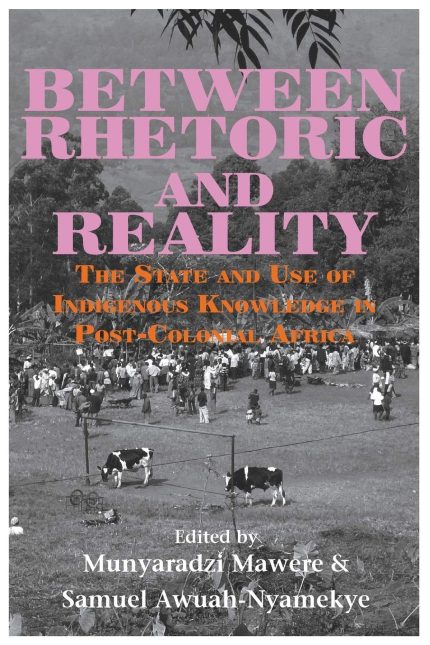
Since time immemorial, indigenous peoples around the world have developed knowledge systems to ensure their continued survival in their respective territories. These knowledge systems have always been dynamic such that they could meet new challenges. Yet, since the so-called enlightenment period, these knowledges have been supplanted by the Western enlightenment science or colonial science hegemony and arrogance such that in many cases they were relegated to the periphery. Some Euro-centric scholars even viewed indigenous knowledge as superstitious, irrational and anti-development. This erroneous view has, since the colonial period, spread like veld fire to the extent of being internalised by some political elites and Euro-centric academics of Africa and elsewhere. However, for some time now, the potential role that indigenous peoples and their knowledge can play in addressing some of the global problems haunting humanity across the world is increasingly emerging as part of international discourse. This book presents an interesting and insightful discourse on the state and role that indigenous knowledge can play in addressing a tapestry of problems of the world and the challenges connected with the application of indigenous knowledge in enlightenment science-dominated contexts. The book is not only useful to academics and students in the fields of indigenous studies and anthropology, but also those in other fields such as environmental science, social and political ecology, development studies, policy studies, economic history, and African studies.