Showing all 10 results

Echo of My Father’s Voice: A Jo...

KShs999.00 KShs950.00

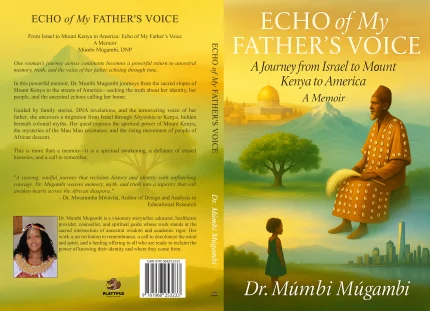
In this riveting and deeply spiritual memoir, Dr. Mumbi Mugambi traces her journey from the foothills of Mount Kenya to the United States, uncovering truths buried beneath colonial myths and systemic erasure. Fueled by childhood stories of “Micii Mikuru”—ancestral homes in Israel and Abyssinia—she embarks on a quest to understand her Kikuyu identity. DNA tests, oral history, and her father's unwavering testimony unveil an ancient migration from the Middle East to East Africa. Along the way, she confronts racism, questions dominant historical narratives, and discovers a rising movement among  diverse people of African descent reclaiming their identity and true origins. From Israel to Mount Kenya to America is both a personal odyssey and a collective awakening—a call to remember, restore, and rise.

A People Called the Agikuyu: Yesterda...

KShs4,500.00 KShs4,300.00
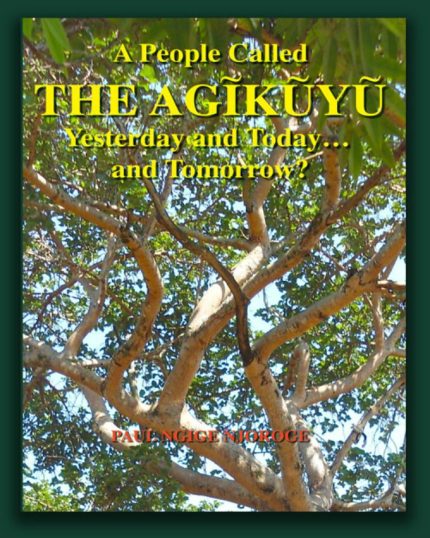
A People Called the Agikuyu: Yesterday and Today … and Tomorrow? Around A.D. 1000, a community of Bantu-Thagicu speakers left their Nyambene Hills area settlement in Igembe-Tigania, in present-day Meru country in central-eastern Kenya, in search of new homes. By A.D. 1400, this community had split into distinct, but closely related, Thagicu-speaking groups occupying a region running from Meru, through Embu and Kirinyaga to Murang’a. These groups were – from north to south – the Tharaka, Cuka, Embu, Mbeere, Gicugu, Ndia, and the Agikuyu. Gikuyu national consciousness goes back to the early 1400s. In the next 400 years, the Agikuyu would expand into Nyeri, Kiambu and parts of Nyandarwa – to occupy the land between the Four Mountains, namely Kirinyaga (Mount Kenya), Kia-Nyandarwa (the Nyandarwa Range), Kia-Njahi (Kilimambogo), and Kia-Mbiruiru (Ngong Hills). The British settler-colonialists, as they penetrated the interior of Kenya in the late 19th century, encountered the Agikuyu building fortified villages on the outskirts of the area that would grow into Nairobi. on the southern frontier – and stopped Gikuyu expansion in its tracks. What followed was the brutal and tragic drama of a war of conquest and inevitable resistance. The resistance was suppressed. But within the ensuing half century, the Mau Mau war of liberation would break out, and the Agikuyu and their Thagicu (now GEMA) cousins would suffer ruthless suppression by the mighty British Empire. This is the story of the Agikuyu, from their beginnings, through their encounter with foreign white rule, their contribution to Kenya’s liberation, and their mixed fortunes since Kenya’s national independence – what with their remarkable contribution to nation-building and economic development, but also their tragic experiences, including attempts at ethnic cleansing targeting them, their GEMA brothers and sisters and other communities in the 1990s, and also, most painfully, in 2007-8. The story is set against the historical background of the trans-Atlantic slave trade, the Scramble for and Partition of Africa, the struggles for the self-determination of African nation-states, as well as nation building in a brutal Globalized ‘New World Order” under the control of the Imperialist Western powers, The author, Paul Ngige Njoroge, studied literature at Makerere and Nairobi Universities. He has worked as a teacher and a book-publishing editor.

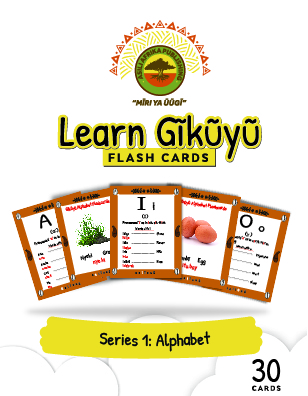
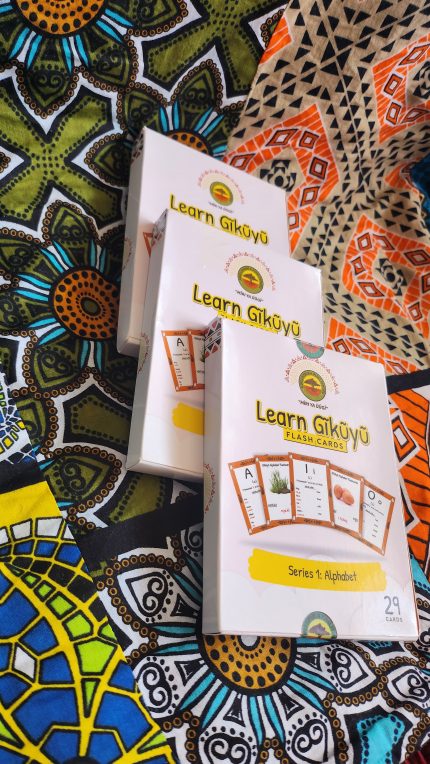
Learn Gῖkũyũ Flashcards Series 1: Alp...

KShs1,200.00
Start your journey of learning Gīkūyū here. Series 1 of the Learn Gīkūyū Flashcards presents the rules of the alphabet step by step, to help you easily master the building blocks of the language. In each card, you will learn how a specific letter is pronounced, example words that use the letter, plus images to help you learn and remember new words.  

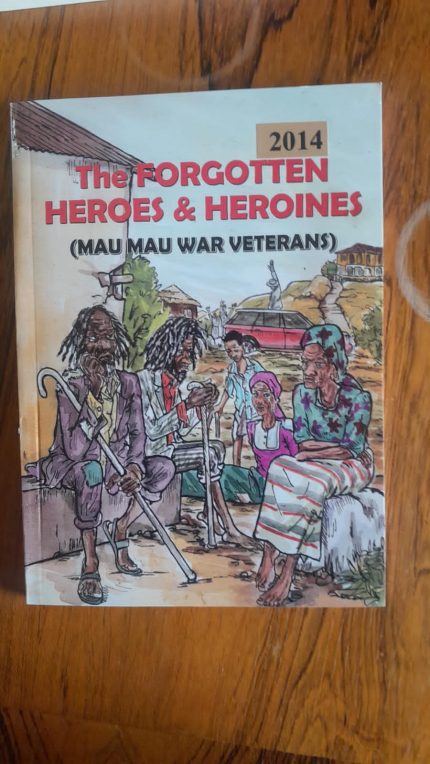
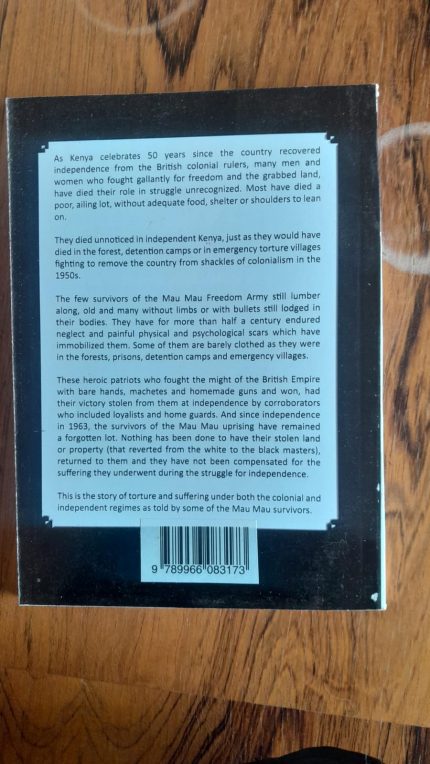
The Forgotten Heroes and Heroines ( M...

KShs1,000.00 KShs600.00
The Forgotten Heroes and Heroines ( Mau Mau War Veterans ) by Gitu wa Kahengeri

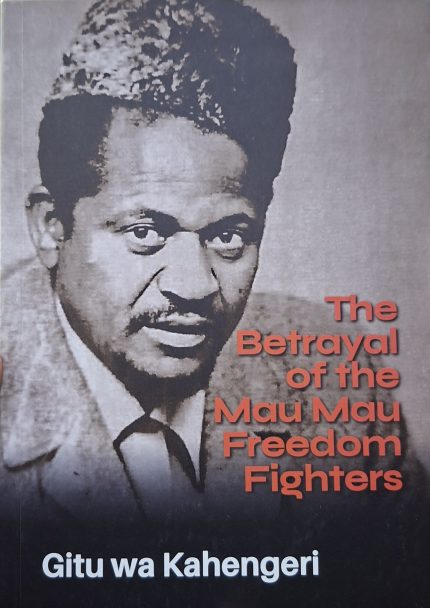
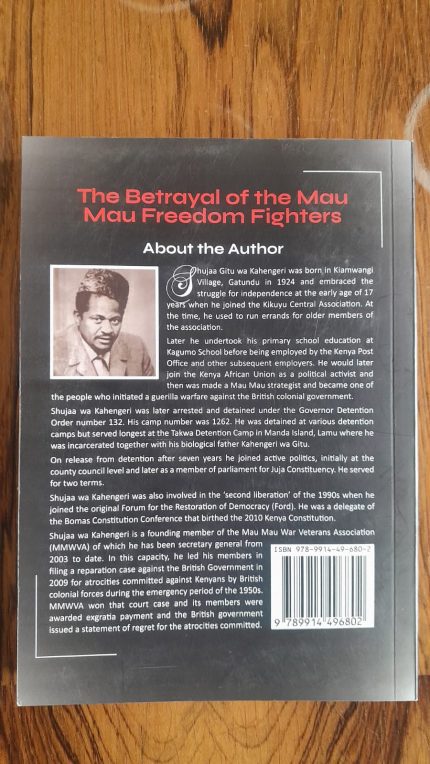
The Betrayal of the Mau Mau Freedom F...

KShs1,400.00 KShs1,000.00
The Betrayal of the Mau Mau Freedom Fighters by Gitu wa Kahengeri

Disco Matanga by Alexander Nderitu

KShs1,500.00 KShs1,000.00

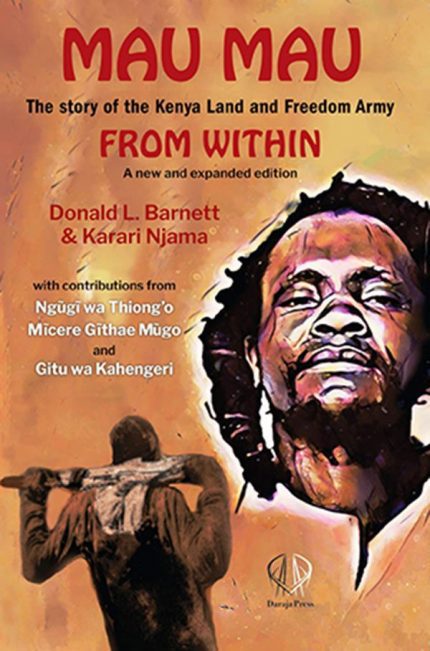
Mau Mau From Within: The Story of the...

KShs4,000.00 KShs3,500.00
The inside story of the struggles of the Kenya Land and Freedom Army, referred to by British colonialism as the ‘Mau Mau rebellion’, is little known today. The autobiographical material written by Karari Njama (a senior leader in the Mau Mau hierarchy) and compiled by Donald L. Barnett was first published by Monthly Review Press in 1966, as Mau Mau From Within: An analysis of Kenya’s Peasant Revolt. It was reprinted in 1970; it has remained out of print for many years. As the late Basil Davidson put it in his review of the first edition: “Njama writes of the forest leaders’ efforts to overcome dissension, to evolve effective tactics, to keep discipline, mete out justice … and to teach men how to survive in those merciless forests. His narrative is crowded with excitement. Those who know much of Africa and those who know little will alike find it compulsive reading. Some 10,000 Africans died fighting in those years . Here, in the harsh detail of everyday experience, are the reasons why.” The book is an extraordinary story of courage, passion, heroism, combined with recounting of colonial terror, brutality and betrayal. It is a story of how the very idea of being ‘Kenyan’ was intimately linked to the idea of freedom, a connection that was destroyed not only by the firepower of the British, but also by those who collaborated and established themselves as the beneficiaries of neocolonial rule. Disconnecting notions of freedom from identity left only a caricature that rapidly descended into tribalism and ethnicity. This momentous story of the struggle for freedom described here is relevant not only for a new generation of Kenyans but also for all those engaged in emancipatory struggles internationally. For so long as the experiences arising from the struggles described in this book are perceived as merely ‘African’ or ‘Kenyan’, it is not possible to fully grasp the contributions they have made to the struggle for a universalist humanity. What is recounted in this publication is more than an ‘analysis of a peasant revolt’. It is above all a history of the Kenya Land and Freedom Army. As Ngūgī wa Thiong’o points out in his Preface to this new edition, ‘we don’t have to use the vocabulary of the colonial to describe our struggles.’ We were tempted to rename the book ‘Kenya Land and Freedom Army from Within.’ But because the original title has wide recognition, and and as one of the characteristics of movements of the oppressed is to appropriate derogatory terms

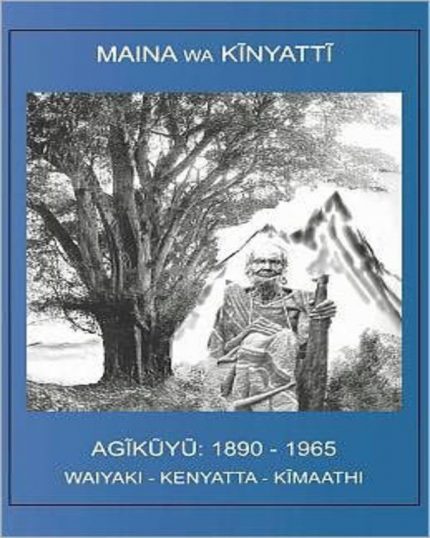
The Agikuyu: 1890 – 1965 by Mai...

KShs3,000.00 KShs2,790.00
Brief Summary Author Maina wa Kinyatti, who has written extensively on the history of the Mau Mau, breaks fresh ground in this treatise, first delivered in The Gikuyu language. The Agikuyu people with their cousins--Embu, Miiru, Mbeere and Akamba--are the inhabitants of central Kenya, which was the epicenter of the decade-long Mau Mau war of liberation. In this book, Kinyatti deftly navigates through the early phases of Kenya's history from the invasion and occupation of the country by the British imperialists and the Africans' spirited response to repression, which would find expression in formulations such as the Kenya African Union (KAU). Kinyatti pays close attention to KAU's towering figures like Jomo Kenyatta, the country's future founding president. He explains how his complicated role in the national struggle--anti-imperialism on one hand, and Mau Mau ambivalence on the other--would lead to his mistaken Author Maina wa Kinyatti, who has written extensively on the history of the Mau Mau, breaks fresh ground in this treatise, first delivered in The Gikuyu language. The Agikuyu people with their cousins--Embu, Miiru, Mbeere and Akamba--are the inhabitants of central Kenya, which was the epicenter of the decade-long Mau Mau war of liberation. In this book, Kinyatti deftly navigates through the early phases of Kenya's history from the invasion and occupation of the country by the British imperialists and the Africans' spirited response to repression, which would find expression in formulations such as the Kenya African Union (KAU). Kinyatti pays close attention to KAU's towering figures like Jomo Kenyatta, the country's future founding president. He explains how his complicated role in the national struggle--anti-imperialism on one hand, and Mau Mau ambivalence on the other--would lead to his mistaken

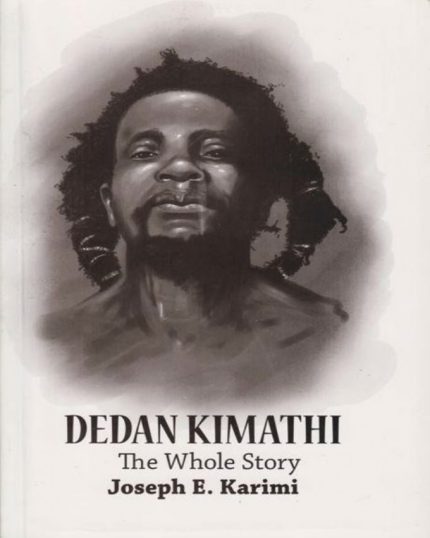
Dedan Kimathi The Whole Story by Jose...

KShs1,800.00 KShs1,490.00
Brief Summary Writer takes an honest look at the life and times of Dedan Kimathi, Kenya’s foremost freedom fighter at his Kimathi Street corner statue in Nairobi, a dreadlocked Dedan Kimathi is a small, frail, bent old man struggling to lift his rifle. That is the public image of the greatest Kenyan ever to live. Old, frail, starved. The sculptors were not helped by a literature that portrays Mau Mau adherents as bloodthirsty, atavistic, rural, poor and illiterate. Which child wants this for his grandpa? Yet image is everything. ISBN:9789966229724 Author:Joseph Karimi