Showing all 15 results

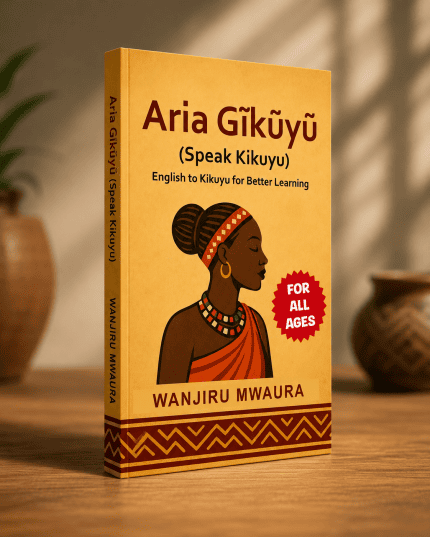
Aria Gĩkũyũ (Speak Kikuyu) English to...

KShs2,000.00
Aria Gĩkũyũ (Speak Kikuyu) is an English-to-Gĩkũyũ language guide designed to help beginners and heritage learners speak, read, and understand Gĩkũyũ with confidence. Through simple vocabulary, grammar, everyday conversations, and practical exercises, the book supports self-paced learning while promoting the preservation and appreciation of the Gĩkũyũ language and culture.

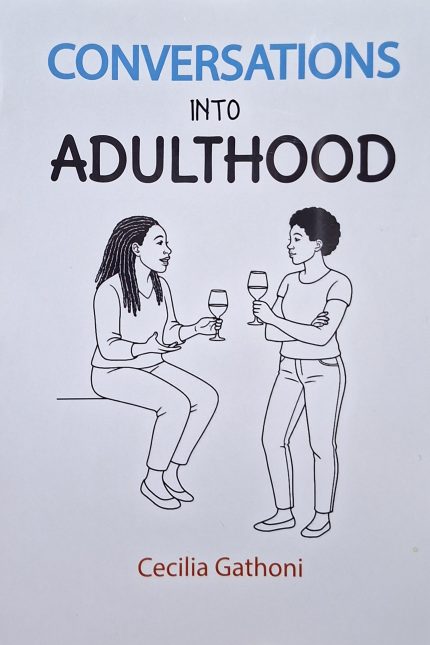
Conversations into Adulthood by Cecil...

KShs1,500.00 KShs1,350.00
Conversations into Adulthood is a hilarious tragedy that invites you to an open discussion of difficult topics from a light-hearted point of view. The topics stretch from grief to death suicide to racism, colonialism to friendship, with a climax that confronts the reader with soul-searching questions of what joy and happiness are, and sets contentment as a rea goal.

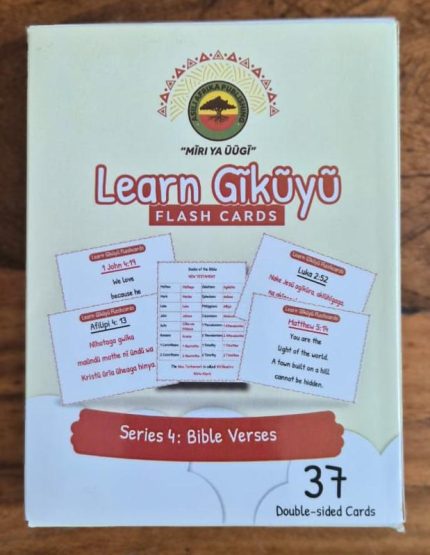
Learn Gῖkũyũ Flashcards Series 4: Bib...

KShs1,100.00

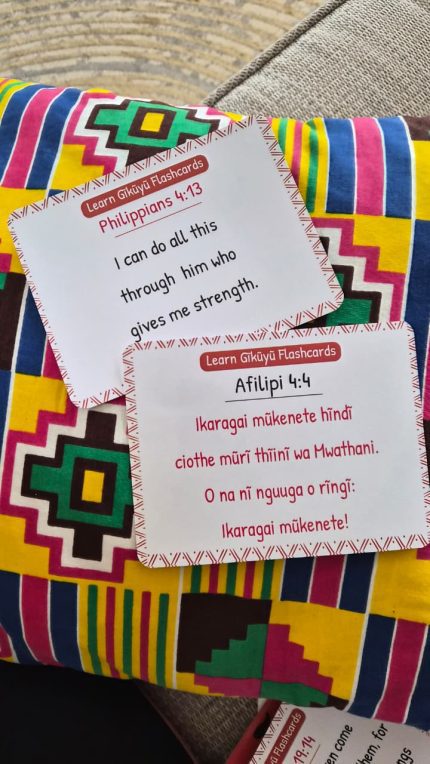
Series 4 of the Learn Gīkūyū Flash cards is designed to improve your ability to read complete sentences through repetitive speech.

These cards have 37 of the most popular bible verses, translated in English and Gīkūyū. They are designed to improve your ability to speak the language fluently. Practice by reading them out loud to a friend. Recite them often to refine your pronunciation and tone, as well as build confidence.

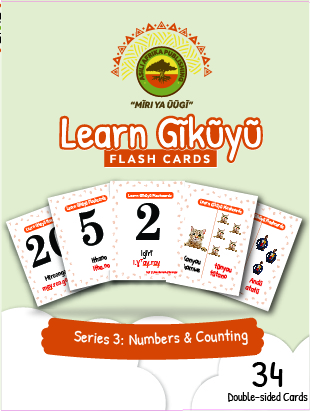
Learn Gῖkũyũ Flashcards Series 3: Num...

KShs1,200.00
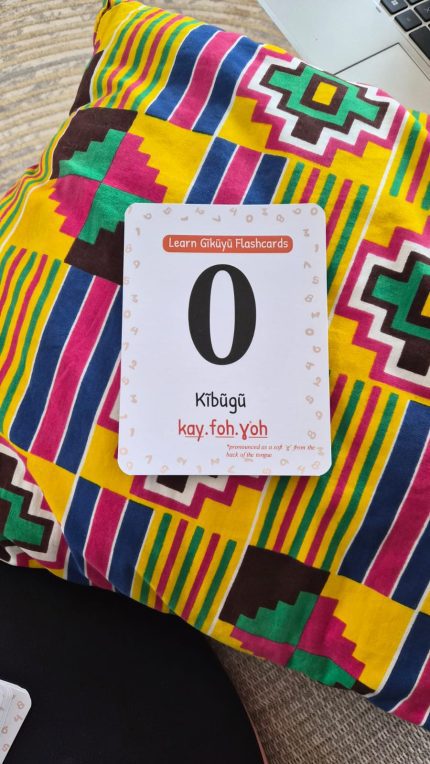
These cards make counting in Gīkūyū as easy as 1 2 3!

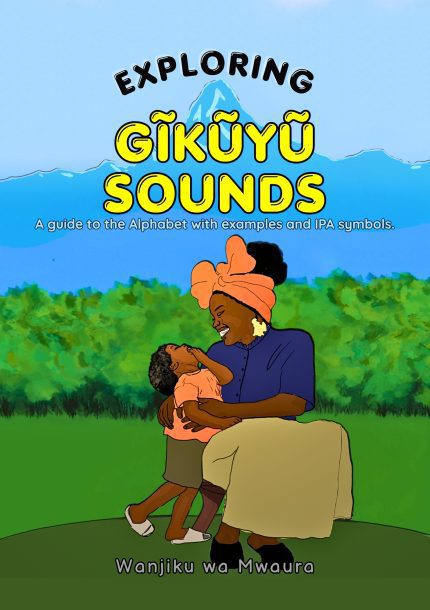
Exploring Gĩkũyũ Sounds

KShs570.00
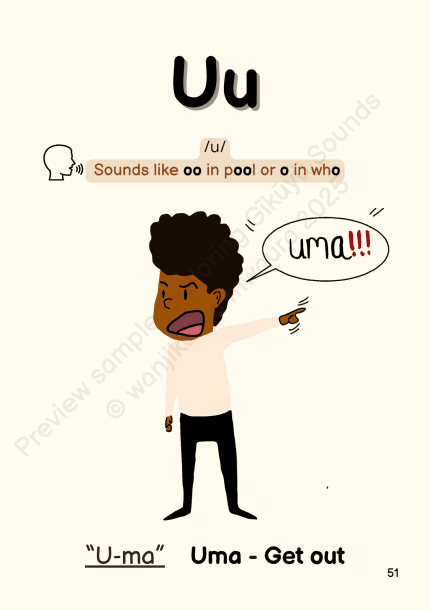
A relatable illustrated guide to the Gĩkūyū alphabet and sounds with IPA (international phonetic alphabet) chart symbols for easy pronunciation.

A People Called the Agikuyu: Yesterda...

KShs4,500.00 KShs4,300.00
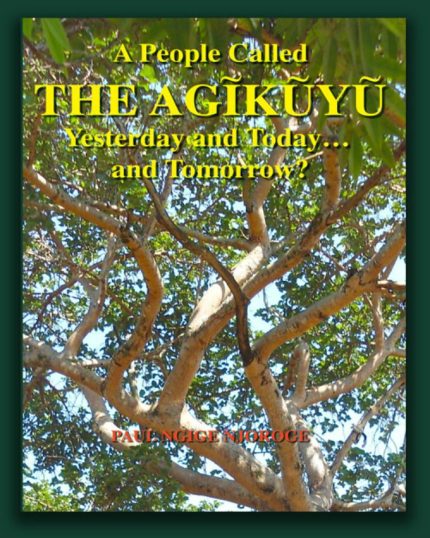
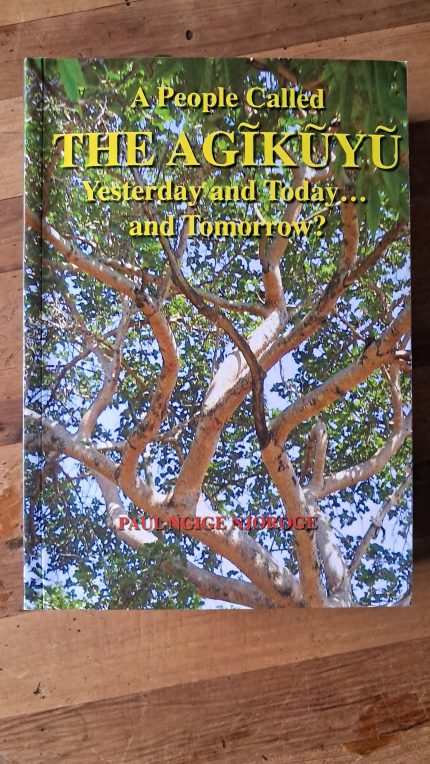
A People Called the Agikuyu: Yesterday and Today … and Tomorrow? Around A.D. 1000, a community of Bantu-Thagicu speakers left their Nyambene Hills area settlement in Igembe-Tigania, in present-day Meru country in central-eastern Kenya, in search of new homes. By A.D. 1400, this community had split into distinct, but closely related, Thagicu-speaking groups occupying a region running from Meru, through Embu and Kirinyaga to Murang’a. These groups were – from north to south – the Tharaka, Cuka, Embu, Mbeere, Gicugu, Ndia, and the Agikuyu. Gikuyu national consciousness goes back to the early 1400s. In the next 400 years, the Agikuyu would expand into Nyeri, Kiambu and parts of Nyandarwa – to occupy the land between the Four Mountains, namely Kirinyaga (Mount Kenya), Kia-Nyandarwa (the Nyandarwa Range), Kia-Njahi (Kilimambogo), and Kia-Mbiruiru (Ngong Hills). The British settler-colonialists, as they penetrated the interior of Kenya in the late 19th century, encountered the Agikuyu building fortified villages on the outskirts of the area that would grow into Nairobi. on the southern frontier – and stopped Gikuyu expansion in its tracks. What followed was the brutal and tragic drama of a war of conquest and inevitable resistance. The resistance was suppressed. But within the ensuing half century, the Mau Mau war of liberation would break out, and the Agikuyu and their Thagicu (now GEMA) cousins would suffer ruthless suppression by the mighty British Empire. This is the story of the Agikuyu, from their beginnings, through their encounter with foreign white rule, their contribution to Kenya’s liberation, and their mixed fortunes since Kenya’s national independence – what with their remarkable contribution to nation-building and economic development, but also their tragic experiences, including attempts at ethnic cleansing targeting them, their GEMA brothers and sisters and other communities in the 1990s, and also, most painfully, in 2007-8. The story is set against the historical background of the trans-Atlantic slave trade, the Scramble for and Partition of Africa, the struggles for the self-determination of African nation-states, as well as nation building in a brutal Globalized ‘New World Order” under the control of the Imperialist Western powers, The author, Paul Ngige Njoroge, studied literature at Makerere and Nairobi Universities. He has worked as a teacher and a book-publishing editor.

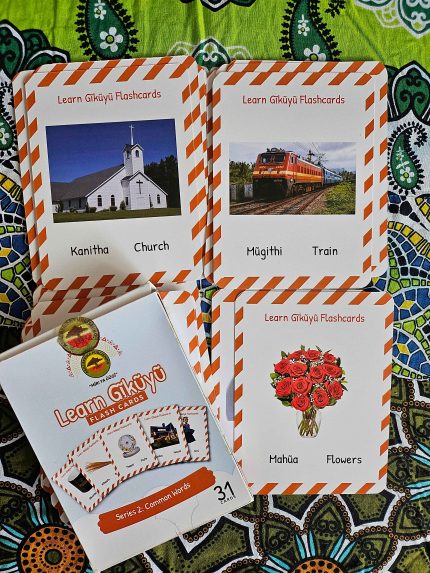
Learn Gῖkũyũ Flashcards Series 2: Com...

KShs1,200.00
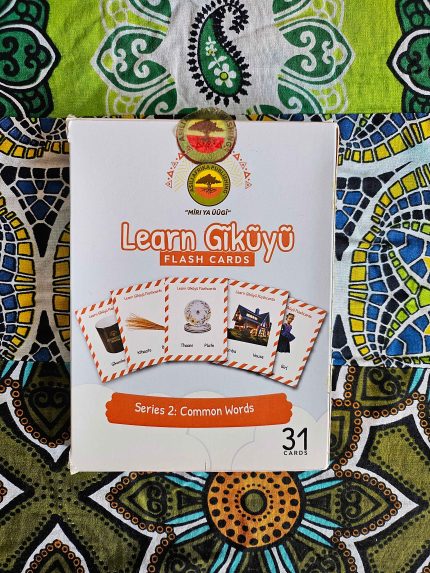
The Learn Gīkūyū Flashcards Series offers a fun interactive way to learn this beautiful language.

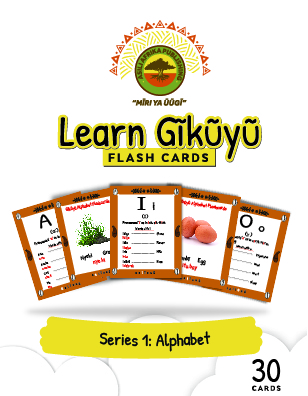
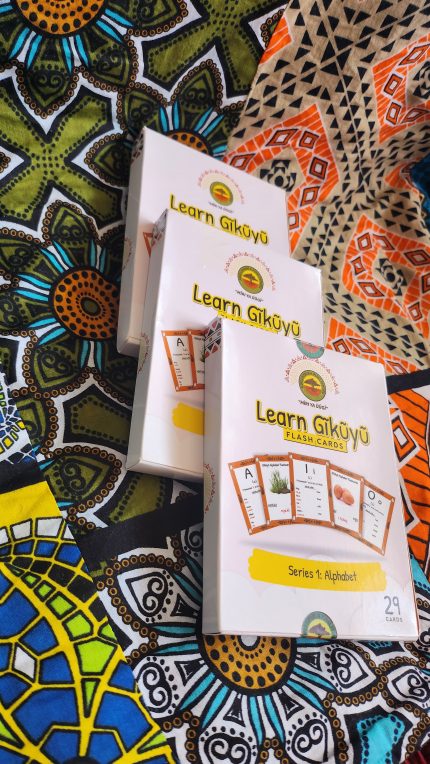
Learn Gῖkũyũ Flashcards Series 1: Alp...

KShs1,200.00
Start your journey of learning Gīkūyū here. Series 1 of the Learn Gīkūyū Flashcards presents the rules of the alphabet step by step, to help you easily master the building blocks of the language. In each card, you will learn how a specific letter is pronounced, example words that use the letter, plus images to help you learn and remember new words.  

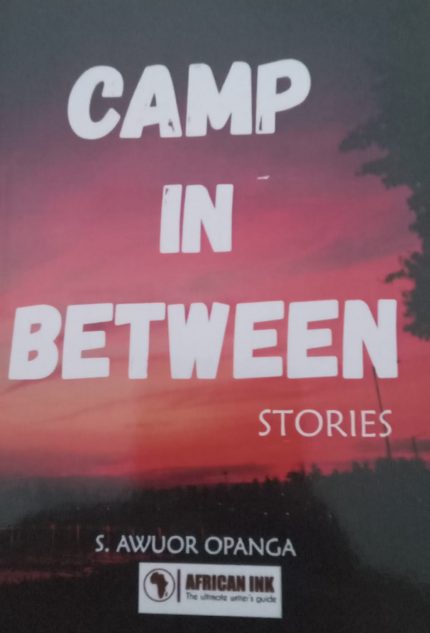
Camp In Between by Beatty Sheila Opanga

KShs1,000.00 KShs850.00
Camp in Between is a collection of six exhilarating stories, with various plots, set in various towns in Kenya, woven together by the author’s inventive use of Kenya’s many languages, her humorous wit, and fearless bluntness, majorly to ask one question, what makes a good parent? Love within and without the bounds of morality addressed, and so is history and a little bit of Kenya’s constantly unstable style of government and where that might lead us.

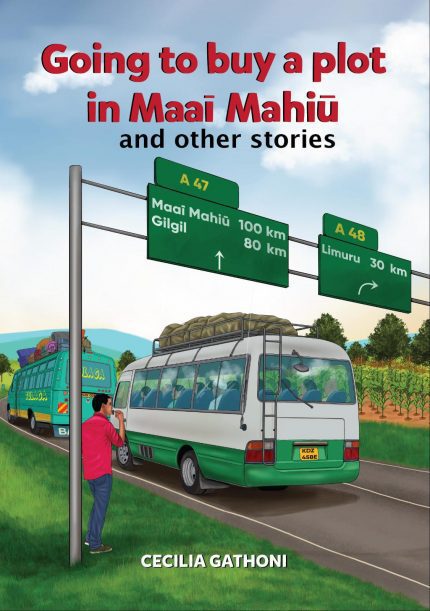
Going to buy a plot in Maaī Mahiū by ...

KShs1,050.00 KShs1,000.00
Going to buy a plot in Maaī Mahiū is a collection of life experiences. It is a glorification if the mundane. It’s a look at the details of life that we miss as we rush towards the life we think we should be living. In spite of what status we attain in life, there is a settled comfort that comes from cleaning a glass,wiping the dinner table, Soaking your dish cloths in Ariel so they don’t embarrass you with the smell. And basically, that is what life is all about. The book uses satire. Satire is a literary or rhetorical device that uses irony, sarcasm, or wit to expose and criticize the flaws, vices, or shortcomings of individuals, institutions, or society as a whole. It often employs exaggeration, parody, or ridicule to provoke thought, challenge norms, and provide social commentary. The goal is not only to entertain but also to highlight and critique societal issues, hypocrisy, absurdities, or injustices. By using humor and clever wordplay, satire aims to provoke introspection and foster change or improvement in the subjects being satirized.

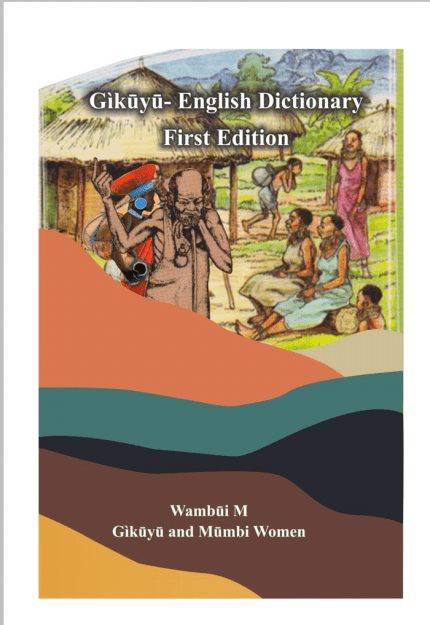
Gìkūyū- English Dictionary First Edition

KShs1,690.00 KShs1,400.00
This is the Gìkūyū - English Dictionary First Edition.

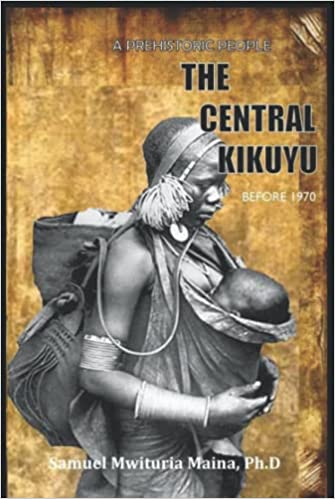
A Prehistoric People THE CENTRAL KIKU...

KShs7,000.00 KShs6,500.00
The central Gĩkũyũ occupy Mũrang’a County, which is in the central part of Kenya. At various times in history, the central gikuyu territory has been known as Ithanga, Mũkũrwe-inĩ, Gĩkuyu, Kĩrĩnyaga, Metumi, Fort Hall and finally Mũrang’a. They are the original Gĩkũyũ and direct descendants of Gĩkũyũ and Mũmbi. The country of the central Gĩkũyũ,' whose system of tribal organisation will be described in this book, lies between the southern Gĩkũyũ of Kiambu (Kabete) and the northern Gĩkũyũ of nyĩrĩ (Gaki) all three lying in the central part of Kenya. Murang’a is divided into six administrative sub-counties: Kandara, Gatanga, Kĩharũ, kangĩma, Kĩgumo and Maragwa. The population, according to the 2019 census is (1,056,640) one million, fifty-six hundred, six hundred and forty. The central Gĩkũyũ people are agriculturists, today keeping a few flocks of sheep and goats and cattle. They are also ardent businessmen. The cultural and historical traditions of the central Gĩkũyũ people have been verbally handed down from generation to generation. These traditions are quite distinct from the other two of the north and south. In writing this book, I sought to bring out this distinction to establish the difference with the southern Gĩkũyũ as was aptly captured by Louis Leakey in his treatise titled “southern kikuyu before 1903”. Probably the only and most comprehensive book on Gĩkũyũ culture, Leakey candidly dwelt on the southern Kikuyu and confesses to not having had much contact with what he wrongly summed up as northern kikuyu. In that said north, there exists two distinct kikuyu cultural groupings that have never been studied to establish this glaring distinction between the nyĩrĩ and mũrang’a groupings. From inception, the central Gĩkũyũ carried forth their information and history through memory. In the book “a prehistoric people: the central Gĩkũyũ before 1970”, effort was made to collect relevant information from sometimes very meagre sources to try to correct the misconception that the kikuyu are a homogenous people practicing a common culture. As a central Gĩkũyũ myself, having been born and grown up there, it is clear after interaction with the other two, that the original Gĩkũyũ still exists in mũrang’a (fig 15) as close to as it was during Gĩkũyũ and Mũmbi era. It is from these original Gĩkũyũ that the other two, the southern and northern, developed after dispersal from Mũrang’a. Thaaaai-to the members of the central Gĩkũyũ kĩama, mwaki wa rũgongo rũa kĩranga, in which I stand as mũthuri wa mbũri igĩrĩ, my comrades-in-arms of the past, present, and future. In this work as in all my other activities, their co-operation, courage, and sacrifice in the service of the central Gĩkũyũ people have been the inspiration and the sustaining power. Finally., I extend my warmest thanks to all those elders and scholars as well as people of all walks of life who gave me much of their time to help collect, critic and record the facts correctly. Again, thank you very much.

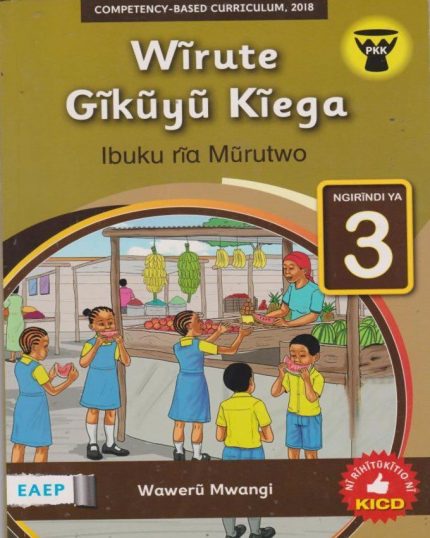
Wirute Gikuyu Kiega By Waweru Mwangi ...
KShs600.00 KShs450.00
Brief Summary Wirute Gikuyu Kiega By Waweru Mwangi GD3 (Approved)

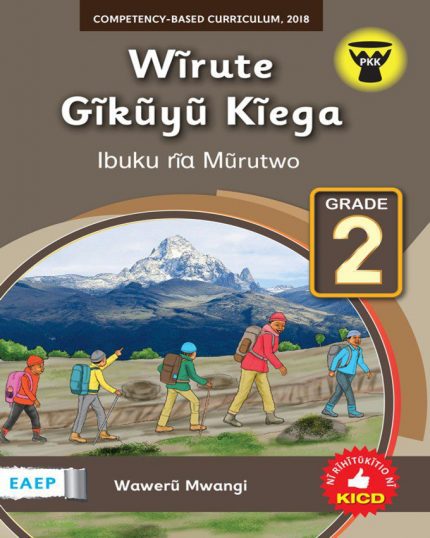
Wirute Gikuyu Kiega By Waweru Mwangi ...

KShs600.00 KShs450.00
Brief Summary Wirute Gikuyu Kiega By Waweru Mwangi GD2 (Approved)

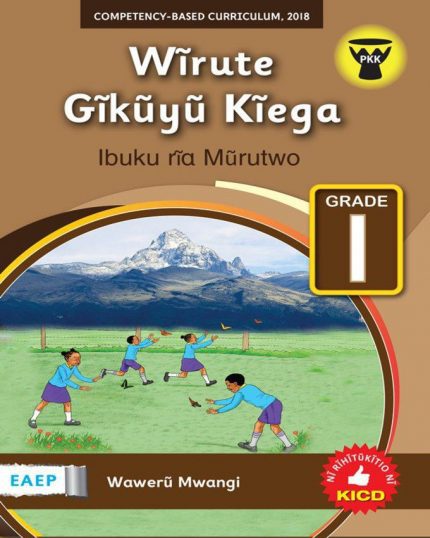
Wirute Gikuyu Kiega by Waweru Mwangi ...

KShs600.00 KShs450.00
Brief Summary Wirute Gikuyu Kiega by Waweru Mwangi GD1 (Approved)