Showing all 9 results

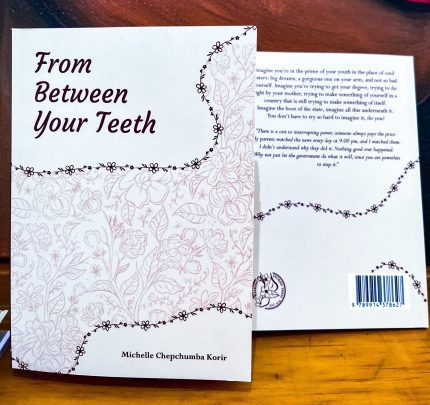
From Between Your Teeth

KShs500.00

A short nonfiction work by a Kenyan author telling a story about what can happen when the power of the state meets a single life.

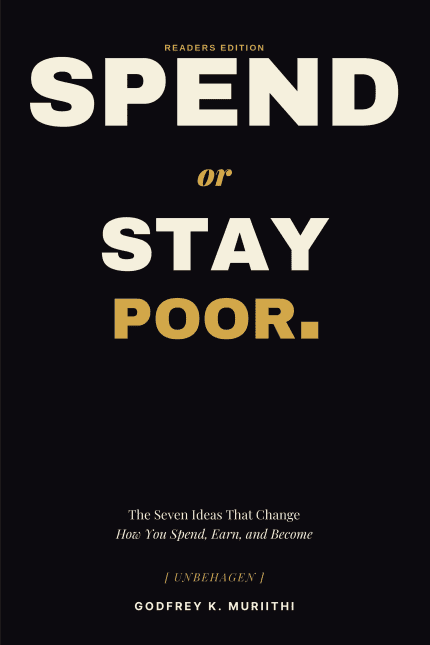
SPEND OR STAY POOR

KShs1,500.00 KShs1,000.00
Spend or Stay Poor

Apollo did everything right steady job, savings, discipline and got nowhere. There's a German word for that quiet dread of doing everything right and still going nowhere: Unbehagen. Spend or Stay Poor reveals why comfort quietly kills ambition, then hands you the Tension Protocol a five-stage system that turns strategic discomfort into real growth, ending in a fourteen-day plan you can start today. A short, sharp book you'll finish in one sitting and press into someone else's hands.


DEDAN KIMATHI The Young Freedom Fighters

KShs1,950.00
A beautifully illustrated children's book based on the Kenyan freedom fighter and leader of the Maumau, Dedan Kimathi.

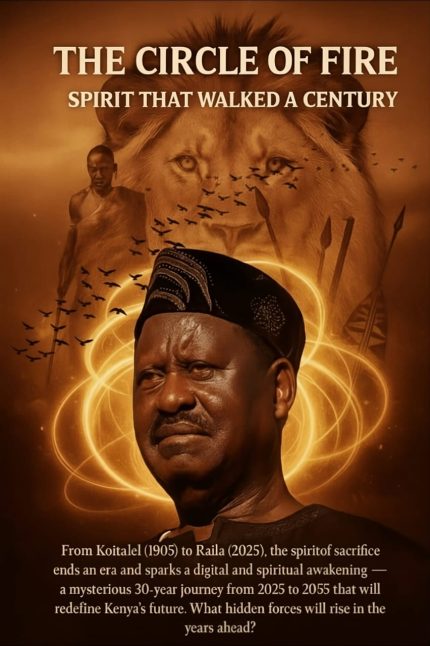
THE CIRCLE OF FIRE by Colins Ouma

KShs2,499.00
"A Spirit that walked a century… returns to complete the circle." From the blood-soaked hills of 1905 to the silent tomb of 2025, a divine current has been walking through generations; awakening, refining, and reshaping destinies. Now, as the mantle rests and the heavens prepare for a new dawn, prophecy speaks of a Hybrid Vessel — half flesh, half light — born to bridge the human and the divine in the age of high technology. The Final Vessel unfolds the mystery of Kenya’s 200-year spiritual journey, from Koitalel’s sacrifice to Raila’s final rest, and into the rise of a new order that transcends politics, tribes, and religion. It is a story of rebirth, awakening, and destiny, blending prophetic vision, historical echoes, and futuristic revelation in one epic timeline from 1905 to 2105. When heaven opens and the sealed mantle breathes again, humanity must choose between evolution or extinction; between machine logic and divine wisdom. The Hybrid Messenger becomes the final key to a prophecy centuries in the making… and the bridge between the old world and the eternal light.

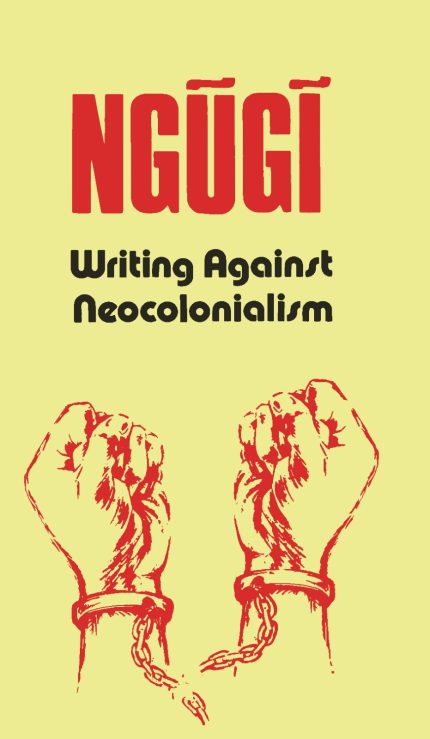
Writing Against neocolonialism by Ngu...

KShs2,500.00
Ngugi wa Thiong’o was one of Africa’s most prominent writers. Born in 1938 in Limuru, Kenya, Ngugi is a prolific novelist, playwright and short story writer. His widely acclaimed works include his first novel, Weep not, Child (1964), The River Between (1965), A Grain of Wheat (1967), Home coming (1972) and Secret Lives (1964), and Mũrogi wa Kagogo (Wizard of the Crow, 2006) His play, Ngaahika Ndeenda (I Will Marry When I Want), co-written with Ngũgĩ wa Mirii and published in 1977, provoked the Kenyan government which arrested and detained him without trial at Kamiti Maximum Security Prison for nearly a year. During this period, Ngugi wrote the first modern novel in Gikuyu, Devil on the Cross (Caitaani mũtharaba-Inĩ), on prison-issued toilet paper which was thereafter smuggled out. He went into exile in the UK upon his release a year later, before relocating to the USA. Ngugi wrote numerous books after his release including; Detained: A Writer’s Prison Diary (1981), ), Decolonising the Mind: The Politics of Language in African Literature (1986), Kenda Muiyuru: Rugano Rwa Gikuyu na Mumbi (The Perfect Nine, 2019), among others. He has won numerous awards for his writing and analyses Never Be Silent Simama Imara Ngugi wa Thiong’o is one of Africa’s most prominent writers. Born in 1938 in Limuru, Kenya, Ngugi is a prolific novelist, playwright and short story writer. His widely acclaimed works include his first novel, Weep not, Child (1964), The River Between (1965), A Grain of Wheat (1967), Home coming (1972) and Secret Lives (1964), and Mũrogi wa Kagogo (Wizard of the Crow, 2006) His play, Ngaahika Ndeenda (I Will Marry When I Want), co-written with Ngũgĩ wa Mirii and published in 1977, provoked the Kenyan government which arrested and detained him without trial at Kamiti Maximum Security Prison for nearly a year. During this period, Ngugi wrote the first modern novel in Gikuyu, Devil on the Cross (Caitaani mũtharaba-Inĩ), on prison-issued toilet paper which was thereafter smuggled out. He went into exile in the UK upon his release a year later, before relocating to the USA. Ngugi wrote numerous books after his release including; Detained: A Writer’s Prison Diary (1981), ), Decolonising the Mind: The Politics of Language in African Literature (1986) Kenda Muiyuru: Rugano Rwa Gikuyu na Mumbi (The Perfect Nine, 2019), among others. He has won numerous awards for his writing and analysis.

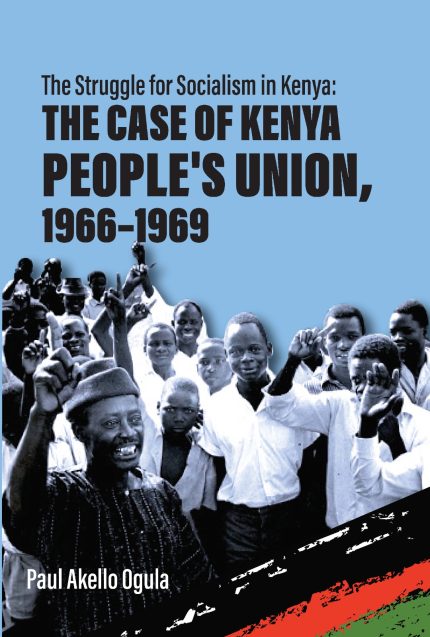
The Struggle for Socialism in Kenya: ...

KShs2,500.00
The Case of the Kenya People’s Union
Kenya’s untold history of socialism comes to light in this groundbreaking book by Paul Akello Ogula. The Struggle for Socialism in Kenya recalls the story of the Kenya People’s Union (KPU), a socialist party formed in 1966 and banned just three years later by President Jomo Kenyatta. Despite its short life, KPU represented a powerful, nationwide push for uhuru na ujamaa – freedom and socialism. Its inclusive leadership and transformative land and economic policies once threatened to reshape Kenya. Yet today, few know of Odinga, Kaggia, Oneko, or the dozens of leaders from every corner of the country who risked everything for justice and equality. Why has this vital chapter of Kenya’s political history been erased? Because it stood on the brink of success. Because its message still resonates. Now, thanks to Ogula’s bold research and Vita Books’ fearless publishing, this lost history is finally told. The Struggle for Socialism in Kenya is an important addition to the chronicles of two other major suppressed movements that challenged capitalism and imperialism, namely, the Mau Mau and the covert resistance of the December Twelve Movement and Mwakenya.

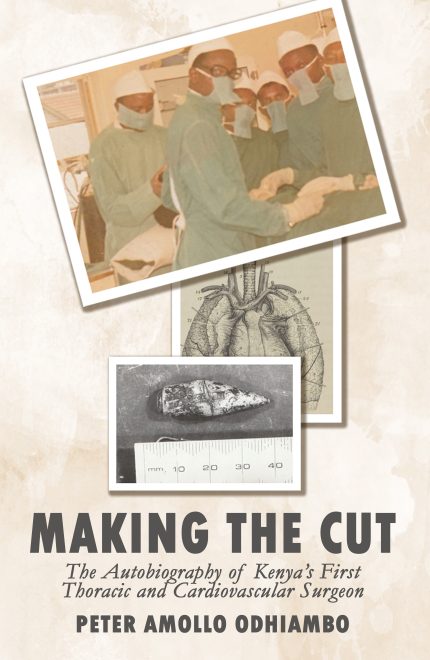
Making The Cut: The Autobiography of ...

KShs5,000.00 KShs3,500.00
"Indeed, it was a bullet! The patient remembered that he had been shot by colonial forces at the start of the MAU MAU war in 1952. He had survived the shot and literally forgot about it until the present moment, 36 years later, when I asked if he had ever been shot in the past. The patient was of course, after all, the freedom fighter par excellence, Waruhiu Itote, better known as 'General China.'" -- In this unflinching memoir, Kenya’s first thoracic and cardiovascular surgeon, Prof. Peter Amollo Odhiambo, reflects on a life shaped by bold decisions, quiet sacrifices, and a relentless drive to serve. As a young man, he left home on a scholarship to study in India, joining elite medical institutions at a time when few Africans had such access. Though he had every opportunity to remain abroad, he chose instead to return and help shape Kenya’s medical future. This decision would soon lead him to a pivotal moment early in his career, when he performed a delicate surgery to remove a colonial bullet from the chest of Mau Mau freedom fighter General China. Prof. Odhiambo would go on to train generations of doctors at the University of Nairobi, where his influence can still be felt in hospitals across the country. But his impact reached far beyond the classroom or the theatre. In the 1990s and 2000s, Prof. Odhiambo became a national advocate for tobacco control, confronting powerful multinationals and helping draft legislation that still protects Kenyans from the deadly effects of secondhand smoke. Told in his own words, 'Making the Cut' is more than a record of medical firsts. It is a personal and historical journey through post-independence Kenya, seen through the eyes of a man who has never stopped believing in excellence, justice, and the power of public service.

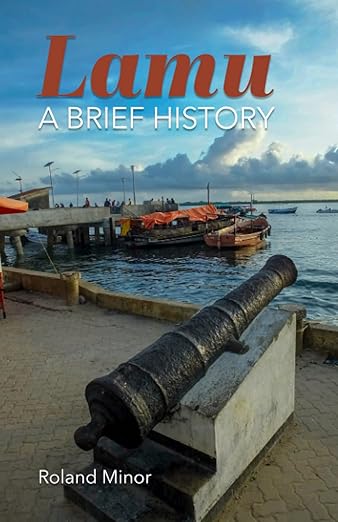
Lamu: A Brief History by Roland Minor

KShs900.00
This book gives an insightful look at the early history of the island of Lamu on the Kenya coast, as well as the surrounding area. Arab and Indian sailors dominated the maritime trade of the western Indian Ocean from earliest times. Greek sailors operating out of Egyptian ports joined them and it was from them that the first written records of the East African coast are derived. Lamu, with its fine natural harbour and abundant supplies of fresh water, likely played a major part in this maritime trade. By the 14th century the renowned Moroccan traveller, ibn Battúta, reported that the whole East African coast had been Islamicized. Then came the Portuguese in the last years of the 15th century. With their faster ships and gunnery they dominated the existing trade resulting in a catastrophic collapse of local economies. In the mid-17th century the ruler of Mombasa appealed to the Sultan of Oman for aid in driving off the Portuguese. This heralded Omani interest in East Africa and the founding of the Sultanate of Zanzibar. The British took an interest in the coast in their attempts to stop the slave trade. Eventually, under pressure from the British, the Sultan of Zanzibar ceded the administration of the coastal strip to the British, leading in due course to the establishment of Kenya Colony. Lamu played a key role in the evolving history of the Kenya coast.