Showing 121–140 of 165 results

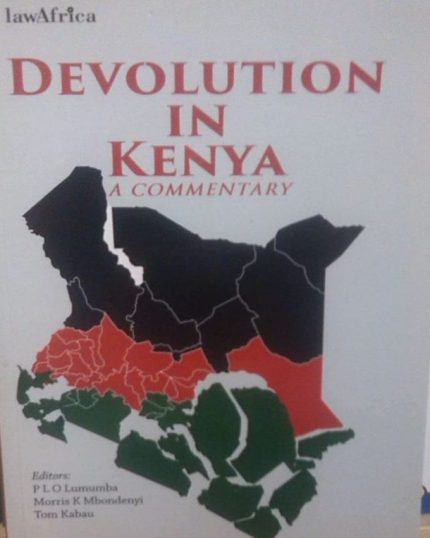
Devolution in Kenya: A commentary by ...

KShs3,000.00 KShs2,899.00
Devolution in Kenya: A commentary by PLO Lumumba

The Deep State The Fall of the Consti...

KShs2,500.00 KShs2,290.00
Mike Lofgren is back with a book perfectly pitched for the frenzied circus of the primaries. His argument this time is that for all of the backstabbing and money grubbing of the campaign season, the politicians we elect have as little ability to shift policy as Communist party apparatchiks. Welcome to Mike Lofgren’s Washington, D.C.—a This Town, where the political theater that is endlessly tweeted and blogged about has nothing to do with actual decision making. The real work gets done behind the scenes by invisible bureaucrats working for the vast web of agencies that actually dictate our foreign policy, defense posture, and security decisions. Have you ever wondered why Obama’s policies look so much like Bush’s? Seek no further: Hillary v. Jeb is just window dressing. Actual power lies in the Deep State, Washington’s shadowy power elite, in the pockets of corporate interests and dependent on the moguls of Silicon Valley, whose data-collecting systems enable the U.S. government to spy on our every move, swipe, and click. Drawing on insider knowledge gleaned in his three decades on the Hill, Lofgren offers a provocative wake-up call to Americans and urges them to fight to reinstate the basic premise of the Constitution.  

Kleptopia How Dirty Money Is Conqueri...

KShs2,799.00 KShs1,799.00
"A must-read for anyone wanting to better understand what has already happened here in America and what lies ahead if Trump is reelected in November…. A magisterial account of the money and violence behind the world’s most powerful dictatorships.” –Washington Post In this shocking, meticulously reported work of narrative nonfiction, an award-winning investigative journalist exposes "capitalism’s monster”—global kleptocracy—and reveals how it is corrupting the world around us. They are everywhere, the thieves and their people. Masters of secrecy. Until now we have detected their presence only by what they leave behind. A body in a burned-out Audi. Workers riddled with bullets in the Kazakh Desert. A rigged election in Zimbabwe. A British banker silenced and humiliated for trying to expose the truth about the City of London. They have amassed more money than most countries. But what they are really stealing is power. In this real-life thriller packed with jaw-dropping revelations, award-winning investigative journalist Tom Burgis weaves together four stories that reveal a terrifying global web of corruption: the troublemaker from Basingstoke who stumbles on the secrets of a Swiss bank, the ex-Soviet billionaire constructing a private empire, the righteous Canadian lawyer with a mysterious client, and the Brooklyn crook protected by the CIA. Glimpses of this shadowy world have emerged over the years. In Kleptopia, Burgis connects the dots. He follows the dirty money that is flooding the global economy, emboldening dictators, and poisoning democracies. From the Kremlin to Beijing, Harare to Riyadh, Paris to the White House, the trail shows something even more sinister: the thieves are uniting. And the human cost will be great.

MBS The Rise to Power of Mohammed bin...

KShs2,000.00 KShs1,690.00
Brief Summary MBS is the untold story of how a mysterious young prince emerged from Saudi Arabia’s sprawling royal family to overhaul the economy and society of the richest country in the Middle East—and gather as much power as possible into his own hands. Since his father, King Salman, ascended to the throne in 2015, Mohammed bin Salman has leveraged his influence to restructure the kingdom’s economy, loosen its strict Islamic social codes, and confront its enemies around the region, especially Iran. That vision won him fans at home and on Wall Street, in Silicon Valley, in Hollywood, and at the White House, where President Trump embraced the prince as a key player in his own vision for the Middle East. But over time, the sheen of the visionary young reformer has become tarnished, leaving many struggling to determine whether MBS is in fact a rising dictator whose inexperience and rash decisions are destabilizing the world’s most volatile region. Based on years of reporting and hundreds of interviews, MBS reveals the machinations behind the kingdom’s catastrophic military intervention in Yemen, the bizarre detention of princes and businessmen in the Riyadh Ritz-Carlton, and the shifting Saudi relationships with Israel and the United States. And finally, it sheds new light on the greatest scandal of the young autocrat’s rise: the brutal killing of journalist Jamal Khashoggi by Saudi agents in Istanbul, a crime that shook Saudi Arabia’s relationship with Washington and left the world wondering whether MBS could get away with murder. MBS is a riveting, eye-opening account of how the young prince has wielded vast powers to reshape his kingdom and the world around him. ISBN:9781984823823 Author:Ben Hubbard

Kenyas War of Independence Mau Mau an...

KShs2,500.00 KShs1,890.00
Kenya's War of Independence restores Kenya’s stolen history to its rightful place, stripped of colonial interpretations. In this expanded and revised version of his 1986 booklet, Kimaathi, Mau Mau's First Prime Minister of Kenya, Durrani covers Mau Mau’s resistance to colonialism and neo-colonialism and reflects on its ideology, organisation and achievements. He sees Mau Mau in the larger context of Kenya’s war of independence and looks at the influence of organised, radical trade unions as the engine of resistance, linking economic with political demands of working people. Additional chapters document the post-independence resistance by the underground December Twelve Movement-Mwakenya. Durrani captures the dynamism of transition from colonialism to neo-colonialism: "Imperialism replaced colonialism, African elites replaced White Settlers, neo-colonial government replaced colonial government. Resistance changed from the War of Independence to War of Economic Independence. Worker and peasant resistance is evident once again. History is on the march”.

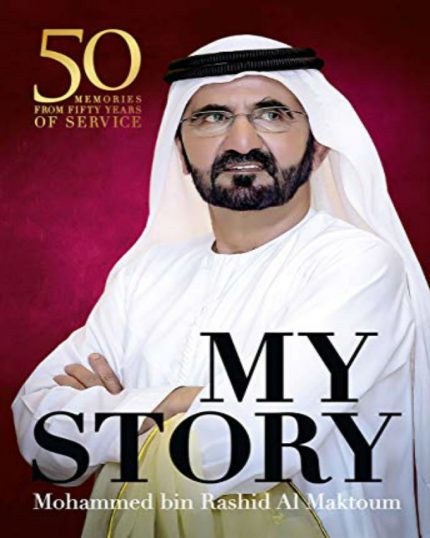
My Story by Mohammed bin Rashid Al Ma...

KShs1,899.00 KShs1,699.00
Brief Summary This important collection of anecdotes and reminiscences from Sheikh Mohammed bin Rashid Al Maktoum is published to mark the occasion of his fifty years in public service, which began with his appointment as Dubai’s Minister of Defence in 1968. These stories tell of the vision behind Dubai’s meteoric growth from a small and bustling trading port to an international metropolis at the heart of global business. They record the evolution of the United Arab Emirates from a shared ideal to a nation where more than 195 nationalities live and work in peace, harmony and prosperity. And they reveal insights from a man whose drive, determination and will to succeed have become legendary. Within these stories lies the heart of Sheikh Mohammed the statesman, the equestrian, the poet and the leader. They are written with the intent to inspire and inform new generations of readers, and to celebrate the achievements of this young and vibrant nation and the people who shaped it. This celebration of a life in service is unavoidably incomplete. As Sheikh Mohammed himself indicates, there is still so much left to do. As a record of the first fifty years alone, however, it forms part of a remarkable legacy. Other titles written by Sheikh Mohammed and published by Explorer include Zayed, Reflections on Happiness & Positivity, Flashes of Verse and Two Great Leaders.  

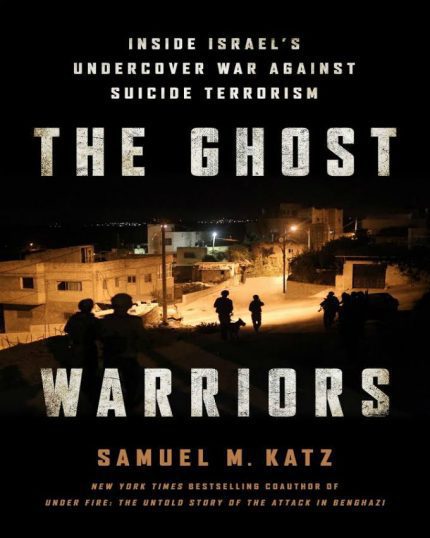
The Ghost Warriors by Samuel M Katz

KShs3,500.00 KShs2,899.00
The Ghost Warriors: Inside Israel's Undercover War Against Suicide Terrorism. The untold story of Ya’mas, the secret special forces team that infiltrated the Palestinians during the Second Intifada. It was the deadliest terror campaign ever mounted against a nation in modern times: the al-Aqsa, or Second, Intifada. This is the untold story of how Israel fought back with an elite force of undercover operatives, drawn from the nation’s diverse backgrounds and ethnicities—and united in their ability to walk among the enemy as no one else dared. Beginning in late 2000, as black smoke rose from burning tires and rioters threw rocks in the streets, Hamas, Islamic Jihad, and Arafat’s Palestinian Authority embarked on a strategy of sending their terrorists to slip undetected into Israel’s towns and cities to set the country ablaze, unleashing suicide attacks at bus stops, discos, pizzerias—wherever people gathered. But Israel fielded some of the most capable and cunning special operations forces in the world. The Ya’mas, Israel National Police Border Guard undercover counterrorists special operations units became Israel’s eyes-on-target response. Launched on intelligence provided by the Shin Bet, indigenous Arabic-speaking Dovrim, or "Speakers,” operating in the West Bank, Jerusalem, and Gaza infiltrated the treacherous confines where the terrorists lived hidden in plain sight, and set the stage for the intrepid tactical specialists who often found themselves under fire and outnumbered in their effort to apprehend those responsible for the carnage inside Israel. This is their compelling true story: a tale of daring and deception that could happen only in the powder keg of the modern Middle East.

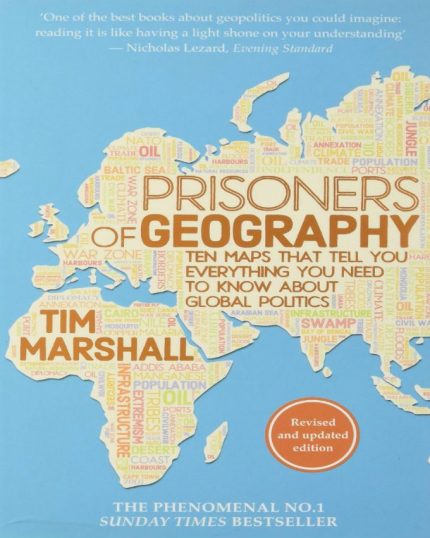
Prisoners of Geography by Tim Marshall

KShs2,990.00 KShs2,890.00
Prisoners of Geography: Ten Maps That Tell You Everything You Need to Know About Global Politics. Maps have a mysterious hold over us. Whether ancient, crumbling parchments or generated by Google, maps tell us things we want to know, not only about our current location or where we are going but about the world in general. And yet, when it comes to geo-politics, much of what we are told is generated by analysts and other experts who have neglected to refer to a map of the place in question. All leaders of nations are constrained by geography. In "one of the best books about geopolitics” (The Evening Standard), now updated to include 2016 geopolitical developments, journalist Tim Marshall examines Russia, China, the US, Latin America, the Middle East, Africa, Europe, Japan, Korea, and Greenland and the Arctic—their weather, seas, mountains, rivers, deserts, and borders—to provide a context often missing from our political reportage: how the physical characteristics of these countries affect their strengths and vulnerabilities and the decisions made by their leaders. Offering "a fresh way of looking at maps” (The New York Times Book Review), Marshall explains the complex geo-political strategies that shape the globe. Why is Putin so obsessed with Crimea? Why was the US destined to become a global superpower? Why does China’s power base continue to expand? Why is Tibet destined to lose its autonomy? Why will Europe never be united? The answers are geographical. "In an ever more complex, chaotic, and interlinked world, Prisoners of Geography is a concise and useful primer on geopolitics” (Newsweek) and a critical guide to one of the major determining factors in world affairs.  

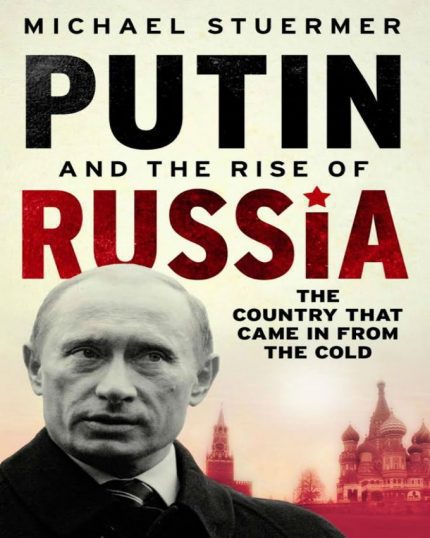
Putin and the Rise of Russia by Micha...

KShs1,900.00 KShs1,690.00
Not for the first time in the last two centuries, Russia leaves the world wondering about its destinies. Russia is, notwithstanding the losses incurred when the Soviet Empire imploded, still an enormous country of ten time-zones from Kaliningrad Oblast to Sakhalin, a land of vast empty spaces full of promise, with more than 140 million population - 15 million of them Muslim - looking at the crescent rising rather than the cross and the stars, suspecting that St George might not be their friend and protector. The question remains about what today constitutes Russia's national interest, and who is the man, or the power elite, to define and implement it. With Vladimir Putin's second term as President about to end, many Russians fear, after eight years of rising oil and gas revenues, instability and insecurity. But the outside world, too, keeps wondering who and what will follow Putin.  

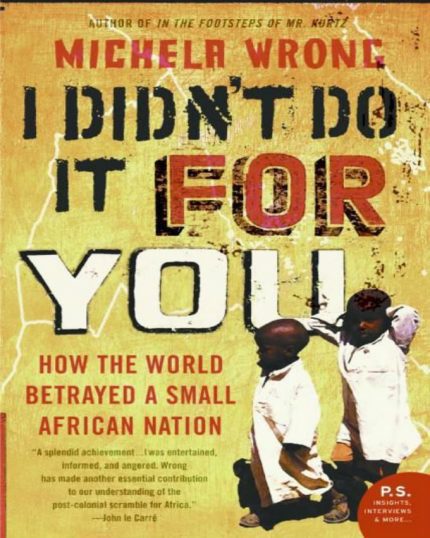
I Did not Do It for You How the World...

KShs2,500.00 KShs2,190.00
Brief Summary Scarred by decades of conflict and occupation, the craggy African nation of Eritrea has weathered the world's longest-running guerrilla war. The dogged determination that secured victory against Ethiopia, its giant neighbor, is woven into the national psyche, the product of cynical foreign interventions. Fascist Italy wanted Eritrea as the springboard for a new, racially pure Roman empire; Britain sold off its industry for scrap; the United States needed a base for its state-of-the-art spy station; and the Soviet Union used it as a pawn in a proxy war. In I Didn't Do It for You, Michela Wrong reveals the breathtaking abuses this tiny nation has suffered and, with a sharp eye for detail and a taste for the incongruous, tells the story of colonialism itself and how international power politics can play havoc with a country's destiny.

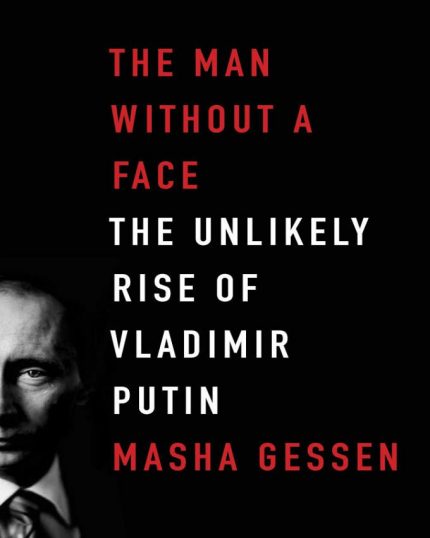
The Man Without a Face The Unlikely R...

KShs2,500.00 KShs2,190.00
The Man Without a Face is the chilling account of how a low- level, small-minded KGB operative ascended to the Russian presidency and, in an astonishingly short time, destroyed years of progress and made his country once more a threat to her own people and to the world. Handpicked as a successor by the "family" surrounding an ailing and increasingly unpopular Boris Yeltsin, Vladimir Putin seemed like a perfect choice for the oligarchy to shape according to its own designs. Suddenly the boy who had stood in the shadows, dreaming of ruling the world, was a public figure, and his popularity soared. Russia and an infatuated West were determined to see the progressive leader of their dreams, even as he seized control of media, sent political rivals and critics into exile or to the grave, and smashed the country's fragile electoral system, concentrating power in the hands of his cronies. As a journalist living in Moscow, Masha Gessen experienced this history firsthand, and for The Man Without a Face she has drawn on information and sources no other writer has tapped. Her account of how a "faceless" man maneuvered his way into absolute-and absolutely corrupt-power has the makings of a classic of narrative nonfiction.

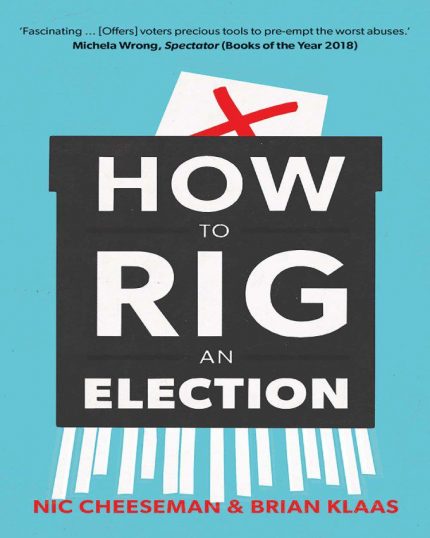
How to Rig an Election by Brian Klaas...

KShs3,390.00 KShs2,990.00
An engrossing analysis of the pseudo-democratic methods employed by despots around the world to retain control contrary to what is commonly believed, authoritarian leaders who agree to hold elections are generally able to remain in power longer than autocrats who refuse to allow the populace to vote. In this engaging and provocative book, Nic Cheeseman and Brian Klaas expose the limitations of national elections as a means of promoting democratization, and reveal the six essential strategies that dictators use to undermine the electoral process in order to guarantee victory for themselves. Based on their firsthand experiences as election watchers and their hundreds of interviews with presidents, prime ministers, diplomats, election officials, and conspirators, Cheeseman and Klaas document instances of election rigging from Argentina to Zimbabwe, including notable examples from Brazil, India, Nigeria, Russia, and the United States--touching on the 2016 election. This eye-opening study offers a sobering overview of corrupted professional politics, while providing fertile intellectual ground for the development of new solutions for protecting democracy from authoritarian subversion.

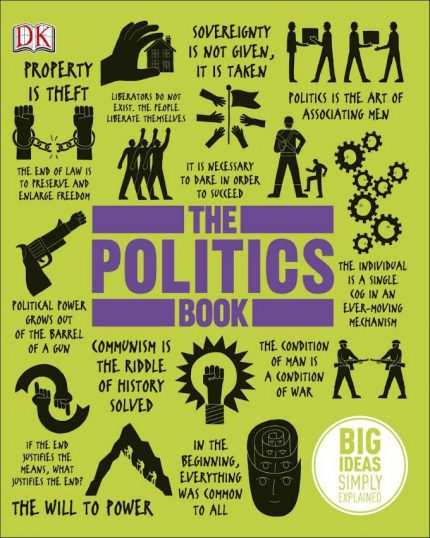
The Politics Book Big Ideas Simply Ex...

KShs5,000.00 KShs3,990.00
From ancient and medieval philosophers such as Confucius and Thomas Aquinas, to revolutionary thought leaders such as Thomas Jefferson and Leon Trotsky, to the voices who have shaped modern politics today -- Mao Zedong, Malcolm X, Che Guevara, and more. "The Politics Book" clearly and simply explains more than 100 groundbreaking ideas in the history of political thought. With easy-to-follow graphics, succinct quotations, and accessible text, "The Politics Book" is an essential reference for students and anyone wondering how politics works.  

How Europe Underdeveloped Africa by W...

KShs2,900.00 KShs2,490.00
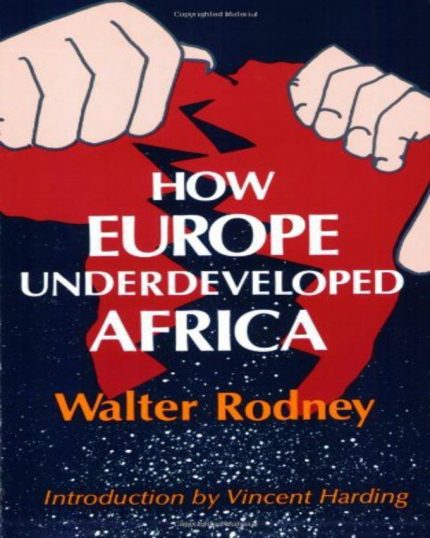
The decisiveness of the short period of colonialism and its negative consequences for Africa spring mainly from the fact that Africa lost power. Power is the ultimate determinant in human society, being basic to the relations within any group and between groups. It implies the ability to defend one's interests and if necessary to impose one’s will by any means available. In relations between peoples, the question of power determines maneuverability in bargaining, the extent to which a people survive as a physical and cultural entity. When one society finds itself forced to relinquish power entirely to another society that in itself is a form of underdevelopment. Before a bomb ended his life in the summer of 1980, Walter Rodney had created a powerful legacy. This pivotal work, How Europe Underdeveloped Africa, had already brought a new perspective to the question of underdevelopment in Africa. his Marxist analysis went far beyond the heretofore accepted approach in the study of Third World underdevelopment. How Europe Underdeveloped Africa is an excellent introductory study for the student who wishes to better understand the dynamics of Africa’s contemporary relations with the West.  

The Future of War A History by Lawren...

KShs1,899.00 KShs1,599.00
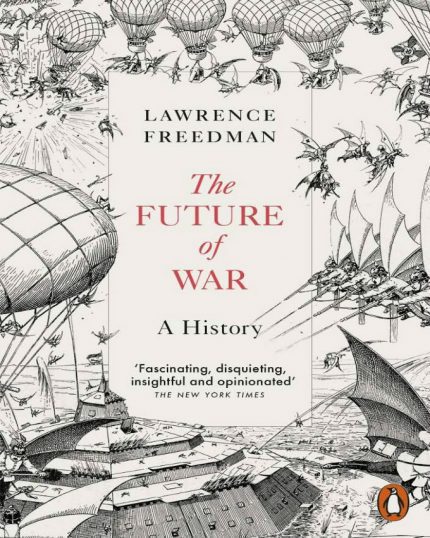
Brief Summary In 1912, Sir Arthur Conan Doyle, creator of Sherlock Holmes, wrote a short story about a war fought from underwater submersibles that included the sinking of passenger ships. At the time, it was dismissed by the British generals and admirals of the day not because the idea of submarines was technically unfeasible, but because no one could imagine that any nation would be so depraved as to sink civilian merchant ships. The future of war more often than not surprises us less because of some fantastic technical or engineering dimension but because of some human, political, or moral threshold that we had never imagined wanting to cross. As Lawrence Freedman shows, the future of war has a past and a present. Ideas of war, strategies for warfare and its practice, and organizing principles of war all have rich and varied origins which have shaped the minds of those who conceive the next war. Freedman shows how war can be studied systematically and empirically to provide a firm foundation for enlightened policy. The Future of War—which covers civil wars to as yet unknown nuclear conflicts, proxy wars (real) to the Cold War (not), fashionably small wars to the War to End All Wars (it didn’t)—is filled with insight and fascinating nuggets of military history and culture from one of the most brilliant military and strategic historians of his generation.

How we made it in Africa by Jaco Maritz

KShs3,000.00 KShs2,890.00
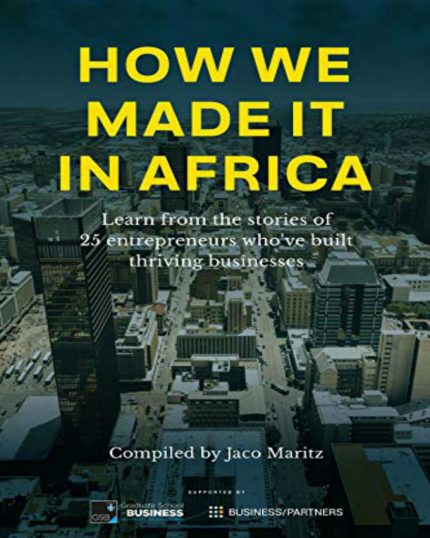
How we made it in Africa: Learn from the stories of 25 entrepreneurs who've built thriving businesses From the founder of the award-winning website (www.howwemadeitinafrica.com) comes the stories of 25 entrepreneurs who've built thriving businesses. * Be inspired by the experiences of Africa’s most dynamic entrepreneurs * Gain insight into the continent’s business opportunities * Find the courage to make your own dreams and ambitions become a reality Discover why Ken Njoroge is building a billion-dollar pan-African digital payments company (it is not because he wants to drive a Ferrari); Find out how Jean de Dieu Kagabo grew a Rwanda-based industrial group from a simple product: toilet paper; And be inspired by the extraordinary tale of Hassan Bashir who created a booming insurance company from nothing but grit and persistence. Each entrepreneur’s story is told in an honest manner, not shying away from the mistakes made and the considerable hurdles they had to overcome. And there were many tough times: from being betrayed by long-time senior managers to losing vast sums of money because of poor market research. Pursuing their business ambitions also had a toll on their personal lives: one entrepreneur was too broke to afford diapers for his baby, while another had to sell her house to keep the company alive. Meet The Entrepreneurs 1. Ken Njoroge (Kenya): The long, hard journey to build a billion-dollar company 2. Tseday Asrat (Ethiopia): A modern twist on Ethiopia's coffee culture 3. Tumi Phake (South Africa): Flexing his entrepreneurial muscles to exploit a gap in the fitness industry 4. Monica Musonda (Zambia): Instant noodle pioneer 5. Hassan Bashir (Kenya): An insurance firm created from nothing but grit and persistence 6. Ebele Enunwa (Nigeria): A $50-million food and retail empire 7. Tayo Oviosu (Nigeria): The entrepreneur who traded in his Silicon Valley life to bring mobile money to Nigerians 8. Navalayo Osembo (Kenya): How to make a Kenyan running shoe 9. Jean de Dieu Kagabo (Rwanda): Rwandan industrialist always hunting for the next big business idea 10. Addis Alemayehou (Ethiopia): Serial entrepreneur bringing the world to Ethiopia 11. Kasope Ladipo-Ajai (Nigeria): Nigerian cooking made convenient 12. Chijioke Dozie (Nigeria): Leveraging past experiences to disrupt the banking industry 13. Sylvester Chauke (South Africa): Marketer with a passion to take African brands global 14. Yoadan Tilahun (Ethiopia): Showing Ethiopia how to throw an event 15. Mossadeck Bally (Mali): West African hotel group built on an appetite for risk 16. Jennifer Bash (Tanzania): Adding value to everyday staples 17. Jesse Moore (Kenya): Thinking out of the box to power over 600 000 homes with solar energy 18. Twapewa Kadhikwa (Namibia): How one hair salon became a group of companies 19. Jacques de Vos (South Africa): Growing a high-impact tech business one problem statement at a time 20. Nana Akua Birmeh (Ghana): Architect breaking glass ceilings 21. Nelly Tuikong (Kenya): Kenyan beauty brand taking on global giants 22. Dr Hend El Sherbini (Egypt): From a small Egyptian family business to a London-listed healthcare giant 23. NJ Ayuk (Cameroon): A lawyer on the road less travelled 24. Polo Leteka (South Africa): The investor who spots opportunity where others see risk 25. Ashley Uys (South Africa): Diagnostic hustler

Bad Samaritans The Myth of Free Trade...

KShs2,500.00 KShs2,300.00
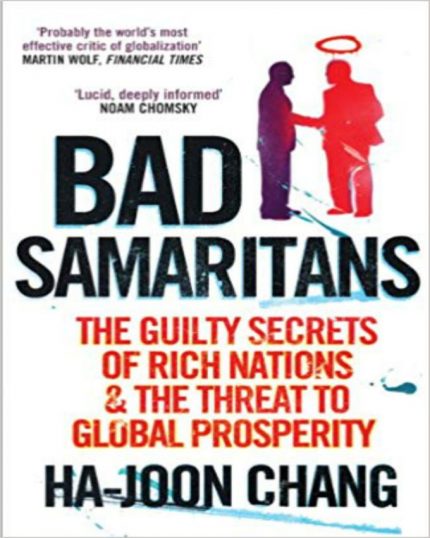
One economist has called Ha-Joon Chang "the most exciting thinker our profession has turned out in the past fifteen years." With Bad Samaritans, this provocative scholar bursts into the debate on globalization and economic justice. Using irreverent wit, an engagingly personal style, and a battery of examples, Chang blasts holes in the "World Is Flat" orthodoxy of Thomas Friedman and other liberal economists who argue that only unfettered capitalism and wide-open international trade can lift struggling nations out of poverty. On the contrary, Chang shows, today's economic superpowers-from the U.S. to Britain to his native Korea-all attained prosperity by shameless protectionism and government intervention in industry. We have conveniently forgotten this fact, telling ourselves a fairy tale about the magic of free trade and-via our proxies such as the World Bank, International Monetary Fund, and World Trade Organization-ramming policies that suit ourselves down the throat of the developing world. Unlike typical economists who construct models of how the marketplace should work, Chang examines the past: what has actually happened. His pungently contrarian history demolishes one pillar after another of free-market mythology. We treat patents and copyrights as sacrosanct-but developed our own industries by studiously copying others' technologies. We insist that centrally planned economies stifle growth-but many developing countries had higher GDP growth before they were pressured into deregulating their economies. Both justice and common sense, Chang argues, demand that we reevaluate the policies we force on nations that are struggling to follow in our footsteps.

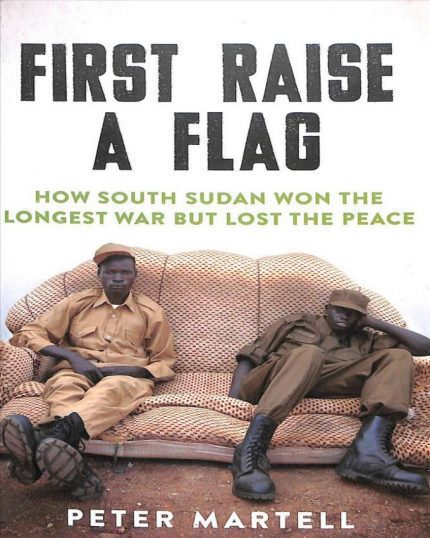
First Raise a Flag How South Sudan Wo...

KShs6,000.00 KShs5,790.00
When South Sudan's war began, the Beatles were playing their first hits and reaching the moon was an astronaut's dream. Half a century later, with millions massacred in Africa's longest war, the continent's biggest country split in two. It was an extraordinary, unprecedented experiment. Many have fought, but South Sudan did the impossible, and won. This is the story of an epic fight for freedom. It is also the story of a nightmare. First Raise a Flag details one of the most dramatic failures in the history of international state-building. Three years after independence, South Sudan was lowest ranked in the list of failed states. War returned, worse than ever. Peter Martell has spent over a decade reporting from palaces and battlefields, meeting those who made a country like no other: warlords and spies, missionaries and mercenaries, guerrillas and gunrunners, freedom fighters and war crime fugitives, Hollywood stars and ex-slaves. Under his seasoned foreign correspondent's gaze, he weaves with passion and colour the lively history of the world's newest country. First Raise a Flag is a moving reflection on the meaning of nationalism, the power of hope and the endurance of the human spirit.

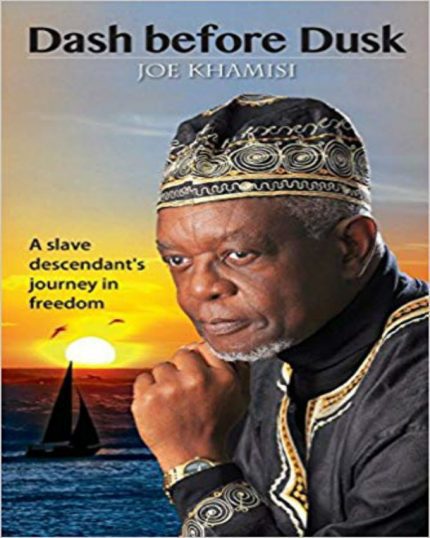
Dash before Dusk: A Slave Descendants...

KShs1,999.00 KShs1,699.00
Brief Summary Dash before Dusk: A slave descendant's journey in freedom is an account of the life and times of Joe Khamisi, a Kenyan slave descendant whose ancestors were taken captive by Arab traders from Nyasaland and Tanganyika, rescued at sea by the British, and settled at Rabai, a slave encampment along the East African coast. Khamisi, a former journalist, diplomat and politician, narrates the significant contributions former slaves and their descendants made in the transformation of Kenya into an independent state and their continuing struggle for recognition.

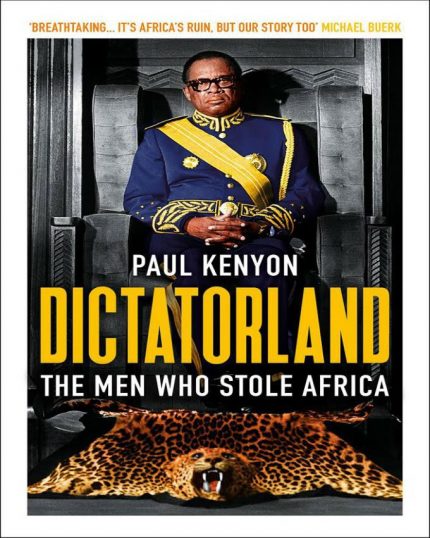
Dictatorland: The Men Who Stole Afric...

KShs2,890.00 KShs2,590.00
The dictator who grew so rich on his country's cocoa crop that he built a 35-storey-high basilica in the jungles of the Ivory Coast. The austere, incorruptible leader who has shut Eritrea off from the world in a permanent state of war and conscripted every adult into the armed forces. In Equatorial Guinea, the paranoid despot who thought Hitler was the saviour of Africa and waged a relentless campaign of terror against his own people. The Libyan army officer who authored a new work of political philosophy, The Green Book, and lived in a tent with a harem of female soldiers, running his country like a mafia family business. And behind these almost incredible stories of fantastic violence and excess lie the dark secrets of Western greed and complicity, the insatiable taste for chocolate, oil, diamonds and gold that has encouraged dictators to rule with an iron hand, siphoning off their share of the action into mansions in Paris and banks in Zurich and keeping their people in dire poverty.