Showing all 16 results

EkeGusii Made Simple: The ‘abc&...

KShs2,000.00 KShs1,500.00
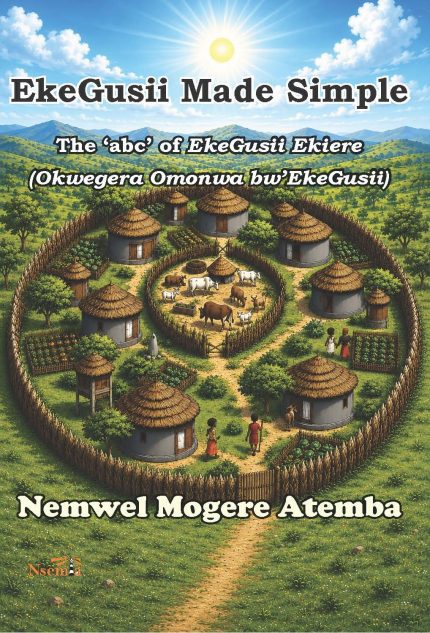
EkeGusii Made Simple introduces the reader to the language spoken by the AbaGusii of Kenya. It covers basics such as the letters of the alphabet (ching’amumu) - vowels (ching’atoki) and consonants (amamumu) - parts of speech (ebiumuntwa bi’enkwano), numbers (chimbaro) and the counting system (kobara). The reader will benefit from basic vocabulary relating to things such as the household, parts of the body (ebimo) and typical items used in a homestead. There are also basic conversational elements, such as greetings (amakwanio) and some forms of communication, in addition to family and community relations (amairi ao ao) and genealogies (chinderia). The reader will also benefit from elements of Gusii culture, such as names (amarieta ao ao) and naming systems, the poetry (emeino) of AbaGusii. Other aspects include seasons (chingaki) and their relations to activities of the time, and much more. The regional variation of the language is underlined, as well, to ensure that the reader appreciates the variety and richness of the language. In doing so, the author underlines the correctness and validity of the variations. There are few titles that offer such a broad introduction to the EkeGusii such as this one. What Others Say “A great step towards a noble task from which many have been and are afraid to start. I love your brave plunge. God bless.” – Dr. Alfred Nyamwange, Author and Teacher.

Gusii Misiri Migration, Rainmaking, S...

KShs2,000.00 KShs1,500.00
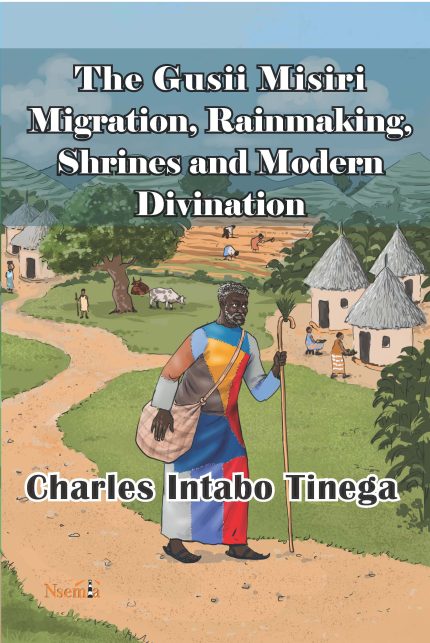
This book is about the Abagusii, Gusiiland, sacred places, sacred people, and religious activities of the community. My late father, William Tinega Mwancha (1928-1994) used to say, “Ntwe basinto b’Oiroba”, meaning, we (human beings) are sons and daughters of the ground (soil). We were formed from the soil and we will eventually return to the soil. For this reason, traditional Gusii elders regard the soil on which they live as sacred. It is therefore in this regard that any literature dealing with the Gusii must demonstrate an understanding of who the Gusii are beginning with their origin, migration and settlement in the land they dearly love and regard as holy. This is why the Gusii Misiri origin, rainmaking, shrines and divination have endeavoured to document what can be summed as the social life of the community. Apart from land (soil), the Gusii have special places, items and people that they regard as sacred. Ngoro ya Mwaga, Sakagwa shrine and Igena monto are only a few sacred places and items discussed in this book. Among the many religious specialists in Gusii, the book explores the life and works of Iriasi the 20th-century Gusii rainmaker. Iriasi was allegedly said to be intersex, a condition considered by many people of his time as uniquely religious. To his contemporaries, Iriasi was created that way to perform unusual tasks such as rainmaking, divination, and prophecy. Further to Iriasi’s nature and religious work, the book demonstrates the relevance of some traditional Gusii religious practices such as divination in modern times.

Echemini y’Ekegusii: Ekegusii C...

KShs280.00 KShs250.00
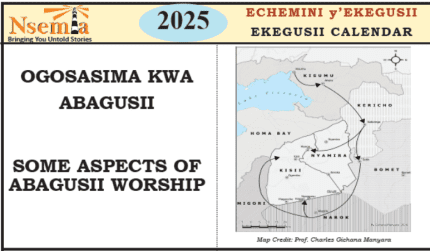
Abagusii lived spiritual lives with Engoro as their God who was associated with the sun, the tool He used to traverse the world. Engoro was responsible for opening and closing days (amatuko/amagooro). At sunrise and sunset, Omogusii prayed for a good day and night. Other worship situations arose out of need, e.g. to bless, cleanse, and sacrifice (among others) in which Omogusii communed with Engoro, described variously as Matonga/Omotongi (the creator), Monyara/Omobui (the powerful one), Omonguru (Almighty), Mokona/Omonyabikone (miracle performer). Among the spirits, Chisokoro represented departed relatives and were a medium for communication between man and Engoro responsible for blessings. Ebirecha represented evil spirits and inflicted punishment. A person displaying negative signs meant that either the Chisokoro were not happy with the person or he had attracted the wrath of ebirecha. For the former, one needed to appease (sacrifice) the Chisokoro. The latter one needed cleansing. Sacrifices and cleansing followed specific routines and were carried out at specified sacred sites.

Enyangi y’Ebitinge

KShs800.00 KShs700.00
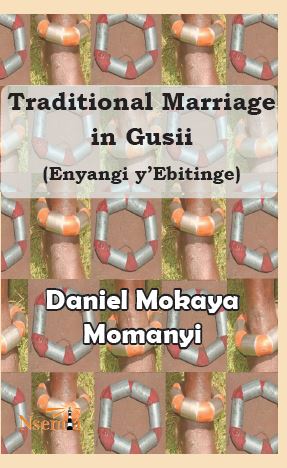
Traditional Wedding in Gusii (Enyangi y'Ebitinge), published posthumously, documents the process of old-style marriage in Gusii and related steps, culminating in a wedding ceremony. The process was meticulous and made of a series of steps, each with a very clear purpose and intended not just for the couple but also for their families and clans. Abagusii attached a lot of value to marriage. It was a major landmark in the 'growing up' of a man or woman in that society. Marriage marked the transition from the care of one's parents to being independent and taking care of oneself and one's family. That transition was possible only after marriage. The importance of marriage and the honour it was accorded is underlined by the respect that was given to a married woman. For example, if she found herself late in getting home someone, that person had an obligation to ensure that she got to her home safely; after all, she was a mother and her progeny would be the link to the future. The book is a flashback to when family and relationships were valued and were at the core of order and success in society. It is especially informative today, especially when modern generations do not appear to associate as much importance to wedlock as it was in the past.

Totems of Abagusii of Kenya

KShs400.00 KShs300.00
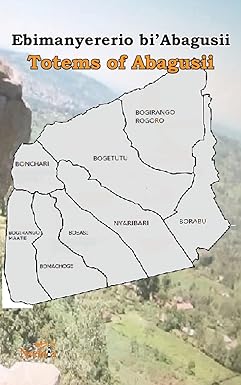
Ebimanyererio nigo bire bi'echingencho ao ao ase abanto ao ao. N'enchera eyemo abanto b'ororeria oromo bakomanyana na kwemanyia ase abanto bande. Ase abande n'enchera y'ogwetogia. N'abande begenete buna ebimanyererio n'enchera eyemo y'okobeka okwegena ase chinkoro chi'abanto. Komenta nayio, ebimanyererio nigo bigokonya abanto koinyora ing'ai barwete nechimbwa chiabo. Soma egetabu eke egere omanye igoro y'ebimanyererio bi'Abagusii. ***** Throughout the world, totems are used variously, including linking people with each other and defining the relationships among many people or groups of people. They can represent the connection between people and the spiritual world. Further, totems help people preserve their culture and history. This book presents totems of Abagusii and explains how they came to be, based on oral history passed down generations.

Amariogo Y’Omogusii

KShs600.00 KShs500.00
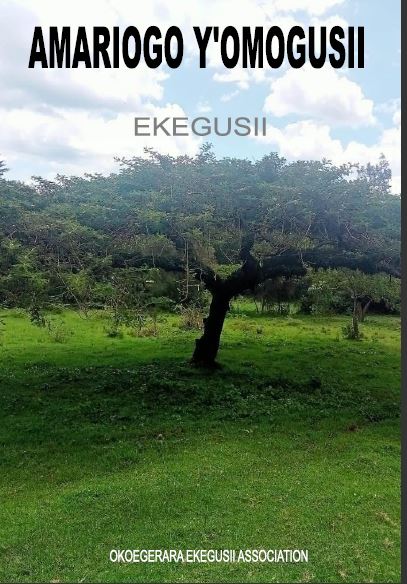
This book introduces nostalgic herbal remedies which cascades into the present realm of medicinal application outside the current conventional medicine. Herbal medicine is the oldest present form of treatment ever applied in mankind. It is as old as man, God instructed Adam and Eve to eat from any fruit tree in the garden, but spare only one at the centre. The fruits and trees were medicine. Quite many of the modern medicine are derived from the natural vegetation. The vegetation act as food for man as well as medicine. There were no modern hospital facilities then; this came along with the advancement of Science and Technology. Most countries globally now use herbal medicine infused with technological innovation for rapid result. Herbal medicine has less negative effects to both man and animals, their administration is also simple and fast sometimes it can be taken directly or as food. For generations Omogusii has used this form of treatment to manage many diseases they encountered on the way as they sojourned to the present settlement. Some ailments were life threatening and broke out in large scale which occassionally were unmanageable. However through herbal medicine, diseases like Cholera, Yellow fever, dysentery and many others which had snowballed into calamities were controlled and contained. Therefore this book has tried to sample the types of ailments which were prevalent and are still of concern together with the herbal administration applied. Although the authors may not have exhausted all the information, an hunch has been left for further research. The book i s written in Ekegusii for that is the target group even though it can be used universally with little language interpretation and translation. Inconclussion therefore this book is very appropriate and handy in administration of herbal medicine.

Proverbs of the Abagusii of Kenya Chr...

KShs1,000.00 KShs850.00
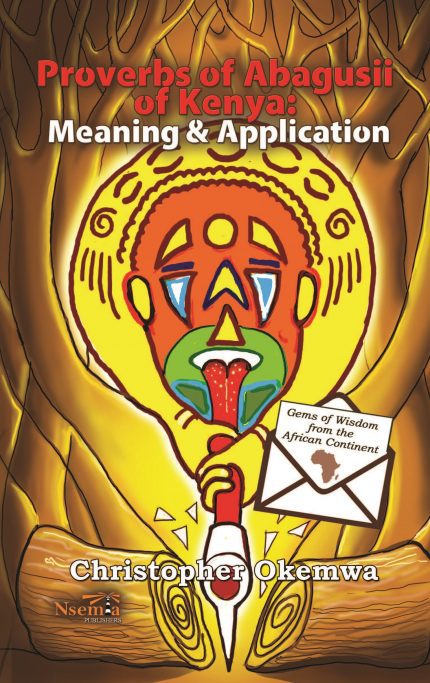
Like most cultural groups, the oral tradition of Abagusii People of Kenya is expressed in, among others, proverbs. These capture lessons and meaning, modulated by time and context as they are passed down generations. Like riddles and metaphors, proverbs express the wisdom of a culture and find apt applications in many situations. Christopher Okemwa's work documents some of the proverbs of Abagusii, their meaning, context in which they are used and application thereof. In this book proverbs are documented in the original form accompanied by English translations in addition to lessons they offer. Embedded in this collection are cultural aspects such beliefs and norms which touch on many aspects of Abagusii society. These aspects include relationships among people, communal life, gender matters, economic issues and many more. Here is what others say "Through careful transcription and translation of proverbs of Abagusii people of Kenya, Okemwa shares knowledge and cultural diversity as a wide range of themes and motifs recur hence multiplying meanings and implications. The proverbs explore both socio-political and socio-economic issues, in addition to fulfilling an aesthetic function." - Gladys Nyaiburi Ogaro, Mount. Kenya University "The uniqueness of this work lies in its use of Ekegusii language to impart culture of Abagusii on the reader through the imagery in proverbs. The advantage of 'hearing' Ekegusii first hand, its literal and deep meaning provided, makes it ideal for students and teachers of language and culture in learning institutions. The work also preserves, for posterity, wisdom that may become extinct with the passage of time." - Margaret Kemunto Obaga, Catholic University, Nairobi, Kenya "Christopher Okemwa's Proverbs of Abagusii of Kenya: Meaning & Application captures and radiates, with delight, the wisdom and beauty in Abagusii proverbs. For Ekegusii speakers, the proverbs nudge one to take a deep look at oneself and see how entertaining they can be. For non-speakers of the language the translation provided gives the poems versatility in content and pervasive reach, thus making them universal pieces of erudition that challenge and encourage. The proverb, 'Naigure ndumo boina ko mosiori ntamanya' (I have heard noise coming from grave diggers, but I am not sure who will be first to be interred), for instance, warns everybody against the barbarism of intransigence and physical confrontations, a universal piece of wisdom. Reading this invaluable book is a sure-fire route to intellectual nourishment. Okemwa has documented answers to our deep-seated questions on our socio- cultural, socio-economic and socio-political queries as captured by Abagusii proverbs. The wisdom therein helps one pry into one's own inadequacies and learn to challenge adversity." - Bwocha Nyagemi Bwocha, St. Augustine University, Tanzania

The Song of a Blacksmith and Totems o...

KShs800.00 KShs700.00
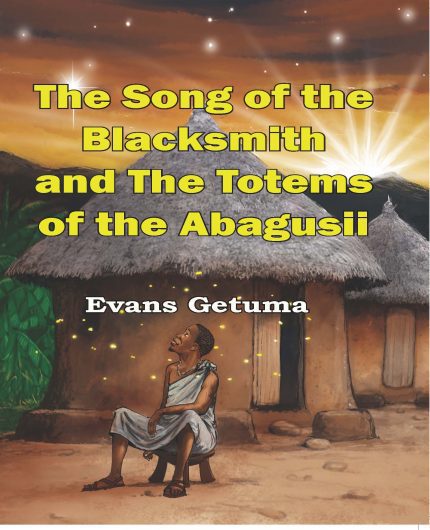
The Song of a Blacksmith and Totems of Abagusii provides insights into two aspects of Abagusii that have not previously been written in this level of detail. First are totems of Abagusii clans and how these came to be. There are insights that inform why, for instance, the Abagirango came to be associated with the leopard. This is in addition to the origins of some clans of Abagusii. Stories of totems of Abagusii clans are similar to stories told by other ethnic groups that may have similar origins or interacted with Abagusii in their sojourns. Further research into how this came to be would unearth the relations that may exist among these ethnic groups. The second area is on spiritual matters, including phenomena, roles and some spiritual manifestations in the Gusii community. A number of spiritual roles are discussed, including the purpose of these roles and how individuals were consecrated to assume them. The elaborate processes that were required for consecration underline the importance accorded to those roles. While many people may not relate to the work in this book, it nonetheless provides good insights into the society that Abagusii lived in.

Kivuli cha Sakawa

KShs1,000.00 KShs900.00
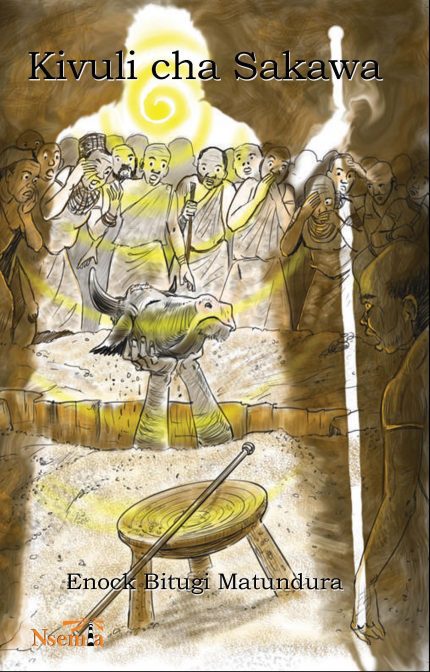
Kivuli cha Sakawa (Sakawa's Ghost) , written in Kiswahili, the major lingua franca in the East African region, is a story about one of Africa's legendary heroes who was at the forefront in the battle against colonialism and its evils. Legend has it that he was a seer and that many of his predictions have come to pass. In this this story, Sakawa finds himself at crossroads following the death of his father, a prominent leader in his own right. Conservative elders in his community who feel threatened by this youngster destined to be a great leader fight him tooth and nail to subdue his shinning star. Will they succeed? Sakawa Ng'iti indeed existed and lived among the Abagusii community in western Kenya at the turn of 19th Century (1800). The unfolding episode in this book did indeed take place, although probably in slightly a different way. By chronicling this episode, the author gives the story a new lease of artistic life and offers opportunity for others to comments and/or offer versions of the story as they understand it.

Abagusii Wisdom Revisited: Proverbs i...

KShs800.00 KShs700.00
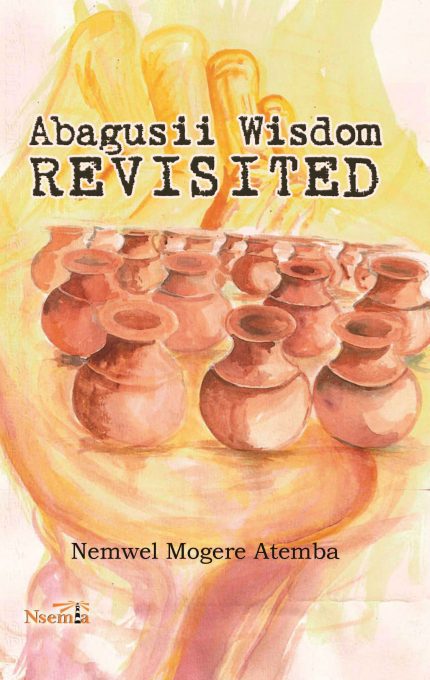
Abagusii Wisdom Revisited is a collection of proverbs and metaphors in Ekegusii, one of the forty one languages spoken in Kenya. It includes naming conventions in the calendar, the traditional homestead, cattle (which were a symbol of wealth in traditional Gusii society), currency and traditional brew. The book captures wisdom told over generations and observations intertwined with profound meaning. In order to avail the work to a wider audience than Ekegusii readers and speakers, the author has attempted to put the necessary context, giving the English equivalent and, in some cases, using story-lines to establish the meaning. Here is an example: Abanda 'mbairokaine; Onchong’a agatama ekworo Kimaiga kayebwate: The rich revere/fear one another as in the case of Onchong’a who fled on noticing Kimaiga’s cloak. Storyline: Once there were two rich men who unknowingly met at the home of a beautiful girl, whom they both intended to woo. Mr. Onchong’a reported earlier. However, when Mr. Kimaiga also arrived for the same purpose, Mr. Onchonga, who was less wealthy, stealthily walked away without ado.

Traditional Marriage in Gusii

KShs800.00 KShs700.00
Traditional Marriage in Gusii (Enyangi y’Ebitinge), published posthumously, documents the process of old-style marriage in Gusii and related steps, culminating in a wedding ceremony. The process was meticulous and made of a series of steps, each with very clear purpose and intended not just for the couple but also their families and clans. Abagusii attached a lot of value to marriage. It was a major landmark in the ‘growing up’ of a man or woman in that society. Marriage marked the transition from the care of one’s parents to being independent and taking care of oneself and one’s family. That transition was possible only after marriage. The importance of marriage and the honour it was accorded is underlined by the respect that was given to a married woman. For example, she found herself late in getting home by someone, that person had an obligation to ensure that she got to her home safely; after all, she was a mother and her progeny would be the link to the future.

Riddles of Abagusii of Kenya by Chris...

KShs800.00 KShs600.00
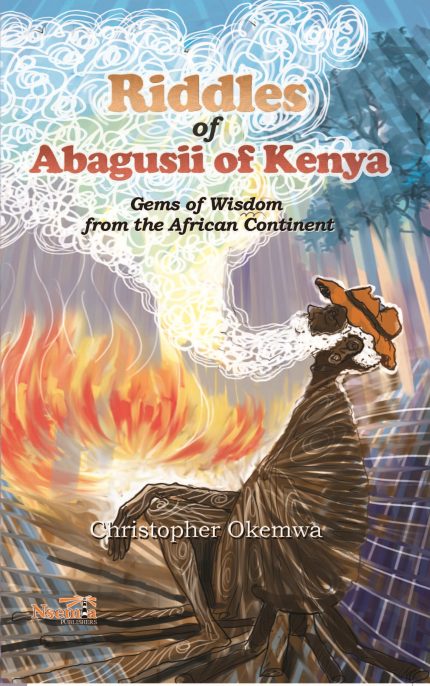
Riddles, along with proverbs, are key aspects of oral communication in many African cultures, including that of Abagusii of Kenya. Popular, especially with children in the community, participants typically use riddles to challenge one another's knoweldge. One person would metaphorically describe something with a concealed clue. The listener, using imagination, previous experience and the context in which the riddle is said, would search for the most relevant answer. It takes great imagination to get the correct answer. Riddles are also performed communally as in the case of groups of people working in the fields, trekking to the market, riding in the same public transport or simply sitting around an evening fire as they waited to retire to bed. This aspect of riddling acted to strengthen community bonds, enhanced knowledge-sharing and imparted lessons, especially for the young in the community. Riddles of Abagusii of Kenya documents the many riddles from that community recorded over a spread of time and space. It offers analysis intended for understanding the riddles and how they are used.

Oral Poetry in Africa :The Abagusii o...

KShs2,000.00 KShs1,500.00
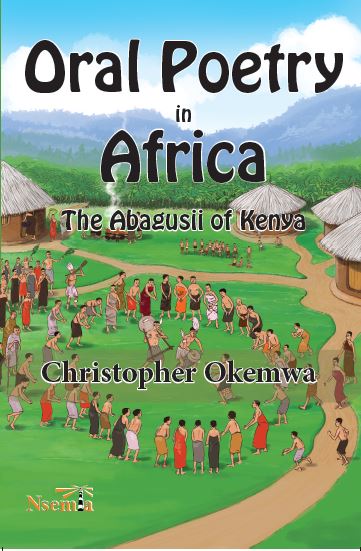
Oral Poetry in Africa: The Abagusii of Kenya highlights characteristics of African oral traditions with particular focus on the oral poetry of the Abagusii of Kenya. It shows that oral poetry in the Abagusii community covered every facet of life. The community’s social-political and economic life, history, values, norms and customs were stored in the oral poetry, in addition to proverbs, riddles and folktales. Notably, oral poetry coloured the entire life of Omogusii and was sung during birth, initiation, marriage and death ceremonies. This book documents the oral poetry of the community in its original form, and in various versions that were practised or sung in different parts of the region inhabited by the community. Further, the book discusses the context in which this poetry was sung and explains some of the cultural practices, norms, and customs that surround or motivated the composition of the poetry. The advent of colonialism had ‘corrupting’ influence on the original poetry, more so with the adoption of English words and phrases. This kind of poetry has not been left out. Aside from the general poetry and the book also captures emeino, the Abagusii classical oral poetry. While the general poetry utilized improvisation as a technique in its presentation and performance, the classical poetry was a fixed form that demanded to be sung in its original form. Unlike the general poetry that, in its ephemerality, invited additions and subtractions from the text, classical poetry was permanent in text with no room for improvisation. Oral Poetry in Africa: The Abagusii of Kenya is meant for students of oral literature at university level. However, it can also be used by researchers of African oral literature, culture, anthropology, history and sociology. Indeed, it is also good for the general reader who is interested in the culture of Abagusii and African people, in general

The Untold Story:Gusii Survival Techn...

KShs800.00 KShs600.00
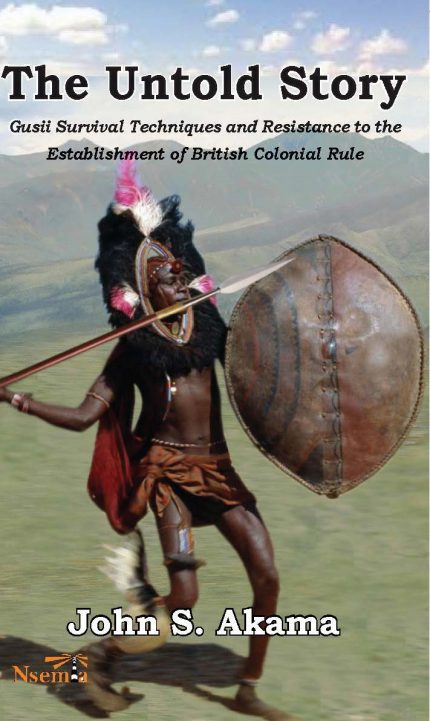
The Untold Story, Gusii Survival Techniques and Resistance to the Establishment of British Colonial Rule. There is little written about the resistance to the establishment of the British colonial rule in Gusii. The scant knowledge available on this historical phenomenon in Kenya is inaccurate and intentionally distorted in favour of the colonial master. The truth, contrary to the incorrect histories presented by the British, is that the Kings African Rival soldiers suffered humiliating defeat in their initial encounter with Gusii warriors. It was a landmark historical event. Otenyo Nyamaterere is incorrectly portrayed as a frustrated and deranged lone-ranger who was high on narcotics when he attacked with a spear and injured the first District Commissioner of Kisii, Geoffrey Northcote. In a fierce rebuttal to this falsehood existing in colonial narratives, this book attempts to correct this erroneousness portrayal of a lead warrior who valiantly came out in defense of community and its lands. And there is context to this resistance. Over many years, the Gusii had honed their fighting skills and survival strategies from the many years of struggle against the hostile and warlike neighbours – the Maasai, the Kipsigis and the Luo. These skills and strategies that came in handy when later the Gusii faced a more formidable external aggressor – the Kings African Rival soldiers. The Gusii warriors fought with valour, demonstrating great fighting skills in their encounter with these forces of conquest even as the latter were better armed. Inevitably the warriors lost, defeated due to the British superior weaponry. The Gusii weapons and hand to hand combat fighting could not match the British gun power.

The Gusii of Kenya by John S. Akama

KShs1,800.00 KShs1,600.00
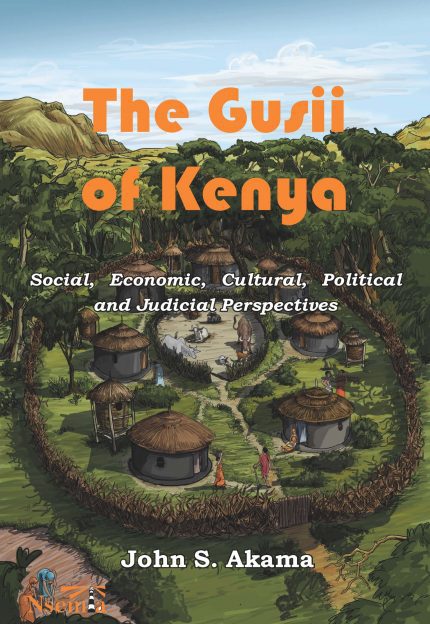
The Gusii of Kenya: Social, Economic, Cultural, Political & Judicial Perspectives provides in-depth topical insights of the Gusii (also known as the Kisii) of Kenya. The book captures historical aspects of the Gusii and how they ended up occupying their present lands. It enunciates the group’s cultural, political and economic organization that are core to the group’s identify and overall survival. Reading the book would provide understanding of some noticeable elements of these perspectives that persist to date. Cultural aspects such as the rites of passage and weddings, part of core identity elements of a people, are well articulated. Social organization, starting at the homestead to clan to community level, was intricately woven to form a coherence whole that defined the Gusii. Indeed, this also formed a basis of core elements of code of conduct (chinsoni) and justice as traditionally administered. The book also raises a number of questions regarding the core character of the Gusii such as lack of central authority and the implications this has had on the community over time. One can only speculate the trajectory of history that would have been had the Gusii organized themselves differently.

Gusii Soapstone Industry:Critical iss...

KShs1,000.00 KShs800.00
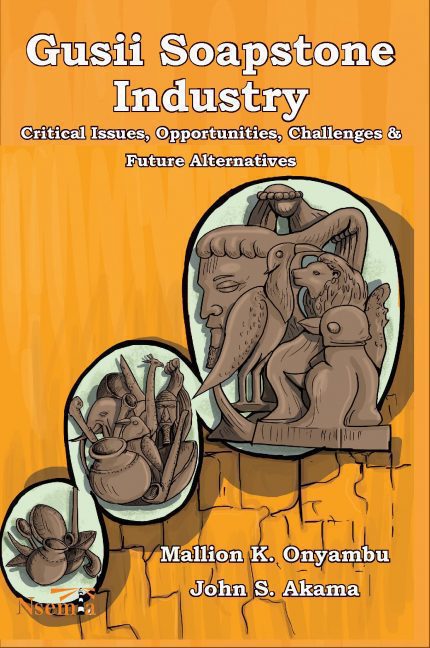
As is the case with most African indigenous industries, not much research has been done on the Gusii soapstone industry. Consequently, the main aim of this book is to fill the identified gap. Specifically, this book traces the origin of the Gusii soapstone industry, going through various stages, i.e. the Pre-Colonial, Colonial and Post-Colonial periods. Within this historical context, the book provides an elucidation of the social, economic, political and cultural factors that have impacted on the evolution and/or development of the soapstone industry. A critical issue captured in the book is the fact that, over the years, the soapstone handicraft products have been transformed from being items of utility for the local people to, mainly, becoming non-utility items that are sold to outsiders, particularly international tourists as unique pieces of indigenous handicraft and/or African art. However, it should be noted that, notwithstanding this transformation, indigenous cultural attributes and/or cultural themes that would have otherwise disappeared, due to increased impacts of globalization, are being preserved by the sculpturing of unique indigenous soapstone products. Furthermore, currently, the soapstone industry has become a major source of livelihood for the Gusii people of Tabaka in Southwestern Kenya. This book provides a lucid articulation of various facets (i.e., social, economic, cultural and political perspectives) of the Gusii soapstone industry, and the fundamental factors that have made the industry survive, over the years, notwithstanding the introduction of mass produced goods from the Western world. The conceptualization of the role of the indigenous industry in promoting sustainable livelihood is clearly brought out, and is presented within the broader milieu of the Gusii society. The book provides excellent reading for anyone interested in having proper perspectives on the history and the overall development of the Gusii soapstone industry. Elkanah Ong’esa, a world renowned artist and soapstone sculptor. As much as the soapstone sculptures are found in museums, art galleries, curio shops and people’s homes in most major cities of the world, not much research and documentation of these unique indigenous industry initiatives has been done. In light of that, this book on the Gusii soapstone industry fills a critical niche and is quite handy for people from all walks of life and academia looking for up to date information on the Gusii soapstone industry. Dr. Margaret Barasa, Anthropolinguistic Expert, and Dean, Faculty of Arts and Social Sciences, Kisii University, Kenya. Most literature on African indigenous industries, such as soapstone mining, carving and marketing, is based on Eurocentric approach which looks at these industries and African art as exotic items for the pleasure of Western gentry and middleclass. Adopting an Afrocentric approach, this book provides a refreshing analysis of the history, transformation and growth of the Gusii soapstone industry; an indigenous initiative that has evolved, systematically, over the years, and has shown a lot of resiliency in the face of many complex challenges. The book is recommended to people who want to have a proper perspective of similar indigenous industries and the Gusii soapstone industry in particular. Matunda Nyanchama, Publisher. This book looks at the resilience of the soapstone industry in Gusii. It shows that the soapstone carvings as currently developed by the Gusii people may have its origin in ancient traditions that dates back to hundreds and perhaps thousands of years. It also gives a good historical analysis of the growth and development of the soapstone industry. It will goes a long way in illuminating critical aspects of the Gusii soapstone industry. Herman Kiriama, Senior Research Fellow, Kisii University, Kenya.