Showing all 8 results

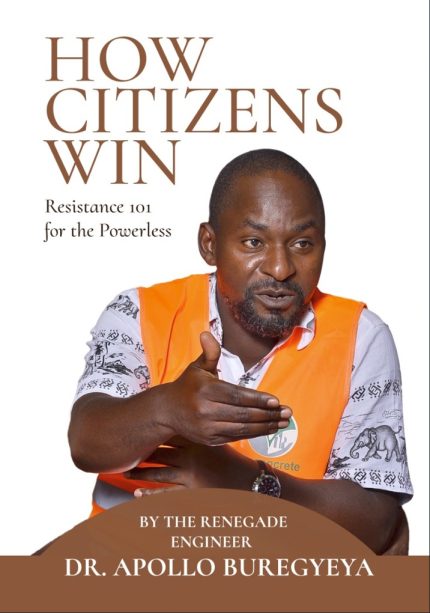
How Citizens Win: Resistance 101 for ...

KShs1,000.00 KShs800.00
How Citizens Win is a powerful and practical guide to reclaiming civic responsibility in a broken system. Written by The Renegade Engineer, this book challenges the quiet surrender that has taken root in many societies, where citizens see everything that is wrong but believe there is nothing they can do. Rejecting the idea that change belongs only to politicians, activists, or the powerful, the book argues that real transformation begins with ordinary people, through small, consistent, and courageous actions. It is not a call to violent revolution, but to disciplined, everyday resistance grounded in integrity, awareness, and collective responsibility. Structured around ten acts of civic courage, the book offers practical pathways for citizens to reshape their societies: documenting injustice, protecting personal dignity, teaching others, supporting local industries, asking hard questions, strengthening households, refusing to glorify corruption, using digital platforms responsibly, backing those who do good, and sustaining personal wellbeing to endure the long struggle. Blending philosophy, lived experience, and relatable African realities, How Citizens Win reframes citizenship as an active duty rather than a passive identity. It shows how seemingly small actions—what you buy, what you say, what you tolerate, and how you live—quietly shape the future of a nation. This is not just a book to read. It is a handbook to practice. A reminder that nations are not rescued from above—they are rebuilt from within, by citizens who choose courage over comfort. Because in the end, citizens win when they stop waiting to be saved—and start acting like the owners of their country.

The Big We – A Blueprint for Sustaina...

KShs1,750.00 KShs1,400.00
The Big We is a bold and practical manifesto for transforming Uganda’s construction industry into a powerful engine of national development. Grounded in history, economics, and real industry experience, Dr. Apollo Buregyeya reframes construction not merely as a sector, but as the backbone of civilization itself—one that shapes markets, livelihoods, and the trajectory of a nation. The book exposes the structural weaknesses that have kept local contractors at the margins of their own economy, including dependence on foreign firms, misaligned procurement systems, high financing costs, and the uncritical adoption of external standards and technologies. It challenges the illusion of a “level playing field” and argues that without deliberate policy and institutional reform, Uganda will continue to outsource both value and capability. At the heart of the book is the “BIG WE” framework—Business Development, Infrastructure Quality, Graduates, Wages, and Exports—a five-part strategy designed to build a competitive, self-reliant, and globally relevant construction industry. Through this framework, the book outlines how Uganda can develop financially strong contractors, raise infrastructure quality through systemic reform, align education with industry needs, improve labour productivity and wages, and ultimately export construction services and expertise. Blending technical insight with economic reasoning, The Big We makes a compelling case for economic patriotism, local capacity building, and institutional alignment. It calls on government, industry players, and professionals to act collectively—to move from “me” to “we”—and take ownership of the nation’s development agenda. This is not just a book about construction. It is a blueprint for reclaiming control of Uganda’s economic future.

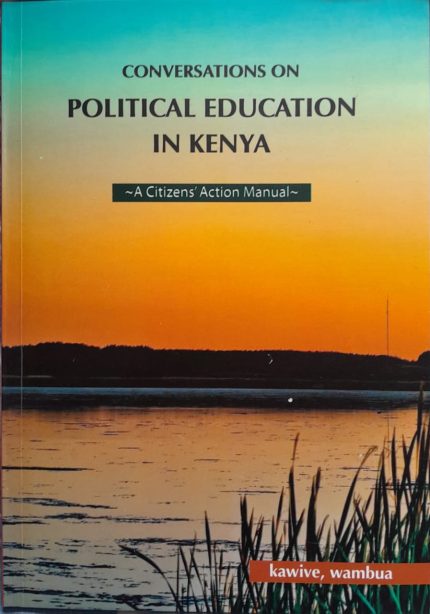
Conversations on Political Education ...

KShs1,500.00
The struggle for Kenya's new constitution has been long and winded. There are lessons of history captured here in the conversations. And then, the Kenyan people got a constitution in 2010 and for it to be implemented well, every person, every state and non state actor has to do something. This book looks at what the Constitution requires these various categories to do and looks at these proposed actions as conversations in a political education perspective,

The Constitution of Kenya: A Commenta...

KShs7,000.00 KShs6,500.00
The Constitution of Kenya: A Commentary by Luis Franceschi and PLO Lumumba

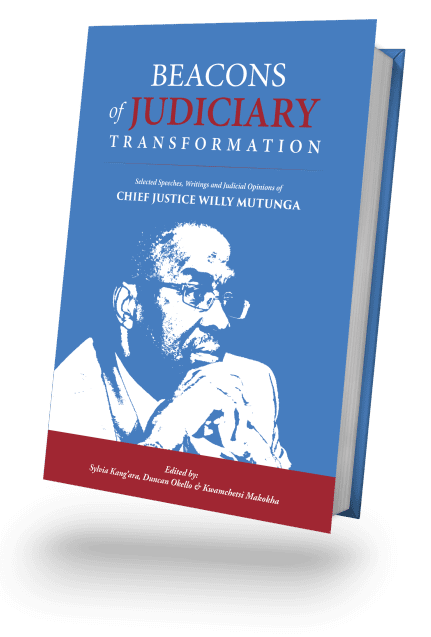
Beacons of Judiciary Transformation b...

KShs3,000.00 KShs2,500.00
This remarkable book contains over 60 speeches, seven judicial opinions, and three academic articles of Chief Justice Willy Mutunga written during his tenure as Chief Justice and President of the Supreme Court of Kenya from 2011 to 2016. Edited by Prof. Sylvia Kangara, Duncan Okello and Kwamchetsi Makokha, the book is a tour de force of Chief Justice Willy Mutunga’s remarkable career as the first Chief Justice under the 2010 Constitution and his efforts to transform the Judiciary, but also his role as an unrivalled leader of civil society movements in Kenya, thinker, academic, reformist and much more. The speeches, judicial opinions and academic articles are divided along the themes that resonate across Chief Justice Mutunga’s career: People, Participation and the Law; Gender Justice; the Legal Profession; Dialogue with Judges, Magistrates, Kadhis and Staff; Judicial Accountability; Jurisprudence; Elections; Expanding the Footprint of Justice; Inter-Governmental Relations; the Elite and the Academy; Nationhood; Youth Culture and the Arts; International Judicial Diplomacy; and of course Beacons for the Future. It is those Beacons for the future from which the title of this book is derived. This book therefore reflects Chief Justice Willy Mutunga’s commitment to what he calls the beacons of the 2010 Constitution. His own tenure as Chief Justice exemplified those beacons of alternative political leadership including incorruptibility, integrity, equitable distribution of resources among all people in the county, particularly minorities, and promotion of the sovereignty of the people through deep and committed public participation. Anyone who wants to understand why Kenya’s 2010 Constitution was so overwhelmingly ratified by the people of Kenya, how to interpret and understand it as well as what it means across a whole range of domains will find this book absolutely indispensable.

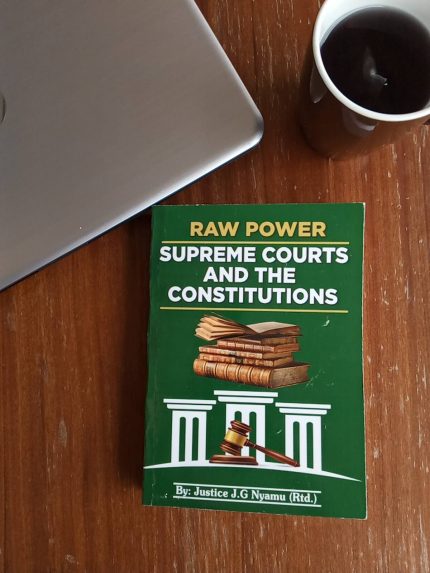
Raw Power Supreme Courts and the Cons...

KShs3,990.00 KShs3,500.00
The author has selected the Supreme Courts of Kenya, India and united states as the focus. He has cast his net wide to include the meaning of sovereignty, constitutional jurisdiction ,decisional independence and ethics in the process of judging.

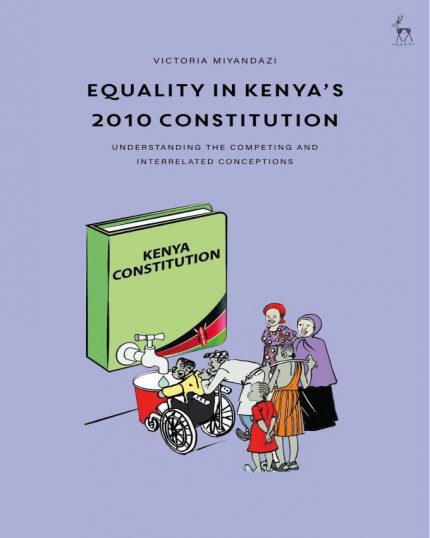
Equality in Kenya’s 2010 Consti...

KShs10,000.00 KShs8,999.00
Brief Summary "This book asks whether there is a coherent conception of equality in Kenya's 2010 Constitution and explores how competing and interrelated ideas of equality in it should be conceptualized, interpreted and applied. Making a significant contribution to the ongoing global conversations on the various understandings of equality, the book illuminates the many ways in which diverse equality guarantees clash, or are interrelated. It also sets out principled approaches on how they can be coherently interpreted to address the myriad inequalities in Kenya. Taking a comparative approach, the book considers how other jurisdictions including the United States, the United Kingdom, Canada, South Africa, India and Botswana have approached the conceptualization, interpretation and application of various equality concepts. The book focuses on important issues such as: - transformative constitutionalism in relation to the interpretation of Kenya's 2010 Constitution; - expanding the list of enumerated grounds for non-discrimination; - affirmative action; - accommodating religious and cultural diversity versus gender equality; - the interrelation between socio-economic rights and status-based equality"--

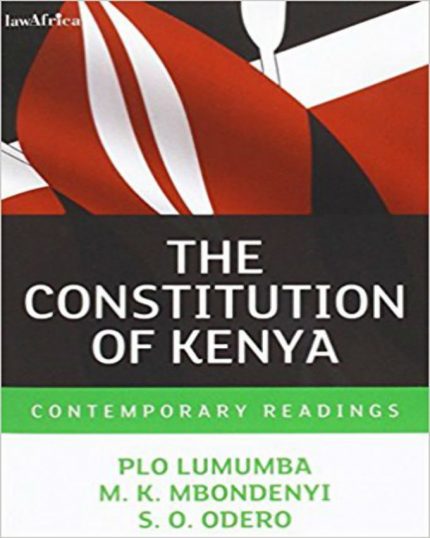
The Constitution of Kenya Contemporar...

KShs3,000.00 KShs2,490.00
The Constitution of Kenya: Contemporary Reading, provides an in-depth assessment of the interface between constitutionalism and Kenya's new Constitution. Focusing on the historical trajectory on the search for a new Constitution, Chapter One lays the groundwork upon which the fault line between constitutionalism and the issue areas are articulated in the other chapters in relation to the new Constitution. The superb chapters on the carefully selected issue areas, make this edited volume an essential reading. The book makes an important contribution to the evolving constitutionalism and policy clarification on Kenya's new Constitution. It is a welcome and timely intervention by legal scholars and practitioners on the new constitution and the challenges facing Kenya in its implementation. The book is an excellent teaching and reading manual for students in law, history, politics, diplomacy, and international relations as well as for the practitioners.