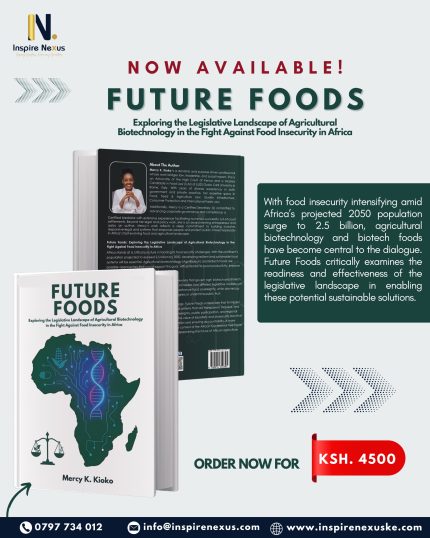
"Future Foods: Exploring the Legislative Landscape of Agricultural Biotechnology in the Fight Against Food Insecurity in Africa"
Africa stands at a critical juncture in tackling its food security challenges. With the continent’s population projected to exceed 2.5 billion by 2050, developing resilient and sustainable agricultural systems will be essential. Future Foods explores agricultural biotechnology (Agr-Biotech) and Biotech Foods as one of several possible approaches that could support this goal, with potential to boost productivity, improve nutrition, and enhance climate resilience.
The book examines the legal and regulatory frameworks that govern Agri- biotech and Biotech Foods in Africa and in the wider global context. It considers how different legislative models can influence innovation, protect farmers’ rights, and advance food sovereignty, while also recognizing that poorly aligned systems may hinder progress or undermine public trust.
Without taking a stance for or against biotechnology, Future Foods underscores that its impact depends largely on governance, particularly legal systems that are transparent, inclusive, and rooted in local priorities. Themes such as seed sovereignty, public participation, and regional cooperation shape the discussion, underscoring the value of biosafety and biosecurity laws that strike a careful balance between fostering innovation and ensuring accountability. A more harmonized legislative approach especially in the context of the African Continental Free Trade Area (AfCFTA) is likely to play a significant role in determining the future of African agriculture and the equitable distribution of its benefits.