Showing 1561–1580 of 1643 results

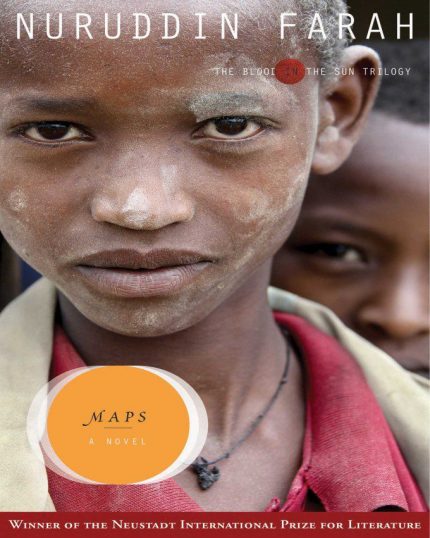
Maps by Nuruddin Farah

KShs2,500.00 KShs2,199.00
Brief Summary This first novel in Nuruddin Farah's Blood in the Sun trilogy tells the story of Askar, a man coming of age in the turmoil of modern Africa. With his father a victim of the bloody Ethiopian civil war and his mother dying the day of his birth, Askar is taken in and raised by a woman named Misra amid the scandal, gossip, and ritual of a small African village. As an adolescent, Askar goes to live in Somalia's capital, where he strives to find himself just as Somalia struggles for national identity.

The AKO Caine Prize for African Writi...

KShs1,000.00 KShs599.00
Brief Summary Now in its 21st year, the AKO Caine Prize for African Writing is African’s leading literary prize, and is awarded to a short story by an African writer published in English, whether in Africa or elsewhere. The collection brings together the five stories on the 2020 shortlist. The authors shortlisted for the 2020 AKO Caine Prize are: - Jowhor Ile (Nigeria) for Fisherman’s Stew - Rémy Ngamije (Rwanda/Namibia) for The Neighbourhood Watch - Irenosen Okojie (Nigeria) for Grace Jones - Erica Sugo Anyadike (Tanzania) for How to Marry an African President - Chikodili Emeladu (Nigeria) for What to do when your child brings home a Mami Wata The 2020 judging panel comprises: - Kenneth Olumuyiwa Tharp (Chair) has over 35 years’ experience in the UK arts and cultural sector, including a 25-year career as a dancer, choreographer, teacher and director. Since May 2018 he has been Director of The Africa Centre. - Audrey Brown is a South African broadcast journalist, who currently presents the BBC World Service flagship daily news and current affairs programme, Focus on Africa. Gabriel Gbadamosi is an Irish-Nigerian poet and playwright. His London novel Vauxhall (2013) won the Tibor Jones Pageturner Prize and Best International Novel at the Sharjah Book Fair. - James Murua is a Kenya-based blogger, journalist, podcaster and editor who has written for a variety of media outlets in a career spanning print, web and TV. - Ebissé Wakjira-Rouw is an Ethiopian-born non-fiction editor, podcaster, publisher and policy advisor at the Dutch Council for Culture in the Netherlands.

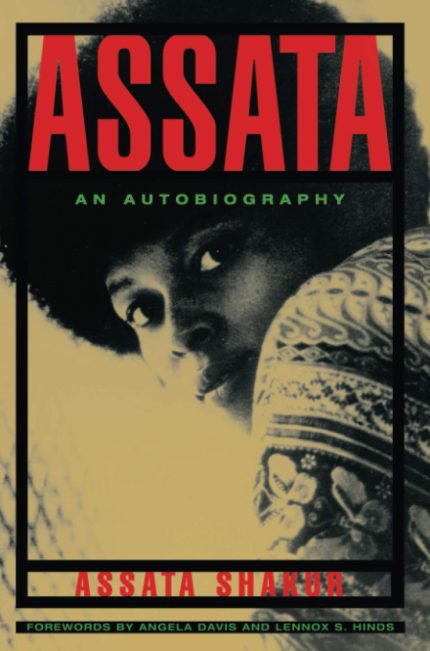
Assata An Autobiography by Assata Shakur

KShs3,000.00 KShs2,800.00
On May 2, 1973, Black Panther Assata Shakur (aka JoAnne Chesimard) lay in a hospital, close to death, handcuffed to her bed, while local, state, and federal police attempted to question her about the shootout on the New Jersey Turnpike that had claimed the life of a white state trooper. Long a target of J. Edgar Hoover's campaign to defame, infiltrate, and criminalize Black nationalist organizations and their leaders, Shakur was incarcerated for four years prior to her conviction on flimsy evidence in 1977 as an accomplice to murder. This intensely personal and political autobiography belies the fearsome image of JoAnne Chesimard long projected by the media and the state. With wit and candor, Assata Shakur recounts the experiences that led her to a life of activism and portrays the strengths, weaknesses, and eventual demise of Black and White revolutionary groups at the hand of government officials. The result is a signal contribution to the literature about growing up Black in America that has already taken its place alongside The Autobiography of Malcolm X and the works of Maya Angelou. Two years after her conviction, Assata Shakur escaped from prison. She was given political asylum by Cuba, where she now resides.

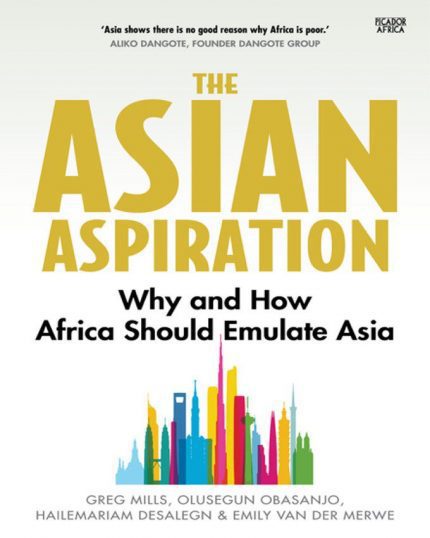
The Asian Aspiration: Why and How Afr...

KShs3,999.00 KShs3,799.00
In 1960, the GDP per capita of Southeast Asian countries was nearly half of that of Africa. By 1986, the gap had closed and today the trend is reversed, with more than half of the world’s poorest now living in sub-Saharan Africa. Why has Asia developed while Africa lagged? The Asian Aspiration chronicles the stories of explosive growth and changing fortunes: the leaders, events and policy choices that lifted a billion people out of abject poverty within a single generation, the largest such shift in human history. The relevance of Asia’s example comes as Africa is facing a population boom, which can either lead to crisis or prosperity; and as Asia is again transforming, this time out of low-cost manufacturing into hi-tech, leaving a void that is Africa’s for the taking. Far from the determinism of ‘Africa Rising’, this book calls for unprecedented pragmatism in the pursuit of African success. Authors: Greg Mills, Olusegun Obasanjo, Hailemariam Desalegn and Emily Van der Merwe

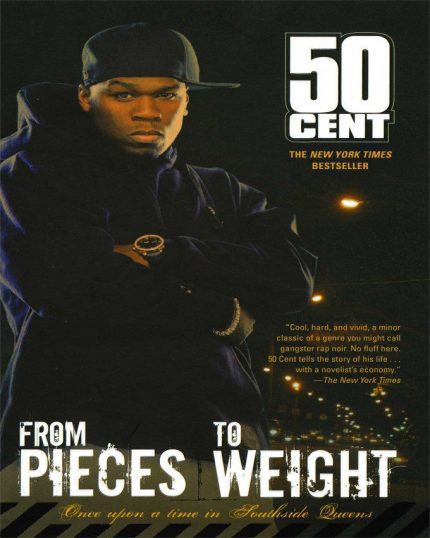
From Pieces to Weight: Once Upon a Ti...

KShs1,799.00 KShs1,499.00
Brief Summary From Pieces to Weight: Once Upon a Time in Southside Queens, a violent and introspective memoir that reveals not only 50's story but the story of a generation of youth faced with hard choices and very little options. A tale of sacrifice, transformation and redemption, but it is also one of hope, determination and the power of self. Told in 50's own unique voice, the narrative drips with the raw insight, street wisdom, and his struggle to survive at all costs...and behold the riches of the American Dream. 50 Cent has sold over 20 million records worldwide. His record-breaking debut album Get Rich or Die Tryin' has sold over 12 million units worldwide, with the largest debut in SoundScan history. While his sophomore effort, The Massacre, sold over 1.14 million copies in its fi rst four days of release, he has since become the fi rst artist to have four songs in the top ten of Billboard's Hot 100 since The Beatles in 1964. His business empire includes: a record label (G-Unit Records, a division of Interscope Records), apparel/footwear ventures (G-Unit Clothing and footwear, joint ventures through the Ecko Clothing Company and Reebok, respectively), vitamin water (Formula 50, through Glacéau's Vitamin Water), watch line (G-Unit Watches, through Jacob & Co), and a video game (50 Cent: Bulletproof, through Vivendi Games). His future plans are to dominate the film and television worlds through two new G-Unit ventures in film and television...and his most prized project: the nonprofit organization The G-Unity Foundation, which aims to better the life of urban youth. "

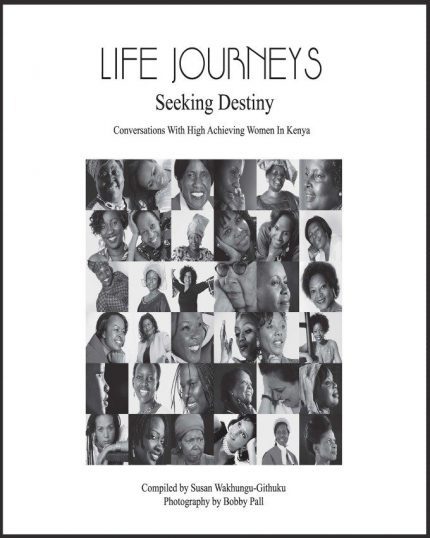
Life Journeys Seeking Destiny: Conver...

KShs6,000.00 KShs5,500.00
This series presents conversations with a diverse group of Kenyans. Presented as photographic vignettes, the stories speak of the life journeys of those profiled and in so doing deliver nuggets of wisdom. Appealing to all audiences, the series which takes a snap shot of societal progress is ultimately for generations to come: “for our children and their children’s children”. The books will surprise and inspire. LIFE JOURNEYS – SEEKING DESTINY is the first in this collection. This book profiles life stories of 74 Kenyan women of substance and achievement. The stories were captured by a group of young, high potential women who also wish to heed their personal calls and shape their destiny.

For Love of Soysambu The Saga of Lord...

KShs3,000.00 KShs2,500.00
This dramatic story spans 122 years and highlights challenges faced by four generations of an initially British aristocratic family in Kenya, with Soysambu in the Great Rift Valley as its central focus. Initially a refuge for dying sheep, but more recently a Wildlife Conservancy and part of a UNESCO World Heritage Site, today Soysambu protects many rare and endangered species. The saga begins in 1897 with the arrival of the Hon. Hugh Cholmondeley, who walked over 1,000 kilometres into East Africa from Berbera. In 1902, after inheriting his title of 3rd Baron Delamere, he abandoned his grand Cheshire family home, Vale Royal, for a grass and mud hut in East Africa, where he befriended local Maasai and gradually built up a formidable reputation as a leading politician and pioneer. When he died in 1931, having sold off his Cheshire estates to fund his agricultural experiments, he was bankrupt. His second wife, Gwladys, Mayor of Nairobi, was associated with the notorious Happy Valley clique, dragging her into the Lord Erroll murder trial in 1941. Delamere's son, Thomas Cholmondeley, now 4th Baron Delamere, moved to Kenya after World War II to salvage his father's farms. Thomas, who was pro-independence, managed to turn Soysambu into a successful cattle ranch. His third wife, Diana, remained notorious for her affair with Lord Erroll at his time of murder, with many still believing she'd been his killer. Following Thomas's death in 1979, his only son Hugh, now 5th Baron Delamere, took over Soysambu. His son, Tom Cholmondeley, faced increasing financial problems and pressure from land-hungry Kenyans, a situation exacerbated when he was charged with murder - twice. After his incarcerations and eventual release, he was busy implementing his innovative ideas on Soysambu when he died unexpectedly on 24th August 2016 after hip surgery.  

The Fishermen by Chigozie Obioma

KShs2,190.00 KShs2,090.00
In a small town in western Nigeria, four young brothers take advantage of their strict father's absence from home to go fishing at a forbidden local river. They encounter a dangerous local madman who predicts that the oldest boy will be killed by one of his brothers. This prophecy unleashes a tragic chain of events of almost mythic proportions.  

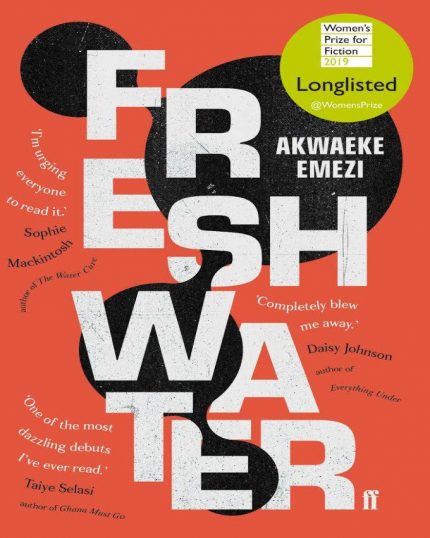
Freshwater by Akwaeke Emezi

KShs2,290.00 KShs1,990.00
An extraordinary debut novel, Freshwater explores the surreal experience of having a fractured self. It centers around a young Nigerian woman, Ada, who develops separate selves within her as a result of being born "with one foot on the other side." Unsettling, heartwrenching, dark, and powerful, Freshwater is a sharp evocation of a rare way of experiencing the world, one that illuminates how we all construct our identities. Ada begins her life in the south of Nigeria as a troubled baby and a source of deep concern to her family. Her parents, Saul and Saachi, successfully prayed her into existence, but as she grows into a volatile and splintered child, it becomes clear that something went terribly awry. When Ada comes of age and moves to America for college, the group of selves within her grows in power and agency. A traumatic assault leads to a crystallization of her alternate selves: As?ghara and Saint Vincent. As Ada fades into the background of her own mind and these selves--now protective, now hedonistic--move into control, Ada's life spirals in a dark and dangerous direction. Narrated by the various selves within Ada and based in the author's realities, Freshwater dazzles with ferocious energy and serpentine grace, heralding the arrival of a fierce new literary voice.  

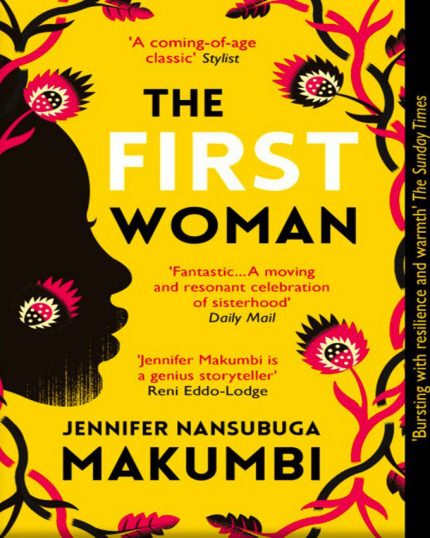
The First Woman by Jennifer Nansubuga...

KShs2,090.00 KShs1,990.00
Brief Summary Growing up in a small Ugandan village, Kirabo is surrounded by powerful women. Her grandmother, her aunts, her friends and cousins are all desperate for her to conform, but Kirabo is inquisitive, headstrong and determined. Up until now, she has been perfectly content with her life at the heart of this prosperous extended family, but as she enters her teenage years, she begins to feel the absence of the mother she has never known. The First Woman follows Kirabo on her journey to becoming a young woman and finding her place in the world, as her country is transformed by the bloody dictatorship of Idi Amin. Jennifer Makumbi has written a sweeping tale of longing and rebellion, at once epic and deeply personal, steeped in an intoxicating mix of ancient Ugandan folklore and modern feminism, that will linger in the memory long after the final page.  

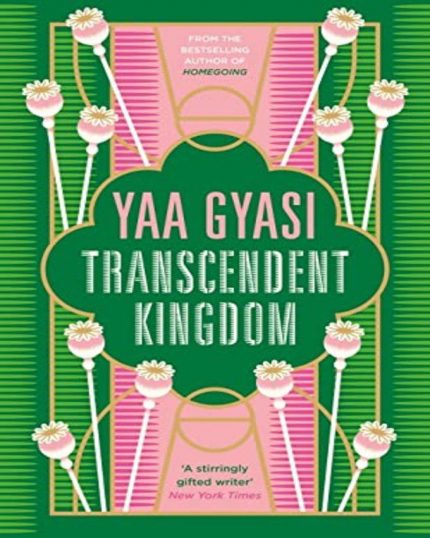
Transcendent Kingdom by Yaa Gyasi

KShs1,899.00 KShs1,599.00
Brief Summary Yaa Gyasi's stunning follow-up to her acclaimed national best seller Homegoing is a powerful, raw, intimate, deeply layered novel about a Ghanaian family in Alabama. Gifty is a fifth-year candidate in neuroscience at Stanford School of Medicine studying reward-seeking behavior in mice and the neural circuits of depression and addiction. Her brother, Nana, was a gifted high school athlete who died of a heroin overdose after a knee injury left him hooked on OxyContin. Her suicidal mother is living in her bed. Gifty is determined to discover the scientific basis for the suffering she sees all around her. But even as she turns to the hard sciences to unlock the mystery of her family's loss, she finds herself hungering for her childhood faith and grappling with the evangelical church in which she was raised, whose promise of salvation remains as tantalizing as it is elusive. Transcendent Kingdom is a deeply moving portrait of a family of Ghanain immigrants ravaged by depression and addiction and grief--a novel about faith, science, religion, love. Exquisitely written, emotionally searing, this is an exceptionally powerful follow-up to Gyasi's phenomenal debut.  

Thomas Sankara Speaks: The Burkina Fa...

KShs3,800.00 KShs3,500.00
Under Sankara's leadership, the revolutionary government of Burkina Faso in West Africa set an electrifying example. Peasants, workers, women, and youth mobilized to carry out literacy and immunization drives; to sink wells, plant trees, build dams, erect housing; to combat the oppression of women and transform exploitative relations on the land; to free themselves from the imperialist yoke and solidarize with others engaged in that fight internationally. Second edition includes a preface by Mary-Alice Waters, a new introduction by editor Michel Prairie, maps, chronology, glossary, and index. Two extensive photo sections feature many unpublished photos of the Burkina Faso revolution.

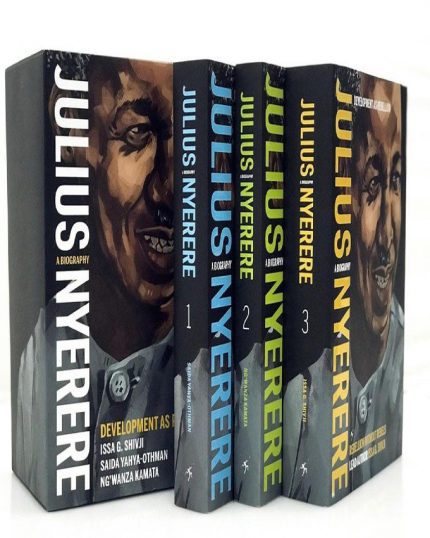
Development as Rebellion A biography ...

KShs8,200.00 KShs7,900.00
Julius Kambarage Nyerere was born on April 13, 1922 in Butiama, on the eastern shore of lake Victoria in north west Tanganyika. His father was the chief of the small Zanaki tribe. He was 12 before he started school (he had to walk 26 miles to Musoma to do so). Later, he transferred for his secondary education to the Tabora Government Secondary School. His intelligence was quickly recognized by the Roman Catholic fathers who taught him. He went on, with their help, to train as a teacher at Makerere University in Kampala (Uganda). On gaining his Certificate, he taught for three years and then went on a government scholarship to study history and political economy for his Master of Arts at the University of Edinburgh (he was the first Tanzanian to study at a British university and only the second to gain a university degree outside Africa. In Edinburgh, partly through his encounter with Fabian thinking, Nyerere began to develop his particular vision of connecting socialism with African communal living. On his return to Tanganyika, Nyerere was forced by the colonial authorities to make a choice between his political activities and his teaching. He was reported as saying that he was a schoolmaster by choice and a politician by accident. Working to bring a number of different nationalist factions into one grouping he achieved this in 1954 with the formation of TANU (the Tanganyika African National Union). He became President of the Union (a post he held until 1977), entered the Legislative Council in 1958 and became chief minister in 1960. A year later Tanganyika was granted internal self-government and Nyerere became premier. Full independence came in December 1961 and he was elected President in 1962. Nyerere’s integrity, ability as a political orator and organizer, and readiness to work with different groupings was a significant factor in independence being achieved without bloodshed. In this he was helped by the co-operative attitude of the last British governor – Sir Richard Turnbull. In 1964, following a coup in Zanzibar (and an attempted coup in Tanganyika itself) Nyerere negotiated with the new leaders in Zanzibar and agreed to absorb them into the union government. The result was the creation of the Republic of Tanzania. Ujamma, socialism and self reliance As President, Nyerere had to steer a difficult course. By the late 1960s Tanzania was one of the world’s poorest countries. Like many others it was suffering from a severe foreign debt burden, a decrease in foreign aid, and a fall in the price of commodities. His solution, the collectivization of agriculture, villigization (see Ujamma below) and large-scale nationalization was a unique blend of socialism and communal life. The vision was set out in the Arusha Declaration of 1967 (reprinted in Nyerere 1968):

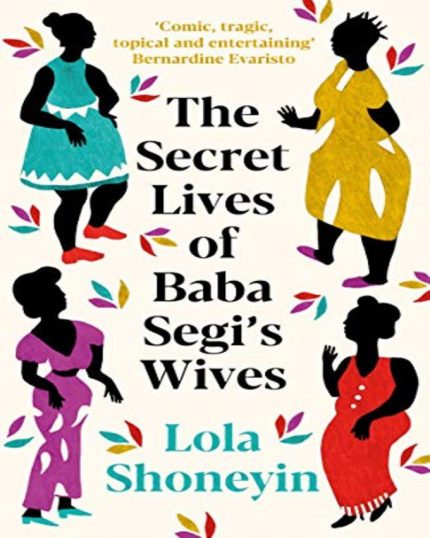
The Secret Lives of Baba Segis Wives ...

KShs2,000.00 KShs1,890.00
African-born poet Lola Shoneyin makes her fiction debut with The Secret Lives of Babi Segi’s Wives, a perceptive, entertaining, and eye-opening novel of polygamy in modern-day Nigeria. The struggles, rivalries, intricate family politics, and the interplay of personalities and relationships within the complex private world of a polygamous union come to life in The Secret Lives of Baba Segi’s Wives—Big Love and The 19th Wife set against a contemporary African background.

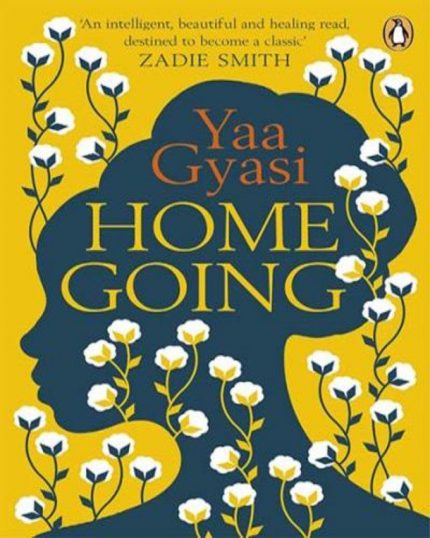
Homegoing by Yaa Gyasi

KShs1,890.00
A novel of breathtaking sweep and emotional power that traces three hundred years in Ghana and along the way also becomes a truly great American novel. Extraordinary for its exquisite language, its implacable sorrow, its soaring beauty, and for its monumental portrait of the forces that shape families and nations, Homegoing heralds the arrival of a major new voice in contemporary fiction. Two half-sisters, Effia and Esi, are born into different villages in eighteenth-century Ghana. Effia is married off to an Englishman and lives in comfort in the palatial rooms of Cape Coast Castle. Unbeknownst to Effia, her sister, Esi, is imprisoned beneath her in the castle's dungeons, sold with thousands of others into the Gold Coast's booming slave trade, and shipped off to America, where her children and grandchildren will be raised in slavery. One thread of Homegoing follows Effia's descendants through centuries of warfare in Ghana, as the Fante and Asante nations wrestle with the slave trade and British colonization. The other thread follows Esi and her children into America. From the plantations of the South to the Civil War and the Great Migration, from the coal mines of Pratt City, Alabama, to the jazz clubs and dope houses of twentieth-century Harlem, right up through the present day, Homegoing makes history visceral, and captures, with singular and stunning immediacy, how the memory of captivity came to be inscribed in the soul of a nation. Generation after generation, Yaa Gyasi's magisterial first novel sets the fate of the individual against the obliterating movements of time, delivering unforgettable characters whose lives were shaped by historical forces beyond their control. Homegoing is a tremendous reading experience, not to be missed, by an astonishingly gifted young writer.

This Is What America Looks Like by Il...

KShs2,599.00 KShs2,299.00
This Is What America Looks Like: My Journey from Refugee to Congresswoman. Ilhan Omar was only eight years old when war broke out in Somalia. The youngest of seven children, her mother had died while Ilhan was still a little girl. She was being raised by her father and grandfather when armed gunmen attacked their compound and the family decided to flee Mogadishu. They ended up in a refugee camp in Kenya, where Ilhan says she came to understand the deep meaning of hunger and death. Four years later, after a painstaking vetting process, her family achieved refugee status and arrived in Arlington, Virginia. Aged twelve, penniless, speaking only Somali and having missed out on years of schooling, Ilhan rolled up her sleeves, determined to find her American dream. Faced with the many challenges of being a Muslim refugee, she questioned stereotypes and built bridges with her classmates and in her community. In under two decades she became a grassroots organizer, graduated from college and was elected to congress with a record-breaking turnout by the people of Minnesota—ready to keep pushing boundaries and restore moral clarity as she sees it in Washington D.C.
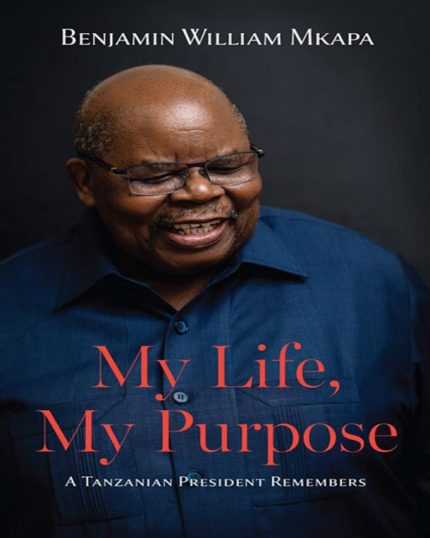
My Life My Purpose A Tanzanian Presid...

KShs4,390.00 KShs3,990.00
His Excellency Benjamin Mkapa was Tanzanian's third president, elected under the first multi-party general election in Tanzania. His memoirs range from his childhood, time as president, and his continuing post-retirement involvement on the international stage of development and peace mediation. This book will appeal to readers interested in: an African's personal experiences of colonialism in East Africa; the struggle for independence by the liberation movements of several African countries; how war helped unify the diverse citizens of a young nation; fostering nationalism and addressing ethnic and religious differences; the economic and social aspects of transition to socialism and then to a free market environment; the political transition from a single party state to multi-partyism; and relations with international organisations and development partners. During the ten years of his presidency he undertook substantial reforms, such as the privatisation of national assets, securing international debt relief and restructuring the public service. His Excellency writes of his childhood, his political maturation, the evolution of the State and politics in Tanzania, as well as some political upheavals in neighbouring countries. These memoirs are enriched by his views on leadership and advice for aspiring leaders. After Julius Nyerere, few books have been written by senior Tanzanian leaders on the evolution of Tanzania; in fact more literature has been produced by foreigners than Tanzanians, thus H.E. Mkapa's memoirs are a milestone. This book will appeal to aspiring leaders; students of development, international politics and diplomacy; those working for development partners; historians and those who want to know more about their Tanzanian heritage.

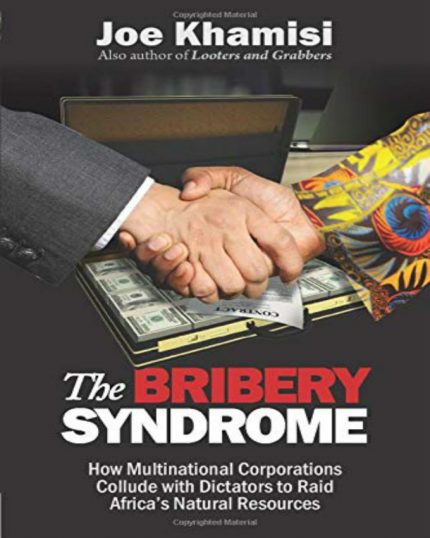
The Bribery Syndrome by Joe Khamisi

KShs2,500.00
The Bribery Syndrome: How Multinational Corporations Collude with Dictators to Raid Africa's Natural Resources. A shocking narration of how global multinationals make billions of dollars in profits by bribing corrupt African dictators and public officials to secure lucrative contracts in some of the most critical economic sectors in Africa. Dozens of foreign company executives have been jailed and/or fined heavily for violating the US Foreign Corrupt Practices Act and the UK Bribery Act. The book focuses on 28 corrupt leaders in sub-Saharan Africa who cozy up with company executives of some of the largest corporations in the world. Both the officials and the global conglomerates make huge amounts of money using kickbacks, bribery, and corruption while millions of Africans languish in poverty. The Bribery Syndrome is a compelling read.

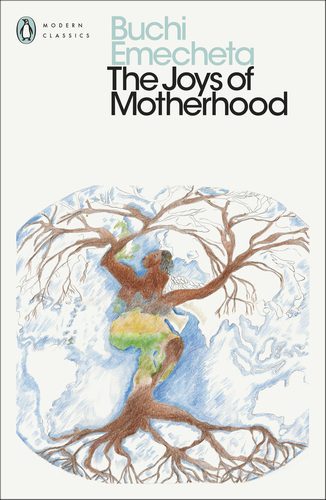
The Joys of Motherhood by Buchi Emecheta

KShs2,090.00 KShs1,890.00
A feminist literary classic by one of Africa’s greatest women writers, re-issued with a new introduction by Stéphane Robolin. First published in 1979, The Joys of Motherhood is the story of Nnu Ego, a Nigerian woman struggling in a patriarchal society. Unable to conceive in her first marriage, Nnu is banished to Lagos where she succeeds in becoming a mother. Then, against the backdrop of World War II, Nnu must fiercely protect herself and her children when she is abandoned by her husband and her people. Emecheta "writes with subtlety, power, and abundant compassion” (New York Times).  

Higher Is Waiting by Tyler Perry

KShs4,690.00 KShs4,490.00
Brief Summary In this intimate book of inspiration, Tyler Perry writes of how his faith has sustained him in hard times, centered him in good times, and enriched his life. Higher Is Waiting is a spiritual guidebook, a collection of teachings culled from the experiences of a lifetime, meant to inspire readers to climb higher in their own lives and pull themselves up to a better, more fulfilling place. Beginning with his earliest memories of growing up a shy boy in New Orleans, Perry recalls the moments of grace and beauty in a childhood marked by brutality, deprivation, and fear. With tenderness he sketches portraits of the people who sustained him and taught him indelible lessons about integrity, trust in God, and the power of forgiveness: his aunt Mae, who cared for her grandfather, who was born a slave, and sewed quilts that told a story of generations; Mr. Butler, a blind man of remarkable dignity and elegance, who sold penny candies on a street corner; and his beloved mother, Maxine, who endured abuse, financial hardship, and the daily injustices of growing up in the Jim Crow South yet whose fierce love for her son burned bright and never dimmed. Perry writes of how he nurtured his dreams and discovered solace in nature, and of his resolute determination to reach ever higher. Perry vividly and movingly describes his growing awareness of God's presence in his life, how he learned to tune in to His voice, to persevere through hard times, and to choose faith over fear. Here he is: the devoted son, the loving father, the steadfast friend, the naturalist, the philanthropist, the creative spirit--a man whose life lessons and insights into scripture are a gift offered with generosity, humility, and love.