














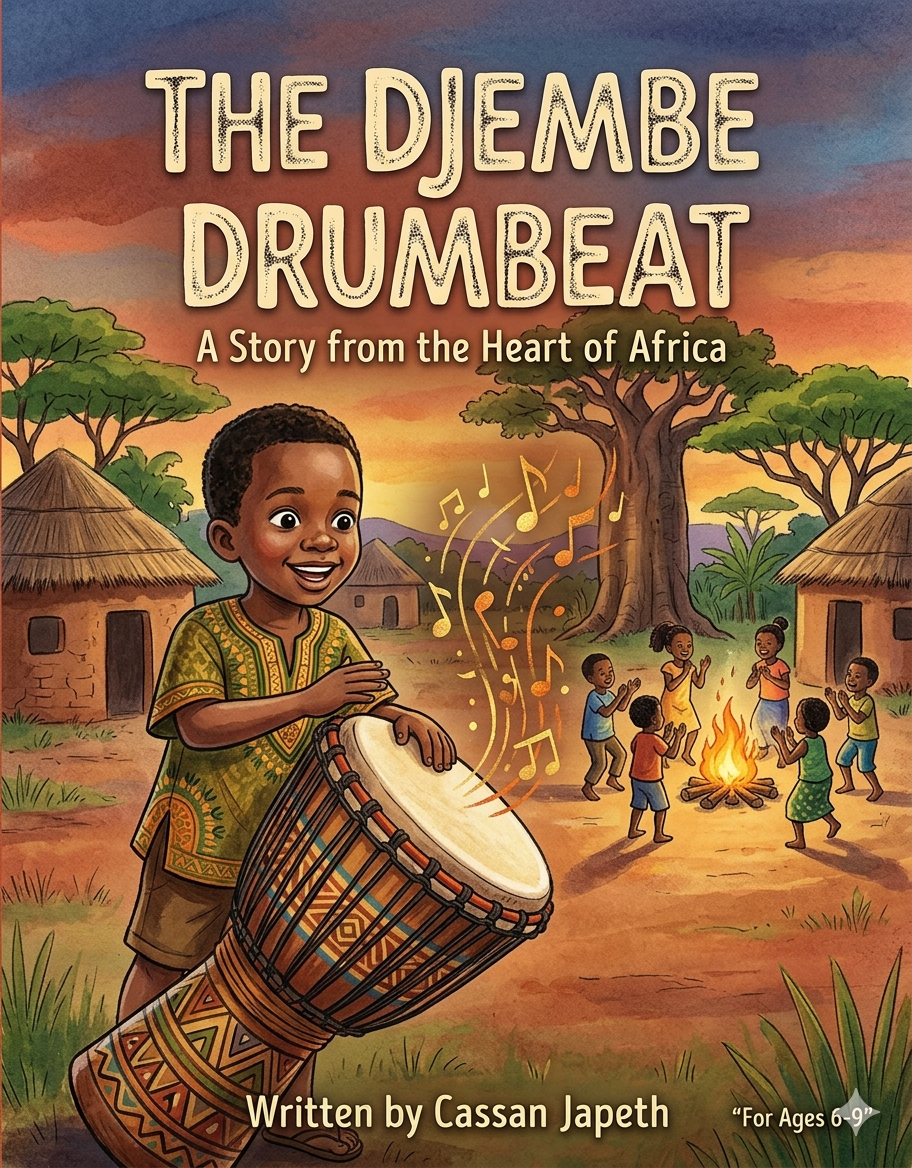
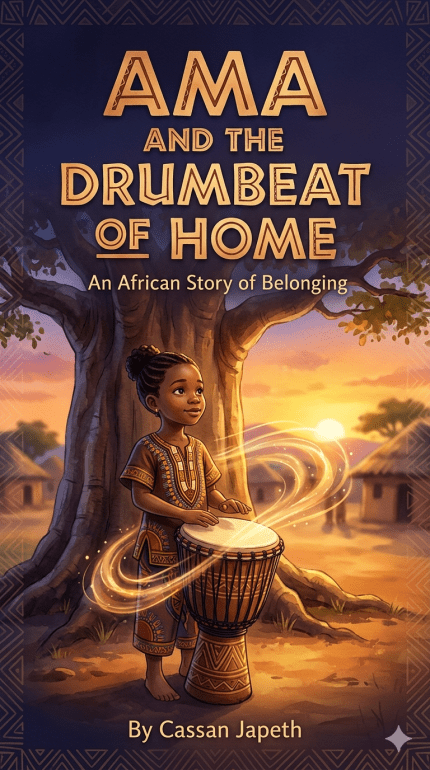

I grew up hearing the drum before I understood its language.
In Ghana, in Nigeria, across the wide and beautiful breadth of West Africa, the drum is not simply an instrument. It is a voice. It speaks of harvests and heartbreaks, of celebrations and caution. It calls the community together and reminds each person, even the smallest child, that they are part of something much larger than themselves.
This story was born from a question I kept asking as I grew older: What happens to a child who is separated from the sounds of home? What happens when the familiar rhythms of your village — the morning drums, the market songs, the evening clapping — fall silent around you?
The answer, I came to believe, is this: the rhythm does not disappear. It goes inward. It hides in your heartbeat, in the way you walk, in the cadence of your laughter. It waits, patient and faithful, until you need it again.
This is a story for every child who has ever felt lost, far from home, uncertain of their place. It is a story rooted in the West African philosophy of Ubuntu — I am because we are — which teaches that identity is not found alone, but in connection with others and with the traditions we carry.
The djembe drum at the heart of this story is one of the most beloved instruments in West Africa, used for centuries to communicate across distances, to mark the rhythm of community life, and to pass culture from one generation to the next. But more than any single drum, this story is about the rhythm that lives inside all of us — the one that never truly falls silent.



















Reviews
Clear filtersThere are no reviews yet.