Nsemia Inc Publishers

Nsemia Inc Publishers

  • No ratings found yet!

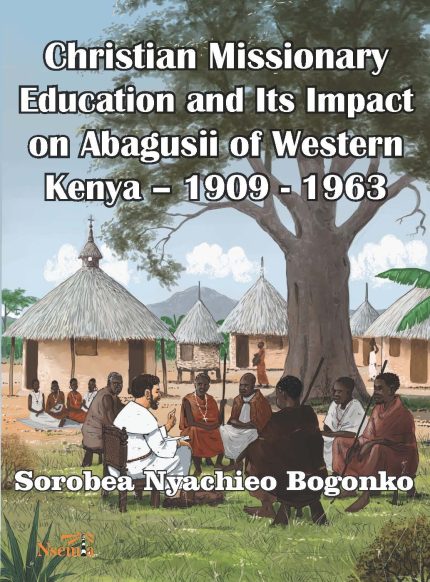
Christian Missionary Education and It...

KShs2,800.00 KShs2,400.00
This work focuses on Christian missionaries’ education in Gusii, western Kenya, between 1909 and 1963. It examines the socio-economic and educational aspects of Gusii society in the pre-Christian period. A key observation is that traditional African education was practical, mnemonic, and real; it was worthwhile for the culture of Abagusii. The missionaries introduced a largely theoretical education that was alien to Gusii. Missionaries, through condemnation of the ways of life of Abagusii, inflicted a deadly blow to traditional education. Gusii educational processes (e.g. rites of passage such as circumcision) and venues of education (e.g. ebisarate) were termed ‘heathen’. Colonial government support for missionary education further weakened indigenous ways and practices, rendering traditional Gusii education helpless. The alien education destroyed traditional structures and systems, and enabled the first modern elite classes to emerge. It produced clerical and administrative cadres for the colonial administration, in addition to commercial and political elites. Mission schools, further, produced teachers who, though not well educated, spread and planted modern education in Gusii society. All this submerged old elites: the rainmakers, medicine men, seers, and others. The actions of missionaries and the colonial government shaped Gusii society anew. Their impact on Gusii culture, economy, healthcare and administration, among others, was irreversible. What would have been the trajectory in Gusii had the foreigners integrated indigenous education into their schemes? To what degree would Gusii society, its culture and knowledge have been preserved? How prominent, for instance, would indigenous ways of life (e.g. medicine) be part of modern Gusii society?

Learning Entrepreneurship Through Ind...

KShs1,800.00 KShs1,400.00
In Learning Entrepreneurship Through Indigenous Knowledge the authors extract knowledge from a sampling of proverbs and sayings, and ingeniously apply this to entrepreneurship. They innovatively employ educative storytelling to concretize the application of the knowledge to business. The stories used are easy to follow given they are drawn from ordinary lives. They are stories that most readers are likely to relate to, given that these stories are drawn from familiar environments and in familiar settings. The work demonstrates the richness of indigenous information and its relevance to today's marketplace. This work will be useful to those that would like to extend the scope of their entrepreneurial information while drawing inspiration from traditional heritage. There is something in this book for students, teachers, businesspeople and researchers in the subject of entrepreneurship. This work provides a glimpse into the potential of the indigenous knowledge base and should inspire similar future works demonstrating relevance of indigenous heritage to other aspects of contemporary life. What Others Say "This is a well thought out idea given the entrepreneurial efforts that are currently underway. It is a good book that targets the forgotten groups of people thus the school children, the youth and the general readership. ... It contains very interesting stories that motivate the young and old alike to read and understand the entrepreneurial ideas being passed on." - Dr. Nelson H. Were Wawire; Senior Lecturer, Department of Applied Economics; Kenyatta University. "It's unique in making a link between folktales and entrepreneurship, especially when the authors draw insights or lessons learned from each story." - Dr Luvisia Bakuli, Lecturer & IT Professional "The stories told are very humorous and stark to the point leaving no room for ambiguity. The Business concepts are tackled with clarity and brevity in a businesslike manner. - Everret Wakoli, Engineer

Factors that Determine Entrepreneuria...

KShs1,800.00 KShs1,500.00
Entrepreneurship is critical to economic development of any nation. Entrepreneurs continually innovate and invent, and as they commercialize the innovations and inventions, they create goods and services. In the process they create new markets, services and products as well as employment. Factors that Determine Entrepreneurial Behaviour in Micro and Small Enterprises in Kenya provides insights into entrepreneurship in Kenya. The book offers practical observations on the state of entrepreneurship in Kenya. It is a good reference for scholars, teachers and students of business and economics, both at undergraduate and post-graduate levels. It is a must read for scholars, practitioners and enthusiasts of entrepreneurial education and knowledge. What Others Say "This book makes a very useful contribution to understanding the factors that affect entrepreneurial behaviour. It will add great value in the field of entrepreneurship." - Henry M Bwisa, Professor of Entrepreneurship, Jomo Kenyatta University of Agriculture and Technology. "The practical approach, based on case study and research results in this book, offers powerful insights into entrepreneurial behaviour in the Kenyan economic landscape. This in invaluable resource for students of entrepreneurship in developing countries." - Book Editor

Critical Thinking

KShs1,800.00 KShs1,500.00
This book, Critical Thinking, is an outgrowth of an undergraduate course that the author developed and taught at Machakos University in Kenya. It presents the definition, nature, and foundations of critical thinking. It further discusses the various schools of thought on the subject of critical thinking, a matter that underlines the broad range of debates that pertain to the subject. In this respect, it demonstrates a great deal of energy that has been expended by theorists of critical thinking on the debate on the nature of critical thinking, generating provocative, interesting and important philosophical perspectives. The work provides students of Critical Thinking with necessary tools to cope successfully with undergraduate and graduate-level courses, and post-academic life. It contains adequate material supportive of postgraduate studies and research in critical thinking. What others say “We hope and expect that this will serve as an important tool for students and scholars alike, and welcome the appearance of this important contribution to the theory and practice of education for critical thinking.” - Harvey Siegel, Department of Philosophy, University of Miami, Coral Gables, Florida, USA.

The Vanishing Indigenous Heritage of ...

KShs2,200.00 KShs2,000.00
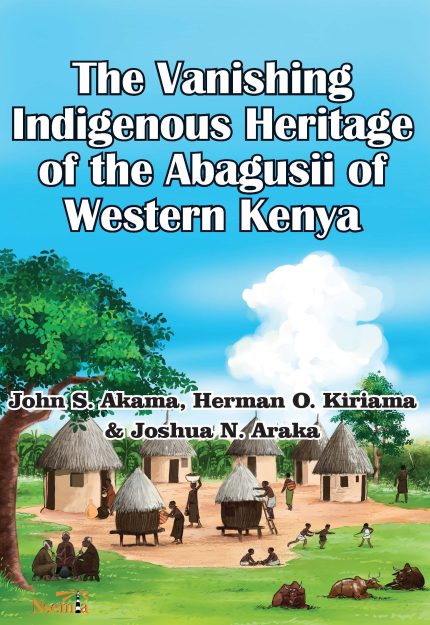
Abagusii are a Bantu-speaking group found in South Western Kenya, also called the Gusii region. Like other indigenous communities in the world, the people of Gusii have a rich heritage that captures their history and culture. The community’s heritage is at the core of their identity. For instance, Abagusii were deeply spiritual, be it in the administration of justice, an individual’s conduct or relationships with others in the society. As the community settled down, some places became more important to them. Some of these sites assumed spiritual significance. Others became historical with inscriptions that predate the arrival of the group on present-day Gusii. Places such as Ngoro ya Mwaga, at the base of the Manga Ridge, were important to the spiritual lives of Abagusii. It was sacred, and clear rules governed the manner of conduct while visiting the location. Other locations like the caves in Sameta have rock-inscribed writings that have stood the test of time. They predate the group’s arrival in that land. Some developments saw the transformation of people’s lives, such as the building of the first watermills, which substantially eased the tedious work of preparing cooking flour. This book points to the potential these places hold for present-day Gusii, Kenya and the world. As the authors write, ‘It is also important to note that other than satisfying the social-religious needs of the local community, if well managed and presented, these sites can become a source of cultural heritage tourism.’ Not only would this promote the heritage of the people of Gusii but also become a source of revenue for the two counties of Kisii and Nyamira. Further, the work underlines the importance of preserving the sites, and the heritage they represent, for future generations and the world at large. Unfortunately, as the land sizes decline in Gusii, there is encroachment and (in many cases) destruction of what was once sacred. When such destruction takes place, it goes with the historical and cultural representation it holds.

Totems of Abagusii of Kenya

KShs400.00 KShs300.00
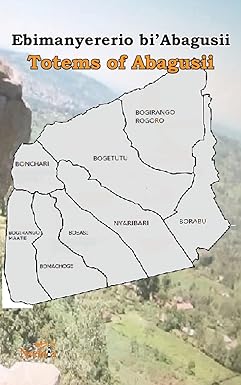
Ebimanyererio nigo bire bi'echingencho ao ao ase abanto ao ao. N'enchera eyemo abanto b'ororeria oromo bakomanyana na kwemanyia ase abanto bande. Ase abande n'enchera y'ogwetogia. N'abande begenete buna ebimanyererio n'enchera eyemo y'okobeka okwegena ase chinkoro chi'abanto. Komenta nayio, ebimanyererio nigo bigokonya abanto koinyora ing'ai barwete nechimbwa chiabo. Soma egetabu eke egere omanye igoro y'ebimanyererio bi'Abagusii. ***** Throughout the world, totems are used variously, including linking people with each other and defining the relationships among many people or groups of people. They can represent the connection between people and the spiritual world. Further, totems help people preserve their culture and history. This book presents totems of Abagusii and explains how they came to be, based on oral history passed down generations.

Reminiscing Wonderland

KShs1,200.00 KShs1,100.00
Praise for Dr. Mong'are Bw'Onyancha's Reminiscing Wonderland “Interesting stories! ...some brought me to tears. Others were enthralling. I was moved by Molo's life story and captivated by the coming of age stories.” Cindy, Editor “Reminiscing Wonderland. The narrator's imagination perceives his new school as a magical dreamland, a 'Once upon a time perfect home 'until he encounters 'stains' which threaten to curtail his aspirations. His learner's enthusiasm, just like in the novel, The African Child, is without parallel. He is like an arrow on the hunter's bow, ready to go. Molo is one of the hurdles he has to overcome. Superficially, Molo is portrayed as a cold, stone-hearted troublemaker. Yet, the writer delves into his stained life. By the end, the reader sympathizes with the concept of his being, relationships, and nurturing (compare with the novels, A Grain of Wheat and Crime and Punishment, where main characters don't have close trusted relationships and how they reap what they sow). Good defeats evil, and there is the hope of redemption and support systems to the purest of state. With the passage of time and increase in human activities, all life in Wonderland will be altered in some way (Paradise Lost, Wonderland Stained).”

Sakagwa Ng’iti: A Kisii Prophet

KShs1,200.00 KShs1,000.00
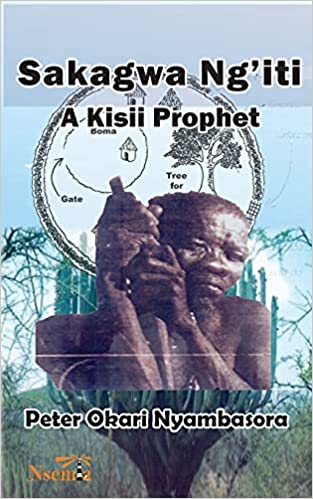
Sakagwa Ng'iti exerted substantial influence on Gusii society and beyond in the latter part of the 1800s. He was many things: a medicine man, rainmaker, an unelected community strategist in dealing with raids from the warring Maasai and Kipsigis, and a prophet whose many prophecies have come to pass, according to those that keenly follow his story. His death was mysterious, leaving many wondering what really happened. Did he, as some accounts claim, eventually settle among the Kipsigis? Was he carried away by chisokoro (ancestors) to join them in the netherworld as happened with Jesus of Nazareth? How come that his spiritual roles (seer, medicine man, and rainmaker) that ran in the family, waned and eventually died off? Peter Okari Nyambasora's Sakagwa Ngi'ti, a Kisii Prophet provides some answers to these questions. It traces the emergence of Sakagwa as a prominent player in Gusii of his time, even as he had no formal power accorded by clan, tribe or lineage. Compiled from oral tales, one on one interviews with family members, and written works, the book provides the most authoritative account of Sakagwa yet written.

Vyama Institutions of Hope

KShs1,200.00 KShs1,000.00
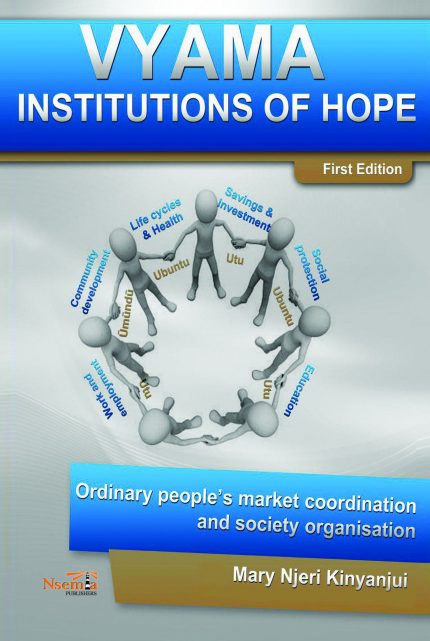
This book makes the case for informal sector institutions in development theory. Through practical examples and interviews conducted in Kenya, the author captures how ordinary people organize themselves to meet daily economic and development challenges. The author traces how ordinary people (wananchi) use non-mainstream mechanisms in the form vyama (social groups) to enable individual, group and community development. The book offers insights into the evolution of vyama (institutions of hope) and the role these institutions continue to play in realizing economic growth: wealth creation and distribution; investments, social protection; and general community development. The work shows how, despite historical disruptions, modernization and neo-liberal policies, ordinary people creatively borrow from tradition. In the process, they use collective mechanisms for resource mobilization, investment, risk-sharing and shared gains for the common good. The author offers pointers into the future and how the chama concept can become mainstream in a people’s economic development. What others say “The analysis is rigorous. It is highly original, emotive, and an excellent piece of work. It makes a major contribution to our knowledge of the proto-proletariat and the informal sector in the developing world. - How the author beautifully weaves anecdotes from classical African novels into her analysis to reinforce her argument makes this work distinctive and unique.” - Professor MBK Darkoh, University of Botswana “This book is based on real life cases in an area that most scholars have not ventured into. It is a major addition of new findings in the body of knowledge. The presentation is clear, understandable and would appeal to most readers.” –Paul Kamau, PhD, Senior Research Fellow, University of Nairobi “The strength of this book is the way it has managed to present the lives of the ordinary people as not hopeless, but rather the base where future development for Africa could be emerging. The book starts from the grassroots and the development actions and innovations taking place there based on the needs as experienced by the ordinary people, rather than the technical fixes of development experts that follow the books rather than the actual needs of the people being developed.” – Professor Beth Maina Ahlberg, PhD, Professor of International Health, Uppsala University “This book demonstrates how ordinary citizens have discovered the power in tapping into social relations and are proactively solving their own socio-political and economic challenges. It calls for the incorporation of the ordinary citizen in development planning with a view of enabling them to receive value from and add value to the globalization and integration process. For anyone who is interested to see Africa play an important role in the global agenda, this is not a book to be ignored.” -- Josephat Juma, Managing Editor, The African Executive magazine.

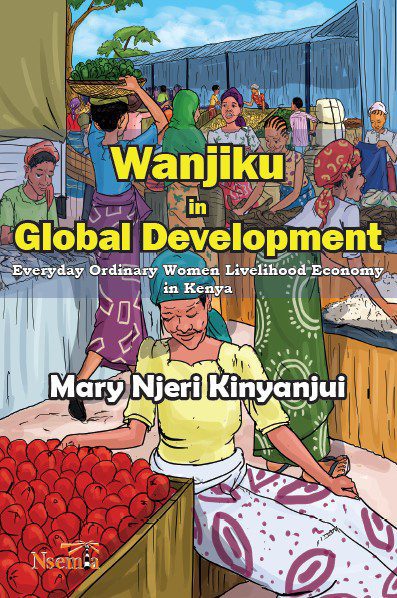
Wanjiku in Global Development

KShs1,400.00 KShs1,200.00
In Kenya, the name 'Wanjiku' epitomizes the ordinary person, the citizen, in the context of national socio-political and socio-economic discourse. The origins of the name are in the often heated national debates on political, economic, and rights-related issues where elite self-interest often takes precedence. Aligned with economic thinking from western schools of thought, the elite often acts without much attention to Wanjiku's daily challenges of survival or completely ignores her well-developed modes of survival as a demonstration of a sound system worth paying attention to. In Wanjiku in Global Development: Everyday Ordinary Women Livelihood Economy in Kenya, Kinyanjui captures Wanjiku's systematic approach to day-to-day activities that undergirded participants' and society's common good. Call it the Wanjiku Business Model. In the true spirit of Ubuntu, market women (Wanjiku) operate within a set of unwritten rules that assure optimization of collective good from interacting among themselves and with others. The Wanjiku Business Model is well illustrated through a number of case studies that further capture its sound basis. Kinyanjui presents a major lesson we can learn from Wanjiku, namely: life does not have to be about cutthroat competition, winners and losers!
delivery

QUICK DELIVERY

Swift dispatch

ONLINE PAYMENT

Multiple options

EXPERT SUPPORT

Help when you need it

WIDE VARIETY

Thousands of books

GLOBAL SHIPPING

Worldwide delivery

Shopping cart
Sign in

No account yet?

Shop
0 Wishlist
0 items Cart
My account